Search results
Search for "hydrogen bonds" in Full Text gives 455 result(s) in Beilstein Journal of Organic Chemistry. Showing first 200.
Co-crystallization of an organic solid and a tetraaryladamantane at room temperature
Beilstein J. Org. Chem. 2021, 17, 1476–1480, doi:10.3762/bjoc.17.103
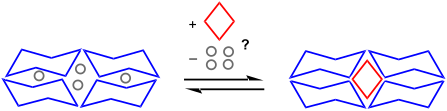
- methyl substituent of the chaperone was found to be disordered, but otherwise well resolved structures were obtained, with hydrogen bonds between phenol hydroxy groups and ether groups of the chaperone (see Table S1 in Supporting Information File 1). For TEO, the crystal system of the co-crystals is
- group. But again, hydrogen bonds between phenol hydroxy groups and the alkoxy substituent of the crystallization chaperone can be resolved. So, in both co-crystal lattices, hydrogen bonding stabilizes the packing arrangement. For TDA/phenol, the host builds the crystal lattice with TDA molecules in


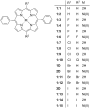
Structural effects of meso-halogenation on porphyrins
Beilstein J. Org. Chem. 2021, 17, 1149–1170, doi:10.3762/bjoc.17.88
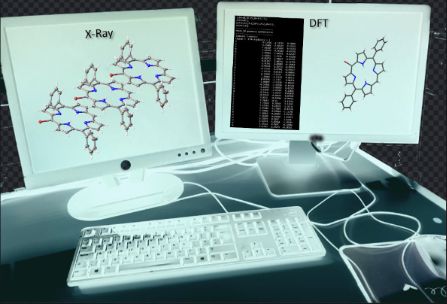
- ‘guests’ within the crystal lattice, through hydrogen-bonding and van der Waals forces. Thereafter, research over the crystal engineering of porphyrins has focused on the noncovalent interactions, such as hydrogen bonds and halogen bonds, or metal coordination interactions [2][3][4][5][6][7][8][9][10][11




Synthesis of multiply fluorinated N-acetyl-D-glucosamine and D-galactosamine analogs via the corresponding deoxyfluorinated glucosazide and galactosazide phenyl thioglycosides
Beilstein J. Org. Chem. 2021, 17, 1086–1095, doi:10.3762/bjoc.17.85
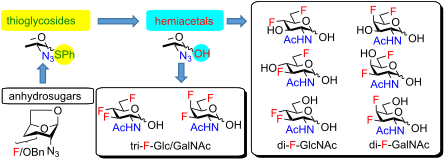
- desolvation penalty associated with binding of hydrophilic natural carbohydrates [8], and (2) create additional contacts with the binding cavity via electrostatic and dipolar interactions with C–F bonds [9][10], new intermolecular hydrogen bonds [11], or rearrangement of hydrogen bond-mediating water


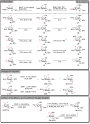

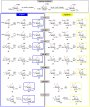
Beyond ribose and phosphate: Selected nucleic acid modifications for structure–function investigations and therapeutic applications
Beilstein J. Org. Chem. 2021, 17, 908–931, doi:10.3762/bjoc.17.76
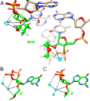
- ]. Compared to the native complex, conformational changes in the RNA and protein were only observed around the site of the AM1 modification. Not only was the amide an ideal structural mimic of phosphate, it also possessed stabilizing hydrogen bonds between the amide N–H and the main chain oxygen and side
- revealed that thermal stabilization may be attributed to nonconventional hydrogen bonds in the backbone [195][196][197]. Gene silencing by RNAi has also been explored with siRNA containing FANA residues [198]. These studies have shown that FANA is accommodated in the sense strand and 5'-end and 3'-termini




DNA with zwitterionic and negatively charged phosphate modifications: Formation of DNA triplexes, duplexes and cell uptake studies
Beilstein J. Org. Chem. 2021, 17, 749–761, doi:10.3762/bjoc.17.65
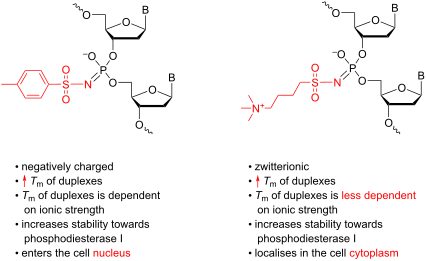
- hydrophobicity of Ts results in less water molecules involved in the formation of hydrogen bonds with dsDNA. However, it does not improve the interaction between two DNA strands, possibly due to the large size of the Ts moiety. For duplexes of the N+ and Ts-ONs formed with complementary RNA, both ΔH and TΔS
- cell-based applications. Illustration of H-bonding in a DNA duplex and a parallel triplex. A) Depiction of Watson–Crick base-paring (left: T-A and right: C-G); B) parallel triple helices: pyrimidine-rich third strand interactions are stabilised by Hoogsteen hydrogen bonds (the duplex is in black, TFO


[2 + 1] Cycloaddition reactions of fullerene C60 based on diazo compounds
Beilstein J. Org. Chem. 2021, 17, 630–670, doi:10.3762/bjoc.17.55
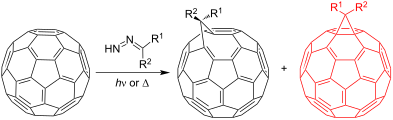
- butyric acid 209. Based on this, fullerene dimer 210 with four hydrogen bonds having a very high dimerization constant was obtained (Scheme 43). Diethyl 4-oxopimelate was used as the precursor of polymer 213. The former was converted via diacid 211 to the target methanofullerene 212, the solution of which
Mesoionic tetrazolium-5-aminides: Synthesis, molecular and crystal structures, UV–vis spectra, and DFT calculations
Beilstein J. Org. Chem. 2021, 17, 385–395, doi:10.3762/bjoc.17.34
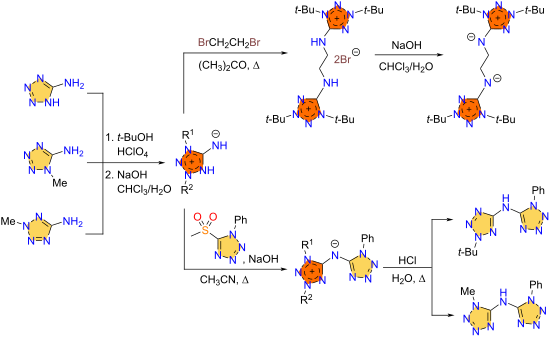
- show no hydrogen bonds in their crystal structures and only van der Waals interactions take place between the molecules. The bistetrazolium salt 9 (bromide salt of mesoionic compound 10) crystallizes in the trigonal space group , with 18 formula units in the unit cell. The asymmetric unit includes one
- their complexation. In salt 9, the bromide ions are held in the crystal structure by hydrogen bonds N15–H15···Br1b [D···A = 3.2774(17) Å, D–H···A = 142°; symmetry code: (b) –x + y + 1/3, −x + 2/3, z + 2/3] and N25–H25···Br2 (D···A = 3.2654(17) Å, D–H···A = 144°). There are also intramolecular hydrogen
- following reasons: in case of chloroform, the solvent can form hydrogen bonds with the nitrogen atoms of the 8a molecule, whereas for methanol and water solutions, the solvent can act as a proton donor, and as a result, compound 8a may exist in the 1,3-di-tert-butyl-5-aminotetrazolium cationic form. To




Multiswitchable photoacid–hydroxyflavylium–polyelectrolyte nano-assemblies
Beilstein J. Org. Chem. 2021, 17, 166–185, doi:10.3762/bjoc.17.17
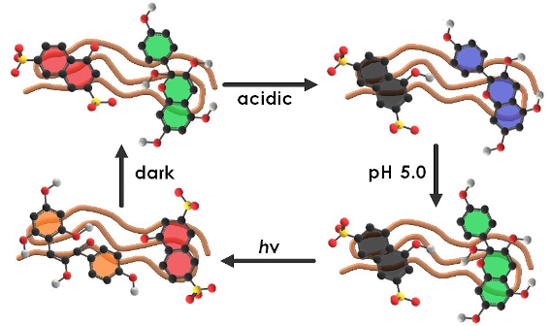
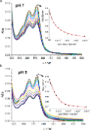
- change of the pH value from pH 7.0 to pH 5.0 leads to an addition of one hydroxy group. This means that the number of possible hydrogen bonds increases from four at pH 7.0 to five at pH 5.0. Yet, the added hydroxy group is in a position where steric hindrance can play a major role. Furthermore, Flavy and
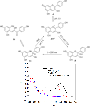
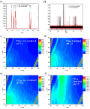
- the photoacid also form nano-assemblies on their own, which are also dependent on the pH value (see Supporting Information File 1). The assemblies are expected to form due to hydrogen bonds and ionic-dipole interaction. Already the raw data (Figure 8) clearly show an exothermic, an endothermic, and
- and one charge plus four hydrogen bonds, which corresponds to one Flavy for example. In difference, the second and fourth binding step are endothermic with ΔH2 = 64.5 kJ/mol and ΔH4 = 75.5 kJ/mol. Here, the association is entropically driven with ΔS2 = 0.22 kJ/mol/K and ΔS4 = 0.22 kJ/mol/K, indicating




Supramolecular polymerization of sulfated dendritic peptide amphiphiles into multivalent L-selectin binders
Beilstein J. Org. Chem. 2021, 17, 97–104, doi:10.3762/bjoc.17.10
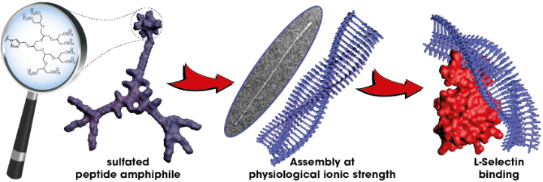
- interactions [17][18]. By a careful design of the corresponding building blocks, extensive multilateral hydrogen bonds between the amino acid sequences of the oligopeptide backbone lead to secondary structures that direct the equilibrium to polymeric nano-scaled assemblies. A well-studied receptor making use



Circularly polarized luminescent systems fabricated by Tröger's base derivatives through two different strategies
Beilstein J. Org. Chem. 2021, 17, 52–57, doi:10.3762/bjoc.17.6
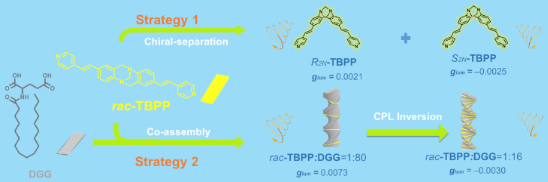
- rac-TBPP/DGG = 1:80, a mirror symmetry was observed in the CPL spectra of the co-gel at the molar ratio of rac-TBPP/LGG = 1:80 (Figure 2d). rac-TBPP contains pyridine units, and the gelator DGG has the carboxyl groups. Therefore, hydrogen bonds might be formed between pyridine in rac-TBPP and the
- could be involved in the formation of various hydrogen bonds (Figure 3b, Figure S7, Supporting Information File 1). At the molar ratio of rac-TBPP/DGG = 1:16, the intensity of the peak at 1691 cm−1 decreases, and the peak at 1729 cm−1 brodens. A new peak adjacent to 1645 cm−1 appears at 1627 cm−1. The
- results demonstrate that some of the acid–acid hydrogen bonds between DGG molecules might be replaced by acid–pyridine hydrogen bonds between DGG and rac-TBPP [27]. In addition, the possible influence of the stoichiometric ratios to the morphologies of rac-TBPP/DGG co-gels was investigated using a


Molecular basis for protein–protein interactions
Beilstein J. Org. Chem. 2021, 17, 1–10, doi:10.3762/bjoc.17.1
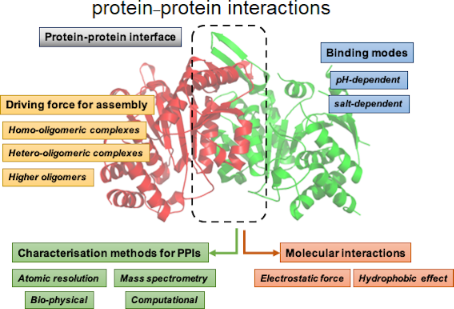
- . In obligate complexes, the interface is characterised by hydrophobic and aromatic residues while in non-obligate, the residues are more polar and charged, with the interface area being smaller [55] and containing more hydrogen bonds [56]. PPIs can also be differentiated by either being transient


Chiral anion recognition using calix[4]arene-based ureido receptors in a 1,3-alternate conformation
Beilstein J. Org. Chem. 2020, 16, 2999–3007, doi:10.3762/bjoc.16.249
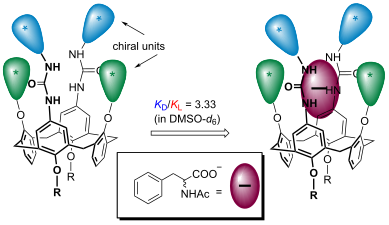
- . The shapes and geometries of anions are widely different, and therefore the design of corresponding tailor-made receptors is based mostly on more directional interactions, such as hydrogen bonds. Indeed, an incredible number of neutral receptors bearing amide, sulfonamide, urea, thiourea, pyrrole, or
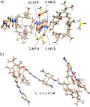
- chain of calixarene molecules joined together by intermolecular hydrogen bonds between the ureido groups (the C=O···H–N distances were 2.293 and 2.048 Å). One of the ureido functions in the macrocycle also held acetone via a C=O···H–N hydrogen bond (2.085 Å) and via a C=O···H–C bond (2.670 Å) from the
- the dimeric motif. X-ray structure of 7d, showing hydrogen bonds between the ureido units (green) and hydrogen bonding of acetone molecules (black). One alkyl group in each calixarene was removed for better clarity. 1H NMR titration of 7c with N-acetyl-ᴅ-phenylalaninate and N-acetyl-ʟ-phenylalaninate




Selected peptide-based fluorescent probes for biological applications
Beilstein J. Org. Chem. 2020, 16, 2971–2982, doi:10.3762/bjoc.16.247

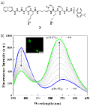
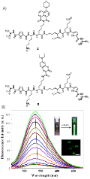
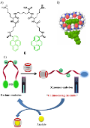
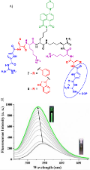
- ). The inhibition by peptide 9 is found to be in a reversible and noncompetitive way. Molecular modeling shows four cationic ammonium groups forming ion pairs and hydrogen bonds with negatively charged residues, such as Glu217, Asp60B, Asp147 and Glu217, respectively and completely block the central pore



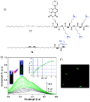

Naphthalonitriles featuring efficient emission in solution and in the solid state
Beilstein J. Org. Chem. 2020, 16, 2960–2970, doi:10.3762/bjoc.16.246
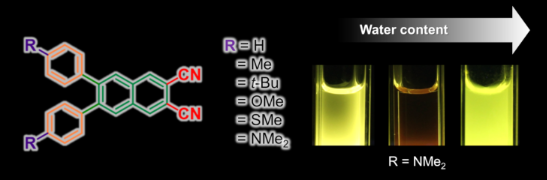
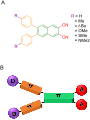
- together by C–H…N intermolecular hydrogen bonds with distances of 3.006 Å for C–H(2e)/N(6) and 3.083 Å for C–H(2d)/N(6) while involving hydrogen atoms of the tolyl moieties and the nitrogen atoms of nitrile groups. Then, these dimeric substructures are linked by C–H…N intermolecular interactions to



Construction of pillar[4]arene[1]quinone–1,10-dibromodecane pseudorotaxanes in solution and in the solid state
Beilstein J. Org. Chem. 2020, 16, 2954–2959, doi:10.3762/bjoc.16.245
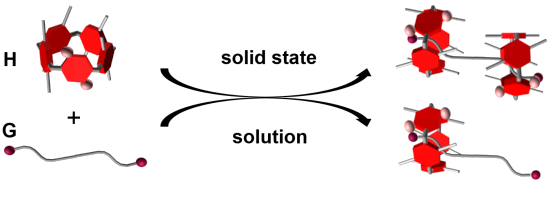
- in the solid state. From single crystal X-ray diffraction, the linear guest molecules thread into cyclic pillar[4]arene[1]quinone host molecules in the solid state, stabilized by CH∙∙∙π interactions and hydrogen bonds. The bromine atoms at the periphery of the guest molecule provide convenience for
- bonds. Specifically, there are four hydrogen atoms on the guest molecule to form multiple CH∙∙∙π interactions with the 1,4-diethoxybenzene subunits of the host. In addition, the two bromine atoms at the periphery of the guest molecule are outside the host cavities and form moderate hydrogen bonds with
- crystallography revealed that two host molecules complex one guest molecule, forming a [3]pseudorotaxane in the solid state (Figure 1). In the crystal structure, the alkyl chain of the guest is threaded through the cavities of two host molecules, which is stabilized by multiple CH∙∙∙π interactions and hydrogen


Controlled decomposition of SF6 by electrochemical reduction
Beilstein J. Org. Chem. 2020, 16, 2948–2953, doi:10.3762/bjoc.16.244
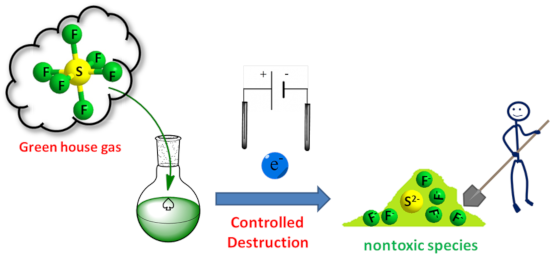
- supporting electrolytes based on tetrabutylammonium (TBA) structures after anion exchange. This poor resolved signal is quite classical for such species due to hydrogen bonds. Another important point is the production of H+ ions at the counter electrode because of the oxidation of acetonitrile [31][32


UV resonance Raman spectroscopy of the supramolecular ligand guanidiniocarbonyl indole (GCI) with 244 nm laser excitation
Beilstein J. Org. Chem. 2020, 16, 2911–2919, doi:10.3762/bjoc.16.240
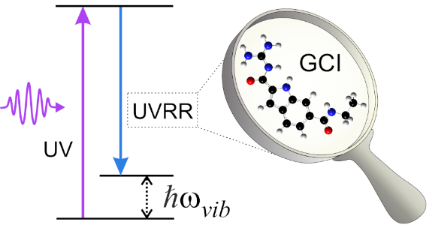
- -covalent interactions namely hydrogen bonds, van der Waals, and/or hydrophobic interactions [1][2][3][4][5]. In this context, Schmuck and co-workers have introduced a class of synthetic receptors based on the guanidiniocarbonyl pyrrole (GCP) moiety (cf. Figure 1 top right) as a carboxylate binding site


Incorporation of a metal-mediated base pair into an ATP aptamer – using silver(I) ions to modulate aptamer function
Beilstein J. Org. Chem. 2020, 16, 2870–2879, doi:10.3762/bjoc.16.236
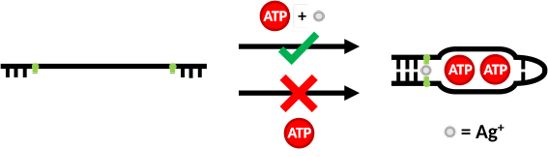
- to release a DNA-bound cargo (in the form of small organic molecules) [10]. Similarly, metal ions can trigger DNA folding into a catalytically active topology [11][12]. Metal-mediated base pairs are artificial base pairs in which hydrogen bonds between the complementary nucleobases are formally


Selective recognition of ATP by multivalent nano-assemblies of bisimidazolium amphiphiles through “turn-on” fluorescence response
Beilstein J. Org. Chem. 2020, 16, 2728–2738, doi:10.3762/bjoc.16.223
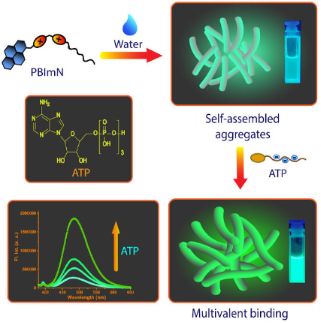
- electrostatic and (C–H)···O− hydrogen bonds involving the acidic proton at the 2-position of the imidazolium moiety to bind to ATP and other phosphate analytes [46]. A number of cyclophanes and tweezers [53][54][55][56] have been reported possessing the following common structural features: a) the presence of


Thermodynamic and electrochemical study of tailor-made crown ethers for redox-switchable (pseudo)rotaxanes
Beilstein J. Org. Chem. 2020, 16, 2576–2588, doi:10.3762/bjoc.16.209
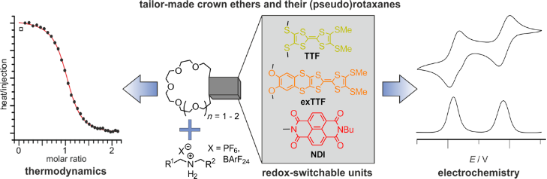
- -8 (DBC8, Figure 1), which bind through noncovalent interactions. In detail, these interactions are strong hydrogen bonds between ether oxygen atoms and ammonium protons. In addition, weaker C–H···O hydrogen bonds with the CH2 groups adjacent to the ammonium nitrogen as well as π–π-interactions
- the experiment. The folded structure observed in the crystal structure hints towards a possible “side-on” complex, where the ammonium axle is not threading through the ring of the macrocycle, yet still forms hydrogen bonds to the crown ether [24][25] (see spectroelectrochemical measurements below
- strength of the hydrogen bonds in the neutral complex and Coulomb repulsion in the oxidized complex [35]. This effect is less pronounced for the complex A2·PF6@exTTFC7 because the TTF unit is more distant to the ammonium unit [37]. The macrocycle bisTTFC8, bearing two TTF units, shows a broadening of the




Water-soluble host–guest complexes between fullerenes and a sugar-functionalized tribenzotriquinacene assembling to microspheres
Beilstein J. Org. Chem. 2020, 16, 2551–2561, doi:10.3762/bjoc.16.207
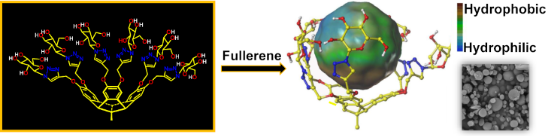
- 1505.9611 (Δ = + 5.2 ppm). The surprising presence of six equivalents of water points to the formation of strong hydrogen bonds between the sugar ester bonds of TBTQ-(OAcG)6 and the water molecules as guests. However, the origin of this intriguing observation associated with the attachment of just two


![[Graphic 2]](/bjoc/content/inline/1860-5397-16-207-i3.svg?max-width=637&scale=1.18182) C60 [TBTQ-(OG)6: 50 μM; C60: 50 μM] and (b) TBTQ-(OG)6
C60 [TBTQ-(OG)6: 50 μM; C60: 50 μM] and (b) TBTQ-(OG)6 


Comparative ligand structural analytics illustrated on variably glycosylated MUC1 antigen–antibody binding
Beilstein J. Org. Chem. 2020, 16, 2540–2550, doi:10.3762/bjoc.16.206
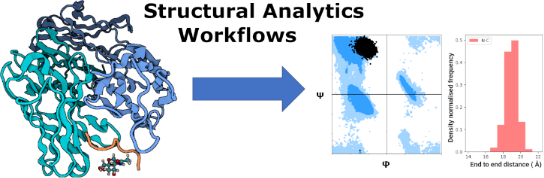
- analysis to consider how the sugar moiety could interact with the antibody (Tables S1–S7 in Supporting Information File 1). In solution, hydrogen bonds occur within the antigen between Arg5–Asp3 and Arg5–Pro8 (in order donor–acceptor) with occupancies of 31.83% and 14.32% (and 13.67%). For the Tn-antigen
- , the peptide portion has hydrogen bonds between Arg5–Pro8 (26.69% and 26.58%), Arg5–Asp3 (12.45%), an Arg5–Pro2 interaction is observed with an occupancy of 7.13%, and an intramolecular hydrogen bond between the C3 alcohol and the carbonyl of the N-acetyl moiety of the GalNAc has an occupancy of 6.92
- %. A shift in hydrogen-bonding populations on glycosylation and the appearance of the Arg5–Pro2 (7.13%) interaction aligns with the compact structure noted previously for the Tn-antigen. When bound, additional intramolecular hydrogen bonds are observed for the Tn-antigen with interactions between the



Styryl-based new organic chromophores bearing free amino and azomethine groups: synthesis, photophysical, NLO, and thermal properties
Beilstein J. Org. Chem. 2020, 16, 2282–2296, doi:10.3762/bjoc.16.189

- planar to the dicyanomethylene group. A twist was observed between the dicyanomethylene and aminophenyl groups (salicylidenyl moiety for 8–12) with an angle of about 50°. In addition, the dyes 8–12 exhibited strong intramolecular O–H···N hydrogen bonds with lengths in the range of 2.63–2.64 Å (Figure 1


Naphthalene diimide bis-guanidinio-carbonyl-pyrrole as a pH-switchable threading DNA intercalator
Beilstein J. Org. Chem. 2020, 16, 2201–2211, doi:10.3762/bjoc.16.185
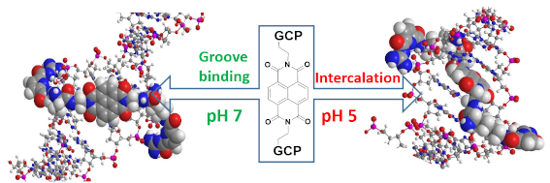
- energetically favourable non-covalent interactions, hydrogen bonds, and van der Waals interactions formed between the DNA/RNA and solvent, and between the compound 4 and solvent. The large positive entropy changes suggest solvent release upon binding, which makes a favourable contribution to the reaction Gibbs





Design, synthesis and application of carbazole macrocycles in anion sensors
Beilstein J. Org. Chem. 2020, 16, 1901–1914, doi:10.3762/bjoc.16.157
- carboxylates were modelled computationally using COSMO-RS. Several observations were made from the computational structures. Intramolecular hydrogen bonds between the urea carbonyl and the carbazole NH protons were present in macrocycles MC001 and MC003, as indicated in Figure 4. The rings of these macrocycles
- studied anions. Additionally, for MC003, intramolecular hydrogen bonds could be present. For most anions, the champion molecules were MC007 and MC009. According to the computation results, neither benzoate nor pivalate were able to fit into the ring of these receptors because these anions were too large