


Search results
Search for "mercury" in Full Text gives 193 result(s) in Beilstein Journal of Organic Chemistry.
Biradical vs singlet oxygen photogeneration in suprofen–cholesterol systems
Beilstein J. Org. Chem. 2016, 12, 1196–1202, doi:10.3762/bjoc.12.115

- photogeneration of biradicals and 1O2, the key mechanistic steps in Ch photooxidation. Steady-state irradiation of 1 and 2 was performed in dichloromethane, under nitrogen, through Pyrex, using a 400 W medium pressure mercury lamp. The spectral analysis of the separated fractions revealed formation of two
- nitrogen, using a Pyrex filter and a 400 W medium pressure mercury lamp. The reaction progress was followed by TLC and NMR. The resulting photomixtures were submitted to silica gel column chromatography, using hexane/ethyl acetate (95:5 v/v) as eluent. The spectral analysis of the separated fractions
- of (S)- or (R)-α-Ch dyads 1 and 2 (150 mg, 0.24 mmol) were irradiated for 8 h through Pyrex with a 400 W medium pressure mercury lamp. After this time the reaction mixtures were concentrated under reduced pressure, and the photomixtures were submitted to silica gel column chromatography, using hexane


Efficient syntheses of climate relevant isoprene nitrates and (1R,5S)-(−)-myrtenol nitrate
Beilstein J. Org. Chem. 2016, 12, 1081–1095, doi:10.3762/bjoc.12.103

- of mercury(I) chloride (0.06 mol %) and sulfuric acid (0.35 mol %) in water following the procedure of Boger et al. [51]. 63 was afforded in an unoptimized 78% yield. Employing the conditions outlined in Scheme 10 63 reacted with the stabilized ylide generated from the deprotonation of triethyl


A robust synthesis of 7,8-didemethyl-8-hydroxy-5-deazariboflavin
Beilstein J. Org. Chem. 2016, 12, 912–917, doi:10.3762/bjoc.12.89

- [26]. Diacetonide formation (product 8, 75%) proceeded as reported for the di(ethylthio) congener [24]. Finally, the dithioacetyl was cleaved while the isopropylidene moieties were retained, but not with mercury salts, as in original publications for the preparation of aldehyde 9 [27], but with the
- deprotection with iodine instead of mercury compounds) we have improved the synthesis of aldehyde 9. The latter compound was then transformed to the protected ribitylamine 10 via the oxime, which was reduced with LiAlH4. Primary amine 10 was then converted with chlorouracil 3, which was actually the key


Synthesis of 2,1-benzisoxazole-3(1H)-ones by base-mediated photochemical N–O bond-forming cyclization of 2-azidobenzoic acids
Beilstein J. Org. Chem. 2016, 12, 874–881, doi:10.3762/bjoc.12.86

- irradiating the base suspended in the solution of 1a with a mercury low-pressure quartz lamp (254 nm) in a quartz reactor with intensive stirring. It was found that the yields of 2a after photolysis of 1a substantially increased in the presence of a base. No dependency on the nature of the base could be


New synthetic strategies for xanthene-dye-appended cyclodextrins
Beilstein J. Org. Chem. 2016, 12, 537–548, doi:10.3762/bjoc.12.53
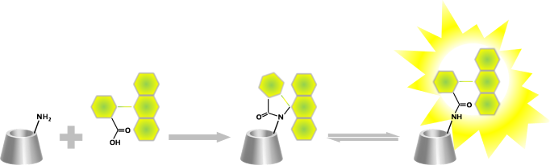
- agents for the carboxylic acid were HOBt and 1-ethyl-3-(3-dimethylaminopropyl)carbodiimide (EDC). Fang and co-workers designed a ratiometric sensor for detecting mercury ions in aqueous media, some biological fluids and living cells based on a rhodamine-modified β-CD [16]. The synthetic strategy was a


A selective and mild glycosylation method of natural phenolic alcohols
Beilstein J. Org. Chem. 2016, 12, 524–530, doi:10.3762/bjoc.12.51

- look for milder conditions for an efficient and inexpensive method of glycosylation while excluding the use of toxic mercury salts as promoter (Helferich reaction) or silver salts. The latter are often rather expensive, moisture and light sensitive, and uncomfortable to handle. Accordingly, various


My maize and blue brick road to physical organic chemistry in materials
Beilstein J. Org. Chem. 2016, 12, 229–238, doi:10.3762/bjoc.12.24
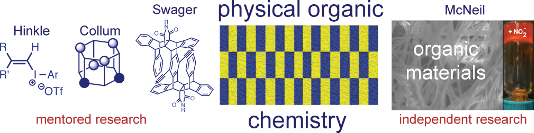
- , might be gelators. We searched the CSD for molecules containing a mercury atom (Hg2+) that was involved in an intermolecular cation–π interaction [28]. We identified molecule 2a, which exhibited 1D π–cation–π interactions in the solid state (Figure 3). Graduate student Kelsey (King) Carter synthesized


Synthesis of cyclic N1-pentylinosine phosphate, a new structurally reduced cADPR analogue with calcium-mobilizing activity on PC12 cells
Beilstein J. Org. Chem. 2015, 11, 2689–2695, doi:10.3762/bjoc.11.289

- . 1H and 13C NMR experiments were performed using a Varian Mercury Plus 400 MHz spectrometer in CD3OD, D2O, CDCl3 and acetone-d6 solvents. Chemical shifts are reported in parts per million (δ) relative to residual solvents signals: CD2HOD 3.31, HOD 4.80, (CD3)(CD2H)CO 2.09 for 1H NMR and CD3OD 49.0 for


Exploring architectures displaying multimeric presentations of a trihydroxypiperidine iminosugar
Beilstein J. Org. Chem. 2015, 11, 2631–2640, doi:10.3762/bjoc.11.282

- plates (Merck F254). Column chromatographies were carried out on Silica Gel 60 (32–63 μm) or on silica gel (230–400 mesh, Merck). Yields refer to spectroscopically and analytically pure compounds unless otherwise stated. 1H NMR spectra were recorded on a Varian Mercury-400 or on a Varian INOVA 400




Effective ascorbate-free and photolatent click reactions in water using a photoreducible copper(II)-ethylenediamine precatalyst
Beilstein J. Org. Chem. 2015, 11, 1950–1959, doi:10.3762/bjoc.11.211
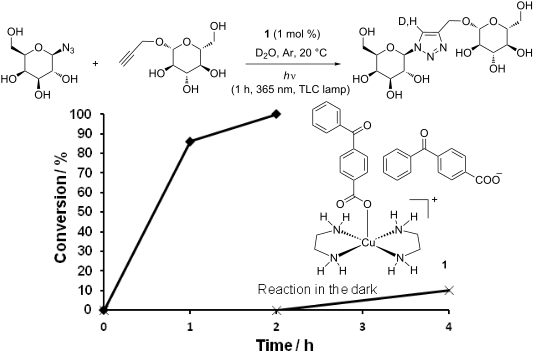
- mercury lamp (type TLC = thin-layer chromatography, 365 nm), or by a 23 W fluorescent bulb, or by ambient/sunlight. In water, a much poorer hydrogen atom donating solvent, the photoreduction of 1 proved inefficient. Interestingly, EPR studies revealed that complex 1 could nonetheless be effectively


Polythiophene and oligothiophene systems modified by TTF electroactive units for organic electronics
Beilstein J. Org. Chem. 2015, 11, 1749–1766, doi:10.3762/bjoc.11.191
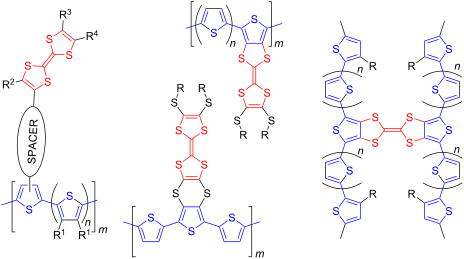
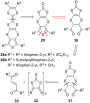
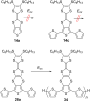
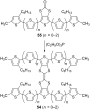
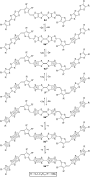
- required for this, 4,6-dibromothieno[3,4-d][1,3]dithiole-2-one (15b), can be efficiently obtained by brominating compound 15a, which in turn is synthesised by mercury(II) acetate assisted transchalcogenation reaction from the corresponding thione 17. Unsubstituted thieno[3,4-d][1,3]dithiole-2-thione (17






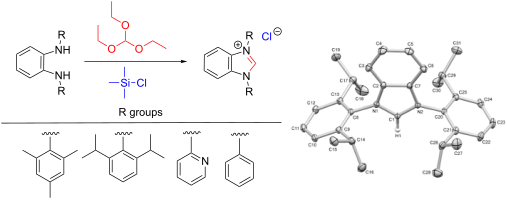
A facile synthetic route to benzimidazolium salts bearing bulky aromatic N-substituents
Beilstein J. Org. Chem. 2015, 11, 1656–1666, doi:10.3762/bjoc.11.182
- } NMR data were recorded on a Varian Gemini-300, a Varian Mercury 200 or Bruker DRX 500 spectrometer using 5 mm diameter NMR tubes. Chemical shifts are expressed in parts per million (ppm). 1H and 13C{1H} NMR spectra were referenced to the residual proton or 13C resonances of the deuterated solvent


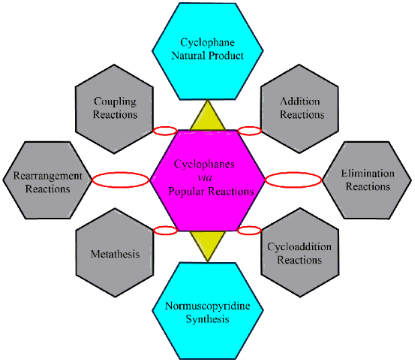
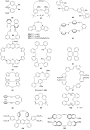
Selected synthetic strategies to cyclophanes
Beilstein J. Org. Chem. 2015, 11, 1274–1331, doi:10.3762/bjoc.11.142






The synthesis of active pharmaceutical ingredients (APIs) using continuous flow chemistry
Beilstein J. Org. Chem. 2015, 11, 1194–1219, doi:10.3762/bjoc.11.134
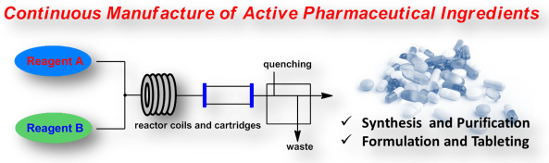
- -polymer tubing wrapped around a cooled medium pressure mercury lamp was used to efficiently generate and react the singlet oxygen in the presence of tetraphenylporphyrin (TPP) as a photosensitizer. Upon exiting the photoreactor, the reaction stream was acidified by combining with a stream of TFA in order


Cathodic hydrodimerization of nitroolefins
Beilstein J. Org. Chem. 2015, 11, 1163–1174, doi:10.3762/bjoc.11.131
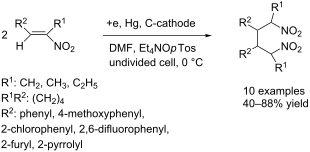
- 85% to 92% yield at a mercury pool cathode and with slightly lower yields at a graphite cathode [5][6][7][8]. The current controlled reduction of alkyl- and aryl-substituted nitroalkenes in acidic medium affords mixtures of ketones and oximes in yields of 39% to 72% [9] and 55% to 91% [10
- the cathode material mercury against the environmentally benign graphite. At a graphite cathode the nitroolefin 1 could be hydrodimerized to the dimer 2. With 60% the yield is lower than in the reduction at the Hg cathode, where 88% of the dimer were obtained. Possibly higher yields can be obtained
- with other graphite varieties or other nontoxic cathode materials. But in principle the mercury cathode can be replaced by a graphite cathode. Structure of the hydrodimers All products show for the nitro group characteristic asymmetrical and symmetrical vibrations at 1530–1560 cm−1 and 1350–1360 cm−1


New tris- and pentakis-fused donors containing extended tetrathiafulvalenes: New positive electrode materials for rechargeable batteries
Beilstein J. Org. Chem. 2015, 11, 1136–1147, doi:10.3762/bjoc.11.128
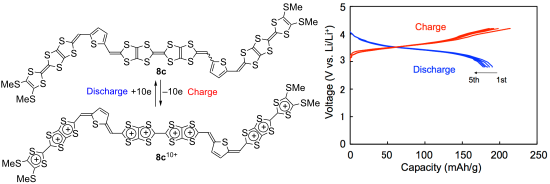
- undesired byproducts. The homo-coupling reaction using 11 might give 12 in a good yield, however, toxic and expensive mercury(II) acetate has to be used for the synthesis of 11. Thus, the cross-coupling reaction is useful for saving 11. The Horner–Wadsworth–Emmons reaction of 12 with 2 equiv of aldehydes

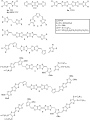


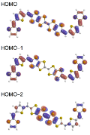
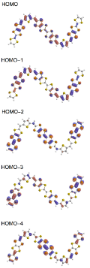
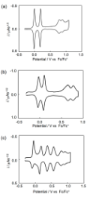



A new and convenient synthetic way to 2-substituted thieno[2,3-b]indoles
Beilstein J. Org. Chem. 2015, 11, 1000–1007, doi:10.3762/bjoc.11.112
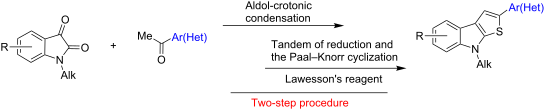
- , 1871, 1909, 1936, 1969, 2332, 2736, 2889, 2936, 2974, 2989, 3075, 3058 cm−1; Anal. calcd for C18H14N2O2S: C, 67.06; H, 4.38; N, 8.69; found: C, 66.98; H, 4.35; N, 8.72. Natural and synthetic derivatives of thieno[2,3-b]indole. Mercury [34] representation of the X-ray crystal structure of 12a. Thermal


Synthesis and characterization of the cyanobenzene-ethylenedithio-TTF donor
Beilstein J. Org. Chem. 2015, 11, 951–956, doi:10.3762/bjoc.11.106
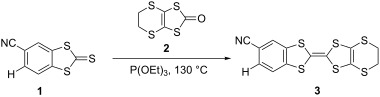
- anisotropic thermal parameters whereas H-atoms were placed in idealised positions and allowed to refine riding on the parent C atom. Molecular graphics were prepared using MERCURY 1.4.2 [29]. General procedure for the synthesis of 3 In freshly destilled triethyl phosphite (10 mL), 2-thioxobenzo[d][1,3


Mechanical stability of bivalent transition metal complexes analyzed by single-molecule force spectroscopy
Beilstein J. Org. Chem. 2015, 11, 817–827, doi:10.3762/bjoc.11.91
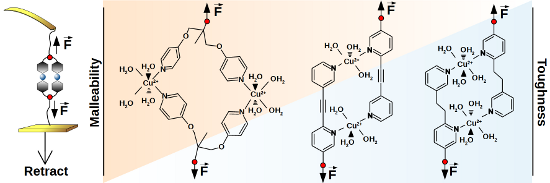
- Si3N4 cantilevers (Olympus Biolever, 60 µm short cantilever: k = 0.03 N/M, 100 µm long cantilever: k = 0.006 N/m, Olympus Corp., Tokyo, Japan) were cleaned by UV/O3 treatment [53] (Penray low-pressure mercury discharge tube, UVP, Upland, CA) and treated as gold supports above. SMF measurements were




Sequence-specific RNA cleavage by PNA conjugates of the metal-free artificial ribonuclease tris(2-aminobenzimidazole)
Beilstein J. Org. Chem. 2015, 11, 493–498, doi:10.3762/bjoc.11.55
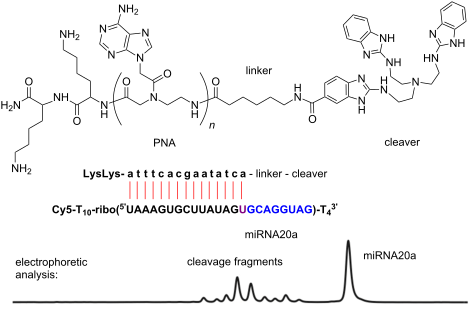
- required an HgO induced cyclization step, a mercury free variant is described herein. Keywords: antisense; fluorescence correlation spectroscopy; guanidine; miRNA 20a; peptide nucleic acids; Introduction Sequence specific artificial ribonucleases are an attractive research target for several reasons. On
- of toxic mercury(II) oxide for the formation of the benzimidazole moieties (Scheme 1) is a disadvantage of this synthesis especially with regard to future biological applications of the final product. Furthermore, conditions for these reactions are rather harsh and the yields may differ considerably
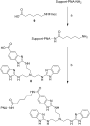
- . Here we report a new and mercury-free synthesis of tris(2-aminobenzimidazole) and its conjugation to PNA oligomers. In addition, the results of cleaving experiments with three different RNA substrates are presented. Results and Discussion Alternative reagents to convert thioureas into guanidines




Bis(vinylenedithio)tetrathiafulvalene analogues of BEDT-TTF
Beilstein J. Org. Chem. 2015, 11, 403–415, doi:10.3762/bjoc.11.46
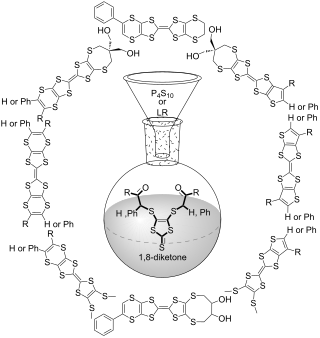
- of the side products 16–19 can be taken as evidence for the proposed reaction mechanism. The thione sulfur atoms of 11a–d and 13a–c were converted into their corresponding oxo forms 26a–d and 27a–c, respectively, using mercury acetate (Scheme 4) [46][53][54]. These were then subjected to cross
- lead to side products during the coupling reaction, performed using triethyl phosphite, and the reaction for conversion of the thione group to a keto group with mercury acetate and acetic acid, they were protected by reaction with methoxyethoxymethylchloride (CH3OCH2CH2OCH2Cl, MEMCl) to obtain 62. The
- which with P4S10 in acidic and basic conditions produced 1,4-dithiin 75 (75%) and thiophene 76 (57%) rings, respectively. They were then converted into their corresponding oxo forms 77 (65%) and 78 (77%), respectively, with mercury acetate and subjected to the coupling reaction with triethyl phosphite


Stereoselective cathodic synthesis of 8-substituted (1R,3R,4S)-menthylamines
Beilstein J. Org. Chem. 2015, 11, 294–301, doi:10.3762/bjoc.11.34
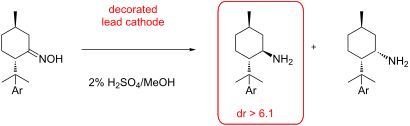
- Discussion Exploratory work Our previous studies revealed that menthone oxime can be electrochemically reduced on either mercury pool or lead cathode (see Scheme 4) [26]. Under optimized reaction conditions, the use of a mercury pool cathode renders compound 3 in 86% yield with a diastereomeric ratio (dr) 3a
- that the reduction of the non-substituted menthone oxime was most effective on mercury or lead as cathodic material [26], we were prompted to study the influence of such cathodes onto yield and stereoselectivity in the conversion of 7a (see Scheme 6). The results clearly indicate that lead represents
- the superior cathode for this application. Compared to mercury, the use of a lead cathode renders significantly higher yields (93% vs 19%). Furthermore, an improved dr of 8:1 in favor of the desired isomer 8a is obtained (compare dr = 6:1 obtained at Hg). Both results clearly demonstrate the positive


Cross-dehydrogenative coupling for the intermolecular C–O bond formation
Beilstein J. Org. Chem. 2015, 11, 92–146, doi:10.3762/bjoc.11.13
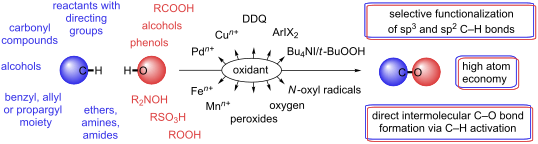
- under irradiation of its alcoholic solutions with a mercury lamp in an oxygen atmosphere; esters were obtained in higher yields in the presence of catalytic amounts of HCl [172]. The formation of primary and secondary alcohol esters was observed after the ozonolysis of a mixture of aldehyde and alcohol









Synthesis and characterization of a new photoinduced switchable β-cyclodextrin dimer
Beilstein J. Org. Chem. 2014, 10, 2874–2885, doi:10.3762/bjoc.10.304
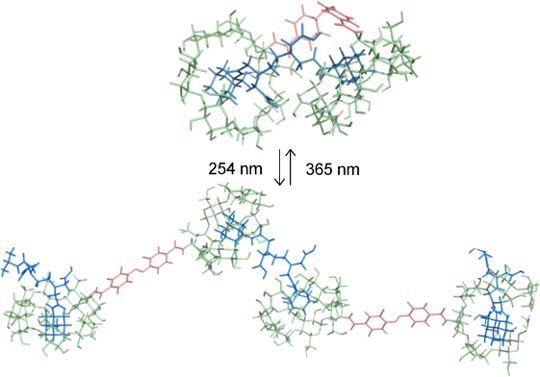
- /ethyl acetate. Ratios are specified in each case in the experimental section. Products were illuminated under UV light (λ = 254 nm) followed by charring with vanillin/H2SO4. UV analyses were performed on a UV–vis Cary VARIAN spectrophotometer coupled with an optic fiber. A 6 Watt mercury lamp was used



Design and synthesis of novel bis-annulated caged polycycles via ring-closing metathesis: pushpakenediol
Beilstein J. Org. Chem. 2014, 10, 2664–2670, doi:10.3762/bjoc.10.280

- carried out by means of Chem Draw 3D and the structure was visualized with the Mercury software (Figure 3). We turned our attention toward the next target, i.e., the symmetrical heptacyclic diol 27, by adopting the ring-rearrangement metathesis (RRM) protocol [42]. To this end, hexacyclic diones 23 [28





