Search results
Search for "phosphate" in Full Text gives 474 result(s) in Beilstein Journal of Organic Chemistry. Showing first 200.
1,2-Naphthoquinone-4-sulfonic acid salts in organic synthesis
Beilstein J. Org. Chem. 2022, 18, 53–69, doi:10.3762/bjoc.18.5
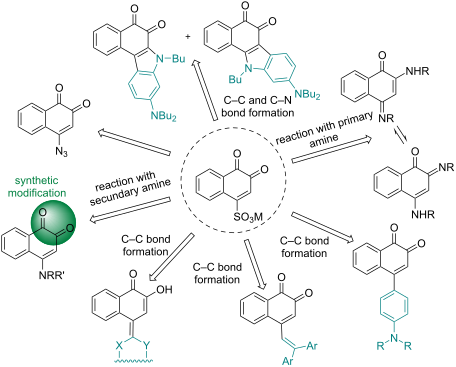
- similar to lapachol, buparvaquone (13) and parvaquone (14), are used to treat animal diseases, such as bovine theileriosis (east coast fever, corridor disease, Zimbabwean theileriosis, and tropical theileriosis) [30][31][32][33]. Buparvaquone (13), phosphate prodrugs, and some formulations were evaluated


Recent advances in the asymmetric phosphoric acid-catalyzed synthesis of axially chiral compounds
Beilstein J. Org. Chem. 2021, 17, 2729–2764, doi:10.3762/bjoc.17.185
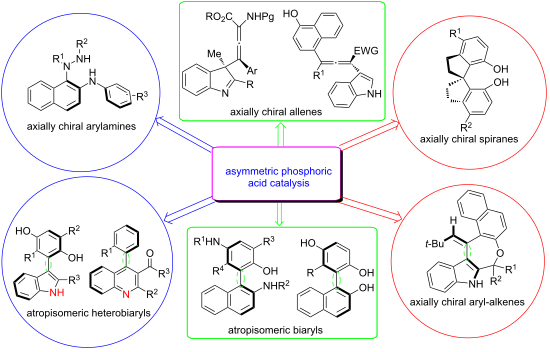
- functional calculations showed that the chiral phosphoric acid proton forms an H-bond with nitrogen atoms of 1 and the phosphate acts as a chiral counterion, resulting in a [3,3]-sigmatropic rearrangement with controlled stereoselectivity [14][41]. In 2017, Tan and co-workers developed an organocatalytic












Synthetic strategies toward 1,3-oxathiolane nucleoside analogues
Beilstein J. Org. Chem. 2021, 17, 2680–2715, doi:10.3762/bjoc.17.182
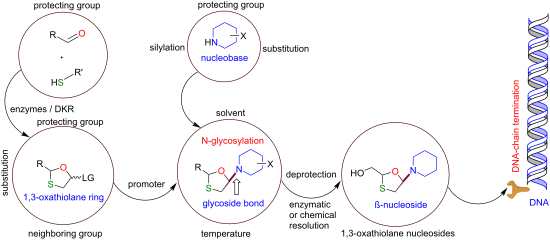
- with natural nucleotides for incorporation into the growing HIV DNA chain. The result if the triphosphate is taken up is the termination of the chain elongation because the drug lacks the 3’-hydroxy group on the deoxyribose ring that is necessary for the sugar–phosphate linking as shown in Figure 2
- THF and phosphate-buffered saline (PBS). The reaction used 64 and 3q as starting materials and was stereocontrolled efficiently, providing an enantiomeric excess of about >99%. The subsequent N-glycosylation further provided enantiopure lamivudine (1). Hu et al. [60] explained that chiral HPLC and








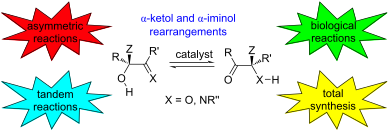
α-Ketol and α-iminol rearrangements in synthetic organic and biosynthetic reactions
Beilstein J. Org. Chem. 2021, 17, 2570–2584, doi:10.3762/bjoc.17.172
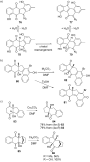
- -xylulose-5-phosphate reductoisomerase (DXR), uses a different mechanism to accomplish the carbon-skeleton rearrangement of its substrate 63 [19]; kinetic isotope effect experiments have excluded an α-ketol rearrangement and instead support a stepwise retro-aldol/aldol sequence for formation of intermediate
- similarity in reaction, 1-deoxy-ᴅ-xylulose-5-phosphate reductoisomerase (DXR) instead uses a retro-aldol/aldol sequence to accomplish its rearrangement of 68 to 69. c) The secondary metabolite aurachin C (71) is oxidized by the FAD-dependent monooxygenase AuaG to epoxide 72, which upon deprotonation by an




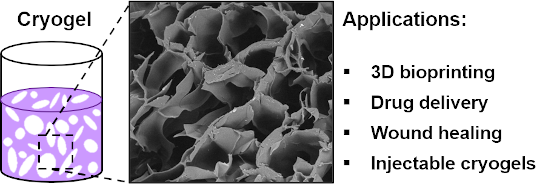
Cryogels: recent applications in 3D-bioprinting, injectable cryogels, drug delivery, and wound healing
Beilstein J. Org. Chem. 2021, 17, 2553–2569, doi:10.3762/bjoc.17.171
- polyamidoamine (PAMAM) dendrimers have been shown to be effective for minimally invasive drug delivery [83]. The reinforced cryogels main function was to provide scaffolding for cell growth and also incorporated the anti-inflammatory corticosteroid drug betamethasone sodium phosphate (BSP) for delivery when
- as a DDS using diclofenac sodium and indomethacin as the drugs. They reported the cumulative release of diclofenac sodium from the monoliths lower than 5% at pH 1.2 and higher than 70% at pH 7.4. In addition, they reported cumulative release 6% of indomethacin within the first hour in phosphate






A novel methodology for the efficient synthesis of 3-monohalooxindoles by acidolysis of 3-phosphate-substituted oxindoles with haloid acids
Beilstein J. Org. Chem. 2021, 17, 2321–2328, doi:10.3762/bjoc.17.150
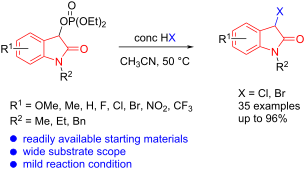
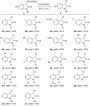
- University, Haikou 571199, Hainan Province, P. R. China 10.3762/bjoc.17.150 Abstract A novel method for the synthesis of 3-monohalooxindoles by acidolysis of isatin-derived 3-phosphate-substituted oxindoles with haloid acids was developed. This synthetic strategy involved the preparation of 3-phosphate
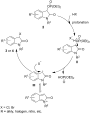
- -substituted oxindole intermediates and SN1 reactions with haloid acids. This new procedure features mild reaction conditions, simple operation, good yield, readily available and inexpensive starting materials, and gram-scalability. Keywords: acidolysis; haloid acids; isatin; 3-monohalooxindole; 3-phosphate
- has a remarkable structural feature: the phosphate moiety is located at the benzylic position as well as at the position α to an amide group, which makes it a good leaving group for the design and development of new reactions. Accordingly, diethyl (2-oxoindolin-3-yl) phosphates 2 have been used




Halides as versatile anions in asymmetric anion-binding organocatalysis
Beilstein J. Org. Chem. 2021, 17, 2270–2286, doi:10.3762/bjoc.17.145
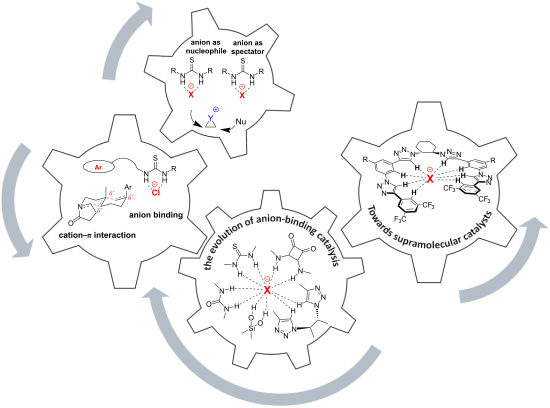
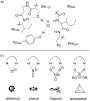
- interactions in the chloride channel of E. coli. and b) examples of chloride, cyanide, nitrate and phosphate anions with their respective topology. a) H-bond vs anion-binding catalysis and b) activation modes in anion-binding catalysis. Role of the counter-anion: a) Anion acting as a spectator and b) anion



Transition-metal-free intramolecular Friedel–Crafts reaction by alkene activation: A method for the synthesis of some novel xanthene derivatives
Beilstein J. Org. Chem. 2021, 17, 2203–2208, doi:10.3762/bjoc.17.142
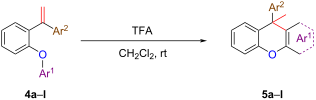
- , iron(III) chloride hexahydrate, trifluoroacetic acid (TFA), N-trifylphosphoramide (NTPA), benzoic acid, diphenyl phosphate (DPP), malonic acid, chloroacetic acid, copper(II) triflate, acetic acid, and p-toluenesulfonic acid (p-TSA) were used as catalysts. TFA gave the best yield of these catalysts with


Progress and challenges in the synthesis of sequence controlled polysaccharides
Beilstein J. Org. Chem. 2021, 17, 1981–2025, doi:10.3762/bjoc.17.129
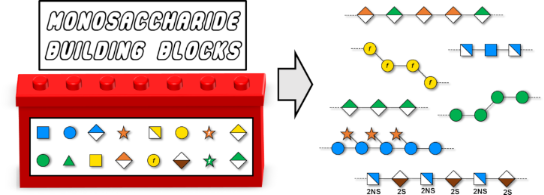
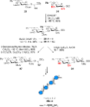
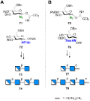
- (LG, e.g., phosphate, fluoride, nucleotide) are polymerized by the enzyme to form the desired polysaccharide (Figure 1A). Several classes of enzymes are available, including hydrolases, phosphorylases, sucrases, glycosyltransferases, and glycosynthases [19][20][21][22]. An excellent overview of the
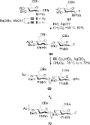
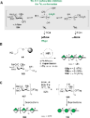
- well as branched β(1–3)-glucans with defined lengths could be prepared by AGA [140][141][142]. The poor nucleophilicity of the C-3 hydroxy group on the glycosyl acceptor required the use of more reactive glycosyl phosphate donors and, in some cases, a double glycosylation cycle [118][143]. Longer
- , enabling the synthesis of a 32mer [272]. The construction of α(1–6)-mannans (up to 10mer) bearing α(1–2)-Man branches was also accomplished using phosphate, N-phenyltrifluoroacetimidate or n-pentenylorthoester donors [273][274]. An approach using a (cationic) ROP method using tricyclic orthoester Man BBs












Chemical approaches to discover the full potential of peptide nucleic acids in biomedical applications
Beilstein J. Org. Chem. 2021, 17, 1641–1688, doi:10.3762/bjoc.17.116
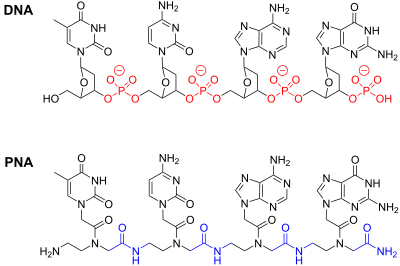
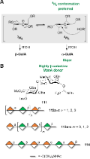
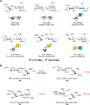
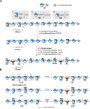
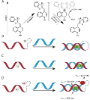
- for innovative chemistry and biology to unlock the full potential of PNA in biomedical applications. Keywords: antisense; chemical modifications; diagnostics; peptide nucleic acid; PNA; Introduction Peptide nucleic acid (PNA) is a DNA mimic where the sugar–phosphate backbone of DNA is replaced with
- similar to A-type DNA and RNA, and allows the O1P oxygen from each DNA phosphate to form a hydrogen bond to the amide proton of each residue of the PNA backbone of the Hoogsteen strand [41]. More recent structural work by Rozners and co-workers confirmed that the PNA–dsRNA triplex had similar structural









Chemical synthesis of C6-tetrazole ᴅ-mannose building blocks and access to a bioisostere of mannuronic acid 1-phosphate
Beilstein J. Org. Chem. 2021, 17, 1527–1532, doi:10.3762/bjoc.17.110
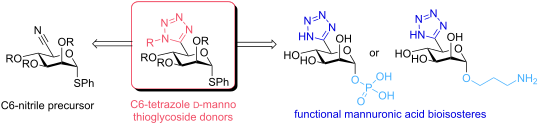
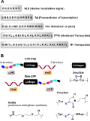
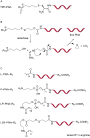
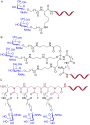
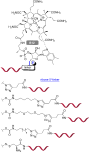
- -protected donors, suitable for iterative oligosaccharide synthesis. The development of these building blocks is showcased to access anomeric 3-aminopropyl- and 1-phosphate free sugars containing this non-native motif. Keywords: alginate; glycosyl 1-phosphate; non-native monosaccharide; tetrazole; uronate
- to explore the synthesis of a ᴅ-manno C6-tetrazole thioglycoside donor and examine subsequent installation of C1 phosphate and anomeric linker groups. Results and Discussion An initial route towards a protected C6-tetrazole building block started from known mannuronic acid thioglycoside 1 (Scheme 1
- overall yield for the route increased from 9 to 21%. To demonstrate capability for anomeric linker attachment and conversion to a biologically relevant analogue of mannuronic acid 1-phosphate, 3-aminopropyl glycoside 20 and glycosyl 1-phosphate 21 were synthesised (Scheme 4). The mixture 18/19 was used


Double-headed nucleosides: Synthesis and applications
Beilstein J. Org. Chem. 2021, 17, 1392–1439, doi:10.3762/bjoc.17.98
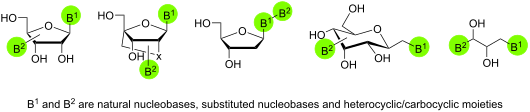
- of deoxyribonucleic acids (DNA) or ribonucleic acids (RNA), which contain either a purine or pyrimidine nucleobase and a furanosyl moiety of pentose sugars, 2′-deoxyribose or ribose [1][2]. Nucleotides are constituted by addition of a phosphate group at the 5′-position of the nucleosides and these
- that resulted in the formation of two novel nucleic acid motifs. The novel nucleic acid motifs could be incorporated either single or multiple times in dsDNA duplexes without altering its stability. It was revealed by molecular dynamics (MD) simulations that the DNA sugar–phosphate backbone



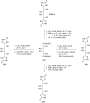


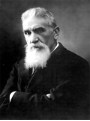
Icilio Guareschi and his amazing “1897 reaction”
Beilstein J. Org. Chem. 2021, 17, 1335–1351, doi:10.3762/bjoc.17.93
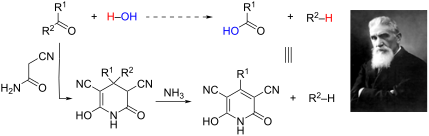
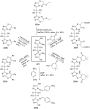
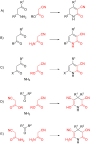
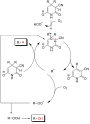
- reactive intermediate capable of transferring a phosphate group to ATP. The Guareschi “1897 reaction” shows a basically different strategy to generate reductive power, associated to aromatization of a prearomatic substrate. The chemiosmotic generation of energy is as universal as the genetic code, and the










N-tert-Butanesulfinyl imines in the asymmetric synthesis of nitrogen-containing heterocycles
Beilstein J. Org. Chem. 2021, 17, 1096–1140, doi:10.3762/bjoc.17.86



Synthesis of 10-O-aryl-substituted berberine derivatives by Chan–Evans–Lam coupling and investigation of their DNA-binding properties
Beilstein J. Org. Chem. 2021, 17, 991–1000, doi:10.3762/bjoc.17.81
- GmbH (Ulm, Germany). Oligonucleotides were dissolved in K-phosphate buffer, and the solution was heated to 95 °C for 5 min and then cooled slowly to room temperature within 4 h. K-phosphate buffer: 25 mM K2HPO4, 60 mM KCl; adjusted with 50 mM KH2PO4, 60 mM KCl to pH 7.0; BPE (biphosphate EDTA) buffer
- : Plots of the relative fluorescence intensity versus the temperature of the solution. Photometric titration of 5a (A) and 5d (B) (cLigand = 20 μM) with ct DNA (1) in BPE buffer (cNa+ = 16 mM, pH 7.0, with 5% v/v DMSO) and with 22AG (2) in K-phosphate buffer (cK+ = 110 mM, pH 7.0, with 5% v/v DMSO). The
- arrows indicate the changes of the absorption bands upon addition of DNA. Inset: Plot of the ligand absorption versus cDNA (in base pairs). Fluorimetric titration of 5a (A) and 5d (B, cLigand = 20 μM) with ct DNA (1) in BPE buffer (cNa+ = 16 mM, pH 7.0, with 5% v/v DMSO) and with 22AG (2) in K-phosphate


Stereoselective synthesis and transformation of pinane-based 2-amino-1,3-diols
Beilstein J. Org. Chem. 2021, 17, 983–990, doi:10.3762/bjoc.17.80
- apoptosis [1][2][3][4][5][6][7]. Due to its involvement in a wide range of cellular processes, significant efforts have been made in the last two decades targeting sphingosine analogues signalling as a therapeutic strategy. For instance, FTY720-P (3), the phosphate of FTY720 (2, fingolimod), proved to be a
- very good agonist for the S1P1 receptor (Figure 1). Sphingosine 1-phosphate (S1P, 4), in turn, performed critical regulator functions in many physiological and pathological treatments, such as Alzheimer’s disease [8][9], cancer [10][11][12][13], multiple sclerosis [14], and inflammation [15]. Due to


Beyond ribose and phosphate: Selected nucleic acid modifications for structure–function investigations and therapeutic applications
Beilstein J. Org. Chem. 2021, 17, 908–931, doi:10.3762/bjoc.17.76
- oligonucleotides that have been explored for gene silencing. Keywords: antisense; chemically modified oligonucleotides; crystallography; siRNA; structure; Introduction The natural nucleic acids sugar-phosphate backbone comes in two flavors, 2'-deoxyribose in DNA and ribose in RNA. However, this relative
- phosphorothioate Rp-stereoisomer (Rp-PS, i.e., phosphate with one of the non-bridging oxygens replaced by sulfur) in bacterial genomes, where it may serve a protective role against nucleases [4] and its loss results in genomic instability [5]. There are over a hundred known base modifications in RNA and the Rp-PS
- therapeutic tool [15]. The chemical make-up of RNA, i.e., the ribose-phosphate backbone, has inspired countless strategies to chemically modify either the sugar [12][41][42][43][44], or the phosphate (e.g., amide-RNA [45]), or both [46][47]. In addition, the ribose has been replaced with alternative sugar




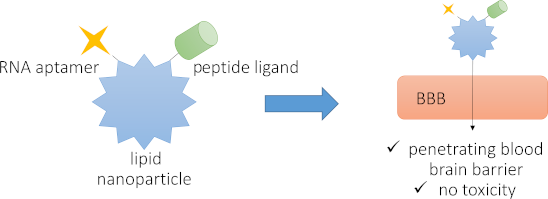
Enhanced target cell specificity and uptake of lipid nanoparticles using RNA aptamers and peptides
Beilstein J. Org. Chem. 2021, 17, 891–907, doi:10.3762/bjoc.17.75
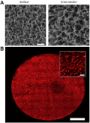
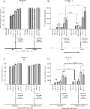
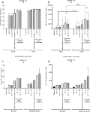
- (phosphate-buffered saline, PBS) conditions (Figure 4A). Additionally, we confirmed LNP uptake by the monocyte-derived macrophages (MDMs) using fluorescent microscopy (Figure 4B). We found that all LNPs containing the Cy5 oligonucleotide were observable under the microscope (Figure 4B) and that all



Synthesis of bis(aryloxy)fluoromethanes using a heterodihalocarbene strategy
Beilstein J. Org. Chem. 2021, 17, 813–818, doi:10.3762/bjoc.17.70

- strategy, we were delighted to observe that the desired compound, 4, was produced as the major product, in 39% yield (72% yield based on recovered starting material) when 6 was reacted with dibromofluoromethane in the presence of excess potassium phosphate in acetonitrile (Scheme 4). Smaller amounts of the


Synthetic reactions driven by electron-donor–acceptor (EDA) complexes
Beilstein J. Org. Chem. 2021, 17, 771–799, doi:10.3762/bjoc.17.67

- [32] found a bifunctional group reaction of perfluoroalkylation and β-alkenylation by a perfluoroalkyl radical. Perfluoroalkylation product 93 was synthesized by utilizing (E)-3-methyl-1-phenylhept-1,6-dien-3-ol (92) and perfluorobutyl iodide (28) as substrates and potassium phosphate and DABCO as


DNA with zwitterionic and negatively charged phosphate modifications: Formation of DNA triplexes, duplexes and cell uptake studies
Beilstein J. Org. Chem. 2021, 17, 749–761, doi:10.3762/bjoc.17.65
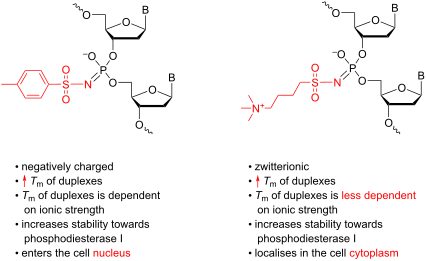
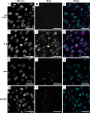
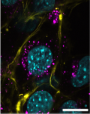
- Yongdong Su Maitsetseg Bayarjargal Tracy K. Hale Vyacheslav V. Filichev School of Fundamental Sciences, Massey University, Private Bag 11-222, 4442 Palmerston North, New Zealand Maurice Wilkins Centre for Molecular Biodiscovery, Auckland 1142, New Zealand 10.3762/bjoc.17.65 Abstract Two phosphate
- phosphate backbone of DNA and RNA, especially charge neutral modifications, have gained attention in recent years because such modifications not only improve the nuclease resistance of ONs but also enhance their affinity towards complementary DNA/RNA/dsDNA and improve cell uptake. The lack of a negatively
- reversed [32]. As a charge-neutral phosphate mimic, the methylphosphonate linkage (PMe) has been introduced into the DNA backbone to improve stability of ONs towards enzymic digestion as well as DNA duplex and triplex binding affinity [33]. However, the poor aqueous solubility [34], reduced binding


Synthesis and properties of oligonucleotides modified with an N-methylguanidine-bridged nucleic acid (GuNA[Me]) bearing adenine, guanine, or 5-methylcytosine nucleobases
Beilstein J. Org. Chem. 2021, 17, 622–629, doi:10.3762/bjoc.17.54
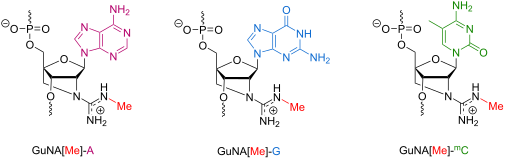
- a Tm analysis accessory. Equimolecular amounts of the target ssRNAs or ssDNAs and the oligonucleotides were dissolved in 10 mM sodium phosphate buffer (pH 7.2) containing 100 mM NaCl to achieve a final strand concentration of 4 µM. The samples were annealed by heating at 95 °C followed by slow
- , and path length in centimeters, respectively. Structures of 2',4'-BNA/LNA analogs. The CD spectra of the ON7/ssRNA, ON2/ssRNA, ON7/ssDNA, and ON2/ssDNA duplexes. Conditions: 10 mM sodium phosphate buffer (pH 7.2), 100 mM NaCl, 4 µM each oligonucleotide. Sequences of the complementary ssRNA and ssDNA
Breakdown of 3-(allylsulfonio)propanoates in bacteria from the Roseobacter group yields garlic oil constituents
Beilstein J. Org. Chem. 2021, 17, 569–580, doi:10.3762/bjoc.17.51
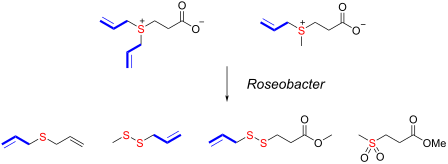
- -volatile precursor that is stored in garlic and related plants and only degraded into sulfur volatiles upon wounding by the pyridoxal phosphate (PLP) dependent alliinase (Scheme 1B) [7]. This initial enzyme-catalyzed reaction yields one equivalent of allylsulfenic acid (10), pyruvic acid (11), and ammonia




Synthesis of (Z)-3-[amino(phenyl)methylidene]-1,3-dihydro-2H-indol-2-ones using an Eschenmoser coupling reaction
Beilstein J. Org. Chem. 2021, 17, 527–539, doi:10.3762/bjoc.17.47

- with thiobenzamide (2a) did not proceed at all and only the formation of isoindigo 9a was observed. However, a very easy synthesis of diethyl (2-oxoindolin-3-yl)phosphate (1g) from isatin has recently appeared [42] which encouraged us to submit this reagent to the Eschenmoser reaction. Unfortunately
- , this reagent reacts with the parent thiobenzamide (2a) very slowly even after heating to 80 °C. A maximum (chromatographic) yield 38% of 5aa was achieved after 32 h when a double molar excess of phosphate 1g was used. A further increase in the excess of 1g had no positive effect on the yield of 5aa
- . This result is in accordance with the relatively low nucleofugality of diethyl phosphate which is roughly quantified by the pKa = 1.39 of its conjugated acid [43]. We have also examined an addition of 20% of tetrabutylammonium bromide as a nucleophilic catalyst which could transform the phosphate 1g in


Synthetic strategies of phosphonodepsipeptides
Beilstein J. Org. Chem. 2021, 17, 461–484, doi:10.3762/bjoc.17.41
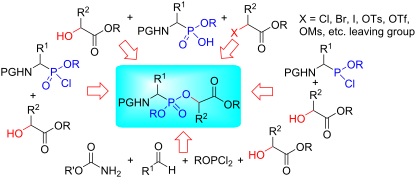
- are derivatives of the new antimalarial drug fosmidomycin and inhibited the 1-deoxy-ᴅ-xylulose 5-phosphate reductoisomerase. The phosphonodepsipeptides 194 were synthesized as prodrugs with an increased activity after oral administration due to a chemical modification of the phosphonate moiety. For