Search results
Search for "photocatalysts" in Full Text gives 116 result(s) in Beilstein Journal of Organic Chemistry.
Photocatalytic nucleophilic addition of alcohols to styrenes in Markovnikov and anti-Markovnikov orientation
Beilstein J. Org. Chem. 2015, 11, 568–575, doi:10.3762/bjoc.11.62
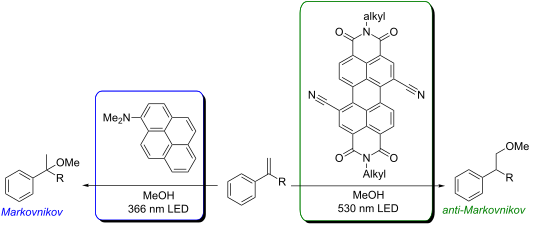
- different electron density. Representative mesoflow reactor experiments allowed to significantly shorten the irradiation times and to use sunlight as “green” light source. Keywords: electron transfer; perylene bisimide; photocatalysis; photochemistry; pyrene; Introduction Photocatalysts are organic or
- light sources, the research field of photoredox catalysis has tremendously grown over the past decade [1][2][3][4][5][6][7]. Transition metal complexes, mainly [Ru(bpy)3]2+ [7], were most often used as photocatalysts, whereas the potential of organic compounds and dyes has not yet been fully exploited


Eosin Y-catalyzed visible-light-mediated aerobic oxidative cyclization of N,N-dimethylanilines with maleimides
Beilstein J. Org. Chem. 2015, 11, 425–430, doi:10.3762/bjoc.11.48
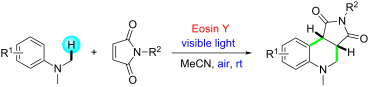
- capable of catalyzing a broad range of useful reactions. A variety of new methods have been developed to accomplish known and new chemical transformations by means of these transition metal-based photocatalysts so far. However, the ruthenium and iridium catalysts usually are high-cost, potentially toxic
- and not sustainable. Similar to the redox properties of these organometallic complexes, some metal-free organic dyes such as Eosin Y, Rose Bengal, Fluorescein, and Methylene Blue, have shown superiority of their applications as photocatalysts, which are easy to handle, environmentally friendly
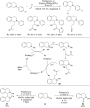
- light (two 9 W blue LEDs) at room temperature. Gratifyingly, the desired product tetrahydroquinoline 3a was obtained in 82% yield after 18 h (Table 1, entry 1). We screened a number of metal-free organic dyes for photocatalysts. Of the dyes screened, Eosin Y showed the highest efficiency (Table 1, entry



An improved procedure for the preparation of Ru(bpz)3(PF6)2 via a high-yielding synthesis of 2,2’-bipyrazine
Beilstein J. Org. Chem. 2015, 11, 61–65, doi:10.3762/bjoc.11.9
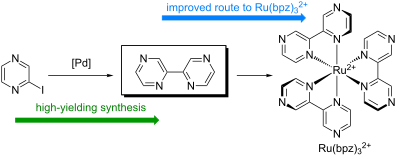
- -absorbing photocatalysts for synthetic applications. Among the most attractive features of this approach is the availability of many known complexes with well-characterized photophysical and electrochemical properties. In particular, Ru(bpz)32+ is a powerful photooxidant that has proven to be uniquely
- )32+) [10] has emerged as one of the most useful transition metal photocatalysts for oxidatively induced organic transformations (Figure 1). Due to the electron-deficient nature of its bipyrazyl ligands, the excited state redox potential of 2 is quite positive (+1.45 V vs SCE) [11]. Consequently, it


One-pot functionalisation of N-substituted tetrahydroisoquinolines by photooxidation and tunable organometallic trapping of iminium intermediates
Beilstein J. Org. Chem. 2014, 10, 2981–2988, doi:10.3762/bjoc.10.316

- ). Alternatively, the α-amino radicals can be trapped by electrophiles [7][8][9]. Oxidative C–H functionalisation of THIQs is reported using Cu(I) [10][11], Fe(III) [12], V(IV) [13] and I2 [14][15] catalysts, but also with heterogeneous [16], metal-organic [17][18] and organic [19][20] photocatalysts. Such
- tertiary amine substrates and unstabilised carbon nucleophiles. Recently, visible-light photoredox catalysis has gained interest as a technique for oxidative functionalisation [34][35]. An important feature of photoredox catalysis is that different photocatalysts have different redox potentials upon


An integrated photocatalytic/enzymatic system for the reduction of CO2 to methanol in bioglycerol–water
Beilstein J. Org. Chem. 2014, 10, 2556–2565, doi:10.3762/bjoc.10.267
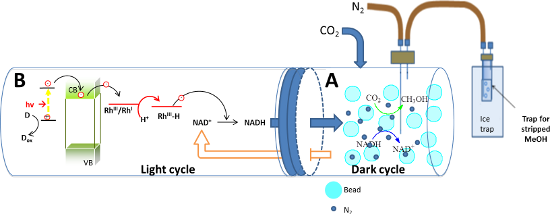
- . For the approach discussed here, the production of one mol of CH3OH from CO2 requires three enzymes and the consumption of three mol of NADH. Regeneration of the cofactor NADH from NAD+ was achieved by using visible-light-active, heterogeneous, TiO2-based photocatalysts. The efficiency of the
- H2O splitting have received significant interest due to their potential environmental and resource preservation benefits [12][13]. Interestingly, the oxidized forms of some common waste organics may find practical application. The use of heterogeneous photocatalysts in the process of NADH regeneration
- ]. Additionally, the properties of other photocatalysts (Cu2O, InVO4, and TiO2, which are less active than the Cr-modified TiO2 photocatalysts), which were modified with the organic compound “rutin”, are briefly presented. Figure 2 shows the transformed diffuse reflectance spectra of the photocatalysts converted


Visible light photoredox-catalyzed deoxygenation of alcohols
Beilstein J. Org. Chem. 2014, 10, 2157–2165, doi:10.3762/bjoc.10.223
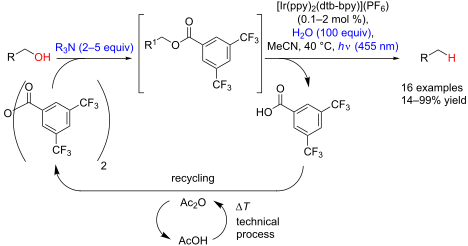
- substitution pattern of benzoates we intended to shift the electrochemical reduction potentials of the substances into a region that could be accessed by common visible light photocatalysts. The substituents should be as inert as possible in order not to interfere with the photochemical reaction itself
- ; dtb-bpy = 4,4′-di-tert-butyl-2,2′-bipyridine] as photocatalysts, Hantzsch ester (diethyl 1,4-dihydro-2,6-dimethyl-3,5-pyridinedicarboxylate) as hydrogen donor, and iPr2NEt as sacrificial electron donor in DMF (Scheme 3). Light generated from a high power LED was channeled into the reaction solution in
- monobenzoate 6e. Reduction of benzoate moiety in case of non-benzylic alcohols. Optimized conditions for larger scale applications. Comparison of different esters and photocatalysts in deoxygenation reaction. Solvent/temperature dependence and control experiments of deoxygenation reaction with 3,5-bis


Visible-light photoredox catalyzed synthesis of pyrroloisoquinolines via organocatalytic oxidation/[3 + 2] cycloaddition/oxidative aromatization reaction cascade with Rose Bengal
Beilstein J. Org. Chem. 2014, 10, 1233–1238, doi:10.3762/bjoc.10.122
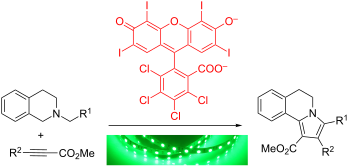
- recently Zhao reported the same reaction using C60-Bodipy hybrids [30] and porous material immobilized iodo-Bodipy [31] as photocatalysts, obtaining in both cases good yields for different pyrrolo[2,1-a]isoquinolines. Finally, Lu presented in 2013 a dirhodium complex for the synthesis of these compounds


Organic synthesis using photoredox catalysis
Beilstein J. Org. Chem. 2014, 10, 1097–1098, doi:10.3762/bjoc.10.107
- synthesis, the principles of photoredox chemistry serve as guidelines, i.e., photoinduced electron transfer (PET) kinetics and thermodynamics as expressed in the Rehm–Weller and Marcus equations. For catalytic versions, the photoinduced redox processes require efficient and robust photocatalysts, and in
On the mechanism of photocatalytic reactions with eosin Y
Beilstein J. Org. Chem. 2014, 10, 981–989, doi:10.3762/bjoc.10.97
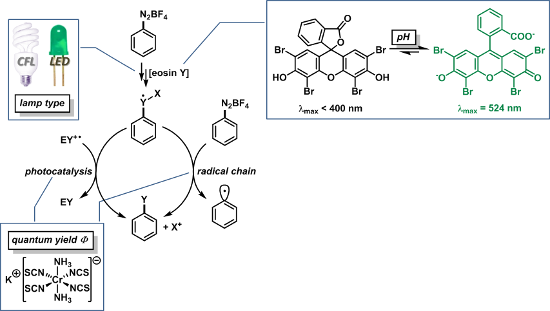
- photocatalysts [3][4][5][6][7][8], whereas much less attention has been directed at eosin Y-catalyzed reactions. The reductive quenching pathway of eosin Y, which operates in the photooxidation of isoquinolines [9], has been studied in a single report [22]. To the best of our knowledge, related data have not
- -driven reactions that lie beyond the focus of this study. Eosin Y (and many other organic photocatalysts) undergo rapid acid–base equilibria which significantly alter the photophysical properties. It is therefore of pivotal importance to ascertain the actual nature of the employed dye under the reaction


Visible light mediated intermolecular [3 + 2] annulation of cyclopropylanilines with alkynes
Beilstein J. Org. Chem. 2014, 10, 975–980, doi:10.3762/bjoc.10.96
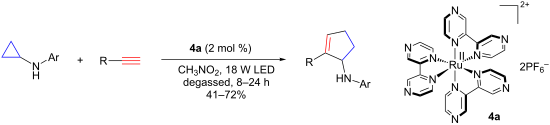
- compounds [21][22][23][24][25][26]. Amines have been used as an electron donor to reduce the excited state of photocatalysts, while they are oxidized to amine radical cations. Our group and others have taken advantage of this facile redox process and developed a number of synthetic methods that harness the


Metal and metal-free photocatalysts: mechanistic approach and application as photoinitiators of photopolymerization
Beilstein J. Org. Chem. 2014, 10, 863–876, doi:10.3762/bjoc.10.83
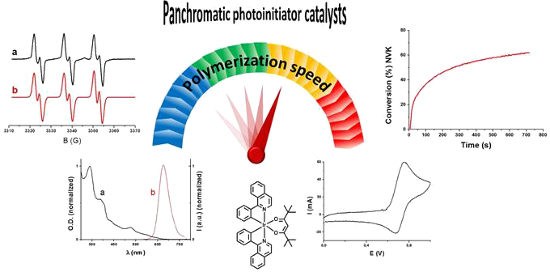
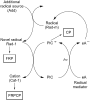
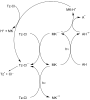
- formerly: University of Haute Alsace/ENSCMu, 3 rue Alfred Werner, 68093 Mulhouse Cedex, France 10.3762/bjoc.10.83 Abstract In the present paper, the photoredox catalysis is presented as a unique approach in the field of photoinitiators of polymerization. The principal photocatalysts already reported as
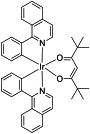
- well as the typical oxidation and reduction agents used in both reductive or oxidative cycles are gathered. The chemical mechanisms associated with various systems are also given. As compared to classical iridium-based photocatalysts which are mainly active upon blue light irradiation, a new






The chemistry of amine radical cations produced by visible light photoredox catalysis
Beilstein J. Org. Chem. 2013, 9, 1977–2001, doi:10.3762/bjoc.9.234
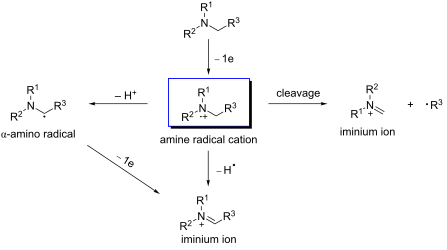
- ). Therefore, a photocatalyst is often required to initialize electron-transfer reactions with amines. Some of the frequently used photocatalysts include ruthenium [24][25][26] and iridium [27][28] polypyridyl complexes as well as organic dyes [29][30] that are absorbed in the visible-light region. They all




New core-pyrene π structure organophotocatalysts usable as highly efficient photoinitiators
Beilstein J. Org. Chem. 2013, 9, 877–890, doi:10.3762/bjoc.9.101
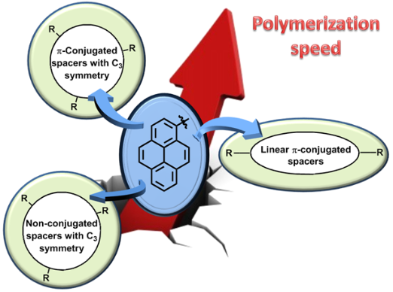
- photocatalysts. Successful results in terms of rates of polymerization and final conversions were obtained. The strong MO coupling between the six different cores and the pyrene moiety was studied by DFT calculations. The different chemical intermediates are characterized by ESR and laser flash photolysis
- ; photocatalysts; photoinitiators; radical photopolymerization; Introduction Free radical sources are encountered in various areas such as organic chemistry, biochemistry and polymer chemistry. In the field of polymer photochemistry applied to photopolymerization reactions, they are referred to as photoinitiators


Flow photochemistry: Old light through new windows
Beilstein J. Org. Chem. 2012, 8, 2025–2052, doi:10.3762/bjoc.8.229
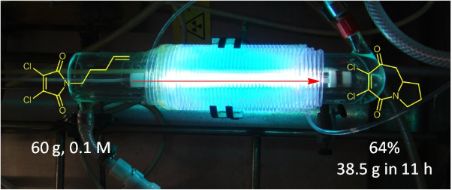
- been shown to be unsuccessful under batch conditions. Nevertheless, the low flow rates and low concentrations involved limited output to 2.4 µmol/h, leaving significant questions over its synthetic utility [48][49][50]. Other redox chemistry to be performed by using titanium dioxide photocatalysts


Microphotochemistry: 4,4'-Dimethoxybenzophenone mediated photodecarboxylation reactions involving phthalimides
Beilstein J. Org. Chem. 2011, 7, 1055–1063, doi:10.3762/bjoc.7.121
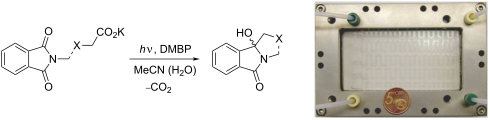
- light, its removal from the product remains challenging. Compared to their acetone-sensitized counterparts [27], however, selectivities and yields were reduced. We are therefore currently investigating water soluble or solid-supported photocatalysts that absorb in the UVA region. The results from this


Synthesis of rigidified flavin–guanidinium ion conjugates and investigation of their photocatalytic properties
Beilstein J. Org. Chem. 2009, 5, No. 26, doi:10.3762/bjoc.5.26

- bonding site for oxoanions or carbonyl groups [45][46][47][48][49]. The structure of the new flavins was determined in solid state and in solution and their photocatalytic properties were tested. Results and Discussion Synthesis The synthesis of the potential photocatalysts 1 and 2, consisting of the
- bonds [54][55][56][57][58] and in solution the flavin chromophore is expected to rotate freely around the C–C single bonds of the ethane linker. Photocatalytic reactions Compounds 1 and 2 were tested as photocatalysts in three different reactions and their performance was compared to tetraacetyl
- effectively transferred in 1 and 2 to the relative flavin–guanidinium ion orientation, which is due to the flexible ethane linker between imide and flavin. Derivatives with a more constrained conformation of the flavin chromophore and the substrate binding sites may lead to chemical photocatalysts with better