


Search results
Search for "supramolecular chemistry" in Full Text gives 229 result(s) in Beilstein Journal of Organic Chemistry. Showing first 200.
Coordination-driven self-assembly of discrete Ru6–Pt6 prismatic cages
Beilstein J. Org. Chem. 2018, 14, 2242–2249, doi:10.3762/bjoc.14.199
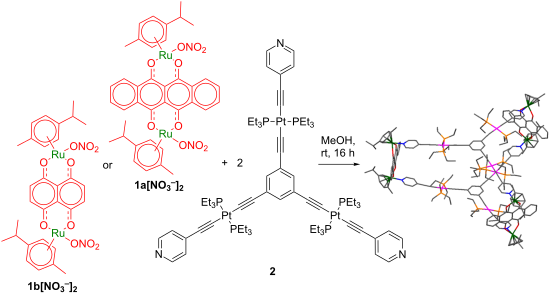
- supramolecular chemistry leading to the formation of a single major product. Keywords: arene–ruthenium(II); heterometallic cages; platinum metalloligand; self-assembly; supramolecular architectures; Introduction Coordination-driven self-assembly of discrete architectures has evolved as a unique protocol to
- –ruthenium(II) acceptor clips/building blocks have been extensively utilized in supramolecular chemistry because of their rigid directionality toward electron-rich donors due to their restricted coordination sites as a result of the fixed position of the p-cymene moiety [24][93][98][99][100][101][102][103


Dynamic light scattering studies of the effects of salts on the diffusivity of cationic and anionic cavitands
Beilstein J. Org. Chem. 2018, 14, 2212–2219, doi:10.3762/bjoc.14.195
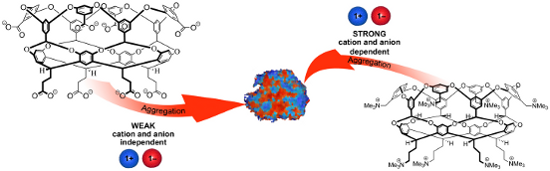
- light scattering; Hofmeister effect; ion–ion interactions; water; Introduction Although all life on planet Earth depends on aqueous solutions, our understanding of aqueous supramolecular chemistry is limited. As a result, as Smith has eloquently pointed out [1], the effects of buffers and salts on


Tetrathiafulvalene – a redox-switchable building block to control motion in mechanically interlocked molecules
Beilstein J. Org. Chem. 2018, 14, 2163–2185, doi:10.3762/bjoc.14.190
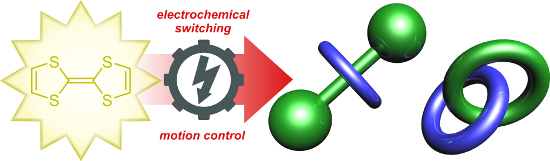
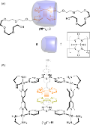
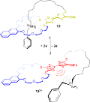
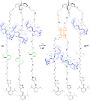
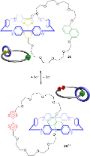
- ; supramolecular chemistry; tetrathiafulvalene; Introduction Undoubtedly, the exploration of nature’s molecular machines in the last century led to a paradigm change of how we think about working and organization processes on the molecular level [1][2][3]. Inspired by the way how energy and concentration
- supramolecular chemistry [28] and for the construction of MIMs [29], the good π-donor properties of TTF are frequently used to template donor–acceptor complexes with π-electron deficient macrocycles. If TTF undergoes oxidation, the π-donating effect decreases, whereas the TTF2+ dication can be considered as a π











Evaluation of dispersion type metal···π arene interaction in arylbismuth compounds – an experimental and theoretical study
Beilstein J. Org. Chem. 2018, 14, 2125–2145, doi:10.3762/bjoc.14.187
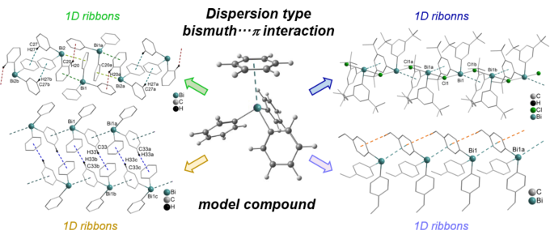
- applications in the field of supramolecular chemistry [10][11][12] and pharmacology are of interest [13][14][15]. Lately, several studies regarding the metal···π interactions in organometallic compounds of antimony and bismuth [16][17][18][19] have been reported including intramolecular [20][21][22] and
- interaction as one of the emerging intermolecular interactions that are of particular interest to coordination chemists with regard to supramolecular chemistry [12]. However, most reports on main group metal···π interactions are based on the description of the single crystal structures and lack a profound





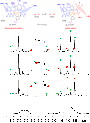
Calix[6]arene-based atropoisomeric pseudo[2]rotaxanes
Beilstein J. Org. Chem. 2018, 14, 2112–2124, doi:10.3762/bjoc.14.186
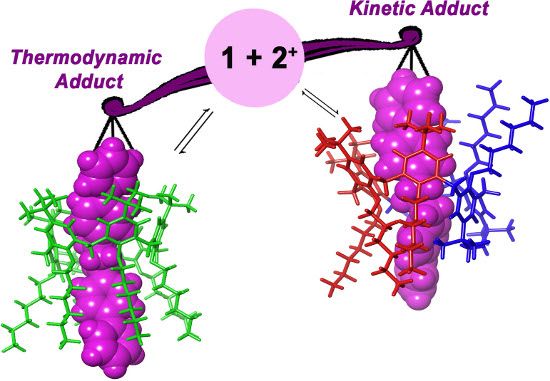
- bis(benzylalkylammonium) axle [19], where the stereoselective formation of the pseudo[3]rotaxane with endo-alkyl orientation VIII was observed [19]. Calixarene macrocycles [22] have found numerous applications in several areas of supramolecular chemistry, such as (bio)molecular recognition [23] and




![[Graphic 2]](/bjoc/content/inline/1860-5397-14-186-i3.svg?max-width=637&scale=1.18182) 1cone and 2+
1cone and 2+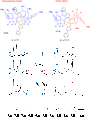


A switchable [2]rotaxane with two active alkenyl groups
Beilstein J. Org. Chem. 2018, 14, 2074–2081, doi:10.3762/bjoc.14.181
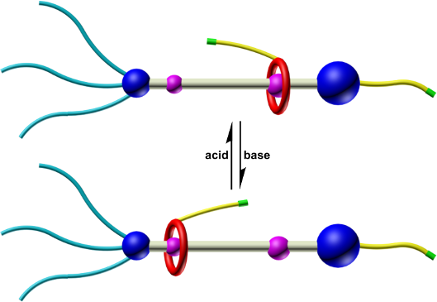
- polymers. Keywords: alkenyl bond; functional crown ether; stimuli-responsiveness; switchable rotaxane; Introduction Along with the development of supramolecular chemistry, much attention has been paid to the design and synthesis of novel and complicated mechanical interlocked molecules (MIMs) [1][2][3][4


Synthesis and supramolecular self-assembly of glutamic acid-based squaramides
Beilstein J. Org. Chem. 2018, 14, 2065–2073, doi:10.3762/bjoc.14.180
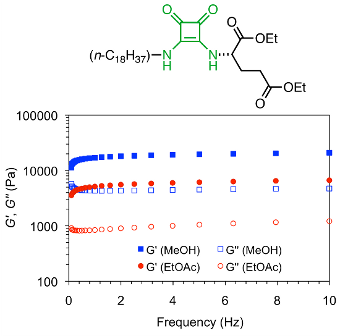
- crystal engineering [13][14][15][16][17]. Despite their isosteric relationship with ureas, which have become key synthons in supramolecular chemistry [18][19], there are only a few reports on the formation of self-assembled supramolecular gels using squaramide derivatives [20][21][22][23]. Along this line


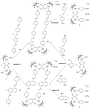
Coordination-driven self-assembly vs dynamic covalent chemistry: versatile methods for the synthesis of molecular metallarectangles
Beilstein J. Org. Chem. 2018, 14, 2027–2034, doi:10.3762/bjoc.14.178
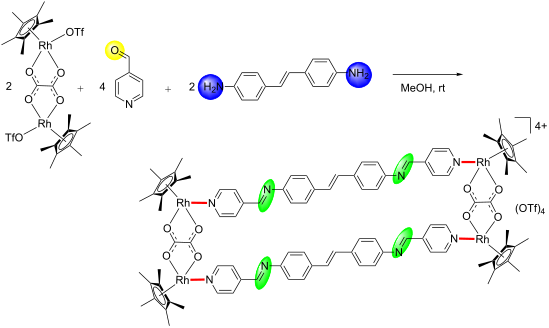
- self-assembly; dynamic covalent chemistry; half-sandwich rhodium complex; metallarectangles; one-pot reaction; supramolecular chemistry; Introduction Over the past two decades, supramolecular structures with organometallic half-sandwich fragments have attracted much attention, including



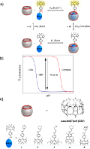
Rational design of boron-dipyrromethene (BODIPY) reporter dyes for cucurbit[7]uril
Beilstein J. Org. Chem. 2018, 14, 1961–1971, doi:10.3762/bjoc.14.171
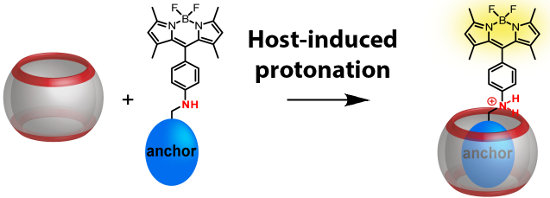
- transfer; supramolecular chemistry; Introduction Cucurbit[n]urils (CBn, n = 5–8, 10, and 14) are a class of macrocyclic host molecules which are water soluble, nontoxic, and are able to bind a large variety of neutral and cationic guests in their inner cavity with high affinity [1][2][3][4]. This unique
- materials science, but its use in supramolecular chemistry is so far very rare [60][61][62][63][64]. It can be applied to investigate translational and rotational diffusion of supramolecules as well as exchange kinetics. To demonstrate the compatibility of the new BODIPY dyes with FCS, we have determined




Synthesis and characterization of π–extended “earring” subporphyrins
Beilstein J. Org. Chem. 2018, 14, 1956–1960, doi:10.3762/bjoc.14.170
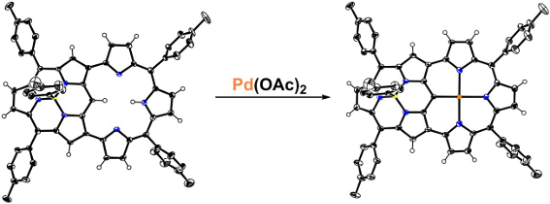
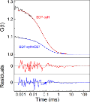
- 3Pd is further red-shifted and more intense. Keywords: aromaticity; earring subporphyrin; π-extended; supramolecular chemistry; Findings Since its first synthesis in 2006 [1][2], subporphyrin, the lowest homolog of porphyrins, has received considerable attention [3][4][5][6][7][8] due to its 14π


Recent advances in materials for organic light emitting diodes
Beilstein J. Org. Chem. 2018, 14, 1944–1945, doi:10.3762/bjoc.14.168
- obtained his Ph.D. from McGill University in 2003. He then completed two postdoctoral fellowships, one in supramolecular chemistry at the Organic Chemistry Institute, University of Zurich and the other in inorganic materials chemistry at Princeton University. After beginning his career in Canada, he moved
Strong binding and fluorescence sensing of bisphosphonates by guanidinium-modified calix[5]arene
Beilstein J. Org. Chem. 2018, 14, 1840–1845, doi:10.3762/bjoc.14.157
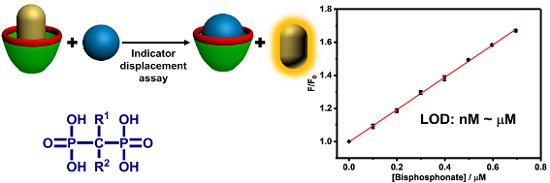
- in view of low cost, ease of use and high sensitivity of optical sensing modalities, but remains a challenge since BPs are considered as unlabeled analytes. With the development of the host–guest concept in supramolecular chemistry, the indicator displacement assay (IDA), pioneered by Prof. Anslyn


Synthesis of diamido-bridged bis-pillar[5]arenes and tris-pillar[5]arenes for construction of unique [1]rotaxanes and bis-[1]rotaxanes
Beilstein J. Org. Chem. 2018, 14, 1660–1667, doi:10.3762/bjoc.14.142

- mechanically interlocked molecules, but also developed the potential applications of pillar[5]arene in supramolecular chemistry. The design and construction of diverse mechanically interlocked molecules are underway in our laboratory. single crystal structure of pillar[5]arene 2a. Single crystal structure of


A conformationally adaptive macrocycle: conformational complexity and host–guest chemistry of zorb[4]arene
Beilstein J. Org. Chem. 2018, 14, 1570–1577, doi:10.3762/bjoc.14.134
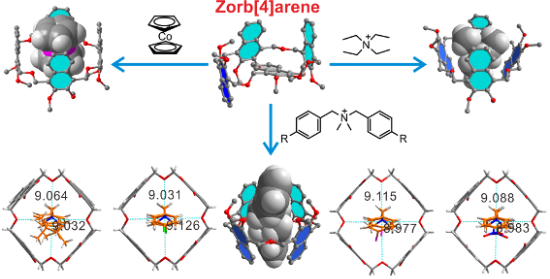
- binding behavior of ZB4 and lays the basis for the construction of stimuli-responsive materials with ZB4 as a major component. Keywords: conformations; host–guest chemistry; macrocycles; supramolecular chemistry; zorb[4]arene; Introduction Macrocyclic receptors are the principal workhorses used in
- supramolecular chemistry [1]. A myriad of synthetic macrocycles have sprouted during the past decade, greatly enriching the arsenal of supramolecular chemists [2][3][4][5][6][7][8][9][10][11]. The majority of artificial macrocycles are featured with rigid backbones as it is widely accepted that preorganization


Hyper-reticulated calixarene polymers: a new example of entirely synthetic nanosponge materials
Beilstein J. Org. Chem. 2018, 14, 1498–1507, doi:10.3762/bjoc.14.127

- ; solid-state NMR; Introduction Nanosponges (NSs) [1][2][3] constitute an emerging area of both materials chemistry and supramolecular chemistry due to their peculiar properties, which have been object of an increasing interest during the last years. These materials are constituted by hyper-reticulated


Recent applications of chiral calixarenes in asymmetric catalysis
Beilstein J. Org. Chem. 2018, 14, 1389–1412, doi:10.3762/bjoc.14.117
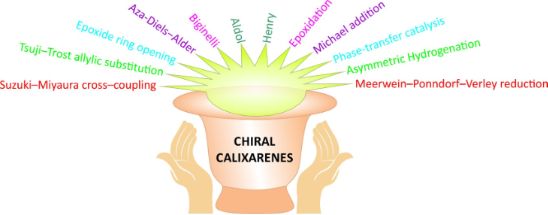
- calixarene; organocatalyst; supramolecular catalyst; Introduction The catalysis of organic reactions by macrocyclic host compounds is a longstanding proposed application of supramolecular chemistry and utilizes the use of noncovalent interactions in catalytic systems to achieve higher reaction rates, more


Binding abilities of polyaminocyclodextrins: polarimetric investigations and biological assays
Beilstein J. Org. Chem. 2017, 13, 2751–2763, doi:10.3762/bjoc.13.271
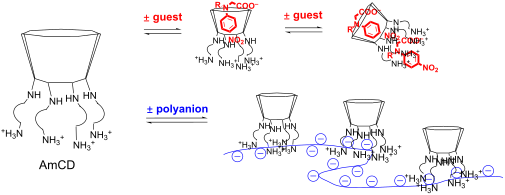
- our materials to exploit both the cavity and the polycationic branches, thus functioning as bimodal ligands. Keywords: aminocyclodextrins; binding properties; nitroanilines; pDNA; polarimetry; supramolecular chemistry; Introduction Polyamine macromolecules have attracted a widespread interest for

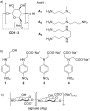


Binding abilities of a chiral calix[4]resorcinarene: a polarimetric investigation on a complex case of study
Beilstein J. Org. Chem. 2017, 13, 2698–2709, doi:10.3762/bjoc.13.268

- : calix[4]resorcinarene; host–guest complexes; p-nitroanilines; polarimetry; supramolecular chemistry; Introduction During the last decades calix[n]arenes and calix[n]resorcinarenes (CAs) have emerged as versatile supramolecular host systems for various applications [1][2][3][4][5], spanning from sensors




Exploring mechanochemistry to turn organic bio-relevant molecules into metal-organic frameworks: a short review
Beilstein J. Org. Chem. 2017, 13, 2416–2427, doi:10.3762/bjoc.13.239
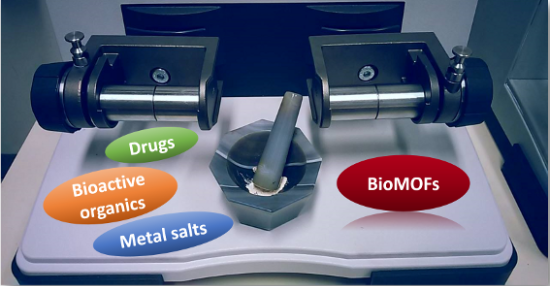
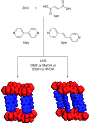
- field of supramolecular chemistry [27][28][29], for solvent-free preparation of co-crystals, and adducts [30][31][32][33][34][35][36][37][38], polymorphs [12], supramolecular aggregates [4][30][39][40][41][42], host–guest complexes [5][43][44][45], metal-organic frameworks (MOFs) [8][28][44][46][47][48
- ][49][50], and coordination networks [46][47][48][51]. All these applications comprise the formation of intermolecular interactions, the basis of supramolecular chemistry. This discipline was fully recognized internationally with the attribution of the Nobel Prize of Chemistry in 1987 to Donald J. Cram
- further biomedical/pharmaceutical applications [71], such as cancer therapy [81][82][83]. MOFs combine coordination and supramolecular chemistry. Coordination chemistry is present in the coordination of organic molecules (linkers) to metal ions or clusters (coordination centers), while supramolecular




Structural diversity in the host–guest complexes of the antifolate pemetrexed with native cyclodextrins: gas phase, solution and solid state studies
Beilstein J. Org. Chem. 2017, 13, 2252–2263, doi:10.3762/bjoc.13.222

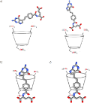
- ; pemetrexed; supramolecular chemistry; Introduction Herein, supramolecular host–guest complexes of the potent folic acid inhibitor pemetrexed (PTX, Figure 1a) with native cyclodextrins (α-, β- and γ-CDs, Figure 1b) in the gas phase (MS), in solution (NMR, UV–vis) and in the solid state (Raman, FTIR–ATR) were




Superstructures with cyclodextrins: Chemistry and applications IV
Beilstein J. Org. Chem. 2017, 13, 2157–2159, doi:10.3762/bjoc.13.215
- are well-suited for the design of molecular machines, which were the subject of the 2016 Nobel Prize in Chemistry [8][9]. Since superstructures are accessible through rational design, supramolecular chemistry had a great influence on organic and macromolecular chemistry as well as pharmacology and
Mechanically induced oxidation of alcohols to aldehydes and ketones in ambient air: Revisiting TEMPO-assisted oxidations
Beilstein J. Org. Chem. 2017, 13, 2049–2055, doi:10.3762/bjoc.13.202
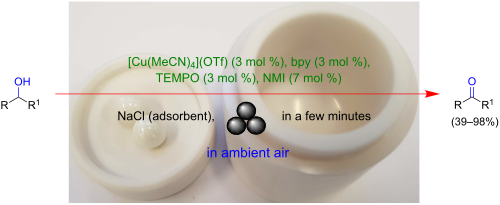
- aims to provide alternative methods to traditional syntheses in organic and inorganic chemistry [49][60][61]. Mechanochemistry is also used in supramolecular chemistry [62] and metal-organic chemistry [63]. In this work, we show that mechanical processing by ball milling can represent a viable solution


Mechanochemical synthesis of small organic molecules
Beilstein J. Org. Chem. 2017, 13, 1907–1931, doi:10.3762/bjoc.13.186
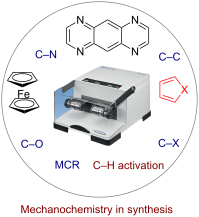
- materials like stainless steel, tungsten carbide, zirconia, agate, etc. [24]. In the past decade, mechanochemical reactions were developed under the areas of chemistry like supramolecular chemistry [25][26], organic synthesis [27][28], nanoparticle synthesis, etc. [29][30]. The historical development of




Derivatives of the triaminoguanidinium ion, 5. Acylation of triaminoguanidines leading to symmetrical tris(acylamino)guanidines and mesoionic 1,2,4-triazolium-3-aminides
Beilstein J. Org. Chem. 2017, 13, 579–588, doi:10.3762/bjoc.13.57
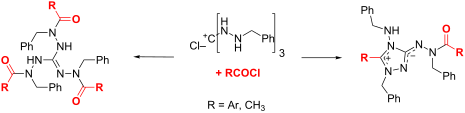
- gives access to diverse chemical structures which could be considered for further studies, e.g., the biological activity of the triazole-based compounds and the use of threefold symmetrically substituted triaminoguanidines as novel hosts in supramolecular chemistry or as ligands in coordination




Pd- and Cu-catalyzed approaches in the syntheses of new cholane aminoanthraquinone pincer-like ligands
Beilstein J. Org. Chem. 2017, 13, 564–570, doi:10.3762/bjoc.13.55

- template for design of complex molecules has become increasingly popular in pharmacology, supramolecular chemistry and nanoscience over recent years [4][5]. Many macrocyclic dimeric derivatives of bile acid were described [6][7][8]. As a rule, a route to the majority of macrocyclic structures requires





