Search results
Search for "switching" in Full Text gives 332 result(s) in Beilstein Journal of Organic Chemistry. Showing first 200.
Hierarchically assembled helicates as reaction platform – from stoichiometric Diels–Alder reactions to enamine catalysis
Beilstein J. Org. Chem. 2020, 16, 2338–2345, doi:10.3762/bjoc.16.195
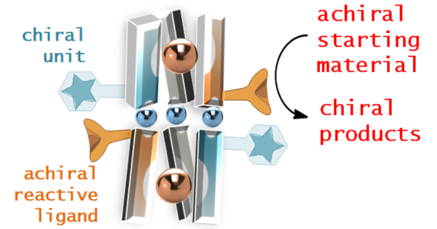
- Diels–Alder reaction [21][22] and (2) a chiral ligand 2-H2 for the stereocontrol [13]. Cleaving the complex under acidic conditions resulted in the desired enantiomerically enriched product 9 and enabled the recovery of the chiral ligand 2-H2 (Scheme 2) [13]. The solvent choice allowed on/off-switching
- of the stereoselectivity of the Diels–Alder reaction. In THF the stereochemically locked dimer of the hierarchical helicate was present. Here stereoselectivity was turned on. On the other hand, the highly dynamic and fast diastereomerizing/epimerizing monomer was the major species in DMF switching
- residue Li[Li3(1)3(6)3Ti2] showed only 16% ee. The yields were higher than 60%. A possible reason for the significant drop in enantioselectivity by switching from ligand 5 to 6 was due to the different dimerization behavior. The homoleptic helicate Li[Li3(6)6Ti2] shows a lower dimerization tendency


Styryl-based new organic chromophores bearing free amino and azomethine groups: synthesis, photophysical, NLO, and thermal properties
Beilstein J. Org. Chem. 2020, 16, 2282–2296, doi:10.3762/bjoc.16.189

- absorption maxima in the range of 512–543 and 529–562 nm, respectively. Of note, the largest bathochromic shifts of the absorption maxima for both series of dyes were observed in DMSO compared to the other solvents applied. Switching the solvent from PhMe to DMSO, bathochromic shifts of 31 nm for 3, 22 nm


Synthetic approaches to bowl-shaped π-conjugated sumanene and its congeners
Beilstein J. Org. Chem. 2020, 16, 2212–2259, doi:10.3762/bjoc.16.186
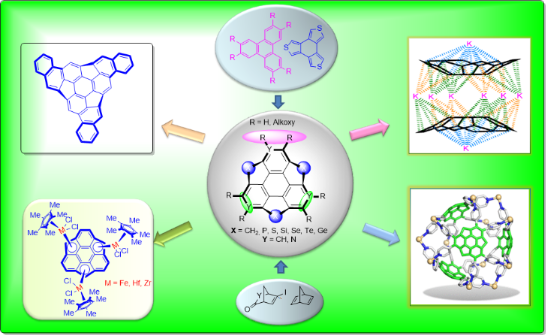
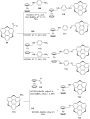
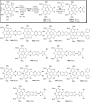
- can not only be useful for enantioselective synthesis of π-bowls but also to produce novel building blocks for molecular switches, chemical machines, molecular motor, ferroelectric memories, molecular devices, and sensory materials etc. Interestingly, electronic switching, thermal transport and











Azo-dimethylaminopyridine-functionalized Ni(II)-porphyrin as a photoswitchable nucleophilic catalyst
Beilstein J. Org. Chem. 2020, 16, 2119–2126, doi:10.3762/bjoc.16.179
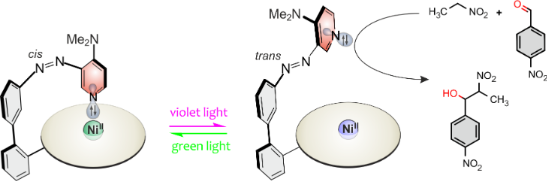
- Abstract We present the synthesis and the photochemical and catalytic switching properties of an azopyridine as a photoswitchable ligand, covalently attached to a Ni(II)-porphyrin. Upon irradiation with 530 nm (green light), the azopyridine switches to the cis configuration and coordinates with the Ni2
- activity. The rate constants in the two switching states differ by a factor of 2.2, and the catalytic switching is reversible. Keywords: catalysis; Ni(II)-porphyrins; nucleophilic catalyst; photoswitch; record player molecules; spin switch; Introduction Photoswitchable catalysis has been realized
- by coordination/decoordination to the Ni2+ ion in a Ni-porphyrin. So-called record player molecules, including a Ni(II)-porphyrin as the square planar base complex and azopyridines as photoswitchable axial ligands, were previously investigated for spin switching applications [13][14][15][16][17][18


Syntheses of spliceostatins and thailanstatins: a review
Beilstein J. Org. Chem. 2020, 16, 1991–2006, doi:10.3762/bjoc.16.166

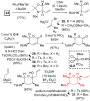
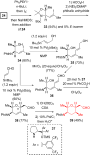
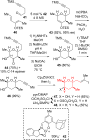
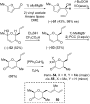
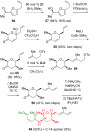
- , followed by the cleavage of the 4’-TBS protecting group gave 127 in an acceptable yield (52%). A protecting-group adjustment finalized the synthesis of 124. Notably, these authors found that switching the sulfone and aldehyde functionalities, i.e., an olefination of the aldehyde generated by the oxidation








Controlling the stereochemistry in 2-oxo-aldehyde-derived Ugi adducts through the cinchona alkaloid-promoted electrophilic fluorination
Beilstein J. Org. Chem. 2020, 16, 1963–1973, doi:10.3762/bjoc.16.163
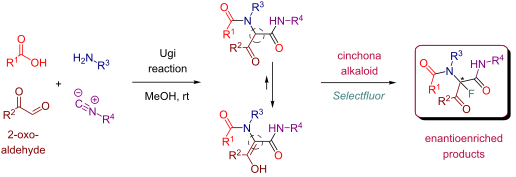
- improvement allowing to obtain 12a with up to 73% ee through the reaction with dihydroquinine benzyl ether (DHQ-Bn, Table 3, entry 12). Switching to quinidine (QD), dihydroquinidine (DHQD), and their derivatives allowed to alter the stereoselectivity of the process leading to the preferred formation of


Tuneable access to indole, indolone, and cinnoline derivatives from a common 1,4-diketone Michael acceptor
Beilstein J. Org. Chem. 2020, 16, 1722–1731, doi:10.3762/bjoc.16.144

- as the main product, with the best yield being obtained in butanol (43%, Table 1, entry 11), however, with the formation of 6b occurring only in 10% yield. Switching to microwave irradiation formed exclusively 7b in 60% yield after 3 h (Table 1, entry 13). Note, that to check the effect of a shorter
- temperature (Table 2, entry 1). Under these conditions, the expected cinnoline 8a was obtained in a low yield of 20% that could be increased up to 40% upon refluxing the mixture (Table 2, entry 2). Switching to toluene (Table 2, entry 3) did not improve the reaction outcome. However, the addition of a





Fluorohydration of alkynes via I(I)/I(III) catalysis
Beilstein J. Org. Chem. 2020, 16, 1627–1635, doi:10.3762/bjoc.16.135
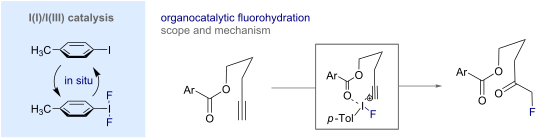
- (64% and 56% yield, respectively, Table 1, entries 2 and 4). Fluorinated solvents such as hexafluoroisopropanol (HFIP) or ethyl trifluoroacetate (ETFA) led to similar results (52% and 50% yield, respectively, Table 1, entries 5 and 6). Switching to non-halogenated solvents such as acetonitrile or


Oxime radicals: generation, properties and application in organic synthesis
Beilstein J. Org. Chem. 2020, 16, 1234–1276, doi:10.3762/bjoc.16.107
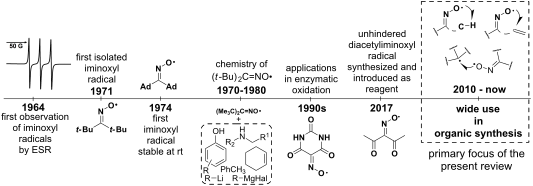
- reaction pathway of a TBN-mediated oxidative cyclization of β,γ-unsaturated oximes 128 was achieved by switching from the argon atmosphere to air or oxygen atmosphere and by lowering the reaction temperature to –10 °C [131]. Oximes 128 undergo cyclization to form nitrooxymethyl-substituted isoxazolines 129


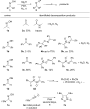


Recent advances in Cu-catalyzed C(sp3)–Si and C(sp3)–B bond formation
Beilstein J. Org. Chem. 2020, 16, 691–737, doi:10.3762/bjoc.16.67
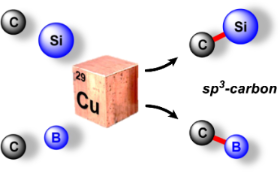
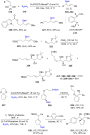
- alkene 307 (e.g., protected allylic alcohols) was explored by varying the ligand on copper. Using catalytic CuCl/Xantphos, direct access to anti-Markovnikov alkylborated products (e.g., 353, 354) was noted. Alternatively, simply switching from Xantphos to Cy-Xantphos afforded the products of Markovnikov
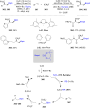
- conversion of 2-substituted 1,3-dienes 376 into borocyano products using commercially available phosphine ligands (Scheme 60). Simply switching from a mono to a bidentate ligand resulted in 1,4 to 4,1-borocupration. The formation of allyl–Cu intermediates in the catalytic cycle readily trap available






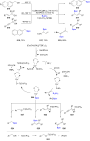
Cascade trifluoromethylthiolation and cyclization of N-[(3-aryl)propioloyl]indoles
Beilstein J. Org. Chem. 2020, 16, 657–662, doi:10.3762/bjoc.16.62
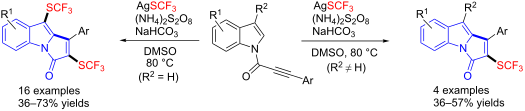
- slightly higher yields, respectively (Table 1, entries 3 and 4). Switching KHCO3 to NaHCO3 could enhance the yield (Table 1, entry 6), whereas K2CO3 and DBU reduced the reaction efficiency (Table 1, entries 5 and 7). Subsequent evaluation of solvents revealed that MeCN and DMF were inferior to DMSO (Table




Synthesis of 4-amino-5-fluoropyrimidines and 5-amino-4-fluoropyrazoles from a β-fluoroenolate salt
Beilstein J. Org. Chem. 2020, 16, 445–450, doi:10.3762/bjoc.16.41

- investigate the use of non-nucleophilic bases, but with DBU, polymerization of the fluoroenolate took place. When using aqueous sodium hydroxide as the base, a 19% yield could be achieved. Switching the solvent to water led to an improvement of the yield to 36% (Table 2). In water, but without using a base


Photophysics and photochemistry of NIR absorbers derived from cyanines: key to new technologies based on chemistry 4.0
Beilstein J. Org. Chem. 2020, 16, 415–444, doi:10.3762/bjoc.16.40
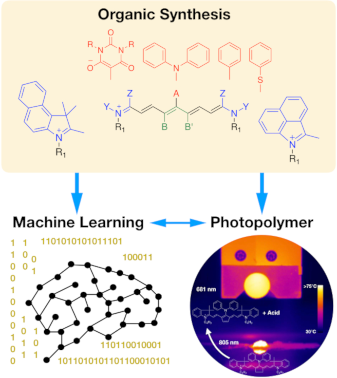
- is more than 80–95% depending on substitution. Thus, such absorbers can also work in systems where typically thermal processes initiated by furnace techniques play the major role. These absorbers generate heat on demand just by switching on and off the light source. Thus, they can be seen more or
- intensity (<100 mW/cm2) NIR-LED resulting in radicals and conjugate acid [5]. Most of them comprised a barbiturate group. 26, 34, 47, and 48 depict some representative examples. On the other hand, positively charged sensitizers showed no reactivity with such a low intensity LED [5]. Switching the LED source


Architecture and synthesis of P,N-heterocyclic phosphine ligands
Beilstein J. Org. Chem. 2020, 16, 362–383, doi:10.3762/bjoc.16.35
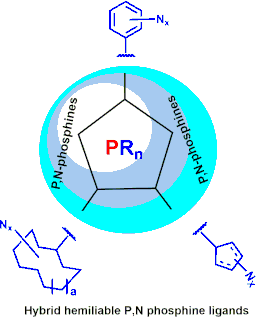
- . The π-acceptor character of phosphorus can be reinforced by the presence of oxygen and/or nitrogen whilst σ-donating potency of nitrogen can be manipulated by switching between sp3 and sp2 hybridization [9][49][50]. The synthesis of phosphines is quite delicate because when exposed to air, some of




Formal preparation of regioregular and alternating thiophene–thiophene copolymers bearing different substituents
Beilstein J. Org. Chem. 2020, 16, 317–324, doi:10.3762/bjoc.16.31
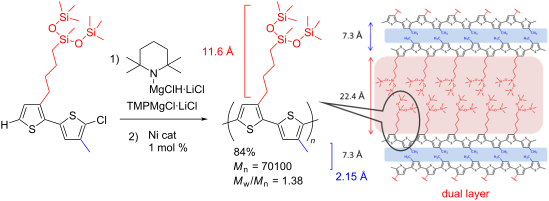
- groups, was obtained with a slightly low molecular weight, suggesting improved solubility compared to 6a (R2 = Me and R1 = n-hexyl), the attempted dissolution of the obtained polythiophene 6b in chloroform was unsuccessful. Switching the oligosiloxane moiety to a branched derivative (R2 = (CH2)4Si(Me


Potent hemithioindigo-based antimitotics photocontrol the microtubule cytoskeleton in cellulo
Beilstein J. Org. Chem. 2020, 16, 125–134, doi:10.3762/bjoc.16.14
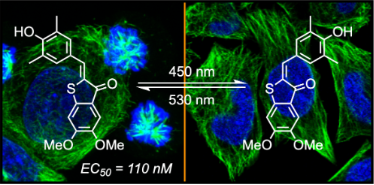
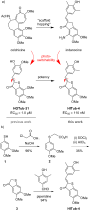
- photoswitching (λ = 450 nm for Z → E and 530 nm for E → Z switching), with the high fatigue resistance characteristic of HTIs. The E-isomer's thermal half-life in EtOAc or DMSO was ca. 40 s (Figure 3 and Supporting Information File 1, Figure S3). Its absorption spectra and photoswitchability were unaltered by
- ) with enhanced proportions of E-isomer can be photogenerated would represent an exciting advance: they could, in contrast to the other photoswitch types, allow all-visible, photoreversible, high-potency switching while reproducing similarly beneficial photoswitchability of bioactivity. Mechanistic
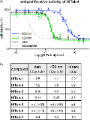
- , respectively. c) Photoreversible switching upon alternating illumination (λ = 450 and 530 nm). d) Thermal relaxation at room temperature after reaching the photostationary state at λ = 450 nm. a) Resazurin reduction assay for HITub-4 and nocodazole in HeLa cells (n = 3), demonstrating the difference in





Reversible photoswitching of the DNA-binding properties of styrylquinolizinium derivatives through photochromic [2 + 2] cycloaddition and cycloreversion
Beilstein J. Org. Chem. 2020, 16, 111–124, doi:10.3762/bjoc.16.13
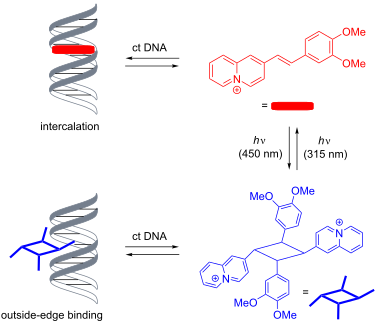
- switching of binding properties [36]. Apparently, styryl-substituted aromatic derivatives could fill this gap because the [2 + 2] photocyclization reaction of stilbenes and derivatives thereof is a well-established reversible photoreaction [37][38][39][40][41][42][43][44][45][46], and styryl dyes, in
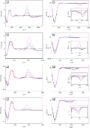
- (black), 0.04 (red), 0.08 (blue), and 2.0 (green). A) Photometric and B) CD spectroscopic monitoring of the photoinduced switching (4b: λex = 315 nm, 3b: λex = 450 nm) between 4b (c = 20 µM, black) and 3b (red) in the presence of ct DNA (c = 20 µM) in BPE buffer. DNA concentration in base pairs
- . Synthesis of styrylquinolizinium derivatives 3a–d. Possible pathways for the selective photodimerization of styrylquinolizinium derivatives 3b and 3c. Photoinduced switching of the DNA binding properties of styrylquinolizinium compound 3b. Absorption and emission data for styrylquinolizinium derivatives 3a




Photocontrolled DNA minor groove interactions of imidazole/pyrrole polyamides
Beilstein J. Org. Chem. 2020, 16, 60–70, doi:10.3762/bjoc.16.8
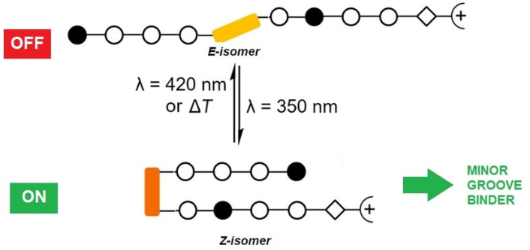
- as a result of the switching process. The amide proton of the azobenzene moiety at 8.7 ppm and the adjacent methylene group at 4.5 ppm met these requirements, and hence were used for analysis (Figure 1). The proportions of the individual species in the mixture were determined by integration of the



Starazo triple switches – synthesis of unsymmetrical 1,3,5-tris(arylazo)benzenes
Beilstein J. Org. Chem. 2020, 16, 22–31, doi:10.3762/bjoc.16.4
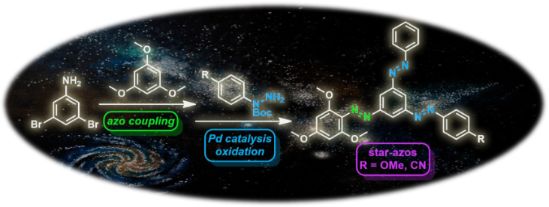
- characterized in terms of their isomerization behavior using UV–vis and 1H NMR spectroscopy. The efficient synthesis of this new class of unsymmetrical tris(arylazo)benzenes opened new avenues to novel multistate switching materials. Keywords: multistate photoswitches; synthesis; tris(arylazo)benzene
- their isomerization properties [3][4]. Also, the incorporation of AB units into cyclic [5] or macrocyclic structures can control the switching, depending, i.a., on symmetry and ring strain [6][7][8][9]. By combining these approaches, half-lives can be tuned from milliseconds to years. The incorporation
- properties of such compounds have not been studied yet. Going one step further, this type of compounds could be substituted in an unsymmetrical way with different azo units, which allowed individual switching using light of different wavelengths [12]. These compounds were then investigated theoretically by


Design, synthesis and investigation of water-soluble hemi-indigo photoswitches for bioapplications
Beilstein J. Org. Chem. 2019, 15, 2822–2829, doi:10.3762/bjoc.15.275
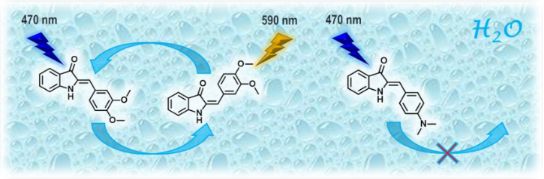
- beyond 3000 years have been achieved [14]. Unlike most of the widely applied photochromes (spiropyrans, spirooxazines, chromenes, dithienylethenes, etc.), both forms of hemi-indigo absorb in the visible light region. Therefore, photochemical switching does not require the use of the UV light, which is of
- systems, photoswitching of these compounds was tested in aqueous medium (Scheme 3). The forward reaction was performed upon irradiation at 360 (UV), 420 nm (violet), 470 nm (blue) and 520 nm (green) light (Figure 1 and Figures S1 and S2 in Supporting Information File 1). Surprisingly, almost no switching
- extent depends on the particular sequence of RNA. Photoswitching of the RNA-bound hemi-indigo Z-2 to the E-form results in emission quenching. The ON–OFF fluorescence switching of Z-2–RNA complexes can be performed reversibly by repeated irradiation with blue (470 nm) and amber (590 nm) light. Conclusion


Chemical tuning of photoswitchable azobenzenes: a photopharmacological case study using nicotinic transmission
Beilstein J. Org. Chem. 2019, 15, 2812–2821, doi:10.3762/bjoc.15.274
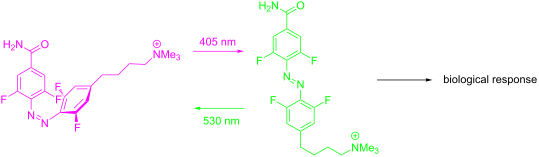
- properties of the tetrafluoroazobenzene (4FAB) scaffold. Ultraviolet light switching and rapid thermal relaxation of the metastable cis configuration are the main drawbacks associated with standard AB-based switches. We designed our photoprobes to take advantage of the excellent thermodynamic stability of




Photoreversible stretching of a BAPTA chelator marshalling Ca2+-binding in aqueous media
Beilstein J. Org. Chem. 2019, 15, 2801–2811, doi:10.3762/bjoc.15.273
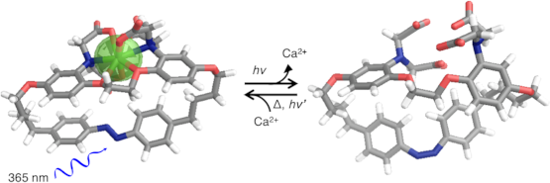
- integrating a spiroamidorhodamine with a BAPTA, whose anticipated switching remains to be proven [27]. Further, interesting approaches are currently being developed on interfacing calmodulin, a messenger protein ionophore, with photochromes [28]. The use of steric effects to decrease binding offers an
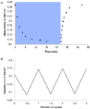
- electron-transfer reaction, while ion binding blocks this quenching pathway restoring emission. Thus, ion liberation from 1 and transfer to 3 would result in a fluorescence off–on switching of the latter. To perform the ion-transfer experiment, the fluorescent dye is loaded with one equivalent of Ca2
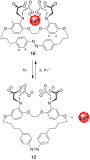
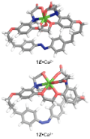
- switching in terms of quantum yields (0.08) and PSS composition (88% cis). The calcium binding affinity of the cis-form was diminished by circa 2.5-fold with respect to the trans-form as the chelator was stretched rendering the binding pocket ill-adapted to accommodate the calcium, as suggested by molecular





An improved, scalable synthesis of Notum inhibitor LP-922056 using 1-chloro-1,2-benziodoxol-3-one as a superior electrophilic chlorinating agent
Beilstein J. Org. Chem. 2019, 15, 2790–2797, doi:10.3762/bjoc.15.271
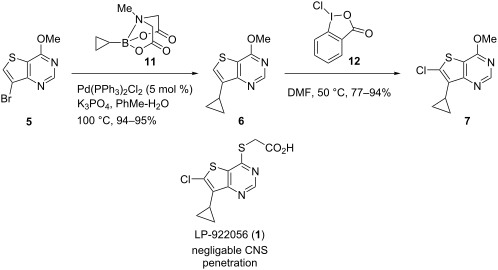
- efficient step in our sequence and justified further optimisation (vide infra). Suzuki–Miyaura cross coupling of bromide 5 with cyclopropylboronic acid (2.5 equiv) produced 6 in good yield (62–89%) but the product required extensive chromatographic purification. We reasoned that switching from the boronic




A chiral self-sorting photoresponsive coordination cage based on overcrowded alkenes
Beilstein J. Org. Chem. 2019, 15, 2767–2773, doi:10.3762/bjoc.15.268
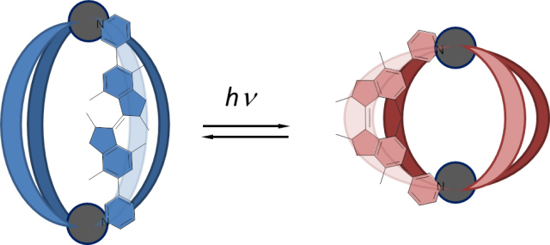
- interesting strategy to form responsive coordination complexes, as they feature a large geometric change upon switching [47]. Herein, we report a photoresponsive coordination cage with ligands based on a first generation molecular motor (Figure 1). Cages with a Pd2L4 composition are formed from bidentate
- explanation could be that the mixture of stable Z-1 and stable E-1 does not form separate well-defined cage structures, but forms mixed complexes. Conclusion In summary, a new photoresponsive supramolecular coordination complex based on overcrowded alkenes is presented, allowing switching between three


A combinatorial approach to improving the performance of azoarene photoswitches
Beilstein J. Org. Chem. 2019, 15, 2753–2764, doi:10.3762/bjoc.15.266
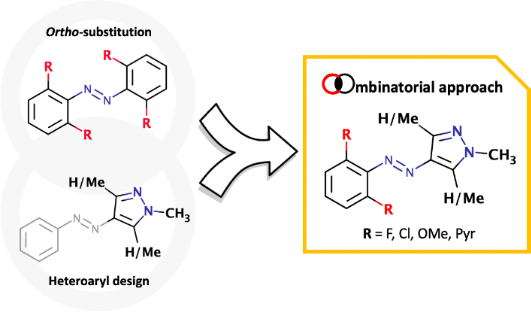
- ] is accompanied by large variations in their absorption spectra. However, azobenzenes remain one of the most popular photoswitches owing to their stability, reliability and tunability: azobenzenes provide high extinction coefficients and quantum yields, allowing switching between Z- and E-isomers with
- low-intensity light, and are stable to repeated switching cycles. Of the several performance metrics that can be used to judge azo switches, however, there are two predominant ones that can prove problematic for azoarenes: 1) the completeness of switching at a given wavelength of light, and 2) the
- -life (t1/2 = 74 days at 25 °C). The photochemical addressability of the azopyrazoles can further be complemented by other stimuli, for example chemical switching using acid [19]. Given their excellent performance, arylazopyrazoles are replacing azobenzenes in optically addressable applications