Search results
Search for "NHC" in Full Text gives 205 result(s) in Beilstein Journal of Organic Chemistry. Showing first 200.
Convenient preparation of high molecular weight poly(dimethylsiloxane) using thermally latent NHC-catalysis: a structure-activity correlation
Beilstein J. Org. Chem. 2015, 11, 2261–2266, doi:10.3762/bjoc.11.246
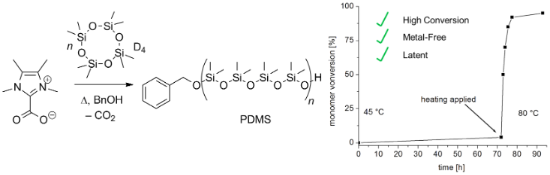
- range of accessible monomer structures has grown impressively [6][7]. Nowadays, NHC-mediated polymerization can be applied to prepare polymers of high industrial and commercial importance, such as poly(amide)s [8][9], poly(ether)s [10], poly(urethane)s [11][12] or poly(acrylate)s [13][14][15][16][17][18
- found that steric hindrance of the NHC shut down polymerization activity. Finally, a report on the polycondensation of α,ω-disilanols describes the efficient polycondensation via NHCs in spite of the generation of water during the reaction, finding that the most basic NHC in the small study delivered
- the best results [25]. In view of these promising, yet somewhat limited, results, the aim for this study was (a) to investigate a range of structurally diverse NHCs to get more insight into the influence of NHC structure on catalytic activity for the polymerization of D4, and (b) to generate the NHCs


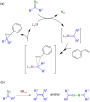
Evidencing an inner-sphere mechanism for NHC-Au(I)-catalyzed carbene-transfer reactions from ethyl diazoacetate
Beilstein J. Org. Chem. 2015, 11, 2254–2260, doi:10.3762/bjoc.11.245




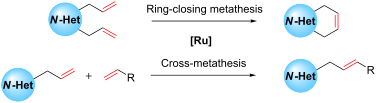
Beyond catalyst deactivation: cross-metathesis involving olefins containing N-heteroaromatics
Beilstein J. Org. Chem. 2015, 11, 2223–2241, doi:10.3762/bjoc.11.241
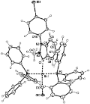
- complex 8 that was isolated and characterized using X-ray diffraction (Scheme 3, reaction 2). In both cases, free PCy3 was observed by NMR confirming amine-induced phosphine displacement. The decomposition of GI was hypothesized to go through a bimolecular coupling from 7. On the contrary, the bulky NHC


Half-sandwich nickel(II) complexes bearing 1,3-di(cycloalkyl)imidazol-2-ylidene ligands
Beilstein J. Org. Chem. 2015, 11, 2171–2178, doi:10.3762/bjoc.11.235
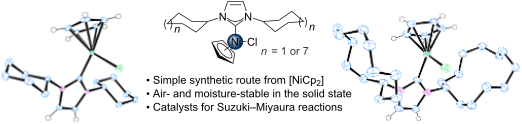
- using a convenient procedure where nickelocene, the NHC·HBF4 salts, and [Et4N]Cl were heated in THF using microwave irradiation. The resulting [NiCl(Cp)(NHC)] complexes are air- and moisture stable in the solid state, and represent two new members of this valuable and practical class of nickel catalysts
- carbenes (NHCs) [2] are an interesting class of catalysts [3][4], due to the fascinating characteristics of NHC ligands, which can be designed to have a wide range of steric and electronic properties [5][6][7]. Nickel catalysts of the form [Ni(Cp)X(NHC)] have been shown to be versatile and relatively easy
- prepared [Ni(η1-Cp)(η5-Cp)(IMes)] (1) from the reaction of the free carbene with nickelocene (IMes = 1,3-bis(2,4,6-trimethylphenyl)imidazol-2-ylidene) (Scheme 1a) [9]. Complexes of the form [NiCl(Cp)(NHC)], such as complex 2, are typically prepared by simply heating nickelocene with the corresponding


Computational study of productive and non-productive cycles in fluoroalkene metathesis
Beilstein J. Org. Chem. 2015, 11, 2150–2157, doi:10.3762/bjoc.11.232
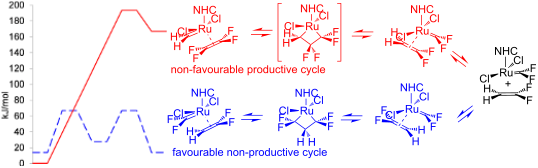
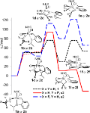
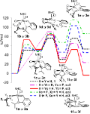
- ruthenium forming 3,3-difluororuthenacyclobutane intermediate a2I. The computations started from an alkene weakly coordinated to the NHC ligand without any coordination to ruthenium (structures 1a and 2a), and continued with the first mechanistic step, the coordination of alkene to ruthenium with partial




Ru complexes of Hoveyda–Grubbs type immobilized on lamellar zeolites: activity in olefin metathesis reactions
Beilstein J. Org. Chem. 2015, 11, 2087–2096, doi:10.3762/bjoc.11.225
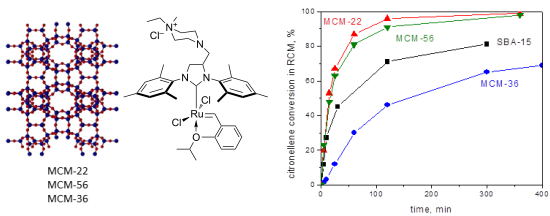
- cationic tags on NHC ligands were linker-free immobilized on the surface of lamellar zeolitic supports (MCM-22, MCM-56, MCM-36) and on mesoporous molecular sieves SBA-15. The activity of prepared hybrid catalysts was tested in olefin metathesis reactions: the activity in ring-closing metathesis of
- ][17][18][19][20]. Although the character of this interaction is not completely clear, they are firm enough to ensure low Ru leaching and catalyst reusability. Recently, we reported Hoveyda–Grubbs type catalysts bearing quaternary ammonium tag on NHC ligand (HGIIN+X, where X = Cl−, I−, PF6−, or BF4
- with sterically enlarged NHC ligand supported on SBA-15 exhibited high stability and was effective in flow reactions [22]. According to our knowledge, zeolites have not been considered as perspective supports for the immobilization of Ru metathesis catalysts due to small diameters of their pores (<1 nm


Olefin metathesis in air
Beilstein J. Org. Chem. 2015, 11, 2038–2056, doi:10.3762/bjoc.11.221
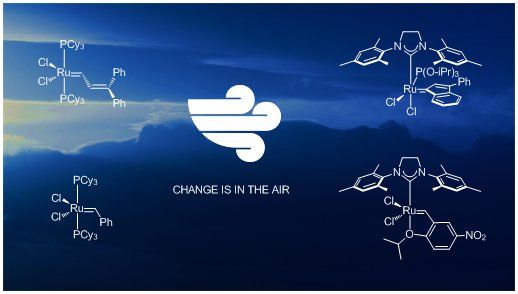
- heteroleptic complexes, bearing one N-heterocyclic carbene (NHC) (16–19, Figure 1) and one phosphine as ligands, represented the second crucial turning point in this chemistry. Following Herrmann’s report on bis-NHC ruthenium complexes (10–15) and their low activity [39], independently and simultaneously the
- groups of Nolan (14) [40][41], Grubbs (15) [42][43][44][45] and Hermann [46][47][48] reported on the synthesis of this family of complexes. The combination of a labile phosphine group with a non-labile NHC ligand provided a significant improvement in terms of reactivity and stability. The bulky NHC
- the Grubbs’ 2nd generation catalyst. The increased stability of 17 is due to the unsaturated backbone of the NHC; the steric bulkiness on the metal center is improved and the σ-donating ability is increased compared to other NHCs. These were the first ruthenium-based catalysts able to perform RCM


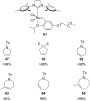


Hexacoordinate Ru-based olefin metathesis catalysts with pH-responsive N-heterocyclic carbene (NHC) and N-donor ligands for ROMP reactions in non-aqueous, aqueous and emulsion conditions
Beilstein J. Org. Chem. 2015, 11, 1960–1972, doi:10.3762/bjoc.11.212
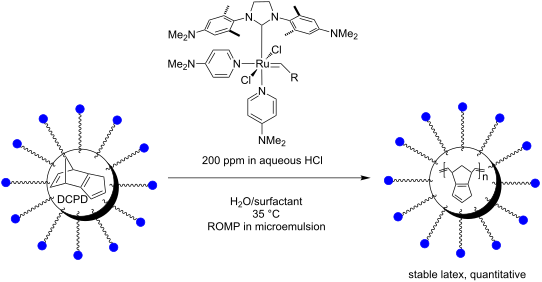
- hydrophilic phosphine ligands [22][23][24][25], NHC ligands [26][27][28][29], N-donor ligands [30], alkylidene moieties [31][32][33] or combinations of these structural features [34][35][36][37]. Another recent development in homogeneous catalysis, and olefin metathesis in particular, have become switchable
- employed for emulsion ROMP bearing an NHC ligand. This may a consequence of the low accessibility of these catalysts and one of the reasons for the relatively low observed activities knowing that the NHC ligand dramatically increases the propagation rates of the metathesis reaction [57]. The higher
- latexes have been produced by use of organic-soluble catalysts in micro or miniemulsions [59][60]. Although, this technique has been more successfully applied for a variety of ROMP substrates and allowed the use of more metathesis-active NHC-bearing catalysts, the protocols required to emulsify the


Effective ascorbate-free and photolatent click reactions in water using a photoreducible copper(II)-ethylenediamine precatalyst
Beilstein J. Org. Chem. 2015, 11, 1950–1959, doi:10.3762/bjoc.11.211
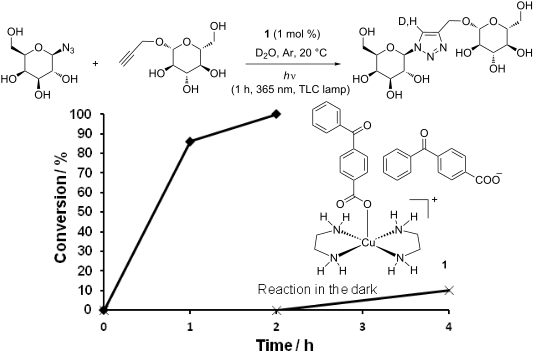
- Gautier and coworkers based on a water-soluble Cu(I)–NHC complex, which could be used under ascorbate-free and open air conditions for the CuAAC ligation of oxidation-sensitive peptides in buffered aqueous media [10]. Recently, we developed the photoreducible copper(II) complexes 2 and 3 incorporating a


Stereochemistry of ring-opening/cross metathesis reactions of exo- and endo-7-oxabicyclo[2.2.1]hept-5-ene-2-carbonitriles with allyl alcohol and allyl acetate
Beilstein J. Org. Chem. 2015, 11, 1893–1901, doi:10.3762/bjoc.11.204

- , while the 1-2 vs 1-3 ratio was almost the same as those in other experiments. It should be noted that less sterically demanding o-tolyl-N-substituents in NHC-ligands provide more space around the ruthenium center. In general, ROCM reactions are most successful when highly strained substrates are used
- -tolyl substituted NHC ligand in [Ru]5 exerts a smaller steric effect than the -PCy3 residue in [Ru]1–4. Furthermore, the bulky phosphine ligand (PCy3) expands away from the transition metal center (coordination sphere), while the N,N’-o-tolyl substituent attached to the central imidazole ring penetrates


Nitro-Grela-type complexes containing iodides – robust and selective catalysts for olefin metathesis under challenging conditions
Beilstein J. Org. Chem. 2015, 11, 1823–1832, doi:10.3762/bjoc.11.198
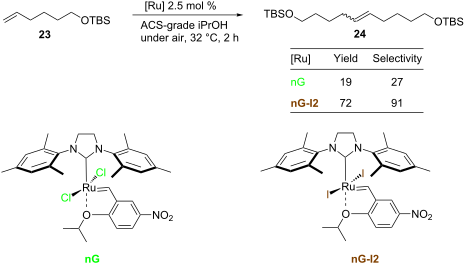
- properties. Great improvement of catalyst efficiency in the transformation of sterically non-demanding alkenes have been achieved by the replacement of the classical SIMes ligand with the bulkier SIPr ligand (Scheme 1) [8][9]. Metathesis catalysts with even larger NHC ligands have also been reported, but
- with iodide can – at least for some substrates – provide similar catalyst stabilization as the introduction of a bulky NHC ligand. In the case of the most sterically crowded nG-SIPr-I2, initiation was delayed, but a very fast reaction propagation was observed. This catalyst was the most stable and
- products with 80–88% yields (0.25 mol % of catalyst, 40 or 70 °C). The catalysts containing a less sterically crowded SIMEs ligand delivered 2 with poor yield, usually accompanied by significant amounts of byproducts 21 and 22. This demonstrates that large substituents in N-heterocyclic ligands (NHC) not


Influence of bulky yet flexible N-heterocyclic carbene ligands in gold catalysis
Beilstein J. Org. Chem. 2015, 11, 1809–1814, doi:10.3762/bjoc.11.196
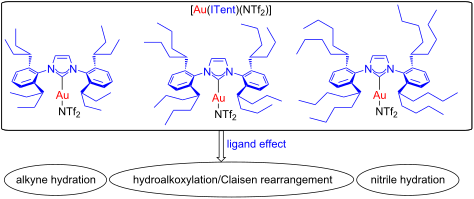
- ) complexes of the formula [Au(NHC)(NTf2)] (NHC = N-heterocyclic carbene) bearing bulky and flexible ligands have been synthesised. The ligands studied are IPent, IHept and INon which belong to the ‘ITent’ (‘Tent’ for ‘tentacular’) family of NHC derivatives. The effect of these ligands in gold-promoted
- efficient catalysts in a wide variety of transformations [1][2][3][4][5][6][7][8][9][10][11][12]. N-heterocyclic carbenes (NHC) have attracted particular attention as ancillary ligands due to their donating properties and steric hindrance [13][14][15][16][17][18][19][20]. These can be easily tuned by
- to a metal centre. We have recently reported the synthesis of the ‘ITent’ family (‘Tent’ stands for ‘tentacular’) of NHC carbenes [21] which comprises IPent, first utilised by Organ, IHept, and INon (Figure 1). IPr [22], which is one of the most commonly used NHC derivatives, can be considered as the


Synthesis and structures of ruthenium–NHC complexes and their catalysis in hydrogen transfer reaction
Beilstein J. Org. Chem. 2015, 11, 1786–1795, doi:10.3762/bjoc.11.194
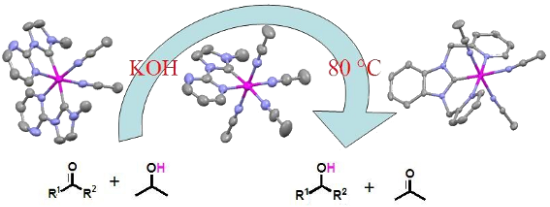
- corresponding nickel–NHC complexes with [Ru(p-cymene)2Cl2]2 in refluxing acetonitrile solution. The crystal structures of three complexes determined by X-ray analyses show that the central Ru(II) atoms are coordinated by pyrimidine- or pyridine-functionalized N-heterocyclic carbene and acetonitrile ligands
- ]. Among NHCs, functionalized NHC ligands have been extensively studied in recent years because of their intriguing structural diversities and potential applications in coordination chemistry and homogenous catalysis. NHC ligands containing additional phosphine, nitrogen, oxygen, and sulfur donating groups
- phenanthrolin-functionalized Ru(II)–NHC complexes containing acetonitrile ligands [33][34]. The most notable example is the acetonitrile-coordinated dinuclear Ru(II)–NHC complex derived from 3,6-bis(N-(pyridylmethyl)imidazolylidenyl)pyridazine, which is a very efficient catalyst for the oxidation of alkenes [35


A comprehensive study of olefin metathesis catalyzed by Ru-based catalysts
Beilstein J. Org. Chem. 2015, 11, 1767–1780, doi:10.3762/bjoc.11.192
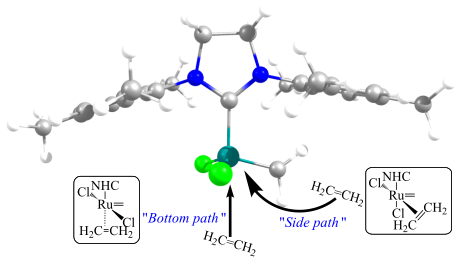
- -heterocyclic ligand (NHC), depending on the first or second generation Grubbs catalyst. Here, DFT calculations unravel to which extent the bottom coordination of olefins with respect is favored over the side coordination through screening a wide range of catalysts, including first and second generation Grubbs
- catalysts as well as the subsequent Hoveyda derivatives. The equilibrium between bottom and side coordination is influenced by sterics, electronics, and polarity of the solvent. The side attack is favored for sterically less demanding NHC and/or alkylidene ligands. Moreover the generation of a 14-electron
- under mild conditions. The next step was the substitution of one phosphine group by an N-heterocyclic carbene, NHC, which strongly increases the activity [11][12][13][14][15]. And, furthermore, a detailed comprehensive analysis of the chemical mechanics of these Grubbs catalysts was required. Once a




Fe(II)/Et3N-Relay-catalyzed domino reaction of isoxazoles with imidazolium salts in the synthesis of methyl 4-imidazolylpyrrole-2-carboxylates, its ylide and betaine derivatives
Beilstein J. Org. Chem. 2015, 11, 1732–1740, doi:10.3762/bjoc.11.189

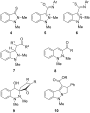
- reaction with sulfur affording the corresponding imidazolethiones under very mild conditions. Keywords: imidazole; isoxazole; NHC carbene; pyrrole-2-carboxylate; relay catalysis; Introduction Pyrrole-2-carboxyate and imidazole units are present in bioactive pyrrole-imidazole alkaloids and pyrrole
- -alkoxycarbonylpyrrol-3-ylimidazolium salts 1 attracted our attention as the potential precursors of ylides 2, which in principle could be in equilibrium with N-heterocyclic carbenes (NHC) 3. Furthermore, hydrolysis of 2 could provide an easy access to unknown carboxy-substituted ylides 4, and then could potentially be
- in the equilibrium with N-heterocyclic carbenes 5 and betaine 6 (Scheme 1). Interplay between N-heterocyclic carbenes, heterocyclic betaines and ylides is currently intensively investigated as a promising route for tuning NHC for specific use. This topic was extensively reviewed [10][11][12][13][14


A facile synthetic route to benzimidazolium salts bearing bulky aromatic N-substituents
Beilstein J. Org. Chem. 2015, 11, 1656–1666, doi:10.3762/bjoc.11.182
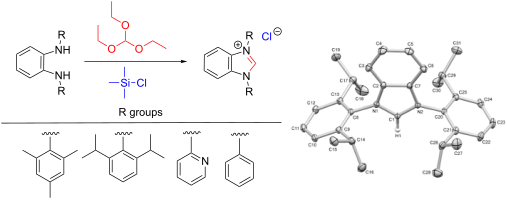
- : benzimidazolium salts; bulky ligands; cyclization; ligand design; N-heterocyclic carbenes (NHC); ring formation; Introduction Imidazole-based N-heterocyclic carbenes (NHCs) are stable systems serving as ancillary ligands mainly to construct organometallic complexes. These NHCs are sterically and electronically
- can be tuned and, based on these properties, they possess great electronic flexibility. These ligands or catalysts reached a prominent position in the mentioned fields of chemistry. It is noteworthy that on the material’s side NHC-type carbene–borane adducts and metal complexes of them can also be
- increased in addition the steric congestion [20]. It is important to recognize that synthetically the stable forms for handling of imidazole carbenes are imidazolium salts. In imidazolium-based NHC chemistry two synthetic aspects are important: 1) there are several fundamental synthetic routes available


Grubbs–Hoveyda type catalysts bearing a dicationic N-heterocyclic carbene for biphasic olefin metathesis reactions in ionic liquids
Beilstein J. Org. Chem. 2015, 11, 1632–1638, doi:10.3762/bjoc.11.178
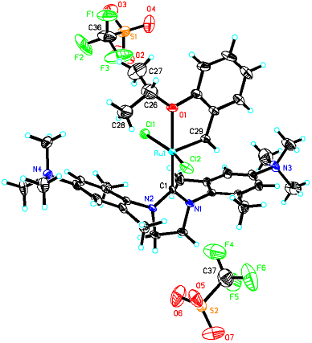
- , H2ITapMe2 = 1,3-bis(2’,6’-dimethyl-4’-trimethylammoniumphenyl)-4,5-dihydroimidazol-2-ylidene, OTf− = CF3SO3−) based on a dicationic N-heterocyclic carbene (NHC) ligand was prepared. The reactivity was tested in ring opening metathesis polymerization (ROMP) under biphasic conditions using a nonpolar organic
- can also be prepared with the aid of N-heterocyclic carbenes (NHCs) that bear pendant ionic groups (Figure 1) [10][16][17][18][19]. We addressed that issue by preparing a novel ionic Ru-NHC-alkylidene using NHCs with ionic groups. Here we report our results. Results and Discussion Catalyst synthesis
- We were attracted by NHC ligands containing a diamino function at the aromatic ring as realized in 1 [20][21][22] since such ligands can be permanently quaternized to the corresponding dicationic species via double alkylation. Additionally, they remain structurally closely related to mesitylene-based



Latent ruthenium–indenylidene catalysts bearing a N-heterocyclic carbene and a bidentate picolinate ligand
Beilstein J. Org. Chem. 2015, 11, 1541–1546, doi:10.3762/bjoc.11.169
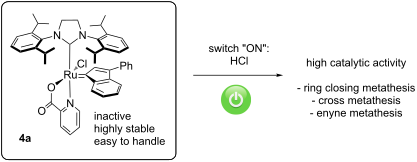
- of cocatalyst. While first examples of latent catalysts were based on phosphine-containing ruthenium complexes bearing a Schiff base ligand (O–N) [9] replacement of the phosphine ligand by sterically demanding and strongly σ-donor N-heterocyclic carbenes (NHC) afforded catalysts with improved
- catalytic performance [10][11][12]. Among the different [N–O]-chelating ligands that have been previously considered [13][14][15][16][17], the pyridyl-2-carboxylate (picolinate) ligand has demonstrated its usefulness in the preparation of efficient latent catalysts based on (NHC)Ru–alkylidene complexes [18
- an interesting alternative to indenylidene-Schiff base complexes that in most cases require toxic thallium salts for their preparation [23][24]. Here, we report the synthesis of (NHC)Ru–indenylidene complexes incorporating chelating picolinic ligands and evaluate their potential as latent catalysts


Ruthenium indenylidene “1st generation” olefin metathesis catalysts containing triisopropyl phosphite
Beilstein J. Org. Chem. 2015, 11, 1520–1527, doi:10.3762/bjoc.11.166
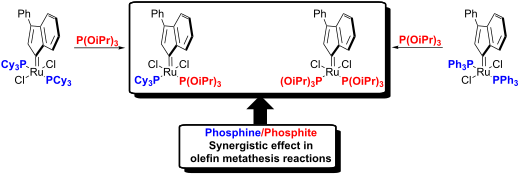
- halides. The apex of the pyramid is occupied by an alkylidene moiety, such as a benzylidene or an indenylidene. Mixed NHC/phosphine complexes (G-II and Ind-II) known as “2nd generation” pre-catalysts generally display higher catalytic activity than “1st generation” complexes (G-I and Ind-I) containing two
- -donor ligand NHC and the π-acidic triisopropyl phosphite [25][37]. Subsequently, the benzylidene analogue G-II-P(OiPr)3 was also reported. The latter displayed a typical trans-configuration, seen in other Ru pre-catalysts, and gave a similar catalytic activity to that of the phosphine-containing parent
- a stoichiometric amount of triisopropyl phosphite. Complex 1 was isolated in analytically pure form in 85% yield, after recrystallization, using a simple ligand exchange reaction (Scheme 1). Similarly to the mixed NHC/phosphite species Caz-1 [25], the cis-geometry is the most thermodynamically


Pyridine-promoted dediazoniation of aryldiazonium tetrafluoroborates: Application to the synthesis of SF5-substituted phenylboronic esters and iodobenzenes
Beilstein J. Org. Chem. 2015, 11, 1494–1502, doi:10.3762/bjoc.11.162

- aryldiazonium tetrafluoroborates with NHC-Pd catalysts was reported recently [63]. When applied to 3a and 3b using Pd(OAc)2 and NHC ligand precursors L, the borylated products 2a and 2b were isolated in only moderate yields (Table 2, entries 1 and 2). However, it was found that the Pd catalyst was not required


Highly selective palladium–benzothiazole carbene-catalyzed allylation of active methylene compounds under neutral conditions
Beilstein J. Org. Chem. 2015, 11, 994–999, doi:10.3762/bjoc.11.111

- heterocyclic ring enables the tuning of their steric and electronic properties affecting the catalytic activity of the resulting metal complex [26][27][28][29]. Although NHC–Pd complexes have been employed in many C–C bond-forming reactions, to the best of our knowledge they have been scarcely applied to the
- of the different behavior displayed by these two carbene ligands can be found in the different aromatic character of their (benzothiazole and imidazole) heterocyclic rings. It is well known that this feature can strongly affect the nucleophilicity of these NHC species, and ultimately can influence
- favourably also with the analogous and more widely used NHC carbenes deriving from imidazole. Complexes and ligands employed. Pd-catalyzed α-allylation of active methylene compounds. Optimization of reaction conditions.a α-allylation of 1,3-dicarbonyl compoundsa. Supporting Information Supporting


Gold-catalyzed formation of pyrrolo- and indolo-oxazin-1-one derivatives: The key structure of some marine natural products
Beilstein J. Org. Chem. 2015, 11, 897–905, doi:10.3762/bjoc.11.101

- carbene (NHC) complex of Au(I) in chloroform (Table 1, entry 5). Reactions with InCl3 and PtCl2(PPh3)3 as catalysts gave very poor yields of exo-dig cyclization product 7 after 24 h (entries 3 and 4). AgOTf and AuCl3 were also screened and AuCl3 was identified as the optimal choice due to the shorter
- to the carbon atom to generate the most stable carbocation. The most stable carbocation is the benzylic carbocation which would not undergo a rearrangement. As discussed above, when the cyclization reaction of 15 was carried out with [(NHC)AuCl] complexes (Table 1, entry 5), the starting material was
- fully recovered. Gold N-heterocyclic carbene complexes, in conjunction with a silver salt, were found to efficiently catalyze different types of reactions [67][68][69]. Therefore, 15 was reacted with [(NHC)AuCl] complex in the presence of AgOTf as the cocatalyst in chloroform. Beside the expected


Diastereoselective and enantioselective conjugate addition reactions utilizing α,β-unsaturated amides and lactams
Beilstein J. Org. Chem. 2015, 11, 530–562, doi:10.3762/bjoc.11.60

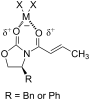
- can be transformed into a number of functional groups [97]. In Procter’s work, they used a Cu(I)–NHC (N-heterocyclic carbene) system to catalyze the asymmetric transfer of silicon from PhMe2SiBpin [98][99] to α,β-unsaturated amides and lactams through activation of the Si–B bond [96] (Scheme 10




Chemoselective O-acylation of hydroxyamino acids and amino alcohols under acidic reaction conditions: History, scope and applications
Beilstein J. Org. Chem. 2015, 11, 446–468, doi:10.3762/bjoc.11.51




Dimerisation, rhodium complex formation and rearrangements of N-heterocyclic carbenes of indazoles
Beilstein J. Org. Chem. 2014, 10, 832–840, doi:10.3762/bjoc.10.79
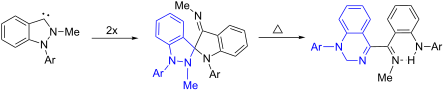
- review articles dealing with syntheses [1][2][3][4], synthetic potentials [4], and biological activities [4][5] of this ring system. In view of the rapid development of the class of N-heterocyclic carbenes (NHC) [6][7][8][9][10][11][12] it is not unexpected, that attention was also directed towards the