Search results
Search for "amide" in Full Text gives 1000 result(s) in Beilstein Journal of Organic Chemistry. Showing first 200.
Chemo-enzymatic total synthesis: current approaches toward the integration of chemical and enzymatic transformations
Beilstein J. Org. Chem. 2024, 20, 1693–1712, doi:10.3762/bjoc.20.151
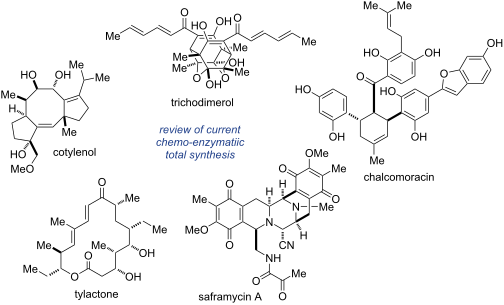
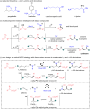
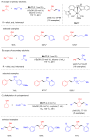
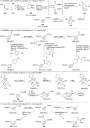
- synthesis of the bis-THIQ alkaloid family, Oguri and Oikawa utilized the NRPS module SfmC to construct a highly functionalized scaffold from amino acid derivatives (Scheme 10) [102]. The total synthesis of 5 from original biosynthetic intermediate 93 requires regioselective amide bond cleavage to remove the
- this problem, the research group designed synthetic substrate analogs (96, 101) that mimic the biosynthetic intermediate 88 (Scheme 10A). By replacing an amide linkage in 88 with an ester linkage, the fatty acid side chain could be removed under mild conditions after enzymatic construction of the




Methyltransferases from RiPP pathways: shaping the landscape of natural product chemistry
Beilstein J. Org. Chem. 2024, 20, 1652–1670, doi:10.3762/bjoc.20.147
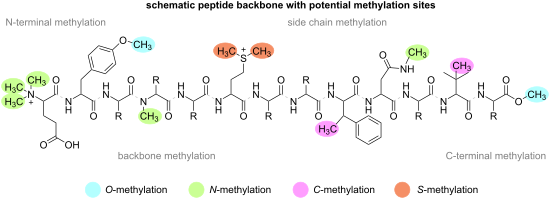
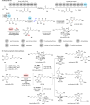
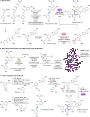
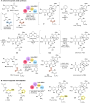
- . Additionally, stereoselectivity can be achieved by using potassium bis(trimethylsilyl)amide for deprotonation and methylation with MeI [33][39]. Any of these routes would yield methylated amino acids that can then be incorporated into an oligopeptide in solid-phase peptide synthesis (SPPS). Additionally, N
- -methylation concurrently to peptide synthesis is also possible. Commonly used methods for SPPS of N-methylated peptides involve activating the amino group with 2-nitrobenzenesulfonamide and methylating agents, such as dimethyl sulphate [40][41][42]. Directly methylating peptides is challenging. Multiple amide
- occur at the N-terminal amide, the peptide backbone, as well as on amino acid side chain amides (Figure 1). While traditional synthesis of N-methylated peptides is challenging and time consuming, installation via RiPP maturases provides an easier, quicker, and greener approach to confer these attributes





Polymer degrading marine Microbulbifer bacteria: an un(der)utilized source of chemical and biocatalytic novelty
Beilstein J. Org. Chem. 2024, 20, 1635–1651, doi:10.3762/bjoc.20.146
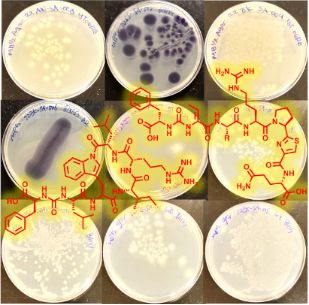
- chains possessed a nucleophilic primary amine. Curiously, the macrocyclizing amide bond was found to exist between a Trp side chain indole nitrogen and the C-terminal carboxylate. To the best of our knowledge, this was the first example of the involvement of a Trp indole in macrolactam formation in
- bacterial natural products, the only other example being the fungal psychrophilins [142][143][144]. It should be noted that the Trp indole nitrogen does participate in amide bond formation in other fungal natural products as well, but not in the context of macrocycle assembly [145]. Compound 27 inhibited




Electrocatalytic hydrogenation of cyanoarenes, nitroarenes, quinolines, and pyridines under mild conditions with a proton-exchange membrane reactor
Beilstein J. Org. Chem. 2024, 20, 1560–1571, doi:10.3762/bjoc.20.139
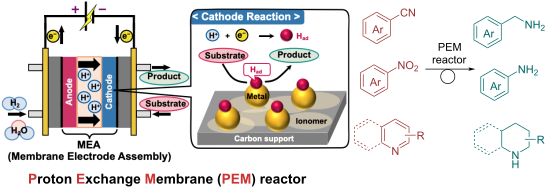
- yields (7a–e, 7g, and 7h), except for 6f which contained a methyl group at the 4-position. The reaction of 2,3-dimethylquinoline (6i) gave the desired product 7i (cis/trans = 3:1) in 77% yield. Substrates bearing acetyl (6k), ester (6l), and amide (6m) groups were tolerated under these conditions and
- applicable and 2,6-dimethylpiperidine (9g) was obtained in moderate yield. In contrast to quinolines, pyridines bearing an amide group were also applicable and amidylpiperidines 9h and 9i were obtained in high yields. Conclusion We established the electrochemical reduction of cyanoarenes, nitroarenes


Benzylic C(sp3)–H fluorination
Beilstein J. Org. Chem. 2024, 20, 1527–1547, doi:10.3762/bjoc.20.137

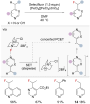
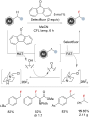
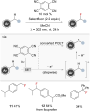
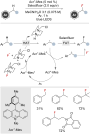
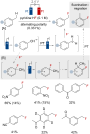
- intramolecular fluorine-atom-transfer (FAT) from an N-fluorinated amide to a pendant carbon-based radical formed from an iron catalyst (Figure 15) [55][56]. This concept of fluorine transfer through a 6-membered transition state was shown to work efficiently from primary, as well as secondary, benzylic radicals
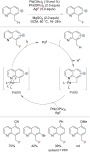
- , non-photochemical, silver-catalysed HAT radical-polar crossover mechanism for nucleophilic benzylic fluorination (Figure 34) [85]. The authors proposed a similar mechanistic pathway to the photochemical methods, citing the use of amide ligands as important for modulating the silver catalyst stability
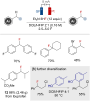
- benzylic C(sp3)–H fluorination with TBPB HAT reagent. Silver-catalysed, amide-promoted benzylic fluorination via a radical-polar crossover pathway. General mechanism for oxidative electrochemical benzylic C(sp3)–H fluorination. Electrochemical benzylic C(sp3)–H fluorination with HF·amine reagents




















Towards an asymmetric β-selective addition of azlactones to allenoates
Beilstein J. Org. Chem. 2024, 20, 1504–1509, doi:10.3762/bjoc.20.134
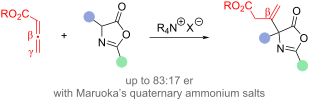
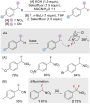
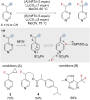
- derivatives by means of nucleophilic azlactone-opening reactions. Gratifyingly primary amines can be easily utilized under reflux conditions to access the amide derivatives 6a and 6b straightforwardly (Scheme 3), thus demonstrating the versatility of compounds 5 to access more complex acyclic α-AA derivatives


Rapid construction of tricyclic tetrahydrocyclopenta[4,5]pyrrolo[2,3-b]pyridine via isocyanide-based multicomponent reaction
Beilstein J. Org. Chem. 2024, 20, 1436–1443, doi:10.3762/bjoc.20.126
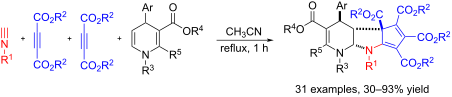
- the amide anion in intermediate D afforded the final product 4 or 6. On the other hand, the final product 4 or 6 might be directly produced by dipolar cycloaddition reaction of 5-(alkylimino)cyclopenta-1,3-diene intermediate C with 5,6-unsaturated dihydropyridine. In consideration of the high


Challenge N- versus O-six-membered annulation: FeCl3-catalyzed synthesis of heterocyclic N,O-aminals
Beilstein J. Org. Chem. 2024, 20, 1412–1420, doi:10.3762/bjoc.20.123
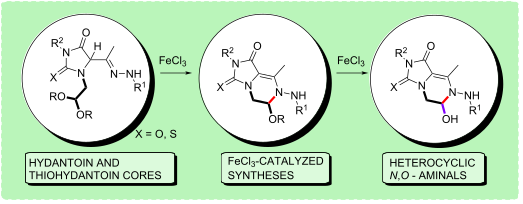
- ), whose sequential acylation process by iso(thio)cyanates 3a–h gives rise to the asymmetric (thio)urea derivatives (intermediate II). The spontaneous nucleophilic attack of the (thio)amide nitrogen on the terminal methyl ester function at C-4 of the starting azo-ene system provides a regioselective




Hypervalent iodine-catalyzed amide and alkene coupling enabled by lithium salt activation
Beilstein J. Org. Chem. 2024, 20, 1405–1411, doi:10.3762/bjoc.20.122

- simple lithium salts for hypervalent iodine catalyst activation. The activated hypervalent iodine catalyst allows the intermolecular coupling of soft nucleophiles such as amides onto electronically activated olefins with high regioselectivity. Keywords: amide coupling; hypervalent iodine catalysis
- hypervalent iodine catalyst. The cationic hypervalent iodine catalyst could then activate the olefin to allow the addition of bifunctional nucleophiles such as an amide to achieve an overall olefin oxyamination process. We have previously reported a series of iodide-catalyzed processes, in which the
- bifunctional amide nucleophiles (Scheme 1e). Results and Discussion Our studies here focused on the development of hypervalent iodine-catalyzed amide and alkene coupling reaction [53][54][55]. In this case, we started with styrene (1) and benzamide (2) as the standard substrates. Using iodotoluene A as the

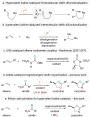


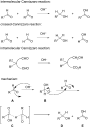
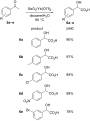
Synthetic applications of the Cannizzaro reaction
Beilstein J. Org. Chem. 2024, 20, 1376–1395, doi:10.3762/bjoc.20.120
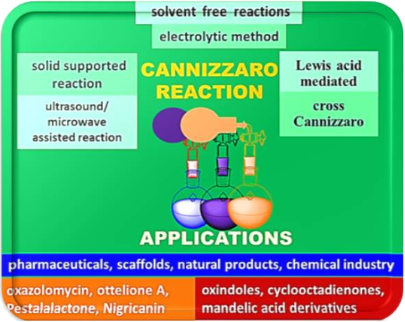
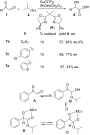
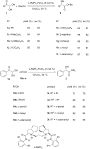
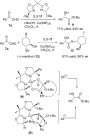
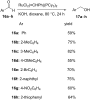
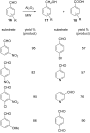
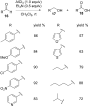
- , and amide, etc. functionalities. The vast area of synthetic venture highlights the significance of this reaction, as exemplified here, in some of the most recent advances of this reaction during the last two decades. Proper utilization of Lewis acid catalysis, desymmetrization of symmetrically remote









Synthesis of 1,2,3-triazoles containing an allomaltol moiety from substituted pyrano[2,3-d]isoxazolones via base-promoted Boulton–Katritzky rearrangement
Beilstein J. Org. Chem. 2024, 20, 1334–1340, doi:10.3762/bjoc.20.117
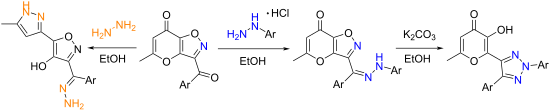
- reaction of hydrazones of 1,2,4-oxadiazoles leads to the corresponding 1,2,3-triazoles containing an amide fragment. Generally, the considered rearrangement proceeds under action of acidic or basic reagents [3][4][5][6][7]. Other options for this process are based on the application of copper salts or


Sustainable tandem acylation/Diels–Alder reaction toward versatile tricyclic epoxyisoindole-7-carboxylic acids in renewable green solvents
Beilstein J. Org. Chem. 2024, 20, 1308–1319, doi:10.3762/bjoc.20.114
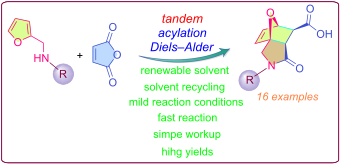
- in good agreement with those reported for this compound in the literature. In all synthesized compounds, Ha and Hb protons are only in endo conformation and therefore the amide and carboxylic acid functional groups are arranged in exo conformation. The fact that the flexible 2n and 2o compounds in
- reaction, the acylation is followed by an intramolecular Diels–Alder reaction and the amide intermediate (a sample compound has been previously isolated and fully characterized as a result of detailed studies) is in equilibrium with the final product at room temperature in polar solvents such as DMSO
- (Figure 3, path I) [132]. Similarly, Tomberg et al., note that in such reactions, amide is formed rapidly by opening the maleic anhydride ring first, followed by a slower cyclization [133]. On the other hand, according to the results of some DFT calculations, Naguib et al., state that [4 + 2


Competing electrophilic substitution and oxidative polymerization of arylamines with selenium dioxide
Beilstein J. Org. Chem. 2024, 20, 1221–1235, doi:10.3762/bjoc.20.105
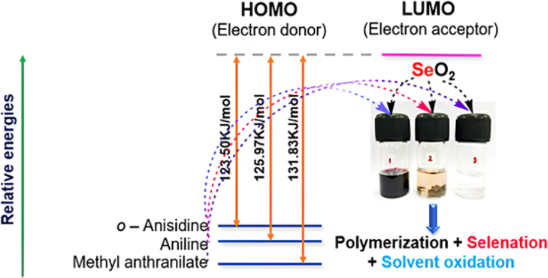
- P21/c [49]. It adopts a transoid geometry around the oxamide C–C bond with nearly 180° torsion angle. This provides the molecule with a planar geometry. It shows intermolecular hydrogen bonding between the amide O and NH moieties. (Figure S35, Supporting Information File 1). Oxamide 9 crystallized in


The Ugi4CR as effective tool to access promising anticancer isatin-based α-acetamide carboxamide oxindole hybrids
Beilstein J. Org. Chem. 2024, 20, 1213–1220, doi:10.3762/bjoc.20.104
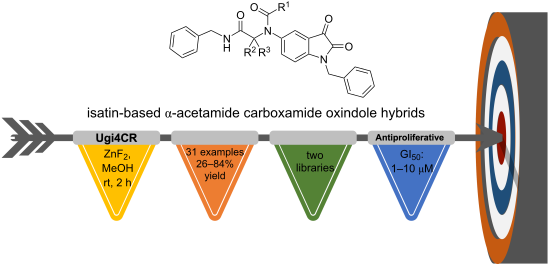
- , 38200, La Laguna, Spain 10.3762/bjoc.20.104 Abstract Considering early-stage drug discovery programs, the Ugi four-component reaction is a valuable, flexible, and pivotal tool, facilitating the creation of two new amide bonds in a one-pot fashion to effectively yield the desired α-aminoacylamides. Here
- , aliphatic chain on the acid component and small aliphatic chain on the aldehyde component to increase the antiproliferative activity. Also, benzyl isocyanide was favored over the aliphatic one (Scheme 1A) [16]. Considering the value of amide groups in drug discovery [19], the feasibility of running the
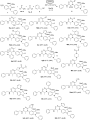
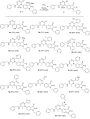
- isatin-based Ugi reaction [16][20][21][22][23] and the potential of the bis-amide-oxindole type derivatives as anticancer agents, a second family was synthesized, and screened for their anticancer activities (Scheme 1B). Results and Discussion Synthesis Underlining sustainability and economically favored




Manganese-catalyzed C–C and C–N bond formation with alcohols via borrowing hydrogen or hydrogen auto-transfer
Beilstein J. Org. Chem. 2024, 20, 1111–1166, doi:10.3762/bjoc.20.98

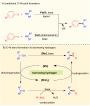
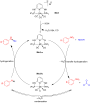
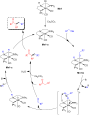
- )phosphine ligand (PN3P) (Mn3) and studied N-methylation reactions in the presence of t-BuOK (20 mol %) at 120 °C for 24 h in toluene [36]. This catalytic system tolerated various functional groups, including nitro, ester, amide, and ketones and gave moderate to good yields (42–98%) of the mono-N-methylated
- Mn23 and t-BuOK (30 mol %) in toluene at 110 °C for 8 h to afford the C3-alkylated oxindoles with up to 85% yield (Scheme 60). However, secondary alcohols substituted with reducible (nitro, amide, aldehyde) groups and −OH, −SH, and –NHMe groups did not provide any expected C-alkylated product. Like the




















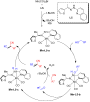


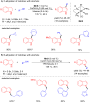


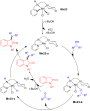


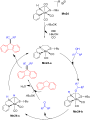

Synthesis of 1,4-azaphosphinine nucleosides and evaluation as inhibitors of human cytidine deaminase and APOBEC3A
Beilstein J. Org. Chem. 2024, 20, 1088–1098, doi:10.3762/bjoc.20.96
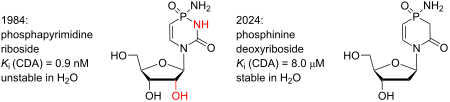
- than 90% purity, as determined by 31P NMR. Compound 10 was used in the next step without further purification. A linear amide 11 was obtained in 47% yield by reacting phosphinate 10 with chloroacetamide in the presence of a large excess of HMDS in acetonitrile at 70 °C for two days. A cyclisation of
- the linear amide 11 was performed in DCM using a 10-fold excess of trifluoroacetic acid at room temperature, providing 1,4-azaphosphinine 12 in 68% yield. Various conditions used for the coupling of nucleobase 8, such as using silylated derivatives (HMDS, BSA) or salts obtained by base treatment (NaH


Innovative synthesis of drug-like molecules using tetrazole as core building blocks
Beilstein J. Org. Chem. 2024, 20, 950–958, doi:10.3762/bjoc.20.85
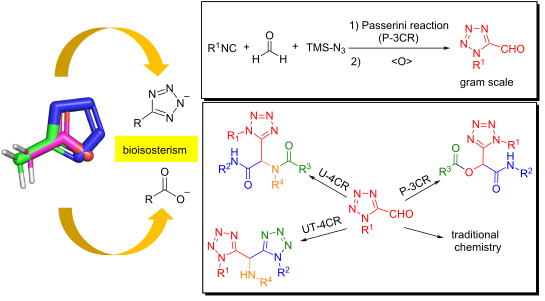
- ready-to-screen drug-like molecules remains a key challenge in the medicinal chemistry field [5][6]. Tetrazole is considered as a privileged scaffold in pharmaceutical and medicinal chemistry, used as a carboxylic acid bioisostere and a cis-amide mimic contributing to improvements in lipophilicity
- , temperature or assisting techniques such as sonication or microwave. Collectively, this building block strategy opens a new avenue to screen acid bioisostere or amide bioisostere compound libraries to revisit or investigate novel drug targets. The diverse scaffold generation from this method also provides




Direct synthesis of acyl fluorides from carboxylic acids using benzothiazolium reagents
Beilstein J. Org. Chem. 2024, 20, 921–930, doi:10.3762/bjoc.20.82
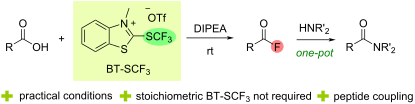
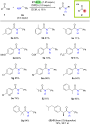
- of the desired amide 5a after 16 h at rt, which could be isolated in 80% yield after column chromatography. A survey of carboxylic acids 1 revealed that the one-pot approach is efficient for a variety of substitution profiles (Scheme 2). Aromatic acids bearing methyl substituents at the para-, ortho
- functionalisation chemistry such as coupling reactions (5g, 5m, 5n). Heteroaromatic (5o) and aliphatic carboxylic acids (5j, 5p, 5q) also reacted smoothly under the optimised conditions. As demonstrated by the efficient formation of amide 5q in 84% yield, the process is tolerant of significant steric bulk at the
- carboxyl α-position. Finally, to assess the influence of the reaction on the stereochemical integrity of chiral carboxylic acid substrates, the deoxyfluorination was performed on the enantiopure (S)-isomer of ibuprofen (er = 99:1). Pleasingly, efficient conversion to the corresponding amide (S)-5l was



(Bio)isosteres of ortho- and meta-substituted benzenes
Beilstein J. Org. Chem. 2024, 20, 859–890, doi:10.3762/bjoc.20.78
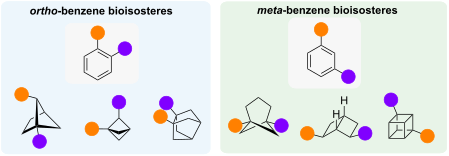
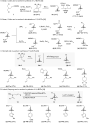
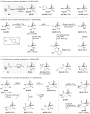
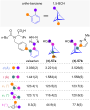
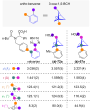
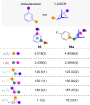
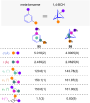
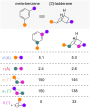
- ]. The ability of 1,5-BCHeps to act as bioisosteres of meta-benzenes was also studied by Anderson and co-workers. They reported the comparison of fatty acid amide hydrolase inhibitor URB597 with its 1,5-BCHep isostere 146 (Figure 21) [27]. They found that while replacement of one of the meta-benzenes
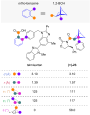
- acid motif, formation of the Weinreb amide 181 and Curtius rearrangement (to 182) were all possible. Comparative physicochemical and biological data for selected 1,3-cubanes and meta-benzene was reported by MacMillan and co-workers. They compared lumacaftor, one of the active compounds of the cystic

















Synthesis and characterization of water-soluble C60–peptide conjugates
Beilstein J. Org. Chem. 2024, 20, 777–786, doi:10.3762/bjoc.20.71
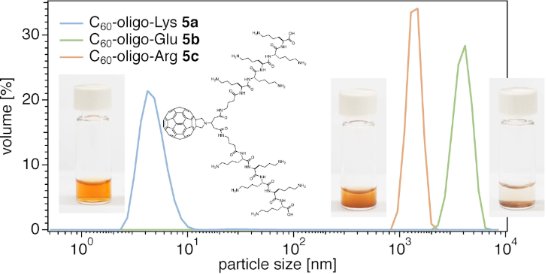
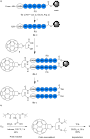
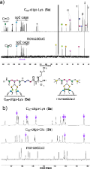
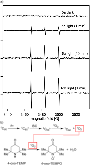
- of hydrophilic oligopeptide anchors (oligo-Lys, oligo-Glu, and oligo-Arg) were synthesized. A previously reported Prato reaction adduct of a biscarboxylic acid-substituted C60 derivative was subjected to a solid phase synthesis for amide formation with N-terminal amines of peptides on resin to
- suitable for the coupling to peptides on resin, prepared by solid-phase peptide synthesis (SPPS) [35]. The detailed conditions for the amide-forming reaction were optimized using biscarboxylic acid-substituted C60 derivative 3 and a similar peptide with a primary amine derived from γ-aminobutyric acid
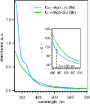
- on resin, a GABA residue was attached to the N-terminus of the peptide in order to provide a less-hindered primary amine, enabling an efficient amide conjugation reaction with biscarboxylic acid-substituted C60 derivative 3. Compound 3 was prepared by Prato reaction of C60 and an N-glycine derivative




Synthesis of new representatives of A3B-type carboranylporphyrins based on meso-tetra(pentafluorophenyl)porphyrin transformations
Beilstein J. Org. Chem. 2024, 20, 767–776, doi:10.3762/bjoc.20.70
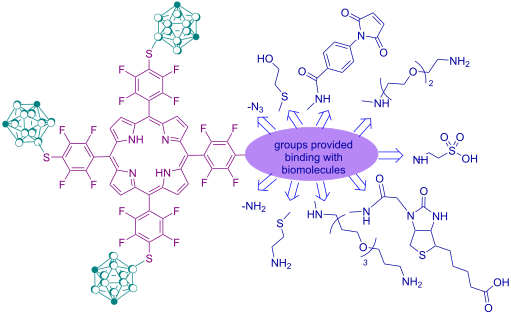
- linkers capable to connect these porphyrins with biomolecules, thus improving their biomedical characteristics and theraputic efficacy for PDT and BNCT due to the combination of different substituents within porphyrin framework. Amide coupling of A3B-type carboranylporphyrin containing an amino



Substrate specificity of a ketosynthase domain involved in bacillaene biosynthesis
Beilstein J. Org. Chem. 2024, 20, 734–740, doi:10.3762/bjoc.20.67
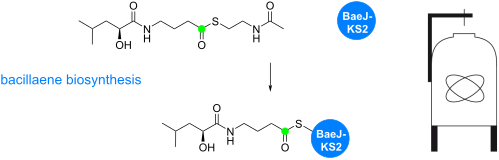
- ester 5 was coupled with the carboxylic acid (S)-8, derived from ʟ-leucine ((S)-6) via hydroxyacid (S)-7, to yield the amide (S)-9. Deprotection through catalytic hydrogenation to (S)-10, saponification of the acetate ester and Steglich esterification with N-acetylcysteamine gave access to the desired


Chemoenzymatic synthesis of macrocyclic peptides and polyketides via thioesterase-catalyzed macrocyclization
Beilstein J. Org. Chem. 2024, 20, 721–733, doi:10.3762/bjoc.20.66
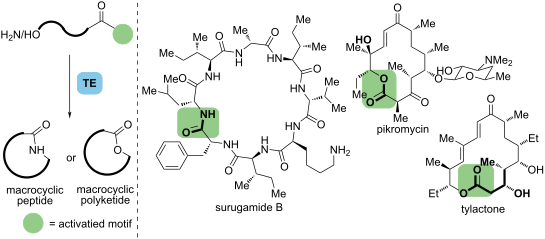
- TE-catalyzed marcolactonization [69]. The synthesis of linear peptide 34 commenced with the lactone opening of 26 to afford Weinreb amide 27. Following primary alcohol protection and amide reduction, the aldehyde 28 was coupled with iodide 29 to afford 30 via Nozaki–Hiyama–Kishi coupling, which was


SOMOphilic alkyne vs radical-polar crossover approaches: The full story of the azido-alkynylation of alkenes
Beilstein J. Org. Chem. 2024, 20, 701–713, doi:10.3762/bjoc.20.64
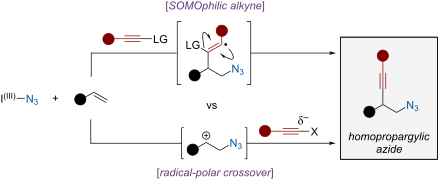
- such as 4d and 4e could be obtained in 84% and 78% yield, respectively. We were pleased to see that the presence of an acetamide did not shut down the reaction, the corresponding product 4f was obtained in 68%. The amide could have competed with the alkynyl-trifluoroborate for the carbocation trapping


Palladium-catalyzed three-component radical-polar crossover carboamination of 1,3-dienes or allenes with diazo esters and amines
Beilstein J. Org. Chem. 2024, 20, 661–671, doi:10.3762/bjoc.20.59
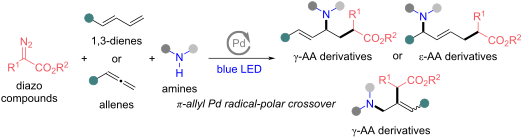
- , amoxapine, an ibrutinib derivative, N-desmethyl sildenafil, silodosin, and lapatinib (4d–k, 35–67%). The late-stage modification of these drug agents and their derivatives in this MCR underlined the synthetic value and high functional group tolerance (e.g., aromatic amine, amide, alcohol, heterocycle). We
- 7 and 8 were produced in high yields through LiAlH4 conditions or nucleophilic addition of methylmagnesium bromide. Moreover, product 4a could be easily transformed to unsaturated ε-amino amide 9 in total 76% yield. Likewise, Weinreb amide 10 was produced and further transformed into ketone 11 in 84