Search results
Search for "chirality" in Full Text gives 314 result(s) in Beilstein Journal of Organic Chemistry. Showing first 200.
Steroid diversification by multicomponent reactions
Beilstein J. Org. Chem. 2019, 15, 1236–1256, doi:10.3762/bjoc.15.121
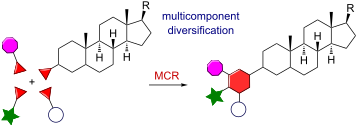
- hormonal ones. All steroids are based on a common skeleton containing three fused six-membered rings and one five membered ring. This fused-ring system provides a readily available source of rigidity and chirality, whose substituents can be oriented either towards the α- or the β-face. Steroids feature a



Catalytic asymmetric oxo-Diels–Alder reactions with chiral atropisomeric biphenyl diols
Beilstein J. Org. Chem. 2019, 15, 955–962, doi:10.3762/bjoc.15.92
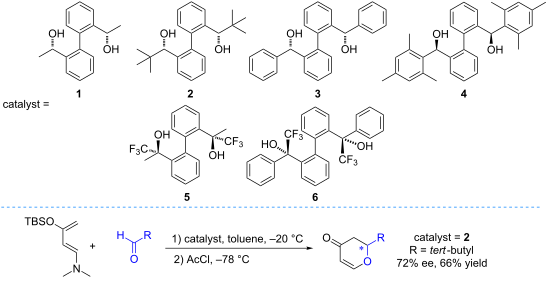
- : asymmetric organocatalysis; axial chirality; biaryls; hydrogen bond; oxo-Diels–Alder reaction; Introduction The Diels–Alder (DA) reaction is a useful and easy-to-perform method for the synthesis of six-membered rings through the direct formation of C–C bonds between a diene and a dienophile (a substituted
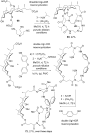
- supramolecular helices or dimers through intermolecular hydrogen bonding of two axially chiral biphenyl hybrid diols (1 and 2 in Scheme 1) which contain point chirality at the side arms and axial chirality at the biphenyl backbone [37]. We envisage the structural similarity and the ability of our scaffold to
- , entries 5 and 6). It should be noted that the absolution configuration of the catalytic product seems to be determined by the axial chirality (P or M) of 5 rather than its point chirality at the side arms (both have the same R-chirality) [40]. The axial chirality of other catalysts have been reported


A diastereoselective approach to axially chiral biaryls via electrochemically enabled cyclization cascade
Beilstein J. Org. Chem. 2019, 15, 795–800, doi:10.3762/bjoc.15.76
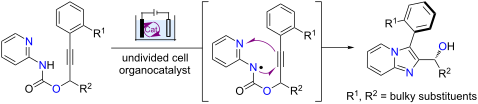
- the biaryls with good to excellent central-to-axial chirality transfer. Keywords: axial chirality; biaryl; electrochemistry; oxidation; radical; Introduction Axially chiral biaryls are prevalent in natural products, bioactive molecules and organocatalysts [1][2]. Among the many methods that have
- been developed for the synthesis of chiral biaryls [3][4][5][6][7][8][9][10], reactions that take avantage of the central-to-axial chirality transfer have been less explored [11][12][13][14]. In addition, an antroposelective synthesis of imidazopyridine-based biaryls has not been reported. Nitrogen
- imidazopyridine-containing biaryls via central-to-axial chirality transfer (Scheme 1). Results and Discussion The substituents on the phenyl ring (R1) and at the propargylic position (R2) of carbamate 2 were varied to study their effects on the diastereoselectivity (Table 1). The electrolysis was conducted under




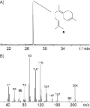
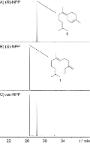
Stereochemical investigations on the biosynthesis of achiral (Z)-γ-bisabolene in Cryptosporangium arvum
Beilstein J. Org. Chem. 2019, 15, 789–794, doi:10.3762/bjoc.15.75
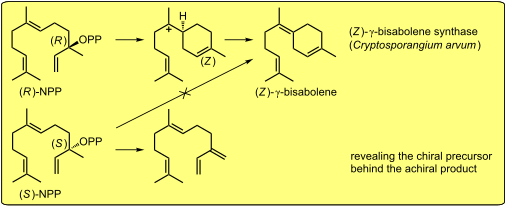
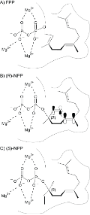
- ; carbocation chemistry; enzyme mechanisms; nerolidyl diphosphate; terpenes; Introduction Given the enormous impact of chirality within biomolecules for all forms of life, it is fascinating to see how nature is able to maintain and reproduce stereochemical information. This concept largely involves the
- provide insights into the stereochemical identity of intermediates in cases of achiral terpenes inhibiting any conclusion from the product structure as shown here, but will also deepen our knowledge of general NPP utilisation by sesquiterpene synthases. The chirality of this tertiary diphosphate is



Tuning the stability of alkoxyisopropyl protection groups
Beilstein J. Org. Chem. 2019, 15, 746–751, doi:10.3762/bjoc.15.70

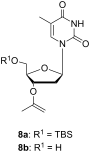
- . Some structural modifications have been introduced to overcome the chirality problem, e.g., the methoxytetrahydropyranyl group suggested in 1970’s for a substitute of THP in nucleoside chemistry [4][5]. For protection of highly sensitive compounds acetone-based acetals can be applied. However, of these



Sigmatropic rearrangements of cyclopropenylcarbinol derivatives. Access to diversely substituted alkylidenecyclopropanes
Beilstein J. Org. Chem. 2019, 15, 333–350, doi:10.3762/bjoc.15.29
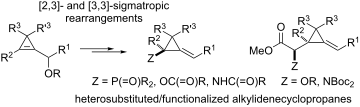
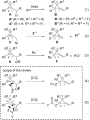
- iron salt) [28][29][30]. Another representative transformation is the copper-catalyzed addition of Grignard reagents to secondary unprotected cyclopropenylcarbinols which proceeds with high levels of chirality transfer to afford alkylidenecyclopropanes possessing a quaternary stereocenter at C2 [31][33
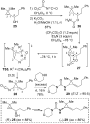
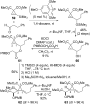
- found to possess optical purities identical to that of the parent substrate (S)-1f (ee = 99%) thereby confirming that complete chirality transfer occurred (from C4 to C2) during the [2,3]-sigmatropic rearrangement [33][34]. It is also worth mentioning that the absolute configuration of (Z)-3f and (E)-3f
- . Although a cationic mechanism could have also been envisioned under the acidic conditions used, the optically enriched acetates 10d and 10e (ee > 98%) led to the corresponding alkylidenecyclopropanes 11d and 11e with complete chirality transfer (ee > 98%) at C2, thereby probing the concerted suprafacial







Synthesis of nonracemic hydroxyglutamic acids
Beilstein J. Org. Chem. 2019, 15, 236–255, doi:10.3762/bjoc.15.22
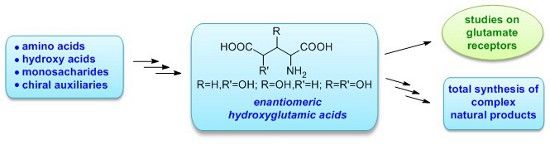
- . Configuration at Cα is retained in the final products and it also induces chirality at the Cβ(OH) center. The hydroxymethyl group of serine can serve as a precursor of the carboxyl fragment but when oxidized to aldehyde it may be attacked by nucleophiles to introduce the required two-carbon residue. From serine
- aldehyde (S)-18 prepared from O-benzyl-L-serine in three standard steps [53] was elongated by a two-carbon fragment employing a Wittig reaction to give Z-alkene 19. To introduce the next center of chirality of the required configuration a iodocyclocarbamation reaction was applied to give trans-oxazolidin-2
- and applications as starting materials in total syntheses of complex natural products from the other. In general, the syntheses started from other amino acids and were designed to preserve the stereochemical integrity at Cα while inducing chirality at Cβ- or Cγ-OH centers. Thus, both enantiomers of


Ruthenium-based olefin metathesis catalysts with monodentate unsymmetrical NHC ligands
Beilstein J. Org. Chem. 2018, 14, 3122–3149, doi:10.3762/bjoc.14.292
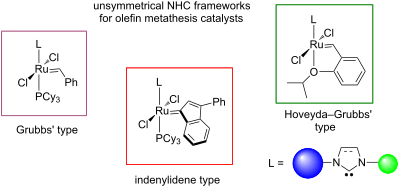
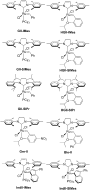
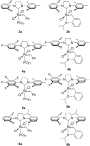
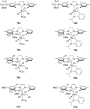
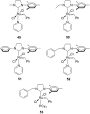
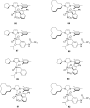
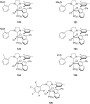
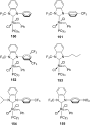
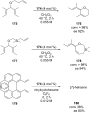
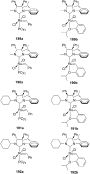
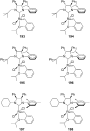
- containing a monosubstituted backbone and two different N-aryl groups (202–204, Figure 37) [63]. The idea behind this new category of compounds lied in the possibility of an efficient transfer of chirality from the backbone group to the metal center through a significant twisting of the monosubstituted arene



















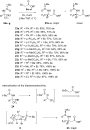
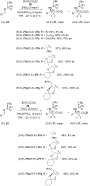
Stereodivergent approach in the protected glycal synthesis of L-vancosamine, L-saccharosamine, L-daunosamine and L-ristosamine involving a ring-closing metathesis step
Beilstein J. Org. Chem. 2018, 14, 2949–2955, doi:10.3762/bjoc.14.274
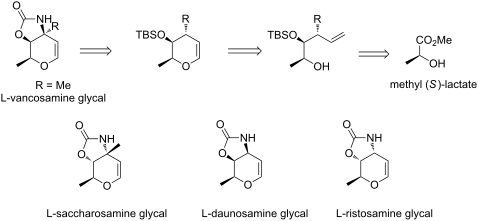
- derivatives, from the same source of chirality. Results and Discussion Synthesis of vancosamine and saccharosamine glycals. The chiral (−)-lactic methyl ester was identified as the privileged starting material considering that the Evans aldol reaction via boron enolates [26][27][28] with an appropriately O


Synthesis of indole–cycloalkyl[b]pyridine hybrids via a four-component six-step tandem process
Beilstein J. Org. Chem. 2018, 14, 2907–2915, doi:10.3762/bjoc.14.269
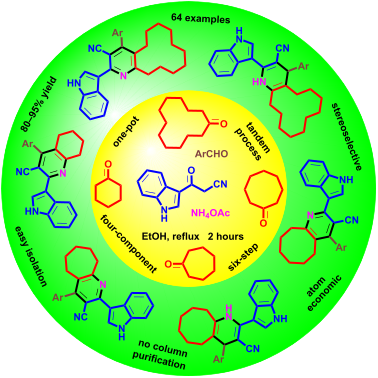
- –cyclododeca[b]pyridine-3-carbonitriles 7 with ortho/ortho-para/ortho-meta substituted phenyl ring at C-4, exhibited axial chirality. For instance, in the case of 7f with p-Cl substituted phenyl ring at C-4, the 5- and 14-CH2 protons appeared as triplets at 2.56 and 3.01 ppm, respectively. However, in 7l
- [b]pyridine-3-carbonitrile hybrid heterocycles 7 with an ortho/ortho-para/ortho-meta substituted phenyl ring at C-4 may be attributed to the axial chirality induced in these molecules due to the restricted rotation of the C–C single bond. The steric hindrance exerted between the nitrile group at C-3
- and the ortho/ortho-para/ortho-meta substitution in the phenyl ring at C-4 restricts the free rotation of the C-4–phenyl C–C single bond thereby inducing axial chirality in these molecules (representative examples, Figure 2). Interestingly in some cases this reaction afforded the unaromatized indole


Some mechanistic aspects regarding the Suzuki–Miyaura reaction between selected ortho-substituted phenylboronic acids and 3,4,5-tribromo-2,6-dimethylpyridine
Beilstein J. Org. Chem. 2018, 14, 2384–2393, doi:10.3762/bjoc.14.214
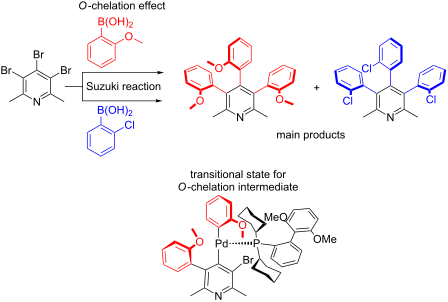
- , Poland 10.3762/bjoc.14.214 Abstract Background: Atropisomers are very interesting stereoisomers having axial chirality resulting from restricted rotation around single bonds and are found in various classes of compounds. ortho-Substituted arylpyridines are an important group of them. A regio- and
- , Tanaka presented an atropselective synthesis of axially chiral all-benzenoid biaryls by gold-catalysed intramolecular hydroarylation of alkynones to give the desired atropisomeric product with a good ee value of 70% [26]. Conventional approaches to the synthesis of biaryl compounds having axial chirality


Calix[6]arene-based atropoisomeric pseudo[2]rotaxanes
Beilstein J. Org. Chem. 2018, 14, 2112–2124, doi:10.3762/bjoc.14.186
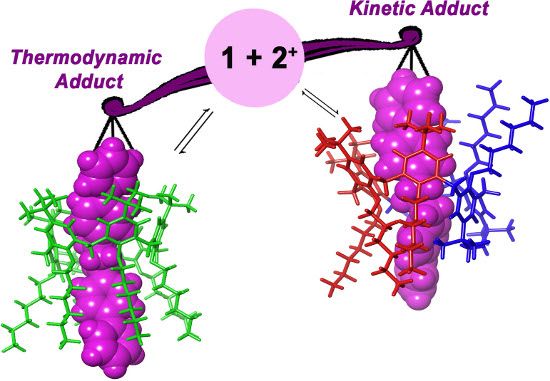
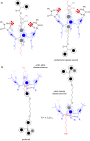
- I*, Figure 1) consisting of achiral components. The combination of a macrocycle with rotational asymmetry and a directional thread with non-equivalent ends is the cause of chirality in this example (Figure 1). Interestingly, our group showed that a chiral pseudorotaxane can be generated upon
- threading a tertiary ammonium axles in a directional (non-flat) calixarene-wheel (II and II*, Figure 1) [17]. In this case the chirality is created by the directionality of the calixarene wheel in a cone conformation, which differentiates the two alkyl chains around the prochiral ammonium center. In 2010




![[Graphic 2]](/bjoc/content/inline/1860-5397-14-186-i3.svg?max-width=637&scale=1.18182) 1cone and 2+
1cone and 2+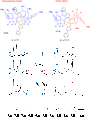


D-Fructose-based spiro-fused PHOX ligands: synthesis and application in enantioselective allylic alkylation
Beilstein J. Org. Chem. 2018, 14, 2082–2089, doi:10.3762/bjoc.14.182
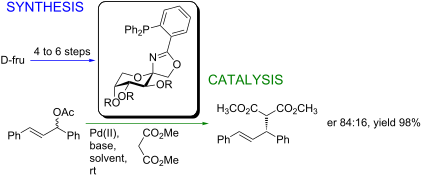
- the desired biologic effect in living organisms, while the other enantiomer could be inactive, cause whole other biological responses or might even have the opposite effect. Hence, for the total synthesis of natural products or pharmaceuticals it is crucial to generate chirality with high




Applications of organocatalysed visible-light photoredox reactions for medicinal chemistry
Beilstein J. Org. Chem. 2018, 14, 2035–2064, doi:10.3762/bjoc.14.179
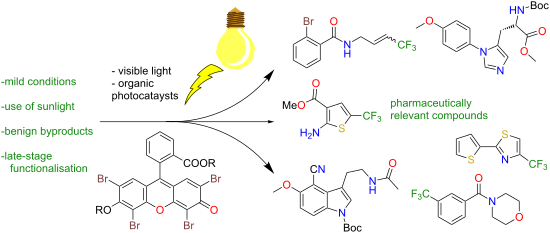
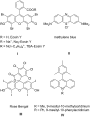
- in biologically active molecules. This reaction was included due to the ability to introduce chirality into lead structures, something that is valuable in medicinal chemistry. The straightforward synthesis of isoxazoline 29a from the corresponding vinyl aldehyde is a perfect example of the potential




A self-assembled photoresponsive gel consisting of chiral nanofibers
Beilstein J. Org. Chem. 2018, 14, 1994–2001, doi:10.3762/bjoc.14.174
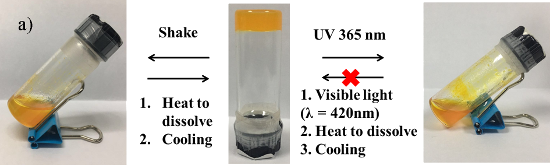
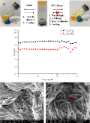
- and the chirality of the nanostructures could both be adjusted by subsequent light irradiation at different wavelengths. The helical nanofiber-like morphology was verified in the internal structure of the gel. The performance of this gel was investigated by a series of methods, such as UV–vis
- absorption spectroscopy, circular dichroism, scanning electron microscopy and rheological techniques. This work provides a new method for facile synthesis of chiro-optical gels. Keywords: chirality; nanostructure; organogel; photoresponse; self-assembly; Introduction Supramolecular gels [1][2] immobilized
- and co-workers [20][21][22][23][24][25][26][27][28][29][30][31] have built a multifunctional controllable gel system, which utilized L-glutamic lipid to construct nanofibers, nanotwists, and nanotubes with the property of chirality. Azobenzene, which is structurally photosensitive, is widely chosen to


A hemicryptophane with a triple-stranded helical structure
Beilstein J. Org. Chem. 2018, 14, 1885–1889, doi:10.3762/bjoc.14.162
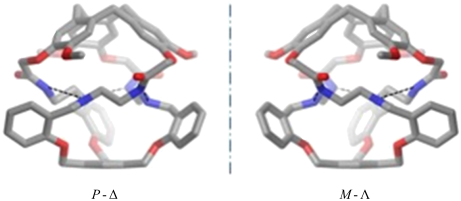
- helical arrangement of the linkers stabilized by intramolecular hydrogen bonds between amide and amine groups. The chirality of the cyclotriveratrylene unit controls the propeller arrangement of the three aromatic rings in the opposite part of the cage. 1H NMR studies suggest that this structure is
- have previously reported that the chirality unit in the south part and the chirality of the CTV unit in the north part influence each other, suggesting that the chirality of the CTV moiety could control the helical arrangement of the linkers [12][13]. We herein report the synthesis of the
- bonding, leading to a triple helical arrangement of the linkers. The CTV unit is also found to strongly control the chirality of this triple helices since the CTV with a P (respectively M) configuration induces a Δ (respectively Λ) chirality of the propeller-like arrangement of the linkers. Results and


Recent advances in hypervalent iodine(III)-catalyzed functionalization of alkenes
Beilstein J. Org. Chem. 2018, 14, 1813–1825, doi:10.3762/bjoc.14.154
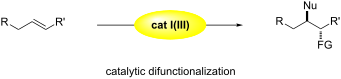
- engages in double hydrogen bonding to form an 11-membered ring, resulting in the chiral helicity. The helical chirality induced in iodine(III) derivatives of 23 bearing the bislactamide motif was described for 27 with an efficient differentiation of the enantiotopic faces of the styrene substrate. This


Design, synthesis and structure of novel G-2 melamine-based dendrimers incorporating 4-(n-octyloxy)aniline as a peripheral unit
Beilstein J. Org. Chem. 2018, 14, 1704–1722, doi:10.3762/bjoc.14.145
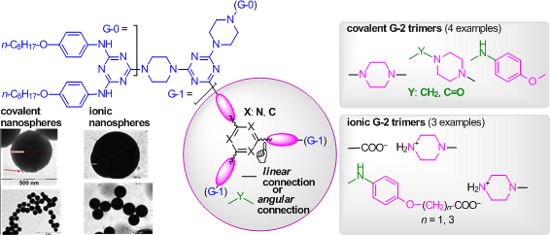
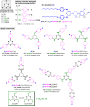
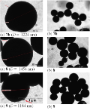
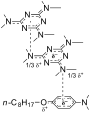
- solution, for example, asymmetric vs propeller (C3-symmetric) [30][36][45][46], “dendritic choreography” [47], “open-gates closed-gates” frontier rotamerism [31] and “in out” axial chirality [33]. In addition, in the targeted G-2 dendrimers (Figure 1), different connections of branches around the core



Recent applications of chiral calixarenes in asymmetric catalysis
Beilstein J. Org. Chem. 2018, 14, 1389–1412, doi:10.3762/bjoc.14.117
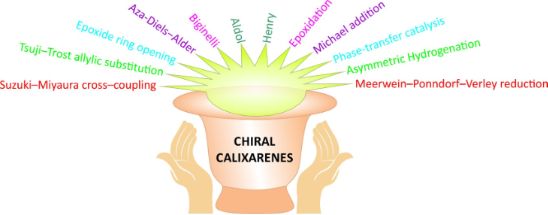
- ][14][15][16][17][18][19][20][21]. In general, chirality can be introduced into the calixarene platform either by incorporation of a chiral group or by asymmetric placement of achiral substituents, creating chirality associated with form. This is termed inherent chirality [22]. Although chiral
- selectivity was the chiral oxazoline unit and not the inherent chirality of calixarene skeleton. Asymmetric hydrogenation Starting with distally O-dialkylated calixarene precursors, a series of BINOL-derived calix[4]arene-diphosphite ligands 40a–g were synthesized by Liu and Sandoval through phosphorylation
- the inherent chirality of calix[4]arene for α-chloroacetophenone and ortho-chloroacetophenone. The results clearly showed the effect of both denticity of ketone reactant and cooperativity between normal and inherent chirality on the selectivity. More recently, Al(III)–calix[4]arene complexes 116a–c


Synthesis of chiral 3-substituted 3-amino-2-oxindoles through enantioselective catalytic nucleophilic additions to isatin imines
Beilstein J. Org. Chem. 2018, 14, 1349–1369, doi:10.3762/bjoc.14.114

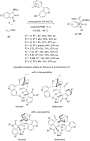
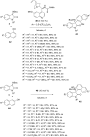
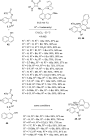
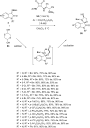
- imines published since the beginning of 2015. Keywords: asymmetric synthesis; chiral 3-amino-2-oxindoles; chirality; isatin imines; nucleophilic addition; Introduction Chiral oxindoles represent an important class of products widely present in nature and exhibiting many biological activities. Among


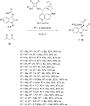


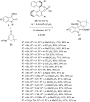

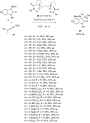
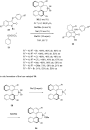






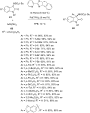
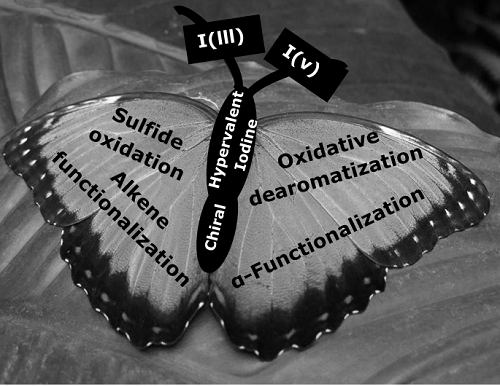
A survey of chiral hypervalent iodine reagents in asymmetric synthesis
Beilstein J. Org. Chem. 2018, 14, 1244–1262, doi:10.3762/bjoc.14.107
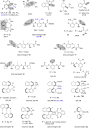
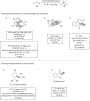
- rearrangement reactions add further value to this chemistry. The strategies used for the synthesis of chiral hypervalent iodine reagents include either the introduction of chirality through the attachment of chiral acids or chiral alcohols to the iodine centers by ligand exchange or are achieved by the
- introduction of axial chirality through the iodoarene backbone. A series of chiral iodine reagents are documented below (Scheme 1). In many cases chiral I(I) reagents get oxidized in situ to the hypervalent I(III) reagents and/or these chiral I(III)/I(V) reagents are used in a catalytic amount in the presence
- asymmetric oxidations were examined in 20 mol % cetyltrimethylammonium bromide (CTAB) reversed micelles [25]. Interestingly, Varvoglis et al. synthesized another new class of a chiral reagent 3 using (+)-camphor sulfonic acids as the source of chirality [26] which was used by Chen et al. for the oxidation of



Diastereoselective auxiliary- and catalyst-controlled intramolecular aza-Michael reaction for the elaboration of enantioenriched 3-substituted isoindolinones. Application to the synthesis of a new pazinaclone analogue
Beilstein J. Org. Chem. 2018, 14, 593–602, doi:10.3762/bjoc.14.46

- increase resulted from a match effect [65][66][67] of the diastereomeric ion pair formed by the chiral nucleophile, the conjugated ketone and the cinchoninium salt. Hence, in our case, the chirality of the new stereochemical center was shown to be controlled by both Michael acceptor and donor interacting


Investigations towards the stereoselective organocatalyzed Michael addition of dimethyl malonate to a racemic nitroalkene: possible route to the 4-methylpregabalin core structure
Beilstein J. Org. Chem. 2018, 14, 553–559, doi:10.3762/bjoc.14.42
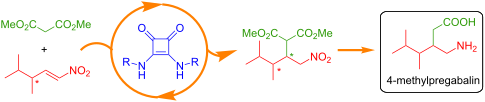
- based on chiral phase-transfer-catalysis of the Michael addition was also reported [26]. In this context, we decided to develop a synthesis of 4-methylpregabalin from a simple and achiral starting material and build its chirality centers using asymmetric catalysis. This paper describes the synthesis of


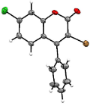
One-pot preparation of 4-aryl-3-bromocoumarins from 4-aryl-2-propynoic acids with diaryliodonium salts, TBAB, and Na2S2O8
Beilstein J. Org. Chem. 2018, 14, 345–353, doi:10.3762/bjoc.14.22
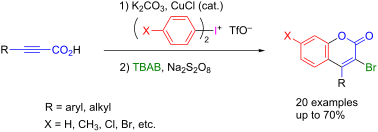
- Teppei Sasaki Katsuhiko Moriyama Hideo Togo Department of Chemistry, Graduate School of Science, Chiba University, Yayoi-cho 1-33, Inage-ku, Chiba 263-8522, Japan Molecular Chirality Research Center, Chiba University, Yayoi-cho 1-33, Inage-ku, Chiba 263-8522, Japan 10.3762/bjoc.14.22 Abstract




Recent developments in the asymmetric Reformatsky-type reaction
Beilstein J. Org. Chem. 2018, 14, 325–344, doi:10.3762/bjoc.14.21
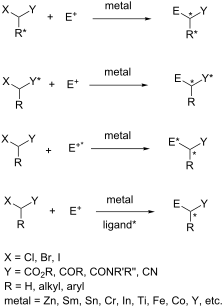
- based on the use of chiral substrates and enantioselective catalytic procedures. Keywords: asymmetric (aza)-Reformatsky reaction; asymmetric synthesis; chirality; diastereoselectivity; enantioselectivity; total synthesis; Introduction The Reformatsky reaction involves the formation of β