Search results
Search for "enolate" in Full Text gives 278 result(s) in Beilstein Journal of Organic Chemistry. Showing first 200.
Hydroarylations by cobalt-catalyzed C–H activation
Beilstein J. Org. Chem. 2018, 14, 2266–2288, doi:10.3762/bjoc.14.202
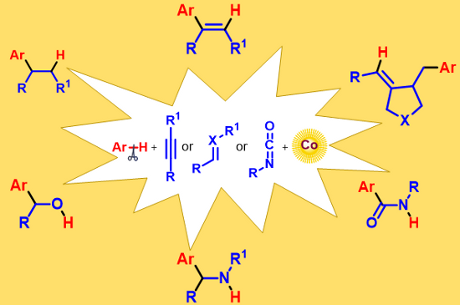
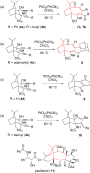
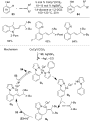
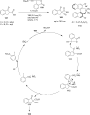
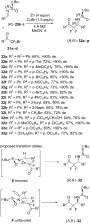
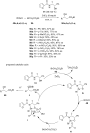
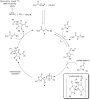
- forms cobalt enolate J2, which converts into J3 by the addition of aldehyde via a chair transition state in a diastereoselective manner. Finally, protonolysis affords product 62 and regenerates the active Co(III)Cp* catalyst for the next cycle. Later, Li et al. reported a Co(III)-catalyzed








Studies towards the synthesis of hyperireflexolide A
Beilstein J. Org. Chem. 2018, 14, 2106–2111, doi:10.3762/bjoc.14.185

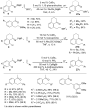
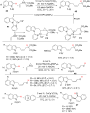
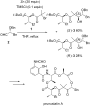
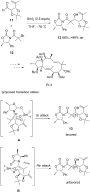
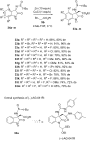
- of the proposed synthetic sequence. Future studies will include the stereoselective epoxidation of 11 followed by opening of the epoxide and lactonization or 1,4-nucleophilic addition to the α,β-unsaturated ketone 11 followed by epoxidation of the resulted enolate with subsequent lactonization to


Hypervalent organoiodine compounds: from reagents to valuable building blocks in synthesis
Beilstein J. Org. Chem. 2018, 14, 1508–1528, doi:10.3762/bjoc.14.128
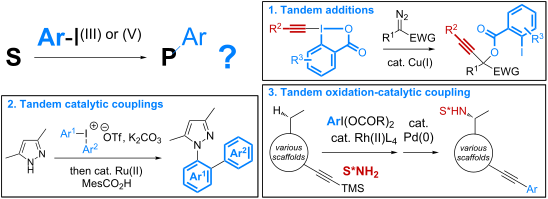
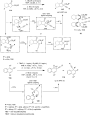
- supported by DFT calculation have led to propose that the rate-determining step of the process would be the ligand exchange between TFA and the O-enolate (Scheme 41) [79]. The resulting cationic intermediate 88 could rapidly evolve through a [3,3] rearrangement. Even though the C-enolate 89 is more stable






Recent applications of chiral calixarenes in asymmetric catalysis
Beilstein J. Org. Chem. 2018, 14, 1389–1412, doi:10.3762/bjoc.14.117
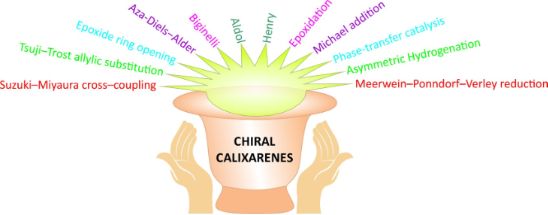
- sodium cation plays an important role in making the sodium enolate soluble in organic phase and this leads to enantiofacial differentiation in the transition state [39]. Just recently, Neri et al. utilized the cation recognition abilities of calixarene-amides in phase-transfer catalysis [40]. Seven
- through the enolate mechanism and complete noncovalent catalysis still needs further investigation. Biginelli reaction The catalysts 69f–j (Figure 8) were successfully applied to the enantioselective multicomponent Biginelli reaction of benzaldehyde, ethyl acetoacetate and urea [68]. The results show that


A survey of chiral hypervalent iodine reagents in asymmetric synthesis
Beilstein J. Org. Chem. 2018, 14, 1244–1262, doi:10.3762/bjoc.14.107
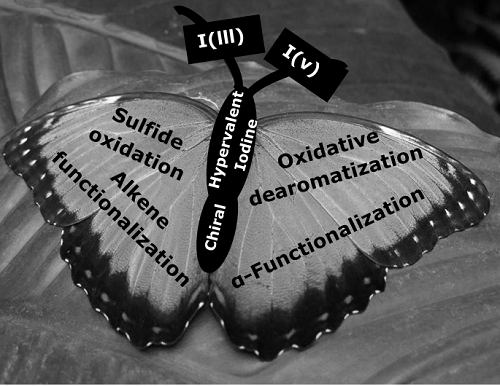
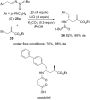
- for the asymmetric α-oxygenation of carbonyls. Nucleophilic attack of the oxygen nucleophile to the intermediate 100 or alternatively a reaction pathway through O-enolate intermediate 101 can explain the desired product formation. In 2014, Kita and Shibata reported a catalytic, enantioselective
- the enolate intermediate 111 followed by the generation of a C–C bond via conjugate addition delivered intermediate carbene 113. A 1,2-hydrogen shift led to the formation of products 108 with enantioselectivities up to 79% (Scheme 24). Later, Maruoka et al. improved the enantioselectivity up to 95% ee



Cross-coupling of dissimilar ketone enolates via enolonium species to afford non-symmetrical 1,4-diketones
Beilstein J. Org. Chem. 2018, 14, 992–997, doi:10.3762/bjoc.14.84
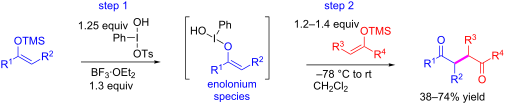
- lithium enolate followed by a second SET step to complete the transformation (Scheme 1a) [16][17]. A different approach, developed by Maulide, relies on the highly efficient umpolung of amides into enolonium species using triflic anhydride, a pyridine base and pyridine N-oxides (Scheme 1b). These
- = H) to afford the 1,4-diketone 7 in 71% yield (Scheme 2) [31]. We therefore focused on identifying the minimum amount of the second enolate that would lead to optimal yields and found that as little as 1.2–1.4 equiv provided the desired 1,4-diketones in acceptable yields without the need for a large
- excess of the second coupling partner (Scheme 2). Since the two coupling partners are both trimethylsilyl enol ethers, an advantage of this method is that the optimization of the coupling of a given enolate pair may be investigated by simply reversing the order of addition. In general, the major



Syn-selective silicon Mukaiyama-type aldol reactions of (pentafluoro-λ6-sulfanyl)acetic acid esters with aldehydes
Beilstein J. Org. Chem. 2018, 14, 373–380, doi:10.3762/bjoc.14.25

- : aldol reaction; ester enolate; fluorine; SF5 compounds; stereochemistry; Introduction The classical acid- or base-catalyzed directed cross aldol reaction of an aldehyde and an enolizable second carbonyl compound is one of the most powerful and reliable carbon–carbon bond-forming transformations in
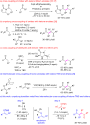
- silylacetals) 5 in the aldol reactions (Scheme 2). From this enolate, two transition states A and B can be formed for the aldol reactions. B should be less favored due to the steric (and may be also electronic) repulsion of the aryl and the SF5 groups. Consequently, the syn-products resulting from transition
- reaction (see above), the nucleophilic attack of the silicon enolate (in our case the ketene silylacetal) at the TiCl4-activated aldehyde results in the formation of intermediate 6. Under the influence of the electron-donating substituent, the elimination of titanium oxide dichloride (Ti(O)Cl2) is favored


Recent developments in the asymmetric Reformatsky-type reaction
Beilstein J. Org. Chem. 2018, 14, 325–344, doi:10.3762/bjoc.14.21
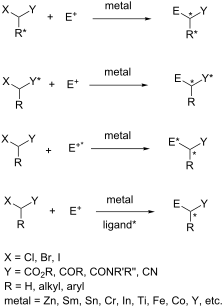
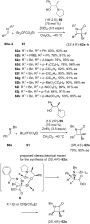
- . The stereochemistry of aza-Reformatsky reactions involving N-sulfinyl ketimines is generally explained through a six-membered transition state with the zinc coordinated to the sulfinyl oxygen atom and the enolate carbanion to the imino carbon atom. The other substituents accommodate in order to
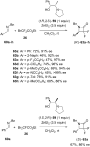
- complex H. A subsequent addition of another molecule of BrZnCH2CO2Et to this complex results in the formation of complex I. In complex I, the double bond of the zinc enolate attacks the carbonyl group of the aldehyde providing compound J which led to the final product 50 under acidic work-up conditions
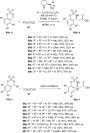
- ). Finally, good to excellent enantioselectivities (76–94% ee) combined to moderate to quantitative yields (45–99%) were reported by Matsubara and Haraguchi in the enantioselective Reformatsky reaction of aldehydes 48b–e,g–i,r–w with enolate equivalent 55 prepared from phenyl isocyanate 56 and CH2(ZnI)2 in











One-pot sequential synthesis of tetrasubstituted thiophenes via sulfur ylide-like intermediates
Beilstein J. Org. Chem. 2018, 14, 243–252, doi:10.3762/bjoc.14.16
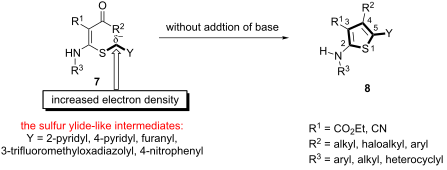
- to excellent yields (68% and 81%). However, a CF3 substituent, which is electron-withdrawing and might promote the keto form, provided the desired compound 8al in a low yield (14%). When the enolate was derived from 3-oxo-3-phenylpropanenitrile, 3-cyano-4-phenylthiophene 8am was obtained in a low


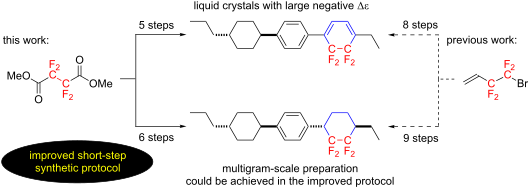
Gram-scale preparation of negative-type liquid crystals with a CF2CF2-carbocycle unit via an improved short-step synthetic protocol
Beilstein J. Org. Chem. 2018, 14, 148–154, doi:10.3762/bjoc.14.10
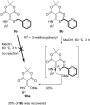
- addition reaction, a Michael addition reaction, giving rise to the corresponding magnesium enolate Int-L. The subsequent hydrolysis of Int-L then leads to the γ-hydroxyketone 8a', which easily tautomerizes into the more stable 5-membered hemiacetal 8a. From the above insight into the reaction mechanism, if


Volatiles from the tropical ascomycete Daldinia clavata (Hypoxylaceae, Xylariales)
Beilstein J. Org. Chem. 2018, 14, 135–147, doi:10.3762/bjoc.14.9
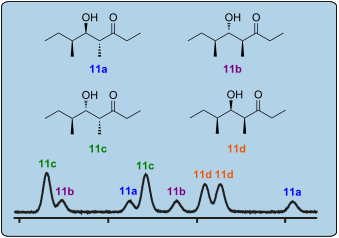
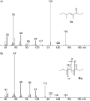
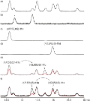
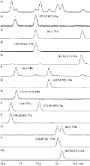
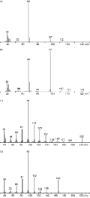
- from an α-cleavage next to the alcohol function. To verify this structural proposal for 11a, racemic 2-methylbutanal (18) was reacted in an aldol addition with the enolate anion of pentan-3-one (23) which produced a racemic mixture of all four diastereomers 11a–d (Scheme 4). All eight stereoisomers of








Vinylphosphonium and 2-aminovinylphosphonium salts – preparation and applications in organic synthesis
Beilstein J. Org. Chem. 2017, 13, 2710–2738, doi:10.3762/bjoc.13.269

- hydride to give the expected ylides 51. A subsequent intramolecular attack of the ylidic carbon atom on the carbonyl group in the Wittig reaction provided 5- or 6-membered alkenes 52 in yields of 51–69% (Scheme 35) [3]. Another example of the use of the enolate anion as a carbon nucleophilic agent was
- reported by Fuchs, who obtained 1,3-cyclohexadienes 54 by reaction of 1,3-butadienyltriphenylphosphonium bromide with enolate anions 53 derived from aldehydes or ketones in yields of 35–57% (Scheme 36). The nucleophilic attack here was directed at position 4 of the diene [11]. Hewson and MacPherson
- of cyclic alkenes in the intramolecular Wittig reaction from vinylphosphonium bromide and ketoesters as precursors of carbon nucleophiles. Synthesis of 1,3-cyclohexadienes by reaction of 1,3-butadienyltriphenylphosphonium bromide with enolate anions. Synthesis of bicyclo[3.3.0]octenes by reaction of


A Brønsted base-promoted diastereoselective dimerization of azlactones
Beilstein J. Org. Chem. 2017, 13, 2663–2670, doi:10.3762/bjoc.13.264

- and Mannich acceptors [20][21][22][23]. Enolate anions derived from azlactone are effective intermediates for the functionalization of α-amino acids. However, the acylation of the enolate ion by another azlactone has been less reported in the literature [24][25][26]. This transformation affords an
- stable and unreactive species (Scheme 2) [29]. Although the mechanistic details of dimerization remain to be elucidated, a plausible mechanism was proposed based on 1H NMR evidence (Figure 3). The NMR experiments revealed that KTCA reacts with CH3CN to form a basic species 3 [30]. The enolate azlactone
- shown in Figure 3. Furthermore, a six-membered ring involving the salt cation, the azlactone ring and the enolate might be involved in the addition step. Irreversible intramolecular cyclization of 4 gave 5 (for a reaction reversibility study of product 2h, see Supporting Information File 1), eventually





![[Graphic 5]](/bjoc/content/inline/1860-5397-13-264-i10.svg?max-width=637&scale=1.18182) vs time for the dimerization of azlactone 1a.
vs time for the dimerization of azlactone 1a.

Diastereoselective Mannich reactions of pseudo-C2-symmetric glutarimide with activated imines
Beilstein J. Org. Chem. 2017, 13, 2473–2477, doi:10.3762/bjoc.13.244
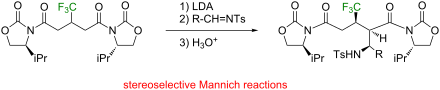
- , Nakanarusawa 4-12-1, Hitachi 316-8511, Japan 10.3762/bjoc.13.244 Abstract As an extension of the boron enolate-based aldol reactions, the oxazolidinone-installed bisimide 1a from 3-(trifluoromethyl)glutaric acid was employed for Mannich reactions with tosylated imines 2 as electrophiles to successfully obtain
- couple of routes to get successful access to such target molecules with a variety of substituents at the 2-position [1][2][3]. Previously, the oxazolidinone-installed bisimide 1a was employed for the crossed aldol reactions by the way of boron enolate which allowed the isolation of optically active
- article. Results and Discussion On the basis of our previous study [4], the chiral glutarimide 1a was employed as the starting material and optimization of reaction conditions with benzaldehyde-based imines 2 was performed (Table 1). Lithium enolate by the action of LDA to 1a was found to be ineffective


Conjugated nitrosoalkenes as Michael acceptors in carbon–carbon bond forming reactions: a review and perspective
Beilstein J. Org. Chem. 2017, 13, 2214–2234, doi:10.3762/bjoc.13.220
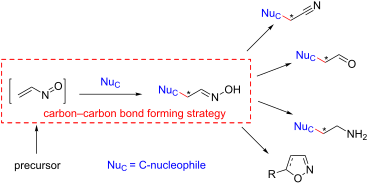
- nucleophile as well as asymmetric catalysis still remains to be studied in these reactions. The high efficiency and stereoselectivity of the enolate addition to nitrosoalkenes make this strategy perspective for application in total synthesis that has been recognized since 1970s. Thus, Oppolzer and co-workers
- -bromooxime 26 with lithium enolate 27 to give oxime 28 via the Michael addition to transient nitrosoalkene NSA6 [31]. Oxime adduct 28 existed predominantly in a cyclic 1,2-oxazine form (Scheme 11). Subsequent benzylation of oxime 28 and the thermal retro-[2 + 2]/[4 + 2]-cycloaddition cascade followed by
- . Diketone 30 was prepared in a straightforward manner by C-C-coupling of nitrosoalkene NSA7 (generated in situ from the corresponding α-bromooxime 31) with silyl enolate of 2-methylcyclopentanone, and subsequent deoxygenation of the resulting oxime 32 with CAN. Unfortunately, attempts to convert pentalenone


Regiodivergent condensation of 5-alkoxycarbonyl-1H-pyrrol-2,3-diones with cyclic ketazinones en route to spirocyclic scaffolds
Beilstein J. Org. Chem. 2017, 13, 2179–2185, doi:10.3762/bjoc.13.218
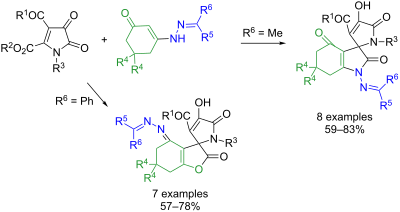
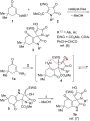
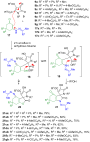
- product of 1,2-addition of the C-nucleophile to the most reactive keto function and subsequent nucleophilic attack by the O-enolate on the conjugate C=C bond activated by two electron acceptors could become more preferable as compared to the alternative “normal” pathway, leading to adducts 10 and
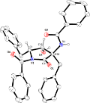
- diastereomers (see Scheme 3 for atom numbering). This configuration was unambiguously confirmed by a single crystal X-ray crystallography of compound 12ab (CCDC 1546062) shown in Figure 1. Puzzled by this unexpected reactivity, we reasoned that the enolate moiety can be activated towards the desired





Synthesis of 2-aminosuberic acid derivatives as components of some histone deacetylase inhibiting cyclic tetrapeptides
Beilstein J. Org. Chem. 2017, 13, 2153–2156, doi:10.3762/bjoc.13.214

- to provide the desired 2-aminoheptenoic acid derivative 11. Several syntheses of this important amino acid have appeared which include Lubell’s palladium-catalyzed allylation [15], Riera’s asymmetric epoxidation protocol [16], Rich’s enolate amination [17] and Hruby’s asymmetric alkylation [18] of a


One-pot multistep mechanochemical synthesis of fluorinated pyrazolones
Beilstein J. Org. Chem. 2017, 13, 1950–1956, doi:10.3762/bjoc.13.189
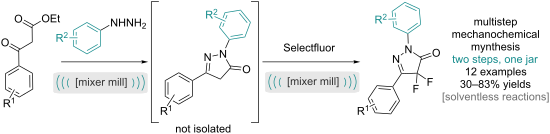
- no further improvement (Table 2, entry 5). The fluorination reaction studied here proceeds via an enolate which is aromatic and therefore is relatively facile (compared to the fluorination of other heterocyclic systems). Introduction of a mild base, such as sodium carbonate to the reaction vessel


Synthesis of benzannelated sultams by intramolecular Pd-catalyzed arylation of tertiary sulfonamides
Beilstein J. Org. Chem. 2017, 13, 1932–1939, doi:10.3762/bjoc.13.187

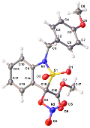
- the methoxycarbonyl group at C-3 under these basic conditions must be due to its reduced electrophilicity in connection with the facile enolate formation at this position. The structures of all obtained compounds were assigned on the basis of 1H and 13C NMR spectra, as well as high resolution mass


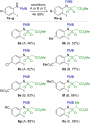
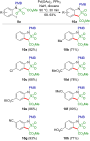


Iodoarene-catalyzed cyclizations of N-propargylamides and β-amidoketones: synthesis of 2-oxazolines
Beilstein J. Org. Chem. 2017, 13, 1823–1827, doi:10.3762/bjoc.13.177

- , 6p is formed under the reaction conditions but the oxazoline ring is readily hydrolysed due to the influence of the electron-withdrawing nitro group on the aromatic ring. The mechanism of this cyclization is proposed to proceed through the formation of iodine(III)-enolate 9 followed by intramolecular

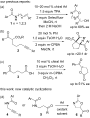

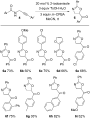


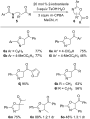


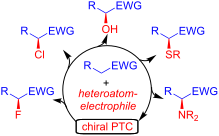
Chiral phase-transfer catalysis in the asymmetric α-heterofunctionalization of prochiral nucleophiles
Beilstein J. Org. Chem. 2017, 13, 1753–1769, doi:10.3762/bjoc.13.170
- alone does not sufficiently catalyse and control the reaction. However, addition of Na2CO3 (leading to formation of the sodium enolate of 1 and the sodium phosphate of H) had a very pronounced effect on both, yield and enantioselectivity when using NFSI as the fluorinating agent. Again, the exact
- enolate and subsequent asymmetric α-functionalization with an electrophile (E). Reported asymmetric α-fluorination of β-ketoesters 1 using different chiral PTCs. Asymmetric α-fluorination of benzofuranones 4 with phosphonium salt PTC F1. Asymmetric α-fluorination of 1 with chiral phosphate-based catalysts


Sustainable synthesis of 3-substituted phthalides via a catalytic one-pot cascade strategy from 2-formylbenzoic acid with β-keto acids in glycerol
Beilstein J. Org. Chem. 2017, 13, 1425–1429, doi:10.3762/bjoc.13.139

- demand and potential for the development of a green one-pot cascade aldol/cyclization strategy for these compounds [22]. The use of β-keto acids as ketone enolate equivalents in metal- and organocatalytic decarboxylative aldol reactions has been extensively studied and proven to be a valuable and



A speedy route to sterically encumbered, benzene-fused derivatives of privileged, naturally occurring hexahydropyrrolo[1,2-b]isoquinoline
Beilstein J. Org. Chem. 2017, 13, 1413–1424, doi:10.3762/bjoc.13.138
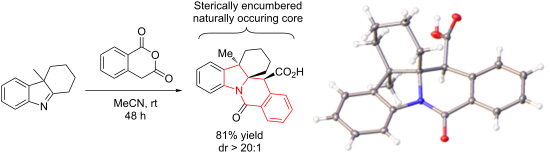
- ) N-acylation of the imine component followed by intramolecular Mannich reaction or (b) Mannich-type addition of the HPA enolate to a protonated imine component followed by intramolecular aminolysis of the cyclic anhydride moiety in Mannich adduct 13 (Scheme 3) [1]. Investigation of the CCR leading to


Switchable highly regioselective synthesis of 3,4-dihydroquinoxalin-2(1H)ones from o-phenylenediamines and aroylpyruvates
Beilstein J. Org. Chem. 2017, 13, 1350–1360, doi:10.3762/bjoc.13.132
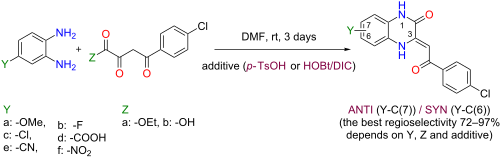
- partial formation of a stabilized enolate anion by DMAP deprotonation. Therefore, using DMAP activation is not recommended for EWG-substituted diamines. e) The reaction of activated ester 12d (obtained in situ after treatment of carboxylic acid 12b with HOBt/DIC, Scheme 6) and a diamine 11a–f (general


Synthesis of alkynyl-substituted camphor derivatives and their use in the preparation of paclitaxel-related compounds
Beilstein J. Org. Chem. 2017, 13, 1230–1238, doi:10.3762/bjoc.13.122
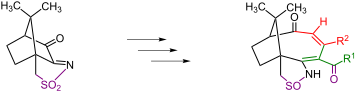
- nitrogen and form the triflate or perrhenate salts. The newly formed five-membered ring in 23 is evident from the 13C NMR signals at 84.0, 90.0, 138.5, 136.0 and 125.5 ppm, and a 1H signal at 5.80 ppm. The enolate carbon is detected at 151.4 ppm in 13C NMR. Neither NMR nor IR show any evidence for carbonyl