Search results
Search for "free-radical" in Full Text gives 160 result(s) in Beilstein Journal of Organic Chemistry.
Anodic coupling of carboxylic acids to electron-rich double bonds: A surprising non-Kolbe pathway to lactones
Beilstein J. Org. Chem. 2013, 9, 1630–1636, doi:10.3762/bjoc.9.186
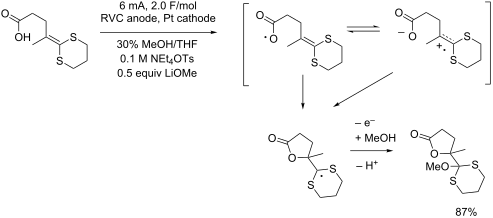
- not appear to be a significant competing pathway. Experimental results indicate that oxidation occurs at the olefin and that the reaction proceeds through a radical cation intermediate. Keywords: carboxylic acid; cyclization; electrolysis; free radical; kolbe; radical cation; Introduction Anodic


Computational study of the rate constants and free energies of intramolecular radical addition to substituted anilines
Beilstein J. Org. Chem. 2013, 9, 1620–1629, doi:10.3762/bjoc.9.185

- indanes or dihydrobenzofurans are too slow to be useful synthetically. Keywords: aromatic substitution; computational chemistry; DFT-D3; free radical; polar effects; radical reaction; Introduction The development of efficient catalytic reactions is one of the central issues of chemistry [1][2]. Radical


Organotellurium-mediated living radical polymerization under photoirradiation by a low-intensity light-emitting diode
Beilstein J. Org. Chem. 2013, 9, 1607–1612, doi:10.3762/bjoc.9.183
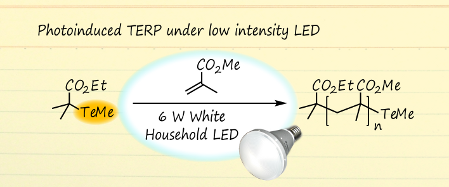
- , and easy availability of the low-cost light source. Structurally well-defined poly(methyl methacrylate), poly(methyl acrylate), and polystyrene, with narrow molecular weight distributions, were synthesized under LED irradiation with or without a neutral density filter. Keywords: free radical; light


Mechanistic studies on the CAN-mediated intramolecular cyclization of δ-aryl-β-dicarbonyl compounds
Beilstein J. Org. Chem. 2013, 9, 1472–1479, doi:10.3762/bjoc.9.167
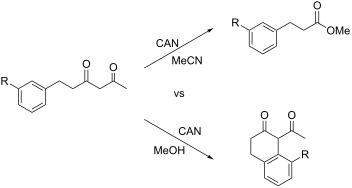
- radical intermediates. Furthermore, DFT computational studies were used to rationalize the observed site selectivity in the 2-tetralone products. Keywords: CAN oxidation; β-dicarbonyls; free radical; radical arylations; tetralones; Introduction 2-Tetralones are important intermediates or components of


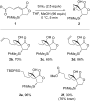
Development of an additive-controlled, SmI2-mediated stereoselective sequence: Telescoped spirocyclisation, lactone reduction and Peterson elimination
Beilstein J. Org. Chem. 2013, 9, 1443–1447, doi:10.3762/bjoc.9.163

- Peterson elimination. The approach allows functionalised cyclopentanols containing two vicinal quaternary stereocentres to be conveniently prepared from simple starting materials. Keywords: cyclisation; free radical; Peterson elimination; reduction; samarium; telescoped process; Introduction Samarium




Diastereoselective radical addition to γ-alkyl-α-methylene-γ-butyrolactams and the synthesis of a chiral pyroglutamic acid derivative
Beilstein J. Org. Chem. 2013, 9, 1432–1436, doi:10.3762/bjoc.9.161
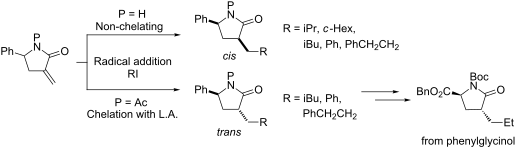
- the reaction were also revealed. This stereoselective radical reaction was used for synthesis of chiral pyroglutamic acid derivatives starting from a commercially available chiral amino acid. Keywords: chelation controlled reaction; diastereoselective reaction; free radical; lactams; pyroglutamic


Copper(II)-salt-promoted oxidative ring-opening reactions of bicyclic cyclopropanol derivatives via radical pathways
Beilstein J. Org. Chem. 2013, 9, 1397–1406, doi:10.3762/bjoc.9.156
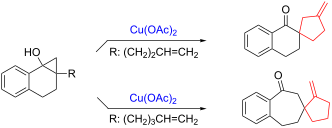
- proposed. Keywords: copper(II) salt; cyclopropanol; electron transfer; free radical; radical ion probe; Introduction Radical ions are key intermediates in electron-transfer (ET) reactions of organic molecules [1][2][3][4][5] and they often undergo fragmentations to yield free radicals and ions [6][7][8
- ][26][28][29][30]. Careful examination of the reaction of probe II with FeCl3 revealed that a small quantity of the spirocyclic ketone was also formed [23][28]. This observation prompted us to explore the possibility that the free radical rearrangement route becomes more predominant when oxidizing


A construction of 4,4-spirocyclic γ-lactams by tandem radical cyclization with carbon monoxide
Beilstein J. Org. Chem. 2013, 9, 1340–1345, doi:10.3762/bjoc.9.151
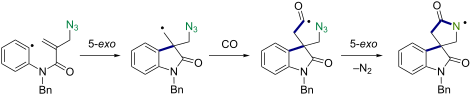
- azides with CO was achieved. The reaction of iodoaryl allyl azides, TTMSS and AIBN under CO pressure (80 atm) in THF at 80 °C gave the desired 4,4-spirocyclic indoline, benzofuran, and oxindole γ-lactams in moderate to good yields. Keywords: 4,4-spirocyclic indol γ-lactams; carbon monoxide; free radical


Preparation of optically active bicyclodihydrosiloles by a radical cascade reaction
Beilstein J. Org. Chem. 2013, 9, 1326–1332, doi:10.3762/bjoc.9.149
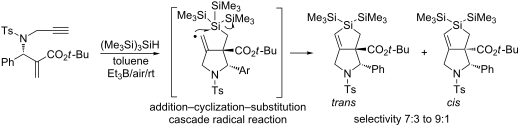
- : bicyclodihydrosilole; free radical; radical cascade reaction; SHi reaction; tris(trimethylsilyl)silane; Introduction Radical cyclization occupies a unique position in organic synthesis because it is a useful reaction for the construction of cyclic molecules [1][2][3][4][5][6][7][8][9][10]. The radical cascade


Metal-free aerobic oxidations mediated by N-hydroxyphthalimide. A concise review
Beilstein J. Org. Chem. 2013, 9, 1296–1310, doi:10.3762/bjoc.9.146
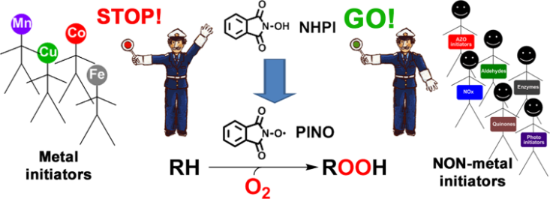
- Abstract Since the beginning of the century, N-hydroxyphthalimide and related compounds have been revealed to be efficient organocatalysts for free-radical processes and have found ample application in promoting the aerobic oxidation of a wide range of organic substrates. When combined with different co
- M−1s−1 [19]) trapping trans,cis peroxyl radicals before they underwent β-fragmentation (Scheme 5). In accordance with this free-radical mechanism, Schmidt and Alexanian more recently reported the aerobic dioxygenation of alkenyl N-aryl hydroxamic acids (Scheme 6) [21]. In this case dioxygenation
- hydroperoxide intermediate, prolonging the free-radical chain [39][40][41]. The NHPI-activation by AQ has been also adopted by other research groups. Li and co-workers applied the NHPI/AQ system to promote the metal and solvent-free oxidation of α-isophorone to ketoisophorone, preventing the isomerization


Homolytic substitution at phosphorus for C–P bond formation in organic synthesis
Beilstein J. Org. Chem. 2013, 9, 1269–1277, doi:10.3762/bjoc.9.143

- . This article deals with two transformations, radical phosphination by addition across unsaturated C–C bonds and substitution of organic halides. Keywords: addition; free radical; homolysis; phosphine; radical; substitution; Introduction Organophosphorus compounds constitute an important class of


The synthesis of well-defined poly(vinylbenzyl chloride)-grafted nanoparticles via RAFT polymerization
Beilstein J. Org. Chem. 2013, 9, 1226–1234, doi:10.3762/bjoc.9.139
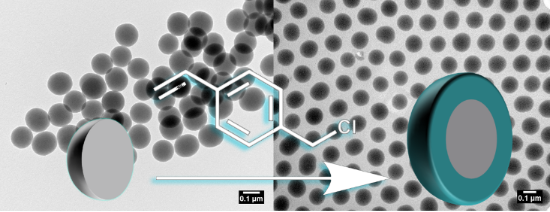
- , and we demonstrate that the exceptional control over their dimensions is achieved by careful tailoring the conditions of the radical polymerization. Keywords: core–shell particles; free radical; grafting; RAFT polymerization; silica; Introduction The versatility of organic free radical chemistry in


Copper-catalyzed aerobic aliphatic C–H oxygenation with hydroperoxides
Beilstein J. Org. Chem. 2013, 9, 1217–1225, doi:10.3762/bjoc.9.138

- aerobic oxygenation of aliphatic C–H bonds with hydroperoxides, which proceeds by 1,5-H radical shift of putative oxygen-centered radicals (O-radicals) derived from hydroperoxides followed by trapping of the resulting carbon-centered radicals with molecular oxygen. Keywords: copper; 1,4-diols; free
- radical; 1,5-H radical shift; hydroperoxides; molecular oxygen; Introduction Aliphatic sp3 C–H bonds are ubiquitous components in organic molecules but rather inert towards most of the chemical reactions. It thus remains as one of the most challenging topics in organic synthesis to develop catalytic


Cascade radical reaction of substrates with a carbon–carbon triple bond as a radical acceptor
Beilstein J. Org. Chem. 2013, 9, 1148–1155, doi:10.3762/bjoc.9.128
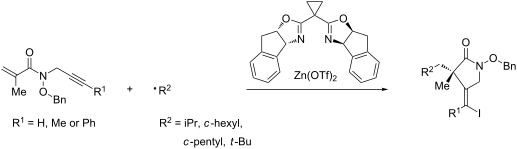
- chiral Lewis acid and these substrates. Keywords: cascade; cyclization; enantioselective; free radical; Lewis acid; radical; Introduction Strategies involving a cascade process offer the advantage of multiple carbon–carbon and/or carbon–heteroatom bond formations in a single operation. Radical




Photoinduced synthesis of unsymmetrical diaryl selenides from triarylbismuthines and diaryl diselenides
Beilstein J. Org. Chem. 2013, 9, 1141–1147, doi:10.3762/bjoc.9.127
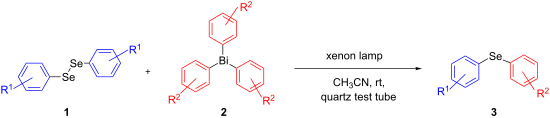
- absence of transition-metal catalysts. A variety of unsymmetrical diaryl selenides can be conveniently prepared by using this arylation method. Keywords: arylation; unsymmetrical diaryl selenide; free radical; organobismuth; photoinduced reaction; Introduction A number of organoselenium compounds are


New core-pyrene π structure organophotocatalysts usable as highly efficient photoinitiators
Beilstein J. Org. Chem. 2013, 9, 877–890, doi:10.3762/bjoc.9.101
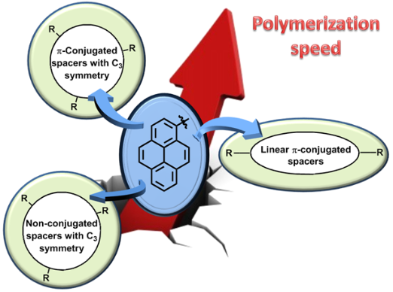
- experiments. The mechanisms involved in the initiation step are discussed, and relationships between the core structure, the Co_Py absorption property, and the polymerization ability are tentatively proposed. Keywords: cationic photopolymerization; free-radical-promoted cationic photopolymerization
- ; photocatalysts; photoinitiators; radical photopolymerization; Introduction Free radical sources are encountered in various areas such as organic chemistry, biochemistry and polymer chemistry. In the field of polymer photochemistry applied to photopolymerization reactions, they are referred to as photoinitiators
- (PI) [1]. These PIs are usable in two scenarios, both of which are light induced. Firstly, they are usable in free radical polymerization (FRP), where the PIs work as either cleavable type I PIs or uncleavable type II PIs in dependence of couples formed by the PI and hydrogen or electron donors (r1 in


Formal synthesis of (−)-agelastatin A: an iron(II)-mediated cyclization strategy
Beilstein J. Org. Chem. 2013, 9, 860–865, doi:10.3762/bjoc.9.99
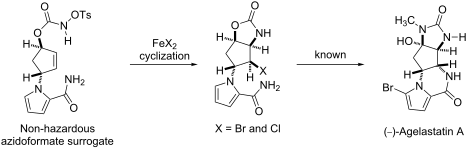
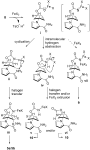
- redox states were operative. Keywords: agelastatin; aminohalogenation; iron(II); free radical; natural product synthesis; Introduction Marine organisms often produce bioactive substances that potentially serve as attractive resources for drug discovery. (−)-Agelastatin A (AA, 1), a cytotoxic alkaloid
- deserve discussion (Scheme 4). We hypothesize that cyclized material 5a/5b, reduced material 9, and enone 10 are generated from an N–iron complex (i) that has free-radical character, as previously proposed in the catalytic cyclization of azidoformates [30][38][39][40]. The contrasting yields obtained from





Recent progress in the discovery of small molecules for the treatment of amyotrophic lateral sclerosis (ALS)
Beilstein J. Org. Chem. 2013, 9, 717–732, doi:10.3762/bjoc.9.82
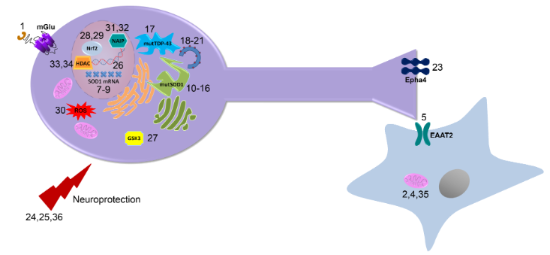
- (3), a heat-shock protein (hsp) coinducer; olesoxime (4), a mitochondrial pore modulator; ceftriaxone (5), an inducer of the glial glutamate transporter (GLT1, EAAT2); and edaravone (6), a free-radical scavenging agent (Figure 1). Our focus in this review is to primarily highlight novel small


Cyclodextrin-induced host–guest effects of classically prepared poly(NIPAM) bearing azo-dye end groups
Beilstein J. Org. Chem. 2012, 8, 1929–1935, doi:10.3762/bjoc.8.224
- controlled conditions such as reversible addition–fragmentation chain-transfer polymerization (RAFT) or atom-transfer radical polymerization (ATRP) [14][15][16]. However, up to now, only a little is known about the preparation of dye-end-group-labeled polymers by using classical free-radical polymerization
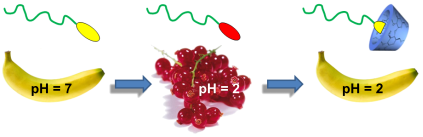
- topology, attract considerable interest for a wide range of optical, medical or reagent-immobilization applications [16]. Results and Discussion Here, we describe the free-radical polymerization of N-isopropylacrylamide (NIPAM, 1) in the presence of a chain–transfer agent and its end-group
- interpreted by the hydrophobic shell of 8 and the strong hydrophobic interaction above the LCST, which causes the formation of the large particles. Conclusion In summary, we have presented the synthesis of an azo-dye-end-group-labeled PNIPAM by free-radical polymerization. The acidochromic and thermo


Bioactive selaginellins from Selaginella tamariscina (Beauv.) Spring
Beilstein J. Org. Chem. 2012, 8, 1884–1889, doi:10.3762/bjoc.8.217

- selaginellin M (2) and selaginellin (3), with IC50 equal to 28.5 and 33.1 μM, respectively. Over the past few decades, considerable biochemical, physiological and pharmacological evidence has accumulated to support the hypothesis that free-radical-mediated oxidative processes are implicated in various human


Evaluation of a chiral cubane-based Schiff base ligand in asymmetric catalysis reactions
Beilstein J. Org. Chem. 2012, 8, 1814–1818, doi:10.3762/bjoc.8.207

- ARC Centre of Excellence for Free-Radical Chemistry and Biotechnology, Research School of Chemistry, Australian National University, Canberra ACT 0200, Australia CSIRO Materials Science and Engineering, Clayton South MDC 3169, Australia College of Pharmacy, Western New England University, Springfield


Influence of cyclodextrin on the solubility of a classically prepared 2-vinylcyclopropane macromonomer in aqueous solution
Beilstein J. Org. Chem. 2012, 8, 1528–1535, doi:10.3762/bjoc.8.173
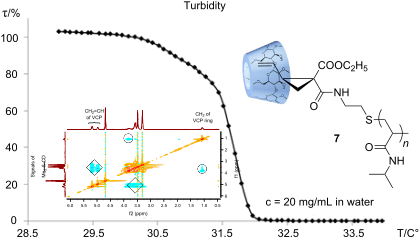
- ; cyclodextrins; graft copolymer; macromonomer; ring-opening free radical polymerization; 2-vinylcyclopropane; Introduction Macromonomers are polymers or oligomers with at least one functional end group that is capable of further polymerization. The molecular weight of macromonomers generally ranges between 1000
- chains. Graft copolymers have found many applications, for example in the field of coatings, adhesives, compatibilizers, emulsifiers or biomaterials [1]. For the synthesis of graft copolymers, free radical copolymerization of macromonomers with suitable low molecular weight vinylmonomers is a widely
- ]. Generally, 2-vinylcyclopropane monomers (2-VCPs) are known for their low volumetric shrinkage or even small expansion during free radical ring-opening polymerization (Scheme 1) [26][27][28]. However, this behavior is not in focus of the present work. The resulting polymer bears mainly 1,5-ring-opened units


Highly selective synthesis of (E)-alkenyl-(pentafluorosulfanyl)benzenes through Horner–Wadsworth–Emmons reaction
Beilstein J. Org. Chem. 2012, 8, 1185–1190, doi:10.3762/bjoc.8.131
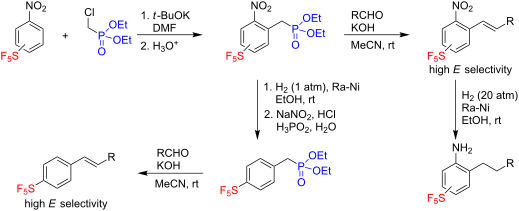
- chemical stability, high electronegativity and strong lipophilic character [2][3][4][5][6][7]. The availability of SF5-containing compounds is very limited. Aliphatic SF5-containing compounds are available through free-radical addition of toxic and expensive SF5Cl to unsaturated compounds [8][9], and


Chiral recognition of macromolecules with cyclodextrins: pH- and thermosensitive copolymers from N-isopropylacrylamide and N-acryloyl-D/L-phenylalanine and their inclusion complexes with cyclodextrins
Beilstein J. Org. Chem. 2011, 7, 204–209, doi:10.3762/bjoc.7.27
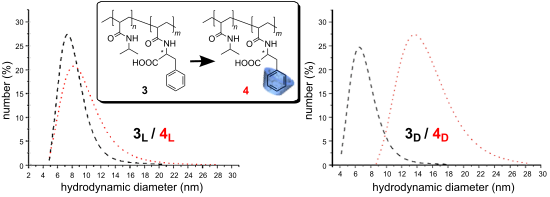
- soluble stimuli-responsive polymers bearing phenylalanine moieties via host-guest interaction with β-cyclodextrin and randomly-methylated-β-cyclodextrin (RAMEB-CD). We synthesised N-acryloyl-D/L-phenylalanine monomers (2D, 2L) which were then copolymerised under free radical conditions with N
- -acryloyl-D-phenylalanine (2D) and N-acryloyl-L-phenylalanine (2L) were copolymerised under free radical conditions with NIPAAm in a molar ratio of 1:20 and 1:10. Compounds 2D or 2L were obtained under Schotten–Baumann conditions using acryloyl chloride. Both copolymers were prepared under similar


Miniemulsion polymerization as a versatile tool for the synthesis of functionalized polymers
Beilstein J. Org. Chem. 2010, 6, 1132–1148, doi:10.3762/bjoc.6.130
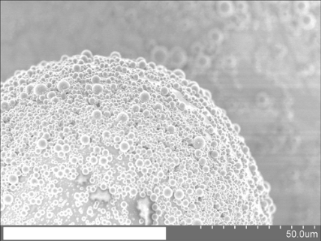
- , polyaddition, polycondensation, and modifications of polymers, and the trends followed in this research field. The so-called “artificial miniemulsions”, i.e., the miniemulsion of preformed polymer, are not described in this review. Free-radical polymerization Most of the reported polymer syntheses in
- miniemulsion are performed via free-radical polymerization. In fact, the polymerization is very simple to perform and yields are usually high. Moreover, the polydispersity in size of the miniemulsion particles and the dispersity of the polymer are not directly correlated, and for applications the focus is in
- of the monomer. The polymerization of hydrophilic monomers in inverse miniemulsions was recently reviewed by Capek [16]. The functional groups that can be introduced in latexes by free-radical polymerization in inverse miniemulsion are overviewed in Table 2. Homopolymers of crosslinked