


Search results
Search for "gold" in Full Text gives 324 result(s) in Beilstein Journal of Organic Chemistry. Showing first 200.
Repurposing the anticancer drug cisplatin with the aim of developing novel Pseudomonas aeruginosa infection control agents
Beilstein J. Org. Chem. 2018, 14, 3059–3069, doi:10.3762/bjoc.14.284
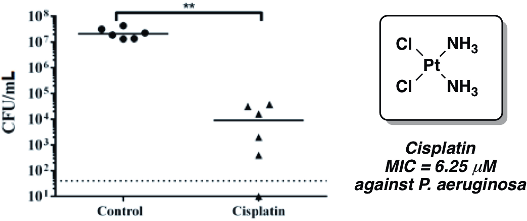
- established biofilm [44]. In addition, the gold-containing drug, auranofin, was found to be a broad-spectrum bactericidal compound, that targets the thiol-redox homeostasis of a range of Gram-positive bacteria [45]. Further studies will be carried out to better understand the resistance mechanism and




Synthesis of unnatural α-amino esters using ethyl nitroacetate and condensation or cycloaddition reactions
Beilstein J. Org. Chem. 2018, 14, 2846–2852, doi:10.3762/bjoc.14.263
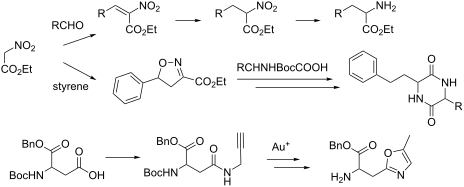
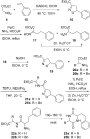
- -amino esters was achieved using gold(I) chemistry. Keywords: α-amino ester; α-nitro esters; cerium ammonium nitrate; cycloaddition; gold(I) cyclization; Introduction In the course of our work on an original synthesis of imidazo[1,2-a]pyrazin-3(7H)-one luciferins [1], a large variety of racemic α-amino
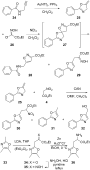
- 16. A second [2 + 3] cycloaddition-based approach is described in Scheme 4. It started with the preparation of the methylene-bearing dipolarophile 25 from propargylamide 24 using gold(I) chemistry, which turned out to be tolerant to a wide variety of dry solvents (dichloromethane, tetrahydrofuran
- in Scheme 5, the oxazole-bearing α-amino ester 43 was prepared from the aspartic acid derivative 37 through the propargylamide 38 followed by a gold(I)-catalyzed cyclization to form the oxazoline derivative 40. Concerning the amidation step, propargylamide 38 was obtained in 78% yield provided that


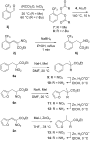

Gold-catalyzed post-Ugi alkyne hydroarylation for the synthesis of 2-quinolones
Beilstein J. Org. Chem. 2018, 14, 2572–2579, doi:10.3762/bjoc.14.234
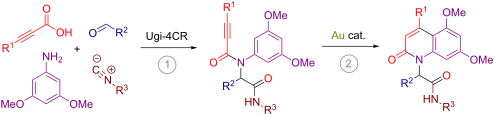
- . Subjecting these adducts to a gold-catalyzed intramolecular alkyne hydroarylation process allowed to efficiently construct the 2-quinolone core bearing a branched substituent on the nitrogen atom. Keywords: gold catalysis; hydroarylation; 2-quinolones; Ugi reaction; Introduction Quinoline and its oxidized
- nitrogen atom through an intramolecular gold-catalyzed alkyne hydroarylation reaction (Scheme 2). It should be noted, that heterocyclic syntheses through post-Ugi transformations have been under extensive exploration for the last two decades [47][48][49], especially in terms of gold-catalyzed Friedel
- (Table 1, entries 1 and 2). The latter proved to be a better choice affording the targeted 2-quinolone 8a in up to 90% yield (Tabel 1, entry 2). Using AgOTf in the absence of gold slowed down the reaction leading to decreased yields of 8a even at an elevated temperature of 60 °C (Table 1, entries 3–5


Synthesis of 3-aminocoumarin-N-benzylpyridinium conjugates with nanomolar inhibitory activity against acetylcholinesterase
Beilstein J. Org. Chem. 2018, 14, 2545–2552, doi:10.3762/bjoc.14.231
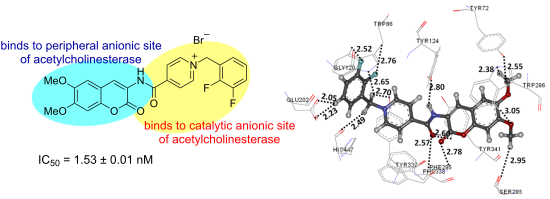
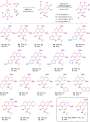
- acetylcholinesterase complexed with donepezil (PDB code 4ey7) [18] retrieved from the Protein Data Bank was used in the study because of its high similarity (approximately 88% similarity), good resolution (at 2.35 Å) and ligand state with donepezil of Human AChE structure. Molecular docking of AChE via the GOLD v5.2.2



Synthesis of indolo[1,2-c]quinazolines from 2-alkynylaniline derivatives through Pd-catalyzed indole formation/cyclization with N,N-dimethylformamide dimethyl acetal
Beilstein J. Org. Chem. 2018, 14, 2411–2417, doi:10.3762/bjoc.14.218
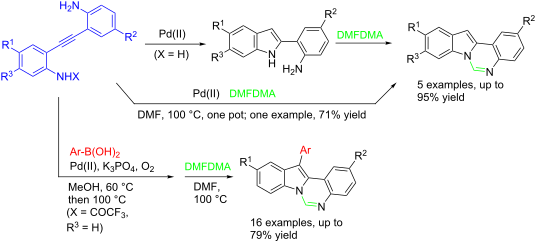
- palladium-catalyzed reaction of 15a in the presence of DMFDMA led directly to the formation of quinazoline 13a in 71% yield through a sequential process (Scheme 5a). The selective formation of products 13 from 15 (and also from 3-unsubstituted indoles 14) is not trivial, since the previously reported gold


Some mechanistic aspects regarding the Suzuki–Miyaura reaction between selected ortho-substituted phenylboronic acids and 3,4,5-tribromo-2,6-dimethylpyridine
Beilstein J. Org. Chem. 2018, 14, 2384–2393, doi:10.3762/bjoc.14.214
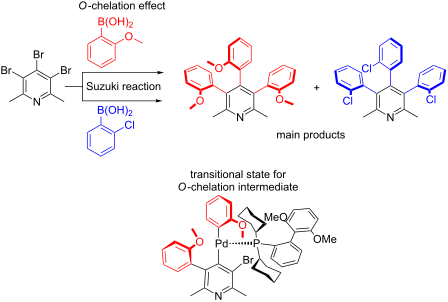
- , Tanaka presented an atropselective synthesis of axially chiral all-benzenoid biaryls by gold-catalysed intramolecular hydroarylation of alkynones to give the desired atropisomeric product with a good ee value of 70% [26]. Conventional approaches to the synthesis of biaryl compounds having axial chirality


Tetrathiafulvalene – a redox-switchable building block to control motion in mechanically interlocked molecules
Beilstein J. Org. Chem. 2018, 14, 2163–2185, doi:10.3762/bjoc.14.190
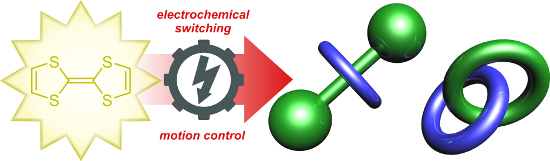
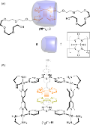
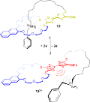
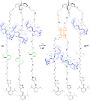
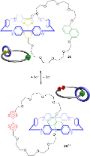
- “molecular muscles” can accumulate their force and consequently deform a material by concerted switching. In rotaxane 21, the two macrocycles are attached by disulfide anchors to the gold surface of microcantilever beams (500 × 100 × 1 µm) and form a self-assembled monolayer. Chemical oxidation leads to a
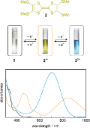
- of a microcantilever beam with gold surface induced by operation of the redox-switchable [3]rotaxane 21 attached to its surface. TTF-dimer interactions in a redox-switchable tripodal [4]rotaxane 22. (a) A molecular friction clutch 23 which can be operated by electrochemical stimuli. (b) Schematic











Anomeric modification of carbohydrates using the Mitsunobu reaction
Beilstein J. Org. Chem. 2018, 14, 1619–1636, doi:10.3762/bjoc.14.138
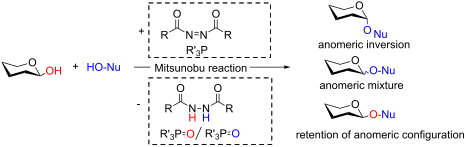
- carbocyclic lignan variants related to podophyllotoxin, a pseudo-anomeric stereospecific inversion of a carbasugar was achieved in good yield in Nishimura’s group [39]. More recently, the Mitsunobu procedure was applied in the context of gold-catalyzed glycosylation in order to install a reactive anomeric


Rhodium-catalyzed C–H functionalization of heteroarenes using indoleBX hypervalent iodine reagents
Beilstein J. Org. Chem. 2018, 14, 1208–1214, doi:10.3762/bjoc.14.102
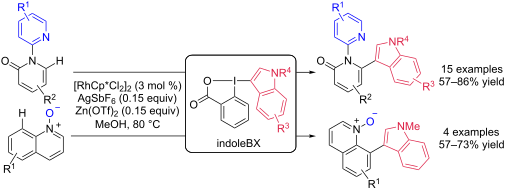
- nitrogen and a transition metal catalyst (reaction 1, Scheme 1A) [11][12][13][14][15][16][17][18][19]. In particular, Li and co-workers have used ethynylbenziodoxolone (EBX) hypervalent iodine reagents to achieve a regiodivergent alkynylation of the pyridinone core employing either a gold(I) or a rhodium




Nanoreactors for green catalysis
Beilstein J. Org. Chem. 2018, 14, 716–733, doi:10.3762/bjoc.14.61
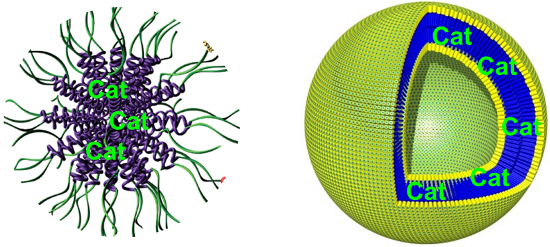
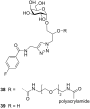
- in yields above 70%. Moreover, the Pd@PNIPAM nanoreactors could be easily recycled thanks to the reversible phase-transition of the polymeric brushes [112]. Que et al. reported the synthesis of gold nanoparticles (Au NPs) sheltered in PEG-PS nanogels for the reduction of 4-nitrophenol (4NP) [121


AuBr3-catalyzed azidation of per-O-acetylated and per-O-benzoylated sugars
Beilstein J. Org. Chem. 2018, 14, 682–687, doi:10.3762/bjoc.14.56
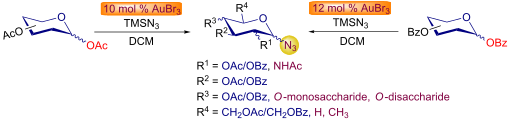
- -benzoylated disaccharides needed 2–3 h of heating at 55 °C. Keywords: acylated sugars; azidation; gold(III) bromide; N-glycoside; oxophilicity; Introduction The past few decades had seen the enrichment of transition metal complexes in various glycosylation strategies [1]. In particular, gold complexes with
- their operationally simple, safe and neutral reaction conditions, had widely contributed to the development of new glycosylation methods. Gold(I) and gold(III) complexes are usually alkynophilic [2], carbophilic and oxophilic because of their affinity towards the alkynes’ and C–O π systems [3][4][5][6
- ]. Thus, various research groups employed either a remote alkyne group possessing versatile glycosyl donors [7][8][9][10][11][12][13][14][15][16] or used glycals [17] for effective O-, C-, and S-glycosylation reactions using gold(I) and gold(III) catalysts. Among the gold-catalyzed activation of non


Carbohydrate inhibitors of cholera toxin
Beilstein J. Org. Chem. 2018, 14, 484–498, doi:10.3762/bjoc.14.34
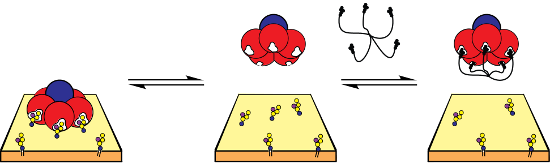
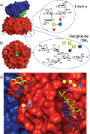
- restricted to organic polymers. Gold nanoparticles coated in galactosyl ligands have been shown to be effective multivalent ligands for cholera toxin [73] and E. coli heat-labile toxin [74]. In these cases the objective of the studies was not to invoke inhibition, but rather to exploit the colour changes
- induced upon crosslinking the gold nanoparticles with CTB or LTB as a strategy for detecting the bacterial toxins. Conclusion Cholera and related diseases caused by other bacterial toxins remain a substantial threat to society. This challenge, and a molecular understanding of the basis of toxin action







Volatiles from the tropical ascomycete Daldinia clavata (Hypoxylaceae, Xylariales)
Beilstein J. Org. Chem. 2018, 14, 135–147, doi:10.3762/bjoc.14.9
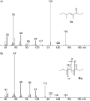
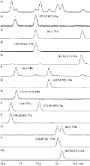
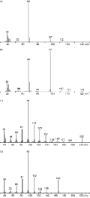
- structure of 6-nonyl-2H-pyran-2-one (17). For comparison a synthetic reference compound was prepared from undec-1-yne (34) and propiolic acid (35) in a gold-catalysed reaction developed by Schreiber and co-workers [40] (Scheme 8). Synthetic 17 and the volatile from D. clavata showed the same mass spectrum








Fluorescent nucleobase analogues for base–base FRET in nucleic acids: synthesis, photophysics and applications
Beilstein J. Org. Chem. 2018, 14, 114–129, doi:10.3762/bjoc.14.7
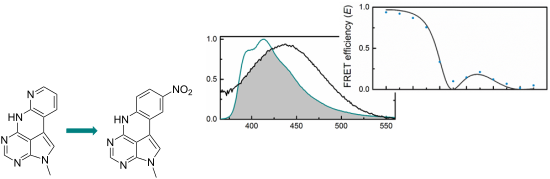
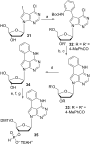
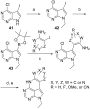
- . Unfortunately, the variety of functional groups requires different protection group strategies and, moreover, changes the reactivity of the nucleobase. Since the discovery of the gold standard of fluorescent base analogues, 2-AP, a multitude of adenine FBAs has emerged [22]. Notable recent examples of adenine





Recent applications of click chemistry for the functionalization of gold nanoparticles and their conversion to glyco-gold nanoparticles
Beilstein J. Org. Chem. 2018, 14, 11–24, doi:10.3762/bjoc.14.2
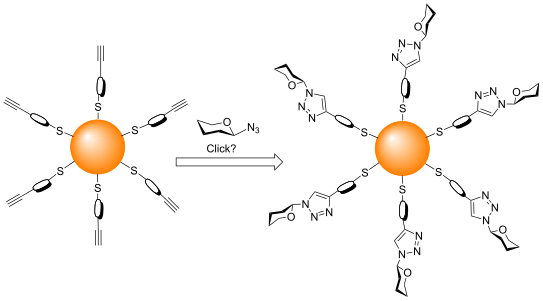
- unravel the causes of, potential new detection methods for, and novel therapeutic strategies against, many disease states. In the last two decades, glyco-gold nanoparticles have emerged as one of several potential new tools for glycoscientists. Glyco-gold nanoparticles consist of the unique structural
- combination of a gold nanoparticle core and an outer-shell comprising multivalent presentation of carbohydrates. The combination of the distinctive physicochemical properties of the gold core and the biological function/activity of the carbohydrates makes glyco-gold nanoparticles a valuable tool in
- glycoscience. In this review we present recent advances made in the use of one type of click chemistry, namely the azide–alkyne Huisgen cycloaddition, for the functionalization of gold nanoparticles and their conversion to glyco-gold nanoparticles. Keywords: azide–alkyne Huisgen cycloaddition; carbohydrates



Asymmetric synthesis of propargylamines as amino acid surrogates in peptidomimetics
Beilstein J. Org. Chem. 2017, 13, 2428–2441, doi:10.3762/bjoc.13.240
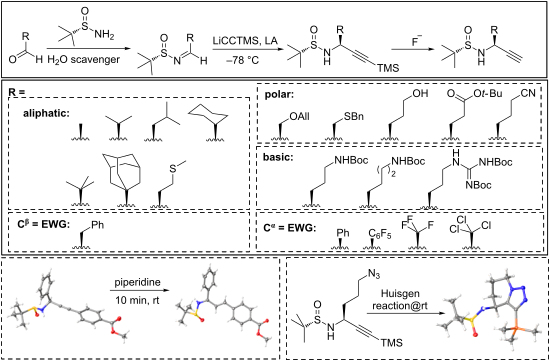
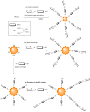
- ], gold-catalyzed azetidin-3-one formation [16], as well as various transition metal-mediated additions and cross-coupling reactions [17] represent further important reactions of propargylamines, providing the potential to form innovative peptidomimetics (Figure 2). Our attention has been focused on the
- ) Intramolecular Pauson–Khand reaction, R = (S)-tert-butylsulfinyl, R’ = CH2CH2OTBDPS [14]. b) Diels–Alder reaction, R = pTs, R’ = H, R’’ = Me [15]. c) Gold-catalyzed intramolecular reaction to azetidin-3-ones, R = tert-butylsulfonyl, R’ = aromatics, aliphatics [16]. d) Sonogashira cross-coupling, R = tert


Is the tungsten(IV) complex (NEt4)2[WO(mnt)2] a functional analogue of acetylene hydratase?
Beilstein J. Org. Chem. 2017, 13, 2332–2339, doi:10.3762/bjoc.13.230
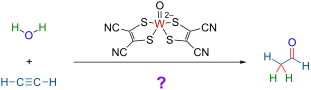
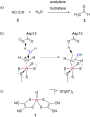
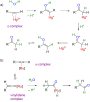
- . More specifically, gold complex AuCl(PPh3) is not usually considered an alkyne hydration catalyst itself, but turns into a catalytically active gold(I) cation after activation with silver salt or Lewis acid [31][32][33][34]. Under the forcing microwave reaction conditions in aqueous methanol



Synthesis and photophysical properties of novel benzophospholo[3,2-b]indole derivatives
Beilstein J. Org. Chem. 2017, 13, 2304–2309, doi:10.3762/bjoc.13.226
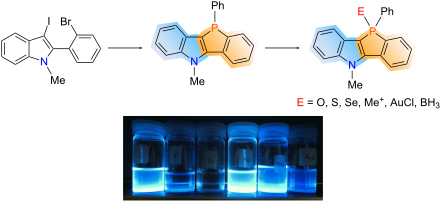
- , respectively. The reaction of 3 with methyl triflate afforded phospholium triflate 7. Phosphole 3 was treated with chloro(dimethyl sulfide)gold in CH2Cl2, resulting in P-complexation and thus affording the gold complex 8. The borane complex 9 was readily prepared from 3 by treating with borane in THF. The
- NMR signals of gold and boron complexes 8 and 9 were observed at δ = 6.0 and 11.5 ppm, respectively. These results show that the electronic nature of the phosphorus atoms is similar to that of the oxidized species 4–7 (δ = 6.0–27.0 ppm). In the IR spectrum of 4 in KBr, a strong absorption for P=O
- electron-accepting properties. This red shift related to methylation of a phosphorus atom is in line with other earlier studies [10][18][33]. The fluorescence intensity of 7 (Ф = 67%) was as strong as that of phosphine oxide 4. The gold and boron complexes (8 and 9, respectively) showed contrasting


Phosphonic acid: preparation and applications
Beilstein J. Org. Chem. 2017, 13, 2186–2213, doi:10.3762/bjoc.13.219
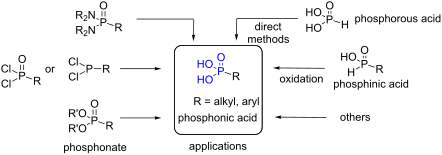
- exchange procedure yields 47 that can then be fully dealkylated with NaI in acetone to produce the phosphonic acid disodium salt 48 [172] (Figure 17). Bromotrimethylsilane is nowadays the gold standard reagent to produce phosphonic acid from dialkyl phosphonate under mild conditions (usually at room


Superstructures with cyclodextrins: Chemistry and applications IV
Beilstein J. Org. Chem. 2017, 13, 2157–2159, doi:10.3762/bjoc.13.215
- with gold salts, such as KAuBr4, which readily crystallize as fine needles [10]. Based on this finding, a new and environmentally friendly recovery process for gold from excavation material is under development. Significant progress was achieved in the functionalization of CDs through the
Synthesis and metal binding properties of N-alkylcarboxyspiropyrans
Beilstein J. Org. Chem. 2017, 13, 1542–1550, doi:10.3762/bjoc.13.154
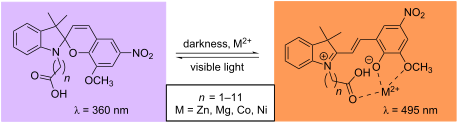
- , N-alkylcarboxyspiropyrans have been tagged (via ester or amide linkage) to carbon nanotubes (e.g., for photocontrolled Zn2+ delivery in biological media [8]) and gold electrodes (for photoswitching the bioelectrocatalytic cascade of cytochrome c/cytochrome oxidase [9]), and attachment to




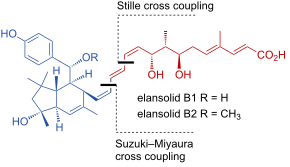
Total synthesis of elansolids B1 and B2
Beilstein J. Org. Chem. 2017, 13, 1280–1287, doi:10.3762/bjoc.13.124
- cuvette at l = 589 nm (Na D-line). The optical rotation is given in [° mL·g−1·dm−1] with c = 1 corresponding to 10 mg mL−1. Preparative HPLC was operated at a Merck Hitachi LaChrome HPLC (Pump L7150 or L7100, Interface D-7000, Diode Array Detector L-7450), respectively, at a Beckmann system Gold HPLC


Strategies toward protecting group-free glycosylation through selective activation of the anomeric center
Beilstein J. Org. Chem. 2017, 13, 1239–1279, doi:10.3762/bjoc.13.123

- glycosylations have now even been described in materials chemistry. Here they provide an extremely efficient way to functionalize hydroxy-terminated self-assembled monolayers (SAM) on gold (Scheme 37). First the surface was incubated with divinyl sulfone (DVS) in a basic aqueous buffer (pH 11) followed by




Glyco-gold nanoparticles: synthesis and applications
Beilstein J. Org. Chem. 2017, 13, 1008–1021, doi:10.3762/bjoc.13.100
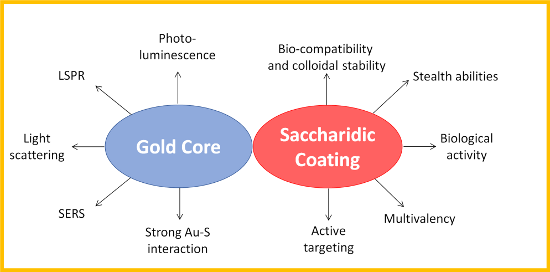
- , Nanotechnology Lab., Via G. Fantoli 16/15, 20138 Milan, Italy 10.3762/bjoc.13.100 Abstract Glyco-gold nanoparticles combine in a single entity the peculiar properties of gold nanoparticles with the biological activity of carbohydrates. The result is an exciting nanosystem, able to mimic the natural multivalent
- presentation of saccharide moieties and to exploit the peculiar optical properties of the metallic core. In this review, we present recent advances on glyco-gold nanoparticle applications in different biological fields, highlighting the key parameters which inspire the glyco nanoparticle design. Keywords
- : gold nanoparticles; glyco nanoparticles; glyconanomaterials; immunology; targeting; Introduction Carbohydrates are well recognized as crucial biomolecules for their capability to produce an enormous number of biocodes which are translated into their ability to promote or suppress a plethora of


First total synthesis of kipukasin A
Beilstein J. Org. Chem. 2017, 13, 855–862, doi:10.3762/bjoc.13.86
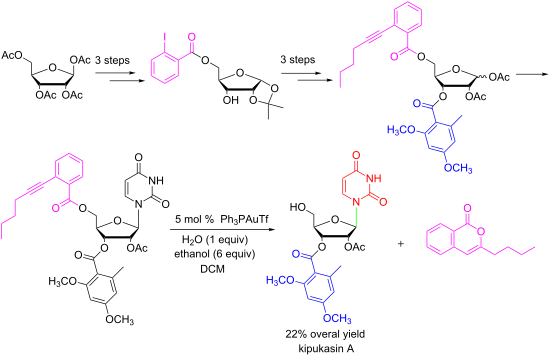
- subsequent Vorbrüggen glycosylation, the protecting group could be removed smoothly in the presence of 5 mol % Ph3PAuOTf in dichloromethane to provide kipukasin A in high yield and regioselectivity. Keywords: gold catalysis; kipukasin A; marine nucleoside; total synthesis; Vorbrüggen glycosylation
- , ester protection is preferred for Vorbrüggen glycosylations in nucleoside syntheses. Very recently, ortho-alkynylbenzoate was successfully developed by our group as neighboring participation group to synthesize 2’-modified nucleosides [24], which could be removed smoothly in the presence of gold(I





