Search results
Search for "linkers" in Full Text gives 193 result(s) in Beilstein Journal of Organic Chemistry.
Synthesis, structure, and mechanical properties of silica nanocomposite polyrotaxane gels
Beilstein J. Org. Chem. 2015, 11, 2194–2201, doi:10.3762/bjoc.11.238
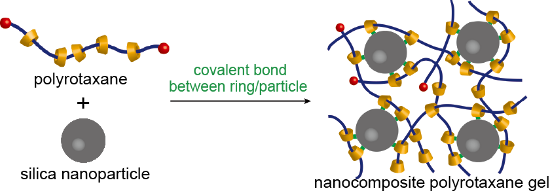
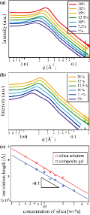
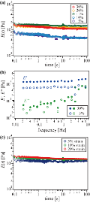
- not occur without silica. This suggests that the silica nanoparticles behave as cross-linkers. Viscoelastic measurements of the nanocomposite gels showed no stress relaxation regardless of the silica content for <20% compression strain, indicating an infinite stable network without physical cross
- polymer chains were not directly bonded but rather mechanically interlocked to the silica surfaces. The silica nanoparticles were homogeneously distributed in the gel and worked as cross-linkers to immobilize the cyclic components of the polyrotaxanes on the silica surfaces. As the backbone polymer chains




Ru complexes of Hoveyda–Grubbs type immobilized on lamellar zeolites: activity in olefin metathesis reactions
Beilstein J. Org. Chem. 2015, 11, 2087–2096, doi:10.3762/bjoc.11.225
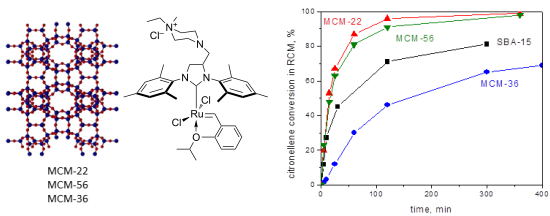
- developed [1][5][13]; most of them are based on surface modification by specially designed linkers providing covalent bond linkage between the support and Ru complex. Hoveyda–Grubbs type catalysts are also capable of direct (linker-free) immobilization by means of non-covalent interactions [8][14][15][16


A new approach to ferrocene derived alkenes via copper-catalyzed olefination
Beilstein J. Org. Chem. 2015, 11, 2072–2078, doi:10.3762/bjoc.11.223
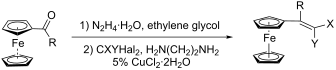
- ]). Ethynylferrocenes are one of the most popular and extremely effective starting compounds in the creation of ferrocenyl polymers. They are widely used for making both polyferrocenylvinylenes (double bond linkers) [17][18][19][20][21] and polyethynylferrocenes (triple bond linkers) [22][23][24][25]. There are several


Supramolecular chemistry: from aromatic foldamers to solution-phase supramolecular organic frameworks
Beilstein J. Org. Chem. 2015, 11, 2057–2071, doi:10.3762/bjoc.11.222
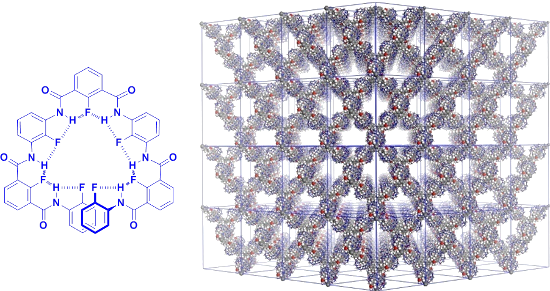
- . Under low temperature, this dynamic [2]catenane could be quantitatively generated. The intramolecular hydrogen bonds formed by the aromatic amide linkers remarkably enhanced the complexation of the porphyrin units towards the fullerene and the bipyridine ligand. Jiang further introduced amide subunits
- folding of the same series of benzene/triazole oligomers [10]. Recently, Jiang and co-workers reported that when fluorine or chlorine was introduced to the 2-position of the meta-substituted benzene linkers, the corresponding triazole oligomers folded to give new foldamers, which were stabilized by


![[Graphic 1]](/bjoc/content/inline/1860-5397-11-222-i19.png?max-width=637&scale=1.18182) 16 and dynamic [2]catenane formed by compounds 17–19.
16 and dynamic [2]catenane formed by compounds 17–19.


Dicarboxylic esters: Useful tools for the biocatalyzed synthesis of hybrid compounds and polymers
Beilstein J. Org. Chem. 2015, 11, 1583–1595, doi:10.3762/bjoc.11.174

- polymerization of tubulin in vitro. The same methodology might be applied to direct a drug by conjugation to a molecule binding to a specific receptor on cancer cells. Moreover, by using dicarboxylated linkers with a disulfide bridge, it was possible to generate dynamic libraries of dimeric hybrids based on


Preparative semiconductor photoredox catalysis: An emerging theme in organic synthesis
Beilstein J. Org. Chem. 2015, 11, 1570–1582, doi:10.3762/bjoc.11.173

- methylene linker, gave doubly reduced 42a as the major product. Pleasingly, however, the dioxadibenzenacyclododecaphane 41a was also obtained in a modest yield (13%). Diacids 40b and 40c were designed with rigid, planar phenyl ring linkers. TiO2 SCPC of the ortho-analogue 40b was more successful with the







Interactions between tetrathiafulvalene units in dimeric structures – the influence of cyclic cores
Beilstein J. Org. Chem. 2015, 11, 930–948, doi:10.3762/bjoc.11.104
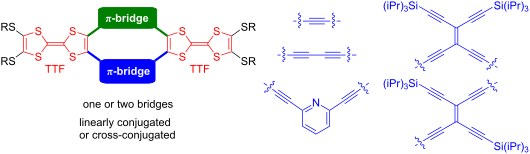
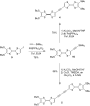
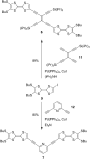
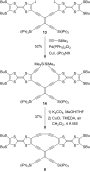
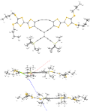
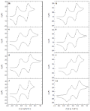
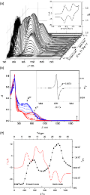
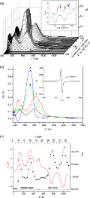
- -ethynylpyridine linkers. When two TTFs are closer together via an ethyne spacer (4), the two waves are rather broad. In fact, a shoulder can be seen for each wave, which indicates weak interactions between the two units, not only for generating two TTF radical cation units, but also for the final generation of






Adsorption mechanism and valency of catechol-functionalized hyperbranched polyglycerols
Beilstein J. Org. Chem. 2015, 11, 828–836, doi:10.3762/bjoc.11.92
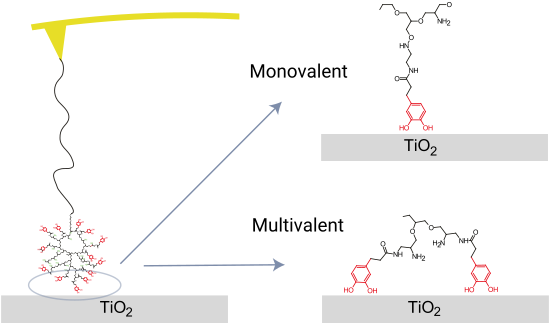
- catechol anchor and the second with two catecholic anchors. Note that in the last case, two catechols with two PEG linkers were involved that shared the applied force. Therefore, the triple maximum force peak with forces of up to 2 nN could be measured despite rupture forces of 1.4 nN for the Si–O bond
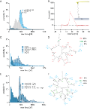
- linkers. A) Force–distance curves where the rupture is not smooth but rather interrupted by a cluster of measurement points. This inter-rupture force is indicated by a red arrow. B) Same curve as in A) depicted as force vs time. C) Histograms of inter-rupture forces for the different dwell times



Influence of length and flexibility of spacers on the binding affinity of divalent ligands
Beilstein J. Org. Chem. 2015, 11, 804–816, doi:10.3762/bjoc.11.90
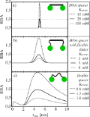
- also the maximum and width of the RBA are in this case determined by the binding range σ. In Figure 5b we assume a DNA spacer that is decorated with flexible PEG linkers at both ends. The PEG linkers consist of four monomers each. Assuming Gaussian-chain behavior with a segment length of b = 0.38 nm
- [29], the fluctuations of the PEG linkers and hence the fluctuations of the whole ligand sum up to Δr = 0.5 nm. The shape of the RBA now is much broader, showing that the ligand is less affected by a mismatch between spacer length and distance between the binding pockets. Additionally, we obtain = 5
- attached via two PEG linkers. Linker length and binding range are set to be identical to the example presented in Figure 5b. The average end-to-end distance of the DNA spacer is either chosen to be equal to d (black, continuous line), or is chosen to be too short by 0.7 nm, which mimics the length of two




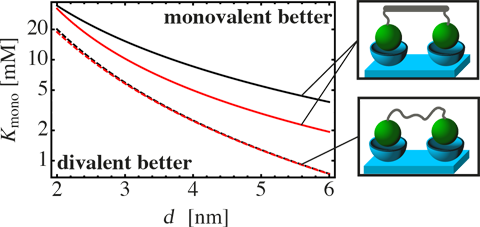
![[Graphic 33]](/bjoc/content/inline/1860-5397-11-90-i83.png?max-width=637&scale=1.18182) is shown for different ligand–spacer constructs. If the monovalent dissociatio...
is shown for different ligand–spacer constructs. If the monovalent dissociatio...
Probing multivalency in ligand–receptor-mediated adhesion of soft, biomimetic interfaces
Beilstein J. Org. Chem. 2015, 11, 720–729, doi:10.3762/bjoc.11.82
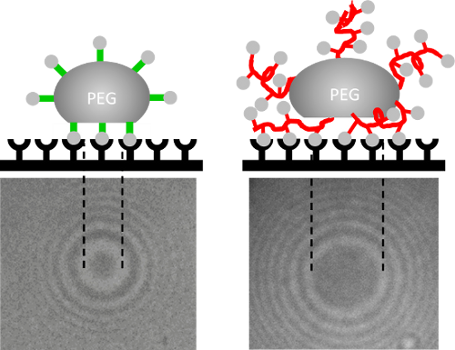
- generally low affinity between sugars and receptors and possibly also by the high flexibility of the polymeric mannose linkers [9]. High molecular flexibility causes a high degree of conformational entropy that negatively affects complex formation between ligands and receptors [23]. Also the design of the


DNA display of glycoconjugates to emulate oligomeric interactions of glycans
Beilstein J. Org. Chem. 2015, 11, 707–719, doi:10.3762/bjoc.11.81
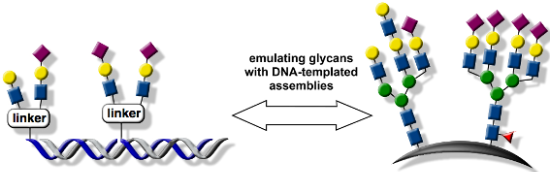
- diverse glycans could be iteratively introduced on amino acid linkers. Inspired by Shoda’s activation [40] which provides facile access to complex glycosyl azides from native carbohydrates, we subsequently applied reiterative CuAAC conjugation of glycans on propargyl glycine residues within a peptide [41
- instructions. To this end a pilot library of fourteen PNA-tagged glycoconjugates that included mannose disaccharides joined by linkers of different lengths were paired through hybridization, varying the ligand combinations and interligand distances. Measuring the affinity of 32 different assemblies against
- between the glycan units and the distinct spatial arrangement conferred by the different linkers. This library represents the largest array of heteroglycan conjugates reported to date. Based on the results obtained with the screen for LecA, a lectin intimately involved in the pathogenicity of P


First principle investigation of the linker length effects on the thermodynamics of divalent pseudorotaxanes
Beilstein J. Org. Chem. 2015, 11, 687–692, doi:10.3762/bjoc.11.78
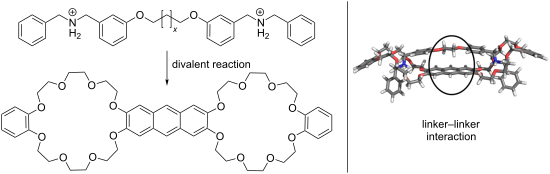
- energies of association (Gibbs free (binding) energies) for divalent crown-8/ammonium pseudorotaxanes are determined by investigating the influence of different linkers onto the binding. Calculations are performed with density functional theory including dispersion corrections. The translational
- linker shows an enhanced binding strength due to electronic effects, namely the dispersion interaction between the linkers from the guest and the host. For the longer linkers this ideal packing is not possible due to steric hindrance. Keywords: density functional theory (DFT); dispersion correction
- different linkers. The shortest linker shows a much larger chelate cooperativity than the longer linkers due to non-innocent linkers that contribute to the binding. To analyze the individual contributions to the binding, we perform first principle calculations of the model system shown in Figure 1, which is


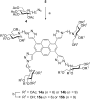
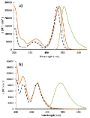
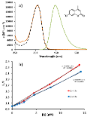
Design, synthesis and photochemical properties of the first examples of iminosugar clusters based on fluorescent cores
Beilstein J. Org. Chem. 2015, 11, 659–667, doi:10.3762/bjoc.11.74
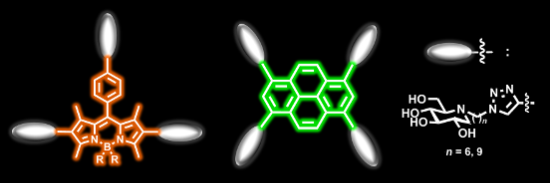
- per DNJ unit) [11][12]. In the following years, an impressive ever-growing number of multivalent iminosugars based on various scaffolds, ligands and linkers have been synthesized to further investigate the impact of multivalency on glycosidase inhibition [9][10][11][12][13][14][15][16][17][18][19][20



Synthesis of multivalent carbohydrate mimetics with aminopolyol end groups and their evaluation as L-selectin inhibitors
Beilstein J. Org. Chem. 2015, 11, 638–646, doi:10.3762/bjoc.11.72
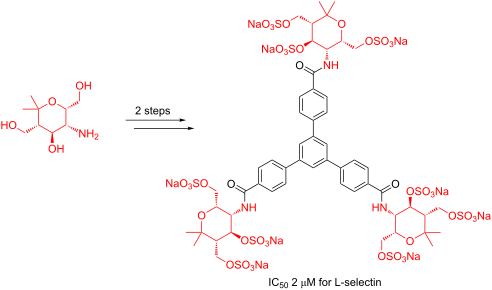
- able to compare aminopyran 1 with aminopolyol 2 two divalent amides were synthesized from compound 16 using the same carboxylic acid dichlorides 7 and 8 as linkers affording the desired compounds 18 and 19 in excellent yields (Table 2, entries 1 and 2). Moreover, another divalent amide 20 with a longer


Synthesis and surface grafting of a β-cyclodextrin dimer facilitating cooperative inclusion of 2,6-ANS
Beilstein J. Org. Chem. 2015, 11, 514–523, doi:10.3762/bjoc.11.58
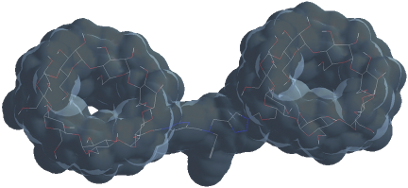
- demonstrated that the choice of linker is an important parameter in order to fully access both cavities [12][13]. Specifically, it was demonstrated that long and/or hydrophobic linkers may induce an inversion process, resulting in self-inclusion of the linker in one of the cavities, thereby limiting


C-5’-Triazolyl-2’-oxa-3’-aza-4’a-carbanucleosides: Synthesis and biological evaluation
Beilstein J. Org. Chem. 2015, 11, 328–334, doi:10.3762/bjoc.11.38

- can interact with intracellular targets to induce cytotoxicity [28][29][30][31][32]. Several functionalities have been inserted as linkers on the 2’-oxa-3’-aza-4’a-carbanucleoside skeleton in order to confer novel mechanisms of action for nucleoside mimics: in this context, the 1,2,3-triazole unit


Come-back of phenanthridine and phenanthridinium derivatives in the 21st century
Beilstein J. Org. Chem. 2014, 10, 2930–2954, doi:10.3762/bjoc.10.312

- phenanthridine moiety – many ethidium bromide-based dimers were prepared and reviewed in the last two decades of the 20th century, thus here will be presented results from 2000 on. Systematic variation of steric and/or electrostatic effects by means of type, number, length and flexibility of linkers connecting
- intercalator able to differentiate between A–U(T) and G–C base pairs by sign of opposite fluorimetric response. An introduction of the permanent positive charge by methylation of the heterocyclic nitrogen changed the binding mode of the conjugates with shorter linkers from minor groove binding to intercalation
- RNA dyes. Another large series of phenanthridinium-homodimers was constructed by linking two ethidium bromide subunits by peptide-like linkers of variable flexibility and rich in hydrogen-bonding possibilities within the DNA grooves (Figure 5). The resulting bis-intercalators (in comparison to the




Synthesis and characterization of a new photoinduced switchable β-cyclodextrin dimer
Beilstein J. Org. Chem. 2014, 10, 2874–2885, doi:10.3762/bjoc.10.304
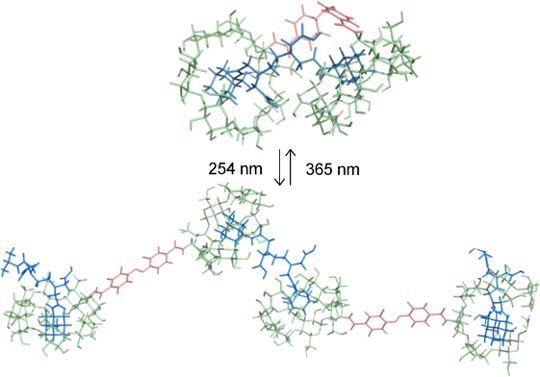
- to the guest molecules [9][10]. These cyclodextrins linked by ester [11], thioether [12][13][14][15][16], urea [17][18][19], or triazole [20] moieties have been previously described. In addition, aromatic azobenzenes are excellent candidates as molecular switch linkers as they have two forms, namely
- cyclic polymers are aggregated into larger objects stabilized by hydrogen bonds between cyclodextrin moieties and by π-stacking interactions between azobenzene linkers. Finally, according to the computational data, the complexes of AZO-CDim 1 with ADAdim 4 are further stabilized by intramolecular



Synthesis of nanodiamond derivatives carrying amino functions and quantification by a modified Kaiser test
Beilstein J. Org. Chem. 2014, 10, 2729–2737, doi:10.3762/bjoc.10.288
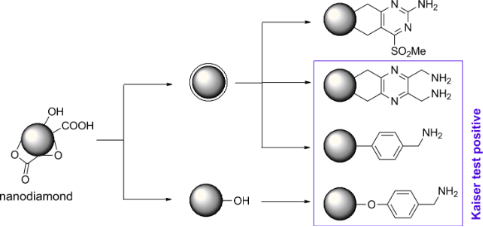
- with amino groups is typically not complete and the stability of amino groups directly bound to the diamond surface is limited as they are at least partially replaced by hydroxy groups under ambient conditions [4]. Therefore, in most cases linkers are used in order to establish stable bonding
- , the linkers are coupled to the diamond surface via heteroatoms. These sites are more easily cleaved compared to carbon–carbon single bonds, e.g., in a physiological environment or other aqueous conditions. It is hence of interest to develop methods that form stable bonds between the diamond surface
- ) BH3·THF, f) Δ, 1,2-dichlorobenzene, g) MCPBA, h) NH3, i) BH3·THF, j) APTMS, k) 4-aminobenzyl(N-Boc)amine, isopentyl nitrite, l) TFA. Surface loading of nanodiamond-carrying amino groups on different linkers using three independent quantification methods. Supporting Information Supporting Information


Synthesis and characterization of a hyper-branched water-soluble β-cyclodextrin polymer
Beilstein J. Org. Chem. 2014, 10, 2586–2593, doi:10.3762/bjoc.10.271
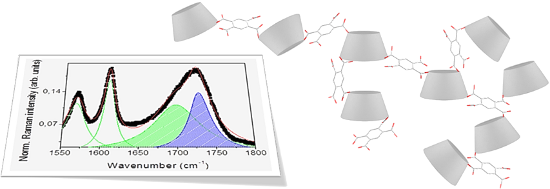
- structural aspects and functional properties, and in particular pyromellitic nanosponges were found to present a critical cross-linking value [17]. In other words, the maximum number of cross-linkers per monomer was proved to be around 6 (i.e., 6 mol of pyromellitic dianhydride for each mol of β-CD). If the




Towards the sequence-specific multivalent molecular recognition of cyclodextrin oligomers
Beilstein J. Org. Chem. 2014, 10, 2428–2440, doi:10.3762/bjoc.10.253
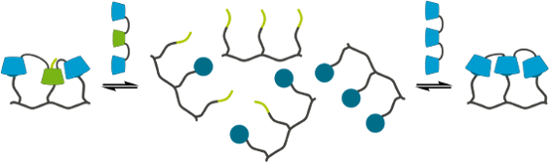
- for the interaction with α-CD, the EM cannot be increased that easy. Here the linkers of the guest and the host moieties have a crucial influence on the structure of the divalent molecules and the host–guest complexes before the intramolecular complexation [1]. Changes in the linkers’ structures can


Reversibly locked thionucleobase pairs in DNA to study base flipping enzymes
Beilstein J. Org. Chem. 2014, 10, 2293–2306, doi:10.3762/bjoc.10.239
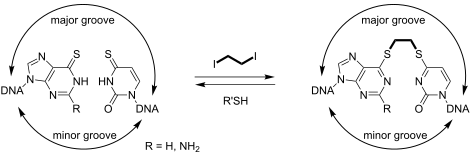
- , long linkers that might interfere with protein binding are typically employed. The Verdine group has developed a cross-linking approach based on the easy postsynthetic introduction of cystamine or longer amino-alkylthiol linkers into ODN using a convertible nucleoside approach [39][40][41][42][43][44
- its neighboring base pairs. In contrast, the ideal geometry of saturated linkers will demand non-planar torsion angles. Coleman et al. [44] investigated this topic by performing molecular dynamic simulations for a disulfide cross-linked I6S/U4S base pair in B-DNA and showed that the compromise between


Molecular recognition of AT-DNA sequences by the induced CD pattern of dibenzotetraaza[14]annulene (DBTAA)–adenine derivatives
Beilstein J. Org. Chem. 2014, 10, 2175–2185, doi:10.3762/bjoc.10.225
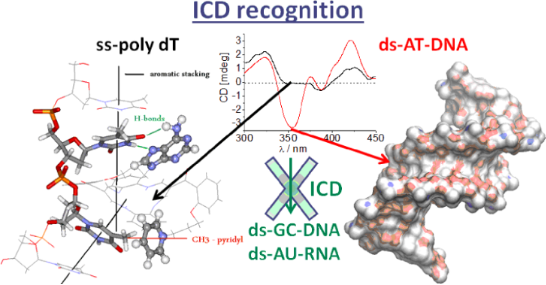
- stacked dimers within the DNA minor groove similar to the crystal structure of close analogue (Figure 4, right). Conversely, the AP5 and AP6 aliphatic linkers are long enough to allow self-folding and easy intramolecular π–π stacking of adenine with DBTAA (Figure 4, upper right). During the binding event


Macrocyclic bis(ureas) as ligands for anion complexation
Beilstein J. Org. Chem. 2014, 10, 1834–1839, doi:10.3762/bjoc.10.193
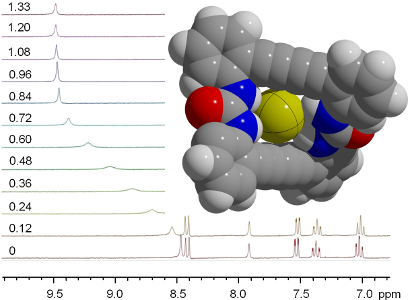
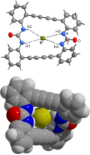
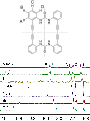
- ring with two ethynylene groups as linkers and 2 the larger ring with two butadiynylene groups. On thermal treatment to 130 °C molecule 1 splits up into two dihydroindoloquinolinone (3) molecules. Both compounds 1 and 2 form adducts with polar molecules such as dimethyl sulfoxide (DMSO) and
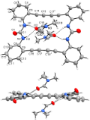
- planar ligand, as was shown by indole-based macrocycles [9]. This ligand system represents a stiff ring of two bis(indole) units connected via two ethynylene groups as linkers. As proven by a crystal structure determination, a chloride ion fits into the cavity bound via four N−H∙∙∙Cl bonds and strong
- butadiynylene groups as spacers turned out as a suitable receptor for small anions with high binding constants. The molecule is flexible. In the complex with a bromide ion embedded in the ring cavity, the cyclic ligand is strongly tilted. The smaller cycle with ethynylene groups as linkers is a much weaker



Influence of perylenediimide–pyrene supramolecular interactions on the stability of DNA-based hybrids: Importance of electrostatic complementarity
Beilstein J. Org. Chem. 2014, 10, 1589–1595, doi:10.3762/bjoc.10.164
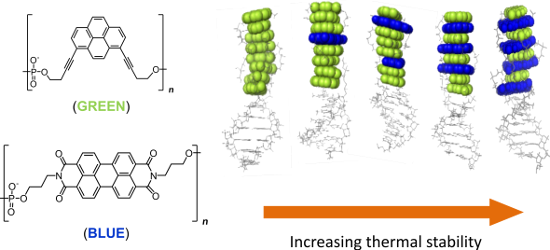
- (Table 1, hybrids 1*2 and 7*6) than hybrids containing both types of aromatic compounds. Although the actual stability of such duplexes strongly depends on several parameters like, e.g., the geometry of the building blocks and the flexibility of the linkers, a general trend can be deduced from the