


Search results
Search for "sterically-hindered" in Full Text gives 298 result(s) in Beilstein Journal of Organic Chemistry. Showing first 200.
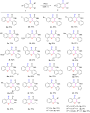
Six-fold C–H borylation of hexa-peri-hexabenzocoronene
Beilstein J. Org. Chem. 2020, 16, 391–397, doi:10.3762/bjoc.16.37
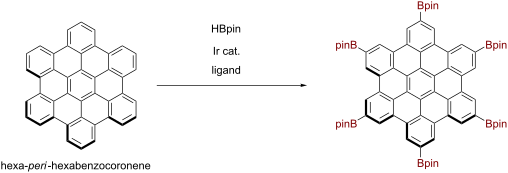
- present method. The analyzed structure from X-ray crystallography confirmed the regioselective C–H borylations at the least sterically hindered C–H bonds of HBC. Optoelectronic measurements of 1 revealed bathochromic shifts of the absorption bands compared with unsubstituted HBC. DFT calculations also


Copper-catalyzed enantioselective conjugate addition of organometallic reagents to challenging Michael acceptors
Beilstein J. Org. Chem. 2020, 16, 212–232, doi:10.3762/bjoc.16.24
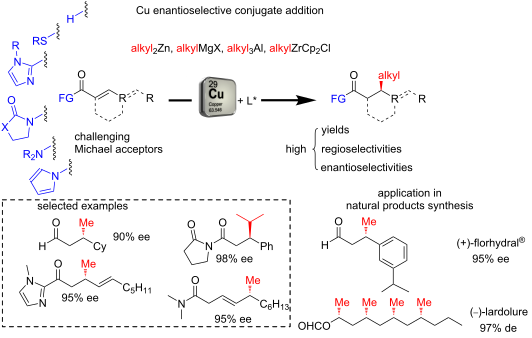
- CuBr∙SMe2/(R,S)-Josiphos (L9). However, the catalytic system was poorly selective toward sterically hindered organomagnesium nucleophiles (15–25% ee). The synthetic versatility of the thioester function was illustrated in the synthesis of (−)-lardolure (26% overall yield over 12 steps) via a relevant




Microwave-assisted synthesis of 2-substituted 4,5,6,7-tetrahydro-1,3-thiazepines from 4-aminobutanol
Beilstein J. Org. Chem. 2020, 16, 32–38, doi:10.3762/bjoc.16.5
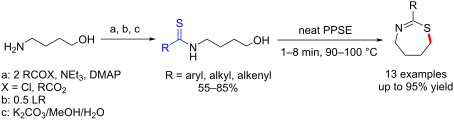
- . Using the optimized protocol, compounds 1a–k were synthesized in high to excellent yields (Table 1). The more sterically hindered derivatives 1l,m required significantly longer reaction times. Thionation of the resulting amidoester 1a with Lawesson's reagent (LR) was then examined. Using the reagent in
- /water (30 min, 70 °C) afforded thioamido alcohol 3a (95%). Thioaroyl derivatives 3b–k were prepared in high to quantitative yields under these experimental conditions, except for the more sterically hindered 2-methylphenyl derivative 2h, which required a longer reaction time (1 h) to achieve complete
- products (Table 2). Ring closure of the more sterically hindered isobutyryl and pivaloyl thioamidoalcohols 3l,m was also successful, requiring slightly higher temperatures. Mechanistic considerations The cyclization of 4-amidobutanols promoted by PPA esters leads exclusively to N-acylpyrrolidines instead


SnCl4-catalyzed solvent-free acetolysis of 2,7-anhydrosialic acid derivatives
Beilstein J. Org. Chem. 2019, 15, 2990–2999, doi:10.3762/bjoc.15.295
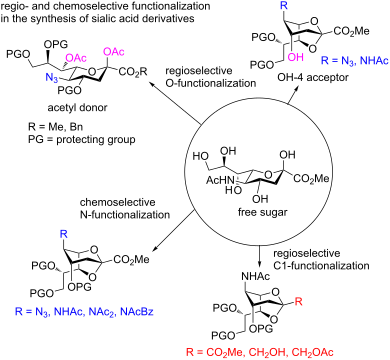
- in the synthesis of inhibitors for N-acetylneuraminidases from different sources [42]. The ring opening of 5 was not trivial since the substrate had a sterically hindered quaternary anomeric center, unlike the tertiary anomeric center C-1 of 1,6-anhydro sugars [29][30][31][32][33][43]. Furthermore
- disaccharides were cleaved and acetylated, as shown in Scheme 5. The difficulty of these reactions might have been attributed to the more liable nature of the tertiary acetal center C-1 of fucose as compared to the sterically hindered quaternary ketal functionality C-2 of the 2,7-anhydro skeleton. To our




Construction of trisubstituted chromone skeletons carrying electron-withdrawing groups via PhIO-mediated dehydrogenation and its application to the synthesis of frutinone A
Beilstein J. Org. Chem. 2019, 15, 2958–2965, doi:10.3762/bjoc.15.291

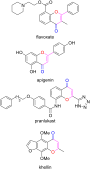
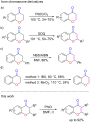
- was converted to the desired product 2j. The substrates bearing various R2 substituents, including electron-withdrawing, electron-donating, sterically hindered, and heterocyclic groups, all reacted smoothly and afforded the desired chromone derivatives 2k–v in acceptable to good yields. Furthermore



Design, synthesis and investigation of water-soluble hemi-indigo photoswitches for bioapplications
Beilstein J. Org. Chem. 2019, 15, 2822–2829, doi:10.3762/bjoc.15.275
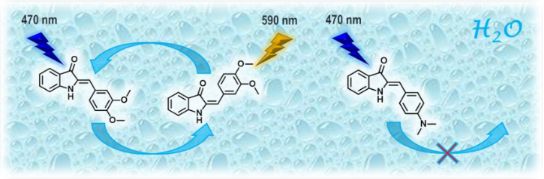
- shifted relative to the one of the Z-isomer. Depending on the substitution pattern, the thermal lifetimes of metastable E-isomers at 25 °C vary from hours to days and sometimes even years [12][13][14]. Remarkably, for sterically hindered hemi-indigo derivatives, thermal lifetimes of the metastable states


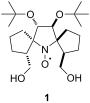
Unexpected one-pot formation of the 1H-6a,8a-epiminotricyclopenta[a,c,e][8]annulene system from cyclopentanone, ammonia and dimethyl fumarate. Synthesis of highly strained polycyclic nitroxide and EPR study
Beilstein J. Org. Chem. 2019, 15, 2664–2670, doi:10.3762/bjoc.15.259

- cyclopentanone and ammonia. The polycyclic amine product was then converted into a sterically shielded polycyclic nitroxide. Sterically hindered nitroxides have high chemical stability [5] and can be used as spin labels to study biopolymers in cells [6]. The introduction of spirocyclic moieties has a smaller
- effect on the reduction rates of nitroxides than does the introduction of linear alkyl substituents. However, spirocyclic nitroxides may have much longer spin relaxation times at 70–150 K which make them attractive agents for spin labeling [7][8][9]. Sterically hindered nitroxides can be used as spin


Regioselective Pd-catalyzed direct C1- and C2-arylations of lilolidine for the access to 5,6-dihydropyrrolo[3,2,1-ij]quinoline derivatives
Beilstein J. Org. Chem. 2019, 15, 2069–2075, doi:10.3762/bjoc.15.204

- para-substituted aryl bromides, high regioselectivities in favor of the α-arylations were observed. The meta-substituted 3-bromoacetophenone and methyl 3-bromobenzoate also afforded the α-arylated lilolidines 10 and 11 with high regioselectivities. Conversely, with the more sterically hindered aryl


Synthesis of 1-azaspiro[4.4]nonan-1-oxyls via intramolecular 1,3-dipolar cycloaddition
Beilstein J. Org. Chem. 2019, 15, 2036–2042, doi:10.3762/bjoc.15.200
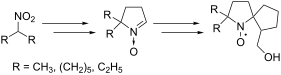
- 7c. 1,3-Dipolar cycloaddition of nitrones to alkenes is known to be reversible [13][14]. We recently reported a similar reversibility of the intramolecular cyclization of sterically hindered pent-4-enylnitrone of the 2H-imidazole series [15]. Treatment with Zn in an AcOH/EtOH/EDTA/Na2 mixture was
- in the side chain, the hydroxymethyl group in 9a–c was protected via acylation. Heating of 9a–c with an excess of acetic anhydride in chloroform quantitatively afforded the corresponding esters 10a–c. The products of acylation of the sterically hindered amino group were not detected in the reaction
- general synthetic approach to sterically hindered spirocyclic nitroxides based on an intramolecular 1,3-dipolar cycloaddition reaction in alkenylnitrones followed by isoxazolidine ring opening. The resulting asymmetric pyrrolidine nitroxides have unexpectedly high rates of reduction with ascorbate. These



Metal-free mechanochemical oxidations in Ertalyte® jars
Beilstein J. Org. Chem. 2019, 15, 1786–1794, doi:10.3762/bjoc.15.172
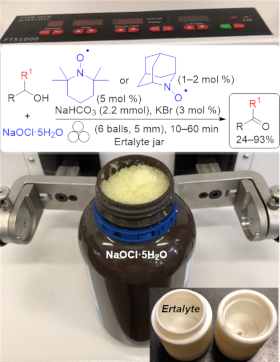
- 4-phenyl-2-butanol into benzylacetone in only 30 min (Scheme 6, ketone 11b). This protocol was successfully extended to other secondary alcohols to afford the corresponding ketones 11b–19b in high conversions and yields. The oxidation of sterically hindered secondary alcohols such as adamantan-2-ol


Recent advances on the transition-metal-catalyzed synthesis of imidazopyridines: an updated coverage
Beilstein J. Org. Chem. 2019, 15, 1612–1704, doi:10.3762/bjoc.15.165
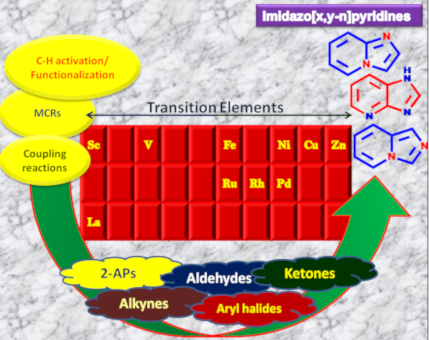
- this methodology resulted in homocoupling of bromoalkynes. Among the examined Cu(I) and Cu(II) salts, Cu(OTf)2 was proven to be the optimal one. Both EW and EDGs were well tolerated except 2-amino-6-methylpyridine which might be sterically hindered due to methyl group at 6-position. The use of
- EDGs at p- and m-positions gave a higher yield than sterically hindered o-substituents and EWGs. Moreover, the absence of metal leaching as tested by atomic absorption spectroscopy (AAS) demonstrated the heterogeneous nature of the used catalyst. Recently, a robust, ligand and additive-free


Synthesis and conformational preferences of short analogues of antifreeze glycopeptides (AFGP)
Beilstein J. Org. Chem. 2019, 15, 1581–1591, doi:10.3762/bjoc.15.162
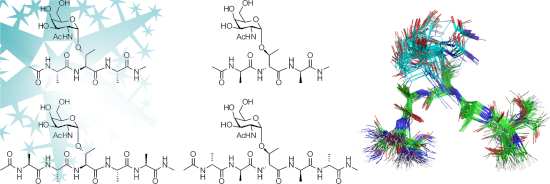
- loading was 0.61 mmol/g. Lower loading of the resin was used in order to enable quantitative incorporation of the sterically hindered, glycosylated building blocks. The synthesis of tri- and pentapeptides (Scheme 1B) was performed manually on solid phase [28]. The obtained glycopeptides were cleaved from


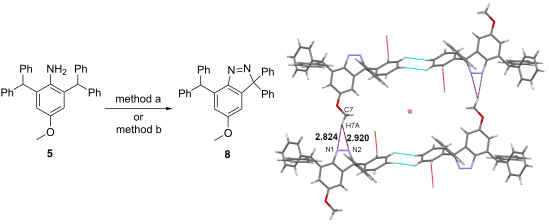
Formation of an unexpected 3,3-diphenyl-3H-indazole through a facile intramolecular [2 + 3] cycloaddition of the diazo intermediate
Beilstein J. Org. Chem. 2019, 15, 1347–1354, doi:10.3762/bjoc.15.134
- [4][5]. Stability and radiochemical improvements were investigated by Matesic et al. [5]. For instance, electron-donating 18F-arylsulfonyl fluoride 1 was >98% stable in the buffer at 3 h, while the electron-withdrawing compound 2 was only 8% stable [5] (Figure 1). The more sterically hindered 18F
- [6]. To further investigate the stability of 18F-sulfonyl fluorides, the sterically hindered compound 4 was selected with enough steric bulk in the 2,6-position. The initial chlorosulfonylation reaction was performed using 1,4-diazabicyclo[2.2.2]octane bis(sulfur dioxide) adduct (DABSO) as a source




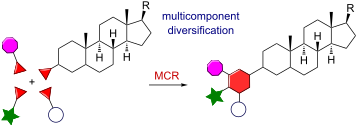
Steroid diversification by multicomponent reactions
Beilstein J. Org. Chem. 2019, 15, 1236–1256, doi:10.3762/bjoc.15.121
- . The configuration of C-5 in each stereoisomer was established using NOESY experiments and theoretical models. The main limitation of this approach was the impossibility to incorporate both aromatic and sterically hindered amines (e.g., tert-butylamine). Besides the reports of Rivera’s and Ramírez’s



Extending mechanochemical porphyrin synthesis to bulkier aromatics: tetramesitylporphyrin
Beilstein J. Org. Chem. 2019, 15, 1149–1153, doi:10.3762/bjoc.15.111
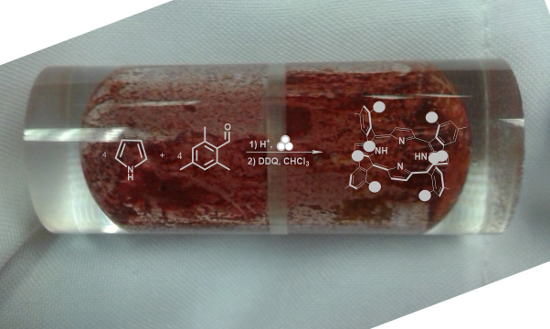
- , simple, room-temperature method for producing tetra-meso-substituted porphyrins with bulky substituents. Keywords: condensation; grinding; mechanochemistry; milling; porphyrin; sterically-hindered; Introduction Porphyrins and related macrocycles such as chlorins, corroles, and bacteriochlorins carry
- could accommodate a sterically-hindered aldehyde, and produce TMP at room temperature and in the absence of added solvent for the condensation step, using relatively simple reaction conditions. The use of mechanochemistry to bring about a no-solvent-added acid-catalyzed condensation between aldehydes
- to cyclocondensation of pyrrole with a sterically-hindered aldehyde. After oxidation to give a porphyrin with bulky substituents, isolated yields are comparable to those obtained from high-temperature syntheses (though still lower than the 30% obtainable with added solvent at room temperature). The


Hoveyda–Grubbs catalysts with an N→Ru coordinate bond in a six-membered ring. Synthesis of stable, industrially scalable, highly efficient ruthenium metathesis catalysts and 2-vinylbenzylamine ligands as their precursors
Beilstein J. Org. Chem. 2019, 15, 769–779, doi:10.3762/bjoc.15.73
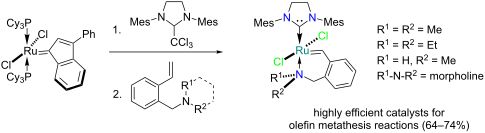
- elimination to form N,N-dialkylaminomethylstyrenes 4 in yields higher than 60% (Table 1). Our attempts to synthesise highly sterically hindered 2-vinyl-N,N-diisopropylbenzylamine by an analogous method failed at the stage of the quaternary salt 3. The application of terminal dihalogen derivatives afforded


Syntheses and chemical properties of β-nicotinamide riboside and its analogues and derivatives
Beilstein J. Org. Chem. 2019, 15, 401–430, doi:10.3762/bjoc.15.36
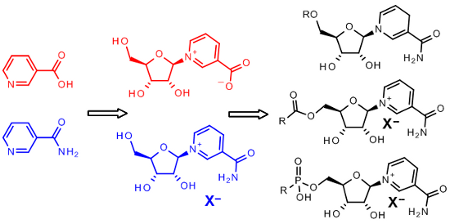
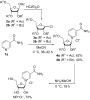
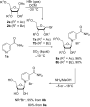
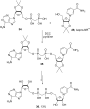
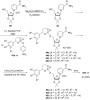
- intermediate F, in which the C2′-acyl group participates in delocalization of the carbocation on the C1′ position. Nam approaches and attacks this carbocation from the less sterically hindered face to give the β-nicotinamide riboside derivatives (Figure 3). A very comprehensive and thorough discussion of the










Sigmatropic rearrangements of cyclopropenylcarbinol derivatives. Access to diversely substituted alkylidenecyclopropanes
Beilstein J. Org. Chem. 2019, 15, 333–350, doi:10.3762/bjoc.15.29
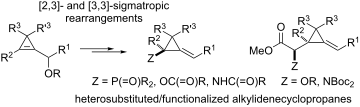
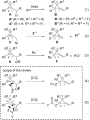
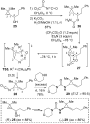
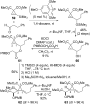
- was not obtained by treatment of the corresponding cyclopropenylcarbinol substituted by an n-undecyl group with trichloroacetonitrile, even under forcing conditions. The authors tentatively suggested this may be due to the sterically hindered n-undecyl chain although this issue was not fully
- produced in excellent yield (94%). More sterically hindered substituents were tolerated at C3, as illustrated with the isolation of the spirocyclic compounds 58j (60%) and 58k (77%), and alkylidenecyclopropane 58l possessing a fully substituted three-membered ring was also formed in excellent yield (96







A tutorial review of stereoretentive olefin metathesis based on ruthenium dithiolate catalysts
Beilstein J. Org. Chem. 2018, 14, 2999–3010, doi:10.3762/bjoc.14.279
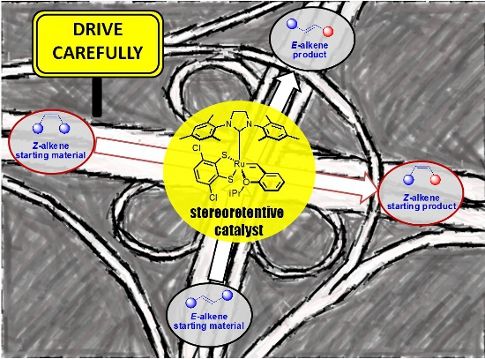
- reactions a 1:3 ratio of A/B was applied. Practical limitations are that A and B have to be of significantly different polarity for easy column chromatographic separation and that sterically hindered olefins are not tolerated. For some alkenes, e.g., styrenes, the homodimerization is too fast leading to




Enhanced single-isomer separation and pseudoenantiomer resolution of new primary rim heterobifunctionalized α-cyclodextrin derivatives
Beilstein J. Org. Chem. 2018, 14, 2829–2837, doi:10.3762/bjoc.14.261

- almost no preferential selectivity for AB, AC or AD regioisomers. Breslow et al. [17] used the 1,3-dimethoxy-4,6-benzenedisulfonyl chloride as a capping agent to prepare the AB regioisomer. Subsequently, Fujita et al. [18] selectively capped the primary rim of α-CD using a special, sterically hindered
- prepared the target 6A,6X-heterobifunctionalized α-CDs. Mesitylenesulfonyl was chosen as the appropriate functional group for insertion in the α-CD skeleton because it is sufficiently stable for reverse column chromatography and more sterically hindered than a tosyl group. The idea of attaching the


Synthesis of α-D-GalpN3-(1-3)-D-GalpN3: α- and 3-O-selectivity using 3,4-diol acceptors
Beilstein J. Org. Chem. 2018, 14, 2805–2811, doi:10.3762/bjoc.14.258

- perspective, a few closely related glycosylations are shown in Scheme 4. Firstly, our own glycosylations using the 4-O-Bz variants, gave a lower yield, when using the TBDPS–TBDPS variant, of 36% [44]. The less sterically hindered Bn–TBDPS variant gave yields of 47%, which are comparable to the 3,4-diol
- be synthesized in 4 less steps than otherwise required. These results show, how the desired protecting group pattern can direct which glycosylation strategy to choose: In the less sterically hindered cases, a 4-O-protecting group, such as the benzoyl or benzyl, can be preferable. However, when a


Unprecedented nucleophile-promoted 1,7-S or Se shift reactions under Pummerer reaction conditions of 4-alkenyl-3-sulfinylmethylpyrroles
Beilstein J. Org. Chem. 2018, 14, 2722–2729, doi:10.3762/bjoc.14.250
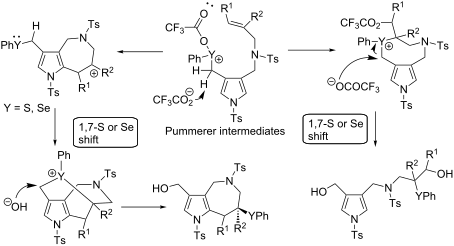
- the sulfur atom. Bis(trifluoro)acetate 16 resulted from the opening of the ring is hydrolysed by TBAH to yield diol 17. Conversely, sterically hindered double bonds of 14 are not easily accessible to the sulfonium ion; therefore, the Pummerer intermediate α-thio carbenium ion 18 is generated through


Assembly of fully substituted triazolochromenes via a novel multicomponent reaction or mechanochemical synthesis
Beilstein J. Org. Chem. 2018, 14, 2689–2697, doi:10.3762/bjoc.14.246
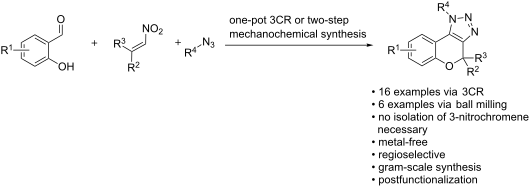
- electron-rich triazolochromenes 5b and 5c, resulting in a drastic loss in yield for the more sterically hindered compound 5c. Furthermore, electron-deficient and halogenated analogs 5d–f were successfully synthesized. In a next series, we examined the substitution pattern on the nitroalkene part. Electron
- (E)-1-nitro-4-(2-nitrovinyl)benzene and sterically hindered 2-hydroxy-1-naphthaldehyde, only the oxidized product analogous to 6 was observed. 2-Hydroxy-4-nitrobenzaldehyde and 2,6-dihydroxybenzaldehyde were unreactive in the cycloaddition reaction. As previously mentioned, solid salicylaldehydes




Cobalt- and rhodium-catalyzed carboxylation using carbon dioxide as the C1 source
Beilstein J. Org. Chem. 2018, 14, 2435–2460, doi:10.3762/bjoc.14.221
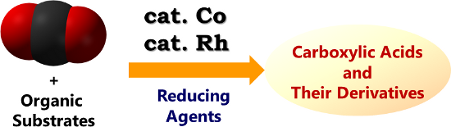
- corresponding conjugated carboxylic acid 4j in 75% yield. The alkenyl triflate 3k prepared from the corresponding aldehyde was also carboxylated, and its corresponding product 4k was obtained in moderate yield. The catalyst CoI2(Me2phen) was also effective with sterically hindered aryl triflates: the
- tolerated in the reaction. Sterically hindered substrates could be subjected to the reaction, and 26g was obtained from 25g. Moreover, a substrate having a heteroaromatic ring (25i) was converted into its corresponding carboxylic acid 26i. Alkenylboronic esters 27 were also converted into the corresponding
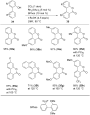
- ) in good-to-high yields. Notably, sterically hindered substrates (34d and 34f) were allowed by elevating the reaction temperature. A plausible reaction mechanism is shown in Scheme 32. First, a phenoxide 34’ generated by the reaction of 2-arylphenol with t-BuOK reacts with a Rh complex A to generate a





Synthesis and post-functionalization of alternate-linked-meta-para-[2n.1n]thiacyclophanes
Beilstein J. Org. Chem. 2018, 14, 2190–2197, doi:10.3762/bjoc.14.192

- ] adduct 19. Traces of unidentified oligomers and functionalized [2 + 2] macrocycle were also observed in the reaction mixture. It can be argued that, due to steric hindrance, the alkylation of macrocycle 6 is slow. The less sterically hindered cyclic trimer 7 and the linear oligomers are therefore faster





