


Search results
Search for "sugars" in Full Text gives 195 result(s) in Beilstein Journal of Organic Chemistry.
Gold(I)-catalysed synthesis of a furan analogue of thiamine pyrophosphate
Beilstein J. Org. Chem. 2014, 10, 2580–2585, doi:10.3762/bjoc.10.270
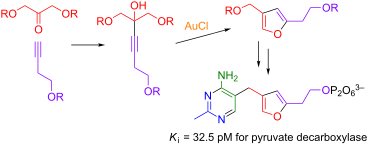
- ., pyruvate dehydrogenase, pyruvate decarboxylase), the formation of amino acid precursors (acetohydroxy acid synthase), and ketol transfer between sugars (transketolase) [1]. One common feature of ThDP-dependent enzymes is to catalyse the cleavage and formation of bonds adjacent to the carbon of a carbonyl


Synthesis of aromatic glycoconjugates. Building blocks for the construction of combinatorial glycopeptide libraries
Beilstein J. Org. Chem. 2014, 10, 2453–2460, doi:10.3762/bjoc.10.256
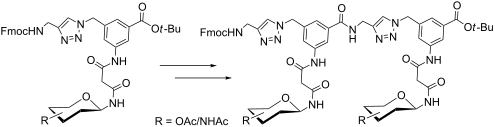
- Markus Norrlinger Thomas Ziegler Institute of Organic Chemistry, University of Tuebingen, Auf der Morgenstelle 18, 72076 Tuebingen, Germany 10.3762/bjoc.10.256 Abstract New aromatic glycoconjugate building blocks based on the trifunctional 3-aminomethyl-5-aminobenzoic acid backbone and sugars


Synthesis and immunological evaluation of protein conjugates of Neisseria meningitidis X capsular polysaccharide fragments
Beilstein J. Org. Chem. 2014, 10, 2367–2376, doi:10.3762/bjoc.10.247
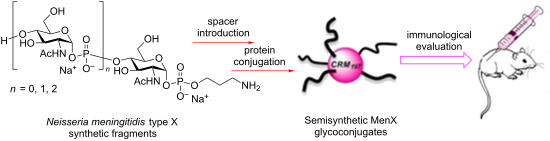
- . In this way, almost quantitative recovery of the activated sugars 11–13 was achieved. Active esters 11–13 were then coupled with the amino groups of the protein in sodium phosphate buffer (100 mM NaPi, pH 7.2) at room temperature for 24 h (Scheme 3). The glycoconjugates 14–16 were purified from the
- latter analytical technique enabled determination of the saccharide/protein molar ratio (saccharide loading). The characteristics of the prepared glycoconjugates are summarized in Table 1. A moderate loading (5–7 sugars/protein) was obtained in compounds 14–16 in respect to conjugates prepared by the


Multivalent glycosystems for nanoscience
Beilstein J. Org. Chem. 2014, 10, 2345–2347, doi:10.3762/bjoc.10.244
- this field of research. Now, a third “sweet” Thematic Series is presented in which the borderline between Alice’s Wonderland and real-life applications of carbohydrates has been deliberately crossed. The structural world of natural sugars has been extended towards artificial carbohydrate architectures
Expanding the scope of cyclopropene reporters for the detection of metabolically engineered glycoproteins by Diels–Alder reactions
Beilstein J. Org. Chem. 2014, 10, 2235–2242, doi:10.3762/bjoc.10.232
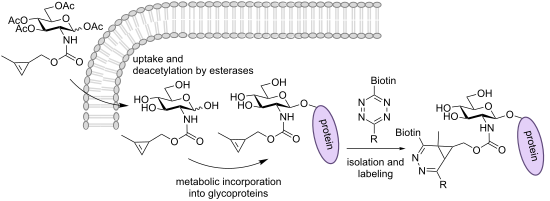
- fact that it can be orthogonal to the azide–alkyne cycloaddition [22][26][27] which allows dual labeling of two different sugars within one experiment [19][21][23][24]. Among the dienophiles mentioned above, strained cyclopropenes have the highest reaction rates for DAinv reactions with tetrazines and
- sugars 1 and 2 we neutralized the corresponding hexosamine hydrochlorides 5 and 6 with sodium methoxide and coupled them to the activated cyclopropene 7 (Scheme 2), the synthesis of which we reported previously [24]. Subsequent acetylation of the carbamates 8 and 9 gave Ac4GlcNCyoc (1) and Ac4GalNCyoc (2
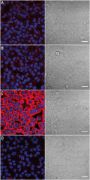
- ], followed by labeling with streptavidin–AlexaFluor647 (streptavidin–AF647) (Scheme 3). With all three sugars staining of the plasma membrane was detected by confocal laser scanning microscopy of living cells (Figure 2A, B, C). Only the solvent control did not show any membrane staining (Figure 2D, for



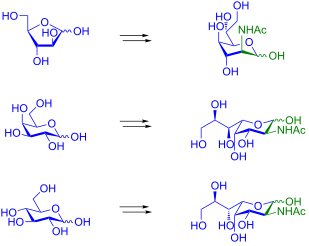
Indium-mediated allylation in carbohydrate synthesis: A short and efficient approach towards higher 2-acetamido-2-deoxy sugars
Beilstein J. Org. Chem. 2014, 10, 2230–2234, doi:10.3762/bjoc.10.231


Reaction of selected carbohydrate aldehydes with benzylmagnesium halides: benzyl versus o-tolyl rearrangement
Beilstein J. Org. Chem. 2014, 10, 1942–1950, doi:10.3762/bjoc.10.202
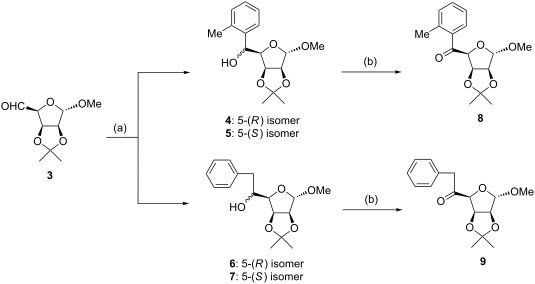
- simple alkyl or aryl branched-chain sugars involves the addition of Grignard reagents. In this regard, a wide variety of Grignard reagents have been added to the free or masked (as hemiacetal) carbonyl functionalities present in the molecule of a suitable fully O-protected saccharide, thereby making
- ketones affording the corresponding hydantoins (precursors of amino acids) via the Bucherer–Bergs reaction in the next step, which were finally transformed into sugar amino acids (precursors of biologicaly active iminosugars). Thus, using methylmagnesium iodide, some alanine-branched sugars were obtained


Synthesis of a bifunctional cytidine derivative and its conjugation to RNA for in vitro selection of a cytidine deaminase ribozyme
Beilstein J. Org. Chem. 2014, 10, 1906–1913, doi:10.3762/bjoc.10.198
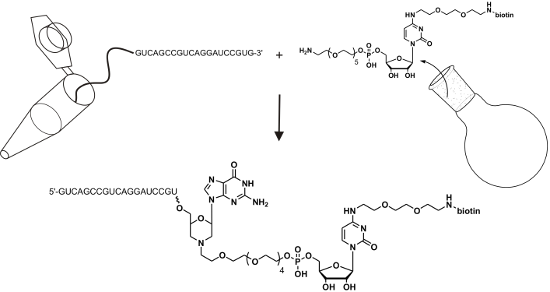
- RNA catalysts that support an aldol reaction between an aldehyde and a ketone, relevant to the synthesis of sugars [6], or the linkage of ribose to nucleobases to generate nucleotides [7]. Such ribozymes are seen as important functional entities underscoring the RNA world theory, where ribonucleic


Multicomponent reactions in nucleoside chemistry
Beilstein J. Org. Chem. 2014, 10, 1706–1732, doi:10.3762/bjoc.10.179
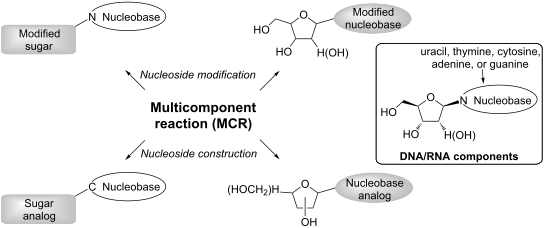
- system (Scheme 27) [98][99]. Attempts to replace the aldehyde 73a with its 3,4,6-hydroxylated counterpart failed to give the expected product [99]. Dwivedi et al. showed that the isopropylidene-protected sugars 75 reacted efficiently with urea (or thiourea) and 1,3-dicarbonyl compounds in diethylene


Expedient synthesis of 1,6-anhydro-α-D-galactofuranose, a useful intermediate for glycobiological tools
Beilstein J. Org. Chem. 2014, 10, 1651–1656, doi:10.3762/bjoc.10.172
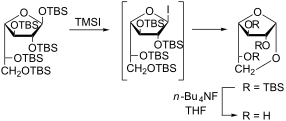
- ; Introduction Anhydro sugars are formed by the intramolecular elimination of a water molecule, with the simultaneous formation of a new heterocyclic ring of different size. They are valuable intermediates not only in carbohydrate synthesis, but also as starting materials for other natural and non-natural
- complex products and bioactive compounds. Among the glycosans, the anhydro sugars involving the anomeric center in the ring formation, the 1,6-anhydro sugars are the most common and useful building blocks [1][2]. They can play a role in synthetic methodologies aiming at the obtainment of regioselectively
- functionalized sugars in a few steps, which could give easy access to convenient glycosyl donors and acceptors [3]. Some sugars, for example galactose, can afford not only the pyranosic derivative 1 but also the furanosic 1,6-anhydro derivative 2, both of which may be equipped with [3.2.1] bicyclic skeletons


Photoswitchable precision glycooligomers and their lectin binding
Beilstein J. Org. Chem. 2014, 10, 1603–1612, doi:10.3762/bjoc.10.166
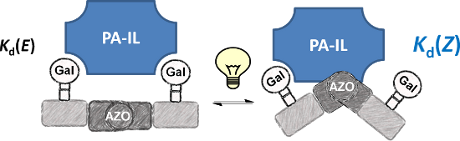
- the Z-form only allows for a monovalent binding of one of the sugars to the protein receptor (Figure 3b). Such a change in binding mode is expected to lead to the observed decrease in binding affinity. It is important to note that additional binding modes might contribute to the multivalent binding of


The search for new amphiphiles: synthesis of a modular, high-throughput library
Beilstein J. Org. Chem. 2014, 10, 1578–1588, doi:10.3762/bjoc.10.163

- synthesise double and triple-chain amphiphiles. With tails in hand, attention was turned to the hydrophilic amphiphile head groups. Sugar head groups were selected for this library because sugars are popular drug targets; however, such compounds often suffer from poor bioavailability [39]. By loading such
- extensively reviewed [44][45][46][47][48][49][50]. Azido-sugars are known to react well under CuAAC reaction conditions [51][52] and have recently been used in the synthesis of a glycodendrimer library [53], as well as in our previous work on single-chain sugar amphiphiles [30]. Hence, a diverse sugar screen
- would provide a wealth of data on the appropriate characteristics for a self-assembled sugar-based amphiphilic drug. Five sugars were chosen for this library: glucose, galactose, lactose, xylose and mannose. Glucose and galactose amphiphiles have been demonstrated to possess slightly different lyotropic


Multivalent scaffolds induce galectin-3 aggregation into nanoparticles
Beilstein J. Org. Chem. 2014, 10, 1570–1577, doi:10.3762/bjoc.10.162
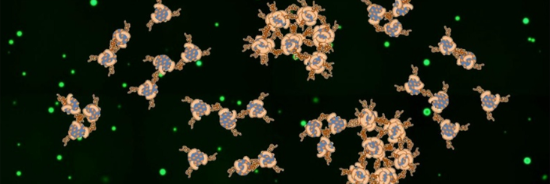
- functionalized dendrimers were characterized by MALDI–TOF–MS (matrix-assisted laser desorption time of flight mass spectrometry). The average numbers of sugars that were incorporated are shown in Scheme 2. The loadings were determined by both the changes in weight average molecular weight (Mw) upon addition of 1
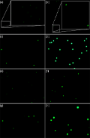
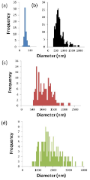
- and the changes in Mw upon deacetylation, enabling characterization of the average number of sugars per dendrimer [30]. Additional characterization details (including 1H NMR spectra) are provided in Supporting Information File 1. Characterization of dendrimer/galectin-3 aggregates Dynamic light


Orthogonal dual thiol–chloroacetyl and thiol–ene couplings for the sequential one-pot assembly of heteroglycoclusters
Beilstein J. Org. Chem. 2014, 10, 1557–1563, doi:10.3762/bjoc.10.160
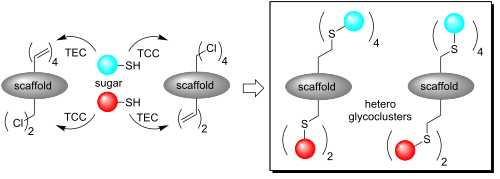
- sugars. We demonstrate that the reaction sequence starting with TCC can be performed one-pot whereas the reverse sequence requires a purification step after the TEC reaction. The versatility of this orthogonal strategy has been demonstrated through the synthesis of diverse hGCs displaying alternating
- capitalized on the utilization of a core scaffold decorated with identical sugars which are covalently linked through various spacers. While mimicking the multivalent sugar display of biological systems, these structures poorly reflect their inherent heterogenicity which hampers progresses towards the
- in our group to prepare tetravalent structures displaying two sugars either in 2:2 or 3:1 relative proportions [20]. In the meanwhile, the group of A. Dondoni has developed a sequential orthogonal TEC in combination with CuAAC for grafting two different sugar motifs on calix[4]arene scaffold [21


Synthesis and solvodynamic diameter measurements of closely related mannodendrimers for the study of multivalent carbohydrate–protein interactions
Beilstein J. Org. Chem. 2014, 10, 1524–1535, doi:10.3762/bjoc.10.157
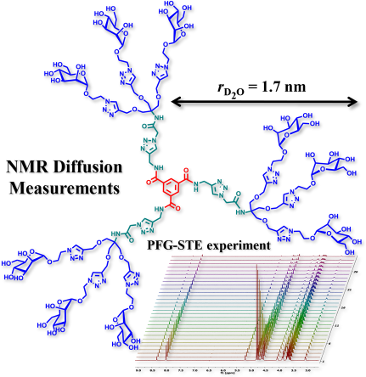
- supported by the recent findings that the sugar backbones themselves also possess a hydrophobic side that orients the sugars in appropriate aromatic amino acid rich pockets [26][27][28]. Unfortunately, due to the inherent complexity of studying multivalent binding interactions, researchers have used
- spectrum supported complete conversion. Note that working with peracetylated sugar precursors allows less tedious purification practices as opposed to working with unprotected sugars which often necessitate purification by cumbersome dialysis followed by HPLC treatment. Here again, the complete structural


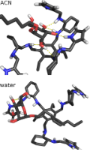
Why a diaminopyrrolic tripodal receptor binds mannosides in acetonitrile but not in water?
Beilstein J. Org. Chem. 2014, 10, 1513–1523, doi:10.3762/bjoc.10.156
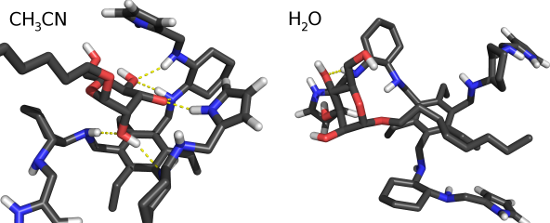
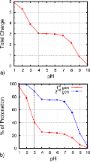
- reason for the higher activity in this solvent. This work also presents a new implementation of the stochastic titration constant-pH molecular dynamics method to a synthetic receptor of sugars and attests its ability to describe the protonation/conformation coupling in these molecules. Keywords
- over the years [1][2][3][4][5][6]. Most of these were developed for glucose since it is one of the most common sugars in living systems [7] and the preferred monosaccharide for energy storage [8]. However, mannose is essential for various biological functions, such as molecular recognition, being one
- of the most abundant sugars in glycoconjugates [9][10]. In 2011, Roelens’ group [11][12][13] synthetized and tested a chiral diaminopyrrolic tripodal receptor that showed high binding affinities to mannosides (Figure 1). This particular receptor is significantly more active in acetonitrile (ACN) than




Postsynthetic functionalization of glycodendrons at the focal point
Beilstein J. Org. Chem. 2014, 10, 1482–1487, doi:10.3762/bjoc.10.152
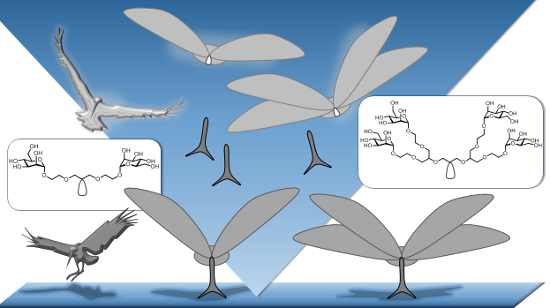
- example the glycodendrimers, have become valuable tools during the last two decades [2]. Typical glycodendrimers consist of (hyper)branched dendritic core molecules which are decorated with specific sugars in their periphery [3][4][5]. In addition to dendrimers, also so-called dendrons have been


Multichromophoric sugar for fluorescence photoswitching
Beilstein J. Org. Chem. 2014, 10, 1471–1481, doi:10.3762/bjoc.10.151
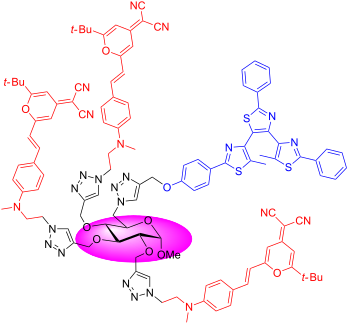
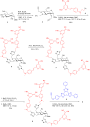
- supramolecular systems. Only one artificial light-harvesting antenna system grafted on the α-D-glucopyranoside has been reported [17]. Results and Discussion Synthesis of multichromophoric sugars Synthesis of organic nano-architectures with a high degree of structural order and defined properties is challenging




Carbohydrate PEGylation, an approach to improve pharmacological potency
Beilstein J. Org. Chem. 2014, 10, 1433–1444, doi:10.3762/bjoc.10.147
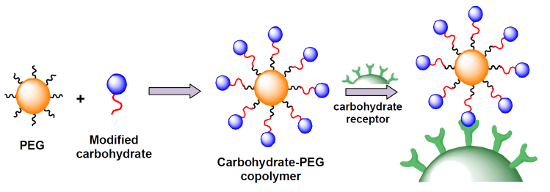
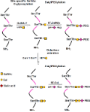
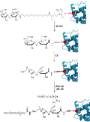
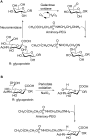
- steric effects [31]. The strategy is based on the finding that certain PEGylated nucleotide-sugars are effectively transferred to a glycan acceptor by the corresponding glycosyltransferase. A modified sialic acid PEGylated at the 5’-amino position in the CMP nucleotide (CMP-SA-5-NHCOCH2NHPEG) can be






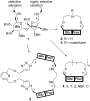
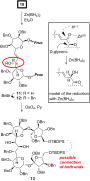
Synthesis of a sucrose dimer with enone tether; a study on its functionalization
Beilstein J. Org. Chem. 2014, 10, 1246–1254, doi:10.3762/bjoc.10.124
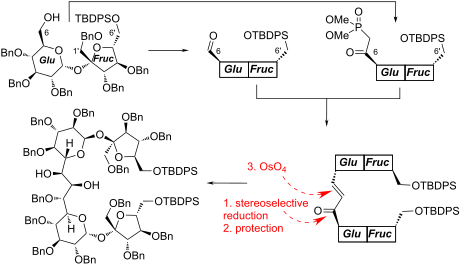
- designed for such receptors, sugars are the most promising due to their availability and biocompatibility. Up to date only monosaccharides have found a wide application in the synthesis of crown ether analogs [5][6]. The disaccharide scaffold is much less pronounced [7]. During the past decade we have
- out that this methodology, which is used in the synthesis of more simple derivatives such as higher carbon sugars, was also applicable for the preparation of the sucrose dimer. Experimental General methods All reported NMR spectra were recorded with a Varian-Vnmrs-600 MHz spectrometer (at 600 and 150




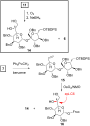
Olefin cross metathesis based de novo synthesis of a partially protected L-amicetose and a fully protected L-cinerulose derivative
Beilstein J. Org. Chem. 2014, 10, 1023–1031, doi:10.3762/bjoc.10.102
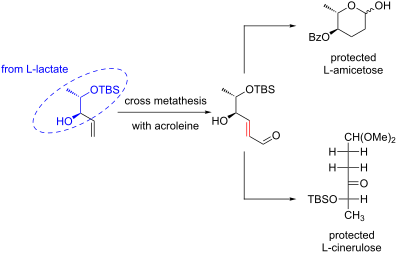
- ., through molecular recognition of a preferred binding site [2][3][4][5], thereby ensuring the selectivity of a chemotherapeutic agent. Particularly common are side chains composed of deoxygenated sugars [6]. For example, the kigamicins are bacterial secondary metabolites isolated from Amicolatopsis sp. [7
- agent with particular activity against different forms of leukemia [13] (Figure 1). Desoxy-sugars are sometimes scarcely available from natural sources and therefore the chemical syntheses of the monosaccharides [6][14] and their assembly to oligosaccharides [15][16][17] has attracted constant attention
- sugar biosynthesis genes [5]. Comparatively few transition metal mediated or -catalyzed reactions have hitherto been used for the synthesis of 2,3,6-tridesoxy sugars such as amicetose. An example is the W-promoted cycloisomerization of lactaldehyde derived alkynols, which yields the glycal of amicetose


Molecular architecture with carbohydrate functionalized β-peptides adopting 314-helical conformation
Beilstein J. Org. Chem. 2014, 10, 948–955, doi:10.3762/bjoc.10.93

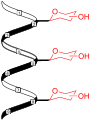
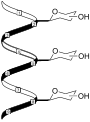
- corresponding lectins. Taillefumier and coworkers link sugar units to β-peptide amino acid side chains by azide–alkyne cycloaddition [20]. Following the concept of highly organized presentation of sugar units on a β-peptide scaffold, we report on simultaneous incorporation of various sugars (glucose, galactose
- peptide scaffolds for the presentation of sugar epitopes has already some precedence. Complex saccharide structures are linked to α-peptides, protein fragments [24][25][26][27] and recently also to glycofoldamers [28]. Sugars are arranged on cyclopeptides [29][30][31][32][33], like Dumy and coworkers


Convergent synthesis of a tetrasaccharide repeating unit of the O-specific polysaccharide from the cell wall lipopolysaccharide of Azospirillum brasilense strain Sp7
Beilstein J. Org. Chem. 2014, 10, 293–299, doi:10.3762/bjoc.10.26
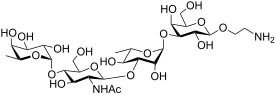
- 1. A number of suitably functionalized monosaccharide intermediates 2, 3 [30], 4 [31], and 5 [32] were prepared from the reducing sugars by using literature reports. The application of a one-pot reaction sequence for the stereoselective glycosylation and the removal of the p-methoxybenzyl (PMB


Multigramme synthesis and asymmetric dihydroxylation of a 4-fluorobut-2E-enoate
Beilstein J. Org. Chem. 2013, 9, 2660–2668, doi:10.3762/bjoc.9.301
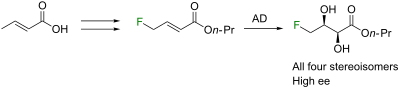
- ][9][10]. The synthesis of fluorinated analogues of sugars can be approached in two strategically different ways. The most common, and often most efficient approach, identifies a sugar precursor, isolates the locus for fluorination (usually an hydroxy group) by protecting all the other functional
- -deoxy-6-fluoro sugars, the locus of reaction is not even a stereogenic centre. The synthesis of 6-fluoro-D-olivose (6) in 23% overall yield from optically pure D-glucose (1) by O’Hagan and Nieschalk (Scheme 1) provides an impressive example of the approach [12]. Isolation of the C-6 hydroxy group in 2
- /deprotection chemistry, and in some cases, the availability of the precursor sugar. Some less common sugars are expensive and available in limited quantities. The alternative approach involves de novo stereodivergent synthesis, which elaborates small fluorinated building blocks using the reactions of modern



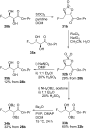

The total synthesis of D-chalcose and its C-3 epimer
Beilstein J. Org. Chem. 2013, 9, 2620–2624, doi:10.3762/bjoc.9.296

- group via exposure to CSA/MeOH for 45 min at 0 °C; this process afforded alcohol 12 in good yield. The notable advantage of this strategy is its high degree of flexibility, rendering it applicable to the preparation of various C-3 analogues of chalcose and other related 4-deoxy sugars. Retrosynthesis of





