


Search results
Search for "transition-metal-catalyzed" in Full Text gives 270 result(s) in Beilstein Journal of Organic Chemistry. Showing first 200.
Intramolecular cascade annulation triggered by rhodium(III)-catalyzed sequential C(sp2)–H activation and C(sp3)–H amination
Beilstein J. Org. Chem. 2019, 15, 571–576, doi:10.3762/bjoc.15.52
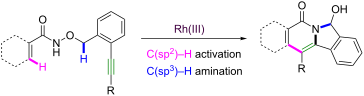
- activation; rhodium; acrylamide; heterocycles; Introduction Over the last decade, transition metal-catalyzed C(sp2)–H activation has emerged as an efficient strategy to access complex molecules [1][2][3][4][5][6]. Among the methodologies, RhIII-catalyzed oxidative annulation of a C(sp2)–H bond with 2π


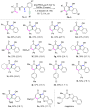


A novel and efficient synthesis of phenanthrene derivatives via palladium/norbornadiene-catalyzed domino one-pot reaction
Beilstein J. Org. Chem. 2019, 15, 291–298, doi:10.3762/bjoc.15.26
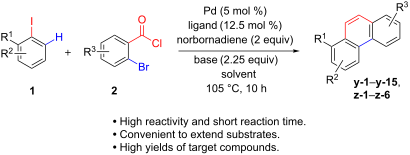
- , trifluoromethyl and ester, gave 75–95% yields of the corresponding products y-9–y-13, which were precursors for further transition metal-catalyzed cross-coupling reactions. To further explore the generality of this reaction, different substituted ortho-bromobenzoyl chlorides were then tested (Scheme 3). The ortho


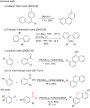


Metal-free C–H mercaptalization of benzothiazoles and benzoxazoles using 1,3-propanedithiol as thiol source
Beilstein J. Org. Chem. 2019, 15, 279–284, doi:10.3762/bjoc.15.24

- [22] and 1,2-ethanedithiol [23]. In the past decades, C–H functionalization has become an effective strategy for constructing different molecules directly from simple arenes and alkanes. C–H functionalization is an important method for C–S coupling reactions [24][25]. For example, transition metal
- -catalyzed C–H thiolation of benzothiazole or benzoxazole with a disulfide and a thiol provides easy access to the corresponding sulfides [26][27][28][29][30][31][32][33][34]. However, the examples using C–H functionalization for preparing 2-mercaptobenzoxazoles or 2-mercaptobenzothiazoles are still rare. In


Ruthenium-based olefin metathesis catalysts with monodentate unsymmetrical NHC ligands
Beilstein J. Org. Chem. 2018, 14, 3122–3149, doi:10.3762/bjoc.14.292
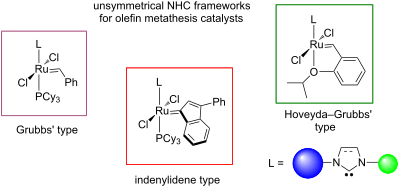
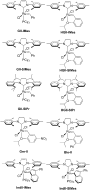
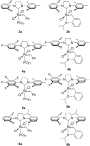
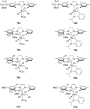
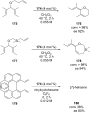
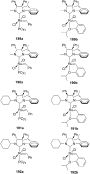
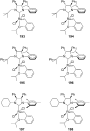
- to the current state of research are discussed. Keywords: ligand design; olefin metathesis; ruthenium catalysts; selectivity; unsymmetrical N-heterocyclic carbenes; Introduction The transition metal-catalyzed olefin metathesis reaction is an indispensable synthetic tool for the construction of new







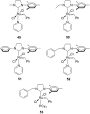


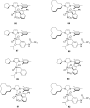


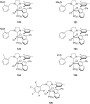


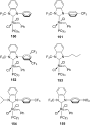






Ring-closing-metathesis-based synthesis of annellated coumarins from 8-allylcoumarins
Beilstein J. Org. Chem. 2018, 14, 2991–2998, doi:10.3762/bjoc.14.278
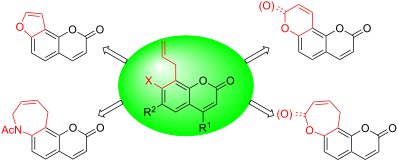
- these established methods necessary. Examples from the past 15 years include transition metal-catalyzed transformations [21][22][23], solid-phase synthesis directed at combinatorial library design [24] and organocatalytic annellation reactions [25][26]. Sparked by our interest in the development and


Molecular iodine-catalyzed one-pot multicomponent synthesis of 5-amino-4-(arylselanyl)-1H-pyrazoles
Beilstein J. Org. Chem. 2018, 14, 2789–2798, doi:10.3762/bjoc.14.256
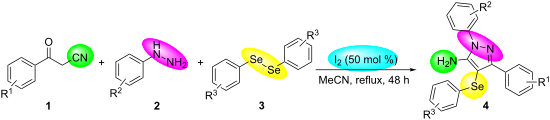
- methodologies describing the transition metal-catalyzed cross-coupling reaction of diorganyl diselenides with (hetero)aryl, alkenyl, and alkynyl halides or pseudo-halides [3], an updated protocol that describe reduced waste generation and atom-economy is desired. In this context, the multicomponent cyclization


Transition metal-free oxidative and deoxygenative C–H/C–Li cross-couplings of 2H-imidazole 1-oxides with carboranyl lithium as an efficient synthetic approach to azaheterocyclic carboranes
Beilstein J. Org. Chem. 2018, 14, 2618–2626, doi:10.3762/bjoc.14.240

- metal-catalyzed C–Br/C–M (M = Li, Mg, Zn, etc.) and C–Br/C–H cross-couplings reactions leading to more complex organic compounds. Mono-substituted imidazolyl carboranes 4a–d and their N-oxide analogues 5a–d were characterized by the data of elemental analysis, IR, NMR spectroscopy (1H, 13C{1H} (APT
- mentioning that the C–H/C–Li coupling reactions of 2H-imidazole 1-oxides 1c,d with carboranyllithium 2 have been found to result in the formation of p-bromophenyl derivatives 4c,d and 5c,d, which are of particular interest as valuable synthons for further modifications, for instance by means of transition


Gold-catalyzed post-Ugi alkyne hydroarylation for the synthesis of 2-quinolones
Beilstein J. Org. Chem. 2018, 14, 2572–2579, doi:10.3762/bjoc.14.234
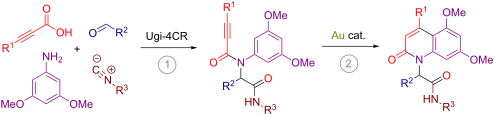
- functionalization [25][26][27][28][29] of the 2-quinolone scaffold has become a budding research trend. In the last decade, a great number of efficient approaches has been developed utilizing transition metal-catalyzed [30][31][32], Lewis acid-mediated [33], and radical cyclizations [34] of various aniline
- derivatives with most recent strategies focusing on the implementation of transition metal-catalyzed C–H activation methods [35][36]. One of the common approaches towards 2-quinolones 2 involves the intramolecular Friedel–Crafts hydroarylation [37][38] of N-arylamides of 3-substituted propynoic acids 1


Synthesis of aryl sulfides via radical–radical cross coupling of electron-rich arenes using visible light photoredox catalysis
Beilstein J. Org. Chem. 2018, 14, 2520–2528, doi:10.3762/bjoc.14.228
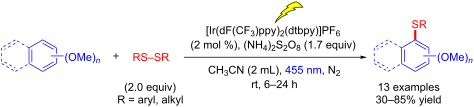
- , antidepressant or antileukotriene agents (Figure 1). Three of the five most selling drugs in 2015 were organosulfur compounds. The majority of methods for C–S bond synthesis use transition metal-catalyzed cross coupling of thiols and their derivatives with organohalides [4][5][6], arylboronic acids [7], aryl


Synergistic approach to polycycles through Suzuki–Miyaura cross coupling and metathesis as key steps
Beilstein J. Org. Chem. 2018, 14, 2468–2481, doi:10.3762/bjoc.14.223
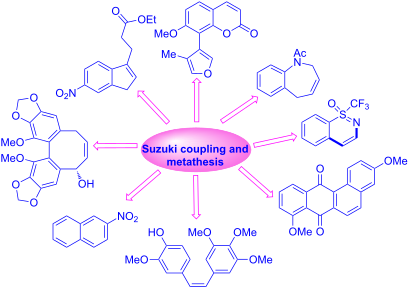
- -Doctoral Fellow at the KU Leuven, Belgium under the EMINTE programme. During post-doctoral work his research work was related to organic synthesis under microwave reaction conditions. Presently, he is Research Associate with Prof. S. Kotha. His research interests include various transition-metal-catalyzed


Cobalt- and rhodium-catalyzed carboxylation using carbon dioxide as the C1 source
Beilstein J. Org. Chem. 2018, 14, 2435–2460, doi:10.3762/bjoc.14.221
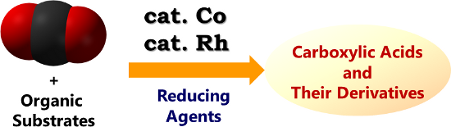
- reagents in transition-metal-catalyzed C–C bond-forming reactions [21][22][23]. In particular, the carboxylation of allyl esters with CO2 has been catalyzed by Pd or Ni under electrochemical reaction conditions [24][25]. For catalytic reactions using reducing agents, Martin reported Ni-catalyzed
- useful methods such as the transition-metal-catalyzed carbozincation of alkynes that affords stereodefined alkenylzinc compounds have been developed. To date, a variety of organozinc reagents (RZnX and R2Zn: R = aryl, alkyl, alkenyl, alkynyl, allyl, and benzyl groups) have been used in these reactions
- ). Possibly another ligand exchange between E and KOAc regenerates the Rh complex A (step e). The desired product (35) is obtained after lactonization. Hydrocarboxylation of arylalkenes Hydrocarboxylation is an essential carboxylation reaction. To date, transition-metal-catalyzed hydrocarboxylation reactions




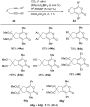

Efficient catalytic alkyne metathesis with a fluoroalkoxy-supported ditungsten(III) complex
Beilstein J. Org. Chem. 2018, 14, 2425–2434, doi:10.3762/bjoc.14.220
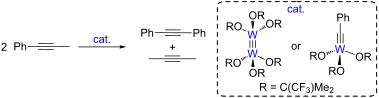
- progress in the past decades [1][2][3][4][5], the synthetic potential of alkyne metathesis has been growing only recently [6][7][8][9][10][11]. Alkyne metathesis represents a transition-metal-catalyzed transformation in which carbon–carbon triple bonds are cleaved and formed under mild conditions via


Catalyst-free synthesis of 4-acyl-NH-1,2,3-triazoles by water-mediated cycloaddition reactions of enaminones and tosyl azide
Beilstein J. Org. Chem. 2018, 14, 2348–2353, doi:10.3762/bjoc.14.210
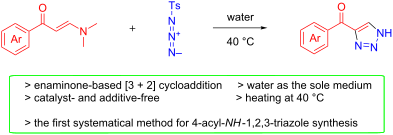
- is a heterocyclic moiety showing exceptionally broad and important applications as privileged structure in the discovery of biologically functional scaffolds, organic materials preparation, as directing group in transition-metal-catalyzed transformations and as key building block in the synthesis of


Hydroarylations by cobalt-catalyzed C–H activation
Beilstein J. Org. Chem. 2018, 14, 2266–2288, doi:10.3762/bjoc.14.202
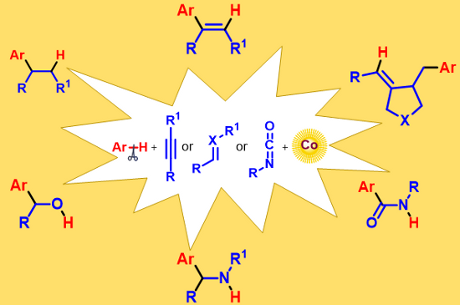
- synthesis owing to the necessity of green chemistry for the modern universe [1][2][3]. In this context, catalytic C–H functionalization has been acknowledged as an atom- and step-economical process [4][5][6]. A wide range of transition metal-catalyzed non-directed or directing group assisted C–H activation
- -catalyzed hydroarylation of C=X bonds Transition-metal-catalyzed addition of C–H bond to polar π bonds such as imines, isocyanates and carbonyls is one of the efficient methods to incorporate heteroatoms in organic molecules [45]. Yoshikai et al. developed an addition reaction of arylpyridines 3 to imines


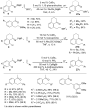


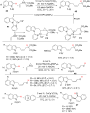


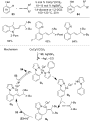


Cobalt-catalyzed peri-selective alkoxylation of 1-naphthylamine derivatives
Beilstein J. Org. Chem. 2018, 14, 2090–2097, doi:10.3762/bjoc.14.183
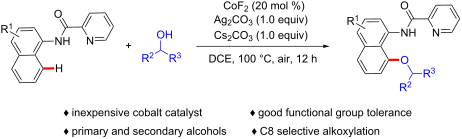
- methods always possess some limitations such as preactivated starting materials, poor regioselectivities, and tedious steps [5]. Therefore, it is desirable to develop an effective strategy to achieve this transformation [6][7]. Over the past few decades, transition-metal-catalyzed C–H activation to form C
- ][35][36][37][38][39][40][41][42] have successfully reported alkoxylation reactions with the auxiliary of directing groups. However, the transition-metal-catalyzed C–H alkoxylation is still largely limited to palladium- [28][33][34][35][36][37][38][39][40] or copper- [26][27][29][41][42] catalyzed




D-Fructose-based spiro-fused PHOX ligands: synthesis and application in enantioselective allylic alkylation
Beilstein J. Org. Chem. 2018, 14, 2082–2089, doi:10.3762/bjoc.14.182
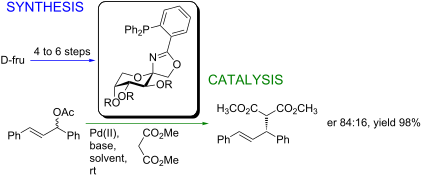
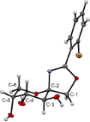
- solvent) the reaction proceeded smoothly in good to high yields. We chose 2-bromobenzonitrile (8) as a nucleophile because we planned to modify the aryl bromide by transition metal-catalyzed cross-coupling reactions afterwards. Unfortunately, the nitrile must be used in a high excess of 15 equiv because




Recent advances in hypervalent iodine(III)-catalyzed functionalization of alkenes
Beilstein J. Org. Chem. 2018, 14, 1813–1825, doi:10.3762/bjoc.14.154
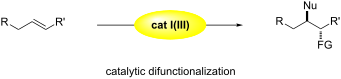
- . Compared to the diverse reactivity profiles of transition metal-catalyzed functionalization of alkenes, hypervalent iodine (III)-mediated reactions are limited to nucleophilic substitution processes. Recently, Liu and co-workers reported a novel cooperative strategy by combining palladium catalysis and


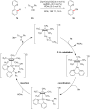
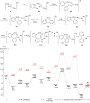
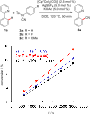
Cobalt-catalyzed C–H cyanations: Insights into the reaction mechanism and the role of London dispersion
Beilstein J. Org. Chem. 2018, 14, 1537–1545, doi:10.3762/bjoc.14.130
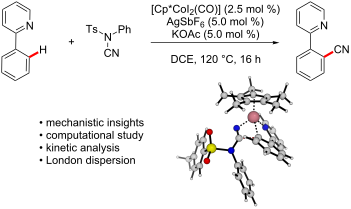
- ][10][11], London dispersion can also play a crucial role in different transition-metal-catalyzed reactions [12][13][14][15][16][17]. The C–H-rich di-1-adamantylphosphine oxide – a typical dispersion element – was experimentally found to be an excellent preligand for ruthenium- and palladium-catalyzed
- exclusively act as a sterically demanding ligand in transition-metal-catalyzed reactions. Conclusion We have analyzed the cobalt(III)-catalyzed C–H cyanation of differently substituted 2-phenylpyridines with N-cyano-N-aryl-p-toluenesulfonamide using density functional theory. On the basis of our computational





Hypervalent organoiodine compounds: from reagents to valuable building blocks in synthesis
Beilstein J. Org. Chem. 2018, 14, 1508–1528, doi:10.3762/bjoc.14.128
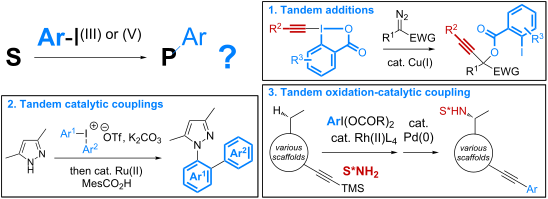
- , their reactivity is higher than that of the corresponding aryl halides, a property that has been widely exploited to develop efficient transition-metal-catalyzed cross coupling reactions [55]. The latter, however, allow for transferring only one of the two aromatic motifs of the iodonium reagents
- application of modern transition-metal-catalyzed methods. Simple hypervalent iodine reagents can now be considered as valuable building blocks in the synthesis of both polyfunctionalized compounds and complex polycyclic skeletons. We believe that the application of this strategy could be a source of
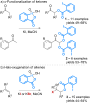
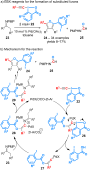
- of Pd(OAc)2 in THF, and affords the dibenzoalkylidenefluorene 47 in an excellent 88% yield (Scheme 16). Ten years later, Huang, Wen and co-workers have demonstrated that, in the presence of both a terminal alkyne and a boronic acid, various cyclic diaryl-λ3-iodanes undergo a transition-metal






Metal-free formal synthesis of phenoxazine
Beilstein J. Org. Chem. 2018, 14, 1491–1497, doi:10.3762/bjoc.14.126
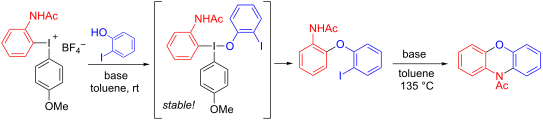
- recently, Bolm and co-workers reported a metal-free cyclization of iodo-substituted diaryl ethers with a broad scope (Scheme 1b) [18]. Transition metal-catalyzed cross couplings have also been employed to form the required C–O and C–N bonds, e.g., by Cu-catalyzed cyclization of 2-(2-bromophenoxy)anilines


Three-component coupling of aryl iodides, allenes, and aldehydes catalyzed by a Co/Cr-hybrid catalyst
Beilstein J. Org. Chem. 2018, 14, 1413–1420, doi:10.3762/bjoc.14.118
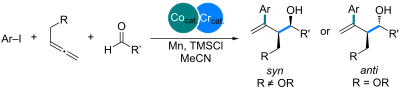
- organometallics, involving a wide range of transition metal-catalyzed reactions. For example, transmetalation between an organonickel (or organocobalt) complex and chromium salt results in the formation of a highly nucleophilic organochromium species, which enables efficient addition to aldehydes to give


Rhodium-catalyzed C–H functionalization of heteroarenes using indoleBX hypervalent iodine reagents
Beilstein J. Org. Chem. 2018, 14, 1208–1214, doi:10.3762/bjoc.14.102
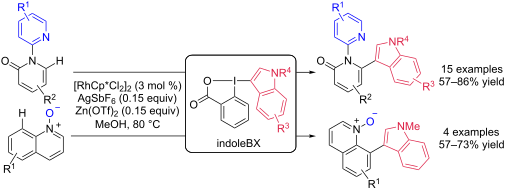
- ), which ends up on the pyridinone ring. As alternative, a Suzuki–Miyaura coupling between 3-halogenoindoles and (2-methoxypyridyl)boronic acids followed by a deprotection of the methoxy group [7][8] or transition-metal-catalyzed annulation methods [9] have also been reported. In contrast, several
- (III) catalyst for C-5 and C-6 functionalization, respectively [13]. Hypervalent iodine reagents in general [20], and benziodoxole derivatives in particular [21], have found broad application in synthetic chemistry. Aryl iodonium salts have been used successfully in transition-metal-catalyzed




Chlorination of phenylallene derivatives with 1-chloro-1,2-benziodoxol-3-one: synthesis of vicinal-dichlorides and chlorodienes
Beilstein J. Org. Chem. 2018, 14, 796–802, doi:10.3762/bjoc.14.67
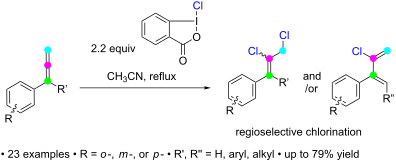
- - and vinyl chlorides are highly sought-after intermediates for effecting allylations, and for use in transition metal-catalyzed carbon–carbon and carbon–heteroatom bond-forming reactions [13][14][15][16][17][18][19][20][21][22][23][24][25][26][27][28]. Given the versatility of allyl chloride and β


Bromide-assisted chemoselective Heck reaction of 3-bromoindazoles under high-speed ball-milling conditions: synthesis of axitinib
Beilstein J. Org. Chem. 2018, 14, 786–795, doi:10.3762/bjoc.14.66

- transition-metal-catalyzed reactions [1][2], which has shown itself as a powerful synthetic tool in both academic and industrial practice [3][4][5][6][7]. The transformation has been enrolled as key steps for numerous synthetic routes, including the recent President Green Chemistry Award winner route of


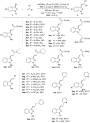

Cobalt-catalyzed directed C–H alkenylation of pivalophenone N–H imine with alkenyl phosphates
Beilstein J. Org. Chem. 2018, 14, 709–715, doi:10.3762/bjoc.14.60
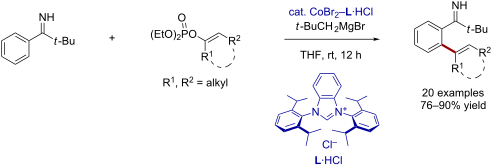
- alkenylation reaction of pivalophenone N–H imine with an alkenyl phosphate. The reaction tolerates various substituted pivalophenone N–H imines as well as cyclic and acyclic alkenyl phosphates. Keywords: alkenylation; C–C bond formation; C–H activation; cobalt; imine; Introduction Transition-metal-catalyzed





