


Search results
Search for "NHC" in Full Text gives 205 result(s) in Beilstein Journal of Organic Chemistry. Showing first 200.
Silver and gold-catalyzed multicomponent reactions
Beilstein J. Org. Chem. 2014, 10, 481–513, doi:10.3762/bjoc.10.46
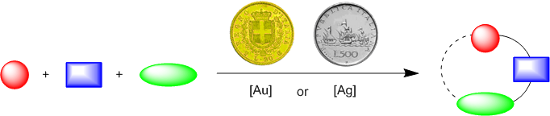
- recently, silver–NHC complexes were found to be valuable catalysts for this MCR. Their first application was reported by Wang and co-workers in 2008 [12], who developed a polystyrene-supported NHC–Ag(I) complex as an efficient catalyst for the A3-coupling under solvent-free conditions, at room temperature
- , and under a nitrogen atmosphere. The in situ generated polymer-supported complexes 2 were claimed to be more active than the parent NHC–silver halides. The reactions afforded the corresponding propargylamines 1 in excellent yields starting from aromatic and aliphatic aldehydes, a wide range of
- secondary amines, as well as aryl and alkyl-substituted alkynes (Scheme 2). It is noteworthy that the approach tolerated challenging substrates such as formaldehyde, o-substituted benzaldehydes, and secondary aromatic amines. Moreover, the PS–NHC–Ag(I) catalyst was proven to be reusable at least 12 times


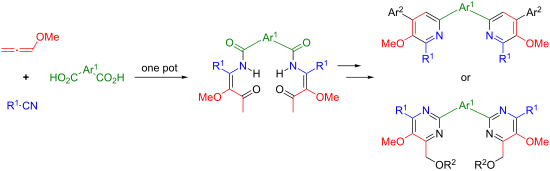
The Flögel-three-component reaction with dicarboxylic acids – an approach to bis(β-alkoxy-β-ketoenamides) for the synthesis of complex pyridine and pyrimidine derivatives
Beilstein J. Org. Chem. 2014, 10, 394–404, doi:10.3762/bjoc.10.37
- catalysis. With ruthenium-based catalysts bearing N-heterocyclic carbene (NHC) ligands, RCM usually delivers macrocyclic olefins as mixtures of E- and Z-isomers, in most cases in favor of the E-isomer [70][71][72][73]. The E/Z-ratio is often under thermodynamic control, reflecting the energy difference


One-pot synthesis of cyanohydrin derivatives from alkyl bromides via incorporation of two one-carbon components by consecutive radical/ionic reactions
Beilstein J. Org. Chem. 2014, 10, 150–154, doi:10.3762/bjoc.10.12
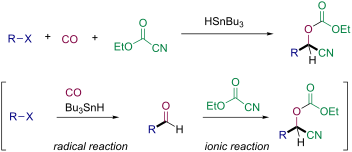
- work in collaboration with Dennis Curran has revealed that, with the use of NHC-borane [18], hydroxymethylation of aromatic iodides can be attained [19]. All these reactions consist of the combination of radical formylation with CO and ionic hydride reduction by hydride reagents (Scheme 1, reaction 1


Modulating NHC catalysis with fluorine
Beilstein J. Org. Chem. 2013, 9, 2812–2820, doi:10.3762/bjoc.9.316
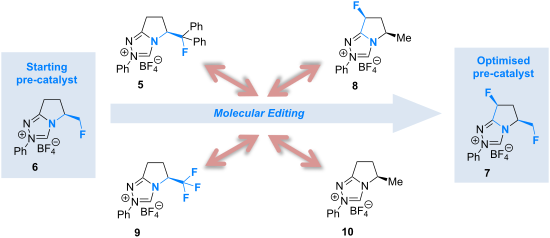
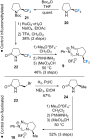
- possible to modulate the behaviour of the corresponding N-heterocyclic carbene (NHC) with minimal steric alterations to the catalyst core. In this study, the effect of hydrogen to fluorine substitution was evaluated as part of a molecular editing study. X-ray crystallographic analyses of a number of
- substitution is evaluated in the NHC-catalysed, enantioselective Steglich rearrangement of oxazolyl carbonates 3 to C-carboxyazlactones 4 [29], recently reported by Smith and co-workers [30][31][32][33][34][35][36]. Fluorination sites were selected based on their proximity to the ring junction nitrogen of the
- is consistent with the recently reported fluorine–NHC gauche effect [22]. The second fluorination site embeds the β-fluoroamine within the bicycle framework of the triazolium salt, thus restricting conformational freedom (e.g. 8). This later scenario was inspired by the elegant work of Rovis and co




Advancements in the mechanistic understanding of the copper-catalyzed azide–alkyne cycloaddition
Beilstein J. Org. Chem. 2013, 9, 2715–2750, doi:10.3762/bjoc.9.308
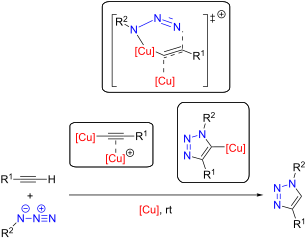
- until NHC-copper complexes were first employed in CuAAC reactions. In 2006, the group of Nolan reported the application of air-stable complexes [(NHC)CuX] as efficient catalysts for CuAAC reactions with terminal and internal alkynes in aqueous solution or under neat conditions (Table 2) [146][147]. Also
- room temperature. However, in organic solvents such as THF, dichloromethane or tert-butanol, only poor conversions were observed with these [(NHC)CuX] catalysts. Nolan et al. also report on the possibility of using [(SIPr)CuCl] as a latent catalyst [148]. With DMSO as solvent, complex [(SIPr)CuCl] (2
- in the following order of ligands: neocuproine < 4,7-dimethoxy-1,10-phenanthroline < bathophenanthroline < 1,10-phenanthroline < 4,7-dichloro-1,10-phenanthroline [150]. In 2006, the group of Nolan introduced a new family of monocationic copper(I) NHC-complexes of general formula [(NHC)2Cu]X (X = BF4




Gold(I)-catalyzed domino cyclization for the synthesis of polyaromatic heterocycles
Beilstein J. Org. Chem. 2013, 9, 2625–2628, doi:10.3762/bjoc.9.297
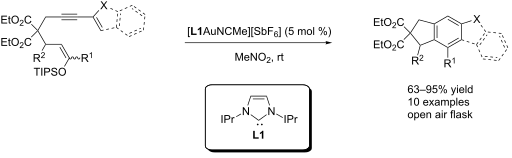
- ; cyclization; gold(I); gold catalysis; heterocycles; regioselectivity; Introduction In the last decade, phosphino and NHC–gold complexes have become prominent catalysts for the addition of nucleophiles to alkenes, alkynes and allenes [1][2][3][4][5][6][7][8][9][10][11]. Owing to the high affinity of gold(I


Ambient gold-catalyzed O-vinylation of cyclic 1,3-diketone: A vinyl ether synthesis
Beilstein J. Org. Chem. 2013, 9, 2537–2543, doi:10.3762/bjoc.9.288
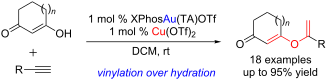
- acceptable yield (59%) of the desired vinyl addition product 3a. Thermally-stable Ph3PAu(TA)OTf (TA-Au, 5%) slightly improved the performance, yielding 63% of the desired product and less hydration byproduct 4. When changing the primary ligand from triphenylphosphine to a NHC, the yield slightly decreased


Synthesis of axially chiral gold complexes and their applications in asymmetric catalyses
Beilstein J. Org. Chem. 2013, 9, 2224–2232, doi:10.3762/bjoc.9.261
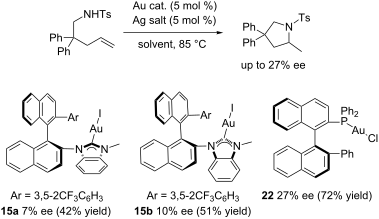
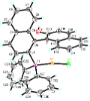
- were also successfully synthesized and characterized by X-ray crystal diffraction. A weak gold-π interaction between the Au atom and the aromatic ring in these gold complexes was identified. Furthermore, we confirmed the formation of a pair of diastereomeric isomers in NHC gold complexes bearing an
- product in moderate yields and up to 29% ee. Keywords: asymmetric gold catalysis; chiral Au catalysts; gold-π interaction; NHC gold complex; Introduction After the long-held assumption of the non-reactivity of gold complexes, numerous reactions catalyzed by gold complexes have emerged in the last 2
- . However, chiral gold complexes [30][31][32][33][34][35][36][37][38][39][40][41][42][43][44][45], especially chiral NHC–gold complex-catalyzed asymmetric reactions [46][47][48][49][50][51][52][53] are still uncommon. Very few efficient chiral NHC–gold catalysts have been known up to the year of 2013. So



Synthesis, characterization and luminescence studies of gold(I)–NHC amide complexes
Beilstein J. Org. Chem. 2013, 9, 2216–2223, doi:10.3762/bjoc.9.260
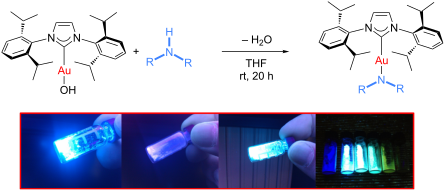
- (NHC) ligands [8][9][10]. Recently, we have been very active in the synthesis and characterization of new gold(I)–NHC complexes and the study of their reactivity, with a special focus on the development of straightforward methodologies [11][12]. As a result of our investigations, we have recently
- reported the synthesis of [AuX(NHC)] (X = Cl, Br, I) complexes, directly from imidazolium and imidazolidinium salts and a suitable gold source, such as [AuCl(SMe2)], using K2CO3 as a base [13]. Moreover, we have also reported the synthesis of the first mononuclear gold(I) hydroxide species, [Au(OH)(IPr
- for the synthesis of such species using hydroxide 1: a) via transmetallation from either boronic acids or siloxides, or b) via deprotonation reactions of suitable substrates. We have applied the latter methodology to the synthesis of organogold–NHC complexes bearing several trans-ligands, such as


Synthesis of enantiomerically pure N-(2,3-dihydroxypropyl)arylamides via oxidative esterification
Beilstein J. Org. Chem. 2013, 9, 2129–2136, doi:10.3762/bjoc.9.250

- good overall yields in a two step process. The key step involves the ring opening of the chiral epoxide with a nitrogen heterocyclic carbene (NHC) and further rearrangement to chiral N-(2,3-dihydroxypropyl)arylamides in high yields and enantioselectivity. During the reaction, no erosion in chiral
- purity was observed. Keywords: N-(2,3-dihydroxypropyl)arylamide; nitrogen heterocyclic carbenes (NHC); oxidative esterification of aromatic aldehyde; Introduction Chiral structures with three carbons are an integral part of many biologically active compounds including alkaloids, pharmaceuticals and
- (Scheme 2). The Mitsunobu reaction yielded the product (S)-2-(oxiran-2-ylmethyl)isoindoline-1,3-dione (4a) [23][24][25][26][27] in 80% yield and in 99% ee. Then 4a was converted to hydroxypropyl benzoate 5a [28][29][30][31][32] by NHC-mediated oxidative esterification of aryl aldehydes (7a–f) [33][34][35


Acid, silver, and solvent-free gold-catalyzed hydrophenoxylation of internal alkynes
Beilstein J. Org. Chem. 2013, 9, 2002–2008, doi:10.3762/bjoc.9.235
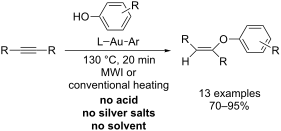
- , we extend the chemistry to the synthesis of arylgold compounds containing carbene ligands. Results and Discussion The synthesis of the carbene-ligated arylgold compounds was accomplished using (NHC)AuCl (NHC = IMes, SIMes, IPr, SIPr) precursors. For the initial screening runs, (IMes)AuCl and 4-tert
- chemistry was extended to other (NHC)AuCl compounds (Figure 1). It was anticipated that incorporating electron-donating groups into the aryl fragments on the gold would facilitate the cleavage of the organic group from the gold center through protodeauration; thus, –C6H4t-Bu and –C6H4OMe were selected as
- range of phenols with diphenylacetylene and 5-decyne serving as representative internal alkynes (Figure 2). Microwave and conventional heating were used in these reactions. Based upon the initial studies, the phosphine ligated catalyst 1, as well as NHC ligated catalysts 7–9 afforded high yields of the


The chemistry of amine radical cations produced by visible light photoredox catalysis
Beilstein J. Org. Chem. 2013, 9, 1977–2001, doi:10.3762/bjoc.9.234
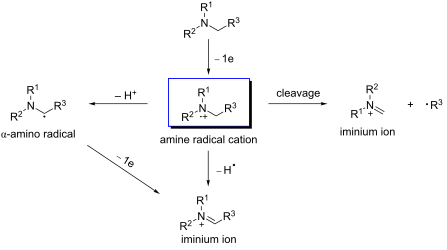
- -aryltetrahydroisoquinoline 13 with an aliphatic aldehyde (Scheme 11) [78]. In the presence of a N-heterocyclic carbene (NHC), the aldehyde is converted to a chiral acyl anion or homoenolate equivalent 37, which is then added to the iminium ion 27 to form Csp3–Csp2 bonds asymmetrically. It is interesting to note that the use
- synthetic transformations to produce a diverse array of amines. Moreover, visible light photoredox catalysis has been merged with other types of catalysis, including enamine catalysis, N-heterocyclic carbene (NHC) catalysis, or copper acetylide formation. This dual catalysis approach has significantly
- reaction. Merging Au-based photoredox catalysis and Lewis base catalysis for the Mannich reaction. Merging Ru-based photoredox catalysis and Cu-catalyzed alkynylation reaction. Merging Ru-based photoredox catalysis and NHC catalysis. 1,3-Dipolar cycloaddition of photogenically formed azomethine ylides




Flow Giese reaction using cyanoborohydride as a radical mediator
Beilstein J. Org. Chem. 2013, 9, 1791–1796, doi:10.3762/bjoc.9.208
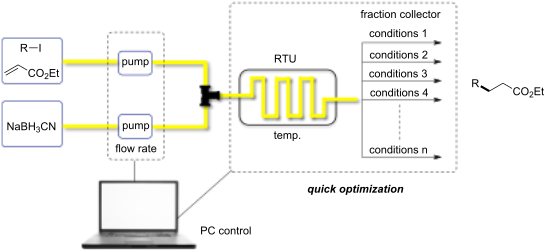
- reductive radical addition reaction, better known as the Giese reaction, was historically carried out most by using tributyltin hydride as the radical mediator [8][9]. Recently borane derivatives such as borohydride reagents [10][11][12][13] or NHC-boranes [14][15][16][17][18] can be used in simple radical


True and masked three-coordinate T-shaped platinum(II) intermediates
Beilstein J. Org. Chem. 2013, 9, 1352–1382, doi:10.3762/bjoc.9.153
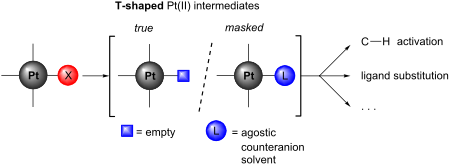
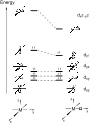
- demanding models [Pt(R)2(Im)] (R = SiMe3, Me; Im = imidazol-2-ylidene) appealed to the trans influence of both NHC and silyl ligands to explain the structure. However, a recent DFT investigation concluded that Y1 is better described as a Pt(0) σ-disilane complex [16] than as a Pt(II) disilyl species
- -heterocyclic carbene (NHC) ligands (Figure 6), which have been proven to be useful stabilizing electron-deficient transition-metal species [25][26][27]. In this regard, recent studies state that the use of IMes* (4,5-dimethyl-1,3-bis(2,4,6-trimethylphenyl)imidazol-2-ylidene) and IMes (1,3-bis(2,4,6
- -trimethylphenyl)imidazol-2-ylidene) ligands in [Pt(Me)(NHC)2]+ T4 and [Pt(NHC’)(NHC)]+ T5 (NHC = IMes*, IMes; NHC’ = cyclometalated ligand) provides pure T-shaped species with no agostic stabilization [28]. Additionally, the resulting [Pt(Ar)(IMes*)2]+ T6 formed after C–H bond activation has also proven to be a





Synthesis and structure of trans-bis(1,4-dimesityl-3-methyl-1,2,3-triazol-5-ylidene)palladium(II) dichloride and diacetate. Suzuki–Miyaura coupling of polybromoarenes with high catalytic turnover efficiencies
Beilstein J. Org. Chem. 2013, 9, 698–704, doi:10.3762/bjoc.9.79
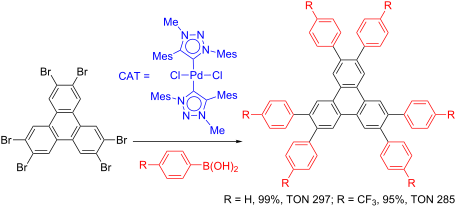
- stability and exceptional catalytic properties in comparison with their normal NHC counterparts. In particular triazolylidenes with sterically demanding mesityl and 2,4,6-triisopropylphenyl wingtip groups are catalytically very active. Polyphenylated arenes are a very important class of compounds and they


Reductions of aldehydes and ketones with a readily available N-heterocyclic carbene borane and acetic acid
Beilstein J. Org. Chem. 2013, 9, 675–680, doi:10.3762/bjoc.9.76

- -dimethylimidazol-2-ylidene borane. Aldehydes are reduced over 1–24 h at room temperature with 1 equiv of acetic acid and 0.5 equiv of the NHC-borane. Ketone reductions are slower but can be accelerated by using 5 equiv of acetic acid. Aldehydes can be selectively reduced in the presence of ketones. On a small
- scale, products are isolated by evaporation of the reaction mixture and direct chromatography. Keywords: NHC-borane; N-heterocyclic carbene borane; reduction; Introduction Reduction of carbonyl compounds is a common, fundamental chemical transformation. Among the numerous hydride reagents available
- decomposition with the release of hydrogen gas. Therefore, appropriate precautions are required for larger scale reactions as well as during transport and storage [5]. N-Heterocyclic carbene boranes (NHC-boranes) have emerged in recent years as a useful class of synthetic reagents, which have interesting


NHC-catalysed highly selective aerobic oxidation of nonactivated aldehydes
Beilstein J. Org. Chem. 2013, 9, 602–607, doi:10.3762/bjoc.9.65

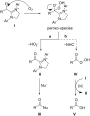
- of carbinols to aldehydes or ketones using oxygen, visible light and mesoporous graphitic carbon nitride (mpg-C3N4) polymer as a metal-free photocatalyst [4]. As an extension of this method we were interested in a consecutive organocatalytic process using an N-heterocyclic carbene (NHC) together with
- mpg-C3N4 and oxygen. NHC-catalysts derived from the corresponding salts are known to react with aldehydes to provide I and lead after oxidation to acyl cation intermediate II. Subsequent reactions with nucleophiles give esters, amides or acids. Reagents such as MnO2 [5][6][7], DDQ, TEMPO and
- azobenzene [8][9][10][11][12][13][14][15][16][17][18] were described. The use of mpg-C3N4 should lead to a new process containing two subsequent organocatalytic reactions (Scheme 1). Results and Discussion In initial experiments we used 4-nitrobenzaldehyde as a model substrate. As NHC-salt we selected A


N-Heterocyclic carbene–palladium catalysts for the direct arylation of pyrrole derivatives with aryl chlorides
Beilstein J. Org. Chem. 2013, 9, 303–312, doi:10.3762/bjoc.9.35

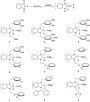
- Catalysis", Campus de Beaulieu, 35042 Rennes, France. Fax: +33 (0)2-23-23-69-39; Tel: +33 (0)2-23-23-63-84 10.3762/bjoc.9.35 Abstract New Pd–NHC complexes have been synthesized and employed for palladium-catalyzed direct arylation of pyrrole derivatives by using electron-deficient aryl chlorides as
- with heteroarenes. Keywords: aryl chlorides; atom-economy; C–H bond activation; C–H functionalization; carbenes; palladium; pyrroles; Introduction N-Heterocyclic carbenes (NHC) have emerged as an important class of ligands in the development of homogeneous catalysis [1][2][3][4][5][6][7][8][9]. Such
- ]. This is especially true for palladium-catalyzed coupling reactions. Pd–NHC catalysts [15] have proven to be excellent alternatives to catalytic systems involving palladium associated to tertiary phosphine ligands [16][17][18][19]. The introduction of aryl groups at C2 or C5 positions of pyrroles is an


Recent advances in transition-metal-catalyzed intermolecular carbomagnesiation and carbozincation
Beilstein J. Org. Chem. 2013, 9, 278–302, doi:10.3762/bjoc.9.34
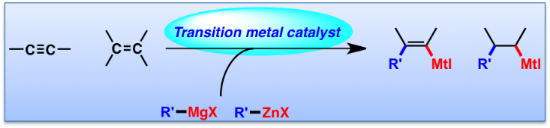
- ). Recently, iron and cobalt have been regarded as efficient catalysts for carbometalation of simple alkynes. Shirakawa and Hayashi reported that iron salts could catalyze arylmagnesiation of arylacetylenes in the presence of an N-heterocyclic carbene (NHC) ligand (Scheme 29) [103]. In 2012, Shirakawa and
- -catalyzed carbozincation of arylacetylenes and its application to the synthesis of tamoxifen. Bristol-Myers Squibb’s nickel-catalyzed phenylzincation. Iron/NHC-catalyzed arylmagnesiation of aryl(alkyl)acetylene. Iron/copper-cocatalyzed alkylmagnesiation of aryl(alkyl)acetylenes. Iron-catalyzed


One-pot tandem cyclization of enantiopure asymmetric cis-2,5-disubstituted pyrrolidines: Facile access to chiral 10-heteroazatriquinanes
Beilstein J. Org. Chem. 2013, 9, 265–269, doi:10.3762/bjoc.9.32
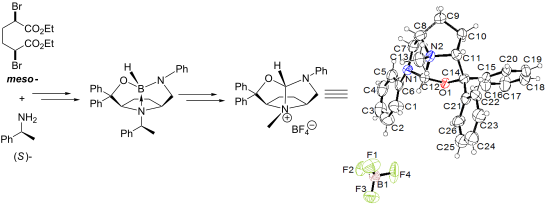
- PTCs of Denmark et al. The designed synthetic route to a hydroxy NHC from 4b. The reduction of amides 4 by LiAlH4 and BH3·THF. One-pot tandem cyclization of 6 in the presence of HC(OCH3)3. Supporting Information Supporting Information File 36: Full experimental details, analytical data and


Alkyne hydroarylation with Au N-heterocyclic carbene catalysts
Beilstein J. Org. Chem. 2013, 9, 246–253, doi:10.3762/bjoc.9.29

- Cristina Tubaro Marco Baron Andrea Biffis Marino Basato Dipartimento di Scienze Chimiche, Università degli Studi di Padova, via Marzolo 1, 35131 Padova, Italy 10.3762/bjoc.9.29 Abstract Mono- and dinuclear gold complexes with N-heterocyclic carbene (NHC) ligands have been employed as catalysts in
- (II) salts as catalyst [8][9][10]. Palladium complexes with N-heterocyclic carbene (NHC) ligands have since been showcased as highly efficient catalysts for this reaction [11][12][13][14]. Alternative catalytic systems based on salts or complexes of other noble metals, such as platinum [15][16][17
- few exceptions [36][40][44]. Finally, concerning the nature of the employed catalysts, simple gold salts or phosphino complexes of gold(I) were utilized in the majority of cases, although in recent years an increasing number of studies have been dealing with the application of NHC complexes of gold


N-Heterocyclic carbene–palladium(II)-1-methylimidazole complex catalyzed Mizoroki–Heck reaction of aryl chlorides with styrenes
Beilstein J. Org. Chem. 2012, 8, 1916–1919, doi:10.3762/bjoc.8.222

- Ting-Ting Gao Ai-Ping Jin Li-Xiong Shao College of Chemistry and Materials Engineering, Wenzhou University, Chashan University Town, Zhejiang Province 325035, People’s Republic of China 10.3762/bjoc.8.222 Abstract A well-defined N-heterocyclic carbene–palladium(II)-1-methylimidazole [NHC-Pd(II
- phosphine ligands, which can then increase the catalytic activity of the metal centre and the stability of the NHC–metal complexes, have attracted growing attention in the metal-catalyzed carbon–carbon and carbon–heteroatom bond-formation reactions during the past two decades [10][11][12][13][14][15
- ]. Consequently, since the seminal papers reported by Herrmann and co-workers [16][17], the NHC–Pd complexes have become a strong challenge to the phosphine–metal complexes in the Mizoroki–Heck reaction. Among the electrophiles participating in the NHC–Pd-complex-catalyzed Mizoroki–Heck reaction, organic iodides


Extending the utility of [Pd(NHC)(cinnamyl)Cl] precatalysts: Direct arylation of heterocycles
Beilstein J. Org. Chem. 2012, 8, 1637–1643, doi:10.3762/bjoc.8.187
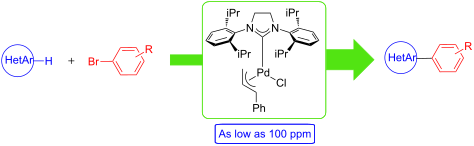
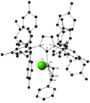
- Anthony R. Martin Anthony Chartoire Alexandra M. Z. Slawin Steven P. Nolan EaStCHEM School of Chemistry, University of St Andrews, North Haugh, St Andrews, KY16 9ST, UK 10.3762/bjoc.8.187 Abstract The use of [Pd(NHC)(cinnamyl)Cl] precatalysts in the direct arylation of heterocycles has been
- efficiency of well-defined palladium catalysts bearing NHC (N-heterocyclic carbene) ancillary ligands in classical cross-coupling reactions, they have rarely been applied to direct arylation procedures [9][10][11][12][13][14][15][16]. Among the family of [Pd(NHC)] complexes, the [Pd(NHC)(cin)Cl] (cin
- catalytic systems, and in the end to see whether the reactivity and application scope of these commercially available complexes could be broadened to include C–H bond functionalization transformations. We now report the activity of the [Pd(NHC)(cin)Cl] complexes 1–4 in the direct arylation of heterocycles



C2-Alkylation of N-pyrimidylindole with vinylsilane via cobalt-catalyzed C–H bond activation
Beilstein J. Org. Chem. 2012, 8, 1536–1542, doi:10.3762/bjoc.8.174
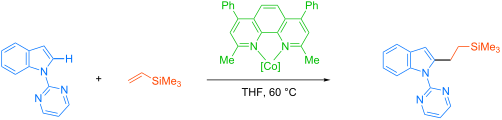
- pyphos, which was the optimum ligand for the alkenylation reaction [33], was poorly effective (Table 1, entry 6). Additional screening of N-heterocyclic carbene (NHC) and phosphine ligands did not lead to an improvement of the catalytic efficiency (Table 1, entries 7–9). The reaction turned out to be




N-Heterocyclic carbene-catalyzed direct cross-aza-benzoin reaction: Efficient synthesis of α-amino-β-keto esters
Beilstein J. Org. Chem. 2012, 8, 1499–1504, doi:10.3762/bjoc.8.169
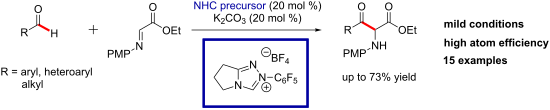
- including C–C bond construction, that is, formal addition of acyl anion equivalents generated from aldehydes 1 with NHCs, to α-imino esters 2 (Figure 1, (f)). Although a large number of NHC-catalyzed umpolung reactions, such as the benzoin reaction and Stetter reaction, have been developed [24][25][26][27
- , and atom-economical synthesis of the α-amino-β-keto esters by NHC-catalyzed cross-aza-benzoin reaction of aldehydes with α-imino esters under mild basic conditions. Results and Discussion First we initiated the cross-aza-benzoin reaction of benzaldehyde (1a) by employing 20 mol % of commercially
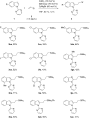
- reaction to give 5a in 42% yield (Table 1, entry 4). We reasoned that the acidity of the NHC precursor was important to promote the reaction under mild basic conditions (Table 1, entry 3 versus entry 4), and therefore we next investigated the substituent on the nitrogen atom of NHC. As envisaged, N





