Search results
Search for "NaBH4" in Full Text gives 232 result(s) in Beilstein Journal of Organic Chemistry. Showing first 200.
Synthesis of rigid p-terphenyl-linked carbohydrate mimetics
Beilstein J. Org. Chem. 2014, 10, 1749–1758, doi:10.3762/bjoc.10.182
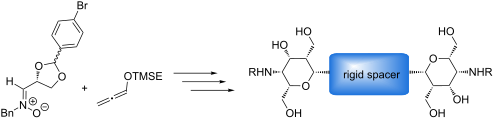
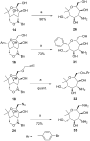
- and protection of 12a to 1,2-oxazine derivative 13. Conditions: a) 1. SnCl4, CH3CN, 4 h, −30 °C → rt; 2. TBSCl, imidazole, THF, 4 h, rt; b) NaBH4, EtOH, 4 h, −40 °C, 72%, dr 81:19; c) L-selectride, THF, 2 h, −10 °C, 73%, only 12a; d) TBSOTf, 2,6-lutidine, THF, 2 h, 0 °C. Synthesis of bicyclic diols 15


Multicomponent reactions in nucleoside chemistry
Beilstein J. Org. Chem. 2014, 10, 1706–1732, doi:10.3762/bjoc.10.179
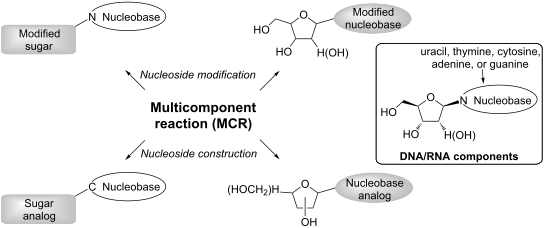
- H2O/EtOH, 60–100 °C, 7 h–10 d; ii. H2, Pd/C or PtO2; iii. (1) 4-methylbenzenethiol, (2) Ni-Ra; iv. (1) MeI, (2) NaBH4; v. (1) MeI, (2) nucleophile. Reagents and reaction conditions: i. H2O, 90 °C, overnight. Reagents and reaction conditions: i. AcOH, H2O, 60 °C, 12 h-5 d; ii. AcOH, H2O, 60 °C, 8 h


Glycosystems in nanotechnology: Gold glyconanoparticles as carrier for anti-HIV prodrugs
Beilstein J. Org. Chem. 2014, 10, 1339–1346, doi:10.3762/bjoc.10.136
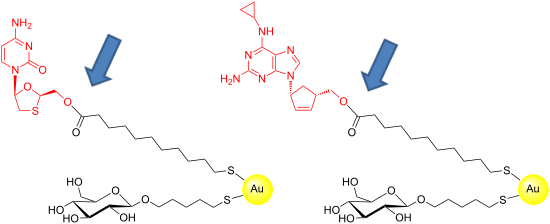
- ]. Due to the presence of an ester group in the prepared drug derivatives, NaBH4 could not be used as reducing agent for the in situ preparation of these gold nanoparticles [32][33]. The ABC- and 3TC-GNPs were then prepared by the so-called “thiol-for-thiol” ligand place exchange (LPE) reaction [34]. The


Synthesis of a sucrose dimer with enone tether; a study on its functionalization
Beilstein J. Org. Chem. 2014, 10, 1246–1254, doi:10.3762/bjoc.10.124
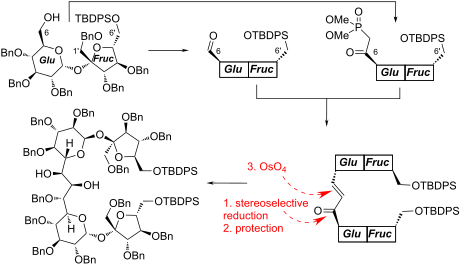
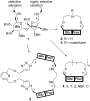
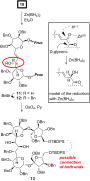
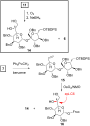
- methodology. This method was used to prove indirectly the 6R configuration at the newly created stereogenic center in allylic alcohol 11. The double bond in 11 was cleaved with ozone and the resulting ozonide was reduced with NaBH4; this sequence afforded sucrose vic-diol 14 and (as a byproduct) sucrose




Primary-tertiary diamine-catalyzed Michael addition of ketones to isatylidenemalononitrile derivatives
Beilstein J. Org. Chem. 2014, 10, 929–935, doi:10.3762/bjoc.10.91

- component process involving a domino Knoevenagel–Michael sequence was developed. 3,3'-Disubstituted oxindole could be transformed into spirooxindoles by reduction with NaBH4. Oxindole based Michael acceptors. Primary-tertiary diamine organocatalysts. Diamine catalyzed Michael addition of acetone to


First synthesis of meso-substituted pyrrolo[1,2-a]quinoxalinoporphyrins
Beilstein J. Org. Chem. 2014, 10, 808–813, doi:10.3762/bjoc.10.76
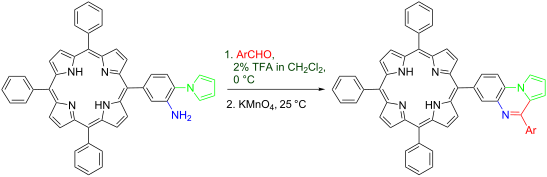
- -triphenylporphyrin. The reaction of this porphyrin with 2,5-dimethoxytetrahydrofuran, followed by the reduction of the nitro group in the presence of NiCl2/NaBH4 afforded 5-(3-amino-4-(pyrrol-1-yl)phenyl)-10,15,20-triphenylporphyrin. This triphenylporphyrin underwent a Pictet–Spengler cyclization after the reaction
- -dimethoxytetrahydrofuran in toluene/acetic acid mixture afforded novel 5-(3-nitro-4-(pyrrol-1-yl)phenyl)-10,15,20-triphenylporphyrin (2) in 89% yield. The reduction of nitroporphyrin 2 was initially carried out by using Sn/HCl, SnCl2·2H2O/HCl, and Pd/C–NaBH4 as reducing agents but the reaction was found to be sluggish and
- provided an inseparable mixture of products. Instead, nitroporphyrin 2 was successfully reduced to 5-(3-amino-4-(pyrrol-1-yl)phenyl)-10,15,20-triphenylporphyrin (3) in the presence of nickel boride, generated in situ by the reaction of NiCl2 and NaBH4 in a CH2Cl2/MeOH mixture at 25 °C. Finally, the


Chromatographically separable rotamers of an unhindered amide
Beilstein J. Org. Chem. 2014, 10, 701–706, doi:10.3762/bjoc.10.63
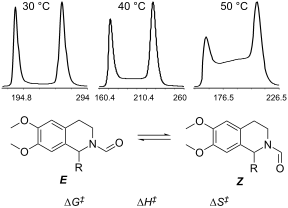
- differences and geometries for E- and Z-4 and both transition states (TS1 and TS2) in hexane. The dihedral angle of O–C–N–C1 () and the C–N bond length are given for each state (BP-D3/def2-SVP). Synthesis of formamide 4. Reagents and conditions: a) KHMDS, THF, −78 °C; then: NaBH4, MeOH, 63%. b) HCOOEt, reflux


![[Graphic 2]](/bjoc/content/inline/1860-5397-10-63-i3.png?max-width=637&scale=1.18182) ) in 4 (BP-D3/def2-SVP).
) in 4 (BP-D3/def2-SVP).

Synthesis of (2S,3R)-3-amino-2-hydroxydecanoic acid and its enantiomer: a non-proteinogenic amino acid segment of the linear pentapeptide microginin
Beilstein J. Org. Chem. 2014, 10, 667–671, doi:10.3762/bjoc.10.59
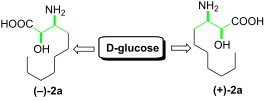
- hemiacetal with NaIO4 and reduction with NaBH4 gave triol 6b,which was monosilylated with TBDPSCl to give 7b. Conversion of the secondary hydroxy group in 7b to azide 8b according to the Mitsunobu protocol, and deprotection followed by oxidation of the primary hydroxy group gave azido acid 10b. Finally


Concise, stereodivergent and highly stereoselective synthesis of cis- and trans-2-substituted 3-hydroxypiperidines – development of a phosphite-driven cyclodehydration
Beilstein J. Org. Chem. 2014, 10, 369–383, doi:10.3762/bjoc.10.35
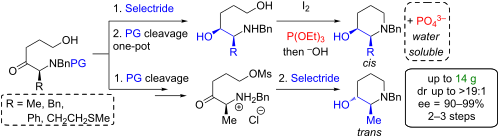
- carbamate protected amino acid derivatives 3 (remaining as impurity in the isolated products 2), quantitative benzylation (1→I) was ensured by successive addition of three portions of benzaldehyde/NaBH4 (Quitt´s procedure [61] → two portions) and by maintaining the pH at a value of 10–11. The extractive
- amidation (2→5) due to competitive formation of the corresponding benzyl esters. Depending on the NaBH4 batch the dibenzyl-protected derivatives 4 formed as side products (<10% referred to 2). The residual impurities (BnOH and 4) were separated either through work up (of amide 5a) or chromatographic
- 5e (along with 30% of reisolated starting material), illustrating the tendency of reagent 6 to attack the side chain ester moiety. Synthesis of syn-amino alcohols C Already the NaBH4 reduction (in MeOH at −40/0 °C) of ketones 7a and 7b and subsequent hydrogenolysis of the Cbz-group in one-pot


Organocatalytic asymmetric fluorination of α-chloroaldehydes involving kinetic resolution
Beilstein J. Org. Chem. 2014, 10, 323–331, doi:10.3762/bjoc.10.30
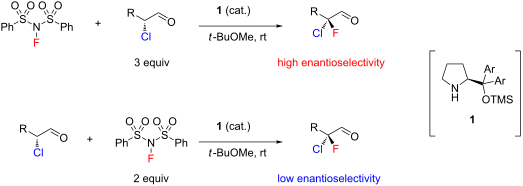
- then poured into MeOH/CH2Cl2 (1:4, 5 mL) at 0 °C. To this solution, NaBH4 (5 mmol) was added, and the mixture was stirred at room temperature for 1 h. The reaction was quenched with saturated aqueous NH4Cl, and the mixture was extracted with Et2O. The organic layer was dried over Na2SO4, concentrated


Synthesis of new enantiopure poly(hydroxy)aminooxepanes as building blocks for multivalent carbohydrate mimetics
Beilstein J. Org. Chem. 2014, 10, 213–223, doi:10.3762/bjoc.10.17
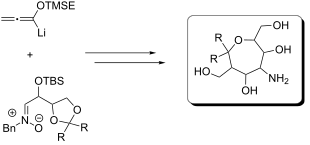
- ), 4.11–4.13 (m, 4H, 5-H, 9-H, NCH2), 4.58 (dd, J = 4.5, 8.1 Hz, 1H, 4-H), 7.26–7.29 (m, 5H, Ph) ppm; ESI-TOF (m/z): [M + H]+ calcd for C23H38NO5Si, 436.2514; found, 436.2553. The analytical data are in accordance with literature [23][37]. Typical procedure for ketone reduction with NaBH4 (procedure 3
- ) (1S,4S,5S,6R,10S)-7-Benzyl-5-(tert-butyldimethylsiloxy)-4-(hydroxymethyl)-2,2-dimethyl-3,8-dioxa-7-azabicyclo[4.3.1]decan-10-ol: Under argon atmosphere ketone 11 (703 mg, 1.61 mmol) was dissolved in dry EtOH (26 mL). The solution was cooled to 0 °C and NaBH4 (119 mg, 3.15 mmol) was added in portions
- of the carbonyl group and deprotection. Conditions: a) NaBH4, EtOH, 0 °C, 40 min to 16 h; b) TBAF (1 M THF), THF, 0 °C, 10 min to 3.5 h. [TBAF = tetra-n-butylammonium fluoride] Synthesis of propargylic ether 18. Conditions: a) propargyl bromide, NaOH, TBAI, H2O/CH2Cl2, −20 °C → rt, 7 d; b) NaBH4


Diversity-oriented synthesis of dihydrobenzoxazepinones by coupling the Ugi multicomponent reaction with a Mitsunobu cyclization
Beilstein J. Org. Chem. 2014, 10, 209–212, doi:10.3762/bjoc.10.16

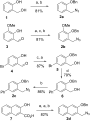
- polarity of 10) to give the pure final product. Synthesis of benzyl azides. a) BnBr, K2CO3, acetone or DMF, rt or 60 °C (for 2d); b) 1) MsCl, Et3N, CH2Cl2, −10 °C; 2) NaN3, DMF, rt; c) NaBH4, MeOH, rt; d) PhB(OH)2, Cs2CO3, Pd(OAc)2, PPh3, 80 °C, 4.5 h; e) 1) MeOH, H2SO4, reflux; 2) LiAlH4, THF, rt


Synthesis of the B-seco limonoid core scaffold
Beilstein J. Org. Chem. 2014, 10, 194–208, doi:10.3762/bjoc.10.15
- regioselective opening [60][61] leading to the β-hydroxyketone that was temporarily masked as a TES ether. Reduction of ketone 85 with NaBH4 resulted in the formation of two diastereomeric alcohols in 2:1 ratio. To our delight flash chromatography permitted smooth separation of the two compounds. nOe studies
- . Reagents and conditions: a) CSA, 2,3-butanedione, trimethyl orthoformate, MeOH, reflux, 16 h, 93%; b) NaBH4, MeOH, rt, 0.5 h, quant.; c) silica-gel supported NaIO4, CH2Cl2/MeOH (20:1), rt, 3 h, quant.; d) MsCl, NEt3, CH2Cl2, 0 °C to rt, 3 h, quant.; e) paraformaldehyde, imidazole, THF/1 M NaHCO3 (1:1), rt
- , 2.5 h, 74%; f) TBSOTf, 2,6-lutidine, CH2Cl2, 0 °C, 15 min, quant.; g) LiHMDS, MeI, THF/DMPU (5:1), −78 °C to −10 °C, 91%, de = 100%; h) NaBH4, CeCl3·7H2O, MeOH, 0 °C, 15 min, 90%, de = 100%; i) PPh3, p-nitrobenzoic acid, DEAD, toluene, rt, 18 h; j) MeOH, Et2O, aqueous saturated K2CO3 solution, rt, 1 h




Recent applications of the divinylcyclopropane–cycloheptadiene rearrangement in organic synthesis
Beilstein J. Org. Chem. 2014, 10, 163–193, doi:10.3762/bjoc.10.14
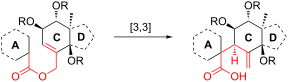
- acid was converted to the corresponding anhydride, which could be reduced to the alcohol using NaBH4, followed by reoxidation with DMP to yield aldehyde 154. Attachment of furanone enolate 155 [134][135], followed by reoxidation yielded tricycle 156. Deprotection of the amine and the MOM-protected




Total synthesis of (+)-grandiamide D, dasyclamide and gigantamide A from a Baylis–Hillman adduct: A unified biomimetic approach
Beilstein J. Org. Chem. 2014, 10, 127–133, doi:10.3762/bjoc.10.9
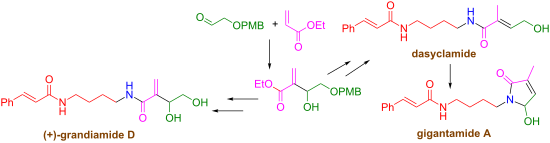
- start with the same for the synthesis of dasyclamide (6). As explained in Scheme 5 attempts to get enamide 22 by reductive dehydroxylation of compound (±)-18 using NaBH4/CuCl2·2H2O or Al-NiCl2·2H2O [16][17][18] and reductive deacetoxylation of compound (±)-21 using NaBH4/t-BuOH or LiBEt3H, THF [19][20
- ][21] did not yield fruitful results. These failures pushed us to explore the dehydroxylation or deacetoxylation reaction using a simpler precursor (±)-16. However, attempts to dehydroxylate the Baylis–Hillman adduct (±)-16 with NaBH4/CuCl2·2H2O [17] and Al-NiCl2·2H2O proved unsuccessful hence, we
- focused on the deacetoxylation of (±)-16. Treatment of (±)-16 with acetyl chloride in the presence of pyridine afforded the corresponding acetate (±)-23 in almost quantitative yield, which underwent the desired deacetoxylation with NaBH4/t-butanol [20] to provide the ester 24 in good yield (Scheme 6). The


Synthesis of five- and six-membered cyclic organic peroxides: Key transformations into peroxide ring-retaining products
Beilstein J. Org. Chem. 2014, 10, 34–114, doi:10.3762/bjoc.10.6
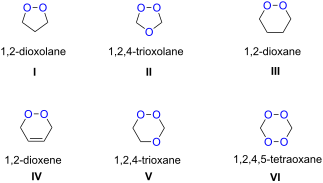
- NaBH4 in an alkaline medium [331]. 3.6. Synthesis of 1,2-dioxanes from 1,4-dicarbonyl compounds The reaction of 1,4-diketones 242 (cyclohexanone derivatives) with hydrogen peroxide in a neutral medium produced 3,6-dihydroxydioxanes 243 albeit without reported yields (Scheme 69). The resulting compounds












Garner’s aldehyde as a versatile intermediate in the synthesis of enantiopure natural products
Beilstein J. Org. Chem. 2013, 9, 2641–2659, doi:10.3762/bjoc.9.300
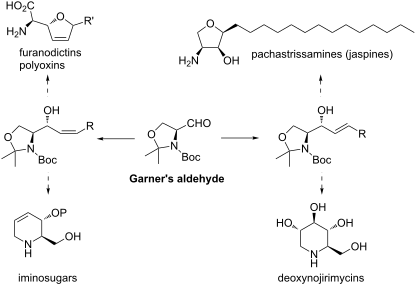
- reduction can be used. The ester can be reduced to alcohol 6 (e.g., with NaBH4/LiCl) and then oxidized to 1 with non-basic methods (e.g., IBX/DMP [30] or TEMPO/NaOCl [31] to name a few), which will not epimerize the α-center. For our synthesis of 1, we adopted a slightly modified sequence [32]. L-Serine (2





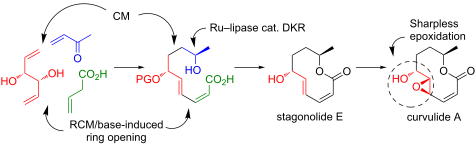
Bidirectional cross metathesis and ring-closing metathesis/ring opening of a C2-symmetric building block: a strategy for the synthesis of decanolide natural products
Beilstein J. Org. Chem. 2013, 9, 2544–2555, doi:10.3762/bjoc.9.289
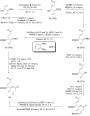
- discouraging results we did not pursue enantioselective reduction methods further to establish the required 9R-configuration, but considered a resolution approach. Ketone 14 was first reduced with NaBH4 to the expected diastereomeric mixture of alcohols 18, which were then subjected to the conditions of the
- starting point for this approach (Scheme 5). Compound 21 was obtained via two alternate routes, either by reduction of ketone 13 (Scheme 3) with NaBH4 or from ester 25 via one-flask reduction to the corresponding aldehyde and addition of methylmagnesium chloride. Ester 25 was in turn synthesized in three




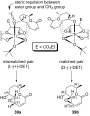


Microwave-assisted synthesis of 5,6-dihydroindolo[1,2-a]quinoxaline derivatives through copper-catalyzed intramolecular N-arylation
Beilstein J. Org. Chem. 2013, 9, 2463–2469, doi:10.3762/bjoc.9.285
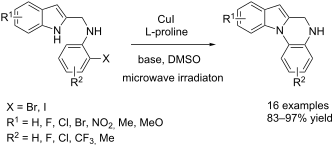
- relevant examples of 5,6-dihydroindolo[1,2-a]quinoxaline derivatives. Reagents and conditions: (a) CF3COOH, anhydrous dichloromethane, reflux; (b) NaBH4, MeOH. Optimization of the reaction conditions for the Cu-catalyzed synthesis of 5,6-dihydroindolo[1,2-a]quinoxaline (2a).a Synthesis of 5,6-dihydroindolo


A one-pot synthesis of 3-trifluoromethyl-2-isoxazolines from trifluoromethyl aldoxime
Beilstein J. Org. Chem. 2013, 9, 2387–2394, doi:10.3762/bjoc.9.275
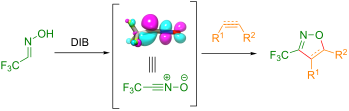
- -trifluoromethylisoxazoles were easily prepared from trifluoromethyl aldoxime 2 under mild conditions by using DIB as oxidant. Theoretical studies of the reactivity of trifluoroacetonitrile oxide 4 toward olefins and alkynes were carried out. The 3-trifluoromethyl-2-isoxazolines were ring-opened with NaBH4 and NiCl2 to
- utilizing H2 and Raney-Ni as catalysts was described by Tanaka and co-workers [49]. However, this methodology is restricted to the synthesis of N-methylated amino alcohols. Instead we investigated the reduction and the ring opening of 3-trifluoromethyl-2-isoxazolines 1a and 1b in the presence of NaBH4 and
- different fluorinated building blocks was demonstrated by the easy ring opening of these intermediates with NaBH4 and NiCl2, yielding the corresponding trifluoromethylated γ-amino alcohol. Example of bioactive molecules bearing the 2-isoxazoline nucleus. Dimerization and isomerization products from nitrile


Cyclopamine analogs bearing exocyclic methylenes are highly potent and acid-stable inhibitors of hedgehog signaling
Beilstein J. Org. Chem. 2013, 9, 2328–2335, doi:10.3762/bjoc.9.267
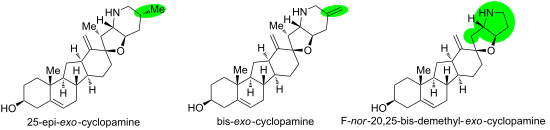
- ), 45 °C, 1.5 h, 78%, (k) NaBH4, EtOH, 65 °C, 5 d, 62%. Synthesis of 20-demethyl-bis-exo-cyclopamine 19 and F-nor-20,25-bis-demethyl-exo-cyclopamine 23. Reaction conditions: (a) allylcerium chloride, THF, 0 °C, 30 min, 93%; (b) 9-BBN, THF, 70 °C, 6 h; then NaBO3, 50 °C, 12 h, 91%; (c) BAIB, TEMPO



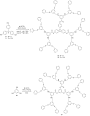
Bis(benzylamine) monomers: One-pot preparation and application in dendrimer scaffolds for removing pyrene from aqueous environments
Beilstein J. Org. Chem. 2013, 9, 2320–2327, doi:10.3762/bjoc.9.266

- temperatures hindered the ability to cleanly obtain bisimines 3. Alternatively, the condensation of 3,5-diamino benzoic acid with 2.1 equiv of benzaldehyde (2a) in methanol at room temperature followed by in-situ reduction with NaBH4 and acidification with 2 N HCl resulted in the precipitation of bisamine 4a
- ]. Replacing NaBH4 with other hydride sources such as NaBH3CN did not impact the reduction rate of 4f. To ensure a clean isolation of bisamines 4, the benzaldehyde starting material needed to be free from oxidized aldehyde byproducts. Using elevated temperatures to promote the formation of bisamines 4 was
- bisamine functionalities and result in increased compound stability. Structure 7 was successfully prepared through a multi-step synthetic scheme [21]. Condensation of 1 with 2.1 equivalents of benzaldehyde 7 followed by in situ reduction with NaBH4 and acidification with 2 N HCl provided dendron 8 (Scheme



Synthesis and antibacterial activity of monocyclic 3-carboxamide tetramic acids
Beilstein J. Org. Chem. 2013, 9, 1899–1906, doi:10.3762/bjoc.9.224

- ), MgSO4 (2.0 equiv), THF, rt. 2. NaBH4 (2.0 equiv), MeOH, rt; (b) ethyl malonyl chloride (1.05 equiv), Et3N (1.2 equiv), CH2Cl2, rt; (c) KOt-Bu (1.1 equiv), THF, reflux; (d) amine (1.0 equiv), toluene, reflux; (e) butyl chloroformate (1.2 equiv), DMAP (2.2 equiv), CH2Cl2, rt. Synthesis of C(5)-alkyl 3


A practical synthesis of long-chain iso-fatty acids (iso-C12–C19) and related natural products
Beilstein J. Org. Chem. 2013, 9, 1807–1812, doi:10.3762/bjoc.9.210

- triethylsilane and BF3·Et2O [53], affording 11. Oxidative cleavage of 11 with KMnO4/Bu4NBr [54] afforded iso-C12 acid 1. Alternatively, anti-Markovnikov hydration of 11, using I2/NaBH4 then hydrogen peroxide [55], afforded the alcohol 12, and oxidation of 12 with KMnO4/Bu4NBr afforded iso-C13 acid 2
- ). Reagents and conditions: (a) MeMgBr, THF, 98%; (b) BF3·Et2O, Et3SiH, CH2Cl2, 99%; (c) KMnO4, Bu4NBr, AcOH, H2O, 88% for 1, 96% for 2; (d) i) I2, NaBH4, THF, ii) H2O2, 95%; (e) MsCl, Et3N, CH2Cl2, 98%; (f) KCN, DMSO, THF, 72%; (g) aq NaOH, EtOH, 96%. Synthesis of iso-C15 4, iso-C16 5, and iso-C17 6 fatty


Efficient regio- and stereoselective access to novel fluorinated β-aminocyclohexanecarboxylates
Beilstein J. Org. Chem. 2013, 9, 1164–1169, doi:10.3762/bjoc.9.130

- bond oxidation with 3-chloroperbenzoic acid (MCPBA) to afford epoxy amino ester 6 cis-diastereoselectively [57] (Scheme 1). Opening of the oxirane ring in 6 with NaBH4 in EtOH at 70 °C proceeded regioselectively, providing exclusively amino ester 5 with the hydroxy function on position 4 (for analogous