Search results
Search for "coupling reactions" in Full Text gives 524 result(s) in Beilstein Journal of Organic Chemistry. Showing first 200.
When metal-catalyzed C–H functionalization meets visible-light photocatalysis
Beilstein J. Org. Chem. 2020, 16, 1754–1804, doi:10.3762/bjoc.16.147
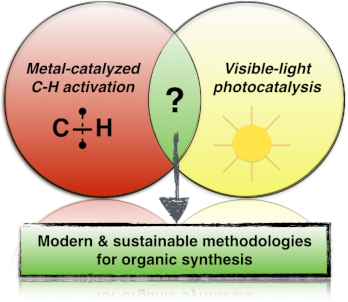
- , thus rendering this methodology well suitable for the synthesis of a variety of indole derivatives. Subsequently, the panel of oxidative Heck coupling reactions via a photoredox catalytic system combined with C–H activation using Rh [74] or Ru [75] was extended by Rueping’s group. In 2014, Rueping


Tuneable access to indole, indolone, and cinnoline derivatives from a common 1,4-diketone Michael acceptor
Beilstein J. Org. Chem. 2020, 16, 1722–1731, doi:10.3762/bjoc.16.144

- ][38][39] or triketones [10][13] and enaminones [40][41][42][43] as starting materials. For the synthesis of cinnoline derivatives, aryldiazenes and aryltriazenes are substrates of choice for transition-metal-catalyzed (Rh, Pd, Cu) cross-coupling reactions, followed by intramolecular cyclizations [44





In silico rationalisation of selectivity and reactivity in Pd-catalysed C–H activation reactions
Beilstein J. Org. Chem. 2020, 16, 1465–1475, doi:10.3762/bjoc.16.122
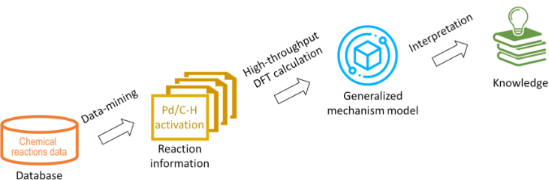
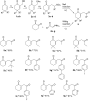
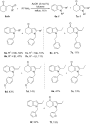
- synthetic strategies. Such examples in recent years include olefin metathesis [1] as well as C–C and C–N coupling reactions [2], among the most obvious examples. While these reactions undoubtedly had very significant impacts on the development of much cleaner and efficient chemical synthesis strategies, the


One-pot synthesis of 1,3,5-triazine-2,4-dithione derivatives via three-component reactions
Beilstein J. Org. Chem. 2020, 16, 1447–1455, doi:10.3762/bjoc.16.120
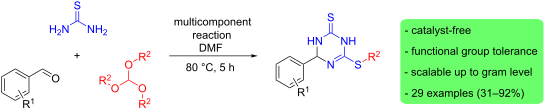
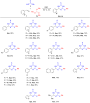
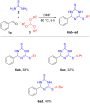
- with the reaction conditions and yielded the corresponding products (6oa–va, 48–92%), allowing for further functionalization through subsequent transition-metal-catalyzed coupling reactions. Intriguingly, it was found that compounds with bicycloaryl and heteroaryl ring systems were also viable






















Disposable cartridge concept for the on-demand synthesis of turbo Grignards, Knochel–Hauser amides, and magnesium alkoxides
Beilstein J. Org. Chem. 2020, 16, 1343–1356, doi:10.3762/bjoc.16.115
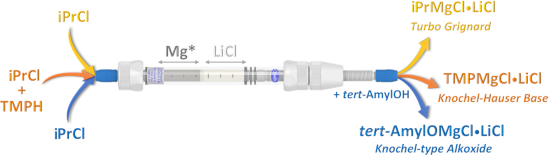
- of the corresponding Grignard intermediate in the presence of ZnCl2 and LiCl, which were subsequently used in Negishi cross-coupling reactions [41]. The most recent example, by the Löb group, reported a pilot plant reactor including a Mg replenish unit that allowed to generate phenylmagnesium bromide


Highly selective Diels–Alder and Heck arylation reactions in a divergent synthesis of isoindolo- and pyrrolo-fused polycyclic indoles from 2-formylpyrrole
Beilstein J. Org. Chem. 2020, 16, 1320–1334, doi:10.3762/bjoc.16.113
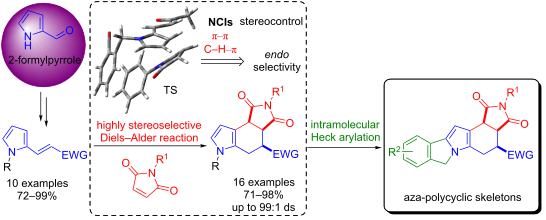
- similar chemoselectivity has been previously observed, being explained as a consequence of the acidity of the C–H bond being cleaved [6][44]. Additional intramolecular cross-coupling reactions were carried out by utilizing dimethyl malonates 8k and 8l, which were prepared through the N-benzylation of 16c
- approach to the fused aza-heterocyclic pentacycle 12. Preparation of 1,2-substituted pyrroles 8a–h.a Diels–Alder reactions of 2-vinylpyrroles 8a–j and 16a,b with maleimides 7b,c.a Heck cross-coupling reactions of 9g–j and 9m for the preparation of pentacycles 11a–e.a Synthesis of tetrahydropyrrolo[3,4-e


Activated carbon as catalyst support: precursors, preparation, modification and characterization
Beilstein J. Org. Chem. 2020, 16, 1188–1202, doi:10.3762/bjoc.16.104
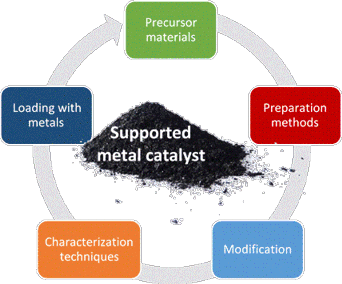
- phenol by oxidative coupling reactions and acidic functional groups decrease the amount of adsorbed phenol [51][127][128]. Duman and co-workers studied different pyrolysis temperatures and activation times with ZnCl2 for the preparation of highly porous activated carbon from fruit stones and nutshells


Palladium-catalyzed regio- and stereoselective synthesis of aryl and 3-indolyl-substituted 4-methylene-3,4-dihydroisoquinolin-1(2H)-ones
Beilstein J. Org. Chem. 2020, 16, 1084–1091, doi:10.3762/bjoc.16.95
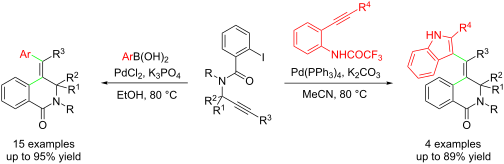
- stereoselective Pd-catalyzed cascade reactions, consisting of the addition of in situ-generated arylpalladium complexes over a proximate carbon–carbon triple bond, followed by cross-coupling reactions, have been reported [26][27][28][29][30][31]. Our continuing interest in the palladium-catalyzed reactions of
- 4 and 6 was unambiguously confirmed by NMR spectroscopy [43]. Conclusion In conclusion, we have demonstrated that cascade cyclocarbopalladations of the readily available aryl/alkyl-substituted N-propargyl-2-iodobenzamides 2 followed by Suzuki–Miyaura coupling reactions with arylboronic acids, in the



Fluorinated phenylalanines: synthesis and pharmaceutical applications
Beilstein J. Org. Chem. 2020, 16, 1022–1050, doi:10.3762/bjoc.16.91
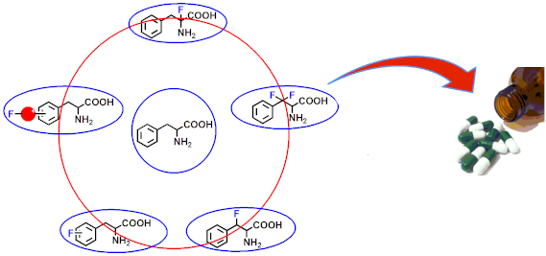
- reported herein different methods for their synthesis. 1.1. Negishi cross coupling of aryl halide and organozinc compounds Jackson and co-workers reported the synthesis of a range of phenylalanine derivatives via Negishi cross-coupling reactions of aryl halides and Zn homoenolates of the protected (R
- targeted compounds 88a,b (Scheme 20). Cross-coupling reactions with boronic acids were found to be successful only for the synthesis of para and meta-derivatives. Several attempts were made to prepare the ortho-substituted derivatives 93 and 95. The synthesis of ᴅ,ʟ-93 or ʟ-95 was achieved by vinylation of
- 1b and 1c with iodoalanine 2 at room temperature using Pd2(dba)3 (2.5 mol %) and SPhos (5.0 mol %) provided excellent yields of (S)-phenylalanines 3a (70% yield) and 3b (80% yield), respectively. Such an efficiency improvement testifies to the suitability of SPhos as a ligand for these coupling


Copper-catalysed alkylation of heterocyclic acceptors with organometallic reagents
Beilstein J. Org. Chem. 2020, 16, 1006–1021, doi:10.3762/bjoc.16.90
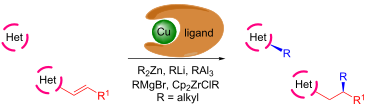
- functionalised alkyl chains at the β-position of the alkenylpyridines, the catalytic system also showed a high functional group tolerance, and thus allowing straightforward chemical transformations of the addition products, including, for example, reductions, cycloadditions, and coupling reactions (Scheme 15B





Aryl-substituted acridanes as hosts for TADF-based OLEDs
Beilstein J. Org. Chem. 2020, 16, 989–1000, doi:10.3762/bjoc.16.88
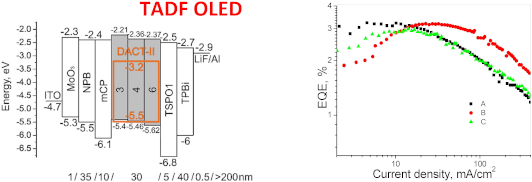
- according to the reported procedure [28]. The subsequent alkylation of 1 using bromoethane afforded the N-ethylated dibromo compound 2 in 80% yield. The target compounds 3–6 were then obtained by Suzuki cross-coupling reactions between brominated acridan 2 and the respective phenylboronic acids in the


Accelerating fragment-based library generation by coupling high-performance photoreactors with benchtop analysis
Beilstein J. Org. Chem. 2020, 16, 982–988, doi:10.3762/bjoc.16.87
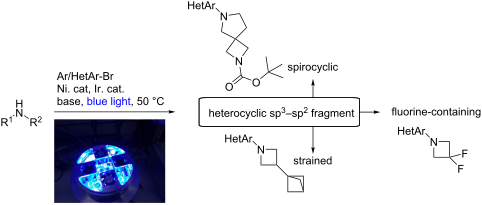
- collections. These are of high value to medicinal chemists to provide defined exit vectors and facilitate rational lead evolution [2][3][4][5][6][7]. Thus, we were interested in developing reliable synthetic methods and technologies to apply metal-catalyzed cross-coupling reactions to such scaffolds, which
- -catalyzed cross-coupling reactions [9]. Recently, milder cross-coupling methods using more abundant and affordable metals such as nickel, in combination with photochemistry or electrochemistry, significantly improved accessibility to N-arylated complex amines [10][11][12]. Results and Discussion As we
- reactions, and ranged from 6% to 50% for copper-catalyzed cross-coupling reactions [13]. Much information could be obtained from this screening. Electron-deficient aryl bromides led to better yields than neutral and electron-rich partners, as observed in previous reports on photochemically- or


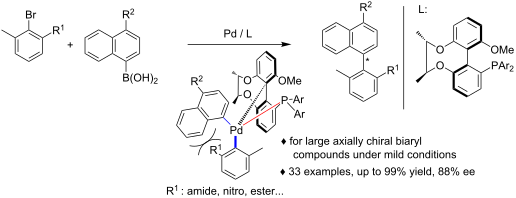
Pd-catalyzed asymmetric Suzuki–Miyaura coupling reactions for the synthesis of chiral biaryl compounds with a large steric substituent at the 2-position
Beilstein J. Org. Chem. 2020, 16, 966–973, doi:10.3762/bjoc.16.85




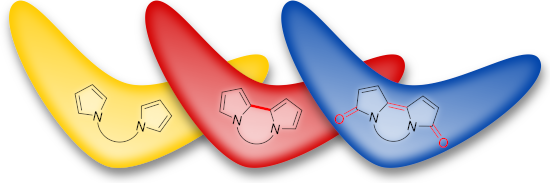
Bipyrrole boomerangs via Pd-mediated tandem cyclization–oxygenation. Controlling reaction selectivity and electronic properties
Beilstein J. Org. Chem. 2020, 16, 895–903, doi:10.3762/bjoc.16.81
- disadvantage may be obviated by transition-metal-mediated double C–H bond activation [22][23], which is functionally equivalent to conventional oxidative coupling reactions, and has become a powerful synthetic tool with a rapidly growing scope of use [24][25][26]. However, in the field of π-conjugated




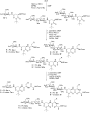
Synthesis of new asparagine-based glycopeptides for future scanning tunneling microscopy investigations
Beilstein J. Org. Chem. 2020, 16, 888–894, doi:10.3762/bjoc.16.80

- investigation of the self assembly of such glycopeptides on metal surfaces will be performed via pMS and STM in further studies. Description of the starting materials 1a–f and 2a–f. Peptide coupling reactions, including the previous Fmoc cleavage. Cleavage of the fully protected peptides 6 and 7. Yields of the
- peptide coupling reactions and comparison of HBTU and HATU. Final deprotection yields of 10a–f and 11a–f. Supporting Information Supporting Information File 15: General methods, experimental procedures, and product characterization data of the compounds 1a–f to 11a–f. Supporting Information File 16: NMR


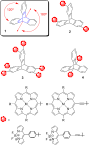
Towards triptycene functionalization and triptycene-linked porphyrin arrays
Beilstein J. Org. Chem. 2020, 16, 763–777, doi:10.3762/bjoc.16.70

- complexes such as 2 were synthesized by us with the purpose of conducting electron transfer studies [25]. Both Suzuki and Sonogashira cross-coupling reactions were employed to realize this new class of triptycene-linked trimeric porphyrins. The three porphyrins, or three BODIPYs in 2 were either linked
- as before. After silica gel column chromatography, a dark purple solid of 16 was isolated in 8% yield. The unsymmetrically substituted triptycene 12 was utilized for several other cross-coupling reactions, including one with the dibrominated porphyrin 17c which was prepared via metalation of 17b and
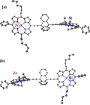
- of various porphyrin/BODIPY dimers with different linker groups in CHCl3. The excitation for compounds 9, 7, 19 and 20 was λ = 433 (23095), 370 (27027), 455 (21978) and 450 (22222) nm (cm−1), respectively. Sonogashira cross-coupling reactions to form symmetric porphyrin and BODIPY triptycene-linked





Efficient synthesis of dipeptide analogues of α-fluorinated β-aminophosphonates
Beilstein J. Org. Chem. 2020, 16, 756–762, doi:10.3762/bjoc.16.69
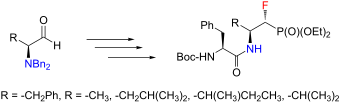
- -aminophosphonates 15 was presented. These compounds were prepared in a four-step sequence starting from N,N-dibenzylamino aldehydes 5. Each step of the synthesis has been optimized to provide very good yields (Pudovik, deoxyfluorination and amine–acid coupling reactions). Furthermore, the absolute configuration of


Recent advances in Cu-catalyzed C(sp3)–Si and C(sp3)–B bond formation
Beilstein J. Org. Chem. 2020, 16, 691–737, doi:10.3762/bjoc.16.67
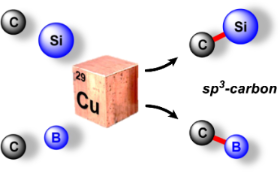
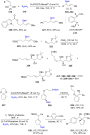
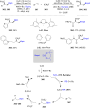
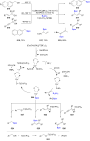
- incorporating silicon or boron into new or existing drugs, in addition to their use as building blocks in cross-coupling reactions en route to various targets of both natural and unnatural origins. In this review, recent protocols relying on copper-catalyzed sp3 carbon–silicon and carbon–boron bond-forming
- ] are common partners in a variety of important cross-coupling reactions. They are also especially valuable precursors to other functional groups such as organic halides, alcohols [5][6][7], etc. Moreover, recent drug discovery efforts have shifted towards the incorporation of these non-natural






Direct borylation of terrylene and quaterrylene
Beilstein J. Org. Chem. 2020, 16, 621–627, doi:10.3762/bjoc.16.58
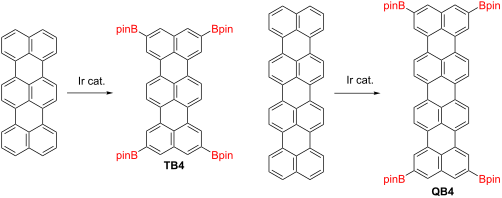
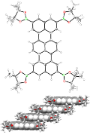
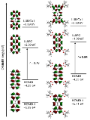
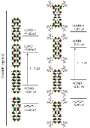
- , 2) the product obtained is soluble in common organic solvents so that the separation and characterization would be readily performed, and 3) the resultant pure soluble terrylene derivative as a versatile unit can be functionalized by using conventional metal-catalyzed coupling reactions. Results and






Regioselectively α- and β-alkynylated BODIPY dyes via gold(I)-catalyzed direct C–H functionalization and their photophysical properties
Beilstein J. Org. Chem. 2020, 16, 587–595, doi:10.3762/bjoc.16.53
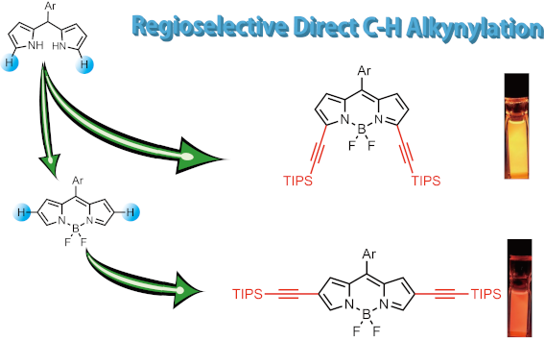
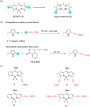
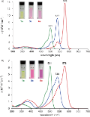
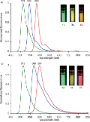
- Glaser-coupling reactions [37]. Conventionally, an alkynylation of the BODIPY core has been achieved by palladium-catalyzed Sonogashira cross-coupling with halogenated BODIPYs (Figure 1b) [35][37]. However, due to the coexistence of multiple C–H bonds, a regioselective direct C–H alkynylation of the



Efficient synthesis of 3,6,13,16-tetrasubstituted-tetrabenzo[a,d,j,m]coronenes by selective C–H/C–O arylations of anthraquinone derivatives
Beilstein J. Org. Chem. 2020, 16, 544–550, doi:10.3762/bjoc.16.51
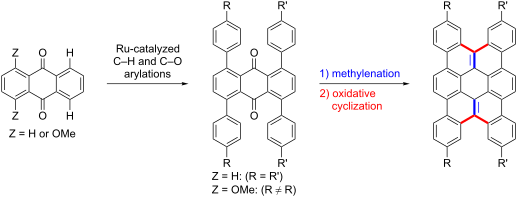
- alkyl and alkoxy substituents at the 3, 6, 13, and 16-positions was achieved based on the ruthenium-catalyzed coupling reactions of anthraquinone derivatives with arylboronates via C–H and C–O bond cleavage. The reaction sequence involving the arylation, carbonyl methylenation, and oxidative cyclization
- groups to form biaryl frameworks. Traditionally, transition-metal-catalyzed cross-coupling reactions of aryl halides or pseudohalides with arylmetal reagents have been employed for the connection of two aryl units [5][6][7][8][9]. However, in search of more efficient synthetic routes, C–H arylation


Copper-catalyzed enantioselective conjugate reduction of α,β-unsaturated esters with chiral phenol–carbene ligands
Beilstein J. Org. Chem. 2020, 16, 537–543, doi:10.3762/bjoc.16.50
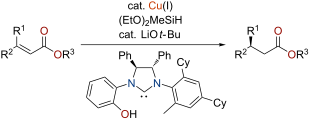
- plays crucial roles in both the catalytic activity and stereoselectivity [19][20][21]. Notably, these catalyst systems were also applicable for three-component coupling reactions using hydrosilanes as hydride reagents [17]. Based on this knowledge, we decided to investigate the effects of the phenol–NHC


Copper-catalyzed remote C–H arylation of polycyclic aromatic hydrocarbons (PAHs)
Beilstein J. Org. Chem. 2020, 16, 530–536, doi:10.3762/bjoc.16.49
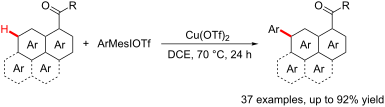
- molecules, thus having drawn much attention. Transition metal-catalyzed C–X/C–M cross-coupling reactions such as Suzuki and Stille couplings are the main approaches to achieve the arylation of PAHs [7][8][9][10][11]. However, the selective arylation of the C7-position of 1-naphthoic acid derivatives remains




Synthesis of triphenylene-fused phosphole oxides via C–H functionalizations
Beilstein J. Org. Chem. 2020, 16, 524–529, doi:10.3762/bjoc.16.48
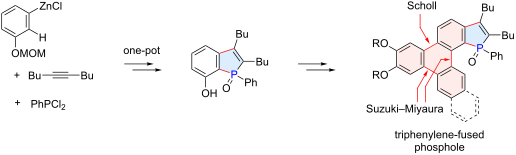
- phosphole oxides through C–H functionalization and cross-coupling reactions. The phosphole ring was constructed in the early stage of the synthesis by a three-component assembly method featuring a 1,4-cobalt migration as the key step. Unlike other C–H activation/alkyne annulation approaches to benzo[b