


Search results
Search for "cyclohexane" in Full Text gives 294 result(s) in Beilstein Journal of Organic Chemistry. Showing first 200.
Fast and efficient synthesis of microporous polymer nanomembranes via light-induced click reaction
Beilstein J. Org. Chem. 2017, 13, 558–563, doi:10.3762/bjoc.13.54
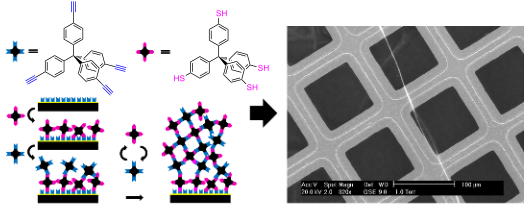
- selectively dissolved using cyclohexane. Afterwards we dissolved the sacrificial substrate to obtain the freestanding CMP membranes. To investigate the freestanding CMP nanomembrane we transferred it to a copper grid and recorded scanning electron microscopy (SEM) images. Figure 4 shows the SEM images of the
- otherwise. Cyclohexane, dichloromethane and dry tetrahydrofuran (THF) were purchased from Merck Millipore; acetone was purchased from VWR Chemicals. Dry THF was degassed three times via freeze-pump-thaw prior to use. PMMA average Mw ≈120.000, PS average Mw ≈170.000, 2-hydroxy-1-[4-(2-hydroxyethoxy)phenyl]-2
- then obtained by following a procedure described in literature [29]: First PMMA/PS was spin coated as a supporting layer and afterwards rinsed overnight in cyclohexane to remove the PS. Then, the mica was removed by floating in solutions of I2/KI/H2O; KI/H2O and in the last step by immersing the


Synthesis of 1-indanones with a broad range of biological activity
Beilstein J. Org. Chem. 2017, 13, 451–494, doi:10.3762/bjoc.13.48
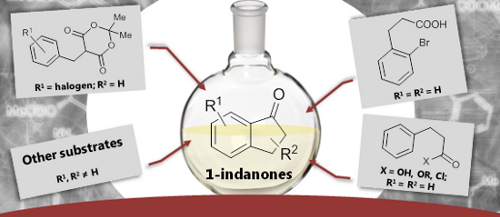
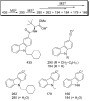
- , 1-indanone has been obtained in 80% yield. Interestingly, when aluminum chloride was added to the lactone in benzene, the yield of this reaction decreased (30%) [34]. Irradiation of esters 44 possessing the photoremovable 2,5-dimethylphenacyl group in benzene or cyclohexane solutions led to free


Organofluorine chemistry: Difluoromethylene motifs spaced 1,3 to each other imparts facial polarity to a cyclohexane ring
Beilstein J. Org. Chem. 2016, 12, 2823–2827, doi:10.3762/bjoc.12.281
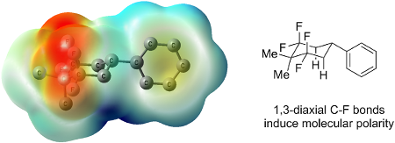
- example of a facially polarised cyclohexane containing 1,3 related CF2 groups. The dipolar nature of the ring arises from the axial orientation of two of the C–F bonds pointing in the same direction, and set by the chair conformation of the cyclohexane. This electrostatic profile is revealed
- experimentally both in the solid-state (X-ray) packing of the rings and by solution (NMR) in different solvents. A computationally derived electrostatic profile of this compound is consistent with a more electronegative and a more electropositive face of the cyclohexane ring. This placing of CF2 groups 1,3 to
- each other in a cyclohexane ring is introduced as a new design strategy which could be applicable to the preparation of polar hydrophobic cyclohexane motifs. Keywords: aliphatic rings; C–F bond; cyclohexane conformation; difluoromethylene group; organofluorine chemistry; Introduction Selective


Characterization of the synthetic cannabinoid MDMB-CHMCZCA
Beilstein J. Org. Chem. 2016, 12, 2808–2815, doi:10.3762/bjoc.12.279

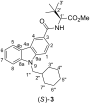
- saturated solution of (S)-3 in cyclohexane (Figure 6, see also CCDC 1521512 for details). To assess the enantiomeric purity of the material, racemization of a small sample of (S)-3 was attempted by treatment with sodium methoxide in methanol at 80 °C for 12 h under rigorous exclusion of moisture, yielding




Synthesis of spiro[isoindole-1,5’-isoxazolidin]-3(2H)-ones as potential inhibitors of the MDM2-p53 interaction
Beilstein J. Org. Chem. 2016, 12, 2793–2807, doi:10.3762/bjoc.12.278
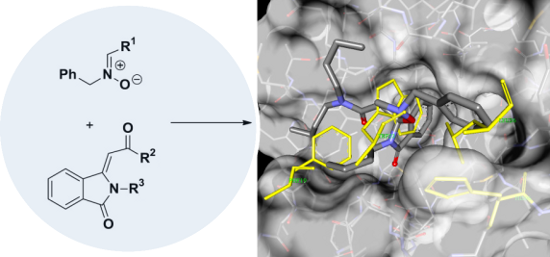
- irradiated under microwave conditions at 200 W, 110 °C, for 4 h (CEM Discover Microwave reactor). The removal of the solvent in vacuo afforded a crude material which, after flash chromatography purification by using as eluent a mixture of chloroform/cyclohexane/ethyl acetate 5:3:2, gave compounds 6a and 7a


Electron-transfer-initiated benzoin- and Stetter-like reactions in packed-bed reactors for process intensification
Beilstein J. Org. Chem. 2016, 12, 2719–2730, doi:10.3762/bjoc.12.268
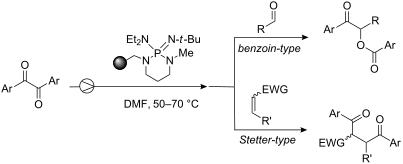
- temperature for the stated time, then filtered and concentrated. The resulting residue was analyzed by 1H NMR to determine the conversion. Subsequently, the residue was eluted from a column of silica gel with 20:1 cyclohexane–AcOEt to give isolated 3aa. Procedure for the model Stetter-like reaction under
- resulting residue was analyzed by 1H NMR to determine the conversion. Subsequently, the residue was eluted from a column of silica gel with 13:1 cyclohexane–AcOEt to give isolated 10aa. Trapping experiment (Scheme 2) A mixture of benzil (1a, 210 mg, 1.00 mmol), PS-BEMP 5 (454 mg, 1.00 mmol) and DMF (2 mL
- ) was stirred at 50 °C for 30 min then acetic anhydride (0.94 mL, 10.0 mmol) was added in one portion. The reaction mixture was stirred at 50 °C for 2 h, then cooled to room temperature, filtered, concentrated, and eluted from a column of silica gel with 7:1 cyclohexane–AcOEt to give (Z)-1,2


Facile synthesis of a 3-deazaadenosine phosphoramidite for RNA solid-phase synthesis
Beilstein J. Org. Chem. 2016, 12, 2556–2562, doi:10.3762/bjoc.12.250

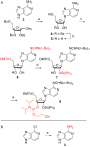
- diluted with dichloromethane (10 mL) and washed with saturated sodium bicarbonate solution (10 mL). The organic layer was then dried over Na2SO4 and evaporated, and the resulting crude product was purified by flash chromatography (50% ethyl acetate in cyclohexane, size: 19.0 × 1.5 cm, 15 g silica gel
- ). Yield: 73 mg (44%) of compound 8 as white foam. TLC (50% ethyl acetate in cyclohexane): Rf = 0.56; 1H NMR (300 MHz, DMSO-d6) δ 0.74–0.95 (m, 48H, NCHN(CH2CH2CH2CH3)2a,b), Si(CH(CH3)3)3a,b), 1.12–1.23 (m, 24H, N(CH(CH3)2)2a,b), 1.28–1.36 (m, 8H, NCHN(CH2CH2CH2CH3)2a,b), 1.55–1.60 (m, 8H, NCHN


A self-assembled cyclodextrin nanocarrier for photoreactive squaraine
Beilstein J. Org. Chem. 2016, 12, 2535–2542, doi:10.3762/bjoc.12.248
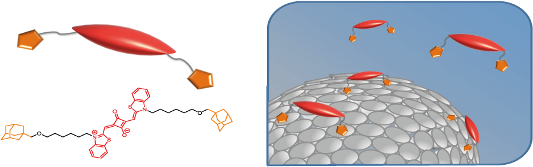
- evaporation. A fraction of crude product was then purifiied through silica column chromatography (EtOAc/cyclohexane (40:1), Rf: 0.6). Molecular formula: C17H29BrO. 1H NMR (400 MHz, CDCl3, 298 K) δ 3.33 (m, 4H, 1,6-H), 2.88 (s, 2H, 7-H), 1.89 (p, J = 3.1 Hz, 3H, 10-H), 1.84–1.75 (m, 2H, 2-H ), 1.68–1.55 (m, 6H


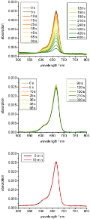
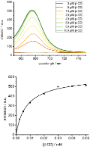

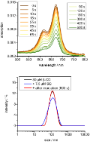

A new paradigm for designing ring construction strategies for green organic synthesis: implications for the discovery of multicomponent reactions to build molecules containing a single ring
Beilstein J. Org. Chem. 2016, 12, 2420–2442, doi:10.3762/bjoc.12.236
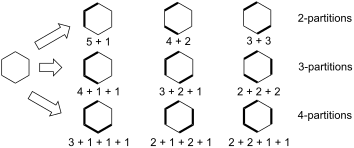
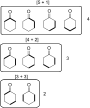
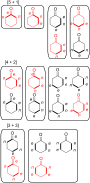
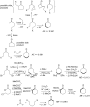
- , catalytic hydration of cyclohexene, or catalytic air oxidation of cyclohexane. However, as an intellectual exercise and proof of principle, we may be able to use the results described for integer partitioning to devise creative syntheses for cyclohexanone which involve actual ring construction via 2








Combined experimental and theoretical studies of regio- and stereoselectivity in reactions of β-isoxazolyl- and β-imidazolyl enamines with nitrile oxides
Beilstein J. Org. Chem. 2016, 12, 2390–2401, doi:10.3762/bjoc.12.233

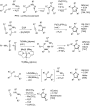
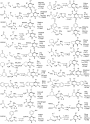
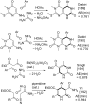
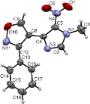
- the products due to the formation of a large amount of tar-like products. Enamines 1a–e, bearing imidazole and isoxazole rings and several hydroxamoyl chlorides 2a–h bearing aryls with electron-withdrawing and releasing groups, pyridine and cyclohexane can be used for the synthesis of azolylisoxazoles




The weight of flash chromatography: A tool to predict its mass intensity from thin-layer chromatography
Beilstein J. Org. Chem. 2016, 12, 2351–2357, doi:10.3762/bjoc.12.228
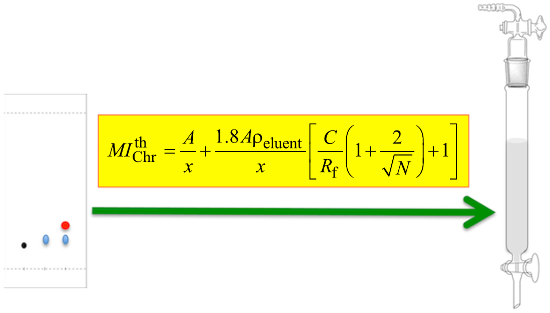
- column using as eluent a 7:3 cyclohexane–acetone mixture (Table 2, entry 1). The mass fraction of product in the crude reaction mixture (79%) was calculated after chromatography taking into account the isolated mass of 1. The values calculated using Equation 18 with N = 35 or Ncalc (Equation 16, B
- = 33.64 or B = 51.70) deviated only from 6, 7 and 11% of the experimental value, respectively. Another experiment (a(bis), Table 2, entry 2) led to a crude reaction mixture containing 60% by weight of 1 which was purified using a disposable cartridge (PuriFlash SIHP 30 µm, Interchim) and cyclohexane–AcOEt
- correct separation was obtained on TLC with the mobile phase cyclohexane–EtOAc (75:25). Again, the values obtained by the calculation were close to the experimental ones, with differentials of 7, 8 and 11% depending on the value taken for N (Table 2, entry 5). In each case, the calculation afforded values


![[Graphic 14]](/bjoc/content/inline/1860-5397-12-228-i34.png?max-width=637&scale=1.18182) with x for reaction b (Scheme 1).
with x for reaction b (Scheme 1).


![[Graphic 15]](/bjoc/content/inline/1860-5397-12-228-i35.png?max-width=637&scale=1.18182) (N = 35) with Rf for the reactions of Scheme 1.
(N = 35) with Rf for the reactions of Scheme 1.
A chiral analog of the bicyclic guanidine TBD: synthesis, structure and Brønsted base catalysis
Beilstein J. Org. Chem. 2016, 12, 1870–1876, doi:10.3762/bjoc.12.176
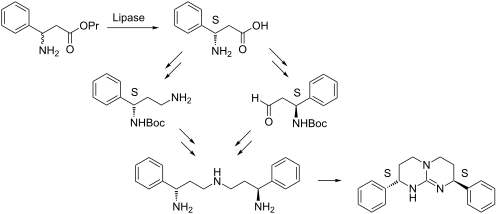
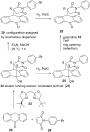
- (42%, 48% ee) yielded 26% of material with 95% ee. Assignment of absolute configurations (Scheme 3): Well grown crystals of enantiopure Michael product 30 suitable for X-ray structural analysis could be obtained by a second recrystallization from CH2Cl2/cyclohexane. The 4-bromophenyl residue allowed


Stereoselective synthesis of tricyclic compounds by intramolecular palladium-catalyzed addition of aryl iodides to carbonyl groups
Beilstein J. Org. Chem. 2016, 12, 1236–1242, doi:10.3762/bjoc.12.118
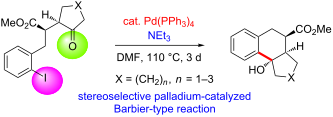
- to that of the products and the formed hydroxy group in the newly generated cyclohexane ring is consistently in trans-arrangement with respect to the methoxycarbonyl group. A transition-state model is proposed to explain the observed stereochemical outcome. This palladium-catalyzed Barbier-type




Synthesis of a deuterated probe for the confocal Raman microscopy imaging of squalenoyl nanomedicines
Beilstein J. Org. Chem. 2016, 12, 1127–1135, doi:10.3762/bjoc.12.109

- °C and concentrated under reduced pressure. The residue was directly chromatographed over silica gel eluting with cyclohexane/AcOEt 4:1 followed by neat AcOEt to provide GemSQ-d6 (3) as a colorless oil (36.0 mg, 72%). 1H NMR (CDCl3, 400 MHz) δ 9.15 (br s, 1H, NHCO), 8.10 (d, J = 7.5 Hz, 1H, H-6


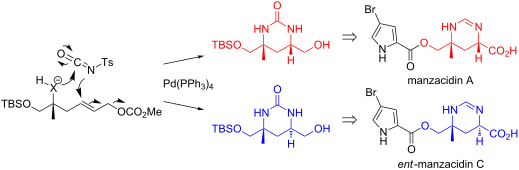
Modular synthesis of the pyrimidine core of the manzacidins by divergent Tsuji–Trost coupling
Beilstein J. Org. Chem. 2016, 12, 1111–1121, doi:10.3762/bjoc.12.107
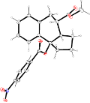
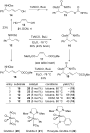
- chromatography on silica gel (cyclohexane/ethyl acetate 4:1) yielded the desired product (1.61 g, 3.77 mmol, 96%) as a colorless solid. Rf 0.29 (cyclohexane/ethyl acetate 4:1); mp 84 °C; [α]20D −2.3 (c 0.5, CHCl3); 1H NMR (300.13 MHz, CDCl3) δ 0.09 (s, 6H), 0.93 (s, 9H), 1.24 (s, 3H), 2.43 (d, J = 8.0 Hz, 2H
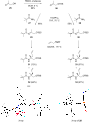
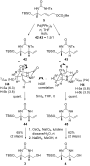
- yellow to red. The solvent was removed under reduced pressure and purification of the residue by column chromatography on silica gel (cyclohexane/ethyl acetate 4:1) yielded the desired products 42 and 43 (766 mg, 1.75 mmol, 94%, dr 1:1.5 anti/syn) as off-white solids. 42: mp 129 °C; [α]20D −20.3 (c 0.5



The synthesis of functionalized bridged polycycles via C–H bond insertion
Beilstein J. Org. Chem. 2016, 12, 985–999, doi:10.3762/bjoc.12.97
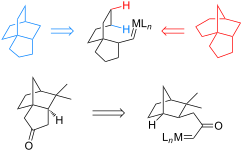
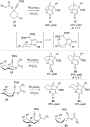
- Bamford–Stevens-like transformation, the reaction with the adjacent alkyne proved to be much faster to provide the bridged-polycyclic product 89. The conditions employed were sufficiently mild and chemoselective that the epoxide in cyclohexane 91 remained intact in the reaction to form 92. The use of







Separation and identification of indene–C70 bisadduct isomers
Beilstein J. Org. Chem. 2016, 12, 903–911, doi:10.3762/bjoc.12.88
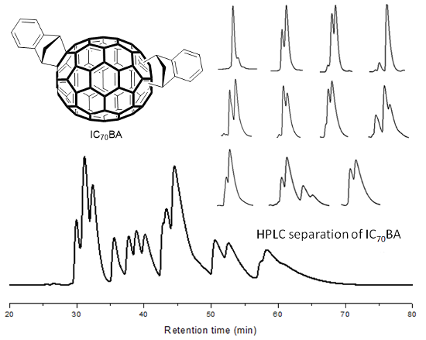
- mixture of IC70BA was achieved by heating C70 with indene at 180 °C in 1,2-dichlorobenzene [9]. Following the reaction, flash chromatography (silica gel, toluene: cyclohexane, 1:9) was performed to remove any excess reagents, mono-adducts of C70 as well as other impurities. In our previous work, the
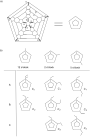
- contained the biggest portions of the original mixture, enough for device testing. Notably, fraction 9 contained two IC70BA species and was further separated by flash chromatography (silica gel, toluene/cyclohexane 1:9) into fraction 9-1 and fraction 9-2 which are known to contain the 2 o’clock-B isomer [9
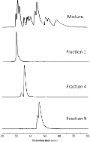
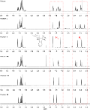
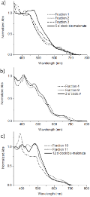
- analyzed with a silica gel HPLC column (cyclohexane 1.0 mL/min), respectively, to assess their relative polarity. The HPLC chromatogram clearly illustrated that the retention time of fraction 10 was shorter than of fraction 11, which suggested that the configuration of fraction 10 was less polar than




Enantioselective carbenoid insertion into C(sp3)–H bonds
Beilstein J. Org. Chem. 2016, 12, 882–902, doi:10.3762/bjoc.12.87
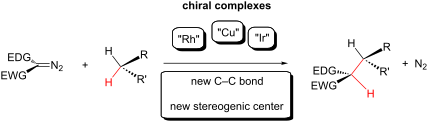
- reagents, also used as solvent, were cyclopentane, cyclohexane and cycloheptane. Two factors are noteworthy in this work. Unlike the carboxamide complexes (R)-18 and (S)-18 previously reported by Doyle and coworkers (Table 2), where the complexation of the chiral ligand to rhodium atoms occurs through the
- attributed to high steric demand required by the chiral ligand in the transition state of the carbenoid insertion step in the C(sp3)–H bond. Cyclic alkanes were also tested with yields ranging from 64–80% and enantioselectivities between 88 and 92% ee. The reaction with cyclohexane was conducted on a gram


Is conformation a fundamental descriptor in QSAR? A case for halogenated anesthetics
Beilstein J. Org. Chem. 2016, 12, 760–768, doi:10.3762/bjoc.12.76

- possible for isoflurane. However, geometry optimization at the MP2/6-311++g(d,p) and ωB97X-D/6-311++g(d,p) (a DTF method which includes dispersion effects) levels converged to five energy minima for the gas phase, implicit solvents (cyclohexane, DMSO and water, using the polarizable continuum model), and


Iridium/N-heterocyclic carbene-catalyzed C–H borylation of arenes by diisopropylaminoborane
Beilstein J. Org. Chem. 2016, 12, 654–661, doi:10.3762/bjoc.12.65

- initially formed aminoborylated product 3 were not successful, its formation was confirmed by 11B NMR (δ = 40.7 ppm in cyclohexane-d12). The crude reaction mixture was treated with pinacol and the yield of the product was estimated by 1H NMR spectroscopy. Using dtbpy, the common ligand for iridium-catalyzed


(Thio)urea-mediated synthesis of functionalized six-membered rings with multiple chiral centers
Beilstein J. Org. Chem. 2016, 12, 462–495, doi:10.3762/bjoc.12.48
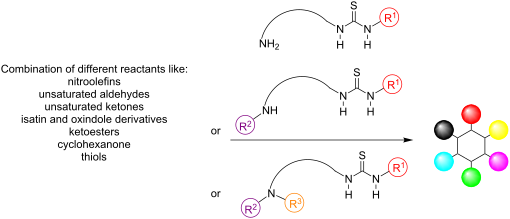
- Bonne, Constantieux, Rodriguez and co-workers reported an enantioselective three-component Michael–Michael–Henry reaction to access a highly substituted cyclohexane 76 with excellent selectivity over three steps (>95:5 dr, 98% ee) using Takemoto’s catalyst 77 (Scheme 27) [46]. The cascade starts with a
- 2010, Zhao and his group demonstrated the synthesis of bicyclo[3.2.1]octan-8-ones 80, via a domino Michael–Henry reaction using quinine-derived catalyst 57 (Scheme 28) [47]. The nucleophile in this process is cyclohexane-1,2-dione (81) and the Michael acceptor is nitroolefin 82. A wide range of
- , Xu and co-workers described a three-compound reaction between dialkyl malonate 222, nitro-alkene 82 and substituted enal 154, catalyzed by the chiral quinine-derived thiourea 57 and organocatalyst 223, affording product 224 with a substituted cyclohexane-ring core (Scheme 70) [89]. The experimental


Cascade alkylarylation of substituted N-allylbenzamides for the construction of dihydroisoquinolin-1(2H)-ones and isoquinoline-1,3(2H,4H)-diones
Beilstein J. Org. Chem. 2016, 12, 301–308, doi:10.3762/bjoc.12.32

- -methylallyl)benzamide (4a) and cyclohexane (2a) as model compounds (Table 1). As shown in Table 1, we found that the reactions did not happen or gave only a trace amount of the desired product with K2S2O8, AIBN, BPO and TBHP as oxidants (Table 1, entries 1, 3–5). PhI(OAc)2 and DCP could be used as oxidants
- examined, and a lower chemical yield was found when the reaction was performed at 100 °C (Table 1, entry 16). With the optimized conditions developed, we then carried out a substrate generality study using various types of N-(2-methylallyl)benzamides 4 to react with cyclohexane (2a). As shown in Scheme 2
- final study of this reaction was the investigation of the mechanism. Firstly, a substrate (8a) bearing a hydrogen atom at the nitrogen was tried for the current system. The cyclohexane radical addition product 9aa’, instead of a cyclization product, was observed with 35% yield (Scheme 5a). This result





Simple activation by acid of latent Ru-NHC-based metathesis initiators bearing 8-quinolinolate co-ligands
Beilstein J. Org. Chem. 2016, 12, 154–165, doi:10.3762/bjoc.12.17
- Cs2CO3 (20 equiv) were added. The reaction mixture was stirred under an atmosphere of argon for 12 h at 25 °C. Insoluble components were removed by filtration over celite. Column chromatography (silica gel) using cyclohexane/ethylacetate = 10/1 (v/v) yielded the corresponding complexes. The synthesis of
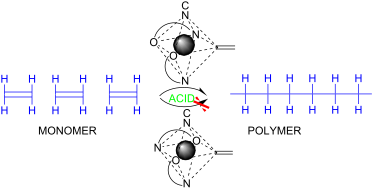
- ; HCl relative to ruthenium) was added to activate the reaction. The reaction was followed by TLC (cyclohexane/ethyl acetate = 3:1) and after complete conversion stopped with an excess of ethyl vinyl ether. The Polymer was precipitated in vigorously stirred methanol (approx. 25 mL for 100 mg polymer


Selectively fluorinated cyclohexane building blocks: Derivatives of carbonylated all-cis-3-phenyl-1,2,4,5-tetrafluorocyclohexane
Beilstein J. Org. Chem. 2015, 11, 2671–2676, doi:10.3762/bjoc.11.287

- derivatisation and facilitate the incorporation of the facially polarised all-cis-1,2,4,5-tetrafluorocyclohexane motif into more advanced molecular scaffolds. Keywords: cyclohexane carbonylation; fluorine containing building blocks: organofluorine chemistry; Introduction Selectively fluorinated building blocks
- cyclohexane rings, to complement aromatic building blocks. In this context we have recently prepared the all-cis-tetrafluorocyclohexanes 2 and 3 [3][4] and also all-cis-hexafluorocyclohexane (1) [5] as shown in Figure 1. In the case of the hexafluorocyclohexane, the ring maintains a chair conformation and
- demonstrated that 4 can be elaborated in a relatively straightforward manner by mainstream reactions of electrophilic aromatic substitution [7]. This extended to the synthesis of cyclohexane substituted (S)-L-phenylalanines with orthogonal protecting groups suitable for their incorporation into peptides [8


Bifunctional phase-transfer catalysis in the asymmetric synthesis of biologically active isoindolinones
Beilstein J. Org. Chem. 2015, 11, 2591–2599, doi:10.3762/bjoc.11.279
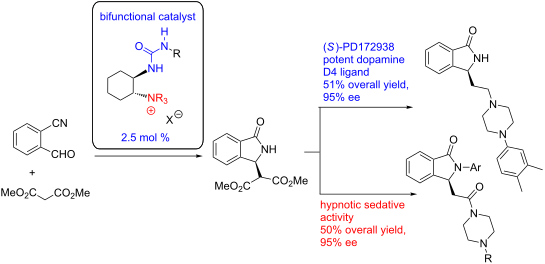
- cascade reaction, investigating novel trans-1,2-cyclohexane diamine-based bifunctional ammonium salts 8. These catalysts were recently introduced by our groups in a variety of different reactions [27][28][29], as exemplified by a related aldol-initiated cascade reaction of glycine Schiff base with 2
- isoindolinones. This work: 1) trans-1,2-cyclohexane diamine-based bifunctional ammonium salts 8 in the asymmetric synthesis of 7; 2) transformation of 7 into 9; 3) asymmetric synthesis of bioactive isoindolinones. Asymmetric cascade, crystallization and decarboxylation reaction. Proposed racemization pathways of





