Search results
Search for "dipolar cycloaddition" in Full Text gives 186 result(s) in Beilstein Journal of Organic Chemistry.
The rapid generation of isothiocyanates in flow
Beilstein J. Org. Chem. 2013, 9, 1613–1619, doi:10.3762/bjoc.9.184
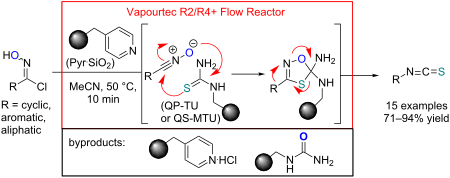
- chemical transformation which typically eliminates the requirements for any conventional work-up or purification of the reaction stream. Keywords: chloroxime; dipolar cycloaddition; flow chemistry; flow synthesis; immobilised reagents; isothiocyanate; nitrile oxide; Introduction Flow based chemical
- ], both reagents causing safety concerns due to the formation of toxic, malodorous and/or extremely corrosive byproducts (Scheme 1a). An underutilised alternative sequence is the 1,3-dipolar cycloaddition reaction between a nitrile oxide and a thiourea compound which initially generates an unstable 1,4,2
- purification of reaction sequences [40][41][42][43][44]. In addition they have been successfully utilised in order to render dipolar cycloaddition reactions involving azomethine ylides [45][46] as well as nitrile oxides [47][48] more practical for generating important heterocyclic scaffolds such as


Efficient continuous-flow synthesis of novel 1,2,3-triazole-substituted β-aminocyclohexanecarboxylic acid derivatives with gram-scale production
Beilstein J. Org. Chem. 2013, 9, 1508–1516, doi:10.3762/bjoc.9.172
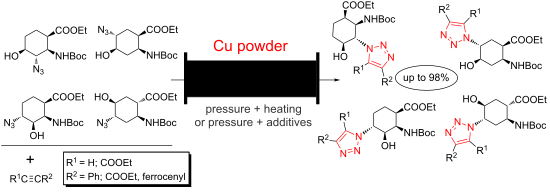
- acid derivatives in a simple and efficient continuous-flow procedure is reported. The 1,3-dipolar cycloaddition reactions were performed with copper powder as a readily accessible Cu(I) source. Initially, high reaction rates were achieved under high-pressure/high-temperature conditions. Subsequently
- applications in numerous other areas of modern chemical sciences, such as bioconjugation [13], supramolecular chemistry, [14] and polymer sciences [15]. Probably the most useful and powerful procedure for the synthesis of 1,2,3-triazoles is the Huisgen 1,3-dipolar cycloaddition of organic azides with



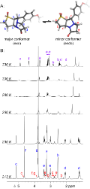
Dipolar addition to cyclic vinyl sulfones leading to dual conformation tricycles
Beilstein J. Org. Chem. 2013, 9, 1419–1425, doi:10.3762/bjoc.9.159

- -broadening in the NMR spectra was found to depend on the presence of substitution next to the inverting nitrogen center. Keywords: DFT calculations; dipolar addition; fluxional behavior; sulfones; VT NMR; Introduction The 1,3-dipolar cycloaddition [1][2][3] represents a powerful methodology for the
- referenced to the carbon resonances of the solvent (CDCl3: δ 77.00). TLC plates were visualized by exposure to KMnO4 stain. Accurate masses were obtained using an orbitrap MS. Infrared spectra were collected using an FT IR spectrometer. General procedure for the dipolar cycloaddition. The vinyl sulfone (0.5


Microwave-assisted three-component domino reaction: Synthesis of indolodiazepinotriazoles
Beilstein J. Org. Chem. 2013, 9, 401–405, doi:10.3762/bjoc.9.41
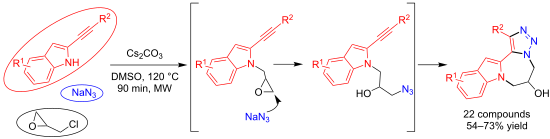
- Abstract A microwave-assisted three-component protocol involving N-1 alkylation of 2-alkynylindoles with epichlorohydrin, ring opening of the epoxide with sodium azide, and an intramolecular Huisgen azide–internal alkyne 1,3-dipolar cycloaddition domino sequence has been described. The efficacy of the
- methodology has been demonstrated by treating various 2-alkynylindoles (aromatic/aliphatic) with epichlorohydrin and sodium azide furnishing annulated tetracyclic indolodiazepinotriazoles in satisfactory yields. Keywords: 2-alkynylindoles; azides; 1,3-dipolar cycloaddition; domino reaction
- ; indolodiazepinotriazoles; Introduction The intermolecular Huisgen azide–alkyne 1,3-dipolar cycloaddition reaction [1][2][3][4][5][6] for the synthesis of 1,2,3-triazoles in both aqueous [7][8][9][10] and organic solvents under either metal-catalyzed [11][12][13] or metal-free conditions [14][15][16] has received


Towards a biocompatible artificial lung: Covalent functionalization of poly(4-methylpent-1-ene) (TPX) with cRGD pentapeptide
Beilstein J. Org. Chem. 2013, 9, 270–277, doi:10.3762/bjoc.9.33
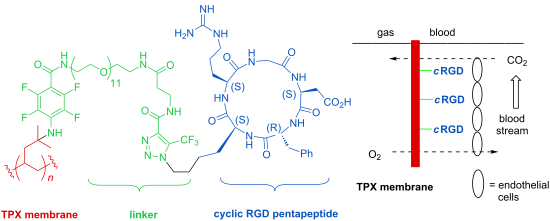
- alternatively pursued a copper-free approach that relied on the oxanorbornadiene strategy of Rutjes [24][25][26][27][28]. This type of specific conjugation most likely proceeds by a 1,3-dipolar cycloaddition/retro-Diels–Alder cascade. By incubating oxanorbornadiene functionalized membranes 7b with cRGD
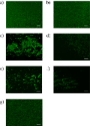
- ). Absorption maxima of fluorescein were located at 457 nm and 481 nm, which can be ascribed to the presence of two isomeric forms (lacton versus carboxylate) of fluorescein [31]. These measurements clearly revealed the successful covalent functionalization of TPX with fluorescein by 1,3-dipolar cycloaddition
- ) of the TPX membrane with an increased factor for the absorption intensity of about 65 compared to 8c. This remarkable result may be rationalized if one assumes that copper is not ideally distributed during the course of the 1,3-dipolar cycloaddition reaction, as the presence of the heterogeneous TPX


Asymmetric synthesis of γ-chloro-α,β-diamino- and β,γ-aziridino-α-aminoacylpyrrolidines and -piperidines via stereoselective Mannich-type additions of N-(diphenylmethylene)glycinamides across α-chloro-N-sulfinylimines
Beilstein J. Org. Chem. 2012, 8, 2124–2131, doi:10.3762/bjoc.8.239
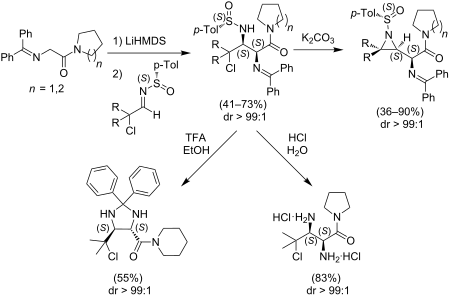
- , comparable non-halogenated trans-imidazolidines were already synthesized by 1,3-dipolar cycloaddition of N-benzylidene glycine ester enolates across N-sulfinylaldimines in the presence of a Lewis acid [43]. The trans-stereochemistry of imidazolidine 12b was ensured by the vicinal coupling constant 3JH4-H5




Copper-catalyzed CuAAC/intramolecular C–H arylation sequence: Synthesis of annulated 1,2,3-triazoles
Beilstein J. Org. Chem. 2012, 8, 1771–1777, doi:10.3762/bjoc.8.202
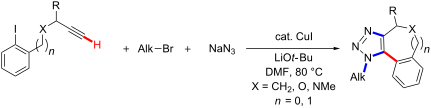
- Rutjes [68] as well as Sharpless [69] elegantly devised alternative approaches exploiting 1-haloalkynes [70], we became interested in exploring a single [71][72][73] inexpensive copper catalyst for one-pot reaction sequences comprising a 1,3-dipolar cycloaddition along with an intramolecular C–H bond
- sequential synthesis of 1,4-dihydrochromeno[3,4-d][1,2,3]triazole (4b, Scheme 2). We were delighted to observe that the desired reaction sequence consisting of a copper-catalyzed 1,3-dipolar cycloaddition and an intramolecular C–H bond arylation converted alkyne 1a to the desired product 4b with high


Parallel solid-phase synthesis of diaryltriazoles
Beilstein J. Org. Chem. 2012, 8, 1027–1036, doi:10.3762/bjoc.8.115
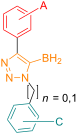
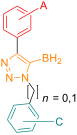
- – Huisgen 1,3-dipolar cycloaddition of solid-phase-immobilized azides with terminal alkynes by copper(I) catalysis: An azide-functionalized Wang resin 7 or 9 (1 equiv) was preswollen in dimethylformamide (1.5 mL/100 mg resin) for 2 h at room temperature. The copper(I) catalyst was prepared in situ by using
- steps with water, dimethylformamide, methanol and dichloromethane (each solvent 3 × 2 mL/100 mg resin) were carried out. GP 3 – Huisgen 1,3-dipolar cycloaddition of solid-phase-immobilized azides with terminal or internal alkynes by ruthenium(II) catalysis: The azide functionalized Wang resin (1 equiv


Parallel and four-step synthesis of natural-product-inspired scaffolds through modular assembly and divergent cyclization
Beilstein J. Org. Chem. 2012, 8, 930–940, doi:10.3762/bjoc.8.105
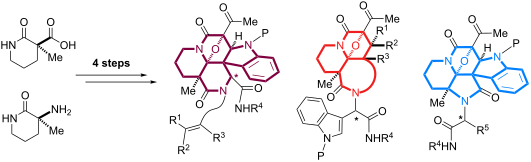
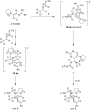
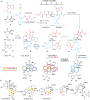
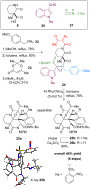
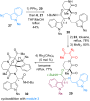
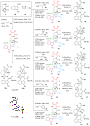
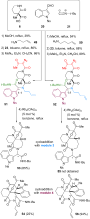
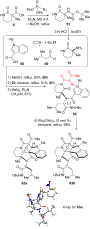
- (Scheme 3). According to the previously reported protocol [22], Ugi reaction employing allylamine (31) and stepwise installation of a diazoimide group provided 35 in good yield. Upon treatment of 35 with Rh2(OAc)4 in benzene under reflux, 1,3-dipolar cycloaddition of the ylide intermediate with the


Thiophene-based donor–acceptor co-oligomers by copper-catalyzed 1,3-dipolar cycloaddition
Beilstein J. Org. Chem. 2012, 8, 683–692, doi:10.3762/bjoc.8.76

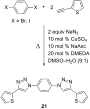
- high yield and purity. Click reactions generally involve a Cu(I)-catalyzed version of the Huisgen 1,3-dipolar cycloaddition of terminal acetylenes and azides (CuAAC), to regioselectively yield 1,4-disubstituted 1H-1,2,3-triazoles [11][12]. In the meanwhile, this type of click reaction has become very




Aryl nitrile oxide cycloaddition reactions in the presence of pinacol boronic acid ester
Beilstein J. Org. Chem. 2012, 8, 606–612, doi:10.3762/bjoc.8.67
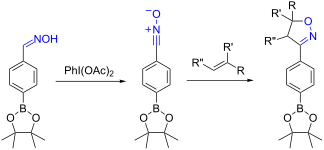
- dipolarophiles to yield aryl isoxazolines with the boronate ester function intact and available for subsequent reaction. Keywords: dipolar cycloaddition; heterocycle; nitrile oxide; hypervalent iodine oxidation; pinacol boronic acid esters; Introduction Metal-mediated coupling reactions to form carbon–carbon
- bonds, and 1,3-dipolar cycloaddition reactions to construct five-membered heterocycles are both powerful tools for assembling organic molecules. Used in combination, these tools offer great flexibility for strategies such as diversity-oriented synthesis [1], solution-phase combinatorial libraries [2
- convenient substrate would be the arylboronate nitrile oxide 1, which would undergo 1,3-dipolar cycloaddition to give isoxazolines 2. This latter compound could in turn be coupled with heterocycles or aryl groups to give insecticidal [5] derivatives of type 3 (Scheme 1). The utility of arylboronic acids and


Intramolecular carbenoid ylide forming reactions of 2-diazo-3-keto-4-phthalimidocarboxylic esters derived from methionine and cysteine
Beilstein J. Org. Chem. 2012, 8, 433–440, doi:10.3762/bjoc.8.49
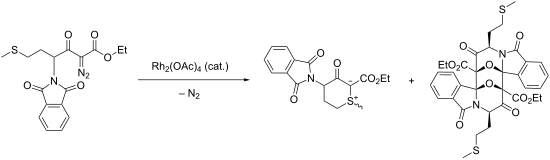
- rise to an annelated bicyclic substructure. In contrast, in our case as well as in [29], the olefinic dipolarophile is found as a substituent at a remote ring position of the cyclic carbonyl ylide, such that the intramolecular 1,3-dipolar cycloaddition generates a bridged oxabicyclo[3.2.1]octane



Aldol elaboration of 4,5,6,7-tetrahydroisoxazolo[4,3-c]pyridin-4-ones, masked precursors to acylpyridones
Beilstein J. Org. Chem. 2012, 8, 308–312, doi:10.3762/bjoc.8.33

- genetic techniques, and been shown to involve conversion from an acyltetramic acid by oxidative ring expansion [7][8]. During a programme of synthesis towards metabolites containing the enolised heterocyclic tricarbonyl motif 3 [9][10][11][12][13][14][15][16], we have reported nitrile oxide dipolar
- -cycloaddition strategies to access the isoxazolo[4,3-c]pyridin-4-one 4 as 2nd-generation masked nonpolar scaffolds for the 3-acyl-4-hydroxypyridin-2-one nucleus [12]; our 1st-generation approach had employed the [4,5-c] isomer 5 [13][14][15]. We have recently reported on elaboration of isoxazolopyridone 4 at C


Synthesis of fused tricyclic amines unsubstituted at the ring-junction positions by a cascade condensation, cyclization, cycloaddition then decarbonylation strategy
Beilstein J. Org. Chem. 2012, 8, 107–111, doi:10.3762/bjoc.8.11
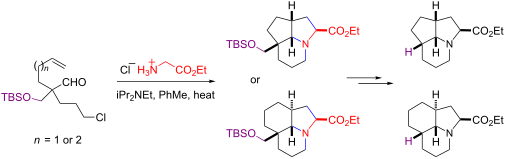
- sequence involving condensation to an intermediate imine, then cyclization and formation of an intermediate azomethine ylide and then intramolecular dipolar cycloaddition. The fused tricyclic products are formed with complete or very high stereochemical control. The hydroxymethyl group was converted into
- ; dipolar cycloaddition; heterocycle; tricyclic; Introduction Cascade reaction sequences [1] provide a rapid and efficient means to build complexity in organic chemistry. One such sequence involves a cyclization followed by in situ intramolecular cycloaddition to give three new rings in a single
- transformation [2][3][4][5][6][7][8]. We have been studying the intramolecular dipolar cycloaddition of azomethine ylides in synthesis [9][10][11][12][13][14][15][16] and were able to show that the azomethine ylide could be prepared in situ by a cyclization step [17][18]; for example, by heating the aldehyde 1


Synthesis of highly functionalized β-aminocyclopentanecarboxylate stereoisomers by reductive ring opening reaction of isoxazolines
Beilstein J. Org. Chem. 2012, 8, 100–106, doi:10.3762/bjoc.8.10
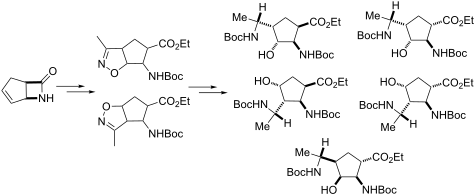
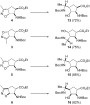
- , University of Szeged, Eötvös u. 6, H-6720 Szeged, Hungary 10.3762/bjoc.8.10 Abstract A rapid and simple procedure was devised for the synthesis of multifunctionalized cyclic β-amino esters and γ-amino alcohols via the 1,3-dipolar cycloaddition of nitrile oxides to β-aminocyclopentenecarboxylates. The
- 1 [48][49] (Scheme 1). The syntheses consisted of a dipolar cycloaddition of nitrile oxide (generated with Boc2O, Et3N and DMAP) to the olefinic bond of cis-ethyl 2-aminocyclopent-3-enecarboxylate derived from 1, during which the isoxazoline-fused amino ester regio- and stereoisomers (2 and 4) were


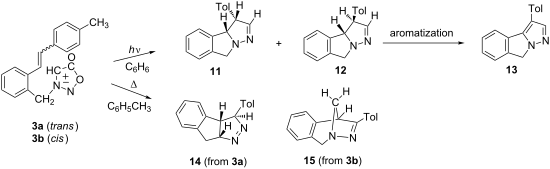
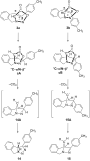
Photochemical and thermal intramolecular 1,3-dipolar cycloaddition reactions of new o-stilbene-methylene-3-sydnones and their synthesis
Beilstein J. Org. Chem. 2011, 7, 1663–1670, doi:10.3762/bjoc.7.196
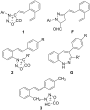
- hybrids of a number of mesomeric ionic structures (Figure 1). One of the most characteristic reactions of sydnones is the intermolecular 1,3-dipolar cycloaddition. In the presence of acetylenic or ethylenic dipolarophiles, sydnones undergo cycloaddition reactions, which can be induced thermally [4][6][7
- such a system, where two chromophores, stilbene and sydnone, are divided by a methylene bridge, an intramolecular 1,3-dipolar cycloaddition and the formation of diverse polycyclic compounds could be expected. Herein we describe, for the first time, the synthesis of cis- and trans-3-(stilbenylmethyl
- , giving cycloadducts 11 or 12, respectively. We also performed the thermal intramolecular reactions with the starting compounds 3a and 3b. Theoretically the intramolecular 1,3-dipolar cycloaddition of the sydnone moiety, acting as a masked azomethine dipole, and the double bond of the stilbene moiety




Efficient synthesis of 1,3-diaryl-4-halo-1H-pyrazoles from 3-arylsydnones and 2-aryl-1,1-dihalo-1-alkenes
Beilstein J. Org. Chem. 2011, 7, 1656–1662, doi:10.3762/bjoc.7.195
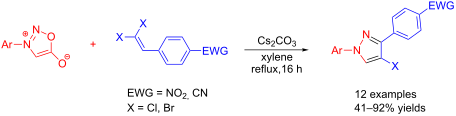
- , Fudan University, Handan Road 220, Shanghai 200433, China 10.3762/bjoc.7.195 Abstract An efficient synthesis of 1,3-diaryl-4-halo-1H-pyrazoles was achieved. The synthesis involves the [3 + 2] dipolar cycloaddition of 3-arylsydnones and 2-aryl-1,1-dihalo-1-alkenes. The process proceeds smoothly in
- based on the condensation of hydrazines with 1,3-dicarbonyl compounds or their equivalents. However, the 1,3-dipolar cycloaddition offers a more convenient synthetic route. Sydnones are easily accessible aromatic compounds and versatile synthetic intermediates. They can be used as unusual, alternative
- cycloaddition substrates for pyrazole synthesis [16][17]. These dipolar compounds are readily prepared in two steps from N-functionalized amino acids, and are readily stored and handled. Methods have been disclosed for the [3 + 2] dipolar cycloaddition of sydnones with alkenyl silanes [18] and stannanes [18


Multistep flow synthesis of vinyl azides and their use in the copper-catalyzed Huisgen-type cycloaddition under inductive-heating conditions
Beilstein J. Org. Chem. 2011, 7, 1441–1448, doi:10.3762/bjoc.7.168
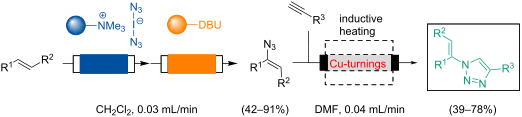
- -type cycloadditions The copper-catalyzed Huisgen-type cycloaddition (CuAAC) is a general and useful method for the synthesis of 1,4-disubstituted-1,2,3-triazoles and is based on the 1,3-dipolar cycloaddition of alkynes and azides [28]. Besides Cu(I) sources also Cu(0) sources, such as copper wire [29


Amines as key building blocks in Pd-assisted multicomponent processes
Beilstein J. Org. Chem. 2011, 7, 1387–1406, doi:10.3762/bjoc.7.163
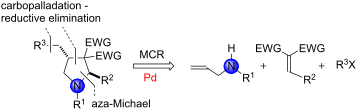
- to the mesoionic compound 5 under these conditions. Subsequent addition of a second, different imine produced β-lactams 9 in good yields, after heating at 55 °C for 24 h (Scheme 4) [4]. As mentioned above, imidazolinium salts 12 can be obtained by a dipolar cycloaddition of münchnone intermediates
- substituents being incompatible. In order to have four independent tunable substrates, the authors added a base (NEtiPr2) to the reaction medium that favors formation of the münchnone intermediate. The second imine was added after 16 h of heating at 45 °C, together with PhSO3H, which catalyzed the dipolar
- cycloaddition and avoided formation of a β-lactam as shown before (Scheme 5) [5]. The palladium-catalyzed trans-addition-alkylative cyclization (anti-Wacker cyclization) of o-ethynylbenzaldehyde with organoboron reagents in the presence of secondary amines was accomplished by Tsukamoto and coworkers [6]. This


Recent developments in gold-catalyzed cycloaddition reactions
Beilstein J. Org. Chem. 2011, 7, 1075–1094, doi:10.3762/bjoc.7.124
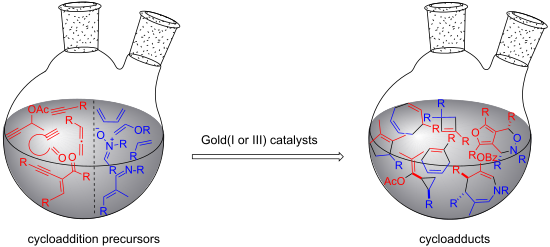
- differences between these carbophilic catalysts. On the other hand, dipolar cycloaddition reactions in which the gold complex does not activate π-bonds, but rather behaves as a more conventional Lewis acid, are not discussed [15][16][17]. Review Cycloadditions initiated by gold-activation of alkynes Many
- on an initial (3 + 2) dipolar cycloaddition between the carbonyl ylide IV and the alkene, followed by a ring expansion (1,2-alkyl migration) that is assisted by the oxy group and generates the oxonium intermediate V (Scheme 2). A final elimination process regenerates the catalyst and affords the
- carbenoid tethered to an imine group (Scheme 10). A subsequent attack of this imine to the carbenoid generates the reactive azomethine ylide intermediate XIV, which undergoes a (3 + 2) dipolar cycloaddition with an intramolecularly tethered alkene or alkyne. Thus, interesting azabicyclo[3.2.1]octane


Chiral gold(I) vs chiral silver complexes as catalysts for the enantioselective synthesis of the second generation GSK-hepatitis C virus inhibitor
Beilstein J. Org. Chem. 2011, 7, 988–996, doi:10.3762/bjoc.7.111
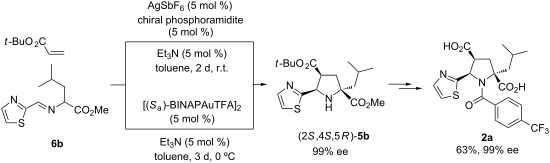
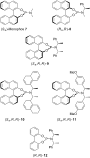
- , Apdo. 1072, E-20018 San Sebastián, Spain 10.3762/bjoc.7.111 Abstract The synthesis of a GSK 2nd generation inhibitor of the hepatitis C virus, by enantioselective 1,3-dipolar cycloaddition between a leucine derived iminoester and tert-butyl acrylate, was studied. The comparison between silver(I) and
- origin of the enantioselectivity of the chiral gold(I) catalyst was justified according to DFT calculations, the stabilizing coulombic interaction between the nitrogen atom of the thiazole moiety and one of the gold atoms being crucial. Keywords: BINAP; 1,3-dipolar cycloaddition; gold; HCV
- synthesis of the endo-pyrrolidine core of 5 is the key step for the preparation of these antiviral agents, and can be efficiently achieved by a 1,3-dipolar cycloaddition (1,3-DC) between the corresponding azomethine ylide and an alkyl acrylate [14][15][16][17][18] (Scheme 1). The first synthesis of racemic




High chemoselectivity in the phenol synthesis
Beilstein J. Org. Chem. 2011, 7, 794–801, doi:10.3762/bjoc.7.90
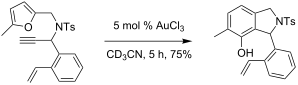
- intermediates A or B. Apart from intermolecular trapping [26][27][28][29][30][31][32][33], intramolecular trapping of such carbenoids has also been reported [34]. One option would be to offer a competing carbonyl group, to produce a carbonyl ylide, which could then undergo a 1,3-dipolar cycloaddition [35]. The
- b). The latter would form intermediate H, which could then either afford product 17 via intramolecular 1,3-dipolar cycloaddition with the olefin, or could form the diene 19 by proton migration. The synthesis of 16 was only possible by a 9-step sequence (Scheme 8). The starting point was a Claisen


Synthetic applications of gold-catalyzed ring expansions
Beilstein J. Org. Chem. 2011, 7, 767–780, doi:10.3762/bjoc.7.87
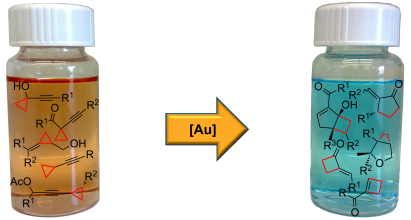
- formation of the 1,4-furan dipole (Scheme 21). In fact, a resonance structure of 60 can be envisaged entailing a gold–carbene and a carbonyl ylide 63. Upon 1,3-dipolar cycloaddition with the alkoxy vinyl ether, bridged bicycle 64 is formed. 1,2-Alkyl migration and bridge opening produces a spiro cation 66


Advances in synthetic approach to and antifungal activity of triazoles
Beilstein J. Org. Chem. 2011, 7, 668–677, doi:10.3762/bjoc.7.79

- which an azide and an alkyne undergo a 1,3-dipolar cycloaddition reaction in the presence of a catalyst such as copper (Scheme 1) or ruthemium (Scheme 2) [27]. Some new synthetic methods for 1,2,3-triazoles are given below (Scheme 3, Scheme 4) [28][29]. Structure activity relationships have revealed
- occupies the most important place in the treatment of fungal diseases. The triazole derivatives noted below were synthesized by various groups and show antifungal activity. Novel 1,2,3-triazole-linked with β-lactam–bile acid conjugates were prepared via 1,3-dipolar cycloaddition reactions of azido β
- ]. Holla et al. synthesized triazole derivatives by the 1,3-dipolar cycloaddition reaction of 4-azido-8-trifluoromethylquinoline with ethyl acetoacetate and acetylacetone, respectively, and tested for antifungal activity against Candida albicans. Among the various synthesized compounds, 1-(1-(8




An overview of the key routes to the best selling 5-membered ring heterocyclic pharmaceuticals
Beilstein J. Org. Chem. 2011, 7, 442–495, doi:10.3762/bjoc.7.57
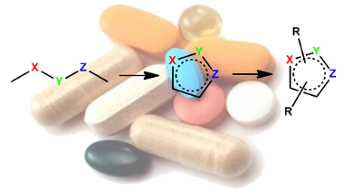
- pyrazole [74]. However, preparation of the alkyne intermediates involves a number of steps and often requires extensive column chromatography, which makes it an unattractive method for synthesis on a larger scale (Scheme 48). A novel 1,3-dipolar cycloaddition between a nitrile imide 244 and an