Search results
Search for "epoxide" in Full Text gives 270 result(s) in Beilstein Journal of Organic Chemistry. Showing first 200.
Versatile synthesis and biological evaluation of novel 3’-fluorinated purine nucleosides
Beilstein J. Org. Chem. 2015, 11, 2509–2520, doi:10.3762/bjoc.11.272

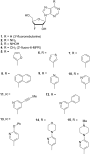
- the protecting groups [35]. Compound 2 has also been synthesized starting from xylofuranoside by manipulating the protecting groups on the carbohydrate moiety [36]. De Clercq and co-workers [37] developed a protocol for the synthesis of 3’-fluororibofuranose in 10 steps, and it requires epoxide



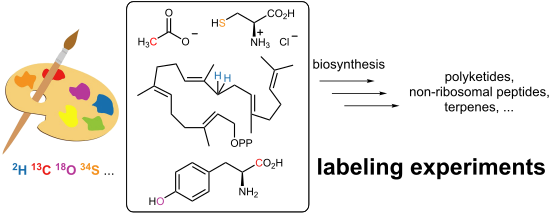
Recent highlights in biosynthesis research using stable isotopes
Beilstein J. Org. Chem. 2015, 11, 2493–2508, doi:10.3762/bjoc.11.271
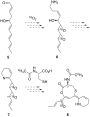
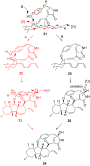
- precursors to gain insight into the used building blocks for the unusual polyketide core [26]. Compound 9 features a trisketal structure in addition to the spiro-epoxide at C-14, which is believed to be the active part of the molecule for interaction with DNA. This was supported by the isolation of









Photoinduced 1,2,3,4-tetrahydropyridine ring conversions
Beilstein J. Org. Chem. 2015, 11, 2166–2170, doi:10.3762/bjoc.11.234
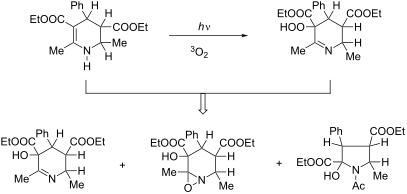
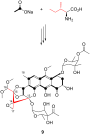
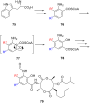
- –carbon double bond in enamines to give the corresponding epoxides, however, in most cases they have not been isolated [36]. The hydroperoxide 2 reacts in the same way. Fission of the epoxide ring may be induced by the base itself producing 3. Attack of a second molecule of hydroperoxide 2 on the imine


Stereoselective synthesis of hernandulcin, peroxylippidulcine A, lippidulcines A, B and C and taste evaluation
Beilstein J. Org. Chem. 2015, 11, 2117–2124, doi:10.3762/bjoc.11.228

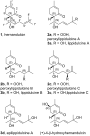
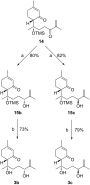
- epoxidation of 5 with tert-butylhydroperoxide (TBHP) in toluene gave 6 ([α]D +34.2° (c 1.3, CHCl3)) in 95% yield [9][22]. Then, the diol 7 was obtained in 85% yield from the reduction of epoxide 6 with LiAlH4 in THF at 0 °C. The diol 7 was easily purified by crystallization (85% yield, n-hexane at −50 °C up



Cross metathesis of unsaturated epoxides for the synthesis of polyfunctional building blocks
Beilstein J. Org. Chem. 2015, 11, 1876–1880, doi:10.3762/bjoc.11.201
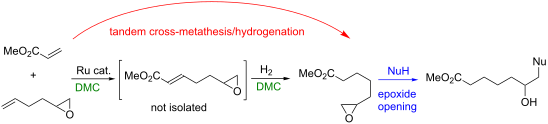
- compounds. The resulting cross metathesis products were hydrogenated in a tandem fashion employing the residual ruthenium from the metathesis step as the hydrogenation catalyst. Interestingly, the epoxide ring remained unreactive toward this hydrogenation method. The saturated compound resulting from the
- cross metathesis of 1 with methyl acrylate was transformed by means of nucleophilic ring-opening of the epoxide to furnish a diol, an alkoxy alcohol and an amino alcohol in high yields. Keywords: cross metathesis; epoxide; ruthenium catalysts; tandem reactions; Introduction Catalytic carbon–carbon
- involving the cross metathesis of a commercially available epoxide-containing olefin with methyl acrylate and acrylonitrile and their subsequent transformations leading to multifunctional building blocks are reported. Results and Discussion Cross metathesis reactions involving electron-deficient olefins are


Recent applications of ring-rearrangement metathesis in organic synthesis
Beilstein J. Org. Chem. 2015, 11, 1833–1864, doi:10.3762/bjoc.11.199
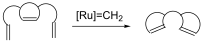
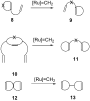
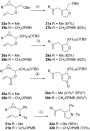
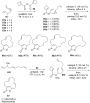
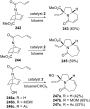
- identified as a key building block. To this end, Fukuyama and co-workers [49] have used the RRM to generate the required building block 230. In this reaction, the required norbornene derivative 228 was prepared from epoxide 227 in two steps and later it was treated with the more reactive catalyst 6 in the










Robust bifunctional aluminium–salen catalysts for the preparation of cyclic carbonates from carbon dioxide and epoxides
Beilstein J. Org. Chem. 2015, 11, 1614–1623, doi:10.3762/bjoc.11.176
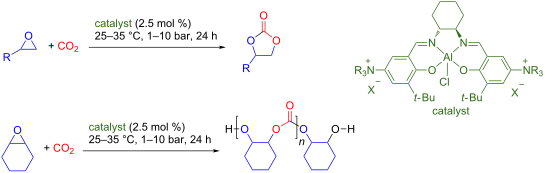
- mixture and reused. Keywords: aluminium; carbon dioxide; cyclic carbonate; epoxide; salen; Introduction Carbon dioxide is a renewable and inexpensive carbon source, so great efforts have been directed at developing novel methods for the valorization of this abundant raw material [1]. One way of
- reported in Table 2, cyclic carbonate, catalyst and unreacted epoxide (for entries 10 and 11) were the only species detected by 1H NMR spectroscopy of the crude reaction product prior to purification by column chromatography. The moderate yield for propylene oxide (Table 2, entry 6) can be explained by


Surprisingly facile CO2 insertion into cobalt alkoxide bonds: A theoretical investigation
Beilstein J. Org. Chem. 2015, 11, 1340–1351, doi:10.3762/bjoc.11.144
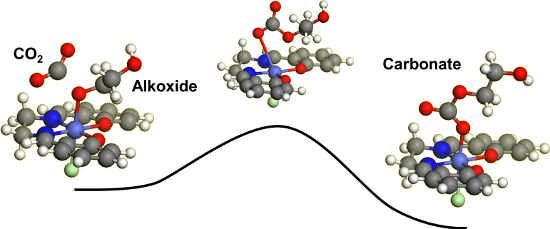
- theoretical study, in which the initiation and propagation steps of the copolymerisation were addressed. The initiation started with the coordination of epoxide at a penta-coordinated metal–salen complex, followed by a nucleophilic, SN2-like, back-side attack on such a coordinated epoxide. The propagation
- comprised a syn-insertion of CO2 into the metal–alkoxide bond and a bimolecular chain transfer of a metal-bound, carbonate-terminated, growing chain to a metal-coordinated and, thus, activated epoxide (see Scheme 2). For hepta-coordinated Cr(III)– and Al(III)–salen complexes, the CO2 insertion requires
- applied to atoms directly involved or in close vicinity of the reaction center, but involves less demanding calculations for the outer periphery. Though kinetically favoured, the insertion of CO2 into the zinc–alkoxide bond turned out to be thermodynamically less favourable than the insertion of epoxide


Selected synthetic strategies to cyclophanes
Beilstein J. Org. Chem. 2015, 11, 1274–1331, doi:10.3762/bjoc.11.142
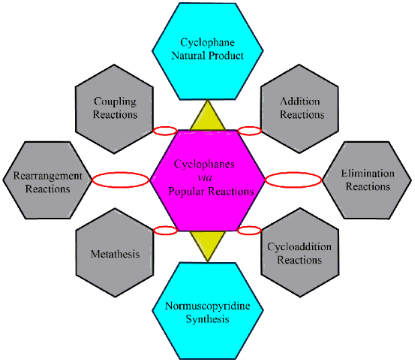
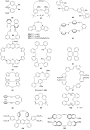
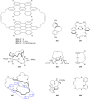
- 339 (22%). Treatment of 339 with 1 equiv of m-chloroperbenzoic acid gave the epoxide 340 (80%), followed by HCl treatment gave [8]paracyclophane 341 (93%) (Scheme 59). Synthesis of the macrocyclic portion of longithorone C (DA reaction): In 1994 longithorone A was first described by Schmitz and co






The chemical behavior of terminally tert-butylated polyolefins
Beilstein J. Org. Chem. 2015, 11, 1246–1258, doi:10.3762/bjoc.11.139
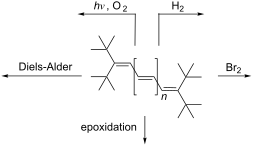
- yielded the symmetrical epoxide 32 with DMDO. Analogously, 19 was converted to mono-epoxide 33 with MCPBA and to 34 with DMDO. Diels–Alder addition of 7 with N-phenyltriazolinedione (PTAD) did not take place. Extension of the conjugated π-system to the next higher vinylog, 19, caused NPTD-addition to the
- -chloroperbenzoic acid (MCPBA) in chloroform at room temperature overnight. Surprisingly, it was neither the mono- epoxide 29 nor its non-terminal isomer 32 but the ketone 31 that was obtained in low yield (ca. 25%). The structure follows from the spectroscopic data (see Supporting Information File 1); the carbonyl
- group is readily seen in the IR spectrum (νmax = 1702 cm−1) and the carbonyl carbon signal in the 13C NMR spectrum at δ = 217 ppm is also of particular diagnostic value. We propose that 31 is produced from epoxide 29 by initial protonation to the oxonium ion 30, which then undergoes a Wagner–Meerwein


Synthesis of a hexasaccharide partial sequence of hyaluronan for click chemistry and more
Beilstein J. Org. Chem. 2015, 11, 604–607, doi:10.3762/bjoc.11.67
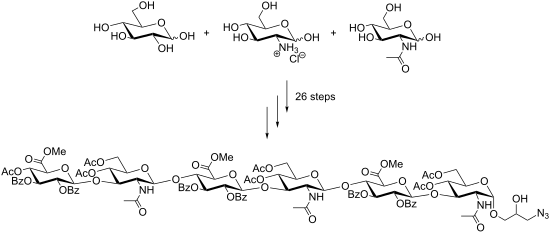
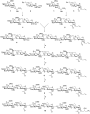
- double bond with Murray's reagent [29][30] yielded the analogous epoxide that was treated with NaN3 in order to afford the desired azido-modified hexasaccharide 10. Conclusion In conclusion, hexasaccharide 10 was successfully prepared in 26 steps and is readily equipped with a terminal azido group. Thus

Synthesis and surface grafting of a β-cyclodextrin dimer facilitating cooperative inclusion of 2,6-ANS
Beilstein J. Org. Chem. 2015, 11, 514–523, doi:10.3762/bjoc.11.58
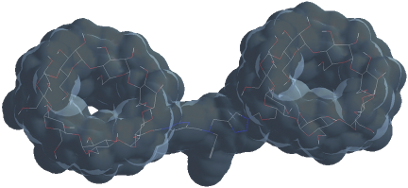
- ) and subsequent ring opening of the epoxide by sodium azide in PEG400 (Scheme 2). In addition to surface grafting of the β-CD dimer, an azide-functionalized quartz slide was grafted with propargyl alcohol (PA, not shown), by CuAACas well, in order to probe changes in 2,6-ANS fluorescence related to


Electrochemical oxidation of cholesterol
Beilstein J. Org. Chem. 2015, 11, 392–402, doi:10.3762/bjoc.11.45
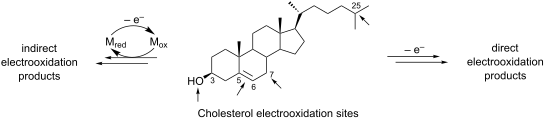
- %), along with the 7-oxo product 9a (15–19%). In addition to these products, epoxide 10a (1.5–3%) was also formed under constant current conditions (Scheme 3). Irrespective of the iron complex used, the reactions afforded the 7α-hydroxylated product 7a in a large excess. The authors postulated the formation
- platinum plates. The electrolysis was performed in the presence of FeCl3 and hematoporphyrin (HMP), and dioxygen was constantly delivered to the cell. Three products, 5α,6β-dichlorocholestan-3β-ol (11), 6α-chlorocholestane-3β,5ß-diol (12), and epoxide (10), as a 1:3 mixture of α and β-isomers, were
- compounds 11 (20%) and 12 (43%) were formed. Second, during the reaction with hydrogen peroxide as an oxidant under non-electrochemical conditions no products were detected, which indicates that the role of dioxygen is not the source of electrochemically generated H2O2. Furthermore, the epoxide 10 was not


Attempts to prepare an all-carbon indigoid system
Beilstein J. Org. Chem. 2015, 11, 363–372, doi:10.3762/bjoc.11.42

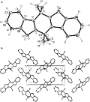
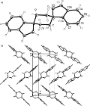
- . Results and Discussion Our first attempt to prepare hydrocarbon 4 started from indene (6, Scheme 2). Epoxidation with m-chloroperbenzoic acid (MCPBA) according to a literature method [15] yielded the epoxide 7 in meager yields (Scheme 2). The methylation of 7 to 8 was achieved by the treatment with







Switching the reaction pathways of electrochemically generated β-haloalkoxysulfonium ions – synthesis of halohydrins and epoxides
Beilstein J. Org. Chem. 2015, 11, 242–248, doi:10.3762/bjoc.11.27

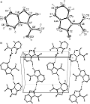
- , which is consistent with the results reported previously [22]. Treatment of 3a-Br with NaOMe resulted in a different product, namely epoxide 6a in 95% yield. In this case, the methoxide ion attacks the sulfur atom and cleaves the S–O bond under formation of an alkoxide ion. The latter intramolecularly
- attacks the carbon atom bearing the bromine substituent to give epoxide 6a (Scheme 2). Presumably, the protonation of the alkoxide ion with MeOH is slower than the intramolecular nucleophilic attack. We could not exclude the possibility that a protonated DMSO molecule presumably generated by the reaction
- mechanism involving the back-side attack of the alkoxide ion to form epoxide 6a. Reactions of β-iodoalkoxysulfonium ions generated from (Z)-5-decene We next examined the reactions of β-iodoalkoxysulfonium ion 3a-I generated by the reaction of (Z)-5-decene (2a) with I+/DMSO (1-I) cation pool [22] (Scheme 1


Anion effect controlling the selectivity in the zinc-catalysed copolymerisation of CO2 and cyclohexene oxide
Beilstein J. Org. Chem. 2015, 11, 42–49, doi:10.3762/bjoc.11.7
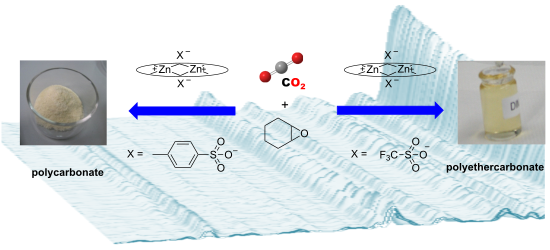
- with epoxides (Scheme 1) is a prime example of a particularly attractive transformation of CO2 [8][9] and is at the verge of commercialisation [8]. In this transformation, the low energy level of the CO2 molecule is overcome by reacting CO2 with an epoxide as energy-rich comonomer [10]. Homogeneous and
- spectra (Figure 2) revealed a profile of epoxide consumption consistent with a first order reaction in both CO2 and epoxide. The initial rate for the consumption of CHO was 5.03 molCHO.(molcat.h)−1. Ether and carbonate linkages in the polyethercarbonate product were formed in parallel in a ratio of 9.8
- the zinc centres. Insertion of CO2 into the metal–alcoholate bond provides a coordinated carbonate species [15]. An epoxide molecule coordinates to a neighbouring zinc centre and the nucleophilic attack by the neighbouring carbonate species leads to chain growth. Insertion of the next CO2 molecule


A carbohydrate approach for the formal total synthesis of (−)-aspergillide C
Beilstein J. Org. Chem. 2014, 10, 3122–3126, doi:10.3762/bjoc.10.329

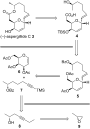
- reaction followed by the reduction of the triple bond to the trans double bond. Alkyne 7 can be synthesized from alkyne 8 involving an isomerization reaction. Alkyne 8 was easily accessible from (R)-propylene oxide (9) through an epoxide opening reaction with 1-butyne. Results and Discussion In recent work
- on aspergillides, Achmatowicz adducts were utilized as the key source for the construction of the dihydropyran moiety and the side arm was synthesized using a Zipper rearrangement as a key reaction after an epoxide ring opening reaction of (R)-propylene oxide/(S)-propylene oxide with n-BuLi. In the




First chemoenzymatic stereodivergent synthesis of both enantiomers of promethazine and ethopropazine
Beilstein J. Org. Chem. 2014, 10, 3038–3055, doi:10.3762/bjoc.10.322

- [tetrabutylammonium bromide (TBAB) or tetrabutylammonium hydrogensulfate (TBAHS)], the epoxide 2 ring opening proceeded unsuccessfully. Again, the amount of the formed impurities was too large to isolate pure fraction. This provoked us to change the synthetic strategy by excluding at first propylene oxide (2) as the


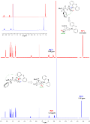


Thermal and oxidative stability of the Ocimum basilicum L. essential oil/β-cyclodextrin supramolecular system
Beilstein J. Org. Chem. 2014, 10, 2809–2820, doi:10.3762/bjoc.10.298
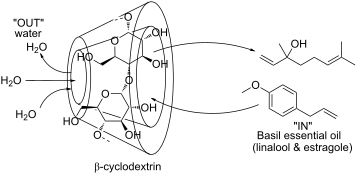
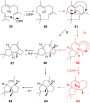
- the raw O. basilicum L. essential oil. This feature can be observed for the relative concentrations in the complex with an increase of 81% for linalool epoxide (3), 43% for caryophyllene epoxide (17), 52% for aristolene epoxide (21) and 61.5% for aromadendrene epoxide (23) (Table 1). The
- raw sample). Some of sesquiterpene oxides found in the raw essential oil exhibited a slow decrease in the relative concentrations in the degraded samples (e.g., caryophyllene oxide (17) and aristolene epoxide (21)). This behavior suggests that the sesquiterpenes are more susceptible to degradation
- % to 0.84% (a decrease of almost 23%) and α-bulnesene (14) with a decrease of only 1.1% (Table 3). The degradation compounds from the sesquiterpene epoxide class were found in very low relative concentrations in the recovered O. basilicum L. essential oil from the non-degraded or degraded β-CD complex


Regio- and stereoselective synthesis of new diaminocyclopentanols
Beilstein J. Org. Chem. 2014, 10, 2513–2520, doi:10.3762/bjoc.10.262

- .10.262 Abstract The optimal conditions for regio- and stereoselective epoxide ring opening of N,N-disubstituted 1,2-epoxy-3-aminocyclopentanes by different nucleophilic reagents have been developed. The substituents on the nitrogen atom in the epoxide precursor and the orientation of the oxirane ring are
- aminolysis of epoxides 6a,b afforded mainly C1 adducts 13a,b arising from trans-diaxal opening of the epoxide ring. Using a Lewis acid catalyst, epoxides 6a,b were transformed into diaminocyclopentanols 14a,b via an alternative pathway involving the formation of aziridinium intermediate 17. Keywords
- of stereoselective epoxide opening of these cyclic amine derivatives are limited to the preparation of the corresponding diols under acidic conditions [23]. Other reported strategies involve the formation of diaminocyclohexanols from epoxides under basic conditions [24] or by activating the epoxides


New highlights of the syntheses of pyrrolo[1,2-a]quinoxalin-4-ones
Beilstein J. Org. Chem. 2014, 10, 2377–2387, doi:10.3762/bjoc.10.248
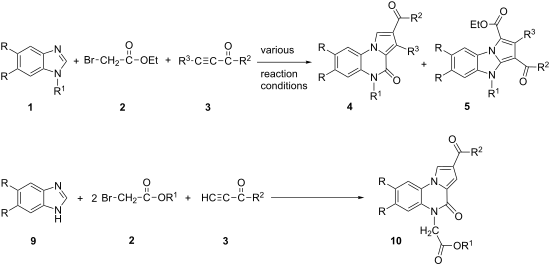
- towards N-bridged heterocyclic compounds [17][18][19][20] prompted us to investigate the one-pot three-component reactions of various substituted benzimidazoles with alkyl bromoacetates and electron-deficient alkynes in presence of an epoxide. Herein, we report a simple one-pot three-component synthetic



Indium-mediated allylation in carbohydrate synthesis: A short and efficient approach towards higher 2-acetamido-2-deoxy sugars
Beilstein J. Org. Chem. 2014, 10, 2230–2234, doi:10.3762/bjoc.10.231
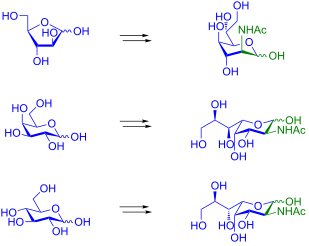
- (CHCO2Me)) generated allylic epoxides 4a–c, which in turn permitted the application of reliable palladium chemistry for the epoxide opening [27][28][29]. Thus, compounds 4a–c were regio- and stereoselectively opened with trimethylsilyl azide and Pd(PPh3)4 as a catalyst [30], furnishing syn-azido alcohols


De novo macrolide–glycolipid macrolactone hybrids: Synthesis, structure and antibiotic activity of carbohydrate-fused macrocycles
Beilstein J. Org. Chem. 2014, 10, 2215–2221, doi:10.3762/bjoc.10.229
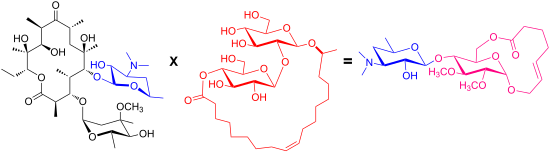
- , stereogenic centers and stereoelectronic effects combine to dictate the “topology” or overall fold of a macrocycle. The structure of β-D-galactose-[13]-macrodiolide 3 [9], derived from X-ray data, originated this line of investigation. It showed that both esters and the epoxide unit are each composed of four
- coplanar atoms that significantly reduce the number of freely rotatable bonds in the molecule [9][10][12][23][24][25] and rigidify its structure. The consequence is that the esters, alkene and epoxide units are not coplanar, but are set at angles to each other (Figure 2 ). The result is a twist in the


Palladium-catalysed cyclisation of alkenols: Synthesis of oxaheterocycles as core intermediates of natural compounds
Beilstein J. Org. Chem. 2014, 10, 2077–2086, doi:10.3762/bjoc.10.216
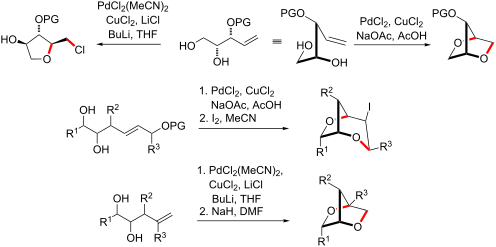
- dichloromethane and subsequent acidic epoxide hydrolysis produced the syn-diol rac-39. The following protection of diol rac-39 as its acetonide and the primary hydroxy group deprotection using sodium methoxide afforded alcohol rac-40 in good yield (43% over 5 steps). Next, Swern oxidation of the primary hydroxy



Application of cyclic phosphonamide reagents in the total synthesis of natural products and biologically active molecules
Beilstein J. Org. Chem. 2014, 10, 1848–1877, doi:10.3762/bjoc.10.195
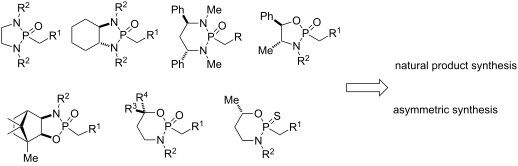
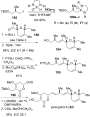
- chiral auxiliary through ozonolysis followed by protection of the side chain as TBDPS ether afforded cyclopentanone 155. Saegusa–Ito oxidation followed by epoxidation of the formed enone gave 156 as the major isomer (dr 9:1). Regioselective reductive opening of the epoxide with Na[PhSeB(OEt)3] produced
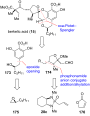
- oxa-Pictet–Spengler reaction from 2,6-dihydroxybenzoic acid 173 and ketal aldehyde 174 as key building blocks (Figure 10). The 2,6-dihydroxybenzoic acid 173 is accessible by opening of epoxide 175 as chiron with a suitable nucleophile. The ketal aldehyde 174 would be derived from butenolide 176