Search results
Search for "piperidine" in Full Text gives 294 result(s) in Beilstein Journal of Organic Chemistry. Showing first 200.
Peptide synthesis: ball-milling, in solution, or on solid support, what is the best strategy?
Beilstein J. Org. Chem. 2017, 13, 2087–2093, doi:10.3762/bjoc.13.206
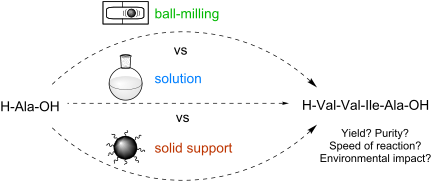
- amounts of organic solvents (DMF, NMP, 1,4-dioxane, DCM), coupling agents (uroniums, phosphoniums, carbodiimides and auxiliary nucleophiles) and bases (Et3N, DIPEA, piperidine) are required for their synthesis and purification [4][7]. Unfortunately, these chemicals present highly undesirable safety
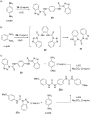
- of Fmoc-V-OH with H-IA-resin and for the deprotection of Fmoc-IA-resin that were performed during 90 min at room temperature, the coupling steps were performed at 70 °C for 7 min under microwave irradiation. The deprotection steps were carried out with piperidine/DMF 1:4 for 3 min at 70 °C. After the


Mechanochemical synthesis of thioureas, ureas and guanidines
Beilstein J. Org. Chem. 2017, 13, 1828–1849, doi:10.3762/bjoc.13.178
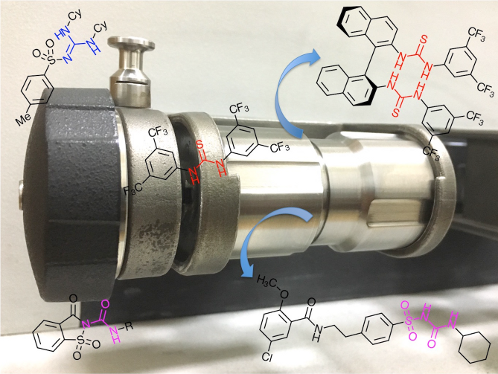
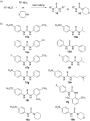
- -type amine–isothiocyanate coupling reaction (Scheme 4). In the case of secondary amines (piperidine, morpholine and thiomorpholine) and sterically hindered amines (2,4- and 2,6-dimethylanilines), ball milling again resulted in ≥99% yields in 10 minutes, except for the reactions involving 4






Synthesis and metal binding properties of N-alkylcarboxyspiropyrans
Beilstein J. Org. Chem. 2017, 13, 1542–1550, doi:10.3762/bjoc.13.154
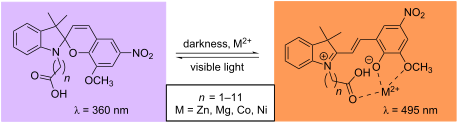
- transformation proved relatively ineffective for alkylcarboxyindolium salts 3 and consequently, we applied alternative conditions using MEK and piperidine [27]. This two-step approach was used to synthesise a range of N-alkylcarboxyspiropyrans derived from bromoalkanoic acids of varying chain length in two-step




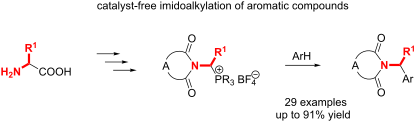
1-Imidoalkylphosphonium salts with modulated Cα–P+ bond strength: synthesis and application as new active α-imidoalkylating agents
Beilstein J. Org. Chem. 2017, 13, 1446–1455, doi:10.3762/bjoc.13.142
- 6 (3.0 mmol) and silica gel-supported piperidine (SiO2-Pip; 200 mg, 0.22 mmol) were added. The electrolysis was carried out under stirring at a current density of 0.3 A/dm2 at 0 °C until a 2.7–3.75 F/mol charge had passed. Solid SiO2-Pip was filtered off, methanol was evaporated under reduced


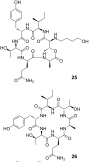
A new member of the fusaricidin family – structure elucidation and synthesis of fusaricidin E
Beilstein J. Org. Chem. 2017, 13, 1430–1438, doi:10.3762/bjoc.13.140
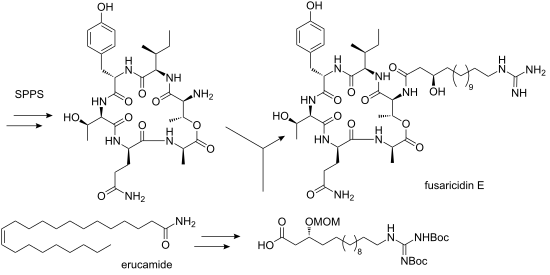
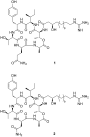
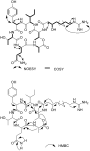
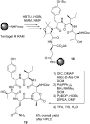
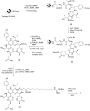
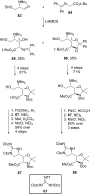
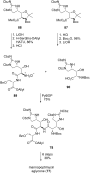
- , 12 h, quant.; b) Fmoc-OSu, NaHCO3, 1,4-dioxane, H2O, 0 °C to rt, 87%; c) 1: O3, DCM, –78 °C, 2: Zn, HOAc, –78 °C to 10 °C, 66%; d) allylmagnesium chloride, 15, Et2O, –78 °C, 84%, 94% ee; e) MOMCl, DIPEA, DCM 0 °C to rt; f) piperidine, DCM, rt; g) 14, NEt3, DCM, 49% (over 3 steps); h) 1: O3, DCM, –78



Effect of the ortho-hydroxy group of salicylaldehyde in the A3 coupling reaction: A metal-catalyst-free synthesis of propargylamine
Beilstein J. Org. Chem. 2017, 13, 552–557, doi:10.3762/bjoc.13.53

- component (Figure 1). Changing the phenylacetylene to other substituted arylacetylenes like p-tolylacetylene, o-bromophenylacetylene, p-bromophenylacetylene or switching from morpholine to other amines like piperidine, 4-benzylpiperidine and pyrrolidine also react smoothly to afford the corresponding
- 80–90 °C (Figure 1, 3k–p). Varying the secondary amine component with 4-benzylpiperidine, piperidine also worked efficiently to produce the corresponding propargylamine derivatives (3q–t). All products were characterized by FTIR, 1H and 13C NMR spectral data. Scaling up the reaction to gram-scale


Synthesis of 1-indanones with a broad range of biological activity
Beilstein J. Org. Chem. 2017, 13, 451–494, doi:10.3762/bjoc.13.48
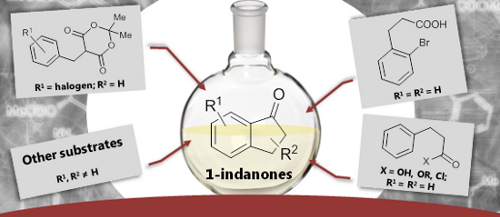
- Knoevenagel olefinations, followed by a Nazarov cyclization using FeCl3 or AlCl3. The 2-phosphorylated chalcones (Z)-145 and non-phosphorylated ones (E)-146 could be obtained from the same substrates, β-ketophosphonates 143 and aromatic aldehydes 144 depending on the reaction conditions used (piperidine


Continuous N-alkylation reactions of amino alcohols using γ-Al2O3 and supercritical CO2: unexpected formation of cyclic ureas and urethanes by reaction with CO2
Beilstein J. Org. Chem. 2017, 13, 329–337, doi:10.3762/bjoc.13.36
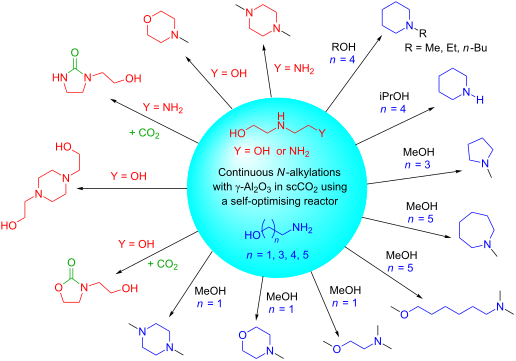
- ). For this reaction, self-optimisation is important as multiple products were identified that could form in parallel; from 1 the possible products we expected to see were a mixture of piperidine (2a), N-methylpiperidine (2b), N- and O-methylated 1, as well as oligomers. We chose to target 2b only for
- several different alcohols by flowing a starting mixture of 1 with the alcohol as the solvent (Table 2, entries 2–4). As might be expected, the cyclisation to N-alkylated piperidines was observed for the primary alcohols. The yield of the corresponding N-alkylated piperidine falls as the longer chain
- alcohols are reacted. When the secondary alcohol isopropanol was used as the solvent, no N-alkylation was observed and piperidine 2a was found as the major product. As this catalyst system has been used previously for the etherification of alcohols [31][32][33][34][35][36][37][38], it is possible that


Silyl-protective groups influencing the reactivity and selectivity in glycosylations
Beilstein J. Org. Chem. 2017, 13, 93–105, doi:10.3762/bjoc.13.12

- electronegativity of the R group is probably also important; when more electropositive (as Si), the oxygen atoms become more electron rich and their repulsion becomes larger. Changing the conformation of a heterocycle has, as mentioned, been studied using the piperidine model system. The pKa of the corresponding


New approaches to organocatalysis based on C–H and C–X bonding for electrophilic substrate activation
Beilstein J. Org. Chem. 2016, 12, 2834–2848, doi:10.3762/bjoc.12.283
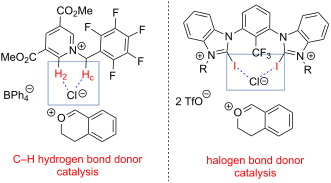
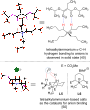
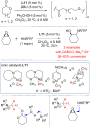
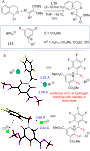
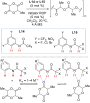
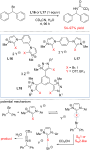
- conformational rigidity that results in a better alignment of alpha C–H groups, relatively high polarization of the alpha C–H bonds due to the presence of electron-withdrawing ester functionalities, and ease of preparation (1–2 steps from commercially available piperidine). Interestingly, the authors assessed








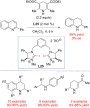


Synthesis of spiro[isoindole-1,5’-isoxazolidin]-3(2H)-ones as potential inhibitors of the MDM2-p53 interaction
Beilstein J. Org. Chem. 2016, 12, 2793–2807, doi:10.3762/bjoc.12.278
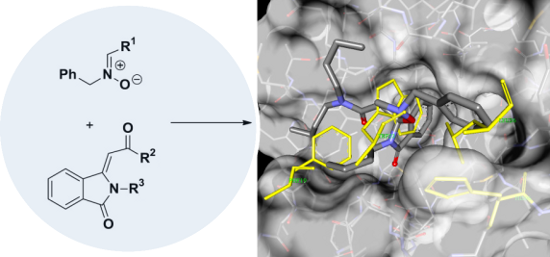
- C26H32N3O4, 450.2393; found, 450.2422. (1RS,4'RS)-2'-Benzyl-2-butyl-4'-(piperidine-1-carbonyl)spiro[isoindoline-1,5'-isoxazolidin]-3-one (6d): White sticky oil (Yield: 45 mg, 35%); IR (neat) νmax: 1684, 1631 cm−1; 1H NMR (500 MHz, CDCl3) δ 7.73–7.69 (m, 1H), 7.54–7.43 (m, 3H), 7.37–7.34 (m, 2H), 7.33–7.26 (m


New syntheses of (±)-tashiromine and (±)-epitashiromine via enaminone intermediates
Beilstein J. Org. Chem. 2016, 12, 2609–2613, doi:10.3762/bjoc.12.256

- piperidine or a pyrrolidine-based precursor, with few reports of alternative approaches. The approach adopted by our research group to the synthesis of these and related bicyclic alkaloids takes advantage of enaminone chemistry [10][11][12][13][14][15][16][17][18][19]. Our interest in the enaminone manifold
- approach most commonly comprise a nitrogen atom in a pyrrolidine or piperidine ring conjugated at C-2 through an exocyclic vinyl fragment to an ester (vinylogous urethane) or another electron-withdrawing substituent (usually ketone, nitrile, nitro or sulfone). When suitable carbon chains bearing terminal


Synthesis, dynamic NMR characterization and XRD studies of novel N,N’-substituted piperazines for bioorthogonal labeling
Beilstein J. Org. Chem. 2016, 12, 2478–2489, doi:10.3762/bjoc.12.242
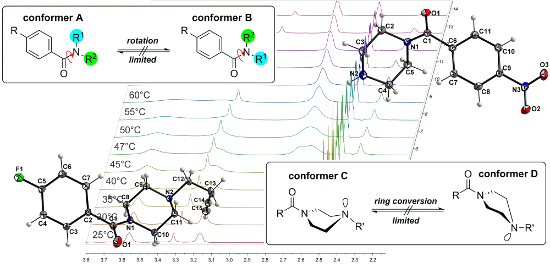
- showed a Tc of 248 K with a ΔG# of 11.1 kJ/mol [23] whereas piperidine shows a higher ΔG# of 42.3 and N-methylpiperidine a ΔG# = 49.8 kJ/mol [21][28]. X-ray structure analyses of 3a and 4b Single crystals of 3a and 4b were obtained and their molecular structures determined using single crystal X-ray


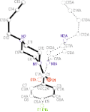


Inhibition of peptide aggregation by means of enzymatic phosphorylation
Beilstein J. Org. Chem. 2016, 12, 2462–2470, doi:10.3762/bjoc.12.240
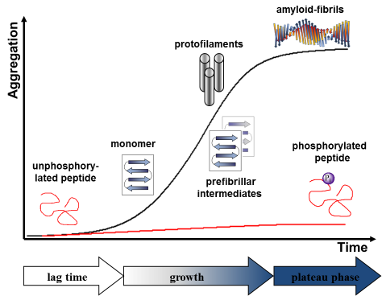
- ) with respect to the resin and two hour double couplings. A mixture of DBU (1,8-diazabicyclo[5,4,0]undec-7-ene) and piperidine (2% each) in DMF was used for Fmoc-deprotection (3 × 10 min). The resin was washed between each step with DMF and DCM (3 × 6 mL each). Peptides were cleaved from the resin by


A new paradigm for designing ring construction strategies for green organic synthesis: implications for the discovery of multicomponent reactions to build molecules containing a single ring
Beilstein J. Org. Chem. 2016, 12, 2420–2442, doi:10.3762/bjoc.12.236
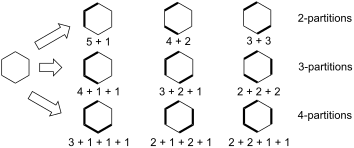
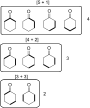
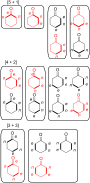
- , there are no documented literature examples of constructing cyclohexanone by assembly of three fragments. For comparison we also show a similar nucleophilic–electrophilic centre analysis for the synthesis of piperidine by 2- and 3-partitions in Figures S2 and S3, whose structure is also made up of a six
- patterns for cyclohexanone are the inverse of those for piperidine. The same observation is made when the patterns for cyclopentanone and pyrrolidine are compared. We may conclude that the fewer nucleophilic or electrophilic centres exist in a ring, the more bonding possibilities there are to consider for
- + 2] coupling strategies to synthesize cyclohexanone; Figure S1 to S7 showing nucleophilic-electrophilic centre labels on 3-partition fragment possibilities for cyclohexanone, 2- and 3-partition fragment possibilities for piperidine, 2- and 3- partition fragment possibilities for cyclopentanone, and 2








Enduracididine, a rare amino acid component of peptide antibiotics: Natural products and synthesis
Beilstein J. Org. Chem. 2016, 12, 2325–2342, doi:10.3762/bjoc.12.226
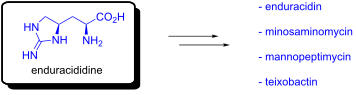
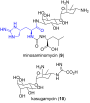
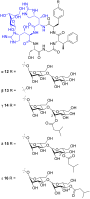
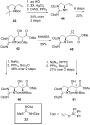
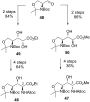
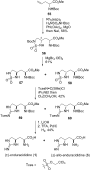
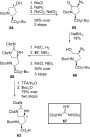
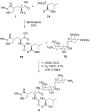
- 102 residue proceeded smoothly giving resin bound peptide 106. Brief (30 seconds) treatment of 106 with piperidine afforded the desired deprotected product, enabling coupling of the final amino acid. Extended exposure of peptide 106 to piperidine led to de-esterification. Final Fmoc removal of 107 and












Thiophene-forming one-pot synthesis of three thienyl-bridged oligophenothiazines and their electronic properties
Beilstein J. Org. Chem. 2016, 12, 2055–2064, doi:10.3762/bjoc.12.194
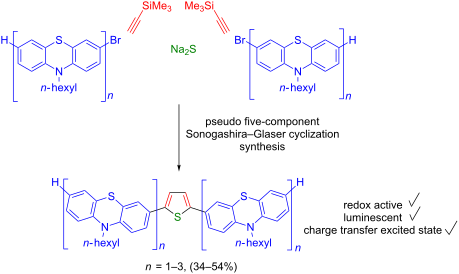
- , 0.08 mmol), CuI (15.0 mg, 0.08 mmol), PPh3 (21 mg, 0.08 mmol), (trimethylsilyl)acetylene (0.56 mL, 2.00 mmol), and piperidine (5.00 mL, 50.4 mmol) were added. The closed vessel under nitrogen was heated at 55 °C (oil bath) for 16 h. Next, TBAF·3H2O (631 mg, 2.00 mmol) was added and the vessel open to


Synthesis and NMR studies of malonyl-linked glycoconjugates of N-(2-aminoethyl)glycine. Building blocks for the construction of combinatorial glycopeptide libraries
Beilstein J. Org. Chem. 2016, 12, 1939–1948, doi:10.3762/bjoc.12.183
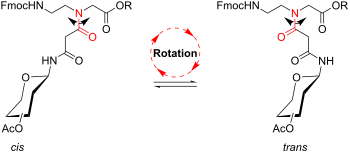
- quantitative yield by subjection 7 to a saturated solution of NH3 in MeOH (7 N) (Scheme 2). In addition to the monomeric glycoconjugates 1a–d and 2a–d we also prepared dimer 4 from the glucose containing conjugate 2a and the N-acetylglucosamine containing conjugate 1c. Treatment of 1c with 20% piperidine in


Effect of the π-conjugation length on the properties and photovoltaic performance of A–π–D–π–A type oligothiophenes with a 4,8-bis(thienyl)benzo[1,2-b:4,5-b′]dithiophene core
Beilstein J. Org. Chem. 2016, 12, 1788–1797, doi:10.3762/bjoc.12.169
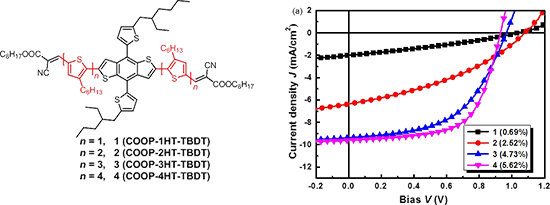
- ) [Pd2(dba)3]·CHCl3, HP(t-Bu)3BF4, K2CO3, THF; ii) 1. n-BuLi/THF, 2. 2-isopropyloxy-4,4,5,5-tetramethyl-1,3,2-dioxaborolane; iii) ICl/THF; iv) Pd(PPh3)4, DMF, 80 °C; v) octyl cyanoacetate, piperidine, CHCl3, reflux. Optical and electrochemical properties of 1–4 in comparison to other compounds in the



Multicomponent reactions: A simple and efficient route to heterocyclic phosphonates
Beilstein J. Org. Chem. 2016, 12, 1269–1301, doi:10.3762/bjoc.12.121
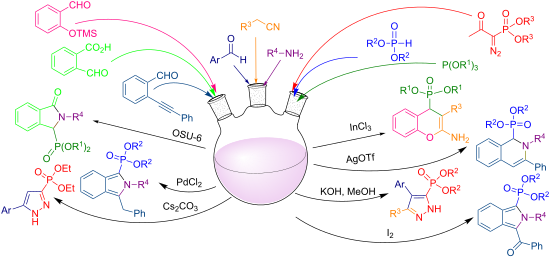
- through the one-pot reaction of phosphonodithioacetate 165, aromatic aldehydes 166 and dienophiles 167 in the presence of piperidine in refluxing toluene (Scheme 36) [74]. The new phosphorylated cycloadducts were isolated in excellent yields and with a trans- or cis-diastereoselectivity. 4 Metal-catalyzed


Cyclisation mechanisms in the biosynthesis of ribosomally synthesised and post-translationally modified peptides
Beilstein J. Org. Chem. 2016, 12, 1250–1268, doi:10.3762/bjoc.12.120
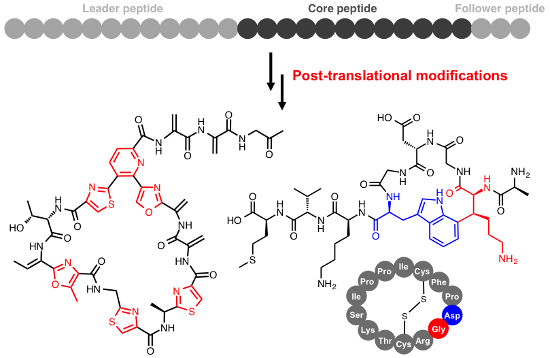
- residue required for AviCys formation derives from cysteine rather than serine. Pyridine and piperidine formation in thiopeptides Thiopeptides are a widespread bacterial RiPP family that are characterised by multiple thiazoles, dehydrated residues and a central substituted pyridine, dehydropiperidine or
- piperidine ring [69] (Figure 6A). Micrococcin was the first member to be identified [70], while the most well-studied member of the class is thiostrepton [71], whose gene cluster was the first of this class to be reported [72][73], along with the thiocillin and siomycin A gene clusters [73][74]. Thiopeptides
- , dehydropiperidine or piperidine is consistent with a [4 + 2] cycloaddition across two dehydrated serine residues [79][80]. Genetic disruption of tclM from the thiocillin pathway showed that TclM was responsible for this transformation [81], although the precise cyclisation mechanism (concerted or stepwise) could





Chiral cyclopentadienylruthenium sulfoxide catalysts for asymmetric redox bicycloisomerization
Beilstein J. Org. Chem. 2016, 12, 1136–1152, doi:10.3762/bjoc.12.110
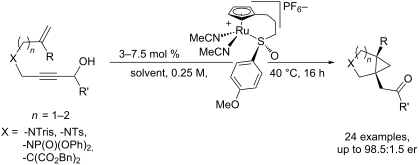
- particularly suited for the construction of the [4.1.0] bicyclic piperidine core of GSK1360707 [27], a triple-uptake inhibitor developed by GlaxoSmithKline [28][29] (Scheme 2c). The construction of this interesting molecular scaffold was a motivator of much of our early work on the ruthenium-catalyzed redox
- amide to the Lewis acidic ruthenium center (Table 5, entry 7). Gratifyingly, utilizing the bulkier 2,4,6-triisopropylbenzenesulfonyl group (Tris) significantly improved the er of protected piperidine 35 to 15.0:85.0. Because of its differential impact on selectivity, this protecting group was pursued




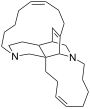
Towards the total synthesis of keramaphidin B
Beilstein J. Org. Chem. 2016, 12, 1096–1100, doi:10.3762/bjoc.12.104
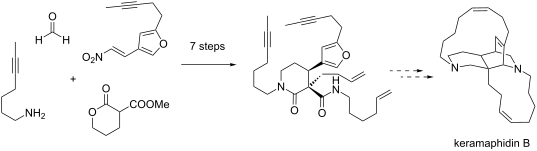
- pronucleophile to a substituted furanyl nitroolefin catalysed by a bifunctional cinchonine-derived thiourea has been used as the key stereocontrolling step in a new synthetic strategy to the heavily functionalised piperidine core of keramaphidin B. Keywords: bifunctional organocatalyst; enantioselective Michael
- wish to report our preliminary synthetic efforts towards the stereoselective synthesis of the heavily functionalised piperidine core of keramaphidin B (1). Results and Discussion Our overall synthetic strategy is presented in Figure 2. We envisaged that a late stage alkyne RCM reaction of 2 and cis



Antibacterial structure–activity relationship studies of several tricyclic sulfur-containing flavonoids
Beilstein J. Org. Chem. 2016, 12, 1065–1071, doi:10.3762/bjoc.12.100

- > piperidine (Table 5, entries 1–4). These results suggest that a larger N,N-dialkylamino group leads to a decreased antibacterial activity, with compound 5c showing an unexpectedly high MIC value in comparison to the other three compounds of this group. Having established this, we synthesized diethylamino


Catalytic asymmetric synthesis of biologically important 3-hydroxyoxindoles: an update
Beilstein J. Org. Chem. 2016, 12, 1000–1039, doi:10.3762/bjoc.12.98
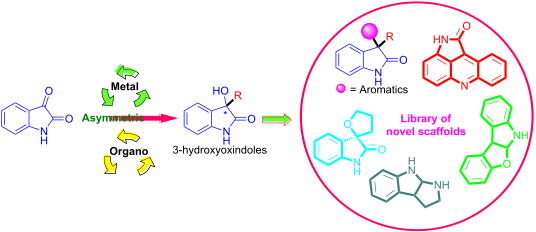
- azomethine ylides generated in situ from the corresponding amines and aldehydes, affording the piperidine-fused spirooxindole frameworks in high yields (up to 93% yield) and with excellent enantioselectivities (>99% ee), albeit with moderate diastereoselectivities (Scheme 54) [71]. Similarly, the same group