Search results
Search for "quinoline" in Full Text gives 196 result(s) in Beilstein Journal of Organic Chemistry.
Synthesis of quinoline-3-carboxylates by a Rh(II)-catalyzed cyclopropanation-ring expansion reaction of indoles with halodiazoacetates
Beilstein J. Org. Chem. 2015, 11, 1944–1949, doi:10.3762/bjoc.11.210

- Magnus Morten Martin Hennum Tore Bonge-Hansen Department of Chemistry, University of Oslo, P.O. Box 1033 Blindern, NO-0315 Oslo, Norway 10.3762/bjoc.11.210 Abstract In this letter, we report a novel synthesis of ethyl quinoline-3-carboxylates from reactions between a series of indoles and
- halodiazoacetates. The formation of the quinoline structure is probably the result of a cyclopropanation at the 2- and 3-positions of the indole followed by ring-opening of the cyclopropane and elimination of H–X. Keywords: catalysis; cyclopropanation; indole; quinoline; Rh(II); ring expansion; Introduction The
- ][8]. Hence, the anticipated initial product from the reaction would be the bottom structure in Scheme 2. However, the only isolated product from both reactions was ethyl quinoline-3-carboxylate (top structure in Scheme 2). Even though we obtained the ethyl quinoline-3-carboxylate from the thermal


Synthesis, antimicrobial and cytotoxicity evaluation of new cholesterol congeners
Beilstein J. Org. Chem. 2015, 11, 1922–1932, doi:10.3762/bjoc.11.208

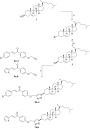
- engineering [23]. In light of this emerging propensity of cholesterol-based architectures to assimilate a plenty of pharmacological activities, cholesterol was propargylated, then reacted with azido-modified quinoline and glucopyranosyl derivatives as part of a previous study [24] to discover new
- constant due to a weak equatorial–diaxial coupling. Compounds 36 and 38 were subjected to reductive debenzylation. While, compound 38 could be debenzylated in excellent yield, quinoline derivative 36 could not be debenzylated even in the presence of Pd(OH)2. Consequently, it might be concluded that bulky
- substituents such as cholesterol and quinoline hindered the complete reductive debenzylation, at least under the described conditions. Biology The antibacterial activity of selected newly synthesized cholesterol conjugates was evaluated in vitro against E.coli (ATCC 11775) and S. aureus (ATTC 12600) according




Pyridinoacridine alkaloids of marine origin: NMR and MS spectral data, synthesis, biosynthesis and biological activity
Beilstein J. Org. Chem. 2015, 11, 1667–1699, doi:10.3762/bjoc.11.183
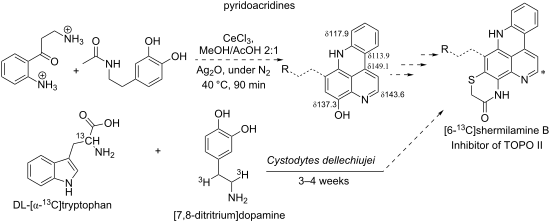
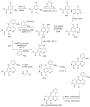
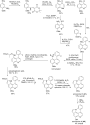
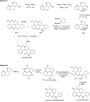
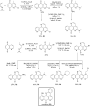
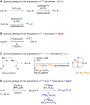
- -nitrobenzoyl)acetate to give a β-keto amide. The resulting amide was subjected to a Knorr cyclization in the presence of polyphosphoric acid to afford a quinolinone, which was further reduced to a quinoline in two steps. The Sandmeyer reaction permitted the replacement of the amide function with a carboxylic
- was subsequently transformed into a quinolone benzyl ether under reflux conditions. A quinoline triflate ester was prepared from the quinolone and coupled to trimethyl(2-nitrophenyl)stannane by Stille coupling catalyzed by palladium acetate. The afforded nitrophenylquinoline was hydrolyzed and
- phosporus pentachloride to prepare 4-chloro-8-methoxy-5-nitroquinoline and secondly with triflate anhydride, dimethylaminopyridine, and 2,6-lutidine to prepare 8-methoxy-5-nitro-4-triflylquinoline. The Suzuki cross-coupling was carried out on both quinoline derivatives in the presence of a palladium











Consequences of the electronic tuning of latent ruthenium-based olefin metathesis catalysts on their reactivity
Beilstein J. Org. Chem. 2015, 11, 1458–1468, doi:10.3762/bjoc.11.158
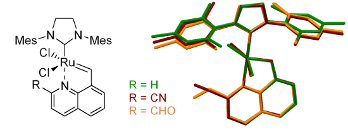
- Arabia 10.3762/bjoc.11.158 Abstract Two ruthenium olefin metathesis initiators featuring electronically modified quinoline-based chelating carbene ligands are introduced. Their reactivity in RCM and ROMP reactions was tested and the results were compared to those obtained with the parent unsubstituted
- ), releasing the desired complexes 14 and 15 as trans-dichloro isomers in good yields. Based on the previously reported trans–cis isomerization of the parent quinoline-based complex 5a, a potential isomerization of 14 and 15 was investigated. Reaction conditions for the isomerization of 5a (complete
- towards the cis-dichloro configured form (TS1cis). The energetic preference of the concerted over the dissociative pathway is decreasing when substituents in 2 position of the quinoline ligand are present. For 14 and 15 the transition state for the generation of the catalytically active 14-electron





Synthesis of icariin from kaempferol through regioselective methylation and para-Claisen–Cope rearrangement
Beilstein J. Org. Chem. 2015, 11, 1220–1225, doi:10.3762/bjoc.11.135

- and SrCO3 or AgNO3 as an activator in pyridine or quinoline [15][31], but it was unsuccessful. TLC monitoring revealed that most of icartin was still unreacted even prolonging the reaction time to 48 h. To our delight, switching the solvent to DMF/CHCl3 and the activator to Ag2CO3 made the reaction to


Synthesis and chemosensing properties of cinnoline-containing poly(arylene ethynylene)s
Beilstein J. Org. Chem. 2015, 11, 373–384, doi:10.3762/bjoc.11.43

- ][17][18]. Moreover, various species of` PAEs with quinoline [19][20], quinoxaline [21][22], thiadiazole [17][23], carbazole [18][24], 1,2,4-triazoles [25], thiazole [26] and azametallocyclic [27] units incorporated into a polymer chain have been described. Since ligands based on pyridazine rings can


Natural phenolic metabolites with anti-angiogenic properties – a review from the chemical point of view
Beilstein J. Org. Chem. 2015, 11, 249–264, doi:10.3762/bjoc.11.28
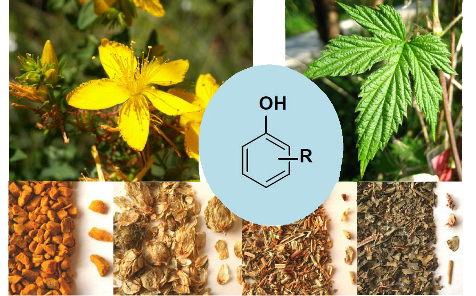
- acts to suppress the signaling pathways mediated by VEGFR2, inducing apoptosis in endothelial cells. Quinoline-substituted phenols To date, quinolone-substituted phenols (Qsps) have not been reported as natural secondary metabolites, although quinolone and alkylated phenols are common structural
- elements of secondary plant products. The quinoline skeleton is present in alkaloids derived from tryptophane-like quinine or camptothecine, whereas alkylated phenols with a varying alkyl side chain length are common metabolites from the shikimate pathway. Qsps were reported in a recent patent [50] to be
- developing in the eyes and in the trunk. Quinoline-substituted phenols were identified as being active based on a significant inhibition of the hyaloid vessel formation in the zebrafish model. The synthesis of two representative compounds, 20 and 23, of this class are shown in Scheme 4 and Scheme 5


Formation of nanoparticles by cooperative inclusion between (S)-camptothecin-modified dextrans and β-cyclodextrin polymers
Beilstein J. Org. Chem. 2015, 11, 147–154, doi:10.3762/bjoc.11.14
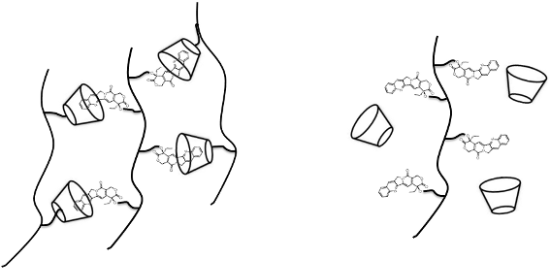
- specific delivery of drugs to the desired place of action lowers the adverse effects associated with conventional chemotherapy tremendously [3]. Therefore, much effort is continuously being made to develop novel drug-carrier systems. (S)-Camptothecin (CPT) is a natural cytotoxic quinoline alkaloid with a


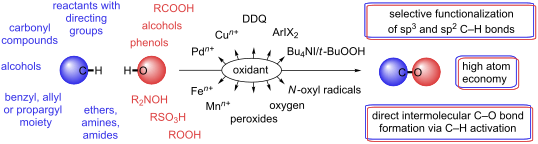
Cross-dehydrogenative coupling for the intermolecular C–O bond formation
Beilstein J. Org. Chem. 2015, 11, 92–146, doi:10.3762/bjoc.11.13
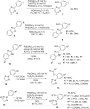
- formation of products 50–54 (Scheme 10). The ortho-acetoxylation of compounds containing picolinamide and quinoline-8-amine moieties (55 and 56, respectively) with the Pd(OAc)2/PhI(OAc)2 system in a AcOH/Ac2O mixture, resulting in the formation of products 57, 58, was performed at higher temperature (150 °C
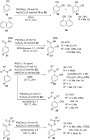
- quinoline-8-amine directing moiety was used for copper-catalyzed aerobic ortho-aryloxylation and alkoxylation of arenes 59 with electron donating or electron withdrawing substituents to afford products 60 [66] (Scheme 12). The method is applicable to a wide range of OH-reagents; the molar ratio OH-reagent









One-pot four-component reaction for convenient synthesis of functionalized 1-benzamidospiro[indoline-3,4'-pyridines]
Beilstein J. Org. Chem. 2014, 10, 2671–2676, doi:10.3762/bjoc.10.281
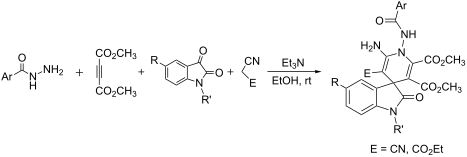
- generation of Huisgen’s 1,4-dipoles are aromatic heterocycles such as N-alkylimidazole, pyridine, quinoline, isoquinoline and primary aromatic amines. In recent years, other nitrogen-containing nucleophiles such as hydrazine and arylhydrazines are also used to generate Huisgen’s 1,4-dipoles in domino


Tandem Cu-catalyzed ketenimine formation and intramolecular nucleophile capture: Synthesis of 1,2-dihydro-2-iminoquinolines from 1-(o-acetamidophenyl)propargyl alcohols
Beilstein J. Org. Chem. 2014, 10, 1255–1260, doi:10.3762/bjoc.10.125
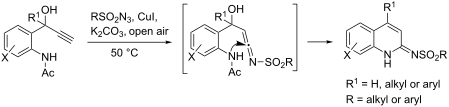
- compounds in moderate to good yields under mild reaction conditions. Keywords: alkyne; azide; cycloaddition; cyclization; quinoline; Introduction The synthesis of N-sulfonylketenimines via CuAAC (copper-catalyzed azide–alkyne cycloaddition) between terminal alkynes and sulfonyl azides has staged for a
- found that these 3o-propargyl alcohols were more productive compared to the above 2o-propargyl alcohols. Thus 2c–f were subjected to the standard reaction conditions with various sulfonyl azides to get the corresponding 4-alkyl-substituted quinoline derivatives 9j-o in 48–77% yields. In further


Addition of H-phosphonates to quinine-derived carbonyl compounds. An unexpected C9 phosphonate–phosphate rearrangement and tandem intramolecular piperidine elimination
Beilstein J. Org. Chem. 2014, 10, 883–889, doi:10.3762/bjoc.10.85
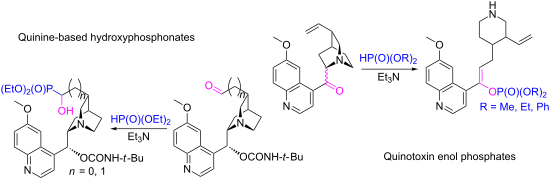
- : aromatic quinoline and chiral aliphatic quinuclidine, and a hydroxy function on the stereogenic carbon atom. Such an architecture combined with the presence of nucleophilic and electrophilic centers buried in a hydrophobic environment predestinates the molecule to asymmetric applications, such as: chiral
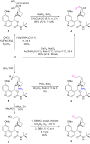
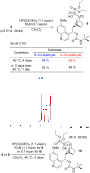
- ’ protons of the quinoline system. This proximity is achievable only in the case of location of vinyl and quinoline protons at the same side of the double bond. Theoretical prediction of the H12 NMR chemical shift provided an additional confirmation [39]. The δ calculated for the Z arrangement (geminal




Aza-Diels–Alder reaction between N-aryl-1-oxo-1H-isoindolium ions and tert-enamides: Steric effects on reaction outcome
Beilstein J. Org. Chem. 2014, 10, 848–857, doi:10.3762/bjoc.10.81
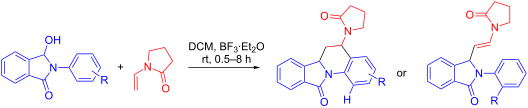
- ; cyclization; Diels–Alder; inverse electron demand; N-acyliminium ion; tert-enamide; Introduction Fused indoline, isoindoline, quinoline and isoquinoline substructures are found in many natural products and bioactive synthetic compounds (Figure 1). For example, nuevamine is a naturally-occurring isoindolo[1,2
- ], and is used as a drug in Eastern Europe for the treatment of cerebrovascular disorders and age-related memory impairment [10]. We are interested in the isoindolo[2,1-a]quinoline skeleton (Figure 1) due to its structural similarities with these alkaloids. The most common method of synthesizing
- and strongly basic conditions [19]. Kang et al. achieved a highly enantioselective synthesis of an isoindolo[2,1-a]quinoline derivative by affecting an intramolecular ring closure on (E)-3-(2-(isoindolin-2-yl)phenyl)acrylaldehyde using camphorsulfonic acid and a chiral pyrrolidine organocatalyst [20


Copper–phenanthroline catalysts for regioselective synthesis of pyrrolo[3′,4′:3,4]pyrrolo[1,2-a]furoquinolines/phenanthrolines and of pyrrolo[1,2-a]phenanthrolines under mild conditions
Beilstein J. Org. Chem. 2014, 10, 692–700, doi:10.3762/bjoc.10.62

- the above catalytic system. To the best of our knowledge, this is the first report of the application of this catalyst for the regioselective 1,3-dipolar cycloaddition reaction, involving azomethine ylides derived from structurally complex quinoline-based N-heterocycles. Results and Discussion Our


Silver and gold-catalyzed multicomponent reactions
Beilstein J. Org. Chem. 2014, 10, 481–513, doi:10.3762/bjoc.10.46
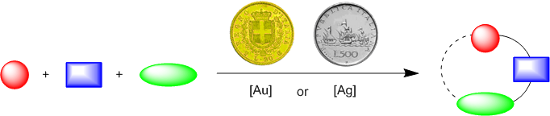
- synthetic strategy, a solution-phase parallel synthesis of 1,2-dihydroisoquinolines has been developed by Larock, providing a 105-membered library for biological assays [58]. Moreover, an extension to γ-ketoalkyne encompassed in diverse heterocyclic frameworks (quinoline, pyridine or benzo[b]thiophene) has


A catalyst-free multicomponent domino sequence for the diastereoselective synthesis of (E)-3-[2-arylcarbonyl-3-(arylamino)allyl]chromen-4-ones
Beilstein J. Org. Chem. 2014, 10, 459–465, doi:10.3762/bjoc.10.43
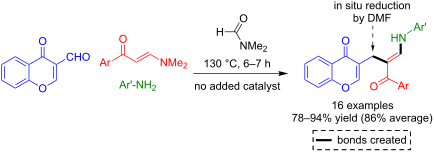
- allows their application in the synthesis of important heterocycles such as indole [28], dihydropyridine [29], quinoline [30], pyrrole [31] and pyridinone [32]. Furthermore, they can take part in one-pot multicomponent reactions with both nucleophilic and electrophilic reactants, leading to a fast access


Continuous flow nitration in miniaturized devices
Beilstein J. Org. Chem. 2014, 10, 405–424, doi:10.3762/bjoc.10.38
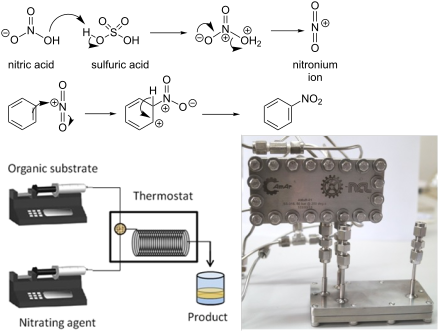
- and quinoline derivatives, and nitro alcohols. Thus, part of the human life and life style is dependent of nitration as a unit reaction. In general, several types of nitrating agents are used for nitration. A literature search covering the last 50 years is presented in Figure 1. One third reports on


Continuous-flow Heck synthesis of 4-methoxybiphenyl and methyl 4-methoxycinnamate in supercritical carbon dioxide expanded solvent solutions
Beilstein J. Org. Chem. 2013, 9, 2886–2897, doi:10.3762/bjoc.9.325
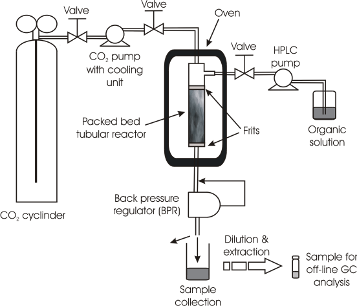
- been reported by numerous authors. Among them, Zhao et al. [18] studied the coupling of non-activated aryl iodides with different alkenes using Pd-MCM-41-NH2. Other examples include Pd-FSM 16 (functionalised with pyridine-carboimine or quinoline-carboimine) [19], oxime carbapalladacycle anchored on


New syntheses of 5,6- and 7,8-diaminoquinolines
Beilstein J. Org. Chem. 2013, 9, 2669–2674, doi:10.3762/bjoc.9.302

- coupling constants (J) are given in Hz. Elemental analyses were determined using a Thermo Finnigan Flash EA 1112 instrument. 6-Chloro-[1,2,5]selenadiazolo[3,4-h]quinoline (2). A mixture of selenadiazolo[3,4-h]quinolone 1 (5.0 g, 20.0 mmol) and POCl3 (10 mL, 16.4 g, 0.1 mol) was stirred at 90 °C for 15 min
- alkalisation of hydrochloride 5. [1,2,5]Selenadiazolo[3,4-h]quinoline (6). SeO2 (58.6 mg, 0.53 mmol) dissolved in water (1 mL) was added to a stirred solution of hydrochloride 5 (100 mg, 0.51 mmol) in water (1 mL) and stirring was continued for an additional 15 min at room temperature. Next, the reaction
- , 23.17. 9-Chloro-[1,2,5]selenadiazolo[3,4-f]quinoline (10). A mixture of selenadiazolo[3,4-f]quinolone 9 (2.0 g, 8.0 mmol) and POCl3 (4 mL, 6.56 g, 42.8 mmol) was stirred at 90 °C for 3 h. After the reaction was complete, the mixture was cooled to 0 °C in an ice bath followed by the addition of crushed


An overview of the synthetic routes to the best selling drugs containing 6-membered heterocycles
Beilstein J. Org. Chem. 2013, 9, 2265–2319, doi:10.3762/bjoc.9.265
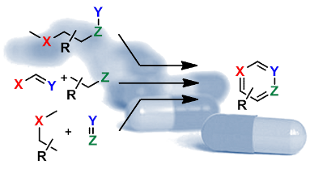
- ] and neatly introduces the required chloride substituent at the 5-position. While isolated pyridines are a vital component in numerous drugs the related quinoline/quinolone scaffolds are becoming increasingly common. One such example is nalidixic acid (1.101, in fact a naphthyridone, Figure 2


Gold-catalyzed regioselective oxidation of propargylic carboxylates: a reliable access to α-carboxy-α,β-unsaturated ketones/aldehydes
Beilstein J. Org. Chem. 2013, 9, 1925–1930, doi:10.3762/bjoc.9.227
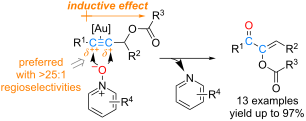
- carboxylate; Introduction We reported in 2010 [1] that α-oxo gold carbenes could be conveniently generated as reactive intermediates in gold-catalyzed intermolecular oxidation of alkynes. By using pyridine N-oxides [1] and later 8-substituted quinoline N-oxides [2] as the external oxidants, this approach


Synthesis and biological activities of the respiratory chain inhibitor aurachin D and new ring versus chain analogues
Beilstein J. Org. Chem. 2013, 9, 1551–1558, doi:10.3762/bjoc.9.176
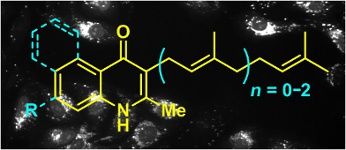
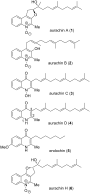
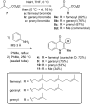
- class of compounds is characterized by a quinolone or quinoline nucleus substituted in position 3 or 4 by a farnesyl chain. In addition, aurachins can further be functionalized by biosynthetic oxidative processes [2][3][4][5]. Since then, additional members of this natural product family were discovered
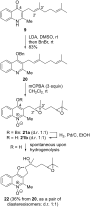
- nonselectively oxidized products. The crude product 21a was then submitted to benzyl group hydrogenolysis. As expected upon completion of the reaction, the 4,5-dihydrofuro[3,2-c]quinoline N-oxide ring system 22 was obtained as a racemic pair of diastereoisomers in a 1:1 ratio, supposedly formed through the
- epoxidation conditions, i.e., the 4,5-dihydrofuro[2,3-c]quinoline N-oxide, and thus to synthesize chain analogues of 6. Biological investigations demonstrated the superiority of the natural product 4 regarding its inhibitory effect on Gram-positive bacteria, human cancer cell lines, and above all on the


Amyloid-β probes: Review of structure–activity and brain-kinetics relationships
Beilstein J. Org. Chem. 2013, 9, 1012–1044, doi:10.3762/bjoc.9.116
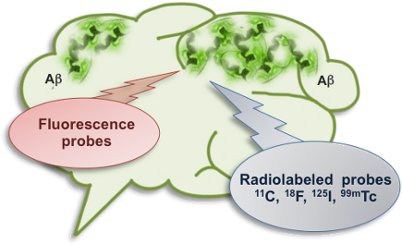
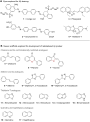
- (9) and diphenyl-1,3,4-oxadiazole (10); and thioflavin-T analogues such as benzothiazole (11), benzoxazole (12), benzofuran (13), imidazopyridine (14), and benzimidazole (15); as well as quinoline (16) and naphthalene (17) derivatives (Figure 1B). In this review, we provide an overview of these AD
- /g at 60 min). In vitro labeling of Aβ plaques in AD brain sections showed a strong signal with low background, and in vivo plaque labeling in transgenic mice was also successful. However, this scaffold is lacking in detailed SAR analysis compared to the imidazopyridine scaffold. Quinoline and
- naphthalene analogues Quinolines Investigation of the quinoline scaffold for imaging in AD has yielded some interesting results, despite there only being a few examples in the literature. The [18F]-labeled 2-fluoroquinolin-8-ol [18F]CABS13 (149) has recently been reported (Figure 5) [98]. The straightforward










Simple synthesis of pyrrolo[3,2-e]indole-1-carbonitriles
Beilstein J. Org. Chem. 2013, 9, 934–941, doi:10.3762/bjoc.9.107

- ketone 5d upon reduction with SnCl2 cyclized to pyrrolo[3,2-f]quinoline-9-carbonitrile 7 [17]. The removal of the benzyloxymethyl group from 1-(benzyloxymethyl)pyrrolo[3,2-e]indoles by catalytic hydrogenation has been described by Macor [6]. The hydroxy group from the N-hydroxypyrrole fragment can be


3-Pyridylnitrene, 2- and 4-pyrimidinylcarbenes, 3-quinolylnitrenes, and 4-quinazolinylcarbenes. Interconversion, ring expansion to diazacycloheptatetraenes, ring opening to nitrile ylides, and ring contraction to cyanopyrroles and cyanoindoles
Beilstein J. Org. Chem. 2013, 9, 743–753, doi:10.3762/bjoc.9.84
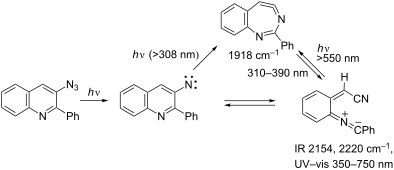
- -quinoline (44): The azide was sublimed at 80 °C and deposited with Ar at 22 K to form a matrix. Principal absorptions of the azide at 11 K: 2100, 1590, 1420, 1340, 1270, 1100 cm−1. Irradiation of the azide 44 at 308 nm or at 310–390 nm for 30 s afforded the nitrile ylide 47 together with a smaller amount of
- ascribed to 46 and reformation of the IR and UV–vis bands ascribed to the nitrile ylide 47. It was possible to cycle several times between these two species by using λ > 550 nm and λ = 310–390 nm, respectively (Figure 2 and Figure 3). FVT of 3-azido-2-phenyl-3-quinoline (44): (a) A sample of the azide (0.2
- g, 0.8 mmol) was sublimed at 60–80 °C and pyrolysed at 500 °C/10−4 mbar in the course of 3 h. The products were separated by flash chromatography on silica gel, eluting with chloroform. Indolo[3,2-b]quinoline (50) was obtained in 56–65% yield in different experiments: mp 250–251 °C (lit. [43] 248 °C