Search for "stepwise" in Full Text gives 334 result(s) in Beilstein Journal of Organic Chemistry. Showing first 200.
Beilstein J. Org. Chem. 2018, 14, 2163–2185, doi:10.3762/bjoc.14.190
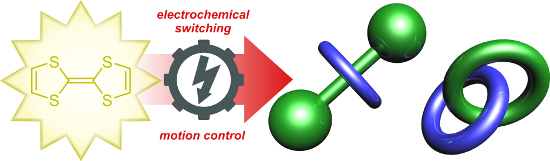
Graphical Abstract
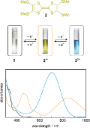
Figure 1: The two one-electron oxidation reactions of tetrathiafulvalene (TTF, 1) and the corresponding prope...
Figure 2: UV–vis spectra and photographs of TTF 2 in its three stable oxidation states (black line = 2, orang...
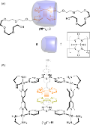
Figure 3: Structure and conformations of two TTF dimers in solution, the mixed-valence and the radical-cation...
Figure 4: (a) The isomerism problem of TTF. (b)–(d) Major synthetic breakthroughs for the construction of TTF...
Figure 5: (a) Host–guest equilibrium between π-electron-poor cyclophane 3 and different TTFs with their corre...
Figure 6: TTF complexes with different host molecules.
Figure 7: Stable TTF (a) radical-cation and (b) mixed-valence dimers in confined molecular spaces.
Figure 8: A “three-pole supramolecular switch”: Controlled by its oxidation state, TTF (1) jumps back and for...
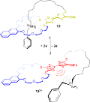
Figure 9: Redox-controlled closing and opening motion of the artificial molecular lasso 12.
Figure 10: Graphical illustration how a non-degenerate TTF-based shuttle works under electrochemical operation....
Figure 11: The first TTF-based rotaxane 13.
Figure 12: A redox-switchable bistable molecular shuttle 14.
Figure 13: The redox-switchable cyclodextrin-based rotaxane 15.
Figure 14: The redox-switchable non-ionic rotaxane 16 with a pyromellitic diimide macrocycle.
Figure 15: The redox-switchable TTF rotaxane 17 based on a crown/ammonium binding motif.
Figure 16: Structure and operation of the electro- and photochemically switchable rotaxane 18 which acts as po...
Figure 17: (a) The redox-switchable rotaxane 19 with a donor–acceptor pair which is stable in five different s...
Figure 18: Schematic representation of a molecular electronic memory based on a bistable TTF-based rotaxane. (...
Figure 19: Schematic representation of bending motion of a microcantilever beam with gold surface induced by o...
Figure 20: TTF-dimer interactions in a redox-switchable tripodal [4]rotaxane 22.
Figure 21: (a) A molecular friction clutch 23 which can be operated by electrochemical stimuli. (b) Schematic ...
Figure 22: Fusion between rotaxane and catenane: a [3]rotacatenane 24 which can stabilize TTF dimers.
Figure 23: The first TTF-based catenane 25.
Figure 24: Electrochemically controlled circumrotation of the bistable catenane 26.
Figure 25: A tristable switch based on the redox-active [2]catenane 27 with three different stations.
Figure 26: Structure of catenane-functionalized MOF NU-1000 [108] with structural representation of subcomponents. ...
Figure 27: (a) [3]Catenanes 29 and 30 which can stabilize mixed-valence or radical-cation dimers of TTF. (b) S...
Beilstein J. Org. Chem. 2018, 14, 1908–1916, doi:10.3762/bjoc.14.165
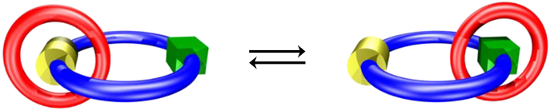
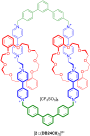
Graphical Abstract
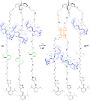
Figure 1: Two [2]rotaxane molecular shuttles with both bis(pyridinium)ethane and benzylanilinium recognition ...
Figure 2: A [3]catenane containing two identical bis(pyridinium)ethane recognition sites on a large macrocycl...
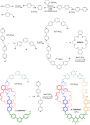
Scheme 1:
Step-wise synthesis of [2]catenane [8DB24C8]6+ containing benzylanilinium and bis(pyridinium)ethane...
Figure 3:
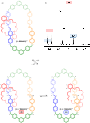
1H NMR spectrum of [2]catenane [8DB24C8]6+ (500 MHz, 298 K, CD2Cl2) showing the assigned proton che...
Figure 4:
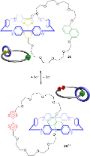
a) The [2]catenane [8DB24C8]6+ can be protonated to yield [8-H
DB24C8]7+ in two different co-conform...
Figure 5:
UV–visible spectra of [8DB24C8]6+ (orange trace) and [8-H
DB24C8]7+ (black trace) in CH3CN solution ...
Beilstein J. Org. Chem. 2018, 14, 1595–1618, doi:10.3762/bjoc.14.137
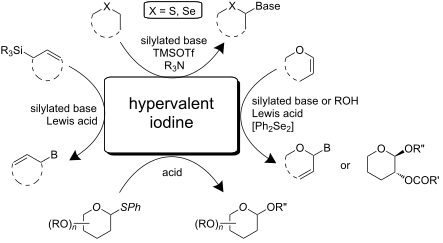
Graphical Abstract
Figure 1: Design of potential antineoplastic nucleosides.
Scheme 1: Synthesis of 4’-thioDMDC.
Scheme 2: Synthesis of 4’-thioribonucleosides by Minakawa and Matsuda.
Scheme 3: Synthesis of 4’-thioribonucleosides by Yoshimura.
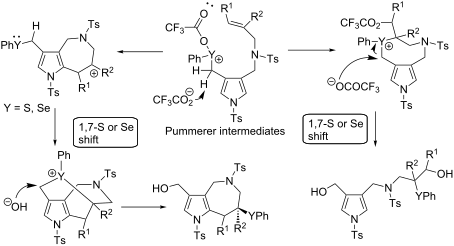
Figure 2: Concept of the Pummerer-type glycosylation and hypervalent iodine-mediated glycosylation.
Scheme 4: Oxidative glycosylation of 4-thioribose mediated by hypervalent iodine.
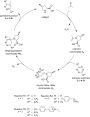
Figure 3: Speculated mechanism of oxidative glycosylation mediated by hypervalent iodine.
Scheme 5: Synthesis of purine 4’-thioribonucleosides using hypervalent iodine-mediated glycosylation.
Scheme 6: Unexpected glycosylation of a thietanose derivative.
Scheme 7: Speculated mechanism of the ring expansion of a thietanose derivative.
Scheme 8: Synthesis of thietanonucleosides using the Pummerer-type glycosylation.
Scheme 9: First synthesis of 4’-selenonucleosides.
Scheme 10: The Pummerer-type glycosylation of 4-selenoxide 74.
Scheme 11: Synthesis of purine 4’-selenonucleosides using hypervalent iodine-mediated glycosylation.
Figure 4: Concept of the oxidative coupling reaction applicable to the synthesis of carbocyclic nucleosides.
Scheme 12: Oxidative coupling reaction mediated by hypervalent iodine.
Scheme 13: Synthesis of cyclohexenyl nucleosides using an oxidative coupling reaction.
Figure 5: Concept of the oxidative coupling reaction of glycal derivatives.
Scheme 14: Oxidative coupling reaction of silylated uracil and DHP using hypervalent iodine.
Scheme 15: Proposed mechanism of the oxidative coupling reaction mediated by hypervalent iodine.
Figure 6: Synthesis of 2’,3’-unsaturated nucleosides using hypervalent iodine and a co-catalyst.
Scheme 16: Synthesis of dihydropyranonucleoside.
Scheme 17: Synthesis of acetoxyacetals using hypervalent iodine and addition of silylated base.
Scheme 18: One-pot fragmentation-nucleophilic additions mediated by hypervalent iodine.
Figure 7: The reaction of thioglycoside with hypervalent iodine in the presence of Lewis acids.
Scheme 19: Synthesis of disaccharides employing thioglycosides under an oxidative coupling reaction mediated b...
Scheme 20: Synthesis of disaccharides using disarmed thioglycosides by hypervalent iodine-mediated glycosylati...
Scheme 21: Glycosylation using aryl(trifluoroethyl)iodium triflimide.
Figure 8: Expected mechanism of hypervalent iodine-mediated glycosylation with glycals.
Scheme 22: Synthesis of oligosaccharides by hypervalent iodine-mediated glycosylation with glycals.
Scheme 23: Synthesis of 2-deoxy amino acid glycosides.
Figure 9: Rationale for the intramolecular migration of the amino acid unit.
Beilstein J. Org. Chem. 2018, 14, 1508–1528, doi:10.3762/bjoc.14.128
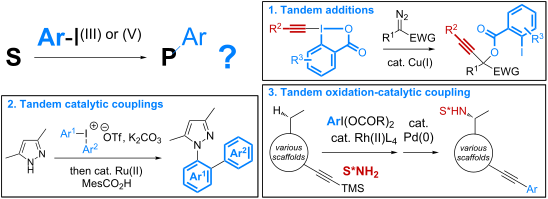
Graphical Abstract
Scheme 1: Strategies to address the issue of sustainability with polyvalent organoiodine reagents.
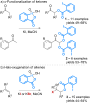
Scheme 2: Functionalization of ketones and alkenes with IBX.
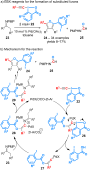
Scheme 3: Functionalization of pyrroles with DMP.
Scheme 4: Catalytic benzoyloxy-trifluoromethylation reported by Szabó.
Scheme 5: Catalytic benzoyloxy-trifluoromethylation reported by Mideoka.
Scheme 6: Catalytic 1,4-benzoyloxy-trifluoromethylation of dienes.
Scheme 7: Catalytic benzoyloxy-trifluoromethylation of allylamines.
Scheme 8: Catalytic benzoyloxy-trifluoromethylation of enynes.
Scheme 9: Catalytic benzoyloxy-trifluoromethylation of allenes.
Scheme 10: Alkynylation of N-(aryl)imines with EBX for the formation of furans.
Scheme 11: Catalytic benzoyloxy-alkynylation of diazo compounds.
Scheme 12: Catalytic asymmetric benzoyloxy-alkynylation of diazo compounds.
Scheme 13: Catalytic 1,2-benzoyloxy-azidation of alkenes.
Scheme 14: Catalytic 1,2-benzoyloxy-azidation of enamides.
Scheme 15: Catalytic 1,2-benzoyloxy-iodination of alkenes.
Scheme 16: Seminal study with cyclic diaryl-λ3-iodane.
Scheme 17: Synthesis of alkylidenefluorenes from cyclic diaryl-λ3-iodanes.
Scheme 18: Synthesis of alkyne-substituted alkylidenefluorenes.
Scheme 19: Synthesis of phenanthrenes from cyclic diaryl-λ3-iodanes.
Scheme 20: Synthesis of dibenzocarbazoles from cyclic diaryl-λ3-iodanes.
Scheme 21: Synthesis of triazolophenantridines from cyclic diaryl-λ3-iodanes.
Scheme 22: Synthesis of functionalized benzoxazoles from cyclic diaryl-λ3-iodanes.
Scheme 23: Sequential difunctionalization of cyclic diaryl-λ3-iodanes.
Scheme 24: Double Suzuki–Miyaura coupling reaction of cyclic diaryl-λ3-iodanes.
Scheme 25: Synthesis of a δ-carboline from cyclic diaryl-λ3-iodane.
Scheme 26: Synthesis of N-(aryl)carbazoles from cyclic diaryl-λ3-iodanes.
Scheme 27: Synthesis of carbazoles from cyclic diaryl-λ3-iodanes.
Scheme 28: Synthesis of carbazoles and acridines from cyclic diaryl-λ3-iodanes.
Scheme 29: Synthesis of dibenzothiophenes from cyclic diaryl-λ3-iodanes.
Scheme 30: Synthesis of various sulfur heterocycles from cyclic diaryl-λ3-iodanes.
Scheme 31: Synthesis of dibenzothioheterocycles from cyclic diaryl-λ3-iodanes.
Scheme 32: Synthesis of dibenzosulfides and dibenzoselenides from cyclic diaryl-λ3-iodanes.
Scheme 33: Synthesis of dibenzosulfones from cyclic diaryl-λ3-iodanes.
Scheme 34: Seminal study with linear diaryl-λ3-iodanes.
Scheme 35: N-Arylation of benzotriazole with symmetrical diaryl-λ3-iodanes.
Scheme 36: Tandem catalytic C–H/N–H arylation of indoles with diaryl-λ3-iodanes.
Scheme 37: Tandem N-arylation/C(sp2)–H arylation with diaryl-λ3-iodanes.
Scheme 38: Catalytic intermolecular diarylation of anilines with diaryl-λ3-iodanes.
Scheme 39: Catalytic synthesis of diarylsulfides with diaryl-λ3-iodanes.
Scheme 40: α-Arylation of enolates using [bis(trifluoroacetoxy)iodo]arenes.
Scheme 41: Mechanism of the α-arylation using [bis(trifluoroacetoxy)iodo]arene.
Scheme 42: Catalytic nitrene additions mediated by [bis(acyloxy)iodo]arenes.
Scheme 43: Tandem of C(sp3)–H amination/sila-Sonogashira–Hagihara coupling.
Scheme 44: Tandem reaction using a λ3-iodane as an oxidant, a substrate and a coupling partner.
Scheme 45: Synthesis of 1,2-diarylated acrylamidines with ArI(OAc)2.
Beilstein J. Org. Chem. 2018, 14, 1446–1451, doi:10.3762/bjoc.14.122
Graphical Abstract
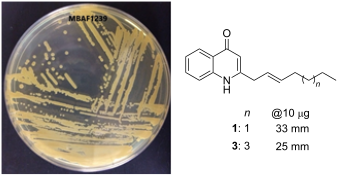
Figure 1: Structures of compounds 1–8.
Figure 2: Key COSY (bold line) and HMBC (arrow) correlations for 3.
Figure 3: Referential 13C chemical shifts of an allylic carbon in burkholone [14] and haplacutine F [15].
Beilstein J. Org. Chem. 2018, 14, 1120–1180, doi:10.3762/bjoc.14.98
Graphical Abstract
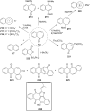
Scheme 1: Tropone (1), tropolone (2) and their resonance structures.
Figure 1: Natural products containing a tropone nucleus.
Figure 2: Possible isomers 11–13 of benzotropone.
Scheme 2: Synthesis of benzotropones 11 and 12.
Scheme 3: Oxidation products of benzotropylium fluoroborate (16).
Scheme 4: Oxidation of 7-bromo-5H-benzo[7]annulene (22).
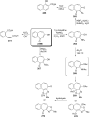
Scheme 5: Synthesis of 4,5-benzotropone (11) using o-phthalaldehyde (27).
Scheme 6: Synthesis of 4,5-benzotropone (11) starting from oxobenzonorbornadiene 31.
Scheme 7: Acid-catalyzed cleavage of oxo-bridge of 34.
Scheme 8: Synthesis of 4,5-benzotropone (11) from o-xylylene dibromide (38).
Scheme 9: Synthesis of 4,5-benzotropone (11) via the carbene adduct 41.
Scheme 10: Heck coupling strategy for the synthesis of 11.
Scheme 11: Synthesis of benzofulvalenes via carbonyl group of 4,5-benzotropone (11).
Figure 3: Some cycloheptatrienylium cations.
Scheme 12: Synthesis of condensation product 63 and its subsequent oxidative cyclization products.
Figure 4: A novel series of benzo[7]annulenes prepared from 4,5-benzotropone (11).
Scheme 13: Preparation of substituted benzo[7]annulene 72 using the Mukaiyama-Michael reaction.
Figure 5: Possible benzo[7]annulenylidenes 73–75.
Scheme 14: Thermal and photochemical decomposition of 7-diazo-7H-benzo[7]annulene (76) and the trapping of int...
Scheme 15: Synthesis of benzoheptafulvalene 86.
Scheme 16: Synthesis of 7-(diphenylmethylene)-7H-benzo[7]annulene (89).
Scheme 17: Reaction of 4,5-benzotropone (11) with dimethyl diazomethane.
Scheme 18: Synthesis of dihydrobenzomethoxyazocine 103.
Scheme 19: Synthesis and reducibility of benzo-homo-2-methoxyazocines.
Scheme 20: Synthesis of 4,5-benzohomotropones 104 and 115 from 4,5-benzotropones 11 and 113.
Scheme 21: A catalytic deuterogenation of 4,5-benzotropone (11) and synthesis of 5-monosubstituted benzo[7]ann...
Scheme 22: Synthesis of methyl benzo[7]annulenes 131 and 132.
Scheme 23: Ambident reactivity of halobenzo[7]annulenylium cations 133a/b.
Scheme 24: Preparation of benzo[7]annulenylidene–iron complexes 147.
Scheme 25: Synthesis of 1-ethynylbenzotropone (150) and the etheric compound 152 from 4,5-benzotropone (11) wi...
Scheme 26: Thermal decomposition of 4,5-benzotropone (11).
Scheme 27: Reaction of 4,5-benzotropone (11) with 1,2-ethanediol and 1,2-ethanedithiol.
Scheme 28: Conversions of 1-benzosuberone (162) to 2,3-benzotropone (12).
Scheme 29: Synthesis strategies for 2,3-bezotropone (12) using 1-benzosuberones.
Scheme 30: Oxidation-based synthesis of 2,3-benzotropone (12) via 1-benzosuberone (162).
Scheme 31: Synthesis of 2,3-benzotropone (12) from α-tetralone (171) via ring-expansion.
Scheme 32: Preparation of 2,3-benzotropone (12) by using of benzotropolone 174.
Figure 6: Benzoheptafulvenes as condensation products of 2,3-benzotropone (12).
Scheme 33: Conversion of 2,3-benzotropone (12) to tosylhydrazone salt 182 and gem-dichloride 187.
Figure 7: Benzohomoazocines 191–193 and benzoazocines 194–197.
Scheme 34: From 2,3-benzotropone (12) to carbonium ions 198–201.
Scheme 35: Cycloaddition reactions of 2,3-benzotropone (12).
Scheme 36: Reaction of 2,3-benzotropone (12) with various reagents and compounds.
Figure 8: 3,4-Benzotropone (13) and its resonance structure.
Scheme 37: Synthesis of 6,7-benzobicyclo[3.2.0]hepta-3,6-dien-2-one (230).
Figure 9: Photolysis and thermolysis products of 230.
Figure 10: Benzotropolones and their tautomeric structures.
Scheme 38: Synthesis strategies of 4,5-benzotropolone (238).
Scheme 39: Synthesis protocol for 2-hydroxy-4,5-benzotropone (238) using oxazole-benzo[7]annulene 247.
Figure 11: Some quinoxaline and pyrazine derivatives 254–256 prepared from 4,5-benzotropolone (238).
Scheme 40: Nitration product of 4,5-benzotropolone (238) and its isomerization to 1-nitro-naphthoic acid (259)....
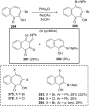
Scheme 41: Synthesis protocol for 6-hydroxy-2,3-benzotropone (239) from benzosuberone (162).
Scheme 42: Various reactions via 6-hydroxy-2,3-benzotropone (239).
Scheme 43: Photoreaction of 6-hydroxy-2,3-benzotropone (239).
Scheme 44: Synthesis of 7-hydroxy-2,3-benzotropone (241) from benzosuberone (162).
Scheme 45: Synthesis strategy for 7-hydroxy-2,3-benzotropone (241) from ketone 276.
Scheme 46: Synthesis of 7-hydroxy-2,3-benzotropone (241) from β-naphthoquinone (280).
Scheme 47: Synthesis of 7-hydroxy-2,3-benzotropone (241) from bicyclic endoperoxide 213.
Scheme 48: Synthesis of 7-hydroxy-2,3-benzotropone (241) by ring-closing metathesis.
Figure 12: Various monosubstitution products 289–291 of 7-hydroxy-2,3-benzotropone (241).
Scheme 49: Reaction of 7-hydroxy-2,3-benzotropone (241) with various reagents.
Scheme 50: Synthesis of 4-hydroxy-2,3-benzotropones 174 and 304 from diketones 300/301.
Scheme 51: Catalytic hydrogenation of diketones 300 and 174.
Scheme 52: Synthesis of halo-benzotropones from alkoxy-naphthalenes 306, 307 and 310.
Figure 13: Unexpected byproducts 313–315 during synthesis of chlorobenzotropone 309.
Figure 14: Some halobenzotropones and their cycloadducts.
Scheme 53: Multisep synthesis of 2-chlorobenzotropone 309.
Scheme 54: A multistep synthesis of 2-bromo-benzotropone 26.
Scheme 55: A multistep synthesis of bromo-2,3-benzotropones 311 and 316.
Scheme 56: Oxidation reactions of 8-bromo-5H-benzo[7]annulene (329) with some oxidants.
Scheme 57: Synthesis of 2-bromo-4,5-benzotropone (26).
Scheme 58: Synthesis of 6-chloro-2,3-benzotropone (335) using LiCl and proposed intermediate 336.
Scheme 59: Reaction of 7-bromo-2,3-benzotropone (316) with methylamine.
Scheme 60: Reactions of bromo-2,3-benzotropones 26 and 311 with dimethylamine.
Scheme 61: Reactions of bromobenzotropones 311 and 26 with NaOMe.
Scheme 62: Reactions of bromobenzotropones 26 and 312 with t-BuOK in the presence of DPIBF.
Scheme 63: Cobalt-catalyzed reductive cross-couplings of 7-bromo-2,3-benzotropone (316) with cyclic α-bromo en...
Figure 15: Cycloadduct 357 and its di-π-methane rearrangement product 358.
Scheme 64: Catalytic hydrogenation of 2-chloro-4,5-benzotropone (311).
Scheme 65: Synthesis of dibromo-benzotropones from benzotropones.
Scheme 66: Bromination/dehydrobromination of benzosuberone (162).
Scheme 67: Some transformations of isomeric dibromo-benzotropones 261A/B.
Scheme 68: Transformations of benzotropolone 239B to halobenzotropolones 369–371.
Figure 16: Bromobenzotropolones 372–376 and 290 prepared via bromination/dehydrobromination strategy.
Scheme 69: Synthesis of some halobenzotropolones 289, 377 and 378.
Figure 17: Bromo-chloro-derivatives 379–381 prepared via chlorination.
Scheme 70: Synthesis of 7-iodo-3,4-benzotropolone (382).
Scheme 71: Hydrogenation of bromobenzotropolones 369 and 370.
Scheme 72: Debromination reactions of mono- and dibromides 290 and 375.
Figure 18: Nitratation and oxidation products of some halobenzotropolenes.
Scheme 73: Azo-coupling reactions of some halobenzotropolones 294, 375 and 378.
Figure 19: Four possible isomers of dibenzotropones 396–399.
Figure 20: Resonance structures of tribenzotropone (400).
Scheme 74: Two synthetic pathways for tribenzotropone (400).
Scheme 75: Synthesis of tribenzotropone (400) from dibenzotropone 399.
Scheme 76: Synthesis of tribenzotropone (400) from 9,10-phenanthraquinone (406).
Scheme 77: Synthesis of tribenzotropone (400) from trifluoromethyl-substituted arene 411.
Figure 21: Dibenzosuberone (414).
Figure 22: Reduction products 415 and 416 of tribenzotropone (400).
Figure 23: Structures of tribenzotropone dimethyl ketal 417 and 4-phenylfluorenone (412) and proposed intermed...
Figure 24: Structures of benzylidene- and methylene-9H-tribenzo[a,c,e][7]annulenes 419 and 420 and chiral phos...
Figure 25: Structures of tetracyclic alcohol 422, p-quinone methide 423 and cation 424.
Figure 26: Structures of host molecules 425–427.
Scheme 78: Synthesis of non-helical overcrowded derivatives syn/anti-431.
Figure 27: Hexabenzooctalene 432.
Figure 28: Structures of possible eight isomers 433–440 of naphthotropone.
Scheme 79: Synthesis of naphthotropone 437 starting from 1-phenylcycloheptene (441).
Scheme 80: Synthesis of 10-hydroxy-11H-cyclohepta[a]naphthalen-11-one (448) from diester 445.
Scheme 81: Synthesis of naphthotropone 433.
Scheme 82: Synthesis of naphthotropones 433 and 434 via cycloaddition reaction.
Scheme 83: Synthesis of naphthotropone 434 starting from 452.
Figure 29: Structures of tricarbonyl(tropone)irons 458, and possible cycloadducts 459.
Scheme 84: Synthesis of naphthotropone 436.
Scheme 85: Synthesis of precursor 465 for naphthotropone 435.
Scheme 86: Generation of naphthotropone 435 from 465.
Figure 30: Structures of tropylium cations 469 and 470.
Figure 31: Structures of tropylium ions 471+.BF4−, 472+.BF4−, and 473+.BF4−.
Scheme 87: Synthesis of tropylium ions 471+.BF4− and 479+.ClO4−.
Scheme 88: Synthesis of 1- and 2-methylanthracene (481 and 482) via carbene–carbene rearrangement.
Figure 32: Trapping products 488–490.
Scheme 89: Generation and chemistry of a naphthoannelated cycloheptatrienylidene-cycloheptatetraene intermedia...
Scheme 90: Proposed intermediates and reaction pathways for adduct 498.
Scheme 91: Exited-state intramolecular proton transfer of 505.
Figure 33: Benzoditropones 506 and 507.
Scheme 92: Synthesis of benzoditropone 506e.
Scheme 93: Synthetic approaches for dibenzotropone 507 via tropone (1).
Scheme 94: Formation mechanisms of benzoditropone 507 and 516 via 515.
Scheme 95: Synthesis of benzoditropones 525 and 526 from pyromellitic dianhydride (527).
Figure 34: Possible three benzocyclobutatropones 534–536.
Scheme 96: Synthesis of benzocyclobutatropones 534 and 539.
Scheme 97: Synthesis attempts for benzocyclobutatropone 545.
Scheme 98: Generation and trapping of symmetric benzocyclobutatropone 536.
Scheme 99: Synthesis of chloro-benzocyclobutatropone 552 and proposed mechanism of fluorenone derivatives.
Scheme 100: Synthesis of tropolone analogue 559.
Scheme 101: Synthesis of tropolones 561 and 562.
Figure 35: o/p-Tropoquinone rings (563 and 564) and benzotropoquinones (565–567).
Scheme 102: Synthesis of benzotropoquinone 566.
Scheme 103: Synthesis of benzotropoquinone 567 via a Diels–Alder reaction.
Figure 36: Products 575–577 through 1,2,3-benzotropoquinone hydrate 569.
Scheme 104: Structures 578–582 prepared from tropoquinone 567.
Figure 37: Two possible structures 583 and 584 for dibenzotropoquinone, and precursor compound 585 for 583.
Scheme 105: Synthesis of saddle-shaped ketone 592 using dibenzotropoquinone 584.
Beilstein J. Org. Chem. 2018, 14, 1112–1119, doi:10.3762/bjoc.14.97
Graphical Abstract
Figure 1: Iodosodilactone and FPID.
Scheme 1: Proposed mechanism for FPID-mediated amide bond formation.
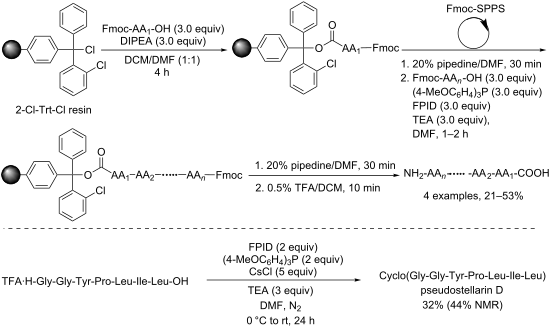
Scheme 2: Solid-phase peptide synthesis mediated by FPID/(4-MeOC6H4)3P. Conditions: The resin loading for 2-C...
Scheme 3: The regeneration of FPID after SPPS.
Figure 2: Structure of pseudostellarin D.
Scheme 4: Synthetic strategies of pseudostellarin D.
Scheme 5: Preparation of the precursor of pseudostellarin D.
Beilstein J. Org. Chem. 2018, 14, 1095–1102, doi:10.3762/bjoc.14.95
Graphical Abstract
Figure 1: The tetrasaccharides associated with the pneumonicoccal serogroup 6.
Figure 2: Retrosynthetic analysis.
Scheme 1: Preparation of D-glucosyl donor 6. Reaction conditions: a) NapBr/PMBCl, NaH, DMF, rt, 12 h, 90% (6a...
Scheme 2: Preparation of L-rhamnosyl acceptor 5. Reaction conditions: a) Py, BzCl, rt, 12 h, 99%; b) DDQ, DCM...
Scheme 3: Preparation of ribitol acceptor 7. Reaction conditions: a) Me2C(OMe)2, pTSA, CH3COCH3, rt, 81%; b) ...
Scheme 4: Stepwise synthesis of tetrasaccharide 1. Reaction conditions: a) TMSOTf, DCM/Et2O (5:1), 4 Å MS, −3...
Scheme 5: One-pot synthesis of tetrasaccharide 1. Reaction conditions: a) TMSOTf, 4 Å MS, DCM/Et2O (4:1), N2,...
Beilstein J. Org. Chem. 2018, 14, 1039–1045, doi:10.3762/bjoc.14.91
Graphical Abstract
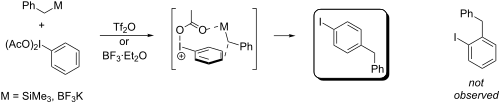
Scheme 1: Examples of the reductive iodonio-Claisen rearrangement compared to new reactivity seen with benzyl...
Scheme 2: Crossover reaction experiments.
Scheme 3: Suggested mechanism based on product formation and crossover experiments.
Scheme 4: Proposed mechanism for the generation of 2i from Table 2, entry 8.
Beilstein J. Org. Chem. 2018, 14, 884–890, doi:10.3762/bjoc.14.75
Graphical Abstract
Figure 1: Representative pyrrolo[3,4-c]pyrrole-1,3-diones and polysubstituted pyrrole derivatives.
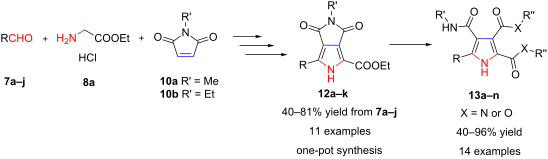
Scheme 1: Synthetic pathway for the preparation of pyrrolo[3,4-c]pyrrole-1,3-diones and highly substituted py...
Scheme 2: Scope of one-pot synthesis of pyrrolo[3,4-c]pyrrole-1,3-diones 12a–k. General reaction conditions: ...
Scheme 3: Scope of the synthesis of highly substituted pyrrole derivatives 13a–n. General reaction conditions...
Scheme 4: Synthesis of 13k from 12d and ethylamine.
Beilstein J. Org. Chem. 2018, 14, 803–837, doi:10.3762/bjoc.14.68
Graphical Abstract
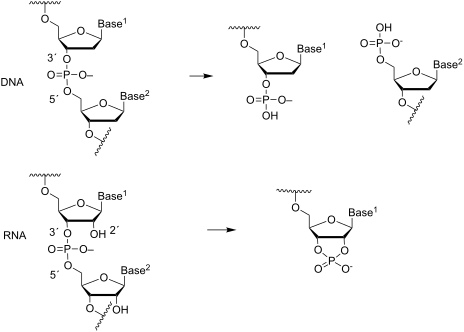
Figure 1: Enzymatic cleavage of phosphodiester linkages of DNA and RNA.
Figure 2: Energy profiles for a concerted ANDN (A) and stepwise mechanisms (AN + DN) with rate-limiting break...
Figure 3: Pseudorotation of a trigonal bipyramidal phosphorane intermediate by Berry pseudorotation [20].
Figure 4: Protolytic equilibria of phosphorane intermediate of RNA transesterification.
Figure 5: Structures of acyclic analogs of ribonucleosides.
Figure 6: First-order rate constants for buffer-independent partial reactions of uridyl-3´,5´-uridine at pH 5...
Scheme 1: pH- and buffer-independent cleavage and isomerization of RNA phosphodiester linkages. Observed firs...
Scheme 2: Mechanism for the pH- and buffer-independent cleavage of RNA phosphodiester linkages.
Scheme 3: Hydroxide-ion-catalyzed cleavage of RNA phosphodiester linkages.
Scheme 4: Anslyn's and Breslow's mechanism for the buffer-catalyzed cleavage and isomerization of RNA phospho...
Scheme 5: General base-catalyzed cleavage of RNA phosphodiester bonds.
Scheme 6: Kirby´s mechanism for the buffer-catalyzed cleavage of RNA phosphodiester bonds [65].
Figure 7: Guanidinium-group-based cleaving agents of RNA.
Scheme 7: Tautomers of triazine-based cleaving agents and cleavage of RNA phosphodiester bonds by these agent...
Figure 8: Bifunctional guanidine/guanidinium group-based cleaving agents of RNA.
Scheme 8: Cleavage of HPNP by 1,3-distal calix[4]arene bearing two guanidine groups [80].
Figure 9: Cyclic amine-based cleaving agents of RNA.
Scheme 9: Mechanism for the pH-independent cleavage and isomerization of model compound 12a in the pH-range 7...
Scheme 10: Mechanism for the pH-independent cleavage of guanylyl-3´,3´-(2´-amino-2´-deoxyuridine) at pH 6-8 [89].
Scheme 11: Cleavage of uridine 3´-dimethyl phosphate by A) intermolecular attack of methoxide ion and B) intra...
Scheme 12: Transesterification of group I introns and hydrolysis of phosphotriester models proceed through a s...
Scheme 13: Cleavage of trinucleoside 3´,3´,5´-monophosphates by A) P–O3´ and B) P–O5´ bond fission.
Figure 10: Model compounds (23–25) and metal ion binding ligands used in kinetic studies of metal-ion-promoted...
Figure 11: Zn2+-ion-based mono- and di-nuclear cleaving agents of nucleic acids.
Figure 12: Miscellaneous complexes and ligands used in kinetic studies of metal-ion-promoted cleavage of nucle...
Figure 13: Azacrown ligands 34 and 35 and dinuclear Zn2+ complex 36 used in kinetic studies of metal-ion-promo...
Figure 14: Metal ion complexes used for determination of βlg values of metal-ion-promoted cleavage of RNA mode...
Figure 15: Metal ion complexes used in kinetic studies of medium effects on the cleavage of RNA model compound...
Scheme 14: Alternative mechanisms for metal-ion-promoted cleavage of phosphodiesters.
Figure 16: Nucleic acid cleaving agents where the attacking oxyanion is not coordinated to metal ion.
Beilstein J. Org. Chem. 2018, 14, 704–708, doi:10.3762/bjoc.14.59
Graphical Abstract
Scheme 1: Radical cation Diels–Alder reaction of trans-anethole [17].
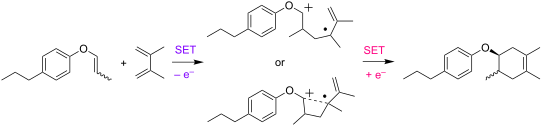
Scheme 2: Radical cation Diels–Alder reactions of aryl vinyl ether and sulfides [17,25].
Scheme 3: Radical cation Diels–Alder reaction of aryl vinyl ether (1). Conditions: 1.0 M LiClO4/CH3NO2, carbo...
Scheme 4: Oxidative SET-triggered reaction of aryl vinyl ether 1c. Conditions: 1.0 M LiClO4/CH3NO2, carbon fe...
Figure 1: GC–MS Monitoring of the oxidative SET-triggered reaction of aryl vinyl ether 1c.
Scheme 5: Oxidative SET-triggered rearrangement of vinyl cyclobutane 4. Conditions: 1.0 M LiClO4/CH3NO2, carb...
Scheme 6: Unsuccessful rearrangement of cyclobutanes. Conditions: 1.0 M LiClO4/CH3NO2, carbon felt electrodes...
Scheme 7: Proposed mechanism for the radical cation Diels–Alder reaction of aryl vinyl ether 1.
Beilstein J. Org. Chem. 2018, 14, 688–696, doi:10.3762/bjoc.14.57
Graphical Abstract
Figure 1: Solution-based Wittig reaction mechanism.
Figure 2: 1H NMR spectra of stilbene mixture (a) and benzyl benzoate (b).
Scheme 1: Possible mechanism of benzyl benzoate formation.
Scheme 2: A possible mechanistic explanation for the E selectivity.
Scheme 3: Ball-milled Wittig reaction using excess benzaldehyde.
Figure 3: Comparison of solution based Wittig reaction (a) with polymer-supported mechanochemical Wittig reac...
Scheme 4: Stepwise ball-milled Wittig reaction with ethanol as the LAG solvent.
Scheme 5: Stepwise ball-milled Wittig reaction with ethanol evaporation between the steps.
Beilstein J. Org. Chem. 2018, 14, 203–242, doi:10.3762/bjoc.14.15
Graphical Abstract
Figure 1: Selected examples of drugs with fused pyrazole rings.
Figure 2: Typical structures of some fused pyrazoloazines from 5-aminopyrazoles.
Scheme 1: Regiospecific synthesis of 4 and 6-trifluoromethyl-1H-pyrazolo[3,4-b]pyridines.
Scheme 2: Synthesis of pyrazolo[3,4-b]pyridine-6-carboxylates.
Scheme 3: Synthesis of 1,4,6-triaryl-1H-pyrazolo[3,4-b]pyridines with ionic liquid .
Scheme 4: Synthesis of coumarin-based isomeric tetracyclic pyrazolo[3,4-b]pyridines.
Scheme 5: Synthesis of 6-substituted pyrazolo[3,4-b]pyridines under Heck conditions.
Scheme 6: Microwave-assisted palladium-catalyzed synthesis of pyrazolo[3,4-b]pyridines.
Scheme 7: Acid-catalyzed synthesis of pyrazolo[3,4-b]pyridines via enaminones.
Scheme 8: Synthesis of pyrazolo[3,4-b]pyridines via aza-Diels–Alder reaction.
Scheme 9: Synthesis of macrocyclane fused pyrazolo[3,4-b]pyridine derivatives.
Scheme 10: Three-component synthesis of 4,7-dihydro-1H-pyrazolo[3,4-b]pyridine derivatives.
Scheme 11: Ultrasonicated synthesis of spiro[indoline-3,4'-pyrazolo[3,4-b]pyridine]-2,6'(1'H)-diones.
Scheme 12: Synthesis of spiro[indoline-3,4'-pyrazolo[3,4-b]pyridine] derivatives under conventional heating co...
Scheme 13: Nanoparticle-catalyzed synthesis of pyrazolo[3,4-b]pyridine-spiroindolinones.
Scheme 14: Microwave-assisted multicomponent synthesis of spiropyrazolo[3,4-b]pyridines.
Scheme 15: Unexpected synthesis of naphthoic acid-substituted pyrazolo[3,4-b]pyridines.
Scheme 16: Multicomponent synthesis of variously substituted pyrazolo[3,4-b]pyridine derivatives.
Scheme 17: Three-component synthesis of 4,7-dihydropyrazolo[3,4-b]pyridines and pyrazolo[3,4-b]pyridines.
Scheme 18: Synthesis of pyrazolo[3,4-b]pyridine-5-spirocycloalkanediones.
Scheme 19: Ultrasound-mediated three-component synthesis of pyrazolo[3,4-b]pyridines.
Scheme 20: Multicomponent synthesis of 4-aryl-3-methyl-1-phenyl-4,6,8,9-tetrahydropyrazolo [3,4-b]thiopyrano[4...
Scheme 21: Synthesis of 2,3-dihydrochromeno[4,3-d]pyrazolo[3,4-b]pyridine-1,6-diones.
Scheme 22: FeCl3-catalyzed synthesis of o-hydroxyphenylpyrazolo[3,4-b]pyridine derivatives.
Scheme 23: Ionic liquid-mediated synthesis of pyrazolo[3,4-b]pyridines.
Scheme 24: Microwave-assisted synthesis of pyrazolo[3,4-b]pyridines.
Scheme 25: Multicomponent synthesis of pyrazolo[3,4-b]pyridine-5-carbonitriles.
Scheme 26: Unusual domino synthesis of 4,7-dihydropyrazolo[3,4-b]pyridine-5-nitriles.
Scheme 27: Synthesis of 4,5,6,7-tetrahydro-4H-pyrazolo[3,4-b]pyridines under conventional heating and ultrasou...
Scheme 28: L-Proline-catalyzed synthesis of of pyrazolo[3,4-b]pyridine.
Scheme 29: Microwave-assisted synthesis of 5-aminoarylpyrazolo[3,4-b]pyridines.
Scheme 30: Microwave-assisted multi-component synthesis of pyrazolo[3,4-e]indolizines.
Scheme 31: Synthesis of fluoropropynyl and fluoroalkyl substituted pyrazolo[1,5-a]pyrimidine.
Scheme 32: Acid-catalyzed synthesis of pyrazolo[1,5-a]pyrimidine derivatives.
Scheme 33: Chemoselective and regiospecific synthesis of 2-(3-methylpyrazol-1’-yl)-5-methylpyrazolo[1,5-a]pyri...
Scheme 34: Regioselective synthesis of 7-trifluoromethylpyrazolo[1,5-a]pyrimidines.
Scheme 35: Microwave-assisted synthesis of 7-trifluoromethylpyrazolo[1,5-a]pyrimidine carboxylates.
Scheme 36: Microwave and ultrasound-assisted synthesis of 7-trifluoromethylpyrazolo[1,5-a]pyrimidines.
Scheme 37: Base-catalyzed unprecedented synthesis of pyrazolo[1,5-a]pyrimidines via C–C bond cleavage.
Scheme 38: Synthesis of aminobenzothiazole/piperazine linked pyrazolo[1,5-a]pyrimidines.
Scheme 39: Synthesis of aminoalkylpyrazolo[1,5-a]pyrimidine-7-amines.
Scheme 40: Synthesis of pyrazolo[1,5-a]pyrimidines from condensation of 5-aminopyrazole 126 and ethyl acetoace...
Scheme 41: Synthesis of 7-aminopyrazolo[1,5-a]pyrimidines.
Scheme 42: Unexpected synthesis of 7-aminopyrazolo[1,5-a]pyrimidines under solvent free and solvent-mediated c...
Scheme 43: Synthesis of N-(4-aminophenyl)-7-aryloxypyrazolo[1,5-a]pyrimidin-5-amines.
Scheme 44: Base-catalyzed synthesis of 5,7-diarylpyrazolo[1,5-a]pyrimidines.
Scheme 45: Synthesis of 6,7-dihydropyrazolo[1,5-a]pyrimidines in PEG-400.
Scheme 46: Synthesis of 7-heteroarylpyrazolo[1,5-a]pyrimidine-3-carboxamides.
Scheme 47: Synthesis of 7-heteroarylpyrazolo[1,5-a]pyrimidine derivatives under conventional heating and micro...
Scheme 48: Synthesis of N-aroylpyrazolo[1,5-a]pyrimidine-5-amines.
Scheme 49: Regioselective synthesis of ethyl pyrazolo[1,5-a]pyrimidine-7-carboxylate.
Scheme 50: Sodium methoxide-catalyzed synthesis of 3-cyano-6,7-diarylpyrazolo[1,5-a]pyrimidines.
Scheme 51: Synthesis of various pyrazolo[3,4-d]pyrimidine derivatives.
Scheme 52: Synthesis of hydrazinopyrazolo[3,4-d]pyrimidine derivatives.
Scheme 53: Synthesis of N-arylidinepyrazolo[3,4-d]pyrimidin-5-amines.
Scheme 54: Synthesis of pyrazolo[3,4-d]pyrimidinyl-4-amines.
Scheme 55: Iodine-catalyzed synthesis of pyrazolo[3,4-d]pyrimidinones.
Scheme 56: Synthesis of ethyl 6-amino-2H-pyrazolo[3,4-d]pyrimidine-4-carboxylate.
Scheme 57: Synthesis of 4-substituted-(3,6-dihydropyran-4-yl)-1H-pyrazolo[3,4-d]pyrimidines.
Scheme 58: Synthesis of 1-(2,4-dichlorophenyl)pyrazolo[3,4-d]pyrimidin-4-yl carboxamides.
Scheme 59: Synthesis of 5-(1,3,4-thidiazol-2-yl)pyrazolo[3,4-d]pyrimidine.
Scheme 60: One pot POCl3-catalyzed synthesis of 1-arylpyrazolo[3,4-d]pyrimidin-4-ones.
Scheme 61: Synthesis of 4-amino-N1,C3-dialkylpyrazolo[3,4-d]pyrimidines under Suzuki conditions.
Scheme 62: Microwave-assisted synthesis of pyrazolo[3,4-b]pyrazines.
Scheme 63: Synthesis and derivatization of pyrazolo[3,4-b]pyrazine-5-carbonitriles.
Scheme 64: Synthesis of 2-thioxo-pyrazolo[1,5-a][1,3,5]triazin-4-ones.
Scheme 65: Synthesis of 2,3-dihydropyrazolo[1,5-a][1,3,5]triazin-4(1H)-one.
Scheme 66: Synthesis of pyrazolo[1,5-a][1,3,5]triazine-8-carboxylic acid ethyl ester.
Scheme 67: Microwave-assisted synthesis of 4,7-dihetarylpyrazolo[1,5-a][1,3,5]triazines.
Scheme 68: Alternative synthetic route to 4,7-diheteroarylpyrazolo[1,5-a][1,3,5]triazines.
Scheme 69: Synthesis of 4-aryl-2-ethylthio-7-methylpyrazolo[1,5-a][1,3,5]triazines.
Scheme 70: Microwave-assisted synthesis of 4-aminopyrazolo[1,5-a][1,3,5]triazine.
Scheme 71: Synthesis of pyrazolo[3,4-d][1,2,3]triazines from pyrazol-5-yl diazonium salts.
Scheme 72: Synthesis of 2,5-dihydropyrazolo[3,4-e][1,2,4]triazines.
Scheme 73: Synthesis of pyrazolo[5,1-c][1,2,4]triazines via diazopyrazolylenaminones.
Scheme 74: Synthesis of pyrazolo[5,1-c][1,2,4]triazines in presence of sodium acetate.
Scheme 75: Synthesis of various 7-diazopyrazolo[5,1-c][1,2,4]triazine derivatives.
Scheme 76: One pot synthesis of pyrazolo[5,1-c][1,2,4]triazines.
Scheme 77: Synthesis of 4-amino-3,7,8-trinitropyrazolo-[5,1-c][1,2,4]triazines.
Scheme 78: Synthesis of tricyclic pyrazolo[5,1-c][1,2,4]triazines by azocoupling reaction.
Beilstein J. Org. Chem. 2018, 14, 54–83, doi:10.3762/bjoc.14.4
Graphical Abstract
Scheme 1: General overview over the sulfur-based substrates and reactive intermediates that are discussed in ...
Scheme 2: Photoredox-catalyzed radical thiol–ene reaction, applying [Ru(bpz)3](PF6)2 as photocatalyst.
Scheme 3: Photoredox-catalyzed thiol–ene reaction of aliphatic thiols with alkenes enabled by aniline derivat...
Scheme 4: Photoredox-catalyzed radical thiol–ene reaction for the postfunctionalization of polymers (a) and n...
Scheme 5: Photoredox-catalyzed thiol–ene reaction enabled by bromotrichloromethane as redox additive.
Scheme 6: Photoredox-catalyzed preparation of β-ketosulfoxides with Eosin Y as organic dye as photoredox cata...
Scheme 7: Greaney’s photocatalytic radical thiol–ene reaction, applying TiO2 nanoparticles as photocatalyst.
Scheme 8: Fadeyi’s photocatalytic radical thiol–ene reaction, applying Bi2O3 as photocatalyst.
Scheme 9: Ananikov’s photocatalytic radical thiol-yne reaction, applying Eosin Y as photocatalyst.
Scheme 10: Organocatalytic visible-light photoinitiated thiol–ene coupling, applying phenylglyoxylic acid as o...
Scheme 11: Xia’s photoredox-catalyzed synthesis of 2,3-disubstituted benzothiophenes, applying 9-mesityl-10-me...
Scheme 12: Wang’s metal-free photoredox-catalyzed radical thiol–ene reaction, applying 9-mesityl-10-methylacri...
Scheme 13: Visible-light benzophenone-catalyzed metal- and oxidant-free radical thiol–ene reaction.
Scheme 14: Visible-light catalyzed C-3 sulfenylation of indole derivatives using Rose Bengal as organic dye.
Scheme 15: Photocatalyzed radical thiol–ene reaction and subsequent aerobic sulfide-oxidation with Rose Bengal...
Scheme 16: Photoredox-catalyzed synthesis of diaryl sulfides.
Scheme 17: Photocatalytic cross-coupling of aryl thiols with aryl diazonium salts, using Eosin Y as photoredox...
Scheme 18: Photocatalyzed cross-coupling of aryl diazonium salts with cysteines in batch and in a microphotore...
Scheme 19: Fu’s [Ir]-catalyzed photoredox arylation of aryl thiols with aryl halides.
Scheme 20: Fu’s photoredox-catalyzed difluoromethylation of aryl thiols.
Scheme 21: C–S cross-coupling of thiols with aryl iodides via [Ir]-photoredox and [Ni]-dual-catalysis.
Scheme 22: C–S cross-coupling of thiols with aryl bromides, applying 3,7-bis-(biphenyl-4-yl)-10-(1-naphthyl)ph...
Scheme 23: Collin’s photochemical dual-catalytic cross-coupling of thiols with bromoalkynes.
Scheme 24: Visible-light-promoted C–S cross-coupling via intermolecular electron donor–acceptor complex format...
Scheme 25: Li’s visible-light photoredox-catalyzed thiocyanation of indole derivatives with Rose Bengal as pho...
Scheme 26: Hajra’s visible-light photoredox-catalyzed thiocyanation of imidazoheterocycles with Eosin Y as pho...
Scheme 27: Wang’s photoredox-catalyzed thiocyanation reaction of indoles, applying heterogeneous TiO2/MoS2 nan...
Scheme 28: Yadav’s photoredox-catalyzed α-C(sp3)–H thiocyanation reaction for tertiary amines, applying Eosin ...
Scheme 29: Yadav’s photoredox-catalyzed synthesis of 5-aryl-2-imino-1,3-oxathiolanes.
Scheme 30: Yadav’s photoredox-catalyzed synthesis of 1,3-oxathiolane-2-thiones.
Scheme 31: Li’s photoredox catalysis for the preparation of 2-substituted benzothiazoles, applying [Ru(bpy)3](...
Scheme 32: Lei’s external oxidant-free synthesis of 2-substituted benzothiazoles by merging photoredox and tra...
Scheme 33: Metal-free photocatalyzed synthesis of 2-aminobenzothiazoles, applying Eosin Y as photocatalyst.
Scheme 34: Metal-free photocatalyzed synthesis of 1,3,4-thiadiazoles, using Eosin Y as photocatalyst.
Scheme 35: Visible-light photoredox-catalyzed preparation of benzothiophenes with Eosin Y.
Scheme 36: Visible-light-induced KOH/DMSO superbase-promoted preparation of benzothiophenes.
Scheme 37: Jacobi von Wangelin’s photocatalytic approach for the synthesis of aryl sulfides, applying Eosin Y ...
Scheme 38: Visible-light photosensitized α-C(sp3)–H thiolation of aliphatic ethers.
Scheme 39: Visible-light photocatalyzed cross-coupling of alkyl and aryl thiosulfates with aryl diazonium salt...
Scheme 40: Visible-light photocatalyzed, controllable sulfenylation and sulfoxidation with organic thiosulfate...
Scheme 41: Rastogi’s photoredox-catalyzed methylsulfoxidation of aryl diazonium salts, using [Ru(bpy)3]Cl2 as ...
Scheme 42: a) Visible-light metal-free Eosin Y-catalyzed procedure for the preparation of vinyl sulfones from ...
Scheme 43: Visible-light photocatalyzed cross-coupling of sodium sulfinates with secondary enamides.
Scheme 44: Wang’s photocatalyzed oxidative cyclization of phenyl propiolates with sulfinic acids, applying Eos...
Scheme 45: Lei’s sacrificial oxidant-free synthesis of allyl sulfones by merging photoredox and transition met...
Scheme 46: Photocatalyzed Markovnikov-selective radical/radical cross-coupling of aryl sulfinic acids and term...
Scheme 47: Visible-light Eosin Y induced cross-coupling of aryl sulfinic acids and styrene derivatives, afford...
Scheme 48: Photoredox-catalyzed bicyclization of 1,7-enynes with sulfinic acids, applying Eosin Y as photocata...
Scheme 49: Visible-light-accelerated C–H-sulfinylation of arenes and heteroarenes.
Scheme 50: Visible-light photoredox-catalyzed β-selenosulfonylation of electron-rich olefins, applying [Ru(bpy)...
Scheme 51: Photocatalyzed preparation of β-chlorosulfones from the respective olefins and p-toluenesulfonyl ch...
Scheme 52: a) Photocatalyzed preparation of β-amidovinyl sulfones from sulfonyl chlorides. b) Preparation of β...
Scheme 53: Visible-light photocatalyzed sulfonylation of aliphatic tertiary amines, applying [Ru(bpy)3](PF6)2 ...
Scheme 54: Reiser’s visible-light photoredox-catalyzed preparation of β-hydroxysulfones from sulfonyl chloride...
Scheme 55: a) Sun’s visible-light-catalyzed approach for the preparation of isoquinolinonediones, applying [fac...
Scheme 56: Visible-light photocatalyzed sulfonylation/cyclization of vinyl azides, applying [Ru(bpy)3]Cl2 as p...
Scheme 57: Visible-light photocatalyzed procedure for the formation of β-ketosulfones from aryl sulfonyl chlor...
Scheme 58: Zheng’s method for the sulfenylation of indole derivatives, applying sulfonyl chlorides via visible...
Scheme 59: Cai’s visible-light induced synthesis of β-ketosulfones from sulfonyl hydrazines and alkynes.
Scheme 60: Photoredox-catalyzed approach for the preparation of vinyl sulfones from sulfonyl hydrazines and ci...
Scheme 61: Jacobi von Wangelin’s visible-light photocatalyzed chlorosulfonylation of anilines.
Scheme 62: Three-component photoredox-catalyzed synthesis of N-amino sulfonamides, applying PDI as organic dye....
Scheme 63: Visible-light induced preparation of complex sulfones from oximes, silyl enol ethers and SO2.
Beilstein J. Org. Chem. 2018, 14, 25–53, doi:10.3762/bjoc.14.3
Graphical Abstract
Figure 1: (A) Gram-negative bacterial membrane with LPS as major component of the outer membrane; (B) structu...
Figure 2: Structures of representative TLR4 ligands: TLR4 agonists (E. coli lipid A, N. meningitidis lipid A ...
Figure 3: (A) Co-crystal structure of the homodimeric E. coli Ra-LPS·hMD-2∙TLR4 complex (PDB code: 3FXI); (B)...
Figure 4: Co-crystal structures of (A) hybrid TLR4·hMD-2 with the bound antagonist eritoran (PDB: 2Z65, TLR4 ...
Scheme 1: Synthesis of E. coli and S. typhimurium lipid A and analogues with shorter acyl chains.
Scheme 2: Synthesis of N. meningitidis Kdo-lipid A.
Scheme 3: Synthesis of fluorescently labeled E. coli lipid A.
Scheme 4: Synthesis of H. pylori lipid A and Kdo-lipid A.
Scheme 5: Synthesis of tetraacylated lipid A corresponding to P. gingivalis LPS.
Scheme 6: Synthesis of pentaacylated P. gingivalis lipid A.
Scheme 7: Synthesis of monophosphoryl lipid A (MPLA) and analogues.
Scheme 8: Synthesis of tetraacylated Rhizobium lipid A containing aminogluconate moiety.
Scheme 9: Synthesis of pentaacylated Rhizobium lipid A and its analogue containing ether chain.
Scheme 10: Synthesis of pentaacylated Rhizobium lipid A containing 27-hydroxyoctacosanoate lipid chain.
Scheme 11: Synthesis of zwitterionic 1,1′-glycosyl phosphodiester: a partial structure of GalN-modified Franci...
Scheme 12: Synthesis of a binary 1,1′-glycosyl phosphodiester: a partial structure of β-L-Ara4N-modified Burkh...
Scheme 13: Synthesis of Burkholderia lipid A containing binary glycosyl phosphodiester linked β-L-Ara4N.
Beilstein J. Org. Chem. 2018, 14, 11–24, doi:10.3762/bjoc.14.2
Graphical Abstract
Figure 1: The three major methods for the synthesis of GAuNPs. (a) Direct reduction of an Au3+ salt in the pr...
Scheme 1: The non-catalysed azide–alkyne Huisgen cycloaddition (NCAAC) between an organic azide (1,3-dipole) ...
Scheme 2: Ligand exchange and NCAAC on an AuNP surface. Reagents and conditions: (a) Br(CH2)11SH in DCM, 60 h...
Scheme 3: Azide functionalization and NCAAC on an AuNP surface using electron deficient alkynes. Reagents and...
Scheme 4: NCAAC performed under hyperbaric conditions. Reagents and conditions: (a) Br(CH2)11SH in C6H6, 48 h...
Scheme 5: The synthesis of AuNPs functionalized with strained alkyne derivatives. HBTU = O-benzotriazole-N,N,N...
Scheme 6: A schematic representation of the SPAAC between azide-functionalized polymersomes and strained alky...
Scheme 7: Functionalization of AuNPs with an azide containing thiol ligand, and subsequent attachment to an a...
Scheme 8: Surface modification of AuNPs using microwave-assisted CuAAC. Reagents and conditions: (a) HS(CH2)11...
Scheme 9: AuNP functionalization and efficient CuAAC with a range of alkynes reported by Boisselier et al. [62]. ...
Scheme 10: Schematic illustration of: (a) AuNP deposition on a carbon electrode; (b) formation of alkyne-termi...
Scheme 11: (a) Synthesis of the alkyne-terminated thiol (ATT) ligand 33; (b) synthesis of 12 nm sized ATT-AuNP...
Scheme 12: Synthesis of (a) cyclooctyne-functionalized AuNPs and (b) GAuNPs using SPAAC [82].
Beilstein J. Org. Chem. 2017, 13, 2584–2595, doi:10.3762/bjoc.13.255
Graphical Abstract
Figure 1: CRDs of the analyzed crystal structures, with mannose pyranosyl units similarly aligned in each str...
Figure 2: A) The solvent exposed binding site of E-selectin interacting with sLex (PDB: 1G1T) [53]. B) The buried...
Figure 3: Dynamic mannose–receptor interactions (20 ns MD simulations), grouped according to the nature of th...
Figure 4: Desolvation of hydroxy groups. A) The desolvation cost of a single hydroxy group associated with th...
Figure 5: Model view of the binding site interactions of DC-SIGN (E) and BC2L-A (H) with water. A) The solven...
Figure 6: Thermodynamic fingerprints of sLex bound to E-selectin and n-heptyl α-D-mannoside bound to FimHLD (I...
Figure 7: Schematic overview of the conformational changes of FimH (I). FimH crystal structures, which corres...
Figure 8: Comparison of the holo (white) and apo (green, magenta) binding sites of LecB (G) and BDCA-2 (A), r...
Beilstein J. Org. Chem. 2017, 13, 2549–2560, doi:10.3762/bjoc.13.251
Graphical Abstract
Figure 1: Natural indole containing molecules 1–7 of biological importance and synthetic auxin analogue 8 req...
Scheme 1: Synthetic strategy towards desired indole product 8.
Scheme 2: Initial flow reactor setup for the synthesis of intermediate 11.
Scheme 3: Coflore ACR setup for the synthesis of intermediate 11.
Scheme 4: Quenching and work-up of the reaction stream from the Coflore ACR for the synthesis intermediate 11....
Figure 2: X-ray structure of intermediate 11, and reductive cyclisation products 12 and 14, assigned structur...
Scheme 5: Stepwise reduction of intermediate 11 under hydrogenation conditions. * Indicates potential tautome...
Scheme 6: Flow sequence for the construction of product 8.
Scheme 7: Assembled process for flow synthesis of product 8 with yields and throughputs.
Beilstein J. Org. Chem. 2017, 13, 2416–2427, doi:10.3762/bjoc.13.239
Graphical Abstract
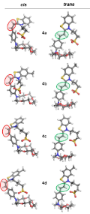
Figure 1: a) Detailed supramolecular packing of a gabapentin–Er network; b) view along the b-axis of the supr...
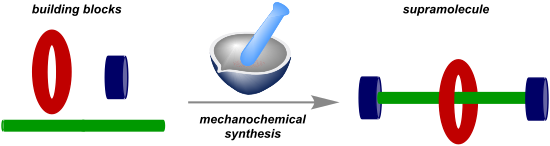
Figure 2: a) Mechanochemical reactivity between the excipient MgO and carboxylic acid NSAID molecules; b) NSA...
Figure 3: Mechanochemical reaction to form Cu3(BTC)2 and the structure of Cu3(BTC)2·(HKUST-1) as reported by ...
Figure 4: Mechanochemical syntheses of coordination polymers from ZnO and fumaric acid. Reprinted with permis...
Figure 5: Mechanochemical synthesis of pillared MOFs from ZnO, fumaric acid and two auxiliary ligands (bipy a...
Figure 6: a) Synthesis of ZIF-8; b) fragment of the crystal structure of ZIF-8. Reprinted with permission fro...
Figure 7: a) Mechanochemical reaction of salicylic acid with Bi2O3 yielding bismuth mono-, di- and trisalicyl...
Beilstein J. Org. Chem. 2017, 13, 2340–2351, doi:10.3762/bjoc.13.231
Graphical Abstract
Scheme 1: Mechanistic rationale and optimization of the domino synthesis of 4-arylnaphtho[2,3-c]furan-1,3-dio...
Scheme 2: Domino synthesis of 4-arylnaphtho[2,3-c]furan-1,3-diones 2 via in situ activation of arylpropiolic ...
Scheme 3: Optimization of the synthesis of 2,4-diphenyl-1H-benzo[f]isoindole-1,3(2H)-dione (4a) by imidation ...
Scheme 4: Pseudo three-component synthesis of 4-aryl-1H-benzo[f]isoindole-1,3(2H)-diones 4.
Scheme 5: Modified sequence for the synthesis of acceptor-substituted 4-aryl-1H-benzo[f]isoindole-1,3(2H)-dio...
Figure 1: The ORTEP-style plot of crystal structure 4b (ellipsoids are draw at the 40% probability level).
Scheme 6: Pseudo four-component synthesis of (E)-2,9-diphenyl-3-(phenylimino)-2,3-dihydro-1H-benzo[f]isoindol...
Scheme 7: Synthesis of 6-phenyl-12H-benzo[f]benzo[4,5]imidazo[2,1-a]isoindol-12-one (6).
Figure 2: The ORTEP-type plot of the crystal structure 5 (left) and a centrosymmetric dimer formation by π–π ...
Figure 3: The ORTEP-type plot of the asymmetric unit of the crystal structure 6 (top) and π-stacking interact...
Figure 4: Emission properties of compounds 4a,b,d–f, 5, and 6 under handheld UV-lamp (λexc ≈ 350 nm).
Figure 5: Relative emission intensities of compounds 4a,b,d–f (recorded in CH2Cl2 UVASOL® at T = 293 K; λexc ...
Figure 6: Absorption and emission properties of selected imides 4 measured in CH2Cl2 UVASOL® at 293 K with λe...
Figure 7: Hammett–Taft correlations of the emission maxima (red circles, lmax,em = 4274 · sR + 24495 [cm−1], R...
Figure 8: Relative emission intensities of the 1-phenyl-2,3-naphthaleneimide 4a (blue) and the pentacyclus 6 ...
Beilstein J. Org. Chem. 2017, 13, 2273–2296, doi:10.3762/bjoc.13.224
Graphical Abstract
Scheme 1: Synthesis of trifluoroethoxy-substituted phthalocyanine.
Scheme 2: Synthesis of trifluoroethoxy-substituted binuclear phthalocyanine 5 in Solkane® 365 mfc.
Scheme 3: Synthesis of trifluoroethoxy-substituted unsymmetrical phthalocyanines.
Scheme 4: Synthesis of trifluoroethoxy-substituted phthalocyanine dimers linked at the β-position.
Figure 1: Structure of trifluoroethoxy-substituted phthalocyanine dimers linked at the α-position.
Figure 2: Structure of trifluoroethoxy-substituted dimer via a diacetylene linker.
Figure 3: UV–vis spectra of 9 (A) and 5 (B).
Figure 4: Structure of binuclear phthalocyanines linked by a triazole linker.
Figure 5: Structure of trinuclear phthalocyanines linked by a triazole linker, and windmill-like molecular st...
Scheme 5: Synthesis of trifluoroethoxy-substituted phthalocyanines conjugated with peptides.
Scheme 6: Synthesis of trifluoroethoxy-substituted phthalocyanines conjugated with deoxyribonucleosides.
Scheme 7: Synthesis of trifluoroethoxy-substituted phthalocyanines conjugated with cyclodextrin.
Figure 6: Direction of energy transfer of phthalocyanine–fullerene conjugates.
Scheme 8: Synthesis of fluoropolymer-bearing phthalocyanine side groups.
Scheme 9: Synthesis of trifluoroethoxy-substituted double-decker type phthalocyanines.
Scheme 10: Synthesis of trifluoroethoxy-substituted subphthalocyanine.
Figure 7: Structure of axial ligand substituted subphthalocyanine hybrid dyes.
Scheme 11: Synthesis of subphthalocyanine homodimers.
Scheme 12: Synthesis of subphthalocyanine heterodimers.
Figure 8: Energy transfer between subphthalocyanine units.
Figure 9: Structure of phthalocyanine and subphthalocyanine benzene-fused homodimers.
Scheme 13: Synthesis of a phthalocyanine and subphthalocyanine benzene-fused heterodimer.
Figure 10: X-ray crystallography of Pc-subPc (left) and UV–vis spectra of benzene-fused dimers.
Beilstein J. Org. Chem. 2017, 13, 2235–2251, doi:10.3762/bjoc.13.221
Graphical Abstract
Figure 1: Dialkyl dicyanofumarates E-1 and dicyanomaleates Z-1.
Scheme 1: Methods for the synthesis of dialkyl dicyanofumarates E-1 from alkyl cyanoacetates 2.
Scheme 2: Methods for the synthesis of dialkyl dicyanofumarates E-1 from alkyl bromoacetates 3.
Scheme 3: Reaction of dimethyl dicyanofumarate (E-1b) with dimethoxycarbene [(MeO)2C:] generated in situ from...
Scheme 4: Cyclopropanation of diethyl dicyanofumarate (E-1a) through reaction with the thiophene derived sulf...
Scheme 5: Cyclopropanation of dimethyl dicyanofumarate (E-1b) through a stepwise reaction with the in situ ge...
Scheme 6: The [2 + 2]-cycloadditions of dimethyl dicyanofumarate (E-1b) with electron-rich ethylenes 20 and 22...
Scheme 7: The [2 + 2]-cycloaddition of isomeric dimethyl dicyanofumarate (E-1b) and dicyanomaleate (Z-1b) wit...
Scheme 8: Non-concerted [2 + 2]-cycloaddition between E-1b and bicyclo[2.1.0]pentene (27).
Scheme 9: Stepwise [3 + 2]-cycloadditions of some thiocarbonyl S-methanides with dialkyl dicyanofumarates E-1...
Scheme 10: Stepwise [3 + 2]-cycloadditions of dimethyl dicyanofumarate (E-1b) and dimethyl dicyanomaleate (Z-1b...
Scheme 11: [3 + 2]-Cycloaddition of diazomethane with dimethyl dicyanofumarate (E-1b) leading to 1H-pyrazole d...
Scheme 12: Reversible Diels–Alder reaction of fulvenes 36 with diethyl dicyanofumarate (E-1a).
Scheme 13: [4 + 2]-Cycloaddition of 9,10-dimethylanthracene (39b) and E-1a.
Scheme 14: Stepwise [4 + 2]-cycloaddition of dimethyl dicyanofumarate (E-1b) with electron-rich 1,1-dimethoxy-...
Scheme 15: Formal [4 + 2]-cycloaddition of 3,4-di(α-styryl)furan (47) with dimethyl dicyanofumarate (E-1b).
Scheme 16: Acid-catalyzed Michael addition of enolizable ketones of type 49 to E-1.
Scheme 17: Reaction of diethyl dicyanofumarate (E-1a) with ammonia NH3.
Scheme 18: Reaction of dialkyl dicyanofumarates E-1 with primary and secondary amines.
Scheme 19: Reaction of dialkyl dicyanofumarates E-1 with 1-azabicyclo[1.1.0]butanes 55.
Scheme 20: Formation of pyrazole derivatives in the reaction of hydrazines with E-1.
Scheme 21: Formation of 5-aminopyrazole-3,4-dicarboxylate 65 via heterocyclization reactions.
Scheme 22: Reactions of aryl- and hetarylcarbohydrazides 67 with E-1a.
Scheme 23: Multistep reaction leading to perhydroquinoxaline derivative 73.
Scheme 24: Synthesis of ethyl 7-aminopteridin-6-carboxylates 75 via a domino reaction.
Scheme 25: Synthesis of morhpolin-2-ones 80 from E-1 and β-aminoalcohols 78 through an initial aza-Michael add...
Scheme 26: Reaction of 3-amino-5-arylpyrazoles 81 with dialkyl dicyanofumarates E-1 via competitive nucleophil...
Scheme 27: Heterocyclization reaction of thiosemicarbazone 86 with E-1a.
Scheme 28: Formation of diethyl 4-cyano-5-oxotetrahydro-4H-chromene-3,4-dicarboxylate (90) from E-1a via heter...
Scheme 29: Reaction of dialkyl dicyanofumarates E-1 with cysteamine (92).
Scheme 30: Formation of disulfides through reaction of thiols with E-1a.
Scheme 31: Formation of CT salts of E-1 with Mn2+ and Cr2+ metallocenes through one-electron transfer.
Scheme 32: Oxidation of diethyl dicyanofumarate (E-1a) with H2O2 to give oxirane 101.
Scheme 33: The aziridination of E-1b through nitrene addition.
Beilstein J. Org. Chem. 2017, 13, 2160–2168, doi:10.3762/bjoc.13.216
Graphical Abstract
Scheme 1: Milling synthesis of 2,3-diphenylquinoxaline from benzil and ortho-phenylenediamine [40].
Scheme 2: Movement of the milling jar and sample holder under milling conditions.
Figure 1: Time-resolved Raman spectrum for the double condensation of o-phenylenediamine and benzil to form 2...
Figure 2: Section of the time-resolved Raman spectrum for the model mechanochemical reaction conducted at 30 ...
Figure 3: (Left) Estimated contribution of each component for each Raman spectrum over time of the synthesis ...
Figure 4: The effect of milling frequency on the milling condensation of benzil and o-phenylenediamine to for...
Figure 5: The reproducibility of varying milling frequency on the neat mechanochemical condensation of benzil...
Figure 6: The effect of milling frequency on the internal jar temperature measured immediately after reaction...
Beilstein J. Org. Chem. 2017, 13, 2028–2048, doi:10.3762/bjoc.13.201
Graphical Abstract
Scheme 1: The mechanistic outline of the intermolecular (a) and intramolecular (b) glycosylation reactions.
Figure 1: Three general concepts for intramolecular glycosylation reactions.
Scheme 2: First intramolecular glycosylation using the molecular clamping.
Scheme 3: Succinoyl as a flexible linker for intramolecular glycosylation of prearranged glycosides.
Scheme 4: Template-directed cyclo-glycosylation using a phthaloyl linker.
Scheme 5: Phthaloyl linker-mediated synthesis of branched oligosaccharides via remote glycosidation.
Scheme 6: Molecular clamping with the phthaloyl linker in the synthesis of α-cyclodextrin.
Scheme 7: m-Xylylene as a rigid tether for intramolecular glycosylation.
Scheme 8: Oligosaccharide synthesis using rigid xylylene linkers.
Scheme 9: Stereo- and regiochemical outcome of peptide-based linkers.
Scheme 10: Positioning effect of donor and acceptor in peptide templated synthesis.
Scheme 11: Synthesis of a trisaccharide using a non-symmetrical tether strategy.
Scheme 12: Effect of ring on glycosylation with a furanose.
Scheme 13: Rigid BPA template with various linkers.
Scheme 14: The templated synthesis of maltotriose in complete stereoselectivity.
Scheme 15: First examples of the IAD.
Scheme 16: Long range IAD via dimethylsilane.
Scheme 17: Allyl-mediated tethering strategy in the IAD.
Scheme 18: IAD using tethering via the 2-naphthylmethyl group.
Scheme 19: Origin of selectivity in boronic ester mediated IAD.
Scheme 20: Arylborinic acid approach to the synthesis of β-mannosides.
Figure 2: Facial selectivity during HAD.
Scheme 21: Possible mechanisms to explain α and β selectivity in palladium mediated IAD.
Scheme 22: DISAL as the leaving group that favors the intramolecular glycosylation pathway.
Scheme 23: Boronic acid as a directing group in the leaving group-based glycosylation method.