Search results
Search for "triazole" in Full Text gives 305 result(s) in Beilstein Journal of Organic Chemistry. Showing first 200.
Synthesis and photophysical studies of a multivalent photoreactive RuII-calix[4]arene complex bearing RGD-containing cyclopentapeptides
Beilstein J. Org. Chem. 2018, 14, 1758–1768, doi:10.3762/bjoc.14.150
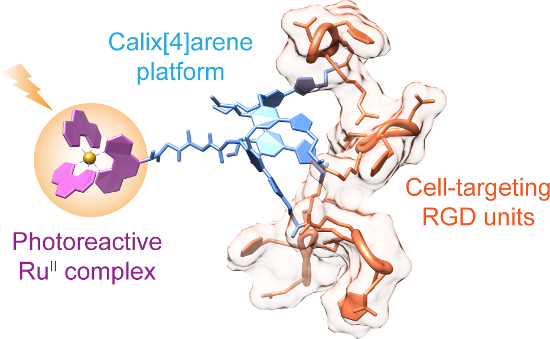
- (CuAAC). Note that the triazole moieties that would result from such a cycloaddition are known to be stable towards hydrolysis and protease, which allows their use in a biological environment [72]. For the CuAAC, the use of CuI-generated in situ from a mixture of CuSO4·5H2O and sodium ascorbate is often





Hypervalent organoiodine compounds: from reagents to valuable building blocks in synthesis
Beilstein J. Org. Chem. 2018, 14, 1508–1528, doi:10.3762/bjoc.14.128
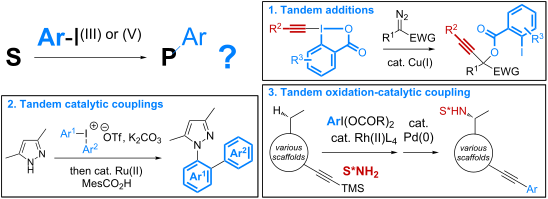
- mechanism that first involves the formation of a 2’-iodobiphenyl-2-azide promoted by the copper complex. The latter then catalyzes an intermolecular [3 + 2] cycloaddition with the alkyne. Finally, the copper-triazole moiety inserts intramolecularly into the second Ar–I bond, allowing a ring closure after






Hyper-reticulated calixarene polymers: a new example of entirely synthetic nanosponge materials
Beilstein J. Org. Chem. 2018, 14, 1498–1507, doi:10.3762/bjoc.14.127

- was assessed by means of FTIR and 13C{1H} CP-MAS solid-state NMR techniques, whereas morphological characterization was provided by SEM microghaphy. The materials were proved to possess pH-dependent sequestration abilities, due to the presence of the weakly basic triazole linkers. Sequestration
- ]) between a heptakis(6-azido-6-deoxy)-β-cyclodextrin and a tetrakis(propargyloxy)calix[4]arene [11][31][32]. In this way, a random disposition of the co-monomer units linked by 1,2,3-triazole units is achieved. The obtained CyCaNSs benefit from several advantages. First, the properties of the material can
- polymeric structure and can be subsequently subjected to further chemical transformation, opening the way to a possible post-functionalization [31]. This, in turn, largely improves the possible tunability in the properties of the materials obtained. Finally, the triazole linker present in the structure is


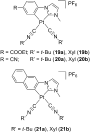
Recent advances in phosphorescent platinum complexes for organic light-emitting diodes
Beilstein J. Org. Chem. 2018, 14, 1459–1481, doi:10.3762/bjoc.14.124






[3 + 2]-Cycloaddition reaction of sydnones with alkynes
Beilstein J. Org. Chem. 2018, 14, 1317–1348, doi:10.3762/bjoc.14.113
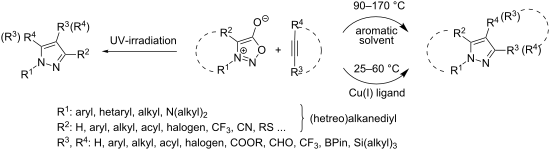
- same N3 coordinating both Cu atoms attacks the terminal carbon of the polarized double bond with concerted cleavage of one of the two copper atoms. The copper triazolide formed in this way is then hydrolyzed to the final triazole. The same presumption (Scheme 17) concerning the role of the two Cu atoms
- -phenylbut-1-yne [119] tridentate tris(benzimidazole) ligands completely failed and tris(triazole) ligands gave only poor to moderate yields (16–65%) even at 100 °C, whereas all the bidentate ligands (phenanthrolines L1, L2 and diimidazo[1,2-a:2',1'-c]quinoxalines L3–L6) were found to be more efficient both


Oligonucleotide analogues with cationic backbone linkages
Beilstein J. Org. Chem. 2018, 14, 1293–1308, doi:10.3762/bjoc.14.111
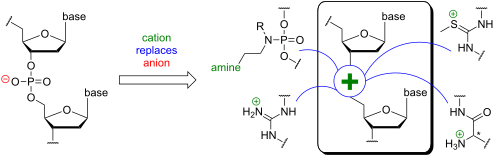
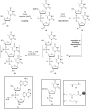
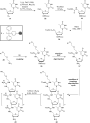
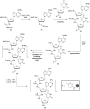
- motifs. Such artificial neutral linkages include, among others, sulfone [14], amide [15][16][17][18][19][20][21][22], triazole [23][24][25][26][27], phosphoramidate [28] and phosphate triester [29] moieties. Using a different approach, positive charges have been introduced into nucleic acid structures





Novel unit B cryptophycin analogues as payloads for targeted therapy
Beilstein J. Org. Chem. 2018, 14, 1281–1286, doi:10.3762/bjoc.14.109
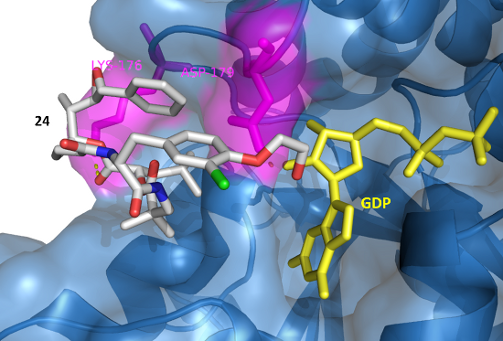
- conjugation of the novel cryptophycin analogues across an appropriate linker to an antibody or peptide. Either a virtually uncleavable triazole (introduced by CuAAC) or scissile ester, carbonate, or carbamate moieties were taken into account. The synthesis of the modified unit B (Scheme 1) started with the


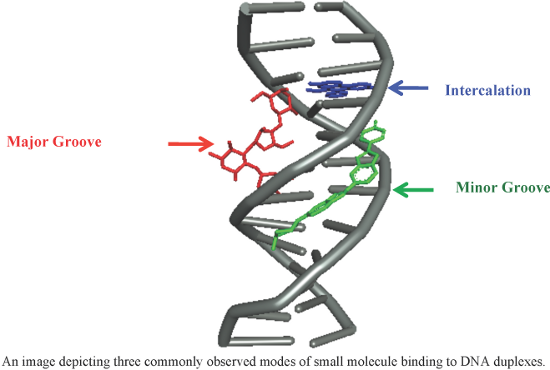
An overview of recent advances in duplex DNA recognition by small molecules
Beilstein J. Org. Chem. 2018, 14, 1051–1086, doi:10.3762/bjoc.14.93





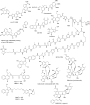

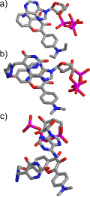
An uracil-linked hydroxyflavone probe for the recognition of ATP
Beilstein J. Org. Chem. 2018, 14, 747–755, doi:10.3762/bjoc.14.63

- precipitated from the solution. The precipitate was filtered, washed with THF thoroughly and dried to yield 264 mg (88%) product as a yellow solid. 1H NMR (500 MHz, DMSO-d6) δ 11.16 (s, 1H, 3-uracil NH), 10.94 (br s, 1H, 1-uracil NH), 8.79 (s, 1H, OH), 8.21 (s, 1H, ArH, triazole), 8.10 (d, J = 8.5 Hz, 2H, 2
- ), 163.64 (C=O6-uracill), 161.90 (CAr-O), 155.98 (CAr-O), 151.16 (C=O2-uracil), 150.85 (C4’-Ar, aniline), 146.17 (CAr-O), 142.98 (CHAr, triazole), 141.70 (CH4-uracil), 136.82 (C-OHchromone), 128.64 (2CH2’-Ar, aniline), 125.96 (CHAr, chromone), 124.83 (CHAr, triazole), 118.06 (CAr, chromone), 115.42 (CAr




Nanoreactors for green catalysis
Beilstein J. Org. Chem. 2018, 14, 716–733, doi:10.3762/bjoc.14.61
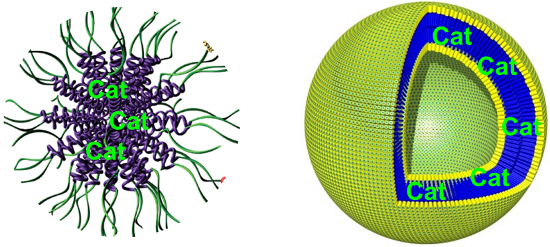
- nanoparticles (DSN) have been shown to be highly efficient in the catalysis of olefin hydrogenation and in Suzuki coupling reactions [98][99]. Ornelas et al. entrapped a palladium catalyst with dendrimers containing triazole groups (DSN) (Figure 6) [100]. The aim here was to provide a platform to perform


AuBr3-catalyzed azidation of per-O-acetylated and per-O-benzoylated sugars
Beilstein J. Org. Chem. 2018, 14, 682–687, doi:10.3762/bjoc.14.56
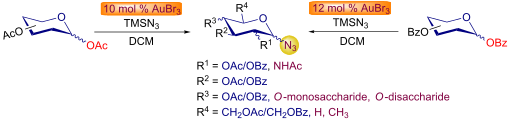
- ], glycoconjugates [30][31][32], N-glycosyl heterocycles [33][34], N-glycosyl triazole [35][36], etc. Glycosyl azides can be accessed from the corresponding glycosyl halides [37][38][39][40] by nucleophilic displacement with NaN3 or using trimethylsilyl azide in the presence of a phase transfer catalyst [41][42][43


Sequential Ugi reaction/base-induced ring closing/IAAC protocol toward triazolobenzodiazepine-fused diketopiperazines and hydantoins
Beilstein J. Org. Chem. 2018, 14, 626–633, doi:10.3762/bjoc.14.49

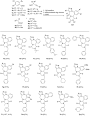
- multicomponent reactions with intramolecular azide–alkyne cycloaddition (IAAC) for the generation of triazole-fused heterocycles [12][13][14][15][16][17][18][19][20][21][22][23]. In this report we disclose our results on the development of a sequential synthetic approach involving Ugi 4-component reaction (4-CR
- -turns [43][44][45] and are also known to bind to a number of biological targets [46][47][48]. Interestingly, the fusion of a triazole ring to a 1,4-benzodiazepine core has resulted in an increase in the biological activity as evident from the different drugs with triazolobenzodiazepine structure such as
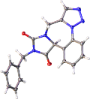
- commenced with the intramolecular azide–alkyne cycloaddition of 5a which furnished the triazole-fused benzodiazepine 8 in 72% yield after 3 hours. The triazolobenzodiazepine 8 was then subjected to base-induced cyclisation with KOH which failed to afford the expected tetracyclic compound 7a. We believe that





Carbohydrate inhibitors of cholera toxin
Beilstein J. Org. Chem. 2018, 14, 484–498, doi:10.3762/bjoc.14.34
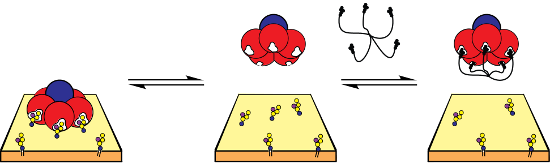
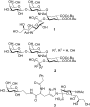
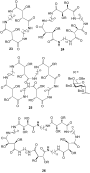
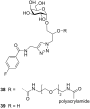
- chelating mechanism. Hughes and co-workers synthesised and evaluated bivalent 1,2,3 triazole-linked galactopyranosides 14 and 15 as shown in Figure 7 [48]. They used a piperazine core as central divalent core on to which the galactose units were attached via flexible linkers. They found that these compounds







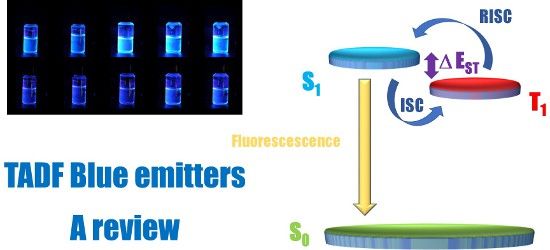
Recent advances on organic blue thermally activated delayed fluorescence (TADF) emitters for organic light-emitting diodes (OLEDs)
Beilstein J. Org. Chem. 2018, 14, 282–308, doi:10.3762/bjoc.14.18








Synthesis and spectroscopic properties of β-meso directly linked porphyrin–corrole hybrid compounds
Beilstein J. Org. Chem. 2018, 14, 187–193, doi:10.3762/bjoc.14.13
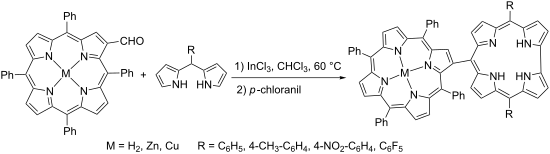
- ) position of substitution (meso or β). So far, corrole macrocyles have been integrated into porphyrin conjugates via anthracene, biphenylene, xanthene, dibenzofuran [16][17][18][19][20], amide [21] and triazole [22][23] linkers. Despite the large number of studies on the synthesis of porphyrin–corrole

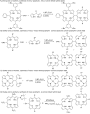


Recent applications of click chemistry for the functionalization of gold nanoparticles and their conversion to glyco-gold nanoparticles
Beilstein J. Org. Chem. 2018, 14, 11–24, doi:10.3762/bjoc.14.2
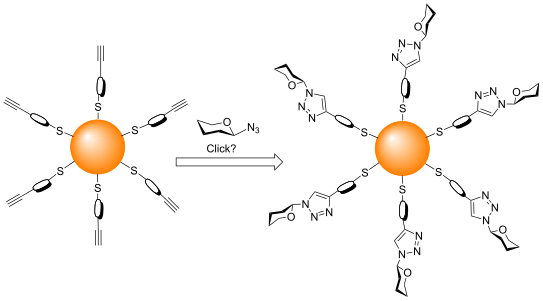
- ; click chemistry; glyco-gold nanoparticles; triazole; Introduction Metal nanoparticles (NPs), with their unique physicochemical properties, have drawn significant interest in recent years, and are expected to form the basis of many biological and technological innovations during the remainder of the
- azide–alkyne Huisgen cycloaddition AuNP surface modification using NCAAC The azide–alkyne Huisgen cycloaddition (AAC) is a 1,3-dipolar cycloaddition between an organic azide and an alkyne that gives triazole products [37][38]. The non-catalysed azide–alkyne Huisgen cycloaddition (NCAAC) is very slow
- , and gives a mixture of 1,4- and 1,5-triazole regioisomers (Scheme 1) [39]. Interest in and applications of the AAC have surged over the past 15 or so years, since the introduction of Cu(I) catalysis, which led to significant improvements in both the regioselectivity and rates of the reaction [40][41



Synthetic mRNA capping
Beilstein J. Org. Chem. 2017, 13, 2819–2832, doi:10.3762/bjoc.13.274
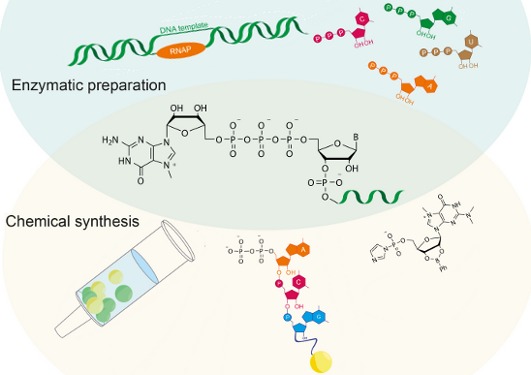
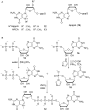
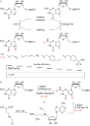
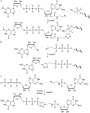
- translation in in vitro translation experiments. In a further step, tetraphosphates with methylene(bisphosphonate) moieties were prepared which improved binding to eIF4E and in some cases conferred enzymatic resistance against DcpS degradation [67]. N2-Triazole-containing monophosphate cap analogues were
- modified methylguanosine resulting in a capped RNA containing a triazole linkage after CuAAC reaction (Figure 7B) [121]. In a similar approach a 5′-azido-modified RNA was prepared by solid-phase synthesis and reacted with an alkyne-functionalized m7G-cap analogue in a CuAAC reaction [122]. Besides its
- utility on long RNA, this click chemistry approach was also applied to the chemical synthesis of cap analogues, simplifying the typically laborious and time-consuming synthesis [121]. A plethora of cap analogues was synthesized replacing one phosphate bridge with a triazole linkage. Depending on their



Vinylphosphonium and 2-aminovinylphosphonium salts – preparation and applications in organic synthesis
Beilstein J. Org. Chem. 2017, 13, 2710–2738, doi:10.3762/bjoc.13.269

- reaction of 4-amino-5-alkyl-2,4-dihydro-1,2,4-triazole-3-thione with DAAD and triphenylphosphine was reported by Mosslemin et al. [25]. The reaction of triphenylphosphine with DAAD and triazole as the NH-acid and a precursor of the ambident sulfur nucleophile gave the corresponding vinylphosphonium salt 83
- . Generation of resonance-stabilized phosphorus ylides in the reaction of triphenylphosphine, dialkyl acetylenedicarboxylates, and 1,2,4-triazole-3-thione derivatives. Synthesis of resonance-stabilized phosphorus ylides via the reaction of triphenylphosphine with dialkyl acetylenedicarboxylates and 2


Recent progress in the racemic and enantioselective synthesis of monofluoroalkene-based dipeptide isosteres
Beilstein J. Org. Chem. 2017, 13, 2637–2658, doi:10.3762/bjoc.13.262
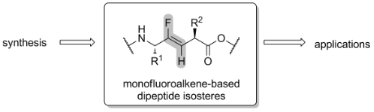
- reacted easily in a SN2 reaction to give a more functionalized molecule. For example, treatment of the chlorinated monofluoroalkene with NaN3 provided the corresponding N3-containing monofluoroalkene. The azide group underwent a 1,3-dipolar cycloaddition to give a 1,2,3-triazole, which is also a peptide


15N-Labelling and structure determination of adamantylated azolo-azines in solution
Beilstein J. Org. Chem. 2017, 13, 2535–2548, doi:10.3762/bjoc.13.250
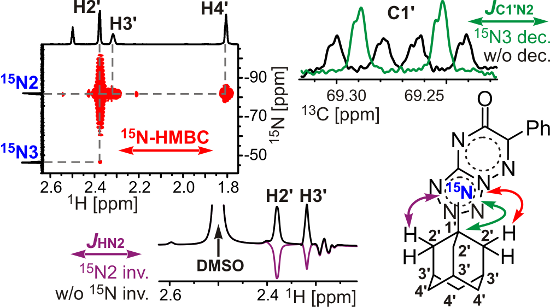
- product structure were also found for N-arylation or N-alkylation with tert-butyl fragments in the series of 1,2,3-triazole [15][16], tetrazole [17][18][19][20], and purine [21] derivatives. Meanwhile, knowledge of the accurate chemical structures of N-substituted heterocycles is essential for biomedical
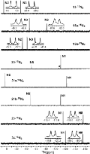
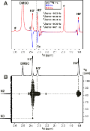
- the most efficient way to measure JHN couplings [24]. Previously, the incorporation of a single 15N label in position 1 of the 1,2,4-triazole fragment of compounds 5 and 6 and analysis of the JCN couplings permitted the unambiguous identification of the structures of the N3-adamantylated derivatives
- by the reisomerization of the initially formed N2-adamantylated product (15a-15N2). Indeed, 2 h of refluxing of isolated 15a-15N2 in TFA with 1.5 molar equivalents of 14 yielded a mixture of compounds 15a-15N2 and 15b-15N2 in the same (1:2) ratio (Scheme 1). The use of [1-15N]-3-amino-1,2,4-triazole




A permutation approach to the assignment of the configuration to diastereomeric tetrads by comparison of experimental and ab initio calculated differences in NMR data
Beilstein J. Org. Chem. 2017, 13, 2478–2485, doi:10.3762/bjoc.13.245

- 1 and 2 were obtained by epimerization at C9. Mixtures of the isomers of 1 were formed in TBAF desilylation of Cinchona 4-TMS-triazole derivatives. Partial isomerisation of 2a into 2b was performed by transient deprotonation using in situ generated sodium methylsulfinylmethylide (Scheme 1). Both


Asymmetric synthesis of propargylamines as amino acid surrogates in peptidomimetics
Beilstein J. Org. Chem. 2017, 13, 2428–2441, doi:10.3762/bjoc.13.240
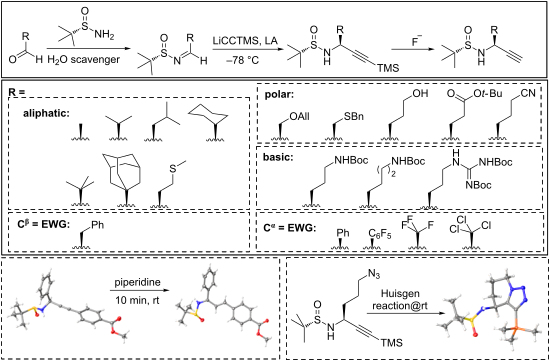
- , Bielefeld University, Universitätsstraße 25, D-33615 Bielefeld, Germany 10.3762/bjoc.13.240 Abstract The amide moiety of peptides can be replaced for example by a triazole moiety, which is considered to be bioisosteric. Therefore, the carbonyl moiety of an amino acid has to be replaced by an alkyne in
- N-sulfinylimines, which leads to amines with the same configuration as the proteinogenic (S)-configured amino acids. This stereoselection was confirmed by various X-ray crystal structures of propargylamines obtained during our investigations like 7a, 7c–e, 7s, 7i–k, 7q and triazole 13w (see
- sulfinamide (S)-1 into N-sulfinylimine 5w, which was reacted with (trimethylsilyl)ethynyllithium. However, following the usual procedure GP-4 with warming up the reaction mixture to room temperature before quenching with water led to the formation of triazole 13w, which was isolated in 56% yield (Table 4


Synthesis, effect of substituents on the regiochemistry and equilibrium studies of tetrazolo[1,5-a]pyrimidine/2-azidopyrimidines
Beilstein J. Org. Chem. 2017, 13, 2396–2407, doi:10.3762/bjoc.13.237

- atom of the enone, both soft sites of the starting materials [29]. In recent research, we developed an efficient method to obtain 1,2,4-triazolo[1,5-a]pyrimidines from the cyclocondensation reaction of 1,1,1-trifluoro-4-metoxy-3-alken-2-one or β-enaminones with 5-amino-1,2,4-triazole. The methodology
- reactions were planned between phenylacetylene and compounds 6a–c. The 1,2,3-triazole synthesis from the 1,3-dipolar cycloaddition reaction between 6a–c and terminal alkynes catalyzed by copper salts (CuAAC) [41][42][43] confirms that the reaction passes through an azide intermediate. In addition to mild


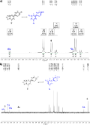
![[Graphic 9]](/bjoc/content/inline/1860-5397-13-237-i9.svg?max-width=637&scale=1.18182) 4d equilibrium in DMSO-d6 at 25 °C.
4d equilibrium in DMSO-d6 at 25 °C.


Solvent-free copper-catalyzed click chemistry for the synthesis of N-heterocyclic hybrids based on quinoline and 1,2,3-triazole
Beilstein J. Org. Chem. 2017, 13, 2352–2363, doi:10.3762/bjoc.13.232
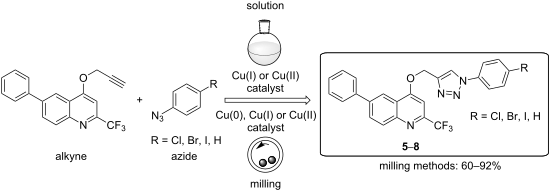
- reactions using Cu(II), Cu(I) and Cu(0) catalysts have been successfully implemented to provide novel 6-phenyl-2-(trifluoromethyl)quinolines with a phenyl-1,2,3-triazole moiety at O-4 of the quinoline core. Milling procedures proved to be significantly more efficient than the corresponding solution
- synthesis of 5–8 Based on the recently obtained 1,2,3-triazole-appended N-heterocycles, as promising lead compounds with efficient and selective cytostatic activities [8][9], our research groups share an interest in derivatization of target compounds by a triazole bridge [33]. Quinoline is an important
- containing a trifluoromethyl group at C-2 and a p-halogen-substituted and non-substituted phenyl-1,2,3-triazole moieties. The synthesis of 2-(trifluoromethyl)-6-phenylquinolone was achieved by Conrad–Limpach reaction of a primary aromatic amine with a β-ketoester [37][38]. Namely, thermal condensation of 4