Search results
Search for "visible light" in Full Text gives 276 result(s) in Beilstein Journal of Organic Chemistry. Showing first 200.
Photochromic diarylethene ligands featuring 2-(imidazol-2-yl)pyridine coordination site and their iron(II) complexes
Beilstein J. Org. Chem. 2019, 15, 2428–2437, doi:10.3762/bjoc.15.235
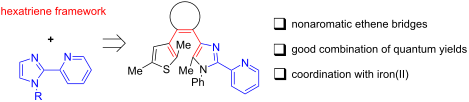
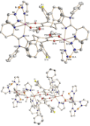
- irradiation (313 nm, toluene, c = 3.4 × 10⁻⁵ M). Inset: fatigue resistance upon multiple subsequent irradiation with UV (365 nm) and visible light (green LED) in acetonitrile. Molecular structure of complexes 8 (top) and 9 (bottom) at 100 K. The H atoms are omitted for clarity; the thermal ellipsoids are


Targeted photoswitchable imaging of intracellular glutathione by a photochromic glycosheet sensor
Beilstein J. Org. Chem. 2019, 15, 2380–2389, doi:10.3762/bjoc.15.230
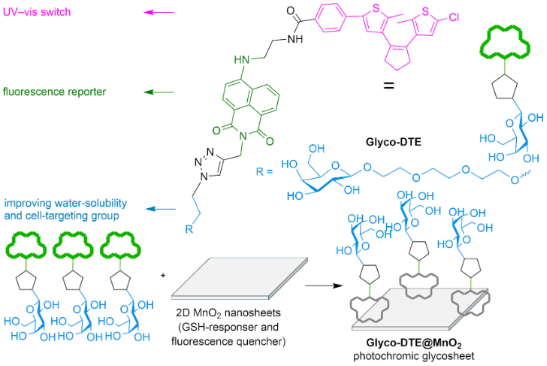
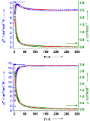
- ring-closed photoisomer [28]. The absorption band at 550 nm remained unchanged after 3 min of irradiation as the photostationary state (PSS) was reached. The absorption spectra of the ring-opened isomer could be fully recovered upon visible light irradiation (4 min), suggesting a photocycloreversion or
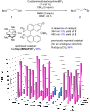
- ring-opening process from the ring-closed photoisomer to the original ring-opened photoisomer. The photo fatigue resistance of Glyco-DTE was then examined at 550 nm via an alternate irradiation with UV and visible light at room temperature. The ring-closing/opening cycles of Glyco-DTE could be repeated
- several times in buffer solution without obvious degradation (Figure 1B), demonstrating the robustness of Glyco-DTE. Figure 1C shows the photoswitching of emission spectra of Glyco-DTE (1 × 10⁻⁵ mol/L) in PBS buffer upon alternating UV and visible light irradiation at room temperature. Upon excitation



Excited state dynamics for visible-light sensitization of a photochromic benzil-subsituted phenoxyl-imidazolyl radical complex
Beilstein J. Org. Chem. 2019, 15, 2369–2379, doi:10.3762/bjoc.15.229
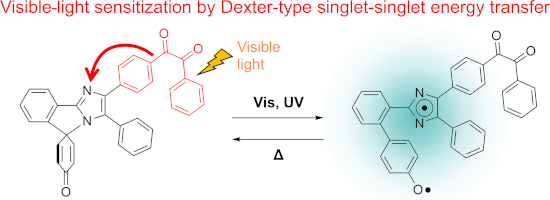
- Abstract Visible-light sensitized photoswitches have been paid particular attention in the fields of life sciences and materials science because long-wavelength light reduces photodegradation, transmits deep inside of matters, and achieves the selective excitation in condensed systems. Among various
- switching speed of PIC opened up various potential applications, no photosensitivity to visible light limits its applications. In this study, we synthesized a visible-light sensitized PIC derivative conjugated with a benzil unit. Femtosecond transient absorption spectroscopy revealed that the benzil unit
- acts as a singlet photosensitizer for PIC by the Dexter-type energy transfer. Visible-light sensitized photochromic reactions of PIC are important for expanding the versatility of potential applications to life sciences and materials science. Keywords: biradical; energy transfer; photochromism



Mono- and bithiophene-substituted diarylethene photoswitches with emissive open or closed forms
Beilstein J. Org. Chem. 2019, 15, 2344–2354, doi:10.3762/bjoc.15.227
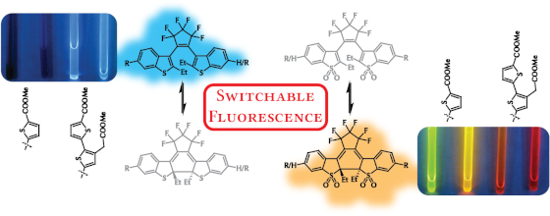
- open forms with rather low emission efficiency. The photoswitching kinetics was studied at several wavelengths with UV and visible light. New diarylethenes underwent ring-closure reactions by irradiation with UV light (365 nm, 405 nm), and the reversible ring-opening by irradiation with visible light
- (470 nm, 530 nm). The on-switching of fluorescence due to the ring-closure reaction was observed also with visible light of 470 nm (to an extent of 10% for compound SyOTh1) and attributed to the Urbach tail effect. Due to a high degree of fluorescence modulation (>270), good fatigue resistance and
- in RESOLFT microscopy. Urbach tail effect Under irradiation with visible light, most DAEs show complete conversion into the OF, because OFs do not absorb at wavelengths corresponding to the absorption band of the CF. However, compound SyOTh1 presented a remarkably “low” value of αCF→OF [470 nm] = 0.9


Recent advances in transition-metal-catalyzed incorporation of fluorine-containing groups
Beilstein J. Org. Chem. 2019, 15, 2213–2270, doi:10.3762/bjoc.15.218
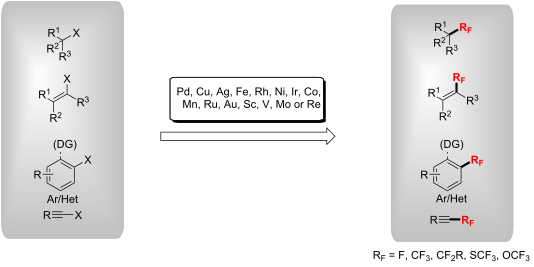
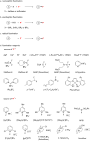
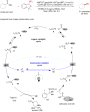
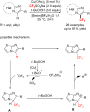
- ’-dCF3bpy)PF6 (1) undergoes photoexcitation with visible light to form the highly oxidizing excited state ·Ir(III) 2. Then, SET from copper carboxylate 4, derived from carboxylic acid 3 with the Cu(II) catalyst to ·Ir(III) 2 provides Cu(III) carboxylate 5, or in the dissociated form, a carboxyl radical and
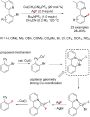
- efficient method to access ortho-CF3 acetanilides and anilines (Scheme 66b). Recently, Wang and co-workers [127] reported a visible-light-induced Pd-catalyzed ortho-trifluoromethylation of acetanilides. Without the need of an external photocatalyst and additive, various N-substituted anilides and











Aggregation-induced emission effect on turn-off fluorescent switching of a photochromic diarylethene
Beilstein J. Org. Chem. 2019, 15, 2204–2212, doi:10.3762/bjoc.15.217
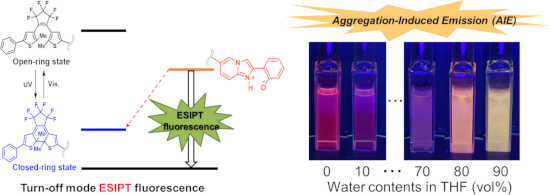
- changed to blue with increasing the absorption band at 587 nm of the closed-ring isomer 1c, then by visible light irradiation the color disappeared and reproducing the absorption spectra at 285 nm of 1o. The cyclization and cycloreversion reactions of 1 were measured in THF and methanol. The results were
- nm) and AS ONE Handy UV Lamp SLUV-4 (λ = 365 nm) were used. For visible light irradiation, a 500W USHIO SX-UI501XQ Xenon lamp attached with Toshiba color filters (Y-48, Y-44, and UV-29) was used. The Gaussian09 program package [32] was used for geometry optimizations with DFT for ground states and


Azologization and repurposing of a hetero-stilbene-based kinase inhibitor: towards the design of photoswitchable sirtuin inhibitors
Beilstein J. Org. Chem. 2019, 15, 2170–2183, doi:10.3762/bjoc.15.214
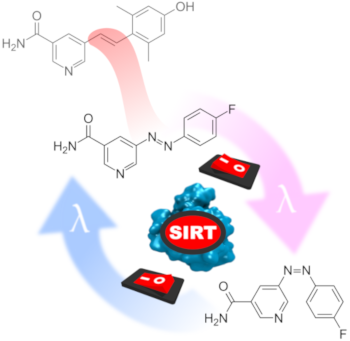
- stilbene motive of selected stilbene 2c by a diazeno group, because photoisomerization of azo dyes was anticipated to proceed fast and reversible by application of UV irradiation and visible light, respectively in this analogue. 5-Diazenylnicotinamide 11 was synthetically accessible in two steps through
- UV irradiation of 365 nm. The photoisomerization could be reversed by exposure to visible light, i.e. 452 nm, albeit the PSS at 452 nm still comprised about 25% of (Z)-11 as determined by HPLC analysis using UV–vis detection at the isosbestic points (Table 2). Light of 500 nm could also reverse
- ), respectively. Visible light radiation of 630 nm (red), 500 nm (green) and 452 nm (blue) was derived from a Paulmann FlexLED 3D strip. All compounds were irradiated in solution, using spectrophotometric grade solvents. Photoisomerization and UV–vis spectra measurement was conducted in quartz cuvettes at room


Naphthalene diimides with improved solubility for visible light photoredox catalysis
Beilstein J. Org. Chem. 2019, 15, 2043–2051, doi:10.3762/bjoc.15.201
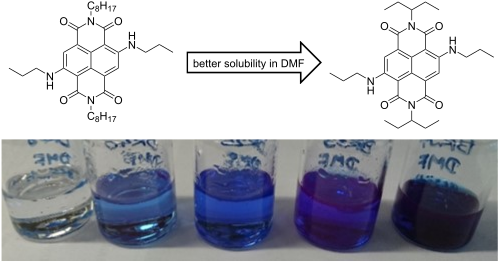
- solubilities. The electron-donating diaminoalkyl substituents together with the electron-deficient aromatic core of the naphthalene diimides increase the charge-transfer character of their photoexcited states and thus shift their absorption into the visible light (500–650 nm). The excited state reduction
- potential was estimated to be approximately +1.0 V (vs SCE) which is sufficient to photocatalyze typical organic reactions. The photoredox catalytic activity in the visible light range was tested by the α-alkylation of 1-octanal as benchmark reaction. Irradiations were performed with LEDs in the visible
- light range between 520 nm and 640 nm. The irradiation by visible light together with the use of an organic dye instead of a transition metal complex as photoredox catalyst improve the sustainability and make photoredox catalysis “greener”. Keywords: chromophore; dyes; electrochemistry; photochemistry

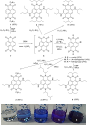


Fluorinated azobenzenes as supramolecular halogen-bonding building blocks
Beilstein J. Org. Chem. 2019, 15, 2013–2019, doi:10.3762/bjoc.15.197
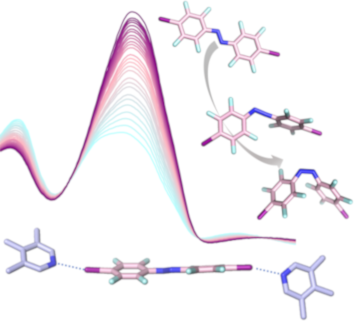
- , Universitätsstraße 1, D-40225 Düsseldorf, Germany 10.3762/bjoc.15.197 Abstract ortho-Fluoroazobenzenes are a remarkable example of bistable photoswitches, addressable by visible light. Symmetrical, highly fluorinated azobenzenes bearing an iodine substituent in para-position were shown to be suitable supramolecular
- substituting azobenzenes in the ortho-positions to the N=N bond with electron-withdrawing fluorine substituents [45][46], the red-shifting of the n→π* transitions enables selective addressing of both the E- and Z-isomer using visible light. Stabilization of the n-orbitals in the Z-isomers leads to a very high
- Information File 1, Figures S1 and S12). By introduction of fluorine atoms ortho to the azo bond, the two n→π* of E- and Z-state become sufficiently separated to address them individually using visible light sources. Along with averting UV light for the photochemical reaction, high PSS ratios can be observed


Synthesis, enantioseparation and photophysical properties of planar-chiral pillar[5]arene derivatives bearing fluorophore fragments
Beilstein J. Org. Chem. 2019, 15, 1601–1611, doi:10.3762/bjoc.15.164
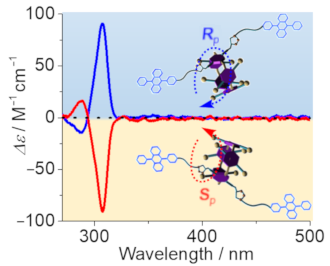
- at the ground state. Similar results were observed for P5A-Py except for a slight bathochromic shift of the absorption compared with Py-6. The fluorescence spectrum of P5A-DPA is very similar to that of DPA-6 (Figure 1b). P5A-DPA showed an intense fluorescence in the visible light region, peaked at



An azobenzene container showing a definite folding – synthesis and structural investigation
Beilstein J. Org. Chem. 2019, 15, 1534–1544, doi:10.3762/bjoc.15.156
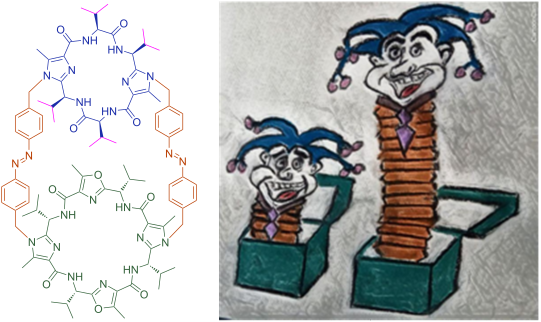
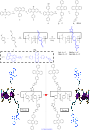
- , whereas by the use of visible light the stretched trans,trans-isomer is formed. By means of quantum chemical calculations and CD spectroscopy we could show that the trans→cis isomerization is spatially directed; that means that one of the two different macrocycles performs a definite clockwise rotation to
- , the trans→cis isomerization is triggered by UV light whereas the cis→trans back relaxation takes place by visible light or heat [30][42]. Due to the high reversibility, the simple synthesis and the high photostability azobenzene derivatives are the most commonly used switching units. A further
- different macrocycles perform a definite clockwise rotation to the other caused by irradiation with UV light and a counterclockwise rotation when the compound is exposed to visible light. The spatial change of the container 10 caused by the switching process could have an impact on the size of the diffusion


Reversible end-to-end assembly of selectively functionalized gold nanorods by light-responsive arylazopyrazole–cyclodextrin interaction
Beilstein J. Org. Chem. 2019, 15, 1407–1415, doi:10.3762/bjoc.15.140
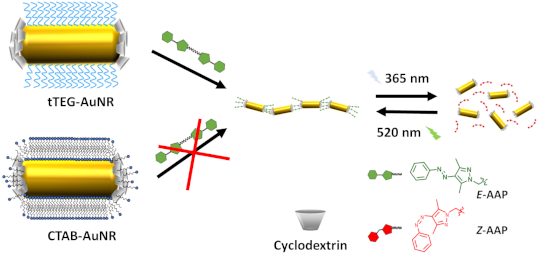
- assembly and disassembly of the AuNR could be induced by host–guest interaction of CD on the nanorods and a photoswitchable arylazopyrazole cross-linker in aqueous solution. The end-to-end assembly of AuNR could be effectively controlled by irradiation with UV and visible light, respectively, over four
- min of the respective wavelength. Via irradiation with visible light (λ = 520 nm, 5 min, 3 W), the LSPR band is again broadened and shifted to a higher wavelength indicating the assembly of AuNR. This procedure could be repeated over four cycles without any fatigue effect and shows the good
- reversibility of the switching behavior. The dispersion of AuNR assemblies after visible light irradiation can also be verified by TEM bright field images (Figure 4d) showing that the disassembly is possible without the combination of irradiation and sonication. This can be attributed to the favorable


Precious metal-free molecular machines for solar thermal energy storage
Beilstein J. Org. Chem. 2019, 15, 1096–1106, doi:10.3762/bjoc.15.106
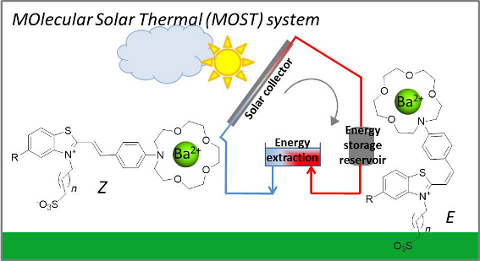
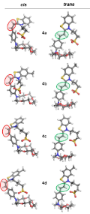
- reactions. Real-time E/Z-photoisomerization of dyes 4a–d and their complexes The photoisomerization of free dyes 4a–d and dye–Ba2+ inclusion complexes were investigated in real time mode upon irradiation with visible light (λ = 488 nm) close to their absorption maxima. Figure 3a illustrates the




Multicomponent reactions (MCRs): a useful access to the synthesis of benzo-fused γ-lactams
Beilstein J. Org. Chem. 2019, 15, 1065–1085, doi:10.3762/bjoc.15.104
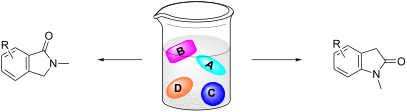
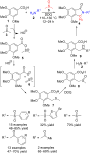
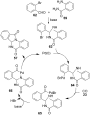
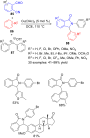
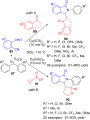
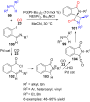
- -component reaction with aryldiazonium tetrafluoroborates 68, DABCO·(SO2)2 (69) and nitriles 70 under Ru(IV) photocatalysis with visible light and in the presence of a Lewis acid (Scheme 21) [101]. Up to 24 isoindolinone derivatives were obtained, bearing a wide variety of aryl moieties at the sulfonyl group










Mechanochemistry of supramolecules
Beilstein J. Org. Chem. 2019, 15, 881–900, doi:10.3762/bjoc.15.86
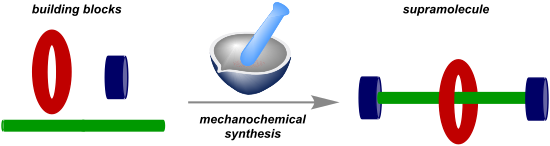
- supramolecular chemistry are dynamic combinatorial chemistry [11], subcomponent self-assembly approach [12][13][14], and systems chemistry [15][16][17][18], etc. There also has been growing interest towards exploration of nontraditional energy sources like visible light [19][20], microwave [21], mechanochemical


Azologization of serotonin 5-HT3 receptor antagonists
Beilstein J. Org. Chem. 2019, 15, 780–788, doi:10.3762/bjoc.15.74
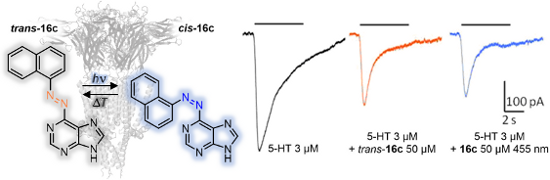
- such an extent, that no new maximum representing the cis-isomer was observed and thus cis–trans isomerization only occurs thermally and is not triggerable by irradiation with visible light. Back-isomerization was triggered by irradiation with visible light (5a, 5b, 16a, 16b, 23, and 28) of the


Dirhodium(II)-catalyzed [3 + 2] cycloaddition of N-arylaminocyclopropane with alkyne derivatives
Beilstein J. Org. Chem. 2019, 15, 542–550, doi:10.3762/bjoc.15.48
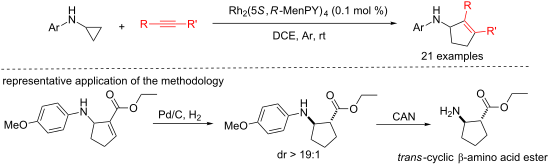
- cycloaddition chemistry based on compound 1. Zheng et al. [7] first reported on the [3 + 2] cycloaddition reaction of 1 with an alkene or alkyne mediated by visible light by the aid of the photocatalyst [Ru(bpz)3](PF6)2. Our group reported the metal catalyst itself, particularly the dinuclear rhodium complex


Tandem copper and photoredox catalysis in photocatalytic alkene difunctionalization reactions
Beilstein J. Org. Chem. 2019, 15, 351–356, doi:10.3762/bjoc.15.30
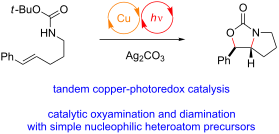
- renewed interest in synthetic photochemistry has resulted in the discovery of a broad range of powerful new bond-forming transformations [1][2][3][4]. Much of this work has been premised on the ability of visible light-activated photocatalysts to generate highly reactive odd-electron intermediates via

Oxidative radical ring-opening/cyclization of cyclopropane derivatives
Beilstein J. Org. Chem. 2019, 15, 256–278, doi:10.3762/bjoc.15.23
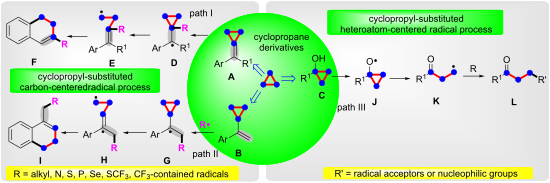
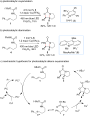
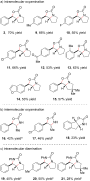
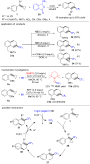
- diphenyl diselenides 12 for the synthesis of 2-phenylseleny-3,3-diarylcyclobutenes 13 under visible light irradiation (Scheme 5) [51]. The desired products 13 contained a cyclobutene group and a selenium atom, which makes the products possess unique biological and pharmaceutical activities. The mechanism
- diaryl diselenides. Bromine radical-mediated ring-opening of alkylidenecyclopropanes. Fluoroalkyl (Rf) radical-mediated ring-opening of MCPs. Visible-light-induced alkylation/ring-opening/cyclization of cyclopropyl olefins with bromides. Mn(III)-mediated ring-opening and [3 + 3]-annulation of




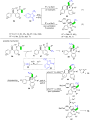


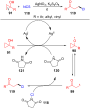


N-Arylphenothiazines as strong donors for photoredox catalysis – pushing the frontiers of nucleophilic addition of alcohols to alkenes
Beilstein J. Org. Chem. 2019, 15, 52–59, doi:10.3762/bjoc.15.5
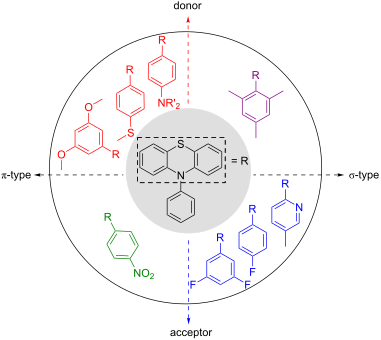
- after 20 h of irradiation. Keywords: addition; phenothiazine; photochemistry; photoredox catalysis; redox potential; Introduction Visible-light photoredox catalysis has become a precious tool in modern synthetic organic chemistry and experiences a continuously growing interest in industrial
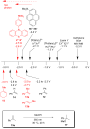
- contradicts the use of visible light irradiation due to vanishing extinction coefficients at the edge to the visible region. To reach for high excited state reduction potentials and excite at rather long irradiation wavelengths an energetically high lying electronic groundstate potential has to be connected



Degenerative xanthate transfer to olefins under visible-light photocatalysis
Beilstein J. Org. Chem. 2018, 14, 3047–3058, doi:10.3762/bjoc.14.283

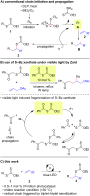
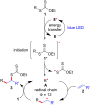
- of the iridium-based photocatalyst that triggers the radical chain process [27]. Results and Discussion Over the last decade, there has been a remarkable advance in synthetic chemistry that takes advantage of various chromophores (either metallic or organic) having visible-light charge transfer
- absorption [28][29][30][31][32][33][34][35][36][37]. In the area of polymer synthesis, visible-light-induced RAFT polymerization of xanthates with vinyl monomers under blue LED (light-emitting diode) irradiation has been reported [38][39][40][41]. Visible-light-induced single unit monomer insertion of the
- ]. Based on these backgrounds, we wondered if the degenerative transfer of xanthates onto olefins could be facilitated by visible-light photocatalysis under milder reaction conditions. We therefore commenced our investigation with the reaction of ethyl ethoxycarbonylmethyl xanthate (1a) and 1-octene (2a



Organometallic vs organic photoredox catalysts for photocuring reactions in the visible region
Beilstein J. Org. Chem. 2018, 14, 3025–3046, doi:10.3762/bjoc.14.282
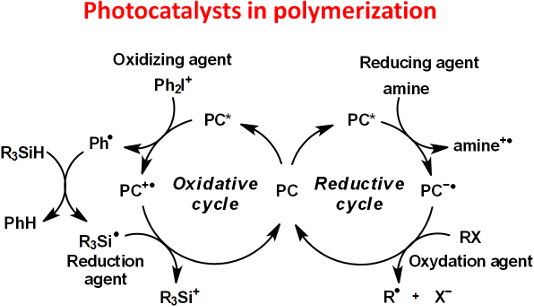
- now possible to perform photopolymerizations upon soft irradiation conditions with, for example, household light bulbs, LED light, low intensity lasers and even sunlight [1][2][3][4]. The first reason is the low cost and infiniteness character of light (more particularly when using visible light). The
- extensive researches [36]. Coordination compounds have interesting properties for photochemical reactions. First, by absorption of visible light, transitions described in part 1.3 can be observed. Thus, the complex goes from its ground state to one electronically excited state which produced reactive
- Cu complexes as highly efficient photoredox catalysis has been the subject of many studies [55][56][57][58]. These complexes have been identified as really efficient for developing low-cost electroluminescent devices or light-mediated reaction such as polymerization upon near UV or visible light



Oxidative and reductive cyclization in stiff dithienylethenes
Beilstein J. Org. Chem. 2018, 14, 2812–2821, doi:10.3762/bjoc.14.259
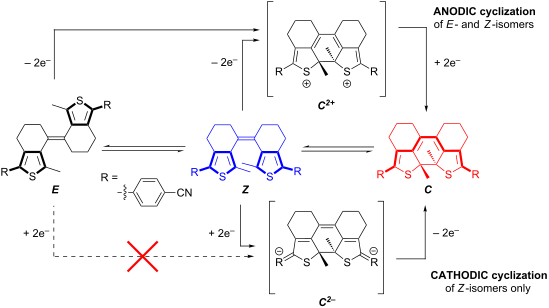
- near UV light. Upon irradiation with visible light the C-isomer undergoes quantitative cycloreversion exclusively to the Z-isomer [33]. Overview of all sDTE and reference DTE compounds investigated in this study. The compound names indicate the molecular frame (e.g., sDTE66) and the substituents


Synthesis of mono-functionalized S-diazocines via intramolecular Baeyer–Mills reactions
Beilstein J. Org. Chem. 2018, 14, 2799–2804, doi:10.3762/bjoc.14.257

- receptor. Hence, it should be possible to administer the stabile inactive compound and switch it on at the site of illness with visible light. To date only a limited number of diazocine derivatives have been published of which most are symmetrically functionalized. Using the Baeyer–Mills reaction for the


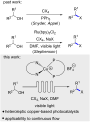
Photocatalyic Appel reaction enabled by copper-based complexes in continuous flow
Beilstein J. Org. Chem. 2018, 14, 2730–2736, doi:10.3762/bjoc.14.251
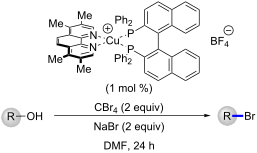
- ][12][13][14], mild reaction conditions and visible-light irradiation), which should be easily embraced by the synthetic community. To further develop the photochemical alcohol→halide transformation, the use of alternative photocatalysts based upon more abundant metals was envisioned [15][16][17][18