


Search results
Search for "Click" in Full Text gives 263 result(s) in Beilstein Journal of Organic Chemistry. Showing first 200.
Synthesis of carbohydrate-scaffolded thymine glycoconjugates to organize multivalency
Beilstein J. Org. Chem. 2015, 11, 668–674, doi:10.3762/bjoc.11.75
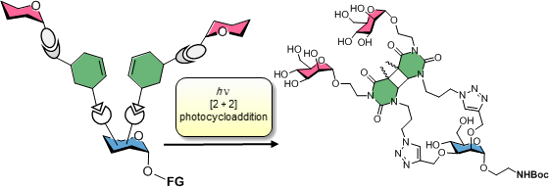
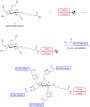
- )-catalyzed click reaction [21][22]. Before, the acid-labile isopropylidene protecting group was removed using 10% TFA in dichloromethane leading to mannoside 4, and then the azide function in 4 was converted in a Staudinger reduction [23] with simultaneous Boc-protection giving rise to mannoside 5 in high
- for eventual immobilisation of the final thymine glycoconjugate on a surface or for conjugation to another multivalent compound. For the click reaction of 5 with the thymine derivative 6, copper sulfate and sodium ascorbate were used. The conjugation product 7 was obtained in 71% yield and showed good
- (Scheme 2). Staudinger reduction of the azide group and Boc-protection in the same pot gave 9 and subsequent click reaction with the thymine derivative 6 the isopropylidene-protected dimeric thymine glycoconjugate 10 in good yield. This could be alkylated employing the bromoethyl mannoside 11 [11] in an



Synthesis of multivalent carbohydrate mimetics with aminopolyol end groups and their evaluation as L-selectin inhibitors
Beilstein J. Org. Chem. 2015, 11, 638–646, doi:10.3762/bjoc.11.72
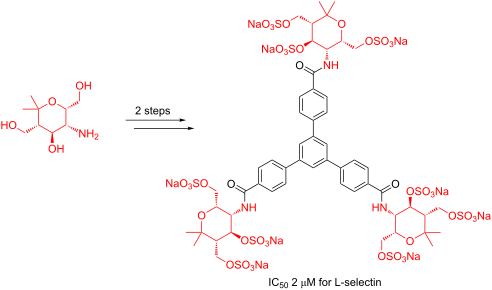
- . Unfortunately, only a few of our prepared compounds were sufficiently soluble in water to be suitable for the SPR test. However, a series of other multivalent conjugates was synthesized by using click chemistry with the azide derived from aminopyran 1 and results will be published in due time [40]. Conclusion


Synthesis of a hexasaccharide partial sequence of hyaluronan for click chemistry and more
Beilstein J. Org. Chem. 2015, 11, 604–607, doi:10.3762/bjoc.11.67
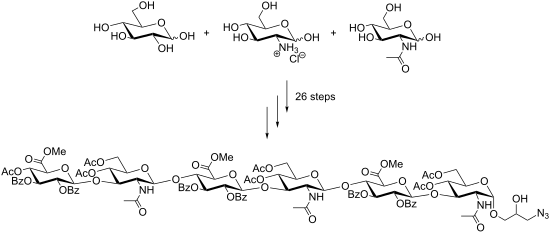
- Abstract In the present work, the synthesis of a hexasaccharide partial sequence of hyaluronan equipped with a terminal azido moiety is reported. This hexasaccharide can be used for the attachment on surfaces by means of click chemistry and after suitable deprotection for biophysical studies. Keywords
- : azide; click chemistry; extracellular matrix; hexasaccharide; hyaluronan; multivalency; Introduction Much effort has been exerted during the last years to refine current knowledge about the biology of the extracellular matrix (ECM) [1]. While in the past, it was only regarded as a “space filler” among
- , allowing it to be used for surface modification via click chemistry. After suitable deprotection it can be used for biophysical studies by interaction with an alkyne group of suitably prepared proteins or proteoglycans giving the opportunity to gain deeper insights into ECM processes. Eventually, this

Synthesis and surface grafting of a β-cyclodextrin dimer facilitating cooperative inclusion of 2,6-ANS
Beilstein J. Org. Chem. 2015, 11, 514–523, doi:10.3762/bjoc.11.58
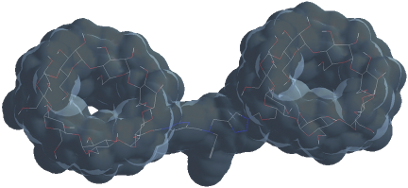
- 140, DK-8000 Aarhus, Denmark 10.3762/bjoc.11.58 Abstract A novel β-cyclodextrin (β-CD) dimer was synthesized and surface-grafted by click chemistry onto azide-functionalized quartz surfaces in order to introduce the cooperative features of the β-CD dimer to solid surfaces. Using NMR and fluorescence
- to parent β-CD) for the inclusion of lipophilic molecules [5][9]. The extensive research on the topic has generated a vast number of different β-CD-dimer constructs and methods for the synthesis thereof. Of these methods, synthesis by click chemistry (and specifically the copper(I)-catalyzed azide


Functionalized branched EDOT-terthiophene copolymer films by electropolymerization and post-polymerization “click”-reactions
Beilstein J. Org. Chem. 2015, 11, 335–347, doi:10.3762/bjoc.11.39
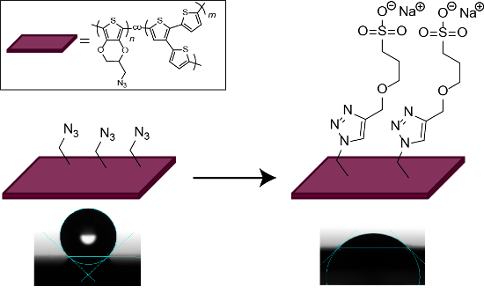
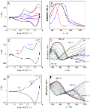
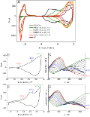
- levels. The use of EDOT-N3 as co-monomer furthermore allows modifications of the films by polymer analogous reactions. Here, we exemplarily describe the post-functionalization with ionic moieties by 1,3-dipolar cycloaddition (“click”-chemistry) which allows to tune the surface polarity of the copolymer
- films from water contact angles of 140° down to 40°. Keywords: band-gap engineering; “click”-chemistry; conducting polymers; electropolymerization; Raman spectroscopy; surface functionalization; Introduction The many different applications of conducting polymers demand for tailored properties
- and alkynes (“click”-reaction) is a commonly used reaction in post-polymerization processes [39][40]. In the case of the azidomethyl-modified EDOT (EDOT-N3) building block different approaches of modifying the corresponding polymer PEDOT-N3 have been conducted so far, including the modification of





C-5’-Triazolyl-2’-oxa-3’-aza-4’a-carbanucleosides: Synthesis and biological evaluation
Beilstein J. Org. Chem. 2015, 11, 328–334, doi:10.3762/bjoc.11.38

- by exploiting a click chemistry reaction of 5’-azido-2’-oxa-3’-aza-4’a-carbanucleosides with substituted alkynes. Biological tests indicate an antitumor activity for the synthesized compounds: most of them inhibit cell proliferation of Vero, BS-C-1, HEp-2, MDCK, and HFF cells with a CC50 in the range
- of 5.0–40 μM. The synthesized compounds do not show any antiviral activity. Keywords: antitumor activity; click chemistry; 1,3-dipolar cycloaddition; nucleic acids; 2’-oxa-3’-aza-4’a-carbanucleoside analogs; Introduction Synthetic modified nucleosides are of great interest as potential new lead
- Sharpless [46] (Scheme 1 and Table 1). The click chemistry process, carried out with equimolar amounts of the respective dipolarophiles, afforded in all the cases the corresponding C-5’-triazolyl-2’-oxa-3’-aza-4’a-carbanucleosides 13 and 14 in good yields (79–89%). According to other copper-catalyzed azide


Formation of nanoparticles by cooperative inclusion between (S)-camptothecin-modified dextrans and β-cyclodextrin polymers
Beilstein J. Org. Chem. 2015, 11, 147–154, doi:10.3762/bjoc.11.14
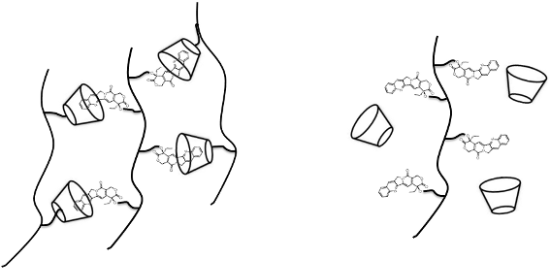
- , ICMPE, CNRS and University Paris Est, 2 rue Henri Dunant, 94320 Thiais, France 10.3762/bjoc.11.14 Abstract Novel (S)-camptothecin–dextran polymers were obtained by “click” grafting of azide-modified (S)-camptothecin and alkyne-modified dextrans. Two series based on 10 kDa and 70 kDa dextrans were
- were based on a 10 kDa and 70 kDa dextran backbone, respectively, which had been modified with alkynes by reaction with glycidyl propargyl ether (GP) as previously described [15]. The subsequent CuAACs with the alkyne-modified dextrans were made in DMSO using standard “click” conditions with 5 mol % Cu
- (I) compared to alkynes, stabilized with TBTA (Scheme 2). In order to maintain a reductive environment 15 mol % sodium ascorbate was added. The “click” conjugation was achieved within 24 hours at ambient temperature. The complete conversion of terminal alkyne protons with corresponding appearance of


Articulated rods – a novel class of molecular rods based on oligospiroketals (OSK)
Beilstein J. Org. Chem. 2015, 11, 74–84, doi:10.3762/bjoc.11.11

- functionalizations in terminal positions. First applications were presented with pyrene, cinnamoyl and anthracenyl labelled ARs. Keywords: articulated rods; click chemistry; molecular rods; oligospiroketals; pyrene excimer; Introduction One of the basic principles in living nature is based on shape-persistent and
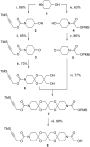
- defined a 1,2,3-triazole containing linkage between two piperidine rings as the flexible joint F, which should be easily accessible by copper-catalyzed cycloaddition between an azide G and a terminal alkyne H (CuAAC, “Click” reaction) [16]. Primary alcohols I serve as “protected” azides accessible by
- Et3N (Scheme 2). With the first articulated rod 11 in hands we investigated whether it is possible to selectively activate the “click-functionalities” again. To our delight 11 could be converted in good yields both to the unprotected alkyne 12 and to the azide 13. Coupling of these articulated rods




Efficient deprotection of F-BODIPY derivatives: removal of BF2 using Brønsted acids
Beilstein J. Org. Chem. 2015, 11, 37–41, doi:10.3762/bjoc.11.6
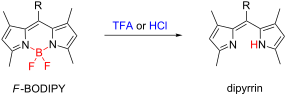
- ) effects this conversion in near-quantitative yields. Compared to existing methods, these conditions are relatively mild and operationally simple, requiring only reaction at room temperature for six hours (TFA) or overnight (HCl). Keywords: Brønsted acids; click chemistry; deboration; dipyrrins; F-BODIPYs
- reacted respectively with the complementary propargyl-tri-Boc cyclam 12 [23][32] and 2-azidoethyl-tri-Boc cyclam 13 [24][25] under the modified click conditions we have reported previously [24] to generate the Boc-protected triazolyl-cyclam/F-BODIPY conjugates 3 and 4 in excellent yields. In attempting to


Synthesis of antibacterial 1,3-diyne-linked peptoids from an Ugi-4CR/Glaser coupling approach
Beilstein J. Org. Chem. 2015, 11, 25–30, doi:10.3762/bjoc.11.4
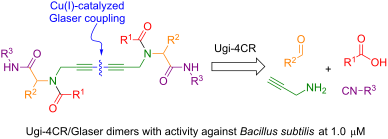
- linking reactions like, e.g., click reactions or amide bonds, the Glaser coupling allows the use of truly identical monomers. This decreases the number of steps for appropriate starting materials, and allows access to true homodimers in sensu strictu. Results and Discussion To achieve the synthesis of


Conjugates of methylated cyclodextrin derivatives and hydroxyethyl starch (HES): Synthesis, cytotoxicity and inclusion of anaesthetic actives
Beilstein J. Org. Chem. 2014, 10, 3087–3096, doi:10.3762/bjoc.10.325
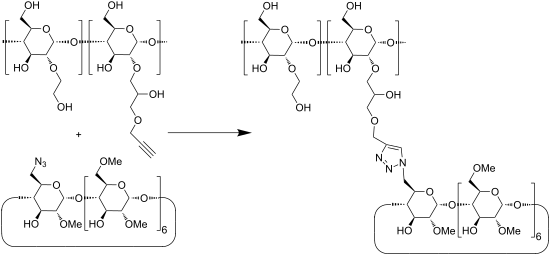
- ] and its Cu+-catalyzed version, called click reaction [31][32], is of special interest because this coupling proceeds rapidly and specific in aqueous media and tolerates many functional groups. Mono-6-azido-6-deoxy-β-CD was already coupled by the click reaction to propargylated dextrane by Nielsen et
- propargyl ether leading to a highly water soluble polymer 3 with DSHES(propargyl) = 0.55. Coupling of the CD azides 1a and 1b to the propargylated HES was performed by Cu+-catalyzed [2 + 3] cycloaddition, the so-called click reaction, leading to the corresponding triazol groups (Scheme 3). The standard
- polymer backbone by the click-reaction is a very efficient way to synthesise polymeric hosts with both low toxicity and excellent binding potential. The conjugate of DIMEB and HES 5a is regarded as a good candidate for oral or parenteral delivery of hydrophobic drugs. Experimental Complexation of




Synthesis of divalent ligands of β-thio- and β-N-galactopyranosides and related lactosides and their evaluation as substrates and inhibitors of Trypanosoma cruzi trans-sialidase
Beilstein J. Org. Chem. 2014, 10, 3073–3086, doi:10.3762/bjoc.10.324

- the bioavailability in vivo [31]. Triazole-substituted β-galactopyranosides and triazole-sialyl mimetics have been synthesized by click chemistry and their inhibitory activity on the hydrolysis of 2’-(4-methylumbelliferyl)-β-D-N-acetylneuraminic acid by TcTS and trypanocidal activity were evaluated
- [32][33]. In the present work, we selected thioglycosidic and N-glycosidic bonds to link the acceptor sugars to a platform by click chemistry, taking into consideration that they are highly resistant to enzymatic hydrolysis [34][35]. We have previously described the synthesis of multivalent β
- infection process. Experimental The synthetic general methods are described in the Supporting Information File 1. Synthesis of compounds 10, 12, 15, 17, 20 and 22. General procedure for the click reaction [43][44]. The corresponding azido-saccharides 9 or 14 [34] (0.20 mmol) and N-linked glycosides 3 or 6




Organic chemistry on surfaces: Direct cyclopropanation by dihalocarbene addition to vinyl terminated self-assembled monolayers (SAMs)
Beilstein J. Org. Chem. 2014, 10, 2897–2902, doi:10.3762/bjoc.10.307

- -SiCl3 and silicon substrate). In the latter chemical modification of the reactive groups of the pre-coated SAM has to be efficient enough such that a reasonable conversion can be obtained, with chemical specificity and lack of surface degradation. In this respect ‘click’ reactions have become attractive




A small azide-modified thiazole-based reporter molecule for fluorescence and mass spectrometric detection
Beilstein J. Org. Chem. 2014, 10, 2470–2479, doi:10.3762/bjoc.10.258

- profiling (ABPP); bioorthogonal; click chemistry; mass defect; molecular probe; Introduction Fluorescent dyes are widely used for detection and monitoring in the fields of chemistry, biochemistry, molecular biology, medicine and material sciences. Due to sensitive and selective detection methods and
- fluorophores requires the attachment of the fluorescent reporter to bio(macro)molecules or synthetic probes. Especially “click chemistry”, introduced by Sharpless and coworkers in 2001 [7], is a widely used strategy to attach fluorophores covalently to other molecules. Among "click" reactions the Cu(I


Synthesis of aromatic glycoconjugates. Building blocks for the construction of combinatorial glycopeptide libraries
Beilstein J. Org. Chem. 2014, 10, 2453–2460, doi:10.3762/bjoc.10.256
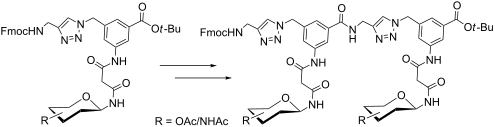
- hydrogenation of the latter with Lindlar catalyst afforded 7 almost quantitatively. Likewise, copper(I)-catalyzed 1,3-dipolar cycloaddition (Click reaction) [15][16][17][18] of 5 with Fmoc-protected propargylamine afforded first t-butyl benzoate 8 in 87% yield. Hydrogenation of the latter with Pd on charcoal


Reversibly locked thionucleobase pairs in DNA to study base flipping enzymes
Beilstein J. Org. Chem. 2014, 10, 2293–2306, doi:10.3762/bjoc.10.239
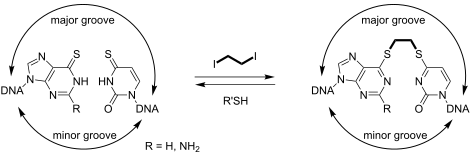
- -linking reaction itself is straight-forward, the vinyl-substituted nucleosides need to be chemically synthesized and subsequently converted into their phosphoamidites for chemical DNA synthesis. The same holds true for cross-links based on aldehyde [8][35][36][37] or click chemistry [38]. In addition


Solution phase synthesis of short oligoribonucleotides on a precipitative tetrapodal support
Beilstein J. Org. Chem. 2014, 10, 2279–2285, doi:10.3762/bjoc.10.237
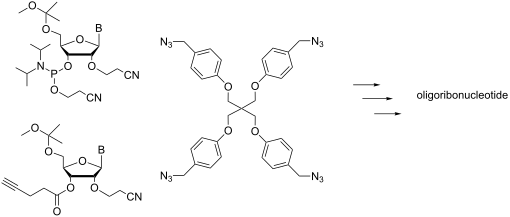
- support by a Cu(I) catalyzed click reaction and conventional phosphoramidite chemistry is then applied. The advantage of this support is that the small molecular reagents and byproducts are removed in each coupling cycle by two fully quantitative precipitations from MeOH, one after oxidation and the


Synthesis and optical properties of pyrrolidinyl peptide nucleic acid carrying a clicked Nile red label
Beilstein J. Org. Chem. 2014, 10, 2166–2174, doi:10.3762/bjoc.10.224
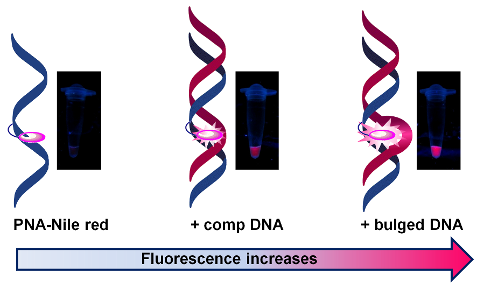
- , pyrrolidinyl peptide nucleic acid (acpcPNA) was labeled at its backbone with Nile red, a solvatochromic benzophenoxazine dye, by means of click chemistry. The optical properties of the Nile red-labeled acpcPNA were investigated by UV–vis and fluorescence spectroscopy in the absence and in the presence of DNA
- insertion are suggestive of different interactions between the Nile red label and the duplexes. Keywords: click chemistry; deoxyribonucleic acid; DNA bulge; fluorescence; nucleic acids; solvatochromism; Introduction Fluorescent labels are important tools for investigating the structure and dynamics of
- of Nile red-labeled DNA by acpcPNA [32], no combination of the Nile red label and PNA has yet been reported in the literature. It is therefore our purpose to develop a facile method for synthesizing Nile red-labeled acpcPNA based on the click strategy [33][34][35][36] and to investigate its optical


Convergent synthetic methodology for the construction of self-adjuvanting lipopeptide vaccines using a novel carbohydrate scaffold
Beilstein J. Org. Chem. 2014, 10, 1741–1748, doi:10.3762/bjoc.10.181
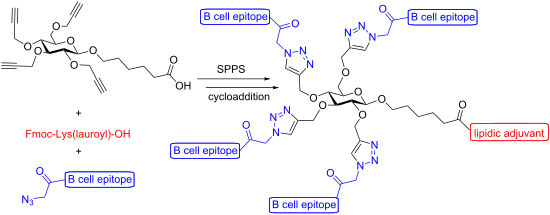
- ‘click’ reaction [20] was employed to couple multiple copies of purified B cell peptide antigens onto the carbohydrate core and lipidic adjuvanting moiety. This type of convergent approach has a number of advantages over the previously described divergent route. Since each component is synthesized
- building block 1 reported here is concise and efficient, involving only one chromatographic step and takes advantage of the highly efficient “click” reaction. Synthesis of lipo-amino acid Lipidation of peptides is important as it is often used to improve stability and permeability of potential therapeutics



Investigations of thiol-modified phenol derivatives for the use in thiol–ene photopolymerizations
Beilstein J. Org. Chem. 2014, 10, 1733–1740, doi:10.3762/bjoc.10.180

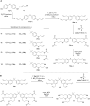
- [13][14], siloranes [15] or spiroorthocarbonates [16] are worth to be mentioned. Since Sharpless et al. published their concept of click chemistry in 2001, these reactions gained growing impact on the design of new materials [17]. Besides the alkyne–azide reaction, especially thiol–ene reactions were




Clicked and long spaced galactosyl- and lactosylcalix[4]arenes: new multivalent galectin-3 ligands
Beilstein J. Org. Chem. 2014, 10, 1672–1680, doi:10.3762/bjoc.10.175
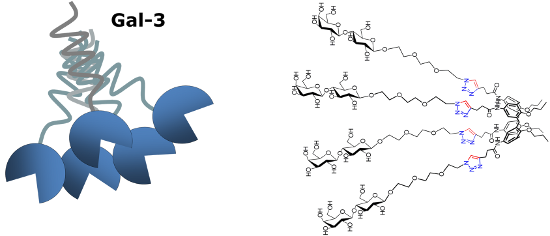
- . Furthermore, we confirmed that in case of this specific lectin binding the presentation of lactose units on a cone calixarene is highly preferred with respect to its isomeric form in the 1,3-alternate structure. Keywords: glycocalixarenes; cluster glycoside effect; multivalency; click chemistry; surface
- glycocalixarenes “Click Chemistry” [23] reactions are extensively used to conjugate (oligo)saccharides to macrocyclic structures due to the mild conditions and the high yields [24]. For the synthesis of glycocalixarenes the amino–isothiocyanate condensation [25][26][27][28][29][30] or the 1,3-dipolar cycloaddition
- substitution reaction of chloride with NaN3 (Scheme 3) led to the corresponding azido derivative 15, which was used to “click” both the cone (8) and 1,3-alternate (18) pentynoic amides. Compound 18 was obtained from the corresponding 1,3-alternate p-aminocalix[4]arene 17 [47] by a reaction with EDC in CH2Cl2


Chemistry of polyhalogenated nitrobutadienes, 14: Efficient synthesis of functionalized (Z)-2-allylidenethiazolidin-4-ones
Beilstein J. Org. Chem. 2014, 10, 1638–1644, doi:10.3762/bjoc.10.170

- (1) as a precursor for the “click synthesis” of highly functionalized (hetero)cyclic as well as acyclic compounds [1][2][3][4][5][6][7][8][9][10][11][12][13][14][15]. The corresponding syntheses that we have developed up to now [2][3][4][5][6][7][8][9][10][11][12][13], always start with the attack of


Triazol-substituted titanocenes by strain-driven 1,3-dipolar cycloadditions
Beilstein J. Org. Chem. 2014, 10, 1630–1637, doi:10.3762/bjoc.10.169

- active complexes allows the identification of structural features essential for biological activity. Keywords: azides; click-chemistry; cycloadditions; cytotoxicity; titanocenes; Introduction Group 4 metallocenes and derivatives of Cp2TiCl2, in particular, continue to be in the focus of contemporary


The search for new amphiphiles: synthesis of a modular, high-throughput library
Beilstein J. Org. Chem. 2014, 10, 1578–1588, doi:10.3762/bjoc.10.163

- anomeric linkages. A library of 80 amphiphiles was subsequently produced, using a 24-vial array, with the majority formed in very good to excellent yields. A preliminary assessment of the liquid-crystalline phase behaviour is also presented. Keywords: amphiphiles; carbohydrates; click chemistry; high
- delivery. Many other fields have utilised the copper-catalysed azide–alkyne cycloaddition (CuAAC) ‘click’ reaction [16][17] to generate libraries of compounds, including enzyme inhibitors [18][19][20], catalysis ligands [21][22][23] and metal frameworks [24][25]. We have recently demonstrated that a


Synthesis and solvodynamic diameter measurements of closely related mannodendrimers for the study of multivalent carbohydrate–protein interactions
Beilstein J. Org. Chem. 2014, 10, 1524–1535, doi:10.3762/bjoc.10.157
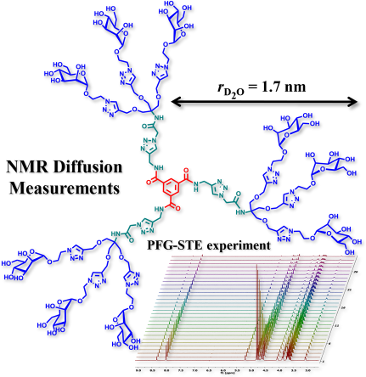
- 9-mer 12, 17, and 21 were determined by pulsed-field-gradient-stimulated echo (PFG-STE) NMR experiments and were found to be 3.0, 2.5, and 3.4 nm, respectively. Keywords: carbohydrates; click chemistry; dendrimers; glycodendrimers; lectins; multivalent glycosystems; Introduction Multivalent
- signal (3H) at δ 4.81 ppm and corresponding HRMS data. Zemplén deprotection (NaOMe, MeOH) afforded 5 in 94% yield. Synthesis of the related homolog 9, prepared in 74% overall yield from known 6 [17] by an analogous click chemistry, is also described in Scheme 1. To this end, trichloride 1 was treated as
- -products together with a better assessment of complete surface group modifications. Hence, known 14 [36] was first cycloadded to mannosylazide 3 under the above CuAAc conditions. The “click reaction” proceeded exceptionally efficiently and provided bromoacylated dendron precursor 18 in 94% yield





