Search results
Search for "X-ray" in Full Text gives 1345 result(s) in Beilstein Journal of Organic Chemistry. Showing first 200.
Manganese-catalyzed C–C and C–N bond formation with alcohols via borrowing hydrogen or hydrogen auto-transfer
Beilstein J. Org. Chem. 2024, 20, 1111–1166, doi:10.3762/bjoc.20.98

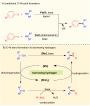
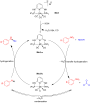
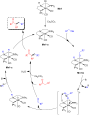
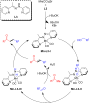
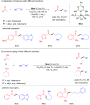
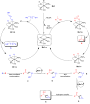
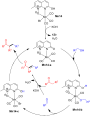
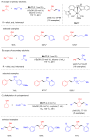
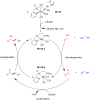
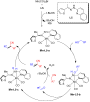
- products (Scheme 5). Interestingly, the dearomatized intermediate resulting from the reaction of base and Mn3 was isolated and characterized by X-ray analysis during the mechanistic investigation. In 2018, Kempe et al. disclosed that the choice of the base plays a critical role in the BH method for the



























Mild and efficient synthesis and base-promoted rearrangement of novel isoxazolo[4,5-b]pyridines
Beilstein J. Org. Chem. 2024, 20, 1069–1075, doi:10.3762/bjoc.20.94
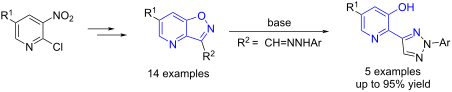
- inhibitor of homeodomain-interacting protein kinases (HIPKs) [32], and combretastatin A-4 analogs evaluated for their anticancer properties against a panel of 60 human cancer cell lines [33] (Figure 2). The structures of all new compounds were confirmed by 1H and 13C NMR and HRMS. X-ray diffraction studies
- -oriented heterocyclic systems. Some examples of biologically active isoxazolo[4,5-b]pyridines with antibacterial [8], anticancer [12] and cytotoxic [10][13] acitivities. Biologically active analogs of compounds 13. X-ray crystal structures of compounds 12c (top left; the second crystallographically unique
- . Yields of compounds 12 and 13. Supporting Information Supporting Information File 16: Experimental section, NMR spectra and X-ray analysis data.


Structure–property relationships in dicyanopyrazinoquinoxalines and their hydrogen-bonding-capable dihydropyrazinoquinoxalinedione derivatives
Beilstein J. Org. Chem. 2024, 20, 1037–1052, doi:10.3762/bjoc.20.92
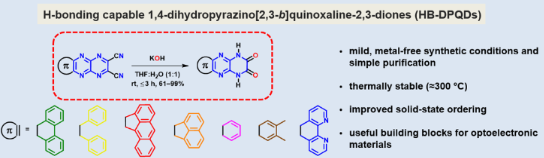
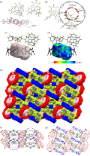
- ). Single crystal X-ray diffraction data could be obtained for three DPQDs. One reveals pairwise hydrogen bonding in the solid state as well as a herringbone packing arrangement rendering it a promising candidate for additional studies in the context of organic optoelectronic devices. Keywords: conjugated
- moderate to excellent hole transport mobilities (1.5 × 10⁻³ and 1.5 cm2/Vs, respectively) [21]. In 2012, Miao et al. reported an H-bonding capable 1,4-dihydropyrazinopyrazine fragment within N-heteroacenes [22]. The X-ray analysis of single crystals revealed the formation of highly-ordered ribbons
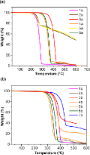
- exhibits a noteworthy impact on the thermal stabilities (analyzed by TGA) of the compounds. The single-crystal X-ray diffraction of DPQD 2b exhibits a desirable herringbone solid-state arrangement for a potential OFET application. Complementary gas-phase computational analysis has provided insight into the




Novel analogues of a nonnucleoside SARS-CoV-2 RdRp inhibitor as potential antivirotics
Beilstein J. Org. Chem. 2024, 20, 1029–1036, doi:10.3762/bjoc.20.91
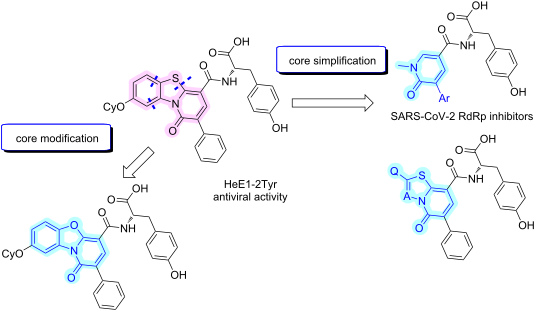
- insufficient evidence provided even by meticulous NMR analysis and eventually had to be confirmed by X-ray crystallography (Figure S1, Supporting Information File 1). Changing the ester function from an ethyl to an allyl group enabled a very mild cleavage using a Pd-mediated reaction with triethylsilane [28
- : Experimental procedures, spectra and X-ray data. Acknowledgements We thank Lucie Bednárová from the Institute of Organic Chemistry and Biochemistry of the Czech Academy of Sciences for the help with the analysis of compound 13. Funding The work was supported by the National Institute of Virology and


Spin and charge interactions between nanographene host and ferrocene
Beilstein J. Org. Chem. 2024, 20, 1011–1019, doi:10.3762/bjoc.20.89
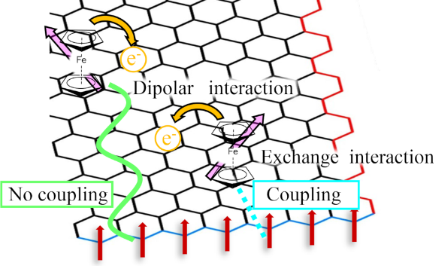
- (SQUID) [21][22] and X-ray magnetic circular dichroism (XMCD) spectroscopy [23]. However, only a tiny paramagnetic behavior of encapsulated ferrocene was observed, and no magnetic host–guest interactions were reported due to the diamagnetic nature of CNTs. Activated carbon fibers (ACFs) consist of a
- magnetic interactions between the nanographene host and FeCp2 guest molecules to achieve a ferromagnet using nanographene host–guest systems. In this study, we introduced ferrocene to ACFs and investigated the magnetic interaction between the host ACFs and ferrocene as magnetic guest molecule using X-ray
- surface of ACFs, which were removed by heating the FeCp2-treated ACFs at 150 °C for 3 hours without FeCp2 vapor. XPS spectra were recorded using a PHI-5600 (ULVAC-PHI) with an Al Kα X-ray source (1486.7 eV) for samples mounted on an indium film. Raman spectroscopy measurements were performed by LabRAM HR


Monitoring carbohydrate 3D structure quality with the Privateer database
Beilstein J. Org. Chem. 2024, 20, 931–939, doi:10.3762/bjoc.20.83

- complement the growing glycan content of the PDB. Keywords: carbohydrates; database; N-glycans; N-glycosylation; polysaccharides; validation; website; Introduction Carbohydrate modelling is an important but often cumbersome stage in the macromolecular X-ray structure solution workflow. The accurate


One-pot Ugi-azide and Heck reactions for the synthesis of heterocyclic systems containing tetrazole and 1,2,3,4-tetrahydroisoquinoline
Beilstein J. Org. Chem. 2024, 20, 912–920, doi:10.3762/bjoc.20.81
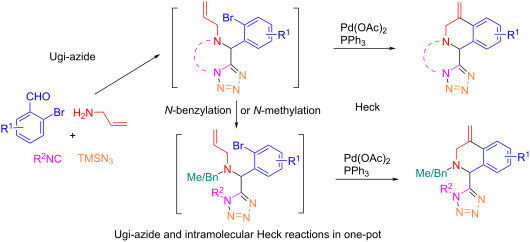
- and 13C NMR, and HRMS analysis. In addition, single crystals of compound 6d and 8c were obtained for X-ray analysis to confirm the structures (Figure 2). Conclusion In conclusion, we have developed a one-pot synthesis with two or three steps for making tetrazolo-pyrazino[2,1-a]isoquinolin-6(5H)-ones


Synthesis and properties of 6-alkynyl-5-aryluracils
Beilstein J. Org. Chem. 2024, 20, 898–911, doi:10.3762/bjoc.20.80
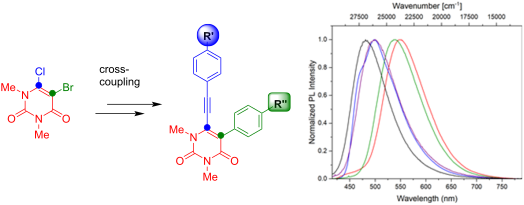
- ring instead of a benzene moiety. This was demonstrated by the introduction of thiophene (5r) and furan (5t) to the uracil structure. The molecules 5n and 5o could not be obtained, due to decomposition during the reaction. The structure of 5a was confirmed by X-ray crystallographic analysis. Crystals
- ). Samples were ionized by electron impact ionization (EI) on an Agilent 6890/5973 or Agilent 7890/5977 GC–MS equipped with a HP-5 capillary column using helium carrier gas or by electron spray ionization (ESI) on an Agilent 1200/6210 time-of-flight (TOF) LC–MS. X-ray single-crystal structure analysis was
- molecules within and between a layer with two molecules at the top and the bottom of the unit cell. b) Determined from X-ray structural analysis at 123 K. Element color: carbon (grey), hydrogen (white), oxygen (red) and nitrogen (blue). The thermal ellipsoids are drawn at the 50% probability level. UV–vis


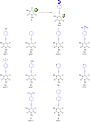

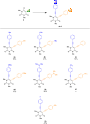
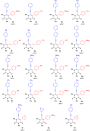


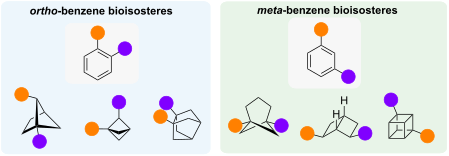
(Bio)isosteres of ortho- and meta-substituted benzenes
Beilstein J. Org. Chem. 2024, 20, 859–890, doi:10.3762/bjoc.20.78


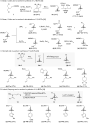


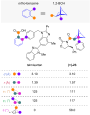
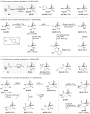


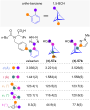
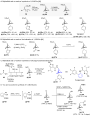


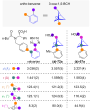


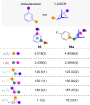

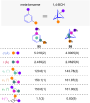


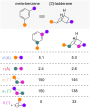


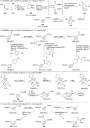


Confirmation of the stereochemistry of spiroviolene
Beilstein J. Org. Chem. 2024, 20, 852–858, doi:10.3762/bjoc.20.77
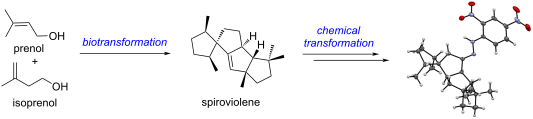
- Abstract We confirm the previously revised stereochemistry of spiroviolene by X-ray crystallographically characterizing a hydrazone derivative of 9-oxospiroviolane, which is synthesized by hydroboration/oxidation of spiroviolene followed by oxidation of the resultant hydroxy group. An unexpected thermal
- , direct evidences such as single-crystal X-ray diffraction results were not reported in their study. The reassignment of the stereochemistry at C3 has resulted in the revision of the proposed cyclization mechanism [12][13][14]. The revised mechanism resembled the cyclization process for the formation of
- stereochemistry by X-ray crystallography using a hydrazone derivative of 1. Results and Discussion Our work commenced with the heterologous production of spiroviolene by E. coli using a recently developed isopentenol utilization pathway for the efficient supply of two C5 precursors for terpene biosynthesis




Skeletal rearrangement of 6,8-dioxabicyclo[3.2.1]octan-4-ols promoted by thionyl chloride or Appel conditions
Beilstein J. Org. Chem. 2024, 20, 823–829, doi:10.3762/bjoc.20.74
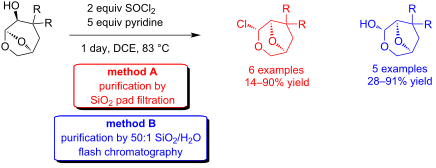
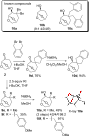
- stereoisomer 10f in 91% yield. The selectivity of the NaBH4 reduction was confirmed for both 10d (see discussion in Supporting Information File 1) and 10e by X-ray crystallography (Figure 2 and Scheme 1, respectively). The oxygen-migration reaction giving 11a was initially observed using the readily available
- , with the exo-hemiacetals favoured due to steric interactions between the substituents and alcohol, while the attempted preparation of 12b led only to complex mixtures (Scheme 2). The products of the reactions were characterised by 1D and 2D NMR, and X-ray crystallography of members from each class was
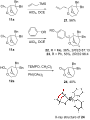
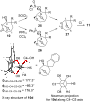
- the X-ray crystal structures for 11a and 11b allowing for the unambiguous assignment of configuration. The chlorinated product 14 contaminating 11b exhibited a 1H NMR spectrum similar to the starting material 10b, except that the resonance for the H4 methine was shifted from δ 3.60 in 10b to δ 3.90




Advancements in hydrochlorination of alkenes
Beilstein J. Org. Chem. 2024, 20, 787–814, doi:10.3762/bjoc.20.72
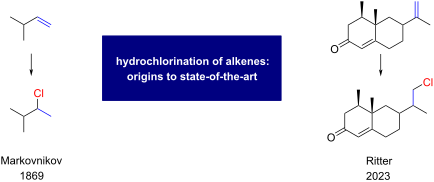
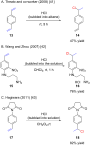
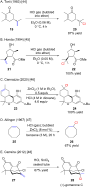
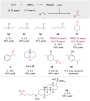
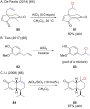
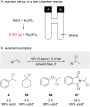
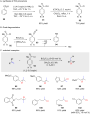
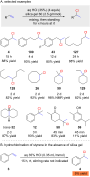
- forms a dissociated hydrogen chloride aggregate in the form of complexes 103 or 105. An X-ray structure of complex 105 was reported and the reaction 104 → 105 is described in the report by Snyder, though not stoichiometric balanced. These complexes seem to play a pivotal role in the hydrochlorination












Regioselective quinazoline C2 modifications through the azide–tetrazole tautomeric equilibrium
Beilstein J. Org. Chem. 2024, 20, 675–683, doi:10.3762/bjoc.20.61
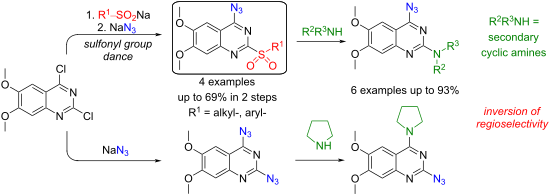
- of 4-azido-6,7-dimethoxy-2-sulfonylquinazoline derivatives 12 were proven by chemical synthesis of the regioisomers 15 (Scheme 7) and X-ray analysis of 12a (Scheme 6). 6,7-Dimethoxy-2,4-diazidoquinazoline (13) was synthesized from commercially available dichloroquinazoline 7 in 93% yield. Further
- explanation for the present tetrazole form in the solutions. Surprisingly, FTIR and X-ray analyses of 12a in the solid state indicated the existence of 12a in the azide form. In subsequent experiments it was discovered that for less nucleophilic N-nucleophiles (piperidine, morpholine, N-methylpiperazine) C2


Production of non-natural 5-methylorsellinate-derived meroterpenoids in Aspergillus oryzae
Beilstein J. Org. Chem. 2024, 20, 638–644, doi:10.3762/bjoc.20.56
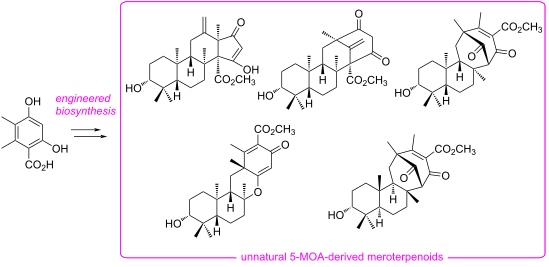
- the complete structural determination of 3. To overcome this challenge in structural determination, we obtained a single crystal of 3 and performed X-ray diffraction analysis, which unambiguously established the structure of 3 as 5′-desmethylpreterretonin A (Figure 2C and Figure S1 in Supporting
- -5′ desmethyl form of the product from the K187A variant of AdrI, which was created during the in-depth functional analysis of terpene cyclases involved in DMOA-derived meroterpenoid biosynthesis [21], through NMR and single-crystal X-ray crystallographic analyses (Figure 2C and Figure S1 in
- . Finally, the A. oryzae strain expressing insA7 produced two major metabolites 7 and 8. Compound 7 was determined to be the C-5′ desmethyl form of insuetusin A1 [19] using NMR and single-crystal X-ray diffraction analyses (Figure 2C and Figure S1 in Supporting Information File 1; CCDC: 2300695) and was



A laterally-fused N-heterocyclic carbene framework from polysubstituted aminoimidazo[5,1-b]oxazol-6-ium salts
Beilstein J. Org. Chem. 2024, 20, 621–627, doi:10.3762/bjoc.20.54
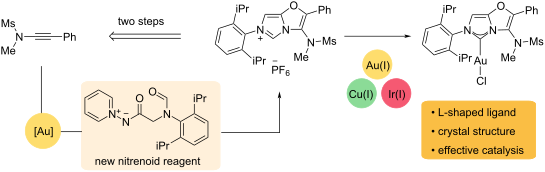
- the C(oxazole)–N(sulfonamide) bond. No coalescence is observed at up to 110 °C indicating that these motifs might be useful as a robust atropisomeric system. The molecular structure of 13 and 14 have been unambiguously determined by single crystal X-ray diffraction (Scheme 2) [28]. The N–metal
- complexes from 6a. The single crystal X-ray diffraction structures of 13 and 14 have ellipsoids drawn at 50% probability, with hydrogens and solvent omitted for clarity. Selected bond angles and distances: 13: C1–Au: 1.98 Å, Au–Cl: 2.28 Å, N2–Au: 3.65 Å. N1–C1–N3: 102.7°, N3–C1–Au: 129.5°, N1–C1–Au: 127.1


Recent developments in the engineered biosynthesis of fungal meroterpenoids
Beilstein J. Org. Chem. 2024, 20, 578–588, doi:10.3762/bjoc.20.50
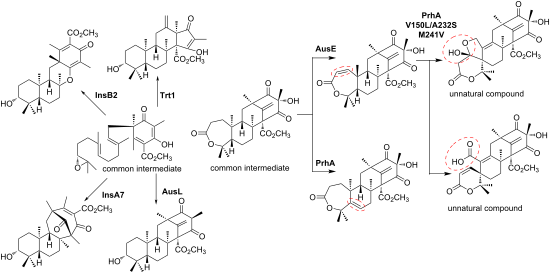
- mutagenesis of key enzymes, including terpene cyclases and α-ketoglutarate (αKG)-dependent dioxygenases, that contribute to the structural diversity. Notable progress in genome sequencing has led to the discovery of many novel genes encoding these enzymes, while continued efforts in X-ray crystallographic






Entry to new spiroheterocycles via tandem Rh(II)-catalyzed O–H insertion/base-promoted cyclization involving diazoarylidene succinimides
Beilstein J. Org. Chem. 2024, 20, 561–569, doi:10.3762/bjoc.20.48
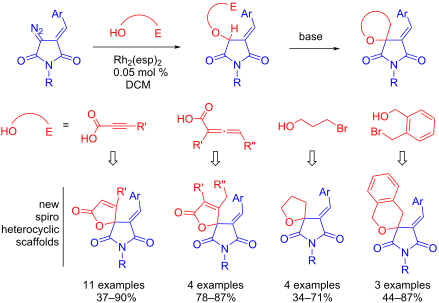
- the reaction in the presence of DIPEA proceeded selectively, albeit more slowly. By increasing the DIPEA loading to 50 mol %, the product 2a was isolated in 75% yield after incubation for 7 days at room temperature. The structure of the obtained spirobutenolide was confirmed by single crystal X-ray
- of compound 4b has been confirmed by single crystal X-ray data. The next step was to investigate the possibility of obtaining six-membered oxygen-containing spiroheterocycles by interaction of DAS 1 with 2-(bromomethyl)benzyl alcohol (15) (Scheme 6). The synthesis was carried out under the conditions
- . These data are provided free of charge by the joint Cambridge Crystallographic Data Centre and Fachinformationszentrum Karlsruhe Access Structures service https://www.ccdc.cam.ac.uk/structures. Supporting Information File 30: General experimental information, X-ray crystallographic data, synthetic


Synthesis of photo- and ionochromic N-acylated 2-(aminomethylene)benzo[b]thiophene-3(2Н)-ones with a terminal phenanthroline group
Beilstein J. Org. Chem. 2024, 20, 552–560, doi:10.3762/bjoc.20.47
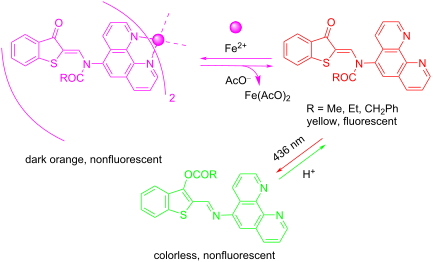
- products 3a–c were comprehensively characterized by IR, 1Н and 13C NMR spectroscopy, HRMS (Supporting Information File 2) as well as by X-ray diffraction analysis. The molecular structure of 3b is shown in Figure 3. The crystal data, details of the data collection and refinements for 3b as well as complete
- , HRMS and X-ray diffraction analysis. Selectively, Fe2+ caused an appearance of new broad long-wavelength absorption bands at 480−530 nm with a contrast naked-eye effect: a visually distinguishable color change of the solutions from yellow to dark orange. The obtained complexes with Fe2+ in acetonitrile
- ™ Impact instrument (electrospray ionization). Melting points were determined on a Fisher–Johns melting point apparatus. X-ray diffraction study The X-ray diffraction dataset of compound 3b was recorded on an Agilent SuperNova diffractometer using a microfocus X-ray radiation source with copper anode and


Synthesis and biological profile of 2,3-dihydro[1,3]thiazolo[4,5-b]pyridines, a novel class of acyl-ACP thioesterase inhibitors
Beilstein J. Org. Chem. 2024, 20, 540–551, doi:10.3762/bjoc.20.46
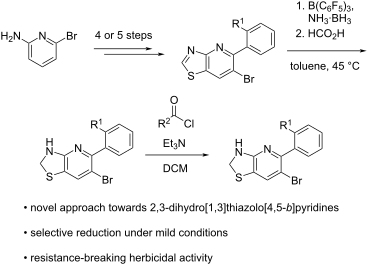
- lead structure with ample space for structural variations. By formally replacing one pyridine moiety of 1,8-naphthyridine 4 by a five-membered thiazole unit, we have identified thiazolo[4,5-b]pyridine 5 as a strong inhibitor of acyl-ACP thioesterase, which has further been confirmed via an X-ray co


Ligand effects, solvent cooperation, and large kinetic solvent deuterium isotope effects in gold(I)-catalyzed intramolecular alkene hydroamination
Beilstein J. Org. Chem. 2024, 20, 479–496, doi:10.3762/bjoc.20.43
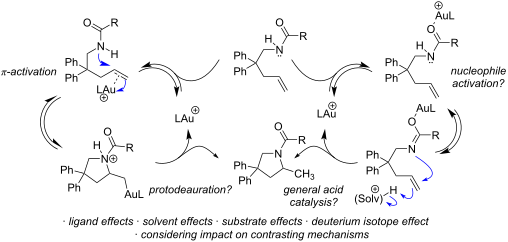
- doublets at 107 and 69 ppm, with J = 275.5 Hz, and a singlet at 70.5 ppm (Figure 4c) [42]. In all attempts to prepare bisphos 7a, the singlet and set of doublets were observed, and always in the same approximate ratio. X-ray crystallographic analysis shows C2 rotational symmetry and confirms the identity






Pseudallenes A and B, new sulfur-containing ovalicin sesquiterpenoid derivatives with antimicrobial activity from the deep-sea cold seep sediment-derived fungus Pseudallescheria boydii CS-793
Beilstein J. Org. Chem. 2024, 20, 470–478, doi:10.3762/bjoc.20.42
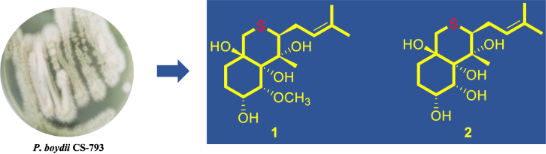
- and mass spectrometric data. X-ray crystallographic analysis confirmed and established the structures and absolute configurations of compounds 1–3, thus providing the first characterized crystal structure of an ovalicin-type sesquiterpenoid. In the antimicrobial assays, compounds 1–3 showed broad
- compound 1, crystals suitable for X-ray crystal analysis were obtained by slow evaporation of the solvent, which could be analyzed by X-ray diffraction analysis using Cu Kα radiation (Figure 4). The resulting Flack parameter, 0.019(6), allowed the assignment of the absolute configurations of all the
- verified by the COSY and HMBC correlations (Figure 2). The structure and relative configuration of compound 2 were deduced the same as for 1 by NOE correlations (Figure 3). Moreover, the absolute configurations of compound 2 were unambiguous determined by X-ray diffraction with the refined Flack parameter


Synthesis of 2,2-difluoro-1,3-diketone and 2,2-difluoro-1,3-ketoester derivatives using fluorine gas
Beilstein J. Org. Chem. 2024, 20, 460–469, doi:10.3762/bjoc.20.41
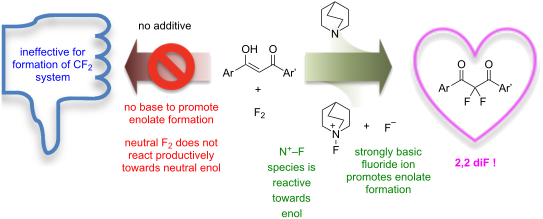
- % isolated yield (Scheme 2) and the structure was confirmed by NMR spectroscopy and X-ray crystallography (Figure 1). To expand the substrate scope of this difluorination method, a range of DBM derivatives 1b–n was synthesized from para-substituted acetophenones, para-substituted benzoyl chlorides and
- . Again, purification by column chromatography gave the products 3 as white crystalline solids and the structures of compounds 3f and 3i were confirmed by X-ray crystallography (Figure 2 and Supporting Information File 1). Molecules 3a, f, and i all exist in the solid state with the dicarbonyl moiety
- submission numbers: 2288841–2288848. Supporting Information File 2: Experimental procedures, characterization data, and copies of 1H, 19F and 13C{1H} NMR spectra. Acknowledgements We thank Dr Dmitry S. Yufit for conducting X-ray crystallographic studies. Parts of this work have already been published in


Enhanced host–guest interaction between [10]cycloparaphenylene ([10]CPP) and [5]CPP by cationic charges
Beilstein J. Org. Chem. 2024, 20, 436–444, doi:10.3762/bjoc.20.38
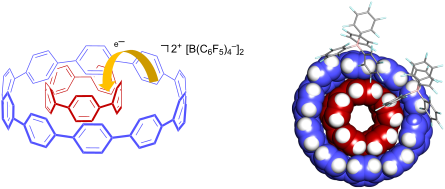
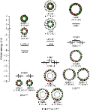
- photophysical and electrochemical analyses and DFT calculations. Therefore, this CT is most likely the origin of the increased Ka value. We also discuss the charged double-layer structure, as determined by X-ray crystallographic analysis. Results and Discussion The size-complementary interaction between CPP2
- observations also agree well with the change in oxidation and reduction potentials upon complex formation observed in the electrochemical analysis. The double-layered structure of the complex was unambiguously determined by single-crystal X-ray analysis (Figure 7), which was performed on a crystal obtained by
- sp2 carbon of [10]CPP within 0.30 nm. HOMO−1, HOMO, LUMO, and LUMO+1 orbitals of [10]CPP⊃[5]CPP2+ (1), [5]CPP2+, and [10]CPP. X-ray crystal structure of [10]CPP⊃[5]CPP2+[B(C6F5)4]2. a) Side and b) top views of ORTEP drawings. The thermal ellipsoids are scaled at the 50% probability level. All hydrogen




Facile approach to N,O,S-heteropentacycles via condensation of sterically crowded 3H-phenoxazin-3-one with ortho-substituted anilines
Beilstein J. Org. Chem. 2024, 20, 336–345, doi:10.3762/bjoc.20.34
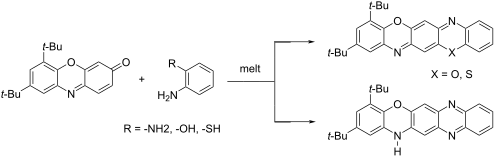
- short-term heating of the melted reactants at 220–250 °C is described, and the compounds were characterized by means of single-crystal X-ray crystallography, NMR, UV–vis, and IR spectroscopy, as well as cyclic voltammetry. The reaction with o-amino-, o-hydroxy-, and o-mercapto-substituted arylamines
- by X-ray crystallography and are shown in Figure 2 (i.e., 4f) and Figures S1 and S2, Supporting Information File 1 (i.e., 4c,d). The geometry of the phenoxazine-3-one fragment of 4c,d,f coincides with that found for 6,8-di-tert-butyl-3H-phenoxazin-3-one (1) [6]. A strong hydrogen bridge, N(15)–H···O
- molecular structure of 5c was also determined using X-ray crystallography (Figure 4). We assumed that the scope of the reaction shown in Scheme 3 could be expanded via replacement of one of the amino groups of o-phenylenediamine by another strong nucleophilic center. It was earlier found [23] that


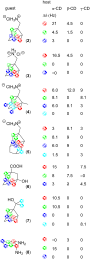
Spatial arrangements of cyclodextrin host–guest complexes in solution studied by 13C NMR and molecular modelling
Beilstein J. Org. Chem. 2024, 20, 331–335, doi:10.3762/bjoc.20.33
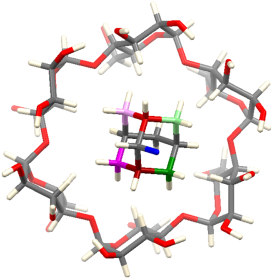
- modelling and solid-state X-ray analysis, provides a detailed description of the spatial arrangement of cyclodextrin host–guest complexes in solution. The chiral cavity of the cyclodextrin molecule creates an anisotropic environment for the guest molecule resulting in a splitting of its prochiral carbon
- calorimetry [13]. Single crystals for many host–guest complexes have been prepared, and their structure elucidated by X-ray crystallography [14][15]. Conformations of host–guest complexes in solution have been studied by 2D NMR experiments [11] (NOESY, ROESY) or proposed computationally [16][17] based on
- -cyclodextrins. Compounds 1, 6 and 8 are commercial, compounds 2–5 [21] and 7 [22] were prepared according to published procedures. Compound 2 (as a free amine) crystallized in the supramolecular capsule of two α-cyclodextrins, and the mono-crystal was subjected to X-ray analysis. This experiment was performed