


Search results
Search for "carbohydrate" in Full Text gives 310 result(s) in Beilstein Journal of Organic Chemistry. Showing first 200.
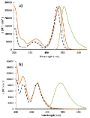
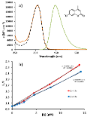
Synthesis and spectroscopic properties of β-triazoloporphyrin–xanthone dyads
Beilstein J. Org. Chem. 2015, 11, 1434–1440, doi:10.3762/bjoc.11.155
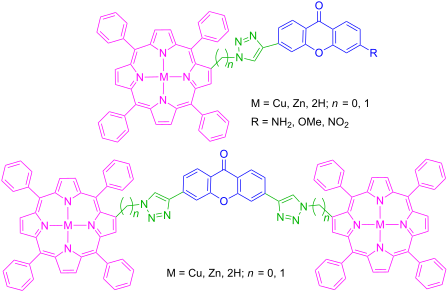
- porphyrins with diverse functionalities such as quinolone [19], ferrocene [20], carbohydrate [21] and fullerene [22] through a copper(I)-catalyzed Huisgen–Sharpless–Meldal 1,3-dipolar cycloaddition reaction [23][24]. Some of these triazolo-bridged porphyrin dyads have shown an efficient intramolecular energy


Selected synthetic strategies to cyclophanes
Beilstein J. Org. Chem. 2015, 11, 1274–1331, doi:10.3762/bjoc.11.142
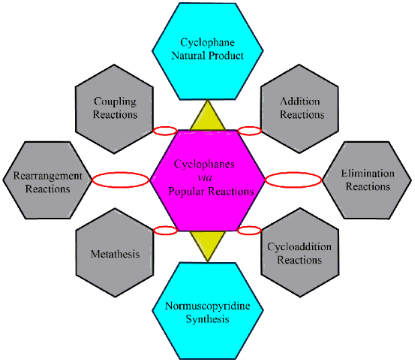
- cyclized product. The cleavage of the acetate groups with sodium methoxide in methanol gave the glycophane (a glycophane is a hybrid of carbohydrate and cyclophane) 143 (27%, Scheme 21). The synthesis of fullerene-related molecules with high binding affinity and/or high selectivity is an active research
- ] have reported the synthesis of a glycotriazolophane 309 (carbohydrate–triazole–cyclophane hybrid) from a sugar amino acid via a copper-catalyzed azide-alkyne cycloaddition sequence. An aminosugar acid was identified as a useful building block to generate cyclophanes. Thus, the treatment of 304 with






Are D-manno-configured Amadori products ligands of the bacterial lectin FimH?
Beilstein J. Org. Chem. 2015, 11, 1096–1104, doi:10.3762/bjoc.11.123

- E. coli bacteria by means of molecular docking and bacterial adhesion studies. It turns out that Amadori rearrangement products have a limited activity as inhibitors of bacterial adhesion because the β-C-glycosidically linked aglycone considerably hampers complexation within the carbohydrate binding
- aromatic moiety with the so-called tyrosine gate at the entrance of the carbohydrate binding site, formed by Y48 and Y137. Additional interactions exerted by extended aglycone portions can further improve ligand affinity for FimH; for example ortho-chloro substitution of the phenyl ring (compounds 2 and 5
- consideration of Amadori products 9 and 10 as FimH ligands The complexation of MeMan (1, cf. Figure 1) as the most simple FimH ligand in the carbohydrate binding site of FimH has been described in detail [10]. It is depicted in a simplified cartoon fashion in Figure 2. The α-configured aglycone moiety (OCH3 in


Multivalency as a chemical organization and action principle
Beilstein J. Org. Chem. 2015, 11, 848–849, doi:10.3762/bjoc.11.94
- [8][9][10][11][12] and studies the scope of multivalent lectin-glycointeractions in galectins [13], with iminosugars [14] and carbohydrate mimetics [15]. This Thematic Series in the Beilstein Journal of Organic Chemistry also investigates the enhanced multivalent binding of protein scaffolds [16

Orthogonal dual-modification of proteins for the engineering of multivalent protein scaffolds
Beilstein J. Org. Chem. 2015, 11, 784–791, doi:10.3762/bjoc.11.88
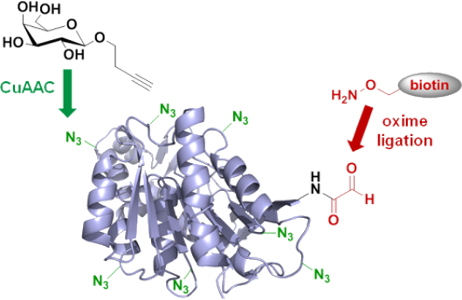
- carbohydrate ligands to the protein barstar [18]. In the current study, we aimed to extend this approach to the dual modification of proteins using a combination of two chemoselective, orthogonal conjugation reactions for the introduction of glycan ligands and biotin to a protein. Our main objective in this
- conjugated with biotin using oxime ligation, by which the protein scaffold was immobilized on a streptavidin gold chip to monitor carbohydrate–protein binding studies by surface plasmon resonance (SPR). This immobilization strategy allowed easy handling and reproducible orientation, which are notable
- , different linker lengths should be probed to allow better binding of multiple carbohydrate units of one protein scaffold with multiple binding sites of one lectin molecule. Conclusion In conclusion, we succeeded in the incorporation of two unnatural functional groups, namely azides and aldehydes, into a


Glycodendrimers: tools to explore multivalent galectin-1 interactions
Beilstein J. Org. Chem. 2015, 11, 739–747, doi:10.3762/bjoc.11.84
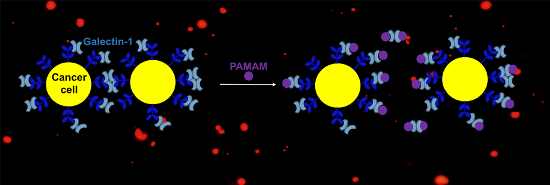
- activity through multivalent interactions with cell surface glycoconjugates [1][2][3][4]. Galectin-1 is a non-covalent homodimer that belongs to a family of β-galactoside binding proteins called galectins [5][6][7]. The monomeric units are oriented such that the two carbohydrate recognition domains are
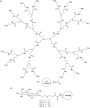
- very effectively used to organize proteins into biologically active arrays. Results Nanoparticle formation Poly(amidoamine) (PAMAM) dendrimers were used as a multivalent framework to study multivalent protein–carbohydrate interactions. The PAMAM structure is shown in Figure 2a. Second, third, fourth
- lactose endgroups on the dendrimers and the carbohydrate recognition site of galectin-1 occurs when nanoparticles are formed (Figure 6). Control experiments were performed with different functional groups on the multivalent framework. No aggregates were detected upon the addition of a polyhydroxylated




Probing multivalency in ligand–receptor-mediated adhesion of soft, biomimetic interfaces
Beilstein J. Org. Chem. 2015, 11, 720–729, doi:10.3762/bjoc.11.82
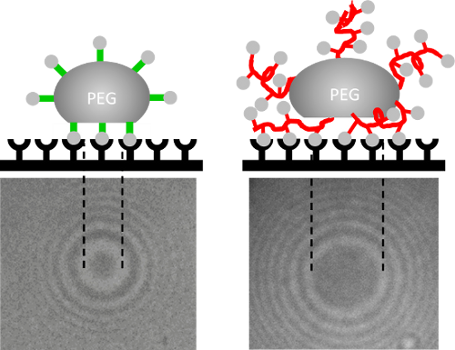
- , Institut für Organische und Makromolekulare Chemie, Universitätsstr. 1, 40225 Düsseldorf, Germany 10.3762/bjoc.11.82 Abstract Many biological functions at cell level are mediated by the glycocalyx, a dense carbohydrate-presenting layer. In this layer specific interactions between carbohydrate ligands and
- a concanavalin A (ConA) layer via poly(ethylene glycol)-(PEG)-based soft colloidal probes (SCPs). Special emphasis is on the dependence of multivalent presentation and density of carbohydrate units on specific adhesion. Consequently, we first present a synthetic strategy that allows for controlled
- type. Remarkably, the results indicated the absence of a molecular-level enhancement of mannose/ConA interaction due to chelate- or subsite-binding. The results seem to support the fact that weak carbohydrate interactions at mechanically flexible interfaces hardly undergo multivalent binding but are


DNA display of glycoconjugates to emulate oligomeric interactions of glycans
Beilstein J. Org. Chem. 2015, 11, 707–719, doi:10.3762/bjoc.11.81
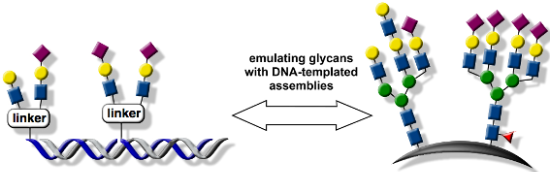
- Alexandre Novoa Nicolas Winssinger Department of Organic Chemistry, NCCR Chemical Biology, University of Geneva 30, quai Ernest Ansermet, 1211 Geneva, Switzerland 10.3762/bjoc.11.81 Abstract Glycans (carbohydrate portion of glycoproteins and glycolipids) frequently exert their function through
- oligomeric interactions involving multiple carbohydrate units. In efforts to recapitulate the diverse spatial arrangements of the carbohydrate units, assemblies based on hybridization of nucleic acid conjugates have been used to display simplified ligands with tailored interligand distances and valences. The
- ]. The first method reported was leveraged on a nucleophilic coupling between readily available glycosyl thiol (obtained in one step by treatment of a native carbohydrate with Lawesson’s reagent [37]) and a chloroacetamide-functionalized PNA (Scheme 7) [38][39]. Using this method, we have shown that


Synthesis of carbohydrate-scaffolded thymine glycoconjugates to organize multivalency
Beilstein J. Org. Chem. 2015, 11, 668–674, doi:10.3762/bjoc.11.75
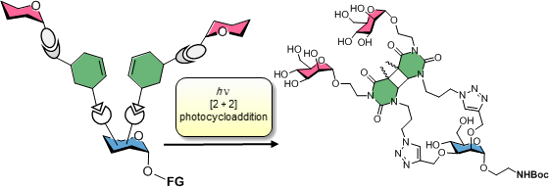
- Anna K. Ciuk Thisbe K. Lindhorst Christiana Albertina University of Kiel, Otto Diels Institute of Organic Chemistry, Otto-Hahn-Platz 3/4, D-24118 Kiel, Germany, Fax: +49 431 8807410 10.3762/bjoc.11.75 Abstract Multivalency effects are essential in carbohydrate recognition processes as occurring
- on the cell surface. Thus many synthetic multivalent glycoconjugates have been developed as important tools for glycobiological research. We are expanding this collection of molecules by the introduction of carbohydrate-scaffolded divalent glycothymine derivatives that can be intramolecularily
- ] photocycloaddition; carbohydrate scaffolds; multivalency; thymine glycoconjugates; Introduction Multivalency of molecular interactions is a fundamental principle in carbohydrate recognition. It influences the avidity and specificity of carbohydrate–protein interactions as well as it enables supramolecular changes



Design, synthesis and photochemical properties of the first examples of iminosugar clusters based on fluorescent cores
Beilstein J. Org. Chem. 2015, 11, 659–667, doi:10.3762/bjoc.11.74
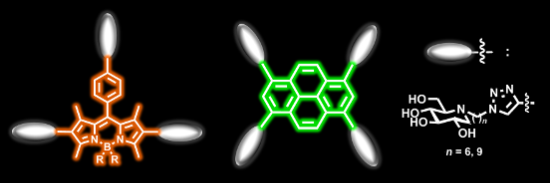
- the endocyclic oxygen have been reported in the literature [1][2]. Iminosugars are mainly known to be inhibitors of a number of carbohydrate-processing enzymes with an emphasis on glycosidases [1][2]. In the early 2000’s, iminosugars were, remarkably, found to inhibit metalloproteinases [3], protein

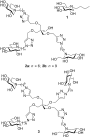


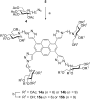
Synthesis of multivalent carbohydrate mimetics with aminopolyol end groups and their evaluation as L-selectin inhibitors
Beilstein J. Org. Chem. 2015, 11, 638–646, doi:10.3762/bjoc.11.72
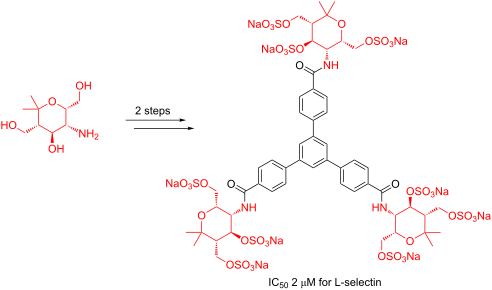
- Platz 1, D-13353 Berlin, Germany 10.3762/bjoc.11.72 Abstract In this article a series of divalent and trivalent carbohydrate mimetics on the basis of an enantiopure aminopyran and of serinol is described. These aminopolyols are connected by amide bonds to carboxylic acid derived spacer units either by
- compounds could not be tested as L-selectin inhibitor by SPR due to their insolubility in water, nevertheless, a divalent and a trivalent amide showed surprisingly good activities with IC50 values in the low micromolar range. Keywords: aminopolyols; carbohydrate mimetics; carboxylic acid amides; inhibition
- ; multivalency; selectins; sulfation; Introduction In a series of publications [1][2][3][4][5][6] our group reported on the syntheses of carbohydrate mimetics [7][8][9][10][11] that are based on aminopyrans, aminooxepanes or other aminopolyols. These compounds and their conjugates were prepared to be examined


Automated solid-phase synthesis of oligosaccharides containing sialic acids
Beilstein J. Org. Chem. 2015, 11, 617–621, doi:10.3762/bjoc.11.69
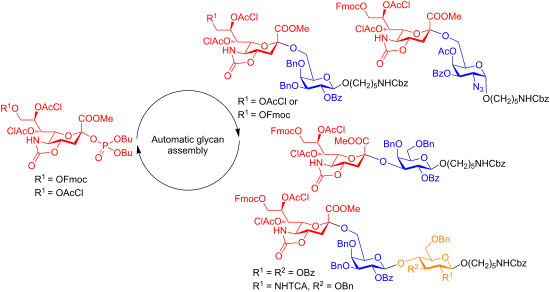
- carbohydrate antigens (TACAs) such as the sialyl-Tn antigen (sTn) [2]. Neu5Ac is often the terminal residue and is usually linked via an α-(2,3) or α-(2,6) linkage to galactose (Gal) (Figure 1) [3]. Automated glycan assembly enables rapid access to structurally defined oligosaccharides [4][5] including
- synthesis in the future as well. The tumor associated sTn carbohydrate antigen (Neu5Ac-α(2,6)GalNAc-α(1,1)linker) disaccharide 17, that resembles the sTn antigen glycan framework (Neu5Ac-α(2,6)GalNAc-α(1,1)Ser/Thr) was synthesized. In order to install the cis-glycoside formed by the union of the


Synthesis of 1,2-cis-2-C-branched aryl-C-glucosides via desulfurization of carbohydrate based hemithioacetals
Beilstein J. Org. Chem. 2015, 11, 583–588, doi:10.3762/bjoc.11.64

- biologically important compounds. Although the synthesis of such carbohydrate derivatives is extensively studied, the synthesis of 1,2-cis-2-C-branched C-, S-, and N-glycosides is less explored. In this article a synthetic strategy for the synthesis of 1,2-cis-2-C-branched-aryl-C-glucosides is reported via a
- hydrogenolytic desulfurization of suitably orientated carbohydrate based hemithioacetals. 1,2-cis-2-Hydroxymethyl and 2-carbaldehyde of aryl-C-glucosides have been synthesized using the current strategy in very good yields. The 2-carbaldehyde-aryl-C-glucosides have been identified as suitable substrates for the
- stereospecific preparation of 2,3-unsaturated-aryl-C-glycosides (Ferrier products). Keywords: aryl-C-glucoside; desulfurization; Ferrier product; hemithioacetal; Introduction 1-C (C-glycosides) and 2-C-branched carbohydrates are important carbohydrate analogues which have found wide application in


Synthesis and biological evaluation of a novel MUC1 glycopeptide conjugate vaccine candidate comprising a 4’-deoxy-4’-fluoro-Thomsen–Friedenreich epitope
Beilstein J. Org. Chem. 2015, 11, 155–161, doi:10.3762/bjoc.11.15
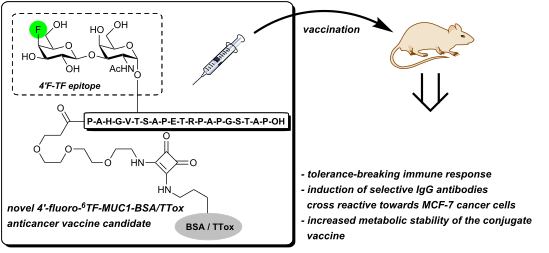
- cells from healthy ones by means of tumor-associated antigens (TACA), e.g., partial structures of the mucin glycoprotein MUC1 [6][7]. Cancer-associated MUC1 is characterized by the presence of specifically altered carbohydrate side chains in its extracellular tandem-repeat domain due to fundamental
- , which becomes accessible to the immune system and can be used as an additional immunogenic determinant for carbohydrate-based cancer vaccines [13]. Despite encouraging results with two- and three-component MUC1 conjugate vaccines in mice models [14][15][16][17][18][19][20][21][22][23][24][25], immune
- tolerance to carbohydrate antigens remains a major obstacle in initiating an effective and long-lasting immune protection against malignancies. One strategy to enhance the immunogenicity of carbohydrate antigens relies upon modification of the glycan hapten [26][27], which renders it more foreign to the




A carbohydrate approach for the formal total synthesis of (−)-aspergillide C
Beilstein J. Org. Chem. 2014, 10, 3122–3126, doi:10.3762/bjoc.10.329




Synthesis and characterization of pH responsive D-glucosamine based molecular gelators
Beilstein J. Org. Chem. 2014, 10, 3111–3121, doi:10.3762/bjoc.10.328

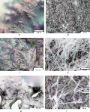
- ]. Several pH responsive small molecular gelators have been designed and synthesized and have shown a variety of potential applications [29][30][31][32][33][34]. Among the different classes of LMWGs, carbohydrate-based systems are especially interesting due to their potential applications in biomedical




A general metal-free approach for the stereoselective synthesis of C-glycals from unactivated alkynes
Beilstein J. Org. Chem. 2014, 10, 2649–2653, doi:10.3762/bjoc.10.277

- single step from a variety of acetylenes , i.e., arylacetylenes and most importantly aliphatic alkynes. Keywords: α-selective; C-alkynylation; glycal; metal free; TMSOTf; Introduction C-Glycosides represent an important class of carbohydrate mimics, owing to their presence in a large number of
- particular interest as it is amenable to further modifications into chiral molecules, carbohydrate analogues, and natural products, such as tautomycin [17][18] and ciguatoxin [19][20][21]. In recent past, significant efforts have been directed toward the C-alkynylation of glycals [9][22][23]. However, all


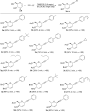

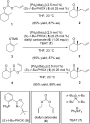
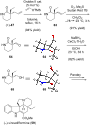
Formal total syntheses of classic natural product target molecules via palladium-catalyzed enantioselective alkylation
Beilstein J. Org. Chem. 2014, 10, 2501–2512, doi:10.3762/bjoc.10.261

- . This publication highlights recent methods for setting quaternary and tetrasubstituted tertiary carbon stereocenters to address the synthetic hurdles encountered over many decades across multiple compound classes spanning carbohydrate derivatives, terpenes, and alkaloids. These enantioselective methods




Synthesis of aromatic glycoconjugates. Building blocks for the construction of combinatorial glycopeptide libraries
Beilstein J. Org. Chem. 2014, 10, 2453–2460, doi:10.3762/bjoc.10.256
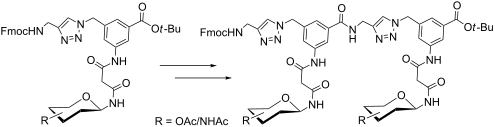
- difficult despite the great achievements in this field during the past decades. Therefore, the application of oligosaccharide mimetics which may be synthesized more easily in larger amounts appears to be a useful tool to investigate, for instance, specific carbohydrate–protein or carbohydrate–carbohydrate
- interactions. Recently our group has prepared a series of trifunctional glycopeptide building blocks with aliphatic backbones, which allow for the automated construction of combinatorial libraries of highly divers glycopeptides suitable for studying carbohydrate–protein interactions [5][6][7][8]. Hitherto, our


A versatile δ-aminolevulinic acid (ΑLA)-cyclodextrin bimodal conjugate-prodrug for PDT applications with the help of intracellular chemistry
Beilstein J. Org. Chem. 2014, 10, 2414–2420, doi:10.3762/bjoc.10.251
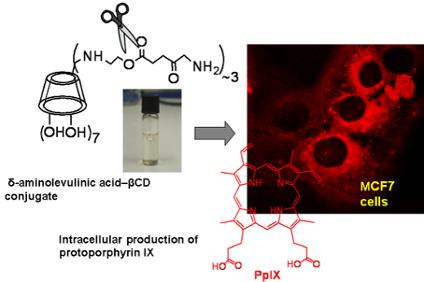
- hydrophobic cavity [7]. The cyclodextrins (CDs) are a notable family of semi-natural carbohydrate molecules approved as pharmaceutical excipients that improve the solubility and bioavailability of drugs through molecular encapsulation. We demonstrated [6] the conjugate’s (PpIX-CD) bimodal action of


Synthesis and immunological evaluation of protein conjugates of Neisseria meningitidis X capsular polysaccharide fragments
Beilstein J. Org. Chem. 2014, 10, 2367–2376, doi:10.3762/bjoc.10.247
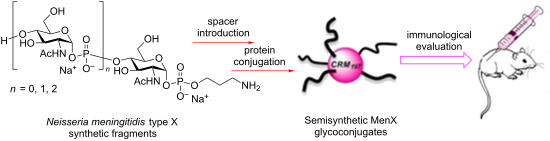
- infections is still unknown. Over the recent years, advances in the synthesis of complex glycans are rendering accessible a variety of carbohydrate antigens with well-defined chemical structure and devoid of bacterial contaminations which could derive from purification of biological materials [21][22][23][24
- excess of unconjugated carbohydrate by precipitation with ammonium sulfate and reconstitution in 10 mM NaPi pH 7.2. The occurrence of conjugation was assessed by SDS-PAGE (sodium dodecyl sulfate polyacrylamide gel electrophoresis) and MALDI–TOF mass spectrometry (see Supporting Information File 1). The
- same conjugation chemistry and different carbohydrate structures [26][27]. However, it needs to be taken in consideration that this loading is comparable to that achieved in the preparation of anti-meningococcal vaccines commercially available [37]. Furthermore, a number of 2.5 and 1.7–4.1 sugar


Multivalent glycosystems for nanoscience
Beilstein J. Org. Chem. 2014, 10, 2345–2347, doi:10.3762/bjoc.10.244
- this field of research. Now, a third “sweet” Thematic Series is presented in which the borderline between Alice’s Wonderland and real-life applications of carbohydrates has been deliberately crossed. The structural world of natural sugars has been extended towards artificial carbohydrate architectures
Expanding the scope of cyclopropene reporters for the detection of metabolically engineered glycoproteins by Diels–Alder reactions
Beilstein J. Org. Chem. 2014, 10, 2235–2242, doi:10.3762/bjoc.10.232
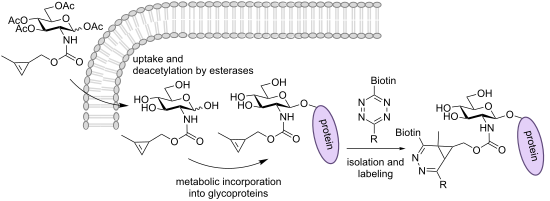
- found application in MOE, and several dienophiles, such as terminal alkenes [19], isonitriles [20][21], and cyclopropenes [22][23][24], have been incorporated in carbohydrate derivatives and detected by reaction with 1,2,4,5-tetrazines [25] (Scheme 1). An important advantage of the DAinv reaction is the



Indium-mediated allylation in carbohydrate synthesis: A short and efficient approach towards higher 2-acetamido-2-deoxy sugars
Beilstein J. Org. Chem. 2014, 10, 2230–2234, doi:10.3762/bjoc.10.231
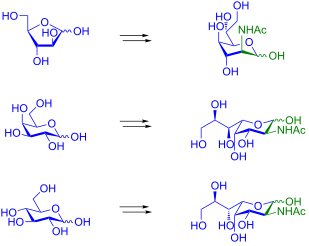
- Christopher Albler Ralph Hollaus Hanspeter Kahlig Walther Schmid Department of Organic Chemistry, University of Vienna, Währingerstrasse 38, 1090 Vienna, Austria 10.3762/bjoc.10.231 Abstract Higher aminosugars are interesting targets in carbohydrate synthesis since these compounds play important


De novo macrolide–glycolipid macrolactone hybrids: Synthesis, structure and antibiotic activity of carbohydrate-fused macrocycles
Beilstein J. Org. Chem. 2014, 10, 2215–2221, doi:10.3762/bjoc.10.229
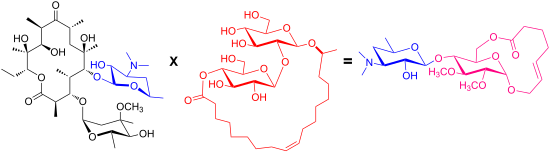
- . Glycosylation of an available hydroxy group on the macrocycle gave a hybrid macrolide with features common to erythromycin and sophorlipid macrolactone. Weak antibiotic activity (MICs <100 μg/mL) was observed for several of the compounds. Keywords: antibiotic; carbohydrate; exo-anomeric effect; macrolide
- ; structure; synthesis; Introduction In contemporary usage, “macrolide” describes any large ring lactone [1]. It was originally coined, however, with reference to a narrower set of compounds: antimicrobial natural products containing a macrolactone ring adorned with deoxygenated carbohydrate residues [2
- ], have investigated compounds that blend features of macrolides and glycolipid lactones. These natural product-like compounds fuse the carbohydrate ring to the macrocycle rather than connecting them through a glycosidic linkage. Compounds 3 and 4 in Figure 1 illustrate one approach that has been reported





