Search results
Search for "cascade" in Full Text gives 429 result(s) in Beilstein Journal of Organic Chemistry. Showing first 200.
When metal-catalyzed C–H functionalization meets visible-light photocatalysis
Beilstein J. Org. Chem. 2020, 16, 1754–1804, doi:10.3762/bjoc.16.147
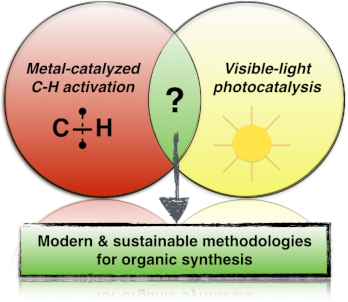
- double activation catalysis (Figure 2, (2)) [49][50]. Similarly, if both catalysts activate the same coupling partner but in a sequential fashion (the activated substrate leads to an intermediate further activated by the second catalyst), this falls in the category of cascade catalysis (Figure 2, (3


Azidophosphonium salt-directed chemoselective synthesis of (E)/(Z)-cinnamyl-1H-triazoles and regiospecific access to bromomethylcoumarins from Morita–Baylis–Hillman adducts
Beilstein J. Org. Chem. 2020, 16, 1579–1587, doi:10.3762/bjoc.16.130

- : phosphonium salt-catalysed triazolation of MBH adducts. Scope of the one-pot cascade reaction of the unprotected Morita–Baylis–Hillman adducts 3a–q. Comparative analysis of the sequential one-pot reaction. Optimization of the triazolation of the MBH adduct 1a. Optimization of the reaction conditions for 3




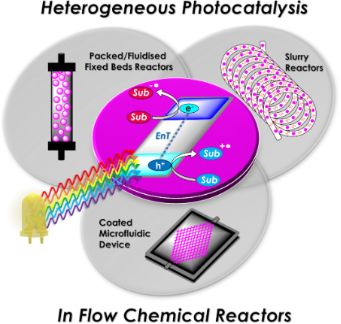
Heterogeneous photocatalysis in flow chemical reactors
Beilstein J. Org. Chem. 2020, 16, 1495–1549, doi:10.3762/bjoc.16.125









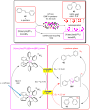

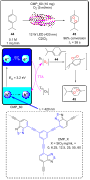

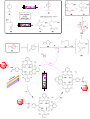


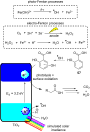

Photocatalyzed syntheses of phenanthrenes and their aza-analogues. A review
Beilstein J. Org. Chem. 2020, 16, 1476–1488, doi:10.3762/bjoc.16.123
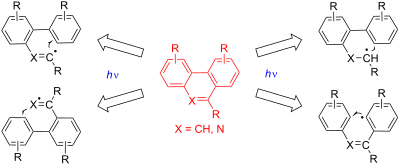
- sulfonyl radical, prone to start a tandem sulfonylation/annulation of vinyl azides [84]. Recently, the phenanthridine core was assembled through a radical cascade triggered by the trifluoromethylthiolation of N-(o-cyanobiaryl)acrylamides. The process occurred under visible-light irradiation (6 W blue LED


An overview on disulfide-catalyzed and -cocatalyzed photoreactions
Beilstein J. Org. Chem. 2020, 16, 1418–1435, doi:10.3762/bjoc.16.118
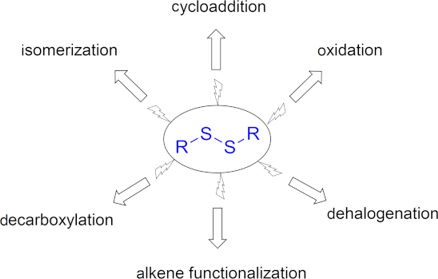
- of vinylcyclopropanes with olefins [8]. The reaction mechanism of this cycloaddition process was similar to other thiyl radical-catalyzed cycloaddition cascade reactions. The alkylthiyl radical generated by the homolysis of a disulfide-bridged peptide precatalyst under UV-light irradiation triggers








Oxime radicals: generation, properties and application in organic synthesis
Beilstein J. Org. Chem. 2020, 16, 1234–1276, doi:10.3762/bjoc.16.107
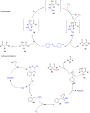
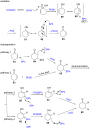
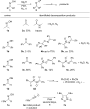
- (Scheme 38) [128]. Both aliphatic (example 118c) and aromatic (examples 118a,b,d–h) β,γ-unsaturated oximes enter this cascade cyclization. Relatively low yields were obtained with electron-withdrawing substituents in isonitrile 117 (examples 118g,h). Another example of a cascade oxidative cyclization
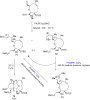
- (products 135a,d–h) and alkyl substituents (products 135b,c) at the oxime fragment (R1). An oxime with a disubstituted double bond (R2 = Me) also reacts with the formation of isoxazoline 135g having a quaternary carbon atom. Under the action of t-BuOOH (TBHP), β,γ-unsaturated oximes 136 undergo a cascade




Photocatalysis with organic dyes: facile access to reactive intermediates for synthesis
Beilstein J. Org. Chem. 2020, 16, 1163–1187, doi:10.3762/bjoc.16.103
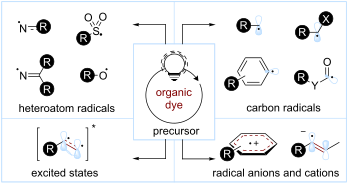
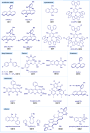
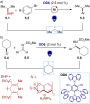
- possible, such as halogenations, azidations, olefinations, or alkynylations. This activation mode was employed by the same group in a cascade strategy, which allowed a remote functionalization [143]. To extend the scope of such transformations, our group reported novel organic dyes in 2018, such as
- oxidation of 29.1 was achieved using Mes-Acr-Me+ (OD2) and a cobalt cocatalyst, ensuring an efficient dehydrogenation. Various N-heterocycles 29.3 were accessed via a radical cyclization cascade with the alkyne derivatives 29.2. Amidyl radical generation The oxidation of amides is more difficult compared to
- previously described approach for iminyl radical formations was employed [140]. The same tunable aryloximes 31.1 were used as electrophores to generate the desired amidyl radicals. This methodology allowed the development of a hydroamination/cyclization cascade to give the heterocycles 31.2 and





Palladium-catalyzed regio- and stereoselective synthesis of aryl and 3-indolyl-substituted 4-methylene-3,4-dihydroisoquinolin-1(2H)-ones
Beilstein J. Org. Chem. 2020, 16, 1084–1091, doi:10.3762/bjoc.16.95
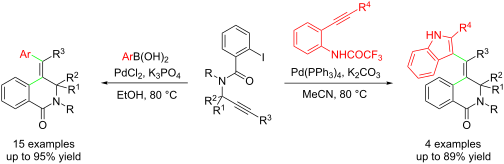
- (Te), Italy 10.3762/bjoc.16.95 Abstract Cascade cyclocarbopalladation of the readily available aryl/alkyl-substituted propargylic amides containing an aryl iodide moiety, followed by Suzuki–Miyaura coupling with arylboronic acids, allowed an efficient regio- and stereoselective synthesis of
- tetrasubstituted 4-methylene-3,4-dihydroisoquinolin-1(2H)-ones. Moreover, cascade cyclocarbopalladation, followed by the reaction with 2-alkynyltrifluoroacetanilides, accomplished a double cyclization to afford challenging 4-methylene-3,4-dihydroisoquinolin-1(2H)-ones bearing a 3-indolyl substituent through
- stereoselective Pd-catalyzed cascade reactions, consisting of the addition of in situ-generated arylpalladium complexes over a proximate carbon–carbon triple bond, followed by cross-coupling reactions, have been reported [26][27][28][29][30][31]. Our continuing interest in the palladium-catalyzed reactions of



Cation-induced ring-opening and oxidation reaction of photoreluctant spirooxazine–quinolizinium conjugates
Beilstein J. Org. Chem. 2020, 16, 904–916, doi:10.3762/bjoc.16.82
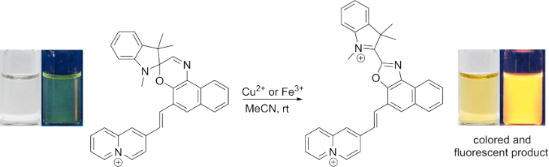
- + and Fe3+ ions most likely induced a ring opening/ring closing cascade of the spirooxazine unit in 3a and 3b including an electron transfer to the respective metal cations. These reaction steps seemed to have different rates in the presence of Cu2+ or Fe3+, which may even allow the differentiation


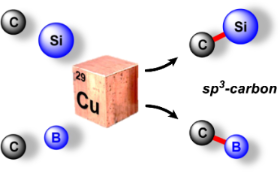
Recent advances in Cu-catalyzed C(sp3)–Si and C(sp3)–B bond formation
Beilstein J. Org. Chem. 2020, 16, 691–737, doi:10.3762/bjoc.16.67
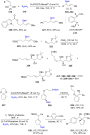
- that a specific geometry of the tethered alkene is required, as no 6-membered ring formation was observed. Interestingly, Cárdenas’ precursor 35 [30] led, after a cascade of reactions, to the formation of compound 36. Computational as well as experimental studies suggested that the ligand and
- -derived benzylic copper species with an electrophilic source of a cyano residue, Yang and co-workers reported on the Cu-catalyzed borylation of styrenes bearing an allylic group at the 1-position. After the initial addition, a cascade of reactions occurred, including cyanation generating a dearomatized
- electrophiles, such as N-cyanosulfonamides, leading to 1,2 or 4,3-borocyanation in a regiospecific fashion from borocuprative intermediates, respectively [111]. Extending earlier efforts from the Montgomery group for Cu-catalyzed cascade diborylation/ortho-cyanations of terminal allenes [112] and styrene




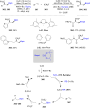


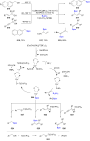
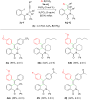
Microwave-assisted efficient and facile synthesis of tetramic acid derivatives via a one-pot post-Ugi cascade reaction
Beilstein J. Org. Chem. 2020, 16, 663–669, doi:10.3762/bjoc.16.63
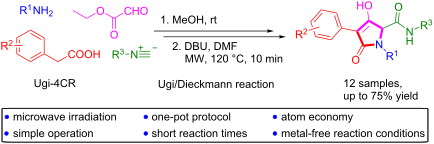
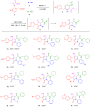
- ][28][29] of complex heterocyclic compounds. Recent advance has been focused in the area toward the development of one-pot [30][31][32] Ugi cascade protocol [33][34] as the powerful synthetic strategy for the construction of increasingly complex heterocyclic compounds in the absence of metal catalysts



Cascade trifluoromethylthiolation and cyclization of N-[(3-aryl)propioloyl]indoles
Beilstein J. Org. Chem. 2020, 16, 657–662, doi:10.3762/bjoc.16.62
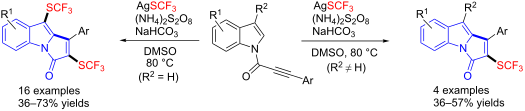
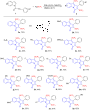
- Organofluorine Chemistry, Center for Excellence in Molecular Synthesis, Shanghai Institute of Organic Chemistry, University of Chinese Academy of Science, Chinese Academy of Science, 345 Lingling Lu, Shanghai 200032, China 10.3762/bjoc.16.62 Abstract A cascade oxidative trifluoromethylthiolation and cyclization
- )propioloyl]indole and N-propargylindoles, respectively. Inspired by these elegant results, we became interested in the preparation of SCF3-substituted pyrrolo[1,2-a]indol-3-ones, which might be potentially useful in medicinal chemistry. Radical cascade reactions constitute highly efficient strategies for the
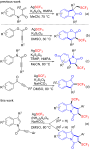
- construction of compounds with structural diversity and complexity. In 2014, Wang reported the first radical cascade trifluoromethylthiolation and cyclization of activated alkenes (Scheme 1a) [23]. Afterward, Nevado [24], Hopkinson and Glorius [25], Dagousset and Magnier [26], as well as Fu [27] applied this




Regio- and stereoselective synthesis of new ensembles of diversely functionalized 1,3-thiaselenol-2-ylmethyl selenides by a double rearrangement reaction
Beilstein J. Org. Chem. 2020, 16, 515–523, doi:10.3762/bjoc.16.47
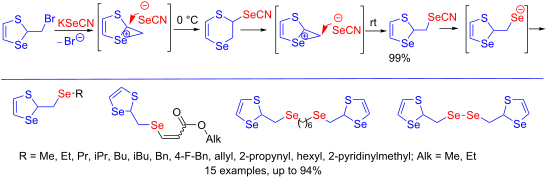
- (Scheme 3). Cascade regio- and stereoselective reactions of thiaselenole 1 with water and ethylene glycol resulted in the formation of the first representatives of the new family of polyfunctional 2,3-dihydro-1,4-thiaselenines [41]. The regioselective nucleophilic substitution reactions in thiaselenole 1


Controlling alkyne reactivity by means of a copper-catalyzed radical reaction system for the synthesis of functionalized quaternary carbons
Beilstein J. Org. Chem. 2020, 16, 502–508, doi:10.3762/bjoc.16.45
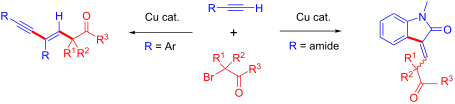
- Pd-catalyzed cascade reaction (C–C bond formation/C–H cyclization process) of N-arylpropynamide 4 for the preparation of indolinone derivatives 5 was previously reported by Li’s group [34][35]. In another report on C–H cyclization by Lei’s group, Ni-catalyzed aromatic C–H alkylation occurs via a
- radical reaction [36]. Both cases were helpful in our development of the current Cu-catalyzed cascade C–H cyclization system. After careful optimization, we found that CuI, 1,10-Phen, Cy2NMe as a base, and 1,4-dioxane were effective for obtaining the best yields of products 5 (Figure 2). In this


Ultrasonic-assisted unusual four-component synthesis of 7-azolylamino-4,5,6,7-tetrahydroazolo[1,5-a]pyrimidines
Beilstein J. Org. Chem. 2020, 16, 281–289, doi:10.3762/bjoc.16.27
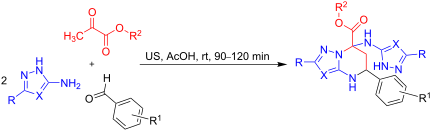
- Republic 10.3762/bjoc.16.27 Abstract Four-component reactions of 3-amino-1,2,4-triazole or 5-amino-1H-pyrazole-4-carbonitrile with aromatic aldehydes and pyruvic acid or its esters under ultrasonication were studied. Unusual for such a reaction type, a cascade of elementary stages led to the formation of
- ]pyrimidines via a cascade of elementary stages that is unusual for such transformations. Thus, we extended the molecular diversity of the compounds obtained by introducing an additional azolyl substituent to the pyrimidine ring. Alternative structures A and B for the tetrahydroazolopyrimidines 4. Molecular


Combination of multicomponent KA2 and Pauson–Khand reactions: short synthesis of spirocyclic pyrrolocyclopentenones
Beilstein J. Org. Chem. 2020, 16, 200–211, doi:10.3762/bjoc.16.23
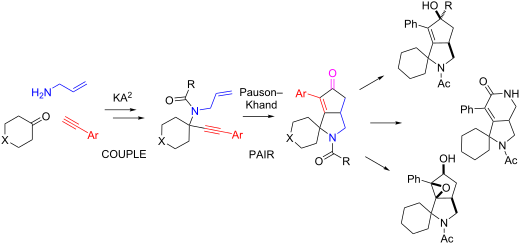
- [39][40], consisting of a [2 + 2 + 1] cycloaddition between an olefin, alkyne, and carbon monoxide. This reaction has been also applied in cascade approaches [41], and in combination with RCM [42], Diels–Alder [43] and Staudinger [44] reactions to produce novel structurally complex chemical entities




Understanding the role of active site residues in CotB2 catalysis using a cluster model
Beilstein J. Org. Chem. 2020, 16, 50–59, doi:10.3762/bjoc.16.7
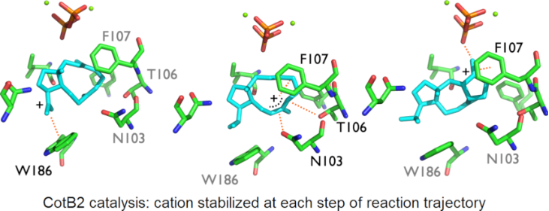
- , Dept. of Chemistry, Technical University of Munich (TUM), Lichtenbergstr. 4, 85748 Garching, Germany 10.3762/bjoc.16.7 Abstract Terpene cyclases are responsible for the initial cyclization cascade in the multistep synthesis of a large number of terpenes. CotB2 is a diterpene cyclase from Streptomyces
- cascade can provide important information towards a biosynthetic strategy for cyclooctatin and the biomanufacturing of related terpene structures. Keywords: active site; CotB2 cyclase; diterpene; mechanism; quantum mechanics; Introduction Enzymes catalyze numerous complex biochemical reactions in
- , representing the first committed step in the biosynthesis of the next-generation anti-inflammatory drug cyclooctatin. The intracellular target of cyclooctatin is an as of yet uncharacterized lysophospholipase, which is involved in early steps of the inflammatory signaling cascade [38][39][40]. In the last


Terpenes
Beilstein J. Org. Chem. 2019, 15, 2966–2967, doi:10.3762/bjoc.15.292
- generate a highly reactive cationic intermediate that can be subject to a cascade reaction through typical carbocation chemistry, including cyclisation reactions, hydride migrations and Wagner–Meerwein rearrangements [1][2]. The cascade is usually terminated by deprotonation or attack of water. The
Bacterial terpene biosynthesis: challenges and opportunities for pathway engineering
Beilstein J. Org. Chem. 2019, 15, 2889–2906, doi:10.3762/bjoc.15.283
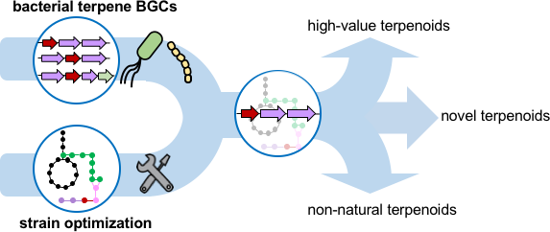
- a result of the inherent differences between these biosynthetic machineries. In modular assembly lines, each individual domain is responsible for one defined biosynthetic transformation, while TCs rather act as chaperones [10] to guide oligoprenyl pyrophosphate precursors through a cascade of
- the leaving pyrophosphate group and the nucleophilic alkenes in proximity to initiate the C–C-bond forming, carbocation-mediated cascade reactions [10]. The hydrophobic binding pocket stabilizes the reaction intermediates and tames the propagation of carbocations through cation–π and other
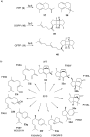
- inverted direction of charge propagation along the oligoisoprene chain in the cyclization cascade [53]. The resulting cyclized product retains the pyrophosphate moiety and can serve as the substrate for a second cyclization catalyzed by type I TCs to generate even more complicated diterpene backbones




Self-assembled coordination thioether silver(I) macrocyclic complexes for homogeneous catalysis
Beilstein J. Org. Chem. 2019, 15, 2465–2472, doi:10.3762/bjoc.15.239
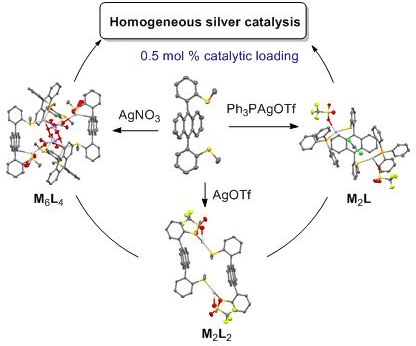
- for gold(III) chloride whose photoreduction to gold(I) was fast and controlled [44][45]. These gold complexes at different oxidation states showed efficient catalytic properties, that were highlighted in a one-pot cascade synthesis of 4H-benzoquinolizin-4-one. Now, we propose to investigate a rigid


Current understanding and biotechnological application of the bacterial diterpene synthase CotB2
Beilstein J. Org. Chem. 2019, 15, 2355–2368, doi:10.3762/bjoc.15.228
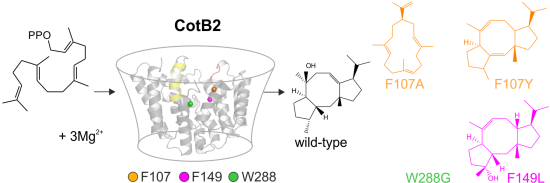
- generate a vast number of (poly)cyclic hydrocarbon scaffolds. Remarkably, this complex chemical reaction, comprising changes in bonding, hybridization as well as the introduction of specific stereochemistry, is performed in a single reaction cascade without consumption of a cofactor [11]. In this review we
- dogmatic dispute in the TPS community about the respective roles of the protein acting as a scaffold and the “inherent” carbocation reactivity [91] in orchestrating an enzyme specific reaction cascade. With regard to the latter, the “inherent reactivity” of carbocations is no doubt an important ingredient
- in terpene biosynthesis. The enzyme could be understood as passive catalyst, essentially chaperoning the intermediates during the reaction cascade. It is clear that much of terpene biosynthesis can be understood by this concept. “Inherent reactivity” largely relies on theoretical calculations


Functionalization of 4-bromobenzo[c][2,7]naphthyridine via regioselective direct ring metalation. A novel approach to analogues of pyridoacridine alkaloids
Beilstein J. Org. Chem. 2019, 15, 2304–2310, doi:10.3762/bjoc.15.222
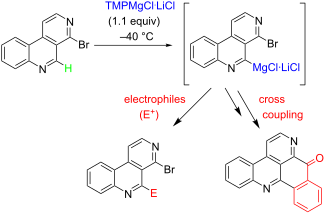
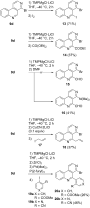
- to a pentacyclic ketone. A similar cyclization reaction was developed by our group some years ago for ester substrates [18], and an analogous cyclization of nitriles was described by Kristensen in ring-closing cascade reactions [34]. The new cyclization method was first tested with ester 20a




Synthesis of acremines A, B and F and studies on the bisacremines
Beilstein J. Org. Chem. 2019, 15, 2271–2276, doi:10.3762/bjoc.15.219

- intramolecular cyclization of 23. Attempted photochemical cyclization of 25. Representative screening conditions for the biomimetic cascade. Supporting Information Experimental procedures, spectroscopic data and copies of NMR spectra (PDF) as well as crystallographic data of compounds 16 and 17. CIF files for


Characterization of two new degradation products of atorvastatin calcium formed upon treatment with strong acids
Beilstein J. Org. Chem. 2019, 15, 2085–2091, doi:10.3762/bjoc.15.206
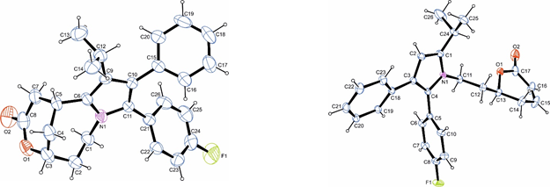
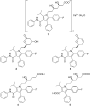
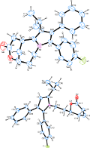
- , resulting in clean conversion into 6 as well. In the following, this unsaturated lactone (Michael system) most likely performs an acid-mediated intramolecular attack at C-2 of the electron-rich pyrrole ring. In a cascade of subsequent reactions, the carboxanilide moiety at C-3 is eliminated and the
- concentrated sulfuric acid) is not the initial step in the cascade of reactions leading from intermediate 3 to product 6. In a control experiment, we treated compound 7 with 37% hydrochloric acid under the above mentioned conditions, but only a complex mixture of decomposition products was obtained, with no




Genome mining in Trichoderma viride J1-030: discovery and identification of novel sesquiterpene synthase and its products
Beilstein J. Org. Chem. 2019, 15, 2052–2058, doi:10.3762/bjoc.15.202
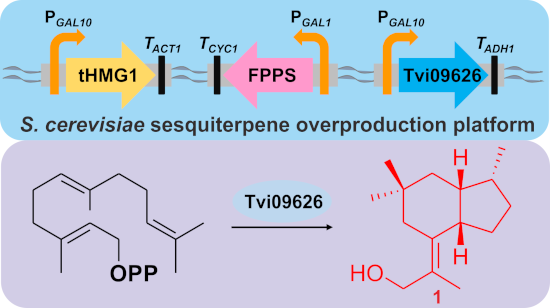
- recently reported type III TPSs, UbiA-related TPSs, also catalyse cascade reactions by diphosphate elimination [8]. In addition, each type of TPS is characterised by a unique aspartate-rich motif; most type I TPSs have a DDXXD/E motif and an NSE/DTE motif, whereas type II TPSs have the DXDD motif [9][10