


Search results
Search for "catalysis" in Full Text gives 1304 result(s) in Beilstein Journal of Organic Chemistry. Showing first 200.
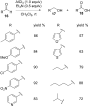
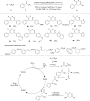
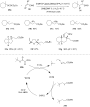
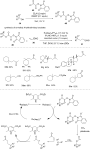
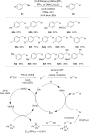
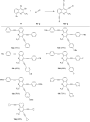
Challenge N- versus O-six-membered annulation: FeCl3-catalyzed synthesis of heterocyclic N,O-aminals
Beilstein J. Org. Chem. 2024, 20, 1412–1420, doi:10.3762/bjoc.20.123
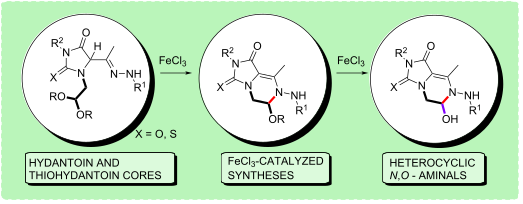
- remarkable advantages such as an environmentally benign alternative to traditional transition-metal catalysis, a low cost, nontoxicity, good stability, and easy handling [30][31]. Upon increasing the amount of FeCl3 to 20 mol %, the time of the reaction was reduced from 86 to 38 hours, and the yield of 5a
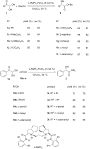
- represents an interesting example of auto-tandem catalysis in which FeCl3 promotes two subsequent reactions. For further confirmation to support our mechanistic hypothesis and in an attempt to switch the reaction toward the formation of hemiaminal 6a, we repeated the reaction of thiohydantoin 4j, (chosen as
- corroborate our mechanistic hypothesis related to the formation of both N,O-aminals and corresponding hemiaminals. In particular, the domino reaction that leads to the carbinolamines represents an interesting example of “auto-tandem catalysis” in which the FeCl3 catalyzes two different chemical




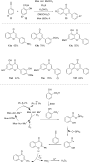
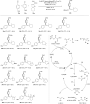
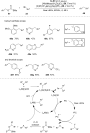
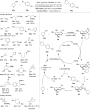
Hypervalent iodine-catalyzed amide and alkene coupling enabled by lithium salt activation
Beilstein J. Org. Chem. 2024, 20, 1405–1411, doi:10.3762/bjoc.20.122

- .20.122 Abstract Hypervalent iodine catalysis has been widely utilized in olefin functionalization reactions. Intermolecularly, the regioselective addition of two distinct nucleophiles across the olefin is a challenging process in hypervalent iodine catalysis. We introduce here a unique strategy using
- simple lithium salts for hypervalent iodine catalyst activation. The activated hypervalent iodine catalyst allows the intermolecular coupling of soft nucleophiles such as amides onto electronically activated olefins with high regioselectivity. Keywords: amide coupling; hypervalent iodine catalysis
- catalysis, which often involves the catalytic use of an iodoarene with stoichiometric oxidants such as MCPBA, Selectfluor, etc. [18][19][20]. Earlier and recent hypervalent iodine-catalyzed olefin halofunctionalizations by several groups have predicated on the use of intramolecular olefin substrates



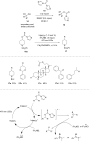
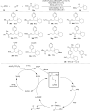
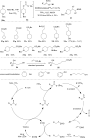
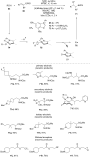
Synthetic applications of the Cannizzaro reaction
Beilstein J. Org. Chem. 2024, 20, 1376–1395, doi:10.3762/bjoc.20.120
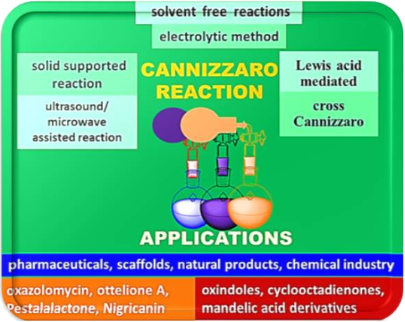
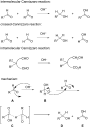
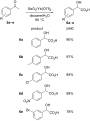
- numerous modified techniques, which established the greener side of the reaction. The use of Lewis acid catalysis in this regard [34][35][36][37][38][39] played a significant role, which also suppressed the epimerization in the case of chiral molecules. Among the various Lewis acid catalysts such as
- methodologies, such as Lewis acid catalysis, desymmetrization of symmetrical dialdehydes, synthesis of natural products, and building blocks. These modifications constitute the main highlight of this review. The use of modern technology and newer strategies aiming towards industrial benefit is the goal for the
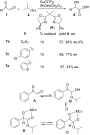
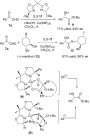
- . developed an asymmetric iron catalyst with the aim of expanding the platform of metal catalysis. Catalysts 14 and 15 proved to be effective in the transformation of glyoxal monohydrates 1a and alcohol 2, to deliver mandelate esters 3a in good yields and enantioselectivities via an enantioselective









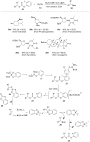
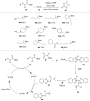
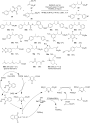
Generation of alkyl and acyl radicals by visible-light photoredox catalysis: direct activation of C–O bonds in organic transformations
Beilstein J. Org. Chem. 2024, 20, 1348–1375, doi:10.3762/bjoc.20.119
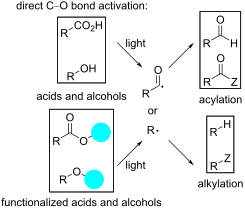
- radicals by activation of C–O bonds using visible-light photoredox catalysis offers a mild and environmentally benign approach to useful chemical transformations. Alcohols, carboxylic acids, anhydrides, xanthates, oxalates, N-phthalimides, and thiocarbonates are some examples of alkyl and acyl precursors
- photocatalysts, transition-metal photoredox catalysts, and metallaphotocatalysts to produce acyl and alkyl radicals driven by visible light. Keywords: acyl radical; alkyl radical; sustainable catalysis; visible light; Introduction The growing awareness of the necessity for sustainable developments has been
- synthesis [4][5][6][7][8][9]. In the context of sustainable catalysis, visible-light-mediated chemistry is becoming a prominent viable option for radical transformations in the synthesis of biologically useful compounds due to the energy efficiency and environmental friendliness [10][11]. Recently, the






Phenotellurazine redox catalysts: elements of design for radical cross-dehydrogenative coupling reactions
Beilstein J. Org. Chem. 2024, 20, 1292–1297, doi:10.3762/bjoc.20.112
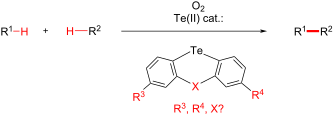
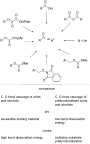
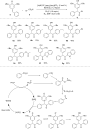
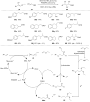
- substitution patterns on the redox catalytic activity. Keywords: cross-dehydrogenative coupling; O2 activation; phenotellurazine; redox catalysis; Te catalysis; Introduction Tellurium catalysis has become increasingly important in recent years. This is due to its unique chalcogen bonding ability, thus
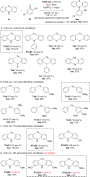
- catalyst candidates can be found in Supporting Information File 1. In the main article we will focus on catalysis results. We therefore first tested various telluracycle candidates, in particular without an NH bridge (catalyst candidates PTeZ3, Te4–Te7, Scheme 2A). These telluracycles, bridged by very
- . Our future research efforts in the area of Te(II) catalysis will likely focus on milder coupling reactions on the one hand, and/or on novel more robust and more active ligand designs on the other. In particular, more investigations will likely be needed regarding the optimization of the possible Te



Oxidative hydrolysis of aliphatic bromoalkenes: scope study and reactivity insights
Beilstein J. Org. Chem. 2024, 20, 1286–1291, doi:10.3762/bjoc.20.111
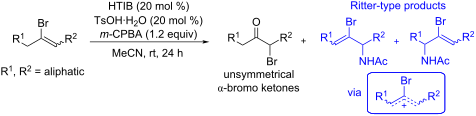
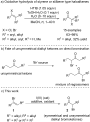
- Amol P. Jadhav Claude Y. Legault Department of Chemistry, Centre in Green Chemistry and Catalysis, Université de Sherbrooke, Québec J1K 2R1, Canada 10.3762/bjoc.20.111 Abstract We have developed an operationally simple method for the synthesis of dialkyl α-bromoketones from bromoalkenes by
- Green Chemistry and Catalysis (CGCC), and the Université de Sherbrooke.



Synthesis and physical properties of tunable aryl alkyl ionic liquids based on 1-aryl-4,5-dimethylimidazolium cations
Beilstein J. Org. Chem. 2024, 20, 1278–1285, doi:10.3762/bjoc.20.110
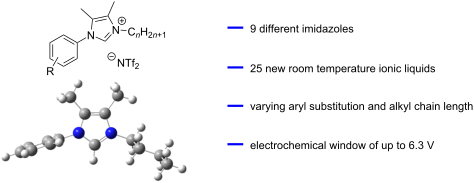
- use in different fields of chemistry like synthesis [4][5][6][7][8][9], catalysis [10][11][12][13][14] and materials science [15][16][17][18][19][20][21][22][23]. ILs generally consist of an organic cation [24], such as the imidazolium or ammonium ion and an inorganic anion like a halide anion or
- ionic liquid in addition to the possibility to introduce alkyl chains with varying length [30]. TAAILs have already been successfully used for the synthesis of nanoparticles and as solvents in catalysis [31][32]. Recently we have described the synthesis and physical properties of TAAILs which have been


Synthesis and optical properties of bis- and tris-alkynyl-2-trifluoromethylquinolines
Beilstein J. Org. Chem. 2024, 20, 1246–1255, doi:10.3762/bjoc.20.107
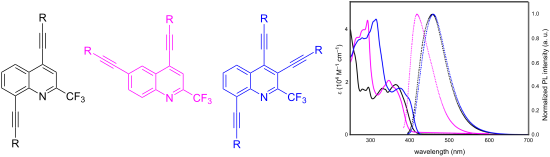
- steady state absorption and fluorescence spectroscopy which give insights of the influence of the substitution pattern and of the type of substituents on the optical properties. Keywords: alkynes; catalysis; fluorescence; heterocycles; palladium; Introduction Quinoline is a well-known core structure








Mechanistic investigations of polyaza[7]helicene in photoredox and energy transfer catalysis
Beilstein J. Org. Chem. 2024, 20, 1236–1245, doi:10.3762/bjoc.20.106
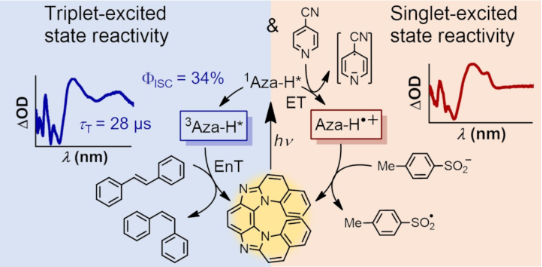
- catalyst in the sulfonylation/arylation of styrenes and as a triplet sensitizer in energy transfer catalysis. The singlet lifetime is sufficiently long to exploit the exceptional excited state reduction potential for the activation of 4-cyanopyridine. Photoinduced electron transfer generating the radical
- underlying reaction mechanism. On the other hand, the relatively high triplet formation quantum yield of Aza-H along with its triplet energy on the order of 2.3 eV permit efficient and metal-free reactions via energy transfer catalysis, as shown for the photosensitized isomerization of stilbene and cinnamyl
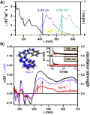
- chloride. We believe that our findings pave the way for a broader usage of the inherently chiral polyazahelicene photocatalyst class, both in photoredox and energy transfer catalysis. A) Room-temperature absorption (black) and emission (yellow) spectra of Aza-H recorded in MeCN/H2O (9:1), and fluorescence




Bismuth(III) triflate: an economical and environmentally friendly catalyst for the Nazarov reaction
Beilstein J. Org. Chem. 2024, 20, 1167–1178, doi:10.3762/bjoc.20.99
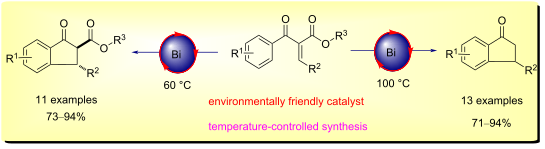
- 3-aryl-1-indanones) in good to excellent yield. The reaction did not require additives and was insensitive to both air and moisture. Preliminary biological evaluation of some indanones showed a promising profile against some human cancer line cells. Keywords: bismuth; catalysis; heterocycles
- ][39][40][41][42][43], and other strategies [44][45]. Although methodologies involving catalysis by Lewis acids are very efficient, including asymmetric versions of the Nazarov reaction, the experimental protocols are quite laborious in most cases, requiring low temperature, an inert atmosphere, or the


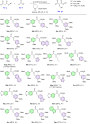
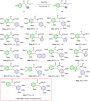
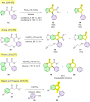


Manganese-catalyzed C–C and C–N bond formation with alcohols via borrowing hydrogen or hydrogen auto-transfer
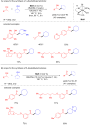
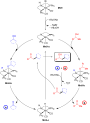
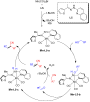
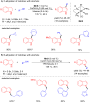
Beilstein J. Org. Chem. 2024, 20, 1111–1166, doi:10.3762/bjoc.20.98

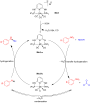
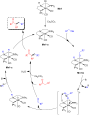
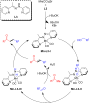
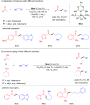
- Milstein [17] in hydrogenation and dehydrogenation reactions with pincer-decorated manganese complexes, significant progress has been made in manganese catalysis [18][19][20]. Notably, well-defined low-valent diamagnetic manganese(I) complexes have been studied in many catalytic transformations, and
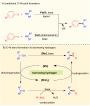
- synthesizing amines, the borrowing hydrogen approach is becoming increasingly popular in catalysis since this method provides an excellent example of a green chemistry and atom-efficient reaction [31][32][33]. This section focuses on manganese-catalyzed C–N bond formation reactions via BH or HA using alcohols
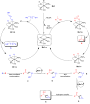
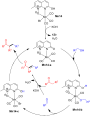
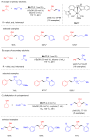
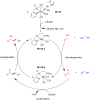
- observed under the established reaction conditions. This pioneering work opened the door for manganese catalysis in BH reactions. However, the high base loading (0.75–1 equiv) was required for this system to attain good yields of the N-alkylated products. Later, the same group developed the second



























Carbonylative synthesis and functionalization of indoles
Beilstein J. Org. Chem. 2024, 20, 973–1000, doi:10.3762/bjoc.20.87
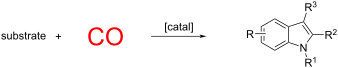
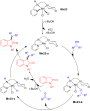
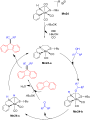
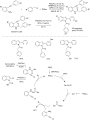
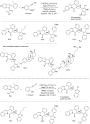
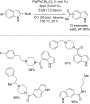
- time, Wu and co-workers contributed to the introduction of two new syntheses of N-aroylindole derivatives by means of nickel catalysis. In 2021, they reported a nickel-catalyzed carbonylative cyclization of 2-nitroalkynes and aryl iodides with Co2(CO)8 as the CO source. The reaction was performed in
- reaction was run in toluene at 100 °C for 24 h under 20 bar of CO [56] (Scheme 25). The other example, however, accomplished the synthesis through Rh-catalysis from substrates without halogens in their structure. This synthesis was published by Huang et al. who obtained good results by using [(Cp*RhCl2)2
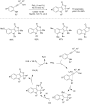
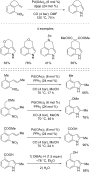
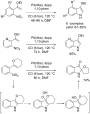
- particular, Xu and co-workers used tertiary amines for achieving the reaction through a Pd/Cu co-catalysis [60]. The 17 examples were obtained by using PdCl2 (10 mol %) as catalyst and Cu(TFA)2∙H2O (30 mol %) as co-catalyst. At the end of the process the catalyst underwent reduction, and therefore, in order












Synthesis and properties of 6-alkynyl-5-aryluracils
Beilstein J. Org. Chem. 2024, 20, 898–911, doi:10.3762/bjoc.20.80
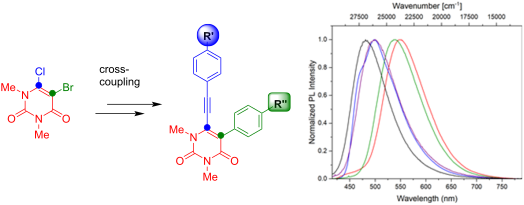
- of different functional groups was tested. The influence of different functional groups on the physical properties was studied by ultraviolet–visible (UV–vis) and fluorescence spectroscopy, providing new insights into the potential applications of uracil-based structures. Keywords: catalysis; cross





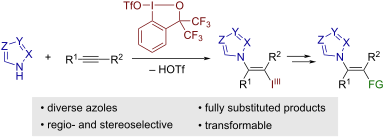
Three-component N-alkenylation of azoles with alkynes and iodine(III) electrophile: synthesis of multisubstituted N-vinylazoles
Beilstein J. Org. Chem. 2024, 20, 891–897, doi:10.3762/bjoc.20.79
- catalysis encompassed various azoles such as pyrazole, indazole, and (benzo)triazole, exhibiting high Z-selectivity. In addition, Cao et al. reported a gold-catalyzed addition of 5-substituted tetrazoles to terminal alkynes [11]. Analogous hydroazolation reactions of alkynes have also been achieved under



(Bio)isosteres of ortho- and meta-substituted benzenes
Beilstein J. Org. Chem. 2024, 20, 859–890, doi:10.3762/bjoc.20.78
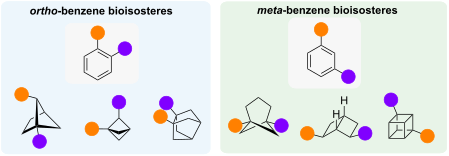
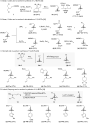
- haloalkylation with alkyl iodides (Scheme 14A) [27][47]. This reaction can be performed either under photoredox catalysis conditions or without the need for an initiator, depending on the used alkyl iodide. For selected examples, the radical initiator Et3B could also be used. Activation by photoredox catalysis
- was developed by Anderson and co-workers and was shown to be the more versatile than initiator-free activation. Both initiator-free and Et3B-initiated reactions only tolerated electrophilic radicals (to 134a and 134e), while photoredox catalysis also tolerated electron-rich radicals (to 134b). The
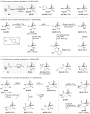
- methylation of the intermediate diacid. As for the 1,2-cubanes, the authors were able to derivatise this general building block into a range of other 1,3-cubanes via metallophotoredox catalysis using acid 167 and redox active esters 168 and 169 (Scheme 17B) [51]. Arylation (to 170), amination (to 171) and











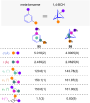


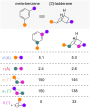


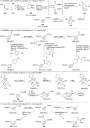


SOMOphilic alkyne vs radical-polar crossover approaches: The full story of the azido-alkynylation of alkenes
Beilstein J. Org. Chem. 2024, 20, 701–713, doi:10.3762/bjoc.20.64
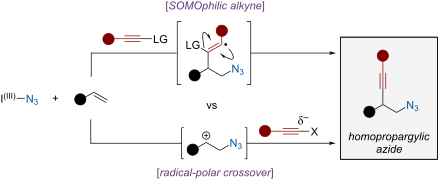
- Julien Borrel Jerome Waser Laboratory of Catalysis and Organic Synthesis, Institute of Chemical Sciences and Engineering, Ecole Polytechnique Fédérale de Lausanne, EPFL SB ISIC LCSO, BCH 4306, 1015 Lausanne, Switzerland 10.3762/bjoc.20.64 Abstract We report the detailed background for the
- reaction. Radical-polar crossover Due to the disappointing results obtained with EBX reagents as SOMOphilic alkynes, we turned our attention to the development of a radical-polar crossover approach using photoredox catalysis. The final results obtained were described in our previous publication [45], but
- Fédérale de Lausanne for financial support. This publication was created as a part of NCCR Catalysis, a National Center of Competence in Research funded by the Swiss National Science Foundation (Grant No. 180544).


Evaluation of the enantioselectivity of new chiral ligands based on imidazolidin-4-one derivatives
Beilstein J. Org. Chem. 2024, 20, 684–691, doi:10.3762/bjoc.20.62
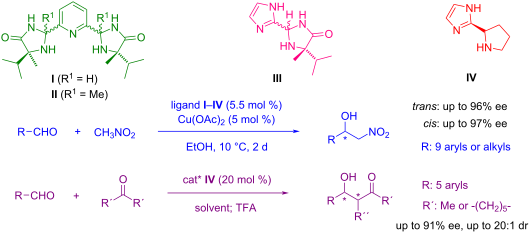
- also tested in asymmetric aldol reactions. Under the optimised reaction conditions, aldol products with enantioselectivities of up to 91% ee were obtained. Keywords: asymmetric aldol reaction; asymmetric Henry reaction; chiral ligands; enantioselective catalysis; imidazolidine derivatives
- , chiral 2-(pyridin-2-yl)imidazolidin-4-one derivatives stand out as a prominent class of chiral nitrogen ligands in enantioselective catalysis. In this work, we focused on structurally modifying 2-(pyridin-2-yl)imidazolidin-4-one ligands to potentially expand the range of efficient catalysts. Our goal was
- , Table 3 summarises the results of Henry reactions obtained by catalysis with copper(II) complexes of ligands IIIa,b. The mutual comparison of these catalysts with those composed of analogous 2-(pyridin-2-yl)imidazolidin-4-ones [5] follows several significant conclusions. For instance, the catalyst of


Palladium-catalyzed three-component radical-polar crossover carboamination of 1,3-dienes or allenes with diazo esters and amines
Beilstein J. Org. Chem. 2024, 20, 661–671, doi:10.3762/bjoc.20.59
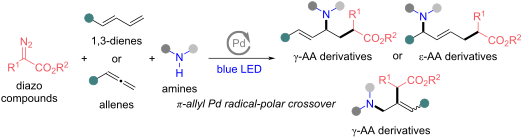
- multicomponent reaction protocol. Keywords: carboamination; diazo chemistry; palladium catalysis; radical-polar crossover; three-component reaction; Introduction Since the discovery of the existence of non-canonical amino acids (AAs) in organisms, such structural motifs have attracted considerable attention
- be difficult to achieve using either radical or polar chemistry alone. In recent years, Gevorgyan, Glorius, Huang and their co-workers reported elegant examples of the carboamination of 1,3-dienes with unactivated alkyl halides and amines under photoinduced palladium catalysis via a radical-polar
- participated in this MCR, affording the products in moderate to good yields (6d–k, 43–73%). Then, the investigations of the scope of allenes demonstrated that the substrates possessing substituents at para-, meta-, and ortho-positions of the aromatic ring were also tolerated under our catalysis conditions



HPW-Catalyzed environmentally benign approach to imidazo[1,2-a]pyridines
Beilstein J. Org. Chem. 2024, 20, 628–637, doi:10.3762/bjoc.20.55
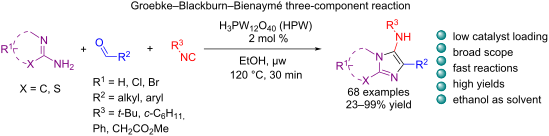
- activities. The most direct way of obtaining this nucleus is the Groebke–Blackburn–Bienaymé three-component reaction (GBB-3CR) between aminopyridines, aldehydes, and isocyanides under both Lewis and Brønsted acid catalysis. However, several catalysts for this reaction have major drawbacks such as being
- conditions and the employment of relatively complex starting materials [19]. A more efficient way of obtaining this nucleus is through the Groebke–Blackburn–Bienaymé three-component reaction (GBB-3CR) between amidines (aminoazoles), aldehydes, and isocyanides under both Lewis and Brønsted acid catalysis [20
- ][21][22]. Multicomponent reactions (MCRs) provide one-pot reactions, simple synthetic procedures, less waste being produced, fewer purification steps, and a high atom economy [23]. The GBB three-component reaction is carried out in the presence of Lewis or Brønsted acid catalysis to increase the




A laterally-fused N-heterocyclic carbene framework from polysubstituted aminoimidazo[5,1-b]oxazol-6-ium salts
Beilstein J. Org. Chem. 2024, 20, 621–627, doi:10.3762/bjoc.20.54
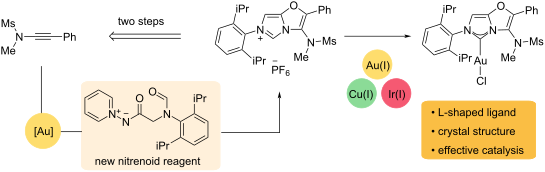
- ; imidazolium; NHC; Introduction Imidazolium-derived nucleophilic heterocyclic carbenes (NHCs) have had a sustained impact across the fields of organometallic and main group chemistry, transition-metal catalysis, materials synthesis and organocatalysis [1]. Laterally annellated polycyclic NHCs offer a useful
- introduced by the groups of Lassaletta [4] and Glorius [5], is the most widely explored framework for L-shaped ligands (Figure 1a). Even when only considering gold catalysis [6], the ImPy framework has been used to great effect [7]. The motif has been used to introduce sterically demanding NHCs with
- secondary gold-ligand interactions [8][9][10], chiral environments [11][12][13] including those enabling secondary interactions with substrates for asymmetric catalysis [14], cooperative and bimetallic catalysis [7][15], and redox-enabling function for Au(I)/(III) cycles [16][17]. Such L-shaped ligands


Synthesis of photo- and ionochromic N-acylated 2-(aminomethylene)benzo[b]thiophene-3(2Н)-ones with a terminal phenanthroline group
Beilstein J. Org. Chem. 2024, 20, 552–560, doi:10.3762/bjoc.20.47
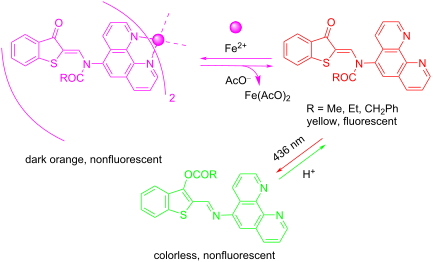
- catalysis and bioimaging [24][25][26]. In addition, such systems provide a convenient platform for creating chemo- and biosensors for rapid analysis of the ionic composition of the environment [27][28]. Results and Discussion The starting compound for the synthesis of N-acylated 2-(aminomethylene)benzo[b


Switchable molecular tweezers: design and applications
Beilstein J. Org. Chem. 2024, 20, 504–539, doi:10.3762/bjoc.20.45
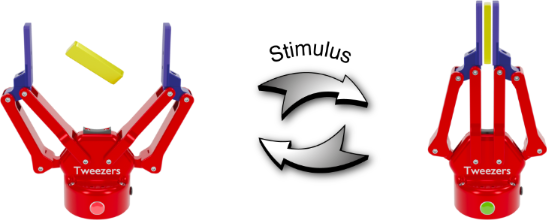
- Schrader [3][4], and more flexible variants by Rebek [5][6], Zimmerman [7][8], Bosnich [9] and others [10][11][12]. Initially serving as agents for guest binding and recognition, molecular tweezers have undergone a remarkable evolution, diversifying their applications into the realms of biology, catalysis
- , the incorporation of responsive functionalities into molecular tweezers not only provides significant benefits in catalysis for the development of switchable catalysts but also extends their utility to molecular magnetism, where magnetic switches exploit mechanical motion, and to molecular electronics
- potential if the arms exhibit additional properties such as luminescence, magnetism, catalysis, redox activity, or more. Such systems can also provide two orthogonal responses: the mechanical motion between the open and closed forms, and a potential new property that emerges when the arms are in spatial


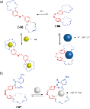


Ligand effects, solvent cooperation, and large kinetic solvent deuterium isotope effects in gold(I)-catalyzed intramolecular alkene hydroamination
Beilstein J. Org. Chem. 2024, 20, 479–496, doi:10.3762/bjoc.20.43
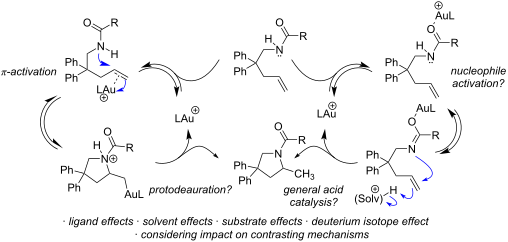
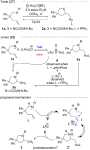
- both within the context of a classic gold π-activation/protodeauration mechanism and a general acid-catalyzed mechanism without intermediate gold alkyls. Keywords: alkene hydroamination; general acid catalysis; gold catalysis; isotope effect; phosphine ligand effect; solvent effect; Introduction
- of alkenes remains challenging. Advances in asymmetric catalysis [2][3][4][5][6][7][8][9][10], C–N [11][12][13][14][15][16][17] and C–C functionalization [18][19] reveal opportunities, but harsh conditions and limited substrate scope present problems. Intramolecular reactions almost invariably
- competing Brønsted acid catalysis in gold-catalyzed alkene functionalization remains a consideration [2], and while it is assumed that alkene activations follow the same prototypical mechanisms as allene and alkyne activations, that is (1) π-activation with nucleophilic attack followed by (2






(E,Z)-1,1,1,4,4,4-Hexafluorobut-2-enes: hydrofluoroolefins halogenation/dehydrohalogenation cascade to reach new fluorinated allene
Beilstein J. Org. Chem. 2024, 20, 452–459, doi:10.3762/bjoc.20.40
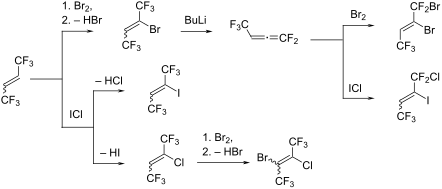
- significantly. One of the new and budding directions in recent years is the stereoselective olefin metathesis processes based on catalysis by complexes of molybdenum, tungsten and ruthenium [3][4][5]. The first publications have recently appeared that molybdenum complexes can catalyze cross-metathesis of butene


Mono or double Pd-catalyzed C–H bond functionalization for the annulative π-extension of 1,8-dibromonaphthalene: a one pot access to fluoranthene derivatives
Beilstein J. Org. Chem. 2024, 20, 427–435, doi:10.3762/bjoc.20.37
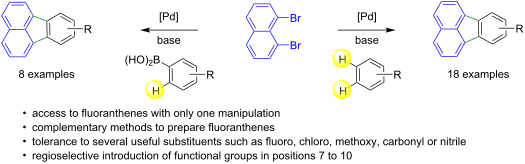
- activation has also been investigated to provide a complementary method. Using the most appropriate synthetic route and substrates, it is possible to introduce the desired functional groups at positions 7–10 on fluoranthenes. Keywords: catalysis; C–H bond functionalization; direct arylation; fluoranthenes





