


Search results
Search for "chemical structures" in Full Text gives 262 result(s) in Beilstein Journal of Organic Chemistry. Showing first 200.
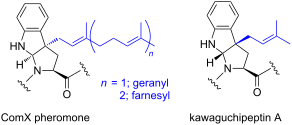
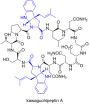
Posttranslational isoprenylation of tryptophan in bacteria
Beilstein J. Org. Chem. 2017, 13, 338–346, doi:10.3762/bjoc.13.37
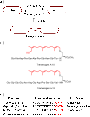
- post-translational isoprenylation of tryptophan. (A) Schematic representation of pheromone-induced conjugation tube formation for mating in Tremella mesenterica. (B) Chemical structures of tremerogens A-10 and a-13. The isoprenyl side chains are shown in red. (C) C-terminal amino acid sequences of the
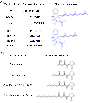
- precursors of isoprenylated peptides and proteins. The CaaX motifs are shown in red. Chemical structures of (A) surfactin A and (B) poly-γ-glutamic acid. (A) Two types of posttranslational isoprenylations of ComX variants. The modified tryptophan residues are colored blue. The isoprenyl side chains are shown
- in boldface and colored blue. (B) Chemical structures of acyl homoserine lactones. The acyl side chains are shown in boldface. (A) Schematic representation of the signal transduction cascade of quorum sensing stimulated by the ComX pheromone in B. subtilis. (B) Amino acid sequences of the aspartate




A new class of organogelators based on triphenylmethyl derivatives of primary alcohols: hydrophobic interactions alone can mediate gelation
Beilstein J. Org. Chem. 2017, 13, 138–149, doi:10.3762/bjoc.13.17
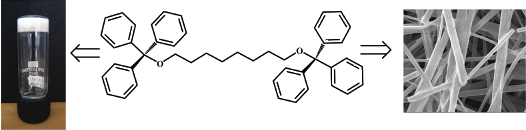
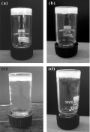
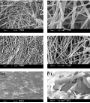
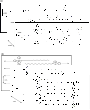
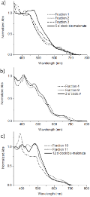
- B3LYP/6-31G (d, p) level of computations. Possible molecular packing arrangement in the self-assembled gel state of (a) TPM-G12 and (b) TPM-G5. Time-dependent UV–vis absorption profile of (a) Direct Red 80 (b) Crystal Violet aqueous dye solution (0.02 mM) by TPM-G12 gel (1% w/v in propan-1-ol). Chemical
- structures of triphenylmethyl-based organogelators. Gelation properties of TPM-G1 – TPM-G15a,b. Supporting Information Supporting Information File 58: Experimental part. Acknowledgements W.P.S gratefully acknowledges UGC, India for providing a Non-NET fellowship. This work was partially supported by the







Versatile synthesis of end-reactive polyrotaxanes applicable to fabrication of supramolecular biomaterials
Beilstein J. Org. Chem. 2016, 12, 2883–2892, doi:10.3762/bjoc.12.287

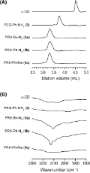
- stretching modes of the terminal phenylazide groups are observed at 2127 and 2092 cm−1, respectively [27]. PRX-Ph-Me (4c) exhibits negligible peaks in this region. In addition, proton nuclear magnetic resonance (1H NMR) spectra of 4a–c are well characterized by the chemical structures of the products




A new protocol for the synthesis of 4,7,12,15-tetrachloro[2.2]paracyclophane
Beilstein J. Org. Chem. 2016, 12, 2443–2449, doi:10.3762/bjoc.12.237
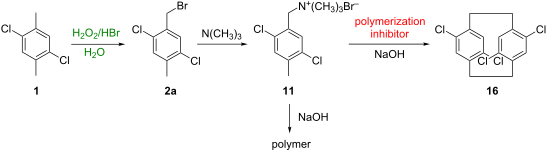
- . calcd for C16H14N2O4 (298.30): C, 64.42; H, 4.73; N, 9.39; found: C, 64.32; H, 4.75; N, 9.45. Chemical structures of parylene N, parylene C, and parylene D. Chemical structures of [2.2]paracyclophane and 4,7,12,15-tetrachloro[2.2]paracyclophane. Synthesis of substituted (4-methylbenzyl)trimethylammonium


A new paradigm for designing ring construction strategies for green organic synthesis: implications for the discovery of multicomponent reactions to build molecules containing a single ring
Beilstein J. Org. Chem. 2016, 12, 2420–2442, doi:10.3762/bjoc.12.236
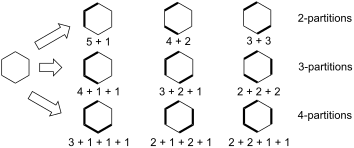
- partitioning to chemical structures. Two problems are addressed: (1) the determination of the total number of possible ways to construct a given ring by 2-, 3-, and 4-component couplings; and (2) the systematic enumeration of those possibilities. The results of the method are illustrated using cyclohexanone
- economy; green organic synthesis; integer partitioning; reactions; probability; retrosynthetic analysis; ring construction strategy; Introduction The ring motif is a key feature in chemical structures that has long attracted the attention of synthetic organic chemists in their quest to implement novel


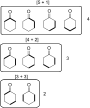
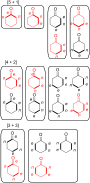
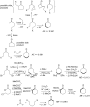


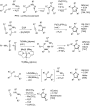




High performance p-type molecular electron donors for OPV applications via alkylthiophene catenation chromophore extension
Beilstein J. Org. Chem. 2016, 12, 2298–2314, doi:10.3762/bjoc.12.223
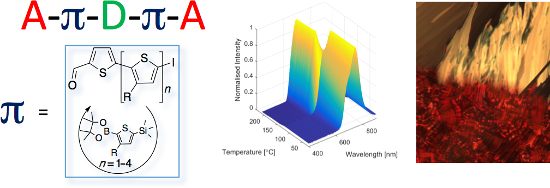
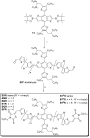
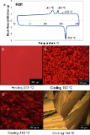
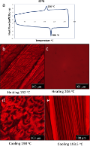
- performance OPV devices and the translation to large area and printed OPV devices. Chemical structures of molecular materials with the following variations; BTxR, alkyl side chains of the terthiophene bridging arm and BXR, oligothiophene bridging arm. BQR thermal and POM properties. a) DSC thermogram of BQR




Tunable microwave-assisted method for the solvent-free and catalyst-free peracetylation of natural products
Beilstein J. Org. Chem. 2016, 12, 2222–2233, doi:10.3762/bjoc.12.214
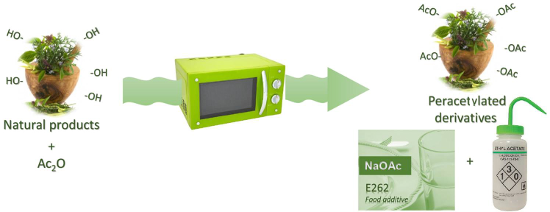
- Supporting Information File 1). Chemical structures of non-fully acetylated forms, i.e., tetra-O-acetylated-quercetin (8% of the mixture, entry B, Figure 3), di-O-acetylated quercetin (60% of the mixture, entry C, Figure 3), tri-O-acetylated quercetin (7% of the mixture, entry D, Figure 3), mono-O-acetylated
- , 155.00, 156.96, 168.07, 168.21, 168.39, 169.59, 169.93, 170.07, 170.23, 170.41. Chemical structures of bioactive substrates and their partition in subsets. MW-assisted acetylation T-program for different subset of substrates. LCHRMS (m/z, [M + Na]+ and [M − H]− only for entry F) spectrum of O-acetylated


Synthesis and characterization of fluorinated azadipyrromethene complexes as acceptors for organic photovoltaics
Beilstein J. Org. Chem. 2016, 12, 1925–1938, doi:10.3762/bjoc.12.182
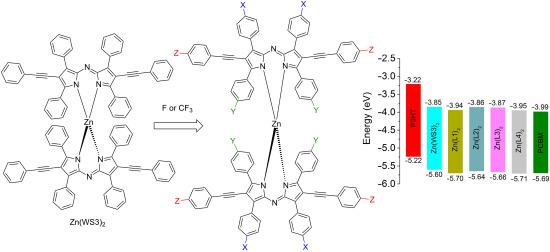
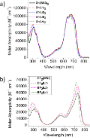
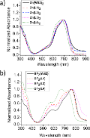
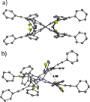
- evaporator. The devices were characterized using a Oriel Sol2A solar simulator and a Keithley 2400 SourceMeter. The active area of each solar cell is 0.20 cm2. a) Azadipyrromethene ligand labeling positioning; b and c) chelates; d) estimated HOMO/LUMO energy levels [9]. Chemical structures of the fluorinated




Ionic liquids as transesterification catalysts: applications for the synthesis of linear and cyclic organic carbonates
Beilstein J. Org. Chem. 2016, 12, 1911–1924, doi:10.3762/bjoc.12.181
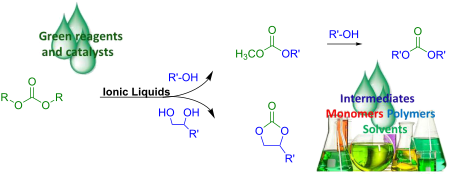
- chemical structures for liquid organic salts. These properties are often referred to as “tunable catalysts”, “task-specific ionic liquids”, and “designer solvents”, which involve the concept of optimizing the use of ILs by tailoring their chemical features for a specific transformation or for classes of


Synthesis and properties of fluorescent 4′-azulenyl-functionalized 2,2′:6′,2″-terpyridines
Beilstein J. Org. Chem. 2016, 12, 1812–1825, doi:10.3762/bjoc.12.171
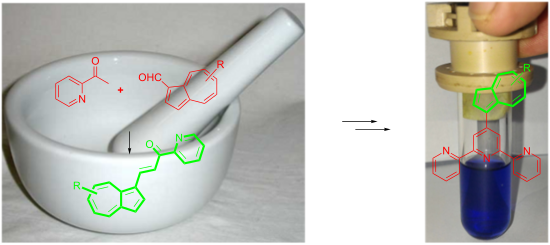
- precursors when the overall yield of the reaction is less than 5% lower. The 1H and 13C NMR spectroscopic data for both terpyridine compounds 4 are consistent with the proposed chemical structures. Comparison with the 1H NMR spectrum of the 4′-phenyl-2,2′:6′,2″-terpyridine analogue [27][29][30] evidences


Star-shaped and linear π-conjugated oligomers consisting of a tetrathienoanthracene core and multiple diketopyrrolopyrrole arms for organic solar cells
Beilstein J. Org. Chem. 2016, 12, 1459–1466, doi:10.3762/bjoc.12.142
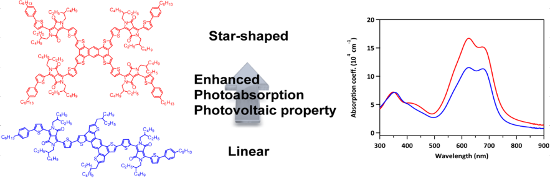
- isotope pattern deconvolution in mass spectra of TTA-DPP4 and TTA-DPP2 showed good agreements with the theoretical isotope patterns, supporting their chemical structures. Synthesis of TTA-DPP2: This compound was prepared in a similar fashion to TTA-DPP4, using 3 (0.31 g, 0.33 mmol) and 4 (0.53 g, 0.69
- AM 1.5G solar illumination at 100 mW cm−2 (1 sun), using a Xe lamp-based Bunko-Keiki SRO-25 GD solar simulator. The light intensity was calibrated using a standard silicon photovoltaic reference cell. Chemical structures of TTA-DPP4 and TTA-DPP2. HOMO and LUMO distributions, calculated energy levels


From N-vinylpyrrolidone anions to modified paraffin-like oligomers via double alkylation with 1,8-dibromooctane: access to covalent networks and oligomeric amines for dye attachment
Beilstein J. Org. Chem. 2016, 12, 1395–1400, doi:10.3762/bjoc.12.133

- alkylation reagent, extending the reaction time and working with a high concentrated solution a mixture of paraffin-like oligomers 2a–c differing in their end groups was obtained. The oligomers were separated by use of column chromatography (Scheme 1). The chemical structures of the derivatives 2a–c were



Biradical vs singlet oxygen photogeneration in suprofen–cholesterol systems
Beilstein J. Org. Chem. 2016, 12, 1196–1202, doi:10.3762/bjoc.12.115

- -benzoylthiophene (BZT). Chemical structure of tiaprofenic acid (TPA) and suprofen (SP). Chemical structures of dyads 1–3. Diagnostic NOE interactions in compounds 4 and 5. Decrease of the absorbance at 290 nm upon irradiation in CH2Cl2 under N2 for 1 (red circles), 2 (black squares) and 3 (blue triangles) as a


A cross-metathesis approach to novel pantothenamide derivatives
Beilstein J. Org. Chem. 2016, 12, 963–968, doi:10.3762/bjoc.12.95

- the higher stability observed for 16 in blood, we expect this stereoselective synthetic route to find utility in accessing other new pantothenamide derivatives. Chemical structures of N-pentylpantothenamide (1) and of its methyl allyl derivative 2. Structure of Grubbs’ catalysts used in this study. In


Separation and identification of indene–C70 bisadduct isomers
Beilstein J. Org. Chem. 2016, 12, 903–911, doi:10.3762/bjoc.12.88
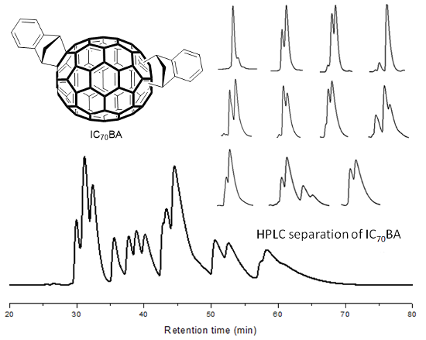
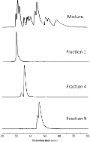
- serendipitous and surprising given the large number of chemical structures involved. It is noteworthy that there have been several studies on reducing the number of isomers in fullerene bisadduct materials using synthetic strategies and about the successful application in solar cell devices [18][19][20][21][22




Enantioselective carbenoid insertion into C(sp3)–H bonds
Beilstein J. Org. Chem. 2016, 12, 882–902, doi:10.3762/bjoc.12.87
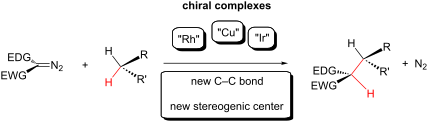
- carbene, triplet carbene and carbenoids. Classification of the carbenoid intermediates by the electronic nature of the groups attached to the divalent carbene carbon. Chiral bis(oxazoline) ligands used in enantioselective copper carbenoid insertion. Chemical structures of complexes (R)-18 and (S)-18


Is conformation a fundamental descriptor in QSAR? A case for halogenated anesthetics
Beilstein J. Org. Chem. 2016, 12, 760–768, doi:10.3762/bjoc.12.76

- stable minima (ruled by intramolecular interactions) do not necessarily coincide with the bioconformation (ruled by enzyme induced fit). Consequently, a QSAR model based on two-dimensional chemical structures was built and exhibited satisfactory modeling/prediction capability and interpretability, then
- useful for understanding the action mechanism of related drugs, as well as to drive the synthesis of new drug like compounds. Since the milestone work by Hansch and Fujita [1], a variety of MD´s have been developed to improve the correlation of chemical structures with bioactivity, ranging from
- requirements for drug development. Multivariate Image Analysis applied to QSAR (MIA-QSAR) is a genuine 2D method, since descriptors are pixels of molecular projections drawn as black and white wireframes [10] and, more recently, as colored 2D-images (chemical structures) with spheres representing atoms with


Art, auto-mechanics, and supramolecular chemistry. A merging of hobbies and career
Beilstein J. Org. Chem. 2016, 12, 362–376, doi:10.3762/bjoc.12.40
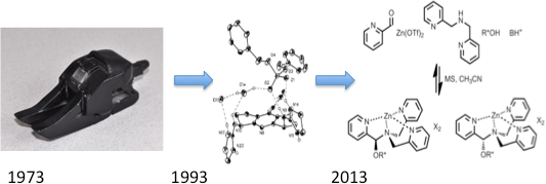
- functional models, it is not surprising that my career has focused on the creation of new molecular and supramolecular structures designed to execute a particular function or achieve a certain task. Further, while we all know “beauty is in the eye of the beholder”, many of our group’s chemical structures are





Determination of formation constants and structural characterization of cyclodextrin inclusion complexes with two phenolic isomers: carvacrol and thymol
Beilstein J. Org. Chem. 2016, 12, 29–42, doi:10.3762/bjoc.12.5
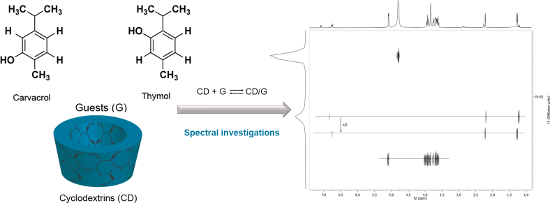
- presence of 10 mM of CD. The radical scavenging activity was expressed as Trolox equivalents TEAC (μmol Trolox/g of G) by using a Trolox calibration curve prepared for a concentration range of 2.5–25 μM. All analyses were done in triplicate. Chemical structures, logP values and molecular volumes (V) of




Physical properties and biological activities of hesperetin and naringenin in complex with methylated β-cyclodextrin
Beilstein J. Org. Chem. 2015, 11, 2763–2773, doi:10.3762/bjoc.11.297
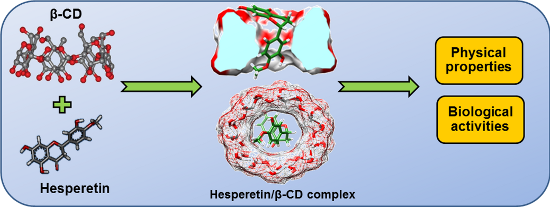
- beneficial biological properties, i.e., free radical scavenging activity [3], cardioprotective action [4], antibacterial and antiviral activities [5]. Two flavonoids in the class of flavanones, hesperetin and naringenin (chemical structures in Figure 1), can be extracted from citrus fruits such as lemon


Learning from the unexpected in life and DNA self-assembly
Beilstein J. Org. Chem. 2015, 11, 2713–2720, doi:10.3762/bjoc.11.292
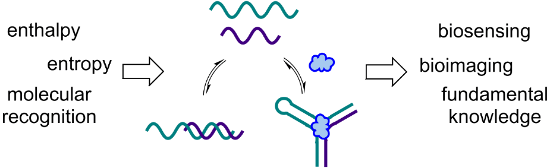
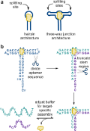
- systems, subtle changes to the energetics of DNA assembly can have rather large effects on the position of equilibrium. We were fortunately able to overcome this challenge by replacing the Cy3 with a hexachlorofluorescein (HEX). HEX and FAM are spectrally orthogonal, but have similar chemical structures




Inclusion complexes of 2-methoxyestradiol with dimethylated and permethylated β-cyclodextrins: models for cyclodextrin–steroid interaction
Beilstein J. Org. Chem. 2015, 11, 2616–2630, doi:10.3762/bjoc.11.281
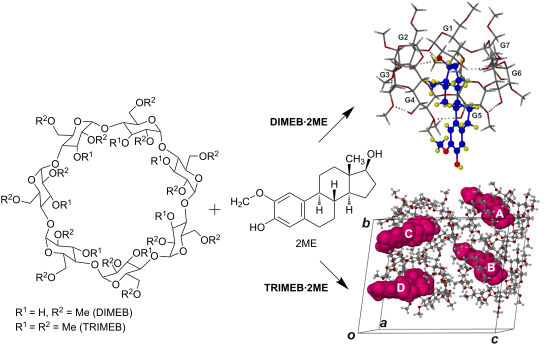
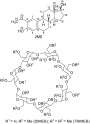
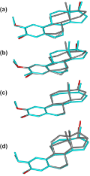
- dissolution profiles. Chemical structures of 2-methoxyestradiol (top) and the derivatised CDs DIMEB and TRIMEB (bottom). The mode of inclusion of 2ME in the DIMEB cavity (a), space-filling side view of the complex with the 2ME molecule in green (b) and cutaway view (c), location of the A-ring of 2ME





Size-controlled and redox-responsive supramolecular nanoparticles
Beilstein J. Org. Chem. 2015, 11, 2388–2399, doi:10.3762/bjoc.11.260
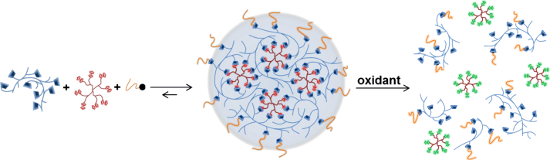
- -triggered disassembly of the host–guest complex. b) Chemical structures of the building blocks used here. c) Binding of Fc by CD and subsequent dissociation upon oxidation of Fc. Hydrodynamic diameters, d, and zeta potentials, ζ, measured by DLS of SNPs prepared at increasing salt concentrations (0–0.2 M


Synthesis of constrained analogues of tryptophan
Beilstein J. Org. Chem. 2015, 11, 1997–2006, doi:10.3762/bjoc.11.216
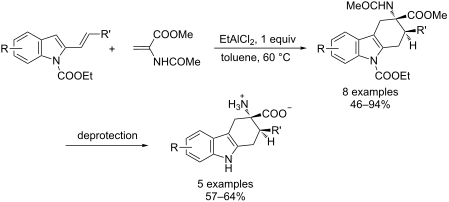
- naturally occurring or chemically synthesized non-proteinogenic amino acids are classified [1]. Chemically synthesized non-proteinogenic amino acids embody in principle a countless collection of assorted chemical structures and are mainly employed as they are or as scaffolds for pharmacologically active


Stereochemistry of ring-opening/cross metathesis reactions of exo- and endo-7-oxabicyclo[2.2.1]hept-5-ene-2-carbonitriles with allyl alcohol and allyl acetate
Beilstein J. Org. Chem. 2015, 11, 1893–1901, doi:10.3762/bjoc.11.204

- ” and H-2”, H-2 and H-3’, H-5 and H-1” Hz; J-resolved; 1H NMR (CDCl3) 3JH1’,H2’ = 11 Hz. RI: 1583 (tR = 34.92 min); TOF MS ES+ m/z [M + Na]+ 202; HRMS m/z: [M + Na]+ calcd for C12H15NO3Na 202.0844; found: 202.0850. Chemical structures of catalysts [Ru]1–6 used in this work. Representative GC





