Search results
Search for "conformation" in Full Text gives 811 result(s) in Beilstein Journal of Organic Chemistry. Showing first 200.
Double-headed nucleosides: Synthesis and applications
Beilstein J. Org. Chem. 2021, 17, 1392–1439, doi:10.3762/bjoc.17.98
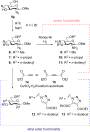
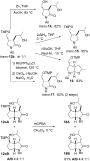
- due to the 3′-endo conformation which placed the 2′-substituent towards the minor groove rather than to the duplex core [35]. Vilarrasa and co-workers [47] synthesized 2′-uracil-1-yl and 2′-thymin-1-yl derivatives of 2′-deoxythymidine starting from uridine (16). The synthesis started with the TIPDS
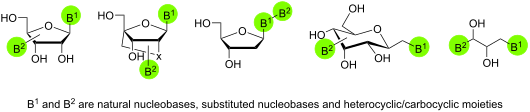
- ][31][65]. Bicyclic double-headed nucleosides In this section we have included the double-headed nucleoside monomers, which have a locked nucleic acid type conformation and the additional nucleobase is attached at one of the carbon or nitrogen atoms constituting the bridge (Figure 1). All examples





Structural effects of meso-halogenation on porphyrins
Beilstein J. Org. Chem. 2021, 17, 1149–1170, doi:10.3762/bjoc.17.88
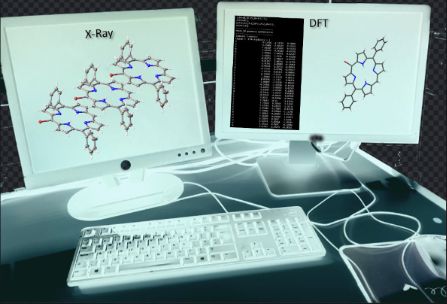
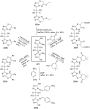
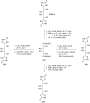
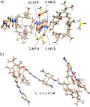
- CSD. In this study we have used the Hirshfeld fingerprint plots together with normal-coordinate structural decomposition and determined crystal structures to elucidate the conformation, present intermolecular interactions, and compare respective contacts within the crystalline architectures
- we were able to deduce the impact a meso halogen has on a porphyrin, for example, meso-halogenation is dependent on the type of alternate substituents present when forming supramolecular assemblies. Furthermore, we have designed a method to predict the conformation of halogenated porphyrins, without
- [18], the conformation of the porphyrin core can play a key role in the binding of small molecules or on its efficiency as an organocatalyst as demonstrated by Roucan et al. [19]. With the continuing interest in nonplanar porphyrins [20] and their relevance for the in vivo functioning of porphyrin




N-tert-Butanesulfinyl imines in the asymmetric synthesis of nitrogen-containing heterocycles
Beilstein J. Org. Chem. 2021, 17, 1096–1140, doi:10.3762/bjoc.17.86

- arrangement of the sulfinyl group is the most stable conformation of the imine, due to the contribution of the hydrogen bonding of the oxygen and the iminic hydrogen. In this scenario, the tribromomethyl anion attacked the less hindered Re face of the imine with (RS) configuration (Scheme 6). The
- generated, taking place a diastereoselective nucleophilic dichloromethylation of the imine. The addition took place almost exclusively to the Re face of the imine (RS)-14, which is the less sterically hindered in the most stable s-cis conformation (see Scheme 2). The second intramolecular N-alkylation step
- chair-like transition state model with the indium coordinated to the nitrogen atom of the imine, and the sulfinyl and R groups located at axial positions, in a kind of s-cis conformation, was proposed to rationalize the stereochemical outcome. By considering this working model, the nucleophilic attack


Synthesis of multiply fluorinated N-acetyl-D-glucosamine and D-galactosamine analogs via the corresponding deoxyfluorinated glucosazide and galactosazide phenyl thioglycosides
Beilstein J. Org. Chem. 2021, 17, 1086–1095, doi:10.3762/bjoc.17.85
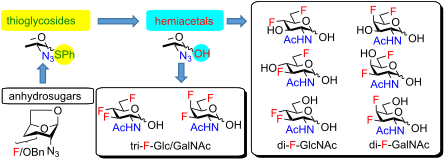
- ᴅ-galacto configuration for all fluoro analogs 59–72. The values of the coupling constants correlated with the 4C1 conformation adopted by the target fluoro analogs in solution (Table 1 and Table S1 in Supporting Information File 1). For example, the magnitude of the germinal fluorine–carbon
- (3JH3/H5-F = 25.5–30.3 Hz) or equatorial (3JH3-F4 = 14.8–16.8 Hz, 3JH5-F4 = 2.5–4.8 Hz) position of the C4 fluorine substituent [57]. Moreover, evaluation of 3JH5-F6 coupling constants revealed that 6-fluoro ᴅ-gluco analogs 59, 62, 64, and 71 assumed preferentially gauche,gauche (gg) conformation of the



Synthesis of 10-O-aryl-substituted berberine derivatives by Chan–Evans–Lam coupling and investigation of their DNA-binding properties
Beilstein J. Org. Chem. 2021, 17, 991–1000, doi:10.3762/bjoc.17.81
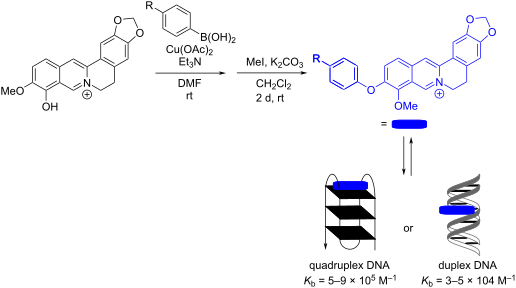
- shift of the equilibrium between the [3 + 1] conformer, related to the shoulder at 255 nm [59], and the basket-type conformation of 22AG, assigned to the positive signal at 290 nm and the weak negative band at 260 nm [60][61] in favor of the latter. Hence, these observations showed that the ligands bind


Prins cyclization-mediated stereoselective synthesis of tetrahydropyrans and dihydropyrans: an inspection of twenty years
Beilstein J. Org. Chem. 2021, 17, 932–963, doi:10.3762/bjoc.17.77
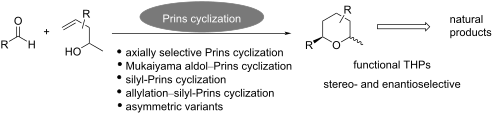
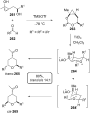
- ion intermediate in a stereoselective manner for THP ring formation as shown in Scheme 3. The outcome of exclusive cis-stereoselectivity in the Prins cyclization might be attributed to the most favorable conformation adopted by 12 with equatorial orientation of the 2,6-substituents (R1 and R2). Alder
- presence of the mild Lewis acid InCl3 and benzaldehyde (88), which produced all-cis-tetrahydropyran-4-one 90 in excellent yield. The transformation proceeded through cyclization of a diequatorial chair-like conformation of the oxocarbenium ion 89 to provide an N-acyliminium ion, which upon hydrolysis
- mixture of cis- and trans-220 (dr = 4.1:1.0). It was explained that the diastereoselectivity of the product depends on the size of the substituent. For example, when the substituent is sterically small, it occupies the pseudoaxial position in the reactive conformation 218 (Scheme 52). Li et al. utilized










Beyond ribose and phosphate: Selected nucleic acid modifications for structure–function investigations and therapeutic applications
Beilstein J. Org. Chem. 2021, 17, 908–931, doi:10.3762/bjoc.17.76
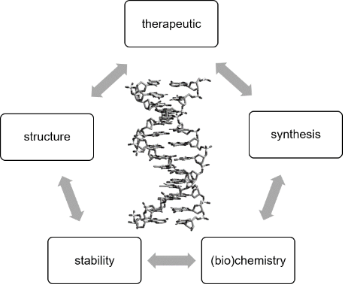
- modifications reported by chemists along with the synthesis of 2'-deoxy-2'-fluoro-nucleosides (FRNA) [24]. The negatively charged phosphodiester linkages in the backbones of DNA and RNA are of fundamental importance for reactivity, stability, conformation and hydration [25][26]. The sugar moieties in DNA and
- (CnpGnpCnpGnpAnpAnpTnpTnpCnpGnpCnpG)-3' at 2 Å resolution [71]. It was found that the overall duplex structure adopted by 3'-NP DNA resembles that of an RNA-like A-form double helix. The deoxyribose ring of phosphoramidate DNA is locked in a northern (C3'-endo) conformation due to the decreased gauche effect between 4'-O and the 3
- in nuclease stability, even relative to PS-modified duplexes [91]. Crystal structures of PS2-modified RNA duplexes were determined to be isomorphous to their native RNA counterpart, causing no perturbation in the ribose sugar conformation, nor the torsion angles of the backbone [92]. More




Synthesis of β-triazolylenones via metal-free desulfonylative alkylation of N-tosyl-1,2,3-triazoles
Beilstein J. Org. Chem. 2021, 17, 762–770, doi:10.3762/bjoc.17.66
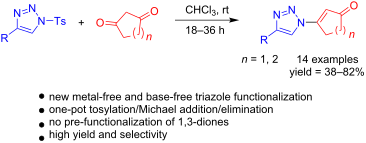
- to exist in twist-boat conformation. When R = H, the pseudoaxial approach of the nucleophile towards the β-position leading to the enolate intermediate VI (R = H) bearing pseudoequatorially oriented OTs group or the pseudoequatorial approach of the nucleophile leading to the intermediate VII (R = H


α,γ-Dioxygenated amides via tandem Brook rearrangement/radical oxygenation reactions and their application to syntheses of γ-lactams
Beilstein J. Org. Chem. 2021, 17, 688–704, doi:10.3762/bjoc.17.58
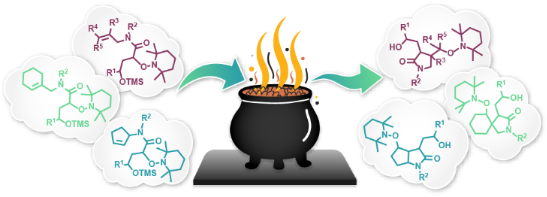
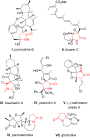
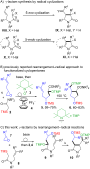
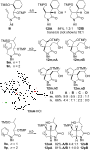
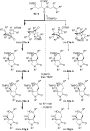
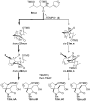
- oxidation have a similarly preferred (Z)-orientation, since the environment around the amide does not change significantly during these elementary steps. A zig-zag conformation of the main chain places the bulky silyloxy and the methyl group of the 1-arylethyl unit in (4S,S)-19i–k, but the silyloxy group
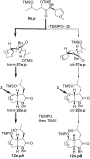
- conformation in radical 20, in which the interactions of the carbonyl group and the cyclohexane ring are minimized, the β-face at the radical center is significantly blocked by the silyloxy group hindering the approach of TEMPO (3), whereas the α-face is free for radical coupling resulting in the formation of
- cyclization of the 2-silyloxycyclohexyl-substituted amide 9l proceeds similarly providing almost equal amounts of two trans diastereomers 12l as single isomers because of the constrained conformation of radical 20, which allows a cyclization essentially only from the α-face (not shown, cf. Scheme 8). Amides







Menthyl esterification allows chiral resolution for the synthesis of artificial glutamate analogs
Beilstein J. Org. Chem. 2021, 17, 540–550, doi:10.3762/bjoc.17.48
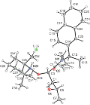
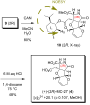
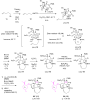
- crystal are arising from the four contiguous single bonds between the heterocycle and the menthyl group. These take a stable extended conformation in the calculations and in the NMR experiment, whereas a rather folded conformation is taken in the crystals. Such a discrepancy is often observed and reported
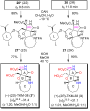
- )-isomers 10 and 21, these three conditions match to define the stable conformer (see Figure 3 and Figure 8). However, the situation is different for the (S)-isomers 10* and 21* because there is no conformation that simultaneously fulfills these three conditions in these compounds. Thus, in 21*, to avoid a
- steric repulsion with the large ring C with the TFA group, the isopropyl group takes a conformation proximal to the methyl ester (see Figure 7). For 10*, with smaller size of the ring C, a conformer in which the isopropyl group and the methyl ester are separated also seems to be energetically








Synthetic strategies of phosphonodepsipeptides
Beilstein J. Org. Chem. 2021, 17, 461–484, doi:10.3762/bjoc.17.41
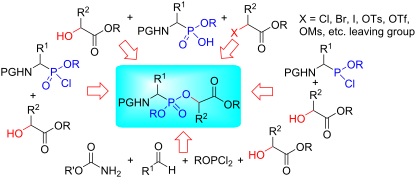
- phosphonodepsipeptide sodium salt 180. By using a similar method, two acyclic analogues 183 and 186 were synthesized as well. The macrocyclic phosphonodepsipeptide 180 and the two acyclic analogues 183 and 186 were evaluated for their potential as inhibitors. The NMR analysis results indicated that the conformation of
- the macrocyclic phosphonodepsipeptide backbone closely approximated that of the lead inhibitor and showed the low-energy conformation accommodated in the active site of penicillopepsin without significant distortion (Scheme 34) [54]. Synthesis of γ-phosphonodepsipeptides The acyloxyalkyl esters 194




Biochemistry of fluoroprolines: the prospect of making fluorine a bioelement
Beilstein J. Org. Chem. 2021, 17, 439–460, doi:10.3762/bjoc.17.40
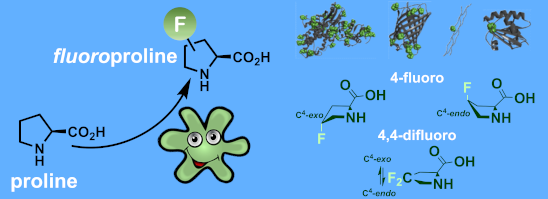
- residue that appear altered in fluoroprolines. The first one to mention is the conformation of the pyrrolidine ring, which exhibits a dynamic transition between several distinct states in a relatively fast kinetic mode (roughly on a GHz scale) [48][49]. For simplicity, two conformations are considered
- most commonly, usually called C4-puckers. In the endo-pucker, the carbon atom C4 is displaced from the ring plane towards the carboxylate group, while in the exo-pucker, it is displaced in the opposite direction (Figure 6). Although, this may look like a mere side-chain conformation transition, this
- °, respectively) are of comparatively similar stability, while the trans-amide is more stable (Figure 7) [53]. In a folded protein, the overall conformation dictates the amide rotation state. Nonetheless, when the protein is unfolded, the trans/cis isomerism can create numerous subpopulations, and the resulting


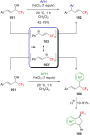
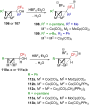
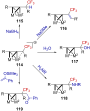
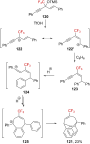
CF3-substituted carbocations: underexploited intermediates with great potential in modern synthetic chemistry
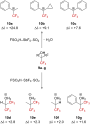
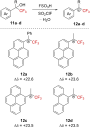
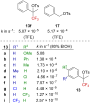
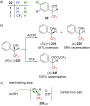
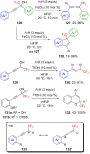
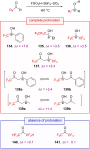
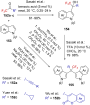
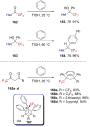
Beilstein J. Org. Chem. 2021, 17, 343–378, doi:10.3762/bjoc.17.32








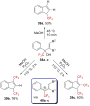


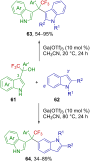


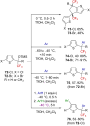

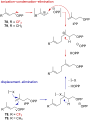







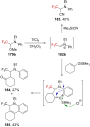


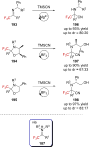
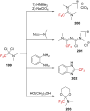


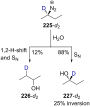








Regioselective chemoenzymatic syntheses of ferulate conjugates as chromogenic substrates for feruloyl esterases
Beilstein J. Org. Chem. 2021, 17, 325–333, doi:10.3762/bjoc.17.30
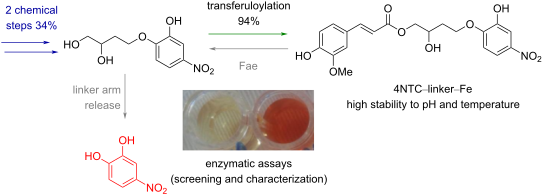
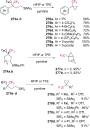
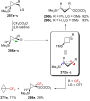
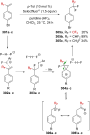
- chromogenic 5-O-feruloylated α-ʟ-arabinofuranosides 1a and 1b is usually achieved using a multistep pathway that involves trapping the furanose conformation, anomeric activation, glycosidation, regioselective deprotection of the primary hydroxy group, feruloylation, and final deprotection to yield the target


19F NMR as a tool in chemical biology
Beilstein J. Org. Chem. 2021, 17, 293–318, doi:10.3762/bjoc.17.28
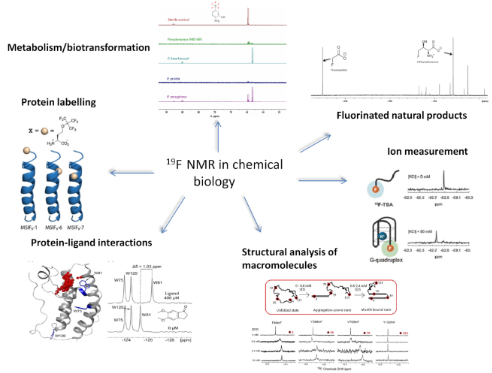
- -β2AR, changes in the NMR signals monitored within different helices of the protein revealed that agonist binding primarily shifted the equilibrium towards the G protein-specific active state of helix VI. In contrast, β-arrestin-biased ligands predominantly affected the conformation of specifically
- several properties of a specifically 3-FTyr-labelled α-synuclein analogue, including its native conformation and the conformational changes induced by urea, spermine and sodium dodecyl sulfate (SDS) [75]. Subsequently, α-synuclein interaction with SDS micelles and model membranes have also been


Annulation of a 1,3-dithiole ring to a sterically hindered o-quinone core. Novel ditopic redox-active ligands
Beilstein J. Org. Chem. 2021, 17, 273–282, doi:10.3762/bjoc.17.26
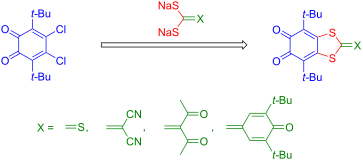
- -quinone exhibit distortion from a mean plane that is typical of sterically hindered o-quinones with annulated 1,3-dithiole ring (Figure S4 in Supporting Information File 1). Both carbonyl oxygens of the acetylacetonate unit are directed towards the 1,3-dithiole ring. Such a conformation provides close


The preparation and properties of 1,1-difluorocyclopropane derivatives
Beilstein J. Org. Chem. 2021, 17, 245–272, doi:10.3762/bjoc.17.25
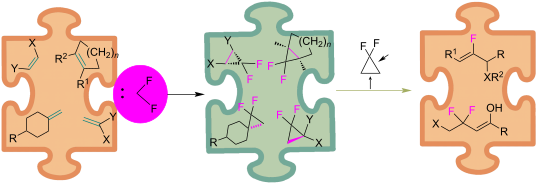
- -isomer 91 (>6 kcal/mol), because of the need to attain a cisoid conformation prior to the rearrangement. The thermal vinylcyclopropane rearrangement of ethyl trans-3-(2,2-difluoro-3-phenylcyclopropyl)acrylate (93) proceeded at 100 °C, resulting in the difluorinated cyclopentene 94 with the substituents




Exploring the possibility of using fluorine-involved non-conjugated electron-withdrawing groups for thermally activated delayed fluorescence emitters by TD-DFT calculation
Beilstein J. Org. Chem. 2021, 17, 210–223, doi:10.3762/bjoc.17.21
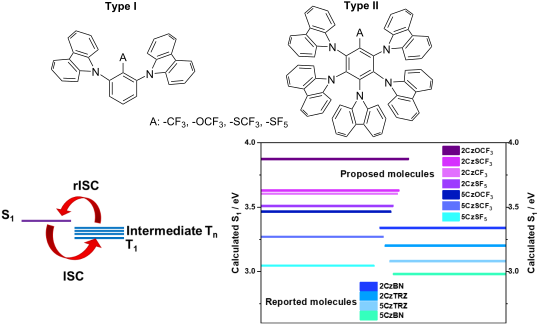
- geometries indicate that the carbazoles adopt a significantly twisted conformation (dihedral angles > 50o) in order to minimize their interaction with the acceptor group. Specifically, for 2CzCF3 the carbazoles are twisted to 60.2o and 70.5o with respect to the bridging phenyl ring while for 2CzSF5, due to


Circularly polarized luminescent systems fabricated by Tröger's base derivatives through two different strategies
Beilstein J. Org. Chem. 2021, 17, 52–57, doi:10.3762/bjoc.17.6
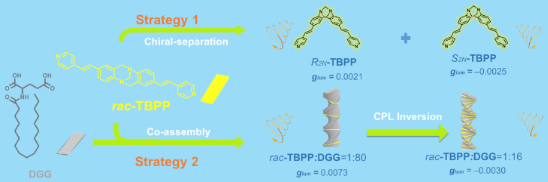
- the co-assembly strategy. The cogels show significant CPL emission and stoichiometry-controlled inversion of chirality due to the hydrogen bonding interactions and packing modes in the supramolecular co-assemblies. Owing to TB special V-shaped structure, rigid conformation, and nitrogen stereogenic


Molecular basis for protein–protein interactions
Beilstein J. Org. Chem. 2021, 17, 1–10, doi:10.3762/bjoc.17.1
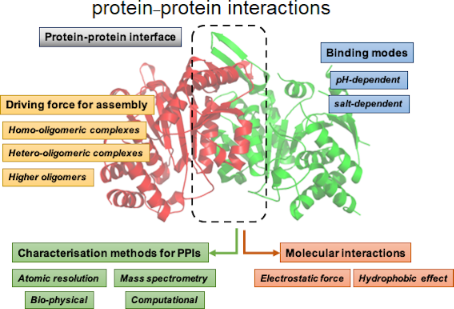
- incorporated deuterium can then be localised through protease-generated peptide fragments or fragmentation within the mass spectrometer. The rate of hydrogen-to-deuterium exchange provides insight into the solvent accessibility. HDXMS provides information on the conformation of the protein, PPIs, and even


Chiral anion recognition using calix[4]arene-based ureido receptors in a 1,3-alternate conformation
Beilstein J. Org. Chem. 2020, 16, 2999–3007, doi:10.3762/bjoc.16.249
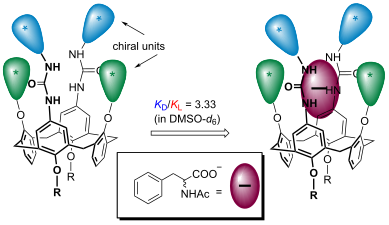
- of calix[4]arene immobilised in the 1,3-alternate conformation led to a system possessing a preorganised ureido cavity hemmed with chiral alkyl units in the near proximity. As shown by the 1H NMR titration experiments, these compounds can be used as receptors for chiral anions in DMSO-d6. The chiral
- different conformations. Although the overwhelming majority of calixarene-based receptors makes use of the cone conformer A (Figure 1), the corresponding diureidocalix[4]arenes in the 1,3-alternate conformation B showed [42][43] surprisingly good complexation abilities towards selected anions. Especially
- reactivity of the nonalkylated phenolic moieties [45]. The fast reaction afforded the corresponding dinitro derivative 3 within a few minutes with 70% yield. As we found in our previous attempts [43][45], the alkylation of dinitrocalixarenes to form the 1,3-alternate conformation is a synthetic challenge. In




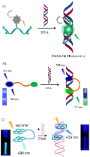
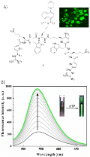
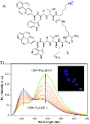
Selected peptide-based fluorescent probes for biological applications
Beilstein J. Org. Chem. 2020, 16, 2971–2982, doi:10.3762/bjoc.16.247

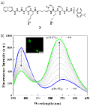
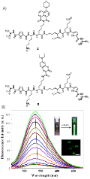
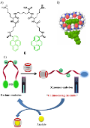
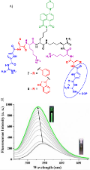
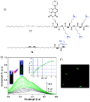
- ) [42]. Probe 6 has a central lysine spacer which is connected to two symmetric peptidic arms. Each arm contains a cationic lysine as a positively charged head group and a pyrene moiety at the end of the γ-aminobutyric acid linker. Compound 6 is mostly in folded conformation in solution and emits pyrene




Naphthalonitriles featuring efficient emission in solution and in the solid state
Beilstein J. Org. Chem. 2020, 16, 2960–2970, doi:10.3762/bjoc.16.246
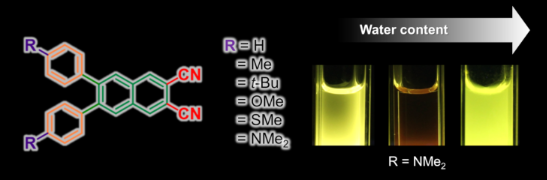
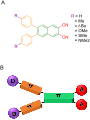
- or rotational modes [34][35]. Secondly, a considerably distorted conformation is also needed to prevent detrimental exciton interactions in the solid state. Currently, 6,7-disubstituted naphthalene-2,3-dicarbonitrile derivatives represent an intensively investigated class of compounds, due to their
- dichloromethane/hexane mixture. The structural data are given in Supporting Information File 1 (Tables S1–S3) and the molecular structure in the crystal of Me is shown in Figure 1. The Me derivative is not planar, as it adopts an asymmetrically twisted conformation. The dihedral angles (φ) between the two tolyl
- generate one-dimensional supramolecular chain-like arrays with tolyl units distributed at the two sides of the chain (Figure 2C). These weak forces help the molecules to minimize the energy loss via non-radiative relaxation channels by rigidifying their conformation [25]. Photophysical characterization of



Changed reactivity of secondary hydroxy groups in C8-modified adenosine – lessons learned from silylation
Beilstein J. Org. Chem. 2020, 16, 2854–2861, doi:10.3762/bjoc.16.234

- the presence of AgNO3 the 3’-O-TBDMS derivative was always obtained in excess over the 2’-isomer. The differences in the reactivity of the 2’- and 3’-OH groups mirror the impact of the sugar conformation, which is dependent on the substitution pattern. Ribonucleosides favor the 3’-endo conformation
- for J2’-3’ after 5'-O-dimethoxytritylation of compound 5 to obtain derivative 6. The clear shift of J1’-2’ can be taken as evidence for a changed sugar conformation, supported by the J1’-2’ coupling constant of 6.1 Hz found in the literature for the 3’-endo conformation of adenosine [32]. Introduction
- of the linker L at C8 in derivative 7 changes the J1’-2’ coupling constant only slightly (4.8 Hz J1’-2’), however, brings in a strong steric effect and most likely induces a preferential syn-conformation of the nucleobase relative to the sugar residue. These effects together can be accounted for the


Easy access to a carbohydrate-based template for stimuli-responsive surfactants
Beilstein J. Org. Chem. 2020, 16, 2788–2794, doi:10.3762/bjoc.16.229
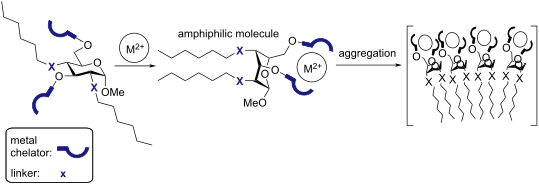
- change the conformation of the head group, for example, through a ring flip giving rise to an altered amphiphilicity. Yuasa and co-workers have employed a metal-chelating xylopyranoside derivative as the polar head group [11]. The xylopyranoside was functionalized with two amino groups on the 2- and the
- 4-position while having lipophilic tails on the anomeric and the 3-position. This configuration made it possible to chelate Zn2+ ions only when the pyranoside was in the flipped 1C4 conformation. The binding of the metal ions could thereby induce a ring flip that would manifest itself in a decreased
- conformation. When the 3- and 6-position are tethered, for example by metal binding, the glucopyranose ring undergoes a ring flip, bringing together the 2- and 4-position as shown in Figure 1b. Levoglucosan is the ideal starting material for such transformations as the 2- and 4-positions can be functionalized