Search results
Search for "cyclohexane" in Full Text gives 294 result(s) in Beilstein Journal of Organic Chemistry. Showing first 200.
Copper-catalysed asymmetric allylic alkylation of alkylzirconocenes to racemic 3,6-dihydro-2H-pyrans
Beilstein J. Org. Chem. 2015, 11, 2435–2443, doi:10.3762/bjoc.11.264
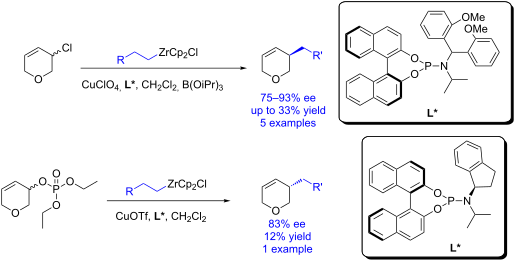
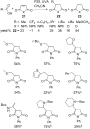
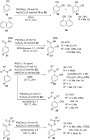
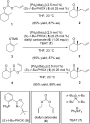
- from allyl phosphate 2d. Various alkenes were examined using the allyl chloride 2a system (Scheme 2). The reaction showed tolerance in functional groups such as CF3 (6, 75% ee) Cl (7, 77% ee), and cyclohexane (8, 88% ee). Electron rich allyl silane could also be used to introduce a TMS group (9, 93% ee




Synthesis of D-fructose-derived spirocyclic 2-substituted-2-oxazoline ribosides
Beilstein J. Org. Chem. 2015, 11, 2289–2296, doi:10.3762/bjoc.11.249

- , the reaction of 5a (0.2 g, 0.415 mmol) was performed at different concentrations (2.5, 5, 10, and 15 equiv) of cyclohexane carbonitrile (Table 1, entry 3) in dry toluene using TMSOTf (1 equiv) at 0 °C to rt under N2 atmosphere. A complex mixture of products was obtained with 2.5 equiv and 5 equiv of
- nitrile, along with trace amounts of product. Using 10 equiv of cyclohexane carbonitrile gave moderate yield of product 8a along with the formation of di-D-fructose dianhydride or spiroketals [49] as the side product. Finally, 15 equiv of nitrile served best for this transformation providing
- the β-orientation, leading to a high stereoselectivity. Finally, due to the widespread applicability of chiral oxazolines, the synthesis of fructose-derived spirooxazolines was examined on a multigram scale. For example, the reaction of 5a (1.2 g, 2.49 mmol) with cyclohexane carbonitrile (15 equiv) in


Evidencing an inner-sphere mechanism for NHC-Au(I)-catalyzed carbene-transfer reactions from ethyl diazoacetate
Beilstein J. Org. Chem. 2015, 11, 2254–2260, doi:10.3762/bjoc.11.245
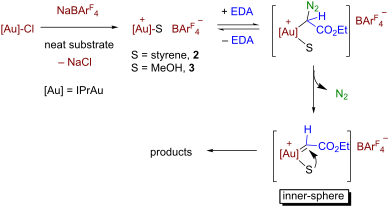
- has been performed varying the catalyst to substrate ratio, but maintaining the concentration of the catalyst as a constant. Thus, 100:0, 80:20 and 60:40 v/v mixtures of styrene and cyclohexane, respectively, have been reacted with EDA (0.285 mmol) with the same catalyst precursor (see Experimental
- ). Under these conditions, cyclohexane is much less reactive than styrene and acts as an inert solvent [29]. The kinetic curves for these three experiments are shown in Figure 2. The plot of kobs vs substrate concentration evidences a direct correlation between styrene concentration and kobs. The same
- 2 is observed with cyclohexane or dichloromethane as dilution agents must be interpreted as the result of their independent behavior in the process, not being involved in any effect relative to polarity or solubility issues. Mechanistic interpretation It has been reported by several authors that the




Recent advances in copper-catalyzed C–H bond amidation
Beilstein J. Org. Chem. 2015, 11, 2209–2222, doi:10.3762/bjoc.11.240

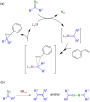
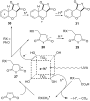
- bond was not favored. More notably, the exploration on the reaction mechanism disclosed that the activation of the alkyl C–H bond was initiated by the tert-butoxy radical (Scheme 6). Inspired by the alkane C–H activation, Yu and Cheng et al. [51] discovered that directly heating amides in cyclohexane




2-Hetaryl-1,3-tropolones based on five-membered nitrogen heterocycles: synthesis, structure and properties
Beilstein J. Org. Chem. 2015, 11, 2179–2188, doi:10.3762/bjoc.11.236

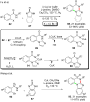
- manifested in the batochromic (Δλ = 15–19 nm) shift of the longest wavelength absorption band as compared with the parent 2-(2-hydroxyphenyl)benzoxazole (cyclohexane, λmax = 321, 334 nm [35]). The excitation spectra of ASS-luminescence correspond to the absorption spectra of the hydroxy form of compounds 11a


![[Graphic 3]](/bjoc/content/inline/1860-5397-11-236-i8.png?max-width=637&scale=1.18182) N···H–O equilibrium in solutions of 2-hetaryl-5,6,7-trichloro- and 4,...
N···H–O equilibrium in solutions of 2-hetaryl-5,6,7-trichloro- and 4,...


Investigation of the role of stereoelectronic effects in the conformation of piperidones by NMR spectroscopy and X-ray diffraction
Beilstein J. Org. Chem. 2015, 11, 1973–1984, doi:10.3762/bjoc.11.213

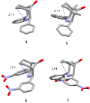
- hyperconjugation, which is related to the anomeric effect (effect where a heteroatomic substituent adjacent to a heteroatom within a cyclohexane ring prefers the axial orientation instead of the equatorial) [6][7][8][9][10][11][12]. Moreover, stereoelectronic effects have been related to the stabilization of
- delocalization interactions from electrons have a relatively important Fermi contact contribution [45]. For example in cyclohexane the spin–scalar coupling constant of the equatorial hydrogen (Heq) is 4 Hz higher (1JC,Heq) than the axial one (1JC,Hax). This difference in the 1JC,H values has been explained in
- , respectively. The Δ1JC,H coupling constant difference for cyclohexane is 3.9 Hz. There is a linear relationship between the 1JC,H value and the population analysis using the SCF density (Figure 9b), which was estimated for compound 3. The Δ1JC,H (= 1JC,H(7)eq − 1JC,H(7)ax) value for compound 8 is −5.0 Hz, and




Hexacoordinate Ru-based olefin metathesis catalysts with pH-responsive N-heterocyclic carbene (NHC) and N-donor ligands for ROMP reactions in non-aqueous, aqueous and emulsion conditions
Beilstein J. Org. Chem. 2015, 11, 1960–1972, doi:10.3762/bjoc.11.212
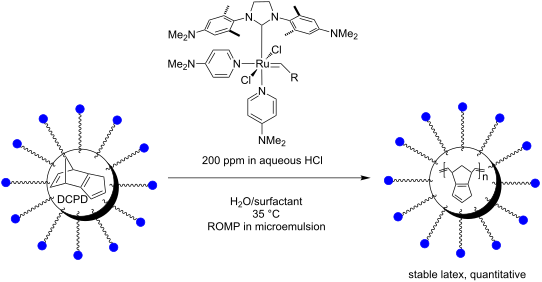
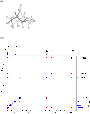
- filtered in air, the residue was washed once with 2-PrOH (20 mL), and then the residue was dried in the vacuum oven at 60 °C for 4 h. The residue still contained significant amounts of the starting complex (on average approx. 30%). Cyclohexane (80 mL) was added to the dry residue (666 mg) under inert gas
- and sonicated at 30 °C for 60 min. The slurry was filtered in air, the residue was washed with cyclohexane (2 × 15 mL) and then dried in the vacuum oven at 60 °C for 2 h to give compound 9 (378 mg, 0.40 mmol, 36%) in >99% purity. 1H NMR (300.1 MHz, C6D6, 20 °C) δ 17.99 (s, Ru=CH), 7.23 (d, 3J[1H1H
- ) (PCy3)2Cl2Ru=CHSPh (8). The cyclohexane filtrate and washes were combined and dried under reduced pressure. Acetone (30 mL) was added to the remaining solid and the slurry was sonicated for 30 min at 30 °C. The mixture is filtered in air and the residue was washed with acetone (2 × 15 mL). Then the


Profluorescent substrates for the screening of olefin metathesis catalysts
Beilstein J. Org. Chem. 2015, 11, 1886–1892, doi:10.3762/bjoc.11.203
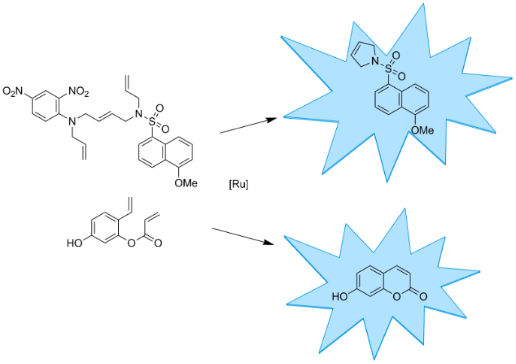
- ). Allylamine was slowly added to the solution, while stirring. After complete addition, the reaction mixture was allowed to stir overnight. The solvent was removed under vacuum and the residue was purified by flash column chromatography (silica gel, cyclohexane/EtOAc 1:1) to obtain a colourless solid (893 mg
- equiv) and then allylamine (378 µL, 5.05 mmol, 1.10 equiv) was added and the mixture was stirred for 2 h at rt until the TLC showed complete consumption. The solvent was removed under reduced pressure and the residue was purified by flash chromatography (silica gel, cyclohexane/EtOAc 3:1) to obtain 960
- diluted with EtOAc (50 mL), washed with water (2 × 50 mL) and dried over MgSO4. The solvent was removed under vacuum and the residue was purified by flash column chromatography (silica gel, cyclohexane/EtOAc 5:1) to obtain 300 mg of red oil (47%). 1H NMR (400 MHz, CDCl3) δ 8.66 (d, 4JHH = 2.7 Hz, 1H


Robust bifunctional aluminium–salen catalysts for the preparation of cyclic carbonates from carbon dioxide and epoxides
Beilstein J. Org. Chem. 2015, 11, 1614–1623, doi:10.3762/bjoc.11.176
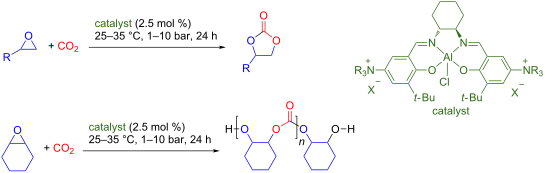
- . [28] 134 °C). 6,6'-((1E,1'E)-((1R,2R)-Cyclohexane-1,2-diylbis(azanylylidene))bis(methanylylidene))bis(2-(tert-butyl)-4-(dimethylamino)phenol) (7) Prepared by a modified literature procedure [30]. A solution of (1R,2R)-diaminocyclohexane (64 mg, 0.57 mmol) in ethanol (5 mL) was added dropwise to a
- . 5,5'-((1E,1'E)-((1R,2R)-Cyclohexane-1,2-diylbis(azanylylidene))bis(methanylylidene))bis(3-(tert-butyl)-4-hydroxy-N,N,N-trimethylbenzenaminium iodide) (8a) To a solution of 7 (100 mg, 0.192 mmol) in dry acetonitrile (5 mL) was added methyl iodide (271 mg, 1.92 mmol). The solution was stirred at room
- C34H54N4O22+, 275.21; found, 275.21. 5,5'-((1E,1'E)-((1R,2R)-Cyclohexane-1,2-diylbis(azanylylidene))bis(methanylylidene))bis(N-benzyl-3-(tert-butyl)-4-hydroxy-N,N-dimethyl-benzenaminium bromide) (8b) To a solution of 7 (120 mg, 0.231 mmol) in dry acetonitrile (5 mL) was added benzyl bromide (79 mg, 0.46 mmol


Star-shaped tetrathiafulvalene oligomers towards the construction of conducting supramolecular assembly
Beilstein J. Org. Chem. 2015, 11, 1596–1613, doi:10.3762/bjoc.11.175
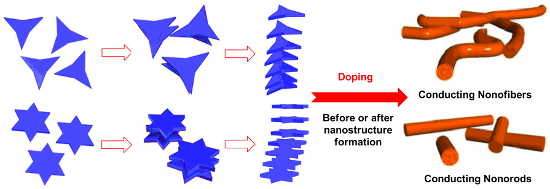
- ]annulene 28, suggesting a higher stacking ability and a larger ring size for 30. Alkyl-substituted TTF[18]annulene 32 was reported to show almost no aggregation behavior in solution [72]. However, the slightly more amphiphilic 31 exhibits self-aggregation in benzene, toluene, and cyclohexane owing to a




Preparative semiconductor photoredox catalysis: An emerging theme in organic synthesis
Beilstein J. Org. Chem. 2015, 11, 1570–1582, doi:10.3762/bjoc.11.173

- further oxidation. SCPC oxidations that take place with varying success include toluene to benzaldehyde and benzoic acid [25], cyclohexane to cylohexanone [26], benzylic and allylic alcohols to carbonyl compounds [27] and alkene epoxidations [28]. Conventional syntheses of coumarins, which are important







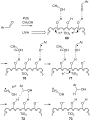
Selected synthetic strategies to cyclophanes
Beilstein J. Org. Chem. 2015, 11, 1274–1331, doi:10.3762/bjoc.11.142
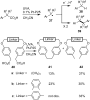
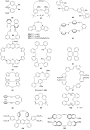
- 1,4-diiodobenzene (109) was reacted with the cyclohexane-1,4-dione (114) in the presence of CeCl3/LiCl/n-BuLi to generate the diol 115. Then, the hydroxy groups were protected as MOM groups to generate the key synthone 116. The other building blocks 119a–c were obtained by protection of dialkynes 117a






Tuning of tetrathiafulvalene properties: versatile synthesis of N-arylated monopyrrolotetrathiafulvalenes via Ullmann-type coupling reactions
Beilstein J. Org. Chem. 2015, 11, 860–868, doi:10.3762/bjoc.11.96
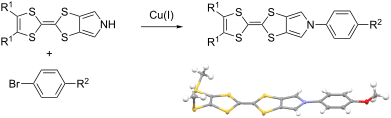
- -dithiolo[4,5-c]pyrrole (4b). Prepared from 7b (0.040 g, 0.119 mmol), CuI (0.023 g, 0.119 mmol), K3PO4 (0.020 g, 0.954 mmol), trans-diaminocyclohexane (22 µL, 0.179 mmol) and 4-bromoanisole (8a, 0.033 g, 0.179 mmol) in 3 mL of dry dioxane. The product was purified by flash chromatography (CH2Cl2/cyclohexane
- , 1:2) to afford bright yellow crystals. X-ray quality crystals were grown by slow evaporation of CDCl3 solution. Yield: 43.2 mg (0.098 mmol, 82%). Mp 198–200 °C; Rf = 0.32 (CH2Cl2/cyclohexane, 1:2); 1H NMR (360 MHz, CDCl3) δ 7.25–7.20 (m, 2H), 6.95–6.91 (m, 2H), 6.79 (s, 2H), 3.83 (s, 3H), 2.43 (s
- chromatography (CH2Cl2/cyclohexane, 1:1) to afford light orange crystals. X-ray quality crystals were grown by slow evaporation of CDCl3/heptane solution. Yield: 53.8 mg (0.105 mmol, 82%); Mp 196–199 °C; Rf = 0.5 (CH2Cl2/cyclohexane, 1:1); 1H NMR (360 MHz, CD2Cl2) δ 7.22–7.17 (m, 2H), 6.81 (s, 2H), 6.76–6.71 (m



Ruthenium-catalyzed C–H activation of thioxanthones
Beilstein J. Org. Chem. 2015, 11, 431–436, doi:10.3762/bjoc.11.49

- cyclohexane/ethyl acetate as eluent. Thioxanthone (1a). Route to methoxyarenes 1d, 1f, and 1h. Ru-catalyzed C–H activation of thioxanthones. Conditions: 6 mol % RuH2(CO)(PPh3)3, toluene, 135 °C, 12 h. Synthesis of substituted thioxanthones from thiosalicylic acid.a C–H activation. Supporting Information


Cross-dehydrogenative coupling for the intermolecular C–O bond formation
Beilstein J. Org. Chem. 2015, 11, 92–146, doi:10.3762/bjoc.11.13
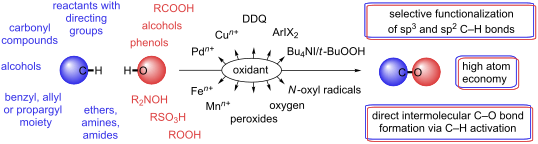
- observed due, apparently, to the addition of the C-radical generated from ketone to benzene [204]. It was shown [209] that the α’-acetoxylation of enones occurs with good selectivity in other solvents, such as cyclohexane and acetonitrile, as well. The acyloxylation of enones and aryl ketones 220 with









Articulated rods – a novel class of molecular rods based on oligospiroketals (OSK)
Beilstein J. Org. Chem. 2015, 11, 74–84, doi:10.3762/bjoc.11.11

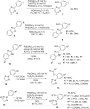
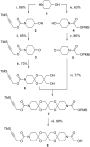
- terminal or lateral positions of the rods. Building blocks with lateral SEGs are called sleeves. In Figure 1 a typical sleeve D (cyan) as well as other typical building blocks of OSK rods are depicted, such as pentaerythritol C (red), cyclohexane-1,4-dione E (green), and piperidine-4-ones B (blue). An OSK




Three-component synthesis of C2F5-substituted pyrazoles from C2F5CH2NH2·HCl, NaNO2 and electron-deficient alkynes
Beilstein J. Org. Chem. 2015, 11, 16–24, doi:10.3762/bjoc.11.3

- crystalline product 19b was purified from the liquid starting material by washing with cyclohexane. The yield of 19b was improved to 73% by performing the reaction at 40 °C (Table 3, entry 5). SiMe3-substituted substrates 20, 21 also reacted slowly, but again performing the reaction at 40 °C allowed to obtain


Synthesis and characterization of a new photoinduced switchable β-cyclodextrin dimer
Beilstein J. Org. Chem. 2014, 10, 2874–2885, doi:10.3762/bjoc.10.304
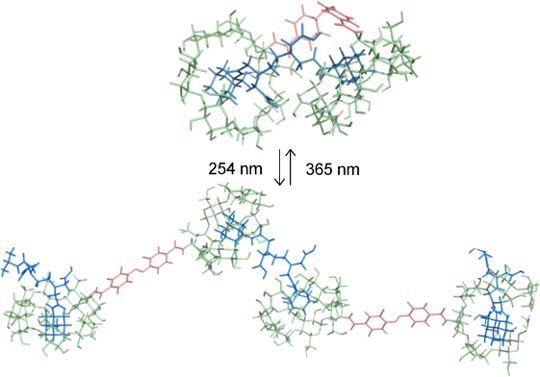
- was purchased from Roquette Frères (Lestrem, France) and β-CD-NH2 was synthesized as previously described [31] or purchased from Biocydex (Poitiers, France). Analytical TLC was performed using Silica Gel 60 F254 plates (Merck, Germany). Eluents were mixtures of dichloromethane/methanol or cyclohexane



Microsolvation and sp2-stereoinversion of monomeric α-(2,6-di-tert-butylphenyl)vinyllithium as measured by NMR
Beilstein J. Org. Chem. 2014, 10, 2521–2530, doi:10.3762/bjoc.10.263

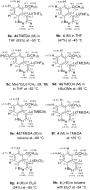
- ), began to change slightly (Tables S8 and S16, [15]) during warm-up in the direction expected [22] for aggregation. The suspicion that n-BuLi might be involved was supported through comparison with a purified sample of 4&TMEDA in Et2O/[D12]cyclohexane (80:14) that contained neither n-BuLi nor MeLi: Now
- solvent [with [D12]cyclohexane (0.060 mL) as the lock substance] with a trace of TMS under argon gas cover was sealed with a soft, solvent-resistant rubber stopper that was finally wrapped with parafilm®. Customary methanol NMR tubes were measured in place of the sample tubes to determine the actual




Formal total syntheses of classic natural product target molecules via palladium-catalyzed enantioselective alkylation
Beilstein J. Org. Chem. 2014, 10, 2501–2512, doi:10.3762/bjoc.10.261

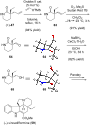
- , terminal alcohol silylation, and tertiary alcohol dehydration, affording methylene cyclohexane (−)-20. Treatment of this silyl ether with Jones reagent simultaneously cleaved the silyl group and oxidized the resulting alcohol, furnishing carboxylic acid (−)-12 in 65% yield. With this enantioenriched acid




A small azide-modified thiazole-based reporter molecule for fluorescence and mass spectrometric detection
Beilstein J. Org. Chem. 2014, 10, 2470–2479, doi:10.3762/bjoc.10.258

- transilluminator whereas BPT (1) offers a very good absorbance at 365 nm, a standard UV excitation wavelength. We then recorded fluorescence spectra of all fluorophores and determined fluorescence quantum yields Φ (Table 1). To characterize BPT (1) in a non-interacting solvent we used cyclohexane resulting in an


A new charge-tagged proline-based organocatalyst for mechanistic studies using electrospray mass spectrometry
Beilstein J. Org. Chem. 2014, 10, 2027–2037, doi:10.3762/bjoc.10.211
- of a MeOH/H2O mixture (1:1, 150 mL) and the aqueous phase was extracted with CH2Cl2 (4 × 50 mL). The combined organic extracts were dried with MgSO4 and the solvents were removed in vacuo. The crude product was purified by column chromatography on silica gel using cyclohexane/ethyl acetate (10:1) as
- extracted with CH2Cl2 (2 × 50 mL). The combined organic extracts were dried with MgSO4 and the solvents were removed in vacuo. The crude product was purified by column chromatography on silica gel using cyclohexane/ethyl acetate (2:3) as eluent (Rf 0.61). Compound 7 was obtained as colorless solid (3.55 g
- , 89%). Crystals suitable for X-ray analysis have been obtained by slow diffusion of cyclohexane into a Et2O solution of 7. 1H NMR (400 MHz, CD3OD) δ 5.26 (s, 1H, CH2CHCH2), 4.30–4.23 (m, 1H, CH2CHN), 3.83–3.76 (m, 1H, NCH2CH), 3.70–3.63 (m, 1H, NCH2CH), 3.14 (s, 3H, S-CH3), 2.67–2.56 (m, 1H, CHCH2CH



Synthesis of 2-substituted tryptophans via a C3- to C2-alkyl migration
Beilstein J. Org. Chem. 2014, 10, 1991–1998, doi:10.3762/bjoc.10.207
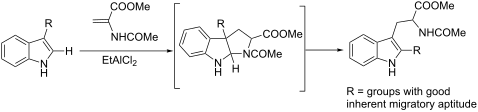
- . The crude product was purified by flash chromatography on silica gel (cyclohexane/ethyl acetate 8:2, or CH2Cl2/methanol 98:2 for 3h, as eluent) and/or crystallization. Friedel–Crafts alkylation of 3-substituted indoles. Optimization of the reaction conditions.a Synthesis of 2-benzyltryptophans 3a–j.a


Multicomponent reactions in nucleoside chemistry
Beilstein J. Org. Chem. 2014, 10, 1706–1732, doi:10.3762/bjoc.10.179
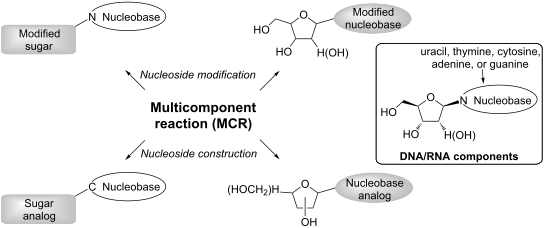
- (59a) (X = NH) [92], the N-methyl-4-hydroxy-6-methylpyridin-2(1H)-one (59b) (X = NMe) [92], N-ethyl-4-hydroxy-6-methylpyridin-2(1H)-one (59c) (X = NEt) [92], 4-hydroxy-6-methyl-2H-pyran-2-one (59d) (X = O) [92], or cyclohexane-1,3-dione (60) [93]. The syntheses of derivatives 61 to 64 represent a


Improving the reactivity of phenylacetylene macrocycles toward topochemical polymerization by side chains modification
Beilstein J. Org. Chem. 2014, 10, 1613–1619, doi:10.3762/bjoc.10.167
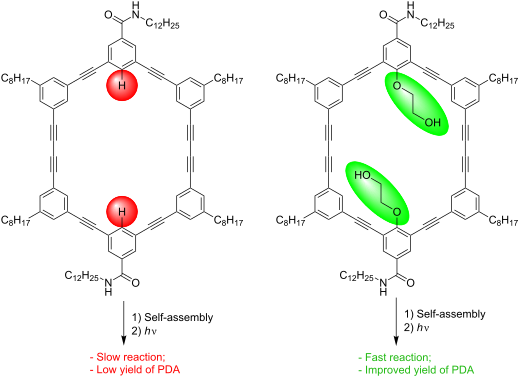
- absence of the influence of the addition of side chains on the gelation properties. In the case of PAM3, however, most of the solvents tested did not lead to gel formation. Thus, only cyclohexane and toluene resulted in a partial gel state. The presence of four amide functions and four 2-hydroxyethoxy
- samples were prepared with PAM1 and PAM2 in cyclohexane at a 10 mg/mL concentration and subjected to differential scanning calorimetry (DSC). The DSC analysis was carried out at temperatures ranging from 298 to 223 K. In both cases, a very sharp exotherm attributable to the crystallization of supercooled
- solvent was observed (see Figure S22 and S23 in Supporting Information File 1). For PAM2, the exotherm at 279 K is closer to the freezing point of cyclohexane (280 K) than for PAM1, which has an exotherm at 267 K. This result suggests that the gel of PAM2 might be less organized than that of PAM1. By