Search results
Search for "dimerization" in Full Text gives 292 result(s) in Beilstein Journal of Organic Chemistry. Showing first 200.
Synthesis of ferrocenyl-substituted 1,3-dithiolanes via [3 + 2]-cycloadditions of ferrocenyl hetaryl thioketones with thiocarbonyl S-methanides
Beilstein J. Org. Chem. 2016, 12, 1421–1427, doi:10.3762/bjoc.12.136

- [3 + 2]-cycloadditions. The high reactivity of ferrocenyl thioketones is demonstrated by the fact that no products of competitive reactions, such as dimerization of the intermediate 1,3-dipole or 1,3-dipolar electrocyclizations, were observed. Based on these observations one can expect that


Molecular weight control in organochromium olefin polymerization catalysis by hemilabile ligand–metal interactions
Beilstein J. Org. Chem. 2016, 12, 1372–1379, doi:10.3762/bjoc.12.131
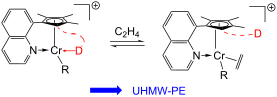
- ] and 2.3 Å–2.4 Å (Cr0) [70][71], respectively. As an alternative to the intramolecular coordination of the hemilabile donor to the vacant coordination site at the chromium center, a dimerization of the cationic methylchromium fragment could occur and examples of such dicationic dimers have been
- reported [72][73][74][75]. We were able to identify local minimum structures of dimers of compounds 3a+–8a+ but the calculated energies lie considerably higher compared to monomeric forms. Consequently, the saturation by the weak hemilabile donor is energetically preferred over dimerization. Another


Synthesis of 2-oxindoles via 'transition-metal-free' intramolecular dehydrogenative coupling (IDC) of sp2 C–H and sp3 C–H bonds
Beilstein J. Org. Chem. 2016, 12, 1153–1169, doi:10.3762/bjoc.12.111
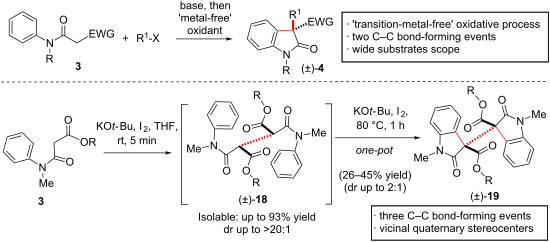
- could not isolate products due to decomposition under optimized IDC conditions. It was noticed that changing the solvent to THF effected very fast (within 5 minutes) dimerization of 3a and b at room temperature to afford 18a and b as sole products in 91–93% yield and in up to >20:1 dr (Scheme 4). This
- ], sharing a vicinal all-carbon quaternary stereogenic centers with extreme steric congestion at the C3a–C3a' σ-bond as well as the attendant lability of this linkage. Under the optimized conditions, one-pot dimerization of β-N-arylamido ester 3a and b and 9a took place in the presence of 1.2 equivalents of
- synthesis of 12b as per method A has been reproduced from reference [46]. Synthesis of spirocyclic product through IDC The synthesis of 14 as per method A has been reproduced from reference [46]. Conditions A: KOt-Bu, iodine; conditions B: KOt-Bu, NIS. Dimerization of β-N-aryl-amidoesters 3a and b





The synthesis of functionalized bridged polycycles via C–H bond insertion
Beilstein J. Org. Chem. 2016, 12, 985–999, doi:10.3762/bjoc.12.97
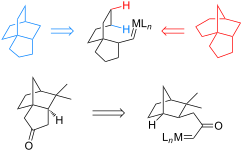
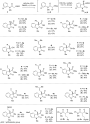
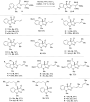
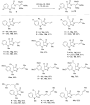
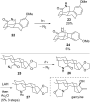
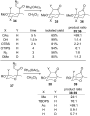
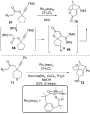
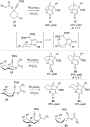
- sterically hindered catalyst such as Rh2(esp)2 or Rh2(OPiv)4 is needed to prevent dimerization of the diazoacetate. These catalysts are presumed to protect the carbene intermediates from intermolecular reactions long enough to adopt the correct conformation for bridged-ring formation. An exploration of the







Enantioselective carbenoid insertion into C(sp3)–H bonds
Beilstein J. Org. Chem. 2016, 12, 882–902, doi:10.3762/bjoc.12.87
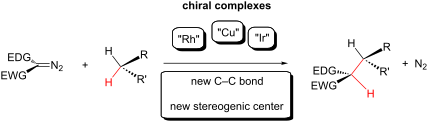
- increase of the enantioselectivity. TCE heteroaryldiazoacetates were also successfully employed for the formation of the rhodium carbenoid insertion products in superior yields when compared to the reaction with methyl aryldiazoacetates. TCE aryldiazoacetates reduced significantly the carbene dimerization


Diradical reaction mechanisms in [3 + 2]-cycloadditions of hetaryl thioketones with alkyl- or trimethylsilyl-substituted diazomethanes
Beilstein J. Org. Chem. 2016, 12, 716–724, doi:10.3762/bjoc.12.71

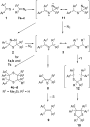
- . Remarkably, in no single case, the ‘head-to-head dimerization’ of aryl/hetaryl and dihetaryl substituted thiocarbonyl ylides was observed. Keywords: [3 + 2]-cycloadditions; diazoalkanes; diradicals; 1,3-dithiolanes; reaction mechanisms; thioketones; Introduction Cycloaddition reactions belong to the most
- ). When the decomposition of 2a or 2b was performed in the presence of a suitable dipolarophile, the corresponding [3 + 2]-cycloadducts were formed, whereas in the absence of a dipolarophile, the ‘head-to-head dimerization’ leading to 2,2,3,3-tetraaryl-1,4-dithianes 4a,b is the exclusive reaction
- total, equimolar amount of 7c. After warming up and typical work-up procedure, the corresponding 1,3-dithiolane 10o and 1,4-dithiane 4c in a ratio of 2:1 were found as products identified in the 1H NMR spectrum of the crude reaction mixture. Thus, in this reaction dimerization of the intermediate


Opportunities and challenges for direct C–H functionalization of piperazines
Beilstein J. Org. Chem. 2016, 12, 702–715, doi:10.3762/bjoc.12.70
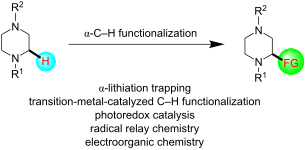
- carbon-substituted piperazines [19][20][21][22]. Mendoza et al. have developed a [3 + 3] dimerization of azomethine to synthesize highly substituted piperazines [23]. Notably, Stoltz and co-workers recently developed an enantioselective synthesis of piperazin-2-ones and piperazines using a palladium





From steroids to aqueous supramolecular chemistry: an autobiographical career review
Beilstein J. Org. Chem. 2016, 12, 684–701, doi:10.3762/bjoc.12.69
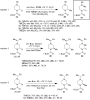
- group at the time had worked with cavitands. In fact, John was – to cut a long story short – instrumental to Don’s publications on the synthesis and properties of soluble carceplexes formed by the dimerization and covalent linking of tetrol-cavitands (Scheme 4). When I first arrived on the scene one of
- hydrophilic portal region, then dimerization of the host will not occur. For example the binding of charged amphiphiles such as n-octanoate lead to 1:1 complexes [33][34]. With these two points noted, a wide range of guests trigger dimerization to form the capsule with ostensibly sixteen negative charges on
- sterically hinder dimerization interfere less with an assembly as the angle between the two interfacing surfaces of a pair of cavitands increases from 0° (in a dimer) to ~70.5° (in a regular tetrahedron). This senary assembly many be higher in free energy, but because this container has a volume of four




Nucleic acids through condensation of nucleosides and phosphorous acid in the presence of sulfur
Beilstein J. Org. Chem. 2016, 12, 670–673, doi:10.3762/bjoc.12.67

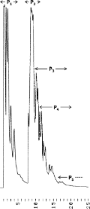
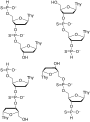
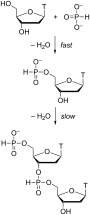
- buffer (pH 7.0). The tall peak eluting at 1.5 min in chromatogram C corresponds to either the enzyme itself or an impurity in the commercial preparation. Phosphitylation and subsequent dimerization of thymidine. Supporting Information Supporting Information File 54: Experimental methods, HPLC



Biosynthesis of α-pyrones
Beilstein J. Org. Chem. 2016, 12, 571–588, doi:10.3762/bjoc.12.56
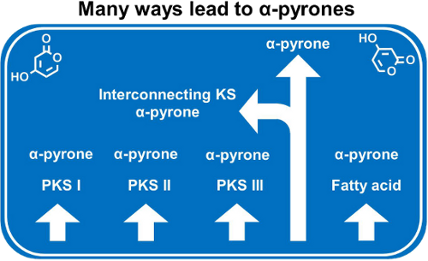
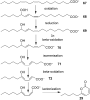
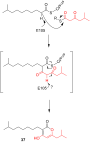
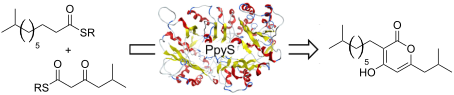
- bound substrate (Figure 25). Indeed, the exchange of this glutamate against an alanine residue resulted in an inactive version of the protein. Further an arginine residue, which could be involved in dimerization, was mutated to an aspartate. Also this mutant lost its catalytic activity, indicating that
- dimerization is essential [63]. The pseudopyronine synthase PyrS represents a homologue of PpyS. Using PpyS from Pseudomonas sp. GM30, it was analyzed if this KS is also involved in the formation of α-pyrones. The two pseudopyronines A (55) and B (56) have been up to now isolated from different Pseudomonas






Recent advances in N-heterocyclic carbene (NHC)-catalysed benzoin reactions
Beilstein J. Org. Chem. 2016, 12, 444–461, doi:10.3762/bjoc.12.47
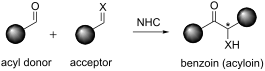
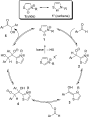
- -derived NHCs have found widespread application as catalysts for benzoin reactions, whereas triazolium-derived NHCs have emerged as popular catalysts for enantioselective benzoin transformations. Review Homo-benzoin reactions The homo-benzoin condensation constitutes an overall catalytic dimerization of an
- –Michael cascade. Divergent catalytic dimerization of 2-formylcinnamates. One-pot, multicatalytic asymmetric synthesis of tetrahydrocarbazole derivatives. NHC-chiral secondary amine co-catalysis for the synthesis of complex spirocyclic scaffolds.



A journey in bioinspired supramolecular chemistry: from molecular tweezers to small molecules that target myotonic dystrophy
Beilstein J. Org. Chem. 2016, 12, 125–138, doi:10.3762/bjoc.12.14
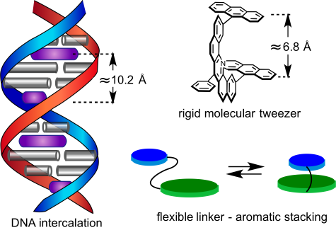
- were reported many years ago. Were the water-soluble tweezers we set out to prepare in 1985 ever made? Where does the field stand today? We found that our molecular tweezers are well preorganized for dimerization, limiting their use in water [22], whereas Klärner and colleagues discovered that their


Comparison of the catalytic activity for the Suzuki–Miyaura reaction of (η5-Cp)Pd(IPr)Cl with (η3-cinnamyl)Pd(IPr)(Cl) and (η3-1-t-Bu-indenyl)Pd(IPr)(Cl)
Beilstein J. Org. Chem. 2015, 11, 2476–2486, doi:10.3762/bjoc.11.269
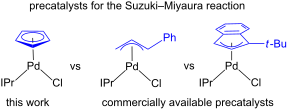
- the form of a Pd(I) dimer [13]. This suggests that Cp is more likely to undergo dimerization than Cin. CpDim was confirmed to be a poor catalyst under the conditions employed in Figure 2 (Scheme 5). This result is indicative of CpDim as an off-cycle deactivation product, which reduces the amount of




Beyond catalyst deactivation: cross-metathesis involving olefins containing N-heteroaromatics
Beilstein J. Org. Chem. 2015, 11, 2223–2241, doi:10.3762/bjoc.11.241
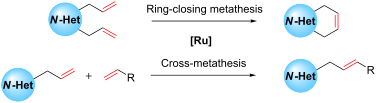
- , the addition of amino additives such as pyridine, morpholine, Et3N or DBU was shown to be detrimental to the G-HII-catalyzed dimerization of styrene (Table 2). Moderate to poor yields in stilbene 7’ were obtained and the value of the yields was correlated with the pKa of the couple ammonium/amine. An
- recommended to avoid dimerization. The most studied strategy allowing the use of olefins bearing N-heteroaromatics is the formation of the N-heteroaromatic salt prior to metathesis. The salt can be either isolated before metathesis or formed in situ using acidic additives. Alternatively, introduction of bulky


C–H bond halogenation catalyzed or mediated by copper: an overview
Beilstein J. Org. Chem. 2015, 11, 2132–2144, doi:10.3762/bjoc.11.230
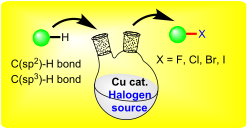
- -functionalized arene dimerization [37]. Besides the issue of selectivity, another major challenge in the DG-assisted C–H activation lied in the removal of the DG, which undermined the efficiency of the synthetic procedure. To alternate the hardly removable DG of the pyridine ring, Carretero and co-workers [38
- related C–H transformation by providing key haloarene intermediates. For examples, in the CuI-catalyzed cross arene dimerization reactions reported by Daugulis et al., the in situ formation of iodoarene intermediate was discovered as the indispensable step during the generation of the biaryl products [65




Conformational equilibrium in supramolecular chemistry: Dibutyltriuret case
Beilstein J. Org. Chem. 2015, 11, 2105–2116, doi:10.3762/bjoc.11.227

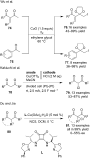
- . Mass spectrometry analysis was performed on a Q-Exactive mass spectrometer (Thermo Scientific). The Benesi–Hildebrand equation [59] was used to find association constants while the method proposed by Tan [60] was used for dimerization of 1. It was assumed that 1:1 stoichiometry is present in all


Supramolecular chemistry: from aromatic foldamers to solution-phase supramolecular organic frameworks
Beilstein J. Org. Chem. 2015, 11, 2057–2071, doi:10.3762/bjoc.11.222
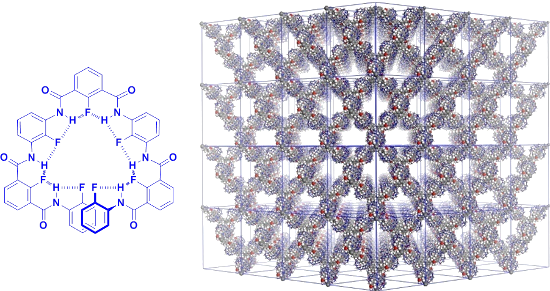
- secondary structures from aromatic backbones driven by different noncovalent forces (including hydrogen bonding, donor–acceptor, solvophobicity, and dimerization of conjugated radical cations) and solution-phase supramolecular organic frameworks driven by hydrophobically initiated aromatic stacking in the
- cavity of cucurbit[8]uril (CB[8]) are highlighted. Keywords: donor–acceptor interaction; foldamer; hydrogen bond; radical cation dimerization; supramolecular organic framework; Review Childhood and growing up I was born on July 23rd, 1966 in the small, remote village of Fang-Liu (a combination of two
- . In 1998, the group reported the extremely stable quadruple hydrogen-bonded dimers 8·8 [16] (Scheme 4). By using an 1H NMR dilution technique, a lower limit to the dimerization constant Kdim (>107 M−1) was estimated. Professor Zimmerman hoped to make an accurate determination of the binding stability


![[Graphic 1]](/bjoc/content/inline/1860-5397-11-222-i19.png?max-width=637&scale=1.18182) 16 and dynamic [2]catenane formed by compounds 17–19.
16 and dynamic [2]catenane formed by compounds 17–19.


The marine sponge Agelas citrina as a source of the new pyrrole–imidazole alkaloids citrinamines A–D and N-methylagelongine
Beilstein J. Org. Chem. 2015, 11, 2029–2037, doi:10.3762/bjoc.11.220
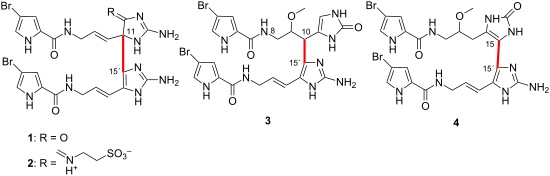
- (18). Citrinamine A (1) is the 2,2´-didebromo derivative of mauritiamine (7) and as in the original publications of 7 and 18 no chiroptical effect was observed for 1. Synthetic studies on mauritiamine (7) [14] demonstrated the formation of similar racemic products by a chemical oxidative dimerization


[2.2]Paracyclophane derivatives containing tetrathiafulvalene moieties
Beilstein J. Org. Chem. 2015, 11, 1917–1921, doi:10.3762/bjoc.11.207
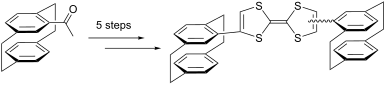
- The Cambridge Crystallographic Data Center via http://www.ccdc.cam.ac.uk/data_request/cif. The desulfurative dimerization of 1,3-dithiol-2-thione 6 was effected by heating it with trimethyl phosphite at 100 °C (Scheme 2). Purification of the crude reaction mixture by column chromatography resulted in
- isolation in order to investigate their structural and chiroptical properties. Conclusion The synthesis of as yet inseparable isomeric tetrathiafulvalenes has been performed by desulfurative dimerization of a [2.2]paracyclophane-substituted trithione. The latter compound was obtained from the corresponding


Recent applications of ring-rearrangement metathesis in organic synthesis
Beilstein J. Org. Chem. 2015, 11, 1833–1864, doi:10.3762/bjoc.11.199
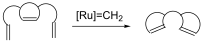
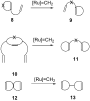
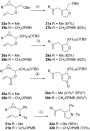
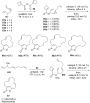
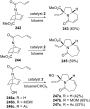
- dimerized 16-membered ring product 101 in 57% yield, which was generated by a RRM–dimerization sequence and its monomer 100 in 14% yield along with 99 in 26% yield (Scheme 20). Bicyclo[2.2.1]heptene derivatives Holtsclaw and Koreeda [25] have explored a chemoselective RRM of the enone containing norbornene










Nitro-Grela-type complexes containing iodides – robust and selective catalysts for olefin metathesis under challenging conditions
Beilstein J. Org. Chem. 2015, 11, 1823–1832, doi:10.3762/bjoc.11.198
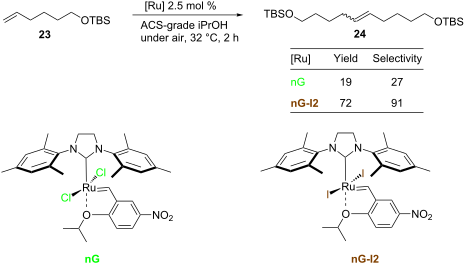
- worse than nG-SIPr. As outlined in Table 2, all tested catalysts were similarly effective in CM of methyl undecenoate 12 with cis-1,4-diacetoxy-2-butene (13), but parent dichloro complexes provided smaller quantities of dimerization product of 12. In CM of 12 with electron deficient methyl acrylate 15


SmI2-mediated dimerization of indolylbutenones and synthesis of the myxobacterial natural product indiacen B
Beilstein J. Org. Chem. 2015, 11, 1700–1706, doi:10.3762/bjoc.11.184

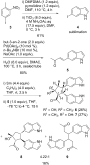
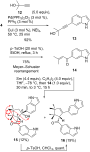
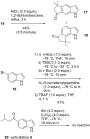
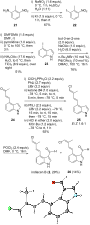
- -configuration were formed by SmI2-mediated reductive dimerization of a 4-(indol-6-yl)butenone, obtained by Heck reaction. The two indolyl units appear to chelate Sm(II)/(III) leading to a gauche-type arrangement at the newly formed bond between the two β-carbons. Through a sequence of Sonogashira cross coupling
- plants [1][2][3] and also in fungi [4] and myxobacteria [5][6]. One example is raputindole A (1), isolated in 2010 from the Rutaceous tree Raputia simulans Kallunki [1], which exhibits a unique tetrahydrocyclopenta[f]indole partial structure (Figure 1) probably formed by dimerization of (E)-6-(3
- their reductive dimerization. We also describe the synthesis of the antimicrobial natural product indiacen B (2) from the myxobacterium Sandaracinus amylolyticus [5], bearing a unique isoprene moiety chlorinated at the methylene group. Results and Discussion SmI2-induced reductive dimerizations 6



Star-shaped tetrathiafulvalene oligomers towards the construction of conducting supramolecular assembly
Beilstein J. Org. Chem. 2015, 11, 1596–1613, doi:10.3762/bjoc.11.175
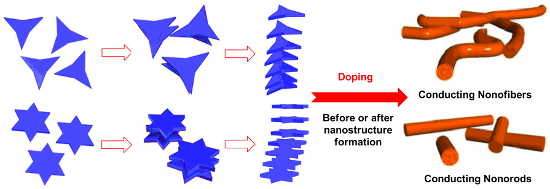
- showed two reversible two-electron redox waves at −0.03 and 0.38 V vs Fc/Fc+ in benzonitrile under normal conditions [25][60]. Conducting nanostructure formation from star-shaped oligo-TTFs Although pristine TTF does not self-associate in solution due to the low association constant for dimerization, the
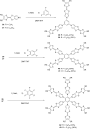
- tris(TTF)[18]annulene 32. Star-shaped TTF oligomers 38–43. Pyridazine-3,6-diol-TTF 45 and its trimer 46. Redox potentials of 16–19 and absorption maxima of monocations 16•+, 17•+, 18•+ and 19•+, and dications 162+, 172+, 182+ and 192+ [25][59]. Association (dimerization) constants and thermodynamic




A novel and widespread class of ketosynthase is responsible for the head-to-head condensation of two acyl moieties in bacterial pyrone biosynthesis
Beilstein J. Org. Chem. 2015, 11, 1412–1417, doi:10.3762/bjoc.11.152
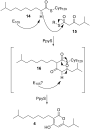
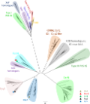
- in the total loss of photopyrone production (Figures S1 and S2, Supporting Information File 1). Similarly, no photopyrone was produced in a R121D derivative. R121α is predicted by the model to be located at the dimer interface interacting with D137β. Thus, dimerization shown to be essential for KS



Selected synthetic strategies to cyclophanes
Beilstein J. Org. Chem. 2015, 11, 1274–1331, doi:10.3762/bjoc.11.142
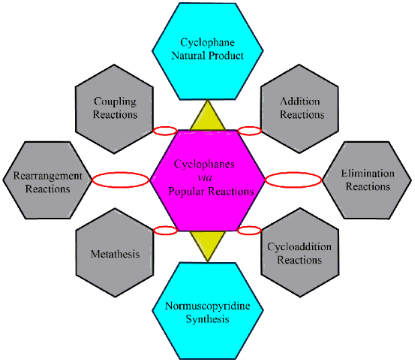
- was subjected to dimerization involving cross-metathesis with G-I/G-II/Schrock catalysts which generated the cyclized product 154. Subsequently, hydrogenation of the cyclophane 154 followed by minor functional group modification gave the natural products 155 and 156 (Scheme 23). Furthermore, the same
- 171 via RCM/CM using G-I (12) or G-II (13) under high dilution conditions to obtain the [n], [n,n] and [n,n,n]paracyclophanes 172–174. Compounds with a short alkenyl chain gave mainly [n,n] and [n,n,n]paracyclophanes (173 and 174) by a dimerization or trimerization sequence. When the compound has a