


Search results
Search for "dispersion" in Full Text gives 255 result(s) in Beilstein Journal of Organic Chemistry. Showing first 200.
A comprehensive study of olefin metathesis catalyzed by Ru-based catalysts
Beilstein J. Org. Chem. 2015, 11, 1767–1780, doi:10.3762/bjoc.11.192
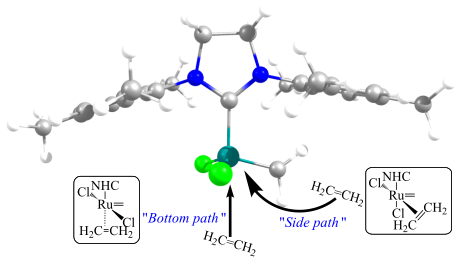
- change the functional for the solvent calculations, despite knowing that the dispersion interactions can occur [68][69][70][71][72][73]. However, here we consider that the qualitative comparison between the set of studied catalysts and even the quantitative trends (side/bottom) should not be affected by




Preparative semiconductor photoredox catalysis: An emerging theme in organic synthesis
Beilstein J. Org. Chem. 2015, 11, 1570–1582, doi:10.3762/bjoc.11.173

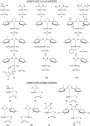
- constituents of pharmaceuticals and dyestuffs, are non-trivial and involve multiple steps. Consequently, the one-pot SCPC oxidation of phenanthrene (1) to benzocoumarin (2), with a dispersion of TiO2 in aqueous, oxygenated CH3CN [29], is very appealing from a green chemistry point of view (Scheme 1). First
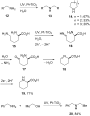
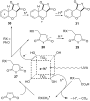
- in an aqueous dispersion of a Pt-TiO2 catalyst, an interesting self-reaction occurred. Ohtani and co-workers isolated modest yields of secondary amines 13 that were formed via C–N coupling (Scheme 4, top) [48]. Terminal diamines reacted by ring closure resulting in cyclic amines 14; pyrrolidine was
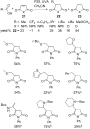
- standard reactions with just P25 gave a slight excess of the chromenopyrrole for most substituents, but the selectivity could be tuned to some extent by modifications to the catalyst. Generally, chromenopyrrole 31 (Y = NR) production was favored by using a more dense dispersion of P25. In contrast







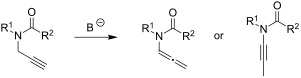
Why base-catalyzed isomerization of N-propargyl amides yields mostly allenamides rather than ynamides
Beilstein J. Org. Chem. 2015, 11, 1441–1446, doi:10.3762/bjoc.11.156
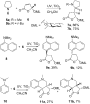
- . From the ωB97 family we tested the ωB97 form, the ωB97X, which includes exact short-range HF exchange, and in addition the ωB97XD functional, which also includes Grimme’s dispersion correction [16]. The DFT tests employed a medium-size 6-31+G** basis in search of a methodology applicable to relatively


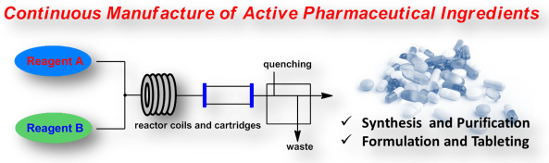
The synthesis of active pharmaceutical ingredients (APIs) using continuous flow chemistry
Beilstein J. Org. Chem. 2015, 11, 1194–1219, doi:10.3762/bjoc.11.134
- showcased the generation and use of organometallic species (i.e., Grignard reagents) in flow synthesis as well as in-line React-IR monitoring in order to precisely control the onset of late stage flow streams that are affected by dispersion effects thus marking the first use of this now commonly


Peptide–polymer ligands for a tandem WW-domain, an adaptive multivalent protein–protein interaction: lessons on the thermodynamic fitness of flexible ligands
Beilstein J. Org. Chem. 2015, 11, 837–847, doi:10.3762/bjoc.11.93
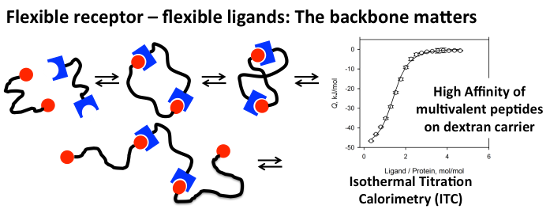
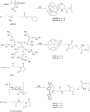
- formed peptide-polymer–protein complex. Inspection of the test solution revealed the formation of a colloidal suspension/dispersion both for pHPMA and for hPG-based peptide conjugates indicating the formation of insoluble aggregates possibly generated through crosslinking. Corresponding to the observed
- colloidal suspension/dispersion the stoichiometry of peptide ligands per protein receptor resulting from the ITC experiments was >2 for each of either pHPMA or hPG-based material, most pronounced for pHPMA with n = 2.6–2.8. Dextran-based conjugates displayed a ligand stoichiometry of 1.4 for the most potent





Probing multivalency in ligand–receptor-mediated adhesion of soft, biomimetic interfaces
Beilstein J. Org. Chem. 2015, 11, 720–729, doi:10.3762/bjoc.11.82
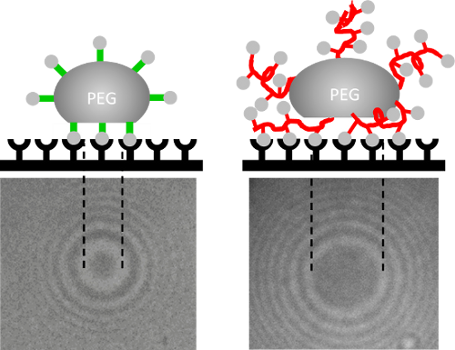
- reaction solution was exchanged with fresh reactants via centrifugation, decantation and re-dispersion of the PEG-SCPs before the next irradiation step. Using this approach, we varied the number of replenishing steps as well as irradiation interval between the replenishing step and measured the resulting
- Irgacure 2959 was added at a concentration of (1 mg, 4.5 µmol) to the dispersion and vigorously shaken and photopolymerized with UV light. Water was exchanged by ethanol and benzophenone (250 mg, 1.4 mmol) and an unsaturated carboxylic acid (acrylic acid (1.2 mL, 17.7 mmol), methacrylic acid (1.5 mL, 17.7
- acid in PEG-SCPs The carboxylic acids in the PEG-SCPs were quantified by titration with TBO, zeta potential measurements and IR spectroscopy. The TBO measurement was conducted as follows. 1.5 mL of PEG-SCP dispersion were centrifuged and a solution of 0.5 mM TBO solution (pH 10.3) was added to the


First principle investigation of the linker length effects on the thermodynamics of divalent pseudorotaxanes
Beilstein J. Org. Chem. 2015, 11, 687–692, doi:10.3762/bjoc.11.78
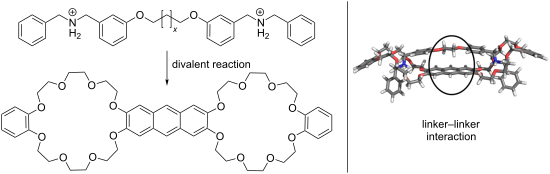
- energies of association (Gibbs free (binding) energies) for divalent crown-8/ammonium pseudorotaxanes are determined by investigating the influence of different linkers onto the binding. Calculations are performed with density functional theory including dispersion corrections. The translational
- linker shows an enhanced binding strength due to electronic effects, namely the dispersion interaction between the linkers from the guest and the host. For the longer linkers this ideal packing is not possible due to steric hindrance. Keywords: density functional theory (DFT); dispersion correction
- (deviation less than 0.3%). This very good agreement is somewhat fortunate, because a basis set extrapolation with DZ and TZ is only accurate to within a few percent. Additionally, the possible errors of the functional and the dispersion correction can also be in the range of 10% for the system under


Chemoselective O-acylation of hydroxyamino acids and amino alcohols under acidic reaction conditions: History, scope and applications
Beilstein J. Org. Chem. 2015, 11, 446–468, doi:10.3762/bjoc.11.51
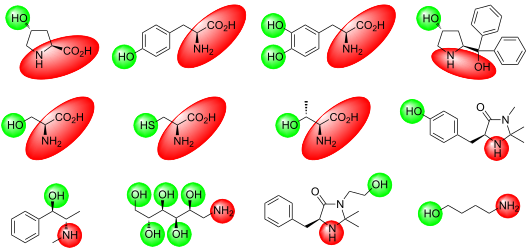
- -load homopolymers by solution copolymerization [46][47], crosslinked polymer microspheres by dispersion copolymerization [47], crosslinked polymer beads by suspension copolymerization [47][48], catalytic core–shell micelles (nanoreactors) [68], hydrophobic nanogel particles by emulsion polymerization


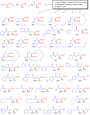
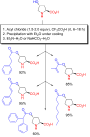
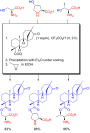


Bis(vinylenedithio)tetrathiafulvalene analogues of BEDT-TTF
Beilstein J. Org. Chem. 2015, 11, 403–415, doi:10.3762/bjoc.11.46
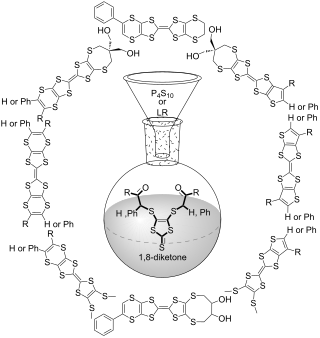
- thickness of the film was obtained. The film was annealed at 25, 55, 85, 115 and finally at 145 °C for 30 min. Electronic transitions of the complex 54, i.e. n–π* and π–π* transitions, led to the formation of radical ion pairs 55. The refractive index dispersion and optical constant of the annealed film


Novel biphenyl-substituted 1,2,4-oxadiazole ferroelectric liquid crystals: synthesis and characterization
Beilstein J. Org. Chem. 2015, 11, 233–241, doi:10.3762/bjoc.11.26
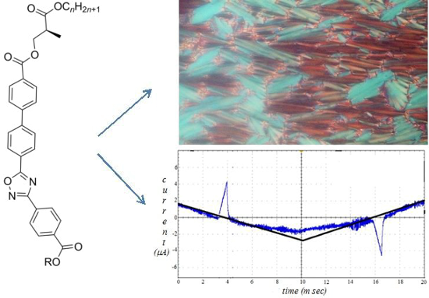
- ., 13a with phenyl end group. The large mesomorphic thermal range in the 13b (C12.Ox.C*Cn) series are due to the higher number of methylene units in the alkyl end chain, which results in the higher surface area and higher London dispersion forces between the molecules. Interestingly, a tilted chiral SmC



A one-pot multistep cyclization yielding thiadiazoloimidazole derivatives
Beilstein J. Org. Chem. 2014, 10, 2989–2996, doi:10.3762/bjoc.10.317
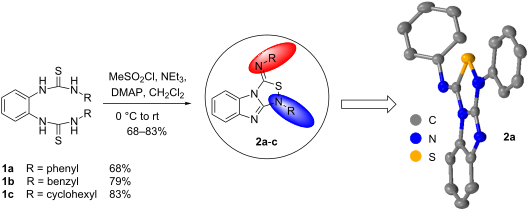
- with a 6-31G(d,p) basis set for hydrogen to include polarization on hydrogen and the 6-31G(d) basis set for the other main group elements using NWChem 6.3 [15]. During optimization, we utilized Grimme’s D3 dispersion [16] for a better description of non-covalent interactions like hydrogen bonding and π


Come-back of phenanthridine and phenanthridinium derivatives in the 21st century
Beilstein J. Org. Chem. 2014, 10, 2930–2954, doi:10.3762/bjoc.10.312

- ethidium bromide and its neutral analogue, revealing detailed description of the forces included in the intercalation process, stressing the dispersion energy as a control factor [50]. Moreover, a number of kinetic measurements provided for the binding of ligands to DNA additionally clarify mechanistic




Synthesis of uniform cyclodextrin thioethers to transport hydrophobic drugs
Beilstein J. Org. Chem. 2014, 10, 2920–2927, doi:10.3762/bjoc.10.310
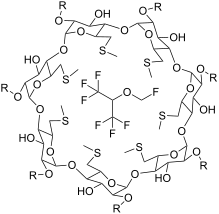
- -methoxyethoxy)ethoxy)ethyl)]-β-cyclodextrin: 2.60 g (65 mmol) NaH (60 wt % dispersion in mineral oil, Sigma-Aldrich) was washed twice with 25 mL of n-pentane under N2 and stirred at rt for 1 h. After addition of 6.25 g (4.64 mmol) heptakis(6-deoxy-6-methylsulfanyl)-β-cyclodextrin dissolved in 130 mL of DMF




Cyclodextrin–polysaccharide-based, in situ-gelled system for ocular antifungal delivery
Beilstein J. Org. Chem. 2014, 10, 2903–2911, doi:10.3762/bjoc.10.308
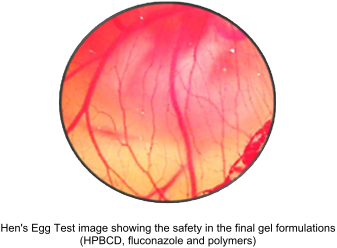
- stirring for 24 hours. Incorporation of drug and CD–drug complexes into ophthalmic gels Fluconazole was incorporate at the gel at a concentration of 2 mg/mL by dispersion of the solid drug into the gel under magnetic stirring. To incorporate the fluconazole–CD complex, cyclodextrin were previously




Detonation nanodiamonds biofunctionalization and immobilization to titanium alloy surfaces as first steps towards medical application
Beilstein J. Org. Chem. 2014, 10, 2765–2773, doi:10.3762/bjoc.10.293
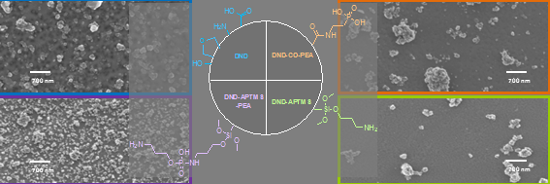
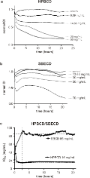
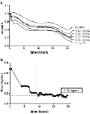
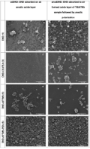
- . Sedimentation and agglomeration of several modified DND appeared to have a substantial influence on the success of the electrochemical immobilization. Silanized DND modified with O-phosphorylethanolamine 6 showed better dispersion in buffer compared to other samples and hence resulted in more homogeneous



Synthesis of nanodiamond derivatives carrying amino functions and quantification by a modified Kaiser test
Beilstein J. Org. Chem. 2014, 10, 2729–2737, doi:10.3762/bjoc.10.288
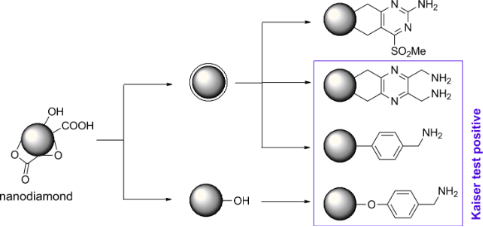
- and dispersion behaviour due to their protic character and the possibility to protonate the nitrogen. In the case of diamond the direct amination of the surface has rarely been reported. Sotowa et al. used the photochemical reaction of ammonia with chlorinated diamond [3]. However, the termination
- centrifugation (15000 min−1, 10 min). The precipitate was washed eight times with acetone, three times with water, three times with acetone and three times with dichloromethane in consecutive dispersion/centrifugation cycles. 150 mg (60% yield) of a black solid was obtained as the product. Elemental analysis: N
- particles were isolated by centrifugation (15000 min−1, 10 min). The precipitate was washed six times with a mixture of dioxane/water (9:1), three times with acetone and three times with dichloromethane in consecutive dispersion/centrifugation cycles. 49 mg (75% yield) of a black solid was obtained as the


Aspergiloid I, an unprecedented spirolactone norditerpenoid from the plant-derived endophytic fungus Aspergillus sp. YXf3
Beilstein J. Org. Chem. 2014, 10, 2677–2682, doi:10.3762/bjoc.10.282
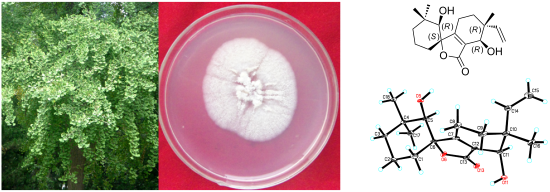
- -temperature (100 K) single-crystal X-ray diffraction experiment, which is shown in Figure 3. As compound 1 has a relatively high percentage of oxygen, it shows enough anomalous dispersion of Cu Kα radiation and allows to determinate the absolute stereochemistry with the Hooft parameter 0.17(15) for 992


Synthesis and characterization of a hyper-branched water-soluble β-cyclodextrin polymer
Beilstein J. Org. Chem. 2014, 10, 2586–2593, doi:10.3762/bjoc.10.271
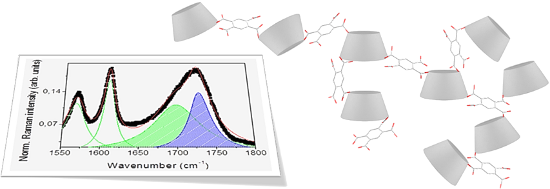
- at 450 nm, consistent with the formation of a SF/polymer complex. The solubilization capacity of the new branched β-CD polymer was also evaluated toward a very poor water soluble anticancer drug, i.e., paclitaxel, showing a great improvement in dispersion in water (data not shown). Conclusion A new




A versatile δ-aminolevulinic acid (ΑLA)-cyclodextrin bimodal conjugate-prodrug for PDT applications with the help of intracellular chemistry
Beilstein J. Org. Chem. 2014, 10, 2414–2420, doi:10.3762/bjoc.10.251
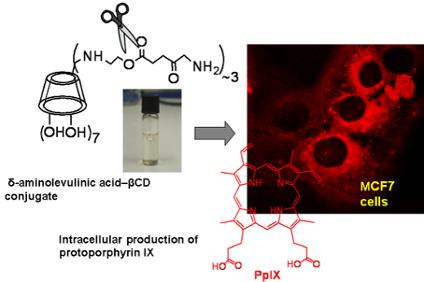
- (1 mM solution, with respect to ALA content) in phosphate buffer saline (pH 7.4) was mixed with fluorescein isothiocyanate-labeled 1-adamantylamine (0.2 mM) [21] and the dispersion was stirred for 20–30 min until a clear solution was obtained. This solution was subsequently used for cell incubation


The effect of permodified cyclodextrins encapsulation on the photophysical properties of a polyfluorene with randomly distributed electron-donor and rotaxane electron-acceptor units
Beilstein J. Org. Chem. 2014, 10, 2145–2156, doi:10.3762/bjoc.10.222
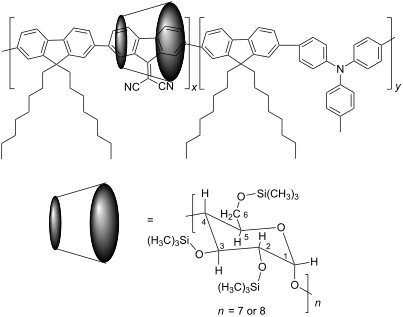
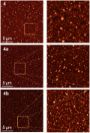
- and their values of the α parameter and the grain diameter reflect the chemical changes of the conjugated polymer surfaces. Thus, the 4a film surface shows smaller grains with an average diameter of 86 ± 8 nm. Furthermore, the relative uniform grain size dispersion induces the lower value of α (0.229
- ) and 0.0773 g (0.2 mmol) of monomer 1 were added and stirred at room temperature in the dark under nitrogen atmosphere for 72 h to give a dispersion. Then 0.334 g (0.8 mmol) of 2, 0.577 (1 mmol) of 2, 2 mL of 3 M Na2CO3 and 20.8 mg (1.82 × 10⁻² mmol) of (Ph3P)4Pd(0), dissolved in 5 mL of degassed


Supercritical carbon dioxide: a solvent like no other
Beilstein J. Org. Chem. 2014, 10, 1878–1895, doi:10.3762/bjoc.10.196
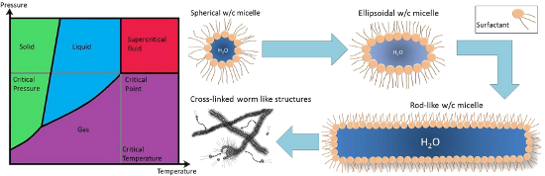
- point pressure) is the minimum pressure where a dispersion is a stable single transparent phase. It has been used as a measure of surfactant efficiency in CO2, with a lower Ptrans being equated to a more efficient surfactant. The w value expresses the degree of water uptake or the number of water


Theoretical study of the adsorption of benzene on coinage metals
Beilstein J. Org. Chem. 2014, 10, 1775–1784, doi:10.3762/bjoc.10.185
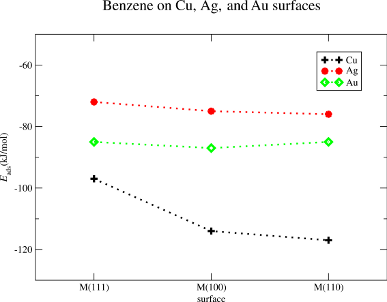
- = Cu), silver (M = Ag) and gold (M = Au) is studied on the basis of density functional theory (DFT) calculations with an empirical dispersion correction (D3). Variants of the Perdew–Burke–Ernzerhof functionals (PBE, RPBE and RevPBE) in combination with different versions of the dispersion correction
- ; dispersion correction; template; Introduction The adsorption of organic molecules on metals is of great interest since the formation of thin films and self-assembled monolayers opens the way toward a functionalization of surfaces [1][2][3][4][5][6][7][8]. The adsorbed molecules often contain an aromatic
- framework that can be substituted with functional groups. The bonding between the surface and the adsorbate is an interplay between electrostatic interaction, including charge transfer (CT) to the surface, and covalent contributions [9][10][11]. In addition, it was found that dispersion interaction plays a


Bis(β-lactosyl)-[60]fullerene as novel class of glycolipids useful for the detection and the decontamination of biological toxins of the Ricinus communis family
Beilstein J. Org. Chem. 2014, 10, 1504–1512, doi:10.3762/bjoc.10.155
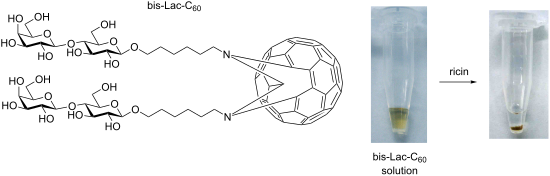
- using an Amicon Ultra-15 device (molecular weight cut: off 5000, Millipore, Co., USA). The concentrate was transferred into a measuring flask, and the total volume was adjusted with distilled water to give a bis-Lac-C60 dispersion colloidal suspension at the desired concentration. Precipitation assay


Glycosystems in nanotechnology: Gold glyconanoparticles as carrier for anti-HIV prodrugs
Beilstein J. Org. Chem. 2014, 10, 1339–1346, doi:10.3762/bjoc.10.136
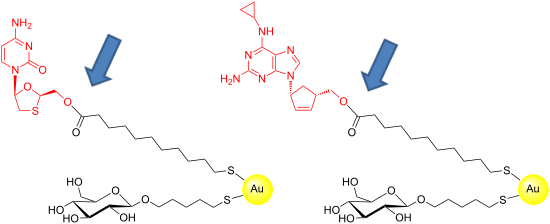
- GNPs water-dispersion that was also used for the cellular experiments. The GNPs dimension was evaluated by electron microscopy (Supporting Information File 1) showing an average gold diameter of ~3 nm. The GNPs contain around 10% of ABC or 3TC were analysed by HPLC and mass spectrometry (see next


Substitution effect and effect of axle’s flexibility at (pseudo-)rotaxanes
Beilstein J. Org. Chem. 2014, 10, 1299–1307, doi:10.3762/bjoc.10.131
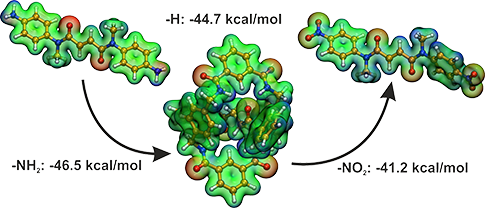
- substitution with different functional groups and of molecular flexibility by changing within the axle from a single C–C bond to a double C=C bond. Therefore, we present static quantum chemical calculations at the dispersion-corrected density functional level (DFT-D3) for several Leigh-type rotaxanes. The
- binding is weakened by approximately 10 kcal/mol, and hydrogen bonds are slightly shortened (by up to 0.2 Å). Keywords: dispersion interaction; hydrogen bond; supramolecular chemistry; template; theoretical chemistry; Introduction Rotaxanes are prototypes for molecular machines and molecular switches [1
- =O stretch mode [27]. Different density functionals, including one functional with an empirical correction for dispersion interaction, for the treatment of such rotaxane complexes were studied. We compared these density functional theory (DFT) results with Møller–Plesset second-order perturbation





