Search results
Search for "electrophile" in Full Text gives 302 result(s) in Beilstein Journal of Organic Chemistry. Showing first 200.
1H-Imidazol-4(5H)-ones and thiazol-4(5H)-ones as emerging pronucleophiles in asymmetric catalysis
Beilstein J. Org. Chem. 2016, 12, 918–936, doi:10.3762/bjoc.12.90
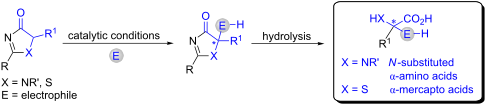
- enolate or equivalent is fixed due to their cyclic nature, thus facilitating the control of the stereoselectivity; iii) they are substituted at the α-position of the carbonyl and therefore, after reaction with an electrophile, a tetrasubstituted stereocenter is created and, iv) the resulting adducts can
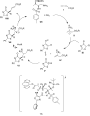
- being necessary for catalyst activity (Figure 4a) [87][88][89]. In 2010 Zhong proposed that the presence of the ortho C–H bond of the aryl group could be the key for success because it could participate together with the thiourea function in the activation of the electrophile [90]. This proposal was in








Asymmetric α-amination of 3-substituted oxindoles using chiral bifunctional phosphine catalysts
Beilstein J. Org. Chem. 2016, 12, 725–731, doi:10.3762/bjoc.12.72
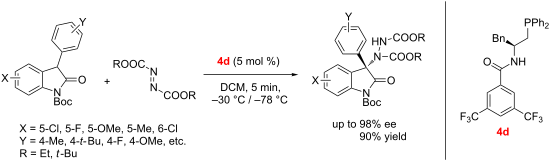
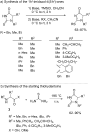
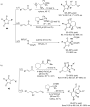
- face of the enolate, driving the electrophile to attack from the Si face. Conclusion In summary, we have realized enantioselective α-aminations of 3-substitued oxindoles with azodicarboxylates by using amino acid-derived bifunctional phosphine catalysts. These reactions afford a variety of chiral 2


Opportunities and challenges for direct C–H functionalization of piperazines
Beilstein J. Org. Chem. 2016, 12, 702–715, doi:10.3762/bjoc.12.70
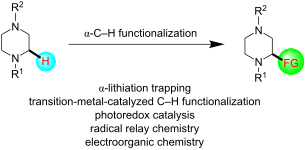
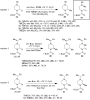
- on the distal nitrogen atom is likely preventing this nitrogen from attacking the electrophile and triggers an elimination process which would yield a byproduct like 29. Of particular interest, when benzophenone (Ph2CO) was used to trap the α-lithiation product of N-Boc-N’-alkylpiperazines, in
- -piperazine 57. In summary, promising progress has been made in the direct α-lithiation trapping of N-Boc-protected piperazines, including enantioselective versions. So far, these methods are limited by narrow electrophile scopes and often low enantioselectivities rendering further developments necessary





Supported bifunctional thioureas as recoverable and reusable catalysts for enantioselective nitro-Michael reactions
Beilstein J. Org. Chem. 2016, 12, 628–635, doi:10.3762/bjoc.12.61
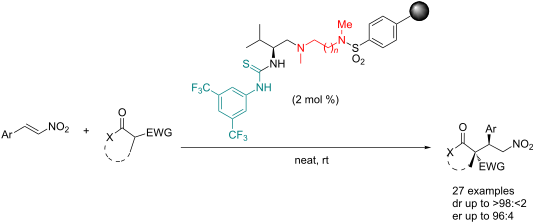
- nitro-Michael addition; supported catalysts; thioureas; Introduction The use of chiral bifunctional thioureas that allow the simultaneous activation of a electrophile, by hydrogen bonding, and a nucleophile, by deprotonation, plays a major role in the stereoselective formation of C–C bonds in different


The aminoindanol core as a key scaffold in bifunctional organocatalysts
Beilstein J. Org. Chem. 2016, 12, 505–523, doi:10.3762/bjoc.12.50
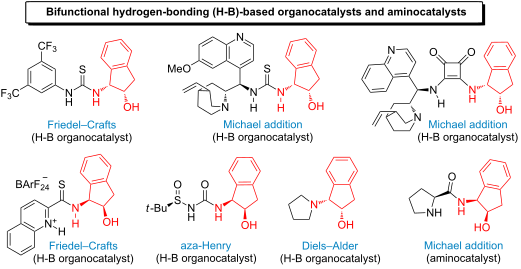
- % ee) (Scheme 10b) [39]. Based on the experimental results, the authors proposed a bifunctional mode of activation (TS7), where the electrophile is fixed and activated by the thiourea framework through several hydrogen bonds. At the same time, the indole is oriented to attack the Re face of the Michael
- reaction pathway based on previously reported transition states (Figure 6). The catalyst ent-4 would activate and fix the electrophile through several hydrogen-bonding interactions with the NH groups of the thiourea. Simultaneously, the hydroxy group would be involved in the activation of the nucleophile


(Thio)urea-mediated synthesis of functionalized six-membered rings with multiple chiral centers
Beilstein J. Org. Chem. 2016, 12, 462–495, doi:10.3762/bjoc.12.48
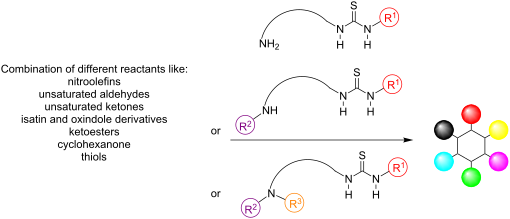
- ethyl malonate, producing the active nucleophile, while the thiourea group activates the electrophile (Scheme 6). The above catalytic reaction provided products with yields up to 99%, dr up to 93:7 and ee up to 93%. Carter and co-worker utilized a similar primary amine-thiourea, organocatalyst 11, in an
- of the nucleophile, making the diene more nucleophilic, and lowers the LUMO of the electrophile, making the dienophile more electrophilic (Scheme 19), thus the catalyst acts via a bifunctional mode. All these interactions are developed in the transition state through hydrogen-bonding, which controls
- same nucleophile 81, Wang and his group combined it with β,γ-unsaturated α-ketoesters 87, as the electrophile, catalyzed by bifunctional indane-derived thiourea 88, to produce derivatives of 3,4-dihydro-2H-pyran 89 (Scheme 30) [49]. This reaction sequence involved a Michael reaction, followed by a


Recent advances in N-heterocyclic carbene (NHC)-catalysed benzoin reactions
Beilstein J. Org. Chem. 2016, 12, 444–461, doi:10.3762/bjoc.12.47
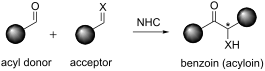
- carbonyl electrophile to afford α-hydroxy ketones (benzoins). It is a 100% atom-economic process wherein a new stereocentre is produced. The reaction is sometimes referred to as acyloin condensation to encompass reactions of aliphatic aldehydes. The assembly of two molecules of the same aldehyde is known
- aldehydes react with an aza electrophile. Imines possessing an electron-withdrawing N-substituent constitute the most commonly used aza electrophile and the reaction affords an α-aminocarbonyl compound as the product. The NHC-mediated addition of aldehyde-derived acyl anions to nitroso compounds leading to
- -2-amino3-hydroxyindanones is catalysed by NHC 31. The imine electrophile is generated in situ from α-sulfonyl-N-Boc amine 33 (Scheme 19). Initial cross-aza-benzoin reaction of one of the aldehyde functionalities with the imine is followed by an intramolecular aldol reaction to furnish the indanone



Cupreines and cupreidines: an established class of bifunctional cinchona organocatalysts
Beilstein J. Org. Chem. 2016, 12, 429–443, doi:10.3762/bjoc.12.46
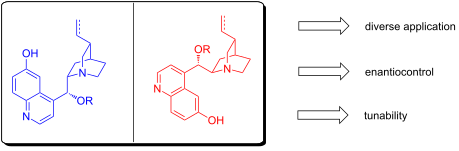
- ]. In this classic process, it was hypothesized that the 6’-OH group was critical in directing the incoming aldehyde electrophile (see Scheme 1 box). Soon after, Shi and co-worker demonstrated the use of β-ICPD in the reaction of imines 5 with methyl vinyl ketone (MVK, 6) using the same catalyst (Scheme
- processes, the tertiary amine adds into the conjugate ester as with the MBH reaction, but instead of the resulting C3-ammonium enolate reacting with an electrophile, an E1cB elimination of the carbonate occurs to generate another conjugated system. This can then undergo an attack by a Michael donor
- hydroxydiketopiperizine system 56 with very high diasterecontrol. Once again, the authors invoke a critical role for the 6’-OH group in the co-ordination and activation of the electrophile in these processes. Cyclopropanations Not unrelated to the Michael addition in a mechanistic sense, is the asymmetric


Organocatalytic asymmetric Henry reaction of 1H-pyrrole-2,3-diones with bifunctional amine-thiourea catalysts bearing multiple hydrogen-bond donors
Beilstein J. Org. Chem. 2016, 12, 295–300, doi:10.3762/bjoc.12.31
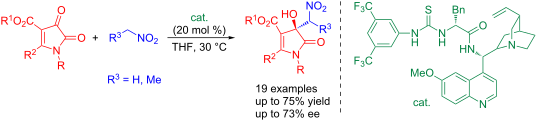
- sites, have captured tremendous attention in particular due to their unique ability of the simultaneous activation of the nucleophile and the electrophile in the same transition state [7][8][9][10][11]. Among them, chiral bifunctional thioureas bearing multiple hydrogen-bond donors have been


A convergent, umpoled synthesis of 2-(1-amidoalkyl)pyridines
Beilstein J. Org. Chem. 2016, 12, 1–4, doi:10.3762/bjoc.12.1
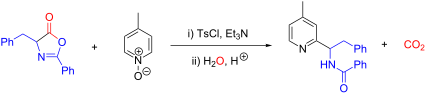
- -amidoalkyl)pyridines that arises from a formally ‘umpoled’ coupling of an α-(amidoalkyl) anion equivalent with a pyridyl electrophile. Results and Discussion Reaction discovery Our research group has a longstanding interest in the synthesis of α,α-disubstituted amino acids [11][12][13][14][15], and in
- pyridylamino acid 9 (Nu = OH) [22][23]. After some minor process optimisation, this product was isolated in 64% yield. We recognised that this constitutes a formally ‘umpoled’ [24] coupling of an α-amino- or amidoalkyl anion [25][26][27] with a pyridyl electrophile and hence would complement existing synthetic


Enantioselective additions of copper acetylides to cyclic iminium and oxocarbenium ions
Beilstein J. Org. Chem. 2015, 11, 2696–2706, doi:10.3762/bjoc.11.290
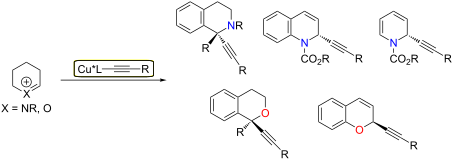
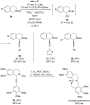
- isoquinolinium ion 9, and found that improved yields and ee’s can be achieved using this substrate and a CuBr/Quinap catalyst, despite the fact that Quinap had proven inferior to Ph-Pybox in the CDC reaction (Scheme 4) [24]. With this new catalyst and electrophile, the catalyst loading, reaction temperature, and





Copper-catalyzed asymmetric conjugate addition of organometallic reagents to extended Michael acceptors
Beilstein J. Org. Chem. 2015, 11, 2418–2434, doi:10.3762/bjoc.11.263
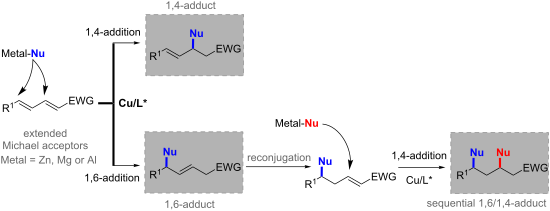
- regiocontrol of the nucleophilic attack, which can occur at three different positions, at least. The regioselectivity outcome of the ACA reaction depends on many parameters, notably the metal/chiral ligand combination, the structure of the electrophile and the nature of the nucleophile. Figure 1 depicts the


Biocatalysis for the application of CO2 as a chemical feedstock
Beilstein J. Org. Chem. 2015, 11, 2370–2387, doi:10.3762/bjoc.11.259
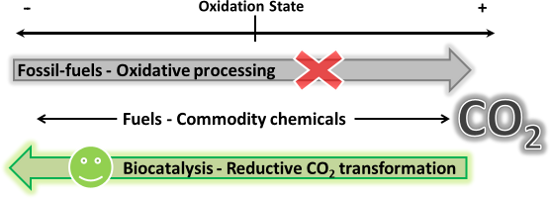
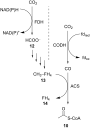
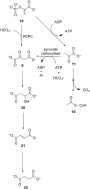
- to produce the RuBisCO substrate 1. A property of RuBisCO with great implications is that it may also accept O2 instead of CO2 as an electrophile in the addition step, thus catalysing a counter-productive reaction, which reduces the photosynthetic output of plants using the Calvin cycle by 25% [48






Molecular-oxygen-promoted Cu-catalyzed oxidative direct amidation of nonactivated carboxylic acids with azoles
Beilstein J. Org. Chem. 2015, 11, 2158–2165, doi:10.3762/bjoc.11.233
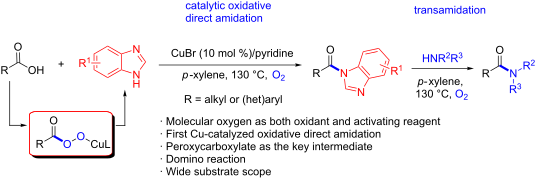
- ) superoxide species were reported to be formed under our standard conditions and might act as a nucleophile to attack carbonyl groups in certain cases [30], although it was always reported as an electrophile [32]. Thus, a new intermediate, peroxycarboxylate, will be formed in our case. In order to figure out




Coupling of α,α-difluoro-substituted organozinc reagents with 1-bromoalkynes
Beilstein J. Org. Chem. 2015, 11, 2145–2149, doi:10.3762/bjoc.11.231

- difluorocarbene addition to multiple bonds [15]. Recently, we proposed a general method for assembling gem-difluorinated structures from organozinc reagents 1, difluorocarbene, and a terminating electrophile [16][17][18][19][20][21] (Scheme 1). (Bromodifluoromethyl)trimethylsilane [16][17][18] or potassium


Synthesis of quinoline-3-carboxylates by a Rh(II)-catalyzed cyclopropanation-ring expansion reaction of indoles with halodiazoacetates
Beilstein J. Org. Chem. 2015, 11, 1944–1949, doi:10.3762/bjoc.11.210

- -carbenoid in the C3-position of N-methylindole followed by elimination of bromide. The conjugated iminium ion is a very good electrophile and can undergo an electrophilic aromatic substitution in the C3-position of N-methylindole to form the bisindole product. Conclusion We have developed a mild and


Reaction of allene esters with Selectfluor/TMSX (X = I, Br, Cl) and Selectfluor/NH4SCN: Competing oxidative/electrophilic dihalogenation and nucleophilic/conjugate addition
Beilstein J. Org. Chem. 2015, 11, 1641–1648, doi:10.3762/bjoc.11.180
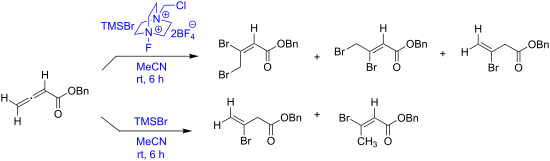
- catalyst for oxidative functionalization is comparatively less explored [11]. Notable examples of oxidative functionalization by Selectfluor include in situ generation of electrophile equivalents Cl+, Br+, SCN+ and NO2+ and their reactions with aromatics [12], the bromination of representative alkenes with


A new method for the synthesis of α-aminoalkylidenebisphosphonates and their asymmetric phosphonyl-phosphinyl and phosphonyl-phosphinoyl analogues
Beilstein J. Org. Chem. 2015, 11, 1418–1424, doi:10.3762/bjoc.11.153

- derivatives consist in the consecutive formation of two Cα–P bonds between a carbon electrophile (most often an electrophilic imine intermediate) and two identical molecules of the proper phosphorus nucleophile. Another group of methods requires the formation of a Cα–N bond between an easily accessible
- , symmetrical, nucleophilic methylenebisphosphonic acid derivative and a nitrogen electrophile. Both groups of methods result in symmetrical products with the same phosphonyl or dialkoxyphosphonyl groups [10][11][12][13][14][15][16][17][18]. Up until 1989, very little was known about the preparative feasibility


Surprisingly facile CO2 insertion into cobalt alkoxide bonds: A theoretical investigation
Beilstein J. Org. Chem. 2015, 11, 1340–1351, doi:10.3762/bjoc.11.144
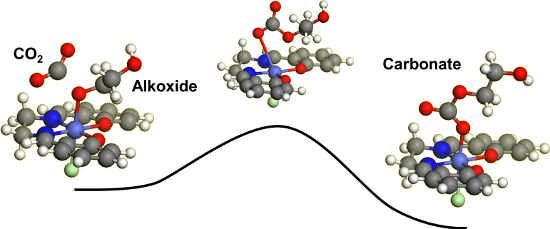
- electrophile, it requires a strong Lewis base in order for CO2 to react [54]. Addition of CO2 to the activated epoxide then occurs with a very low activation barrier [55]. In contrast, it has been generally believed up to now that, in the catalysed reaction of CO2 and epoxides, both reactants need to be


Weakly nucleophilic potassium aryltrifluoroborates in palladium-catalyzed Suzuki–Miyaura reactions: relative reactivity of K[4-RC6F4BF3] and the role of silver-assistance in acceleration of transmetallation
Beilstein J. Org. Chem. 2015, 11, 608–616, doi:10.3762/bjoc.11.68

- 5% (19F NMR) (Scheme 3). It should be noted that 2,3,5,6-tetrafluoropyridine was not observed in the reaction mixtures in both cases. The use of the electron-rich C-electrophile, 4-IC6H4CH3 (9), instead of 3 leads to biphenyls 4-(4'-CH3C6H4)C6F4R (10c–f,h–p) in 60–80% preparative yields (see Table 2


Diastereoselective and enantioselective conjugate addition reactions utilizing α,β-unsaturated amides and lactams
Beilstein J. Org. Chem. 2015, 11, 530–562, doi:10.3762/bjoc.11.60

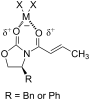
- intermediate. At this point, the carbanion can be either protonated to form the β-substituted product or an electrophile can be added to form the α,β-disubstituted product. The latter operation is often referred to as a three-component coupling due to the combination of the original unsaturated compound, the
- nucleophile, and the electrophile. In 1883, Komnenos reported the first conjugate addition where he added the diethyl malonate anion to ethylidene malonate [12]. This reaction was not fully investigated until 1887, when Michael thoroughly studied this reaction using various stabilized nucleophiles and α,β




Further exploration of the heterocyclic diversity accessible from the allylation chemistry of indigo
Beilstein J. Org. Chem. 2015, 11, 481–492, doi:10.3762/bjoc.11.54
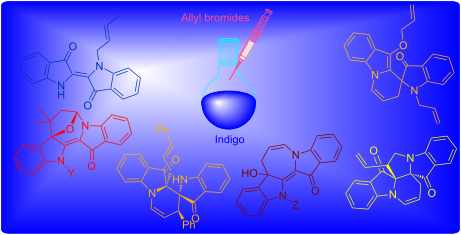
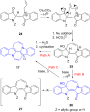
- -nucleophile and C6-imine electrophile in the proposed intermediates to cyclisation (see structure 27 in Scheme 7) is least for the gem-dimethyl compound 10 (3.042 Å) and larger for the monomethyl compound 9 (3.056 Å) and 7 (3.180 Å). With cinnamyl bromide, an additional variation in the product outcome was
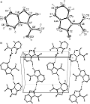
- 31 (ball and stick representation). ORTEP data for 31 is given in Supporting Information File 1. Calculated values of ΔHf of the red diindolone substrate 10 and the bridged tetrahydrofuran product 22, plus the distance between nucleophile (O) and electrophile (C) in the proposed key reaction




Attempts to prepare an all-carbon indigoid system
Beilstein J. Org. Chem. 2015, 11, 363–372, doi:10.3762/bjoc.11.42

- employed for olefin polymerization [26][27]. Since compound 23 contains doubly activated methylene positions, it should be easy to alkylate or bis-alkylate it. Furthermore, use of a bis-electrophile such as 1,2-dibromoethane could lead to the [2.2]indenophane 26 or its isomer 27, both potential ligands for







Matsuda–Heck reaction with arenediazonium tosylates in water
Beilstein J. Org. Chem. 2015, 11, 358–362, doi:10.3762/bjoc.11.41
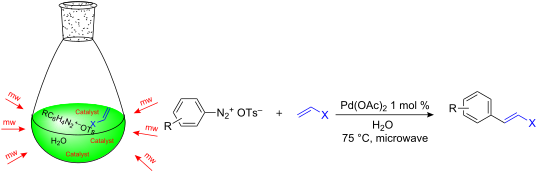
- with the work of Matsuda’s group [2], who used a diazonium salt as a high-reactive electrophile for a Heck reaction, the Matsuda–Heck reaction does require the addition of neither bases nor ligands and is carried out under very mild conditions [3]. Furthermore, diazonium salts are more often prepared


Cross-dehydrogenative coupling for the intermolecular C–O bond formation
Beilstein J. Org. Chem. 2015, 11, 92–146, doi:10.3762/bjoc.11.13
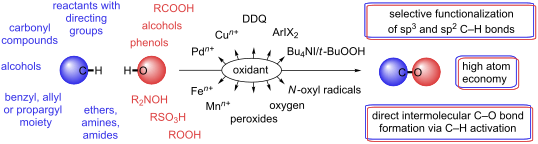
- as the second stage in a two-step cross-dehydrogenative C–O coupling. The formation of a new C–O bond generally takes place with the involvement of an O-nucleophile, an O-radical, or an O-electrophile. In the oxidative coupling with O-reagents as nucleophiles, electrophilic intermediates that are