


Search results
Search for "green" in Full Text gives 1075 result(s) in Beilstein Journal of Organic Chemistry. Showing first 200.
Multi-redox indenofluorene chromophores incorporating dithiafulvene donor and ene/enediyne acceptor units
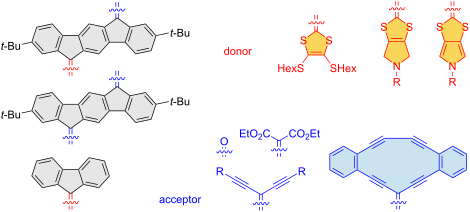
Beilstein J. Org. Chem. 2024, 20, 59–73, doi:10.3762/bjoc.20.8
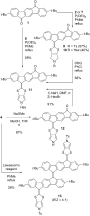
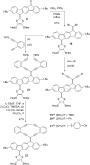
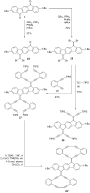
- mixture was stirred in an open flask at rt for 3 days before it was filtered through a plug of SiO2 (CH2Cl2 as eluent) and concentrated under reduced pressure. Flash column chromatography (30% CH2Cl2 (technical grade stabilized with 0.2% EtOH)/heptane) yielded 23 (33 mg, 47%) as a dark green solid. Rf
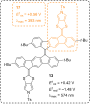
- orbitals), the dianion has an additional 6π-aromatic cyclopentadienyl anion (highlighted in green), while the cation has a 6π-aromatic 1,3-dithiolium ring (highlighted in red). ORTEP plots (50% probability) and crystal packing of compounds a) 25, b) 26, and c) 29. The respective crystal packing of each





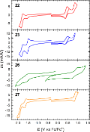


1-Butyl-3-methylimidazolium tetrafluoroborate as suitable solvent for BF3: the case of alkyne hydration. Chemistry vs electrochemistry
Beilstein J. Org. Chem. 2023, 19, 1966–1981, doi:10.3762/bjoc.19.147
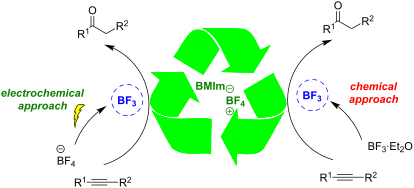
- BMIm-BF4. The reaction was also carried out using dioxane as solvent [108]. In this case, the product was obtained with a very low yield of 10% (Table 3, entry 13). This result emphasizes the importance of the use of an IL as a solvent, not only for its green aspect, in particular for its very low
- arylalkynes, in terms of selectivity and, in some cases, of yield. The possibility of recycling the ionic liquid for subsequent reactions was successfully demonstrated, confirming the advantage of using BMIm-BF4 as a green solvent for this reaction. Together, these results demonstrate the promise of BMIm-BF4


Long oligodeoxynucleotides: chemical synthesis, isolation via catching-by-polymerization, verification via sequencing, and gene expression demonstration
Beilstein J. Org. Chem. 2023, 19, 1957–1965, doi:10.3762/bjoc.19.146

- 401 nt ODNs were synthesized and purified with CBP. The two were joined together using Gibson assembly to give the 800 nt green fluorescent protein (GFP) gene construct. The sequence of the construct was verified via Sanger sequencing. To demonstrate the potential use of the long ODN synthesis method
- green fluorescent protein (GFP) gene construct using Gibson assembly. Sanger sequencing confirmed the authenticity of the long ODNs. To demonstrate the applications of the long ODN synthesis method, the GFP gene was expressed in E. coli. Results Long ODN synthesis and CBP purification The 800 nt (all
- of 55% predicted in the above analysis. To demonstrate protein synthesis using genes constructed from the long synthetic ODNs, the pF1K vector containing the 800 bp GFP gene construct derived from the CBP purified 399 and 401 nt ODNs was transformed into E. coli KRX cells. Green fluorescence was


Aromatic systems with two and three pyridine-2,6-dicarbazolyl-3,5-dicarbonitrile fragments as electron-transporting organic semiconductors exhibiting long-lived emissions
Beilstein J. Org. Chem. 2023, 19, 1867–1880, doi:10.3762/bjoc.19.139
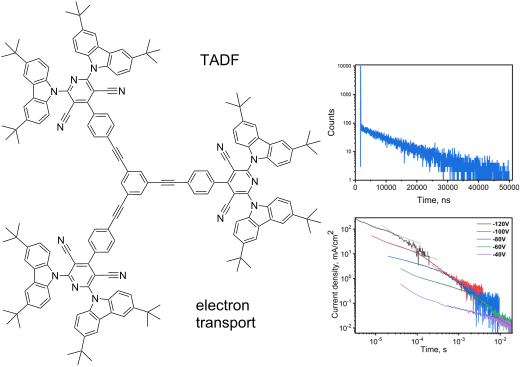
- TADF lifetimes of less than 1 µs. TADF-OLEDs based on these materials exhibited EQEmax of up to 25.0% and well-suppressed efficiency roll-offs. Green and orange normal/dual TADF emitters were produced using compounds containing 3,6-di-tert-butylcarbazole and 3,7-dibromophenothiazine moieties. Pyridine
- -3,5-dicarbonitriles substituted with 3,6-di-tert-butylcarbazole were successfully leveraged as TADF emitters in the fabrication of OLED with relatively high device life-times and a high EQEmax of 25% [7]. An effective green TADF was achieved for pyridine-3,5-dicarbonitriles with highly twisted
- be soluble in common organic solvents and to exhibit non-structured emission peaks in the green-yellow color region of the spectrum. The PL intensity of the compounds in solution was enhanced after deoxygenation, indicating the presence of triplet harvesting by the mechanism of thermally activated


Controlling the reactivity of La@C82 by reduction: reaction of the La@C82 anion with alkyl halide with high regioselectivity
Beilstein J. Org. Chem. 2023, 19, 1858–1866, doi:10.3762/bjoc.19.138
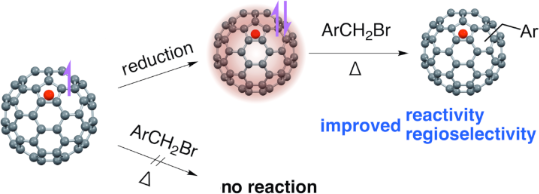
- reduction [21] using a degassed tetrabutylammonium hexafluorophosphate (TBAF) pyridine solution. After stirring for 3 h, a dark green solution was obtained. CS2 was added to precipitate TBAF, and the solution was filtered to collect the La@C2v-C82 anion solution. The solvent was then removed under reduced
- in the second step. Preparation of the La@C2v-C82 anion As described in [21], La@C2v-C82 (0.34 × 10⁻⁶ mol) was dissolved in 10 mL of a pyridine solution containing TBAF (0.54 × 10⁻³ mol) and then stirred for 2 h under an Ar atmosphere. The resulting green solution was concentrated to 2.0 mL. CS2 was


Thienothiophene-based organic light-emitting diode: synthesis, photophysical properties and application
Beilstein J. Org. Chem. 2023, 19, 1849–1857, doi:10.3762/bjoc.19.137
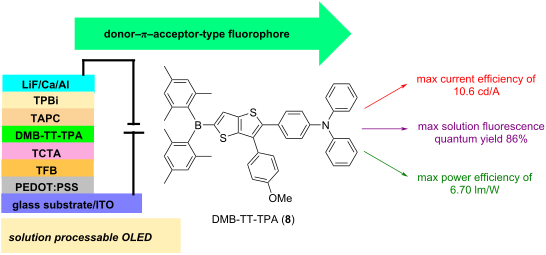
- an external quantum efficiency (EQE) of 4.61%, along with a green emitting luminescence at 512 nm (Table 2). According to the CIE color space chromaticity diagram, the device was located at the coordinates of 0.16 and 0.51. The obtained EL results are in good agreement with the fluorescence


GlAIcomics: a deep neural network classifier for spectroscopy-augmented mass spectrometric glycans data
Beilstein J. Org. Chem. 2023, 19, 1825–1831, doi:10.3762/bjoc.19.134

- : GalN; orange: GlcN; green: GlcNAc; red: ManN. Synthetic IRMPD spectrum (grey trace) generated on the basis of a high resolution endogeneous experimental spectrum of GlcN (black trace) from dataset 1 using additional white noise: 10%; linear signal amplitude modulation: 5%; downsampling coefficient: 2


A novel recyclable organocatalyst for the gram-scale enantioselective synthesis of (S)-baclofen
Beilstein J. Org. Chem. 2023, 19, 1811–1824, doi:10.3762/bjoc.19.133
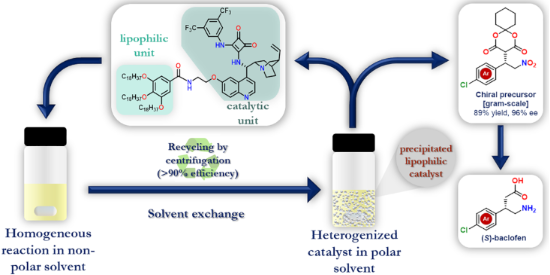
- ). During solvent selection, both the catalytic performance and green chemistry aspects were addressed. For this purpose, we followed GSK’s solvent sustainability guide [34], which ranks solvents according to their properties, such as waste generation, environmental and health impacts, and boiling point
- (Figure 2). Considering the three factors mentioned above (yield, enantiomeric excess, and green chemistry), toluene was chosen as a solvent for the recycling reactions. The schematic for the recycling by solvent replacement is shown in Figure 3. After the stereoselective Michael addition was completed in
- and toluene, while using 2-MeTHF drastically decreased the enantioselectivity. From the perspective of green chemistry, anisole would be more favorable, but toluene is also a distinctly better alternative to the other solvents (e.g., DCM) commonly used in Michael additions. Another critical aspect


Decarboxylative 1,3-dipolar cycloaddition of amino acids for the synthesis of heterocyclic compounds
Beilstein J. Org. Chem. 2023, 19, 1677–1693, doi:10.3762/bjoc.19.123
- Xiaofeng Zhang Xiaoming Ma Wei Zhang Center for Green Chemistry and Department of Chemistry, University of Massachusetts Boston, 100 Morrissey Boulevard, Boston, MA 02125, USA Department of Medicinal Chemistry, Cerevel Therapeutics, 222 Jacobs St Suite 200, Cambridge, MA 02141, USA School of
- , and the Centre for Green Chemistry at the University of Massachusetts Boston.




A series of perylene diimide cathode interlayer materials for green solvent processing in conventional organic photovoltaics
Beilstein J. Org. Chem. 2023, 19, 1620–1629, doi:10.3762/bjoc.19.119
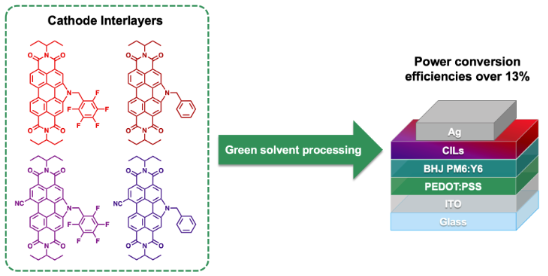
- the previously reported cyanated N-annulated perylene diimide (CN-PDIN-H), the N-position was functionalized with a benzyl and pentafluorobenzyl group to make CN-PDIN-B and CN-PDIN-FB, respectively. The materials exhibit solubility in the green solvent, ethyl acetate, and thus were processed into thin
- ethyl acetate, while using a bulk heterojunction (BHJ) comprised of PM6:Y6. High power conversion efficiencies (PCEs) of 13% were achieved compared to control devices using the standard PFN-Br CIL. Keywords: cathode interlayer materials; green solvent processing; organic photovoltaics; Introduction
- devices at low cost with minimal environmental impact becomes viable, especially if processed from green solvents [3][4][5]. These devices have the opportunity to be integrated into buildings, automobiles, Internet of Things (IoT) devices, etc. This has motivated scientists to develop OPV technology over


Synthesis of 5-arylidenerhodanines in L-proline-based deep eutectic solvent
Beilstein J. Org. Chem. 2023, 19, 1537–1544, doi:10.3762/bjoc.19.110

- , volatile solvents, hard conditions, and/or difficult purifications. However, green chemistry has become a crucial sub-discipline in the field of chemistry and the chemical industry is giving major priority to sustainable processes. Since a few years, deep eutectic solvents (DES) are considered as a
- promising emerging class of green solvents as they offer numerous advantages, such as low volatility, non-flammability, chemical and thermal stability, recyclability, and above all a good biodegradability [10]. Moreover, their synthesis is usually easy and cheap as DES are formed by simply mixing an H-bond
- derivative synthesis. In accordance with the principles of green chemistry, we envisaged a procedure with temperatures not too high and reaction times not too long. We also wanted to isolate pure compounds by a simple filtration after precipitation in aqueous media without the need for extraction or


Complexes of resorcin[4]arene with secondary amines: synthesis, solvent influence on “in-out” structure, and theoretical calculations of non-covalent interactions
Beilstein J. Org. Chem. 2023, 19, 1525–1536, doi:10.3762/bjoc.19.109
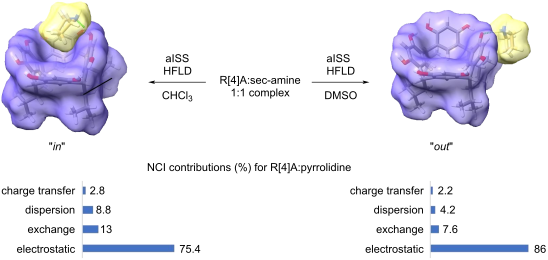
- and the pyrrolidine molecule are marked in green, 1.478 Å in DMSO and 1.565 Å in CHCl3. Additionally, the lengths of hydrogen bonds between the protons of the hydroxy groups and the oxygen atoms in the upper ring of R[4]A are marked in purple. It is worth noting the significantly shorter length of the
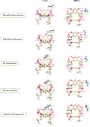
- (PBE0-D4/def2-mTZVPP/CPCM(DMSO) structures of these complexes. The lengths of intermolecular hydrogen bonds between R[4]A and amines are marked in green, while the intramolecular hydrogen bonds between the oxygen anion and the hydrogen atom of the adjacent hydroxy group in R[4]A are marked in violet
- highlighted in blue. Theoretically calculated (PBE0-D4/def2-mTZVPP/CPCM) structures of the R[4]A:pyrrolidine complex in DMSO and CHCl3. The lengths of hydrogen bonds between the R[4]A molecule and the pyrrolidine molecule are marked in green, while the lengths of hydrogen bonds in the upper ring of R[4]A




N-Sulfenylsuccinimide/phthalimide: an alternative sulfenylating reagent in organic transformations
Beilstein J. Org. Chem. 2023, 19, 1471–1502, doi:10.3762/bjoc.19.106
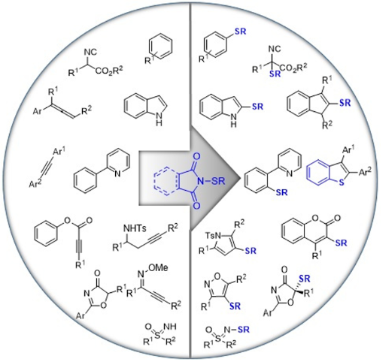
- -catalyzed sulfenylation by N-(sulfenyl)succinimides/phthalimides In 2012, Chen and co-workers found that in the reaction of N-(organothio)succinimides 1 and sodium sulfinates 2 using a Lewis acid in ionic liquids (ILs) and water as a green solvent system leads to the formation of thiosulfonates 3 (Scheme 2
- by Guo and Wu et al. (Scheme 19) [56]. Employment of a reusable heterogeneous nanomaterial, mild reaction conditions, avoiding the use of any additive, or base, and water/EtOH as a green solvent system were the advantages of this new method. N-Sulfenyl sulfoximines 45 were synthesized as coupling
- stereogenic carbon centers bearing a sulfur atom. Although, significant efforts have been made to form enantioselective C–S bonds, the direct sulfenylation with more green, economical, and environmentally friendly sulfenylating reagents remains a challenge for organic chemists. N-(Sulfenyl)succinimides




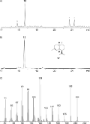
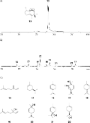
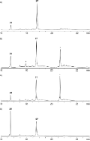
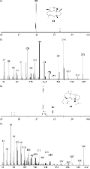
Functional characterisation of twelve terpene synthases from actinobacteria
Beilstein J. Org. Chem. 2023, 19, 1386–1398, doi:10.3762/bjoc.19.100
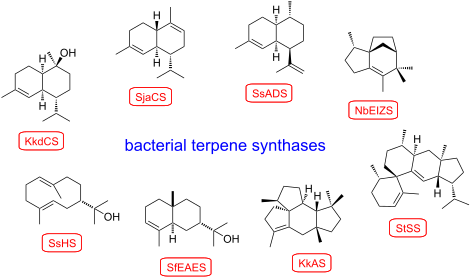
- branches indicate groups of homologous sesquiterpene synthases, green branches indicate groups of homologous diterpene synthases, and purple branches indicate groups of homologous sesterterpene synthases from which at least one representative was functionally characterised. The red arrows highlight enzymes




Organic thermally activated delayed fluorescence material with strained benzoguanidine donor
Beilstein J. Org. Chem. 2023, 19, 1289–1298, doi:10.3762/bjoc.19.95
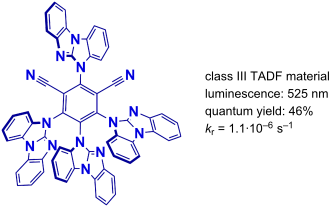
- benzoguanidine donor and compare it with the benchmark carbazole-based material (4CzIPN). Extended π-conjugation in 4BGIPN material results in yellow-green luminescence at 512 nm with a fast radiative rate of 5.5 × 10⁻⁵ s−1 and a photoluminescence quantum yield of 46% in methylcyclohexane solution. Such a
- is up to 0.4 eV higher in energy than the singlet 1CT state. The high quantum yields of up to 46% indicate that the yellow-green 4BGIPN emitter shows a high promise as a platform for developing bright 4BGIPN-TADF class III type compounds with unity PLQY. Future works may benefit in isolating a


Non-noble metal-catalyzed cross-dehydrogenation coupling (CDC) involving ether α-C(sp3)–H to construct C–C bonds
Beilstein J. Org. Chem. 2023, 19, 1259–1288, doi:10.3762/bjoc.19.94
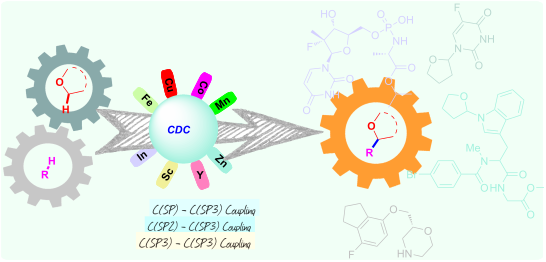
- are widespread as essential building blocks in various drugs, natural products, agrochemicals, and materials. Modern economy requires developing green strategies with improved efficiency and reduction of waste. Due to its atom and step-economy, the cross-dehydrogenative coupling (CDC) reaction has
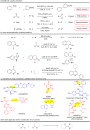
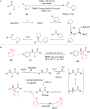
- synthetic strategy for the construction of C–C bonds in organic synthesis (Scheme 1b). Compared with traditional coupling reactions, the CDC strategy has the following advantages: 1) atom economy, 2) green and efficient reaction, 3) a wide range of substrate sources. Therefore, organic chemists consider the
- source played a key role, with lower yields or no product obtained when the reaction was performed without water or under other light source conditions such as 19 W CFL or irradiation with blue or green LEDs. This method is applicable to various heteroatom-containing compounds such as quinolines



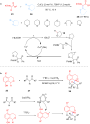


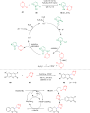

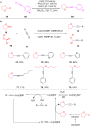


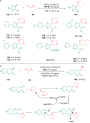


Unravelling a trichloroacetic acid-catalyzed cascade access to benzo[f]chromeno[2,3-h]quinoxalinoporphyrins
Beilstein J. Org. Chem. 2023, 19, 1216–1224, doi:10.3762/bjoc.19.89
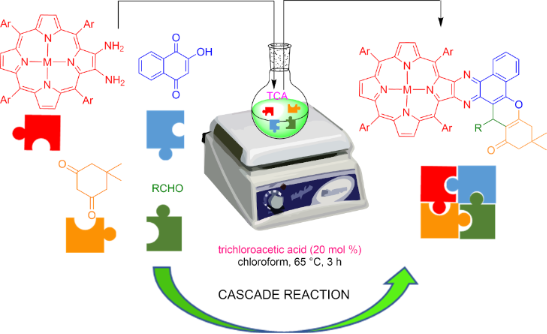
- visible and near IR regions [11][12][13][14]. Similarly, simple quinoxaline-based heterocycles have shown their potential as photosensitizers to induce toxicity in a single cell green algae such as Chlamydomonas reinhardtii [15] and also displayed efficacy against Mycobacterium tuberculosis and other


Selective and scalable oxygenation of heteroatoms using the elements of nature: air, water, and light
Beilstein J. Org. Chem. 2023, 19, 1146–1154, doi:10.3762/bjoc.19.82
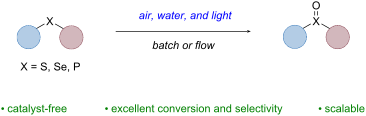
- resulted in a significant reduction in kinetics and selectivity (Table 1, entry 3). Other more green and biobased solvent alternatives, such as ethanol [36], can effectively replace the acetonitrile (for the complete scope of solvents, please consult Supporting Information File 1, Table S2), but reaction





Photoredox catalysis harvesting multiple photon or electrochemical energies
Beilstein J. Org. Chem. 2023, 19, 1055–1145, doi:10.3762/bjoc.19.81
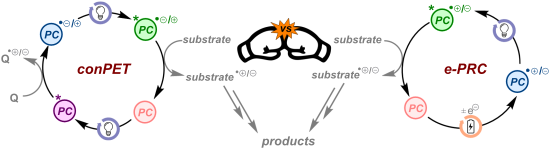
- enabling controlled bond activations [45]. Regarding the reductive C–C arylation, the application of the xanthene dye rhodamine 6G (Rh-6G) as a catalyst for the reduction of heteroarenes bearing two or three bromine atoms (e.g., 6) under irradiation with green light (λ = 530 nm) gave monosubstituted
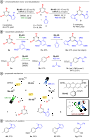
- products (e.g., 7) whereas irradiation with blue light (λ = 455 nm) provided disubstituted products 8 (Figure 5A). Additionally, adding a different trapping reagent before switching from green to blue light allows for a sequential and controlled substitution in a one-pot reaction (Figure 5B). 2,4,6
- -Tribromopyrimidine (6a), whose core pyrimidine structure can be found in many biologically active compounds, could be sequentially substituted with 1,3,5-trimethoxybenzene and N-methylpyrrole to give 8a. The protocol also enabled the selective reductive dehalogenation at the benzylic position of 9a with green light

























The effect of dark states on the intersystem crossing and thermally activated delayed fluorescence of naphthalimide-phenothiazine dyads
Beilstein J. Org. Chem. 2023, 19, 1028–1046, doi:10.3762/bjoc.19.79
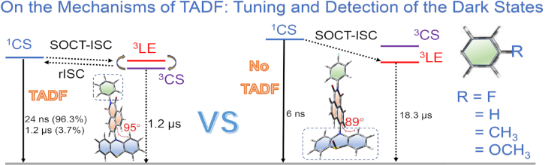
- 3LE appear with a characteristic absorption peak of 3NI* at 463 nm and this process can be ascribed to SOCT-ISC (green line in Figure 7d). This postulation is supported by the nanosecond transient spectra (see below). Nanosecond transient absorption (ns-TA) spectra In order to study the lowest-lying


CO2 complexation with cyclodextrins
Beilstein J. Org. Chem. 2023, 19, 1021–1027, doi:10.3762/bjoc.19.78
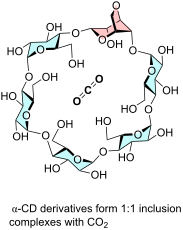
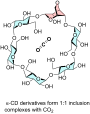
- (40 μM) and 1 (2 mM) in citrate phospate buffer pH 3 (right) from 350–400 nm with 0 (blue), 2 (red), 4 (green), 6 (orange) and 8 (grey) bar of CO2. Binding of CO2 to 1 as a function of pressure. The results of crystallization of α-cyclodextrin from water in an atmosphere of CO2 carried out in a


Copper-catalyzed N-arylation of amines with aryliodonium ylides in water
Beilstein J. Org. Chem. 2023, 19, 1008–1014, doi:10.3762/bjoc.19.76
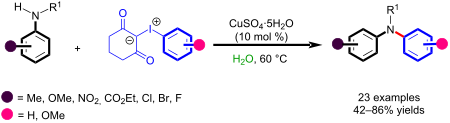
- .19.76 Abstract Copper sulfate catalyzed an efficient, inexpensive, and environment-friendly protocol that has been developed for N-arylation of amines with 1,3-cyclohexadione-derived aryliodonium ylides in water as a green solvent. Aromatic primary amines substituted with electron-donating as well as



Clauson–Kaas pyrrole synthesis using diverse catalysts: a transition from conventional to greener approach
Beilstein J. Org. Chem. 2023, 19, 928–955, doi:10.3762/bjoc.19.71
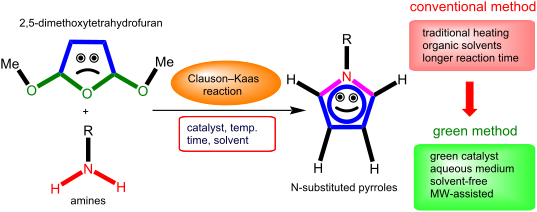
- -dimethoxytetrahydrofuran; green synthesis; microwave-assisted reaction; N-substituted pyrrole; Introduction Heterocyclic compounds are the most explored molecules in organic chemistry in terms of their synthesis and various applications. Among the diverse heterocyclic compounds, N-containing heterocycles are found in
- . This methodology has been applied to diverse areas of chemistry, including natural product synthesis [45][46], medicinal chemistry [47][48], polymer chemistry [49][50] and porphyrin chemistry [51][52][53]. In recent years, green chemistry has become a widely used method for organic synthesis in order
- to reduce energy consumption and the carbon footprint. The traditional heating techniques used to synthesize compounds are being replaced by contemporary green alternative energy systems, such as photocatalysis, microwave irradiation, ultrasonic irradiation, grinding, and ball milling processes




Photoredox catalysis enabling decarboxylative radical cyclization of γ,γ-dimethylallyltryptophan (DMAT) derivatives: formal synthesis of 6,7-secoagroclavine
Beilstein J. Org. Chem. 2023, 19, 918–927, doi:10.3762/bjoc.19.70
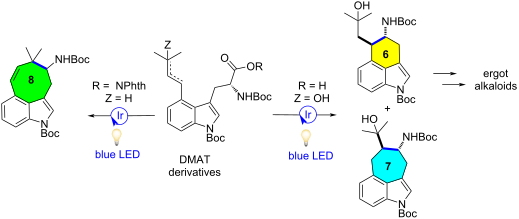
- -dimethylallyltryptophan (DMAT) derivatives containing unactivated alkene moieties has been developed, providing green and efficient access to various six-, seven-, and eight-membered ring 3,4-fused tricyclic indoles. This type of cyclization, which was hitherto very difficult to comprehend in ergot biosynthesis and to


Cyclodextrins as building blocks for new materials
Beilstein J. Org. Chem. 2023, 19, 889–891, doi:10.3762/bjoc.19.66
- use of CDs and further stimulate their market. The exploration of the potential of inclusion complexation is not limited to the biomedical field. CDs are renewable and biodegradable materials that enable green and environmental biotechnologies for all applications [11]. The ability of CDs to act as



