


Search results
Search for "hydrogen bonds" in Full Text gives 455 result(s) in Beilstein Journal of Organic Chemistry. Showing first 200.
Olefin metathesis catalysts embedded in β-barrel proteins: creating artificial metalloproteins for olefin metathesis
Beilstein J. Org. Chem. 2018, 14, 2861–2871, doi:10.3762/bjoc.14.265
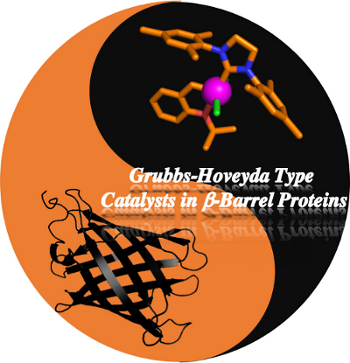
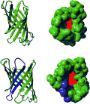
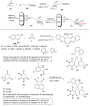
- are generally regarded to be more rigid than disordered or α-helix structures [30][31]. β-Barrels are structural motifs found in numerous proteins in which (mostly) antiparallel β-strands twist and coil to form closed, quasi-cylindrical structures held together by a network of hydrogen bonds [32


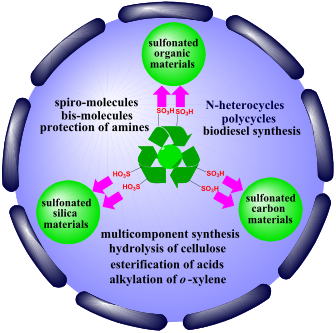
An overview on recent advances in the synthesis of sulfonated organic materials, sulfonated silica materials, and sulfonated carbon materials and their catalytic applications in chemical processes
Beilstein J. Org. Chem. 2018, 14, 2745–2770, doi:10.3762/bjoc.14.253
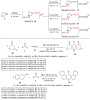
- substance and chlorosulfonic acid for the first time. The authors proposed that the high Brønsted acidity of the catalyst arises mainly from hydrogen bonds between the two -SO3H groups. The catalyst 53 was studied by different analyses including FTIR, 1H NMR, 13C NMR, UV–vis, and fluorescence spectra. Then









Pathoblockers or antivirulence drugs as a new option for the treatment of bacterial infections
Beilstein J. Org. Chem. 2018, 14, 2607–2617, doi:10.3762/bjoc.14.239
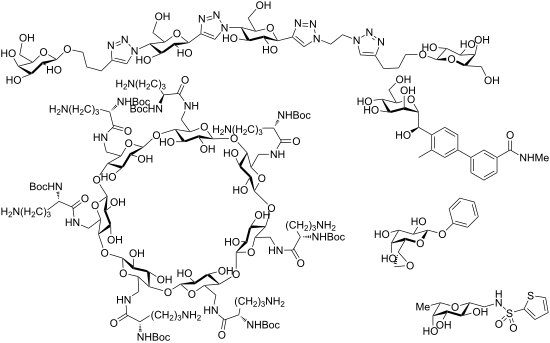
- interact with the tyrosine gate formed by Tyr48 and Tyr137 [15][16], as well as form hydrogen bonds and electrostatic interactions with the Arg98/Glu50 salt bridge of the protein. Taking this coordination geometry into consideration for further ligand optimization, it was found important to focus on the




Nucleoside macrocycles formed by intramolecular click reaction: efficient cyclization of pyrimidine nucleosides decorated with 5'-azido residues and 5-octadiynyl side chains
Beilstein J. Org. Chem. 2018, 14, 2404–2410, doi:10.3762/bjoc.14.217
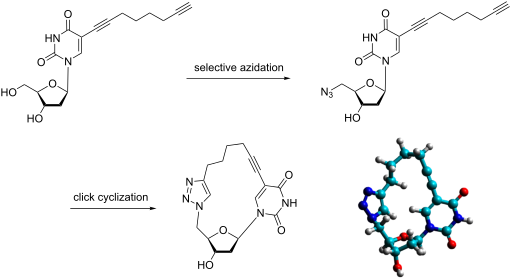
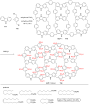
- -dimensional network consisting of a linear unit connected by hydrogen bonds between N3–H and the triazole N3’’ of a second molecule (Figure 3, Supporting Information File 1, Figures S3 and S4). Additionally, the molecules are bridged by water molecules connecting O2 of the base moiety and N2’’ of the triazole
- ring with 3’-OH of the next unit. The second layer is twisted by ≈54° to the first layer and both layers are hold together by weak hydrogen bonds between O4 and methylene groups C9 and C11. In a particular layer the triazole rings are stacked. The same is true for the base moieties. For comparison, the
- ellipsoids are drawn at the 50% probability level and H-atoms are shown as small spheres of arbitrary size. Hydrogen bonds are shown as dashed lines. The crystal packing of 8 shows the intramolecular hydrogen-bonding network (projection parallel to the x-axis). N- and S-conformation for cyclonucleoside 8. B


Non-metal-templated approaches to bis(borane) derivatives of macrocyclic dibridgehead diphosphines via alkene metathesis
Beilstein J. Org. Chem. 2018, 14, 2354–2365, doi:10.3762/bjoc.14.211
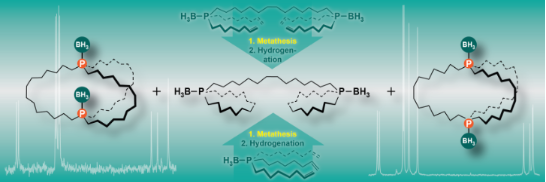
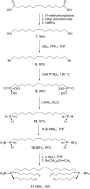
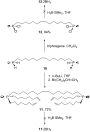
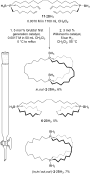
- (12) in 94% yield using triphosgene, a standard reagent for the chlorination of phosphorus–hydrogen bonds [49]. Since a direct reaction with an excess of the Grignard reagent BrMg(CH2)6CH=CH2 would give 11, a dead end, initial conversion to the bis(borane) adduct 12·2BH3 was envisioned. However






Catalyst-free synthesis of 4-acyl-NH-1,2,3-triazoles by water-mediated cycloaddition reactions of enaminones and tosyl azide
Beilstein J. Org. Chem. 2018, 14, 2348–2353, doi:10.3762/bjoc.14.210
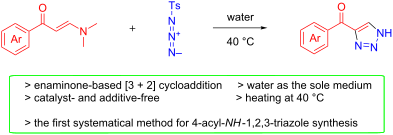
- -triazoline 4 which couples to water by strong hydrogen bond effect [51]. The presence of the hydrogen bonds may promote the elimination of the amino group and the acidic C–H bond at the α-position of the acyl group, which affords N-tosyl-1,2,3-triazole 5. Under the present reaction conditions, the


Selective formation of a zwitterion adduct and bicarbonate salt in the efficient CO2 fixation by N-benzyl cyclic guanidine under dry and wet conditions
Beilstein J. Org. Chem. 2018, 14, 2204–2211, doi:10.3762/bjoc.14.194

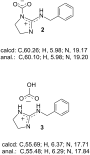
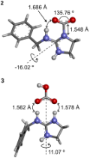
- loss exhibited rapid and slow weight loss behaviors around 127 °C and until 162 °C (ii), respectively. Finally, the thermal decomposition of 3 has occurred completely around 260 °C (iii). This three-steps behavior of weight loss suggested that the dimer of 3 was constructed by the two hydrogen bonds
- the dimer of 3. Accordingly, the intermediate complex of 3 and 1 was constructed by the two hydrogen bonds between OH−N and O−HN in the bicarbonate salt 3 and the free guanidine 1, and then another one pair of CO2 and H2O was almost released from the intermediate complex (3+1 dimer) around 127 °C in
- . Especially, the results of the thermal analysis revealed that the obtained zwitterion adduct and bicarbonate salt stabilized the dimer complexes based on multiple intermolecular hydrogen bonds. This also indicated that the zwitterion adduct, bicarbonate salt, and their dimers were a fairly stable structure






Synthesis and post-functionalization of alternate-linked-meta-para-[2n.1n]thiacyclophanes
Beilstein J. Org. Chem. 2018, 14, 2190–2197, doi:10.3762/bjoc.14.192

- Figure 1). The conformation in the solid state is stabilised by intramolecular O–H···S hydrogen bonds (O···S distances 3.2081 (16) and 3.4179 (17) Å) and shows no central void. The formation of the [3 + 3] product is favoured by stronger bases and shorter reaction times. Therefore, in entry 8 of Table 1
- -thiacyclophane 6: (a) ball-and-stick representation, with O–H···S hydrogen bonds shown as green dashed lines, (b) space-filling representation viewed along the pseudo twofold axis. Macrocyclization towards homothiacalixarenes 3a and 3b [12]. Cyclocondensation reaction of 4 and 5 towards [2 + 2] and [3 + 3


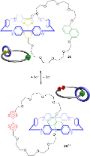
Tetrathiafulvalene – a redox-switchable building block to control motion in mechanically interlocked molecules
Beilstein J. Org. Chem. 2018, 14, 2163–2185, doi:10.3762/bjoc.14.190
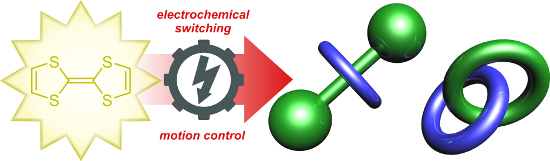
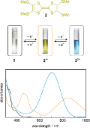
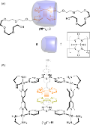
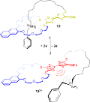
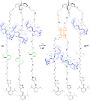
- TTFs. However, also the type of substituent on the TTF moiety plays a role in terms of weak secondary binding interactions such as hydrogen bonds [63]. For example TTF 5 which is substituted by ethylene glycol chains displays a high association constant of Ka = 50,000 M−1 in acetonitrile. Additionally
- station by hydrogen bonds as shown by the high association constant of a structurally similar pseudorotaxane precursor (Ka = 590,000 M−1). The high association constant is a result of the weakly coordinating anion (WCA) used, i.e., tetrakis(3,5-bis(trifluoromethyl)phenyl)borate. Comparison to a











Synthesis and supramolecular self-assembly of glutamic acid-based squaramides
Beilstein J. Org. Chem. 2018, 14, 2065–2073, doi:10.3762/bjoc.14.180
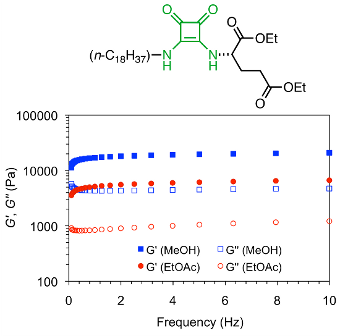
- of a self-assembled network in organic solvents is likely driven by the formation of hydrogen bonds between different gelator molecules (polar head) as well as hydrophobic interactions between the long aliphatic chains. Considering our previous results obtained with diacids 1 and 2 [33], we initially


Asymmetric Michael addition reactions catalyzed by calix[4]thiourea cyclohexanediamine derivatives
Beilstein J. Org. Chem. 2018, 14, 1901–1907, doi:10.3762/bjoc.14.164
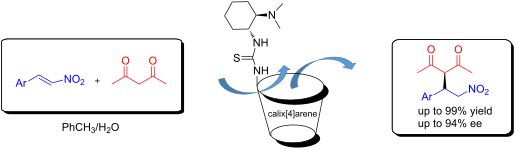
- in forming hydrogen bonds with substrates. This may lead to activated forms of the substrates allowing the corresponding reaction to occur [9][10][11]. For example, Jacobsen and co-workers pioneered an effective chiral thiourea catalyst which was employed in an asymmetric Strecker reaction [12][13



A hemicryptophane with a triple-stranded helical structure
Beilstein J. Org. Chem. 2018, 14, 1885–1889, doi:10.3762/bjoc.14.162
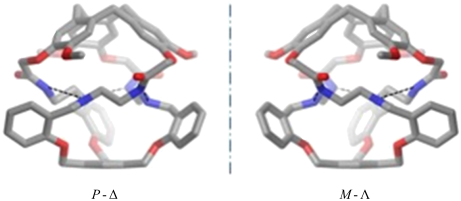
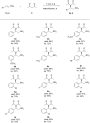
- helical arrangement of the linkers stabilized by intramolecular hydrogen bonds between amide and amine groups. The chirality of the cyclotriveratrylene unit controls the propeller arrangement of the three aromatic rings in the opposite part of the cage. 1H NMR studies suggest that this structure is
- parallel peptide chains coil about each other in a triple stranded left-handed helical structure. Its high thermal and mechanical stability results mainly from the numerous hydrogen bonds found in the triple helix framework [2]. Bioinspired structures, based on peptide backbones, have been built, allowing
- three imine functions is highly sable [12][13]. Hydrogen bonds between the amide group and the formed imine function could account for the high stability of this intermediate, shifting the equilibrium between the different oligomers and the cage in favor of this latter (vide infra). 1H NMR of cage 1 The


Preparation and X-ray structure of 2-iodoxybenzenesulfonic acid (IBS) – a powerful hypervalent iodine(V) oxidant
Beilstein J. Org. Chem. 2018, 14, 1854–1858, doi:10.3762/bjoc.14.159
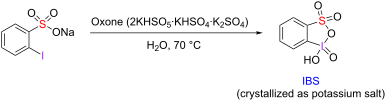
- . In addition, a water molecule was observed in the crystal structure of 6, which forms two strong hydrogen bonds (≈2.05 Å for O(21)–H(2)···O(11) and ≈2.07 Å for O(21)–H(3)···O(5)) with neighbouring oxygen atoms and two short donor–acceptor interactions with K(1) and K(2) potassium ions. Overall, the


Strong binding and fluorescence sensing of bisphosphonates by guanidinium-modified calix[5]arene
Beilstein J. Org. Chem. 2018, 14, 1840–1845, doi:10.3762/bjoc.14.157
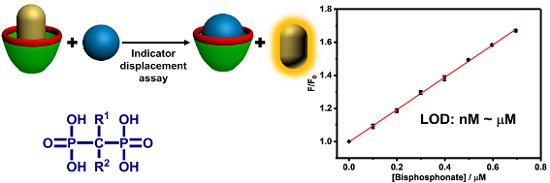
- was tested as binding receptor. GC5A was prepared according to our previous procedure [26] and the guanidinium groups installed in the upper rim are expected to form multiple salt bridge interactions (charge-assisted hydrogen bonds) with the phosphate groups of BPs (Scheme 1c) [26][29]. To execute IDA


Host–guest complexes of conformationally flexible C-hexyl-2-bromoresorcinarene and aromatic N-oxides: solid-state, solution and computational studies
Beilstein J. Org. Chem. 2018, 14, 1723–1733, doi:10.3762/bjoc.14.146
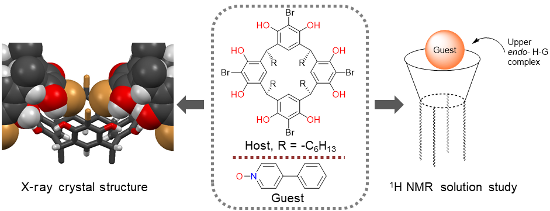
- intramolecular O···H–O hydrogen bonds (HBs) [1][2]. The combination of their confined cavity and conformational flexibility has driven the interest in these synthetic receptors [3], a subclass of calixarenes [4], for a wide range of applications in fields such as catalysis [5][6][7][8][9], sensors [10][11
- property usually preferred by resorcinarenes when solvate and guest molecules are absent inside the cavity. Note that the self-inclusion complex of BrC6 has exo methanol solvent hydrogen bonds to host hydroxy groups. This can possibly be explained by the longer lower-rim hexyl chains providing enough


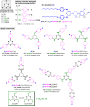
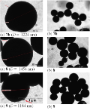
Design, synthesis and structure of novel G-2 melamine-based dendrimers incorporating 4-(n-octyloxy)aniline as a peripheral unit
Beilstein J. Org. Chem. 2018, 14, 1704–1722, doi:10.3762/bjoc.14.145
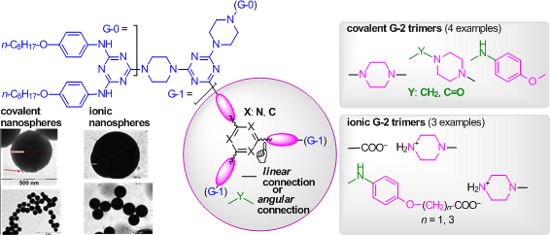
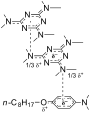
- strong hydrogen bond acceptor solvents, such as DMSO-d6 [45], then the NH groups are exposed to the solvent rather than developing intramolecular hydrogen bonds. Conversely, a TG value less negative than −4 ppb K−1 discloses the NH group preference towards intramolecular hydrogen bonds formation, at room



The phenyl vinyl ether–methanol complex: a model system for quantum chemistry benchmarking
Beilstein J. Org. Chem. 2018, 14, 1642–1654, doi:10.3762/bjoc.14.140
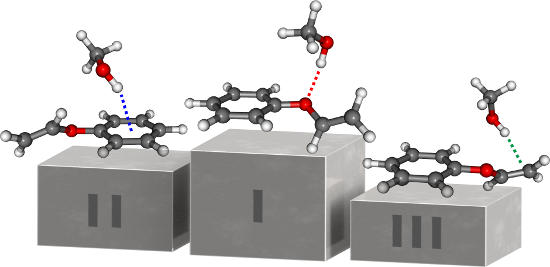
- hydrogen bonds; Introduction The balance of different noncovalent interactions is crucial for chemical and biochemical processes as it controls molecular recognition and aggregation [1][2][3][4][5][6]. In order to gain a deeper understanding of these processes, knowledge on exact structural arrangements
- the size of the attached alcohol. Torsional balances in solution have been used to probe aromatic OH∙∙∙π interactions and to show that these interactions remain important at room temperature [23]. In such aromatic solute–solvent systems, one frequently encounters hydrogen bonds formed towards oxygen
- . Observing the intermolecular contacts, which may or may not be designated as weak hydrogen bonds but are expected to stabilize the complexes, the main difference between the two structures is a phenyl vs ethenyl CH to methanol O contact (cf. dashed gray lines in Figure 1). Both are separated by only a few


A conformationally adaptive macrocycle: conformational complexity and host–guest chemistry of zorb[4]arene
Beilstein J. Org. Chem. 2018, 14, 1570–1577, doi:10.3762/bjoc.14.134
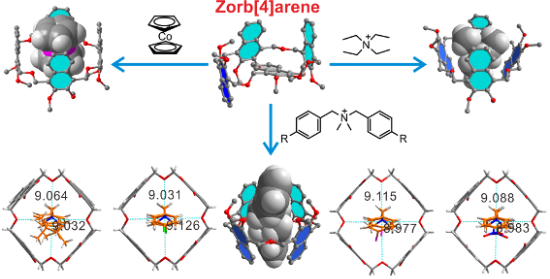
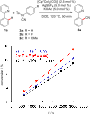
- large amplitude conformational responses to the electronic substituents on the guests. Instead of a linear free-energy relationship, ZB4 follows a parabolic free-energy relationship. This is explained by invoking the influence of secondary C–H···O hydrogen bonds on the primary cation···π interactions
- structures may provide an explanation for their surprising binding behaviors. Multiple non-covalent interactions, including C–H···O hydrogen bonds, cation···π, C–H···π and π···π interactions, are involved in all the cases. Undoubtedly, cation···π interactions between the core quaternary ammonium ions of the
- size of the host cavity. As shown in Figure 3 (bottom), the vertical and horizontal distances between the diagonal oxygen atoms are different for all the four complexes. This distance is presumably tuned through the C–H···O hydrogen bonds between the CH2–O–CH2 oxygen atoms and the aromatic protons of


Cobalt-catalyzed C–H cyanations: Insights into the reaction mechanism and the role of London dispersion
Beilstein J. Org. Chem. 2018, 14, 1537–1545, doi:10.3762/bjoc.14.130
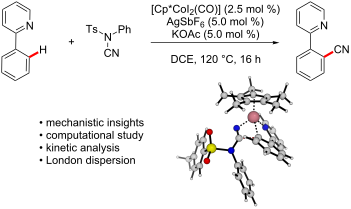
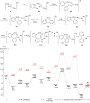
- structures, significant interactions can be found between the Cp* ligand and the various phenyl groups of the reagents. In addition, the presence of additional stabilizing interactions such as further hydrogen bonds can also be confirmed by this analysis (e.g., in TS3, see also the Supporting Information





Recent applications of chiral calixarenes in asymmetric catalysis
Beilstein J. Org. Chem. 2018, 14, 1389–1412, doi:10.3762/bjoc.14.117
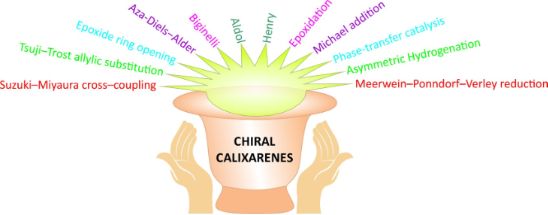
- ligands based on the same chiral scaffold. It was concluded that free hydroxy groups on the lower rim of the calixarene ligands do not have a beneficial catalytic effect due to the formation of hydrogen bonds with the incoming boronic acids. In the same study, diphosphine ligand (S,S)-29 was used in the
- hydrophilic region via hydrogen bonds between 75 and interfacial water molecules. The catalytic activity of compound 83 as an organocatalyst was evaluated in the enantioselective aldol reaction of 21 and 70 in different amounts of water. In the presence of 10 mol % catalyst, the aldol adduct was obtained in
- results, a plausible reaction mechanism similar to that previously suggested for the L-proline-catalyzed aldol reactions in water which proceeds via an enamine intermediate was proposed. As shown in Figure 10, it is proposed that hydrogen bonds between the OH and NH groups of the calix[4]arene catalyst


A three-armed cryptand with triazine and pyridine units: synthesis, structure and complexation with polycyclic aromatic compounds
Beilstein J. Org. Chem. 2018, 14, 1370–1377, doi:10.3762/bjoc.14.115
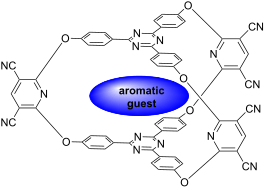
- cryptand 2 they were 3.27 Å and 3.21 Å, respectively. Since the 3,5-dicyanopyridine fragment contains hydrogen-bond acceptor nitrogen atoms it might be possible to select a guest system which besides the stacking interaction could establish extra hydrogen bonds to enhance the complex stability. Accordingly




Oligonucleotide analogues with cationic backbone linkages
Beilstein J. Org. Chem. 2018, 14, 1293–1308, doi:10.3762/bjoc.14.111
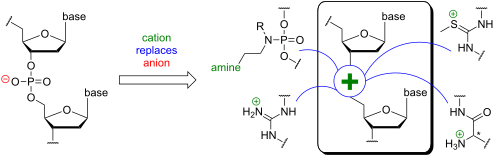
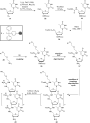
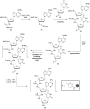
- range and its ability to form both intermolecular electrostatic interactions and hydrogen bonds [50]. Letsinger's aminoalkyl phosphoramidate modification was stereogenic at the phosphorus atom, thus leading to complex mixtures of diastereomeric oligomers (with the exception of the aforementioned related





An unusual thionyl chloride-promoted C−C bond formation to obtain 4,4'-bipyrazolones
Beilstein J. Org. Chem. 2018, 14, 1287–1292, doi:10.3762/bjoc.14.110
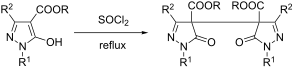
- such a way that mirror enantiomers are interconnected to each other by weak intermolecular hydrogen bonds (C–H···O 2.523 Å, 130.64°, Figure 3). In the following, related 5-hydroxypyrazol-4-carboxylates 1b–i were subjected to the same reaction conditions (refluxing SOCl2) and in all cases the
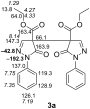
- two pyrazolone units is 1.544(3) Å. For details see the Supporting Information File 1. Arrangement (4R,4'R)- and (4S,4'S)-3a enantiomers in the crystal unit drawn with 50% displacement ellipsoids. The hydrogen bonds are shown by dashed lines. Supplementary crystallographic data for compound 3a can be


Novel unit B cryptophycin analogues as payloads for targeted therapy
Beilstein J. Org. Chem. 2018, 14, 1281–1286, doi:10.3762/bjoc.14.109
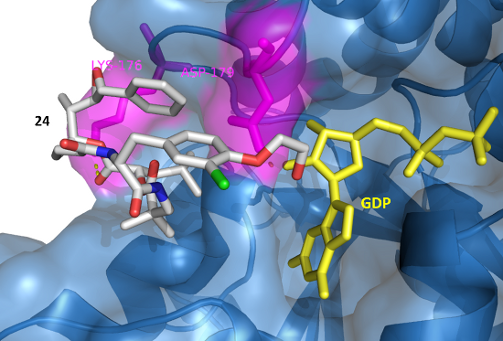
- ”, has been proposed [2][52][53]. We performed a docking study to explain the different affinities of the newly synthesized derivatives. The parent compound 2 scored highest with respect to β-tubulin binding (Table 2). Three hydrogen bonds were detected to key residues in the peptide binding pocket of
- activity whereas analogues 23 and 24 showed a reduced activity but were still very cytotoxic. Cryptophycin-1 (1) and -52 (2). Binding mode of 2, showing the interaction to the vinca domain peptide binding pocket (blue). Hydrogen bonds are shown as yellow dots with the interacting amino acid residues in


London dispersion as important factor for the stabilization of (Z)-azobenzenes in the presence of hydrogen bonding
Beilstein J. Org. Chem. 2018, 14, 1238–1243, doi:10.3762/bjoc.14.106
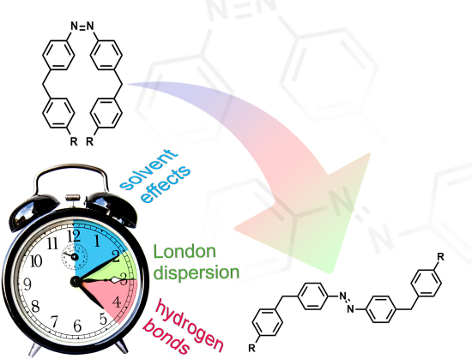
- important classes of molecular switches is crucial for the design of light-responsive materials using this entity. Herein, we present the stabilization of metastable (Z)-azobenzenes by London dispersion interactions, even in the presence of comparably stronger hydrogen bonds in various solvents. The Z→E
- isomerization rates of several N-substituted 4,4′-bis(4-aminobenzyl)azobenzenes were measured. An intramolecular stabilization was observed and explained by the interplay of intramolecular amide and carbamate hydrogen bonds as well as London dispersion interactions. Whereas in toluene, 1,4-dioxane and tert
- -butyl methyl ether the hydrogen bonds dominate, the variation in stabilization of the different substituted azobenzenes in dimethyl sulfoxide can be rationalized by London dispersion interactions. These findings were supported by conformational analysis and DFT computations and reveal low-energy London





