


Search results
Search for "organocatalysis" in Full Text gives 205 result(s) in Beilstein Journal of Organic Chemistry. Showing first 200.
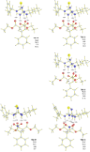
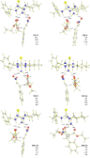
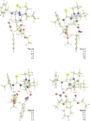
Synthesis and evaluation of new guanidine-thiourea organocatalyst for the nitro-Michael reaction: Theoretical studies on mechanism and enantioselectivity
Beilstein J. Org. Chem. 2012, 8, 1485–1498, doi:10.3762/bjoc.8.168
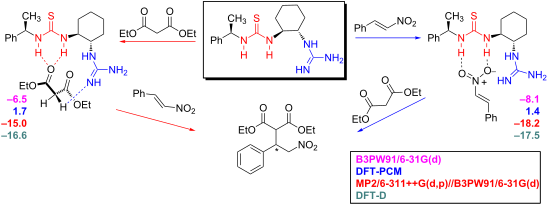
- . Extensive DFT calculations, including solvent effects and dispersion corrections, as well as ab initio calculations provide a plausible description of the reaction mechanism. Keywords: bifunctional organocatalyst; DFT calculations; guanidine-thiourea; Michael addition; organocatalysis; transition states
- archive entries. Supporting Information File 434: Detailed information about the DFT calculations Acknowledgements The authors gratefully acknowledge generous financial support from the Deutsche Forschungsgemeinschaft (SPP 1179 “Organocatalysis”) and the generous amount of computational time from HLRBII



A quantitative approach to nucleophilic organocatalysis
Beilstein J. Org. Chem. 2012, 8, 1458–1478, doi:10.3762/bjoc.8.166
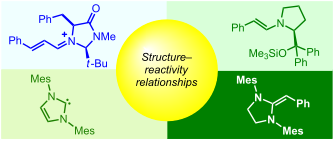
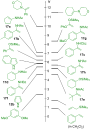
- ; kinetics; NHC activation; organocatalysis; structure reactivity relationships; Review Introduction The most comprehensive nucleophilicity and electrophilicity scales presently available, are based on Equation 1, in which electrophiles are characterized by one solvent-independent parameter E, and
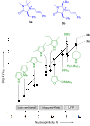
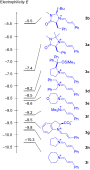
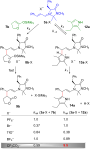
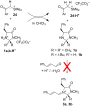
- aliphatic substitutions [21][22]. In this essay, we will illustrate applications of Equation 1 in nucleophilic organocatalysis. Iminium activated reactions A key step of the commonly accepted catalytic cycle for iminium activated reactions (Figure 2) is the attack of a nucleophile 4 on the intermediate
- 1179 Organokatalyse / Priority Program 1179 Organocatalysis 2004–2010 and SFB 749) for financial support.









Organocatalytic asymmetric addition of malonates to unsaturated 1,4-diketones
Beilstein J. Org. Chem. 2012, 8, 1452–1457, doi:10.3762/bjoc.8.165
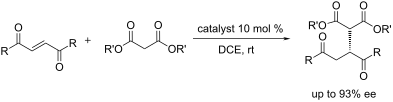
- calculated VCD spectra of the reaction product 3a. Keywords: Michael addition; non-covalent catalysis; organocatalysis; squaramide; thiourea; Introduction The asymmetric 1,4-conjugated addition (Michael reaction) of C-nucleophiles to enones is a powerful tool for obtaining a significant variety of
- enantiomer. From the synthetic point of view, the conjugate addition of the nucleophile is, at the same time, a formal umpolung reaction with respect to the other carbonyl group (Figure 1). Results and Discussion Catalyst screening As a part of our ongoing studies in organocatalysis [16][17][18][19] we
- ), and the EU European Regional Development Fund (3.2.0101.08-0017) for financial support and COST Action CM0905 (ORCA, Organocatalysis).


Synthesis of chiral sulfoximine-based thioureas and their application in asymmetric organocatalysis
Beilstein J. Org. Chem. 2012, 8, 1443–1451, doi:10.3762/bjoc.8.164
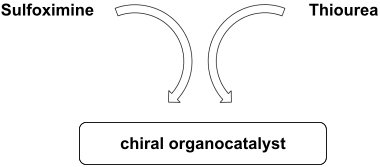
- catalysts in high overall yields without affecting the stereohomogeneity of the sulfur-containing core fragment. Keywords: anhydride opening; catalytic asymmetric Biginelli reaction; organocatalysis; sulfoximines; thioureas; Introduction Since their discovery in the middle of the last century
- hydrogenations and carbon–carbon bond formations [34][35][36]. During the past decade, asymmetric organocatalysis had a tremendous impact on synthetic organic chemistry [37][38][39][40][41]. Yet, this field of research continues to grow, and the quest for new organic molecules which efficiently catalyze
- (-like) catalysts with S-stereogenic sulfonimidoyl substituents are unknown. Herein, we present our first results concerning synthetic approaches towards such molecules and describe preliminary studies of two applications in asymmetric organocatalysis. Results and Discussion Our investigations began with


Cation affinity numbers of Lewis bases
Beilstein J. Org. Chem. 2012, 8, 1406–1442, doi:10.3762/bjoc.8.163
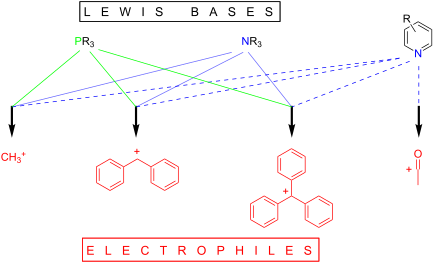
- substrate model for acyl-transfer reactions. Affinities towards these cationic electrophiles are complemented by data for Lewis-base addition to Michael acceptors as prototypical neutral electrophiles. Keywords: ab initio; cation affinity; Lewis basicity; organocatalysis; proton affinity; Introduction
- group of phosphanes are presented in Table 6 in which most of the phosphanes are interesting for organocatalysis. Again, all MCA values are calculated for reaction at the phosphorus atom if not mentioned otherwise. In order to discuss inductive and mesomeric electron-donating effects the tri-para
- /mol. Triarylphosphanes can be of interest for organocatalysis if at least one substituent in ortho-position of a phenyl group enables hydrogen bonds to the substrate as is, for example, the case in phosphanes 260, 287, and 293. These latter three compounds differ only in the position of the


Highly enantioselective access to cannabinoid-type tricyles by organocatalytic Diels–Alder reactions
Beilstein J. Org. Chem. 2012, 8, 1385–1392, doi:10.3762/bjoc.8.160
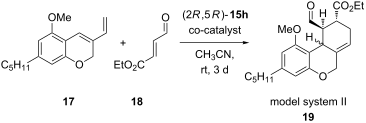
- synthesis. Keywords: cannabinoids; Diels–Alder reaction; natural product synthesis; organocatalysis; Introduction The Diels–Alder reaction is one of the most important processes for carbon–carbon-bond formation in organic chemistry [1][2]. Especially in the synthesis of natural products it is a widely
- fine chemicals, were either transition-metal complexes or enzymes. In the past few years, however, organocatalysis has emerged as an alternative approach for the catalytic production of enantiomerically pure organic compounds [15][16]. These organocatalysts have several important advantages. They are


Organocatalytic C–H activation reactions
Beilstein J. Org. Chem. 2012, 8, 1374–1384, doi:10.3762/bjoc.8.159
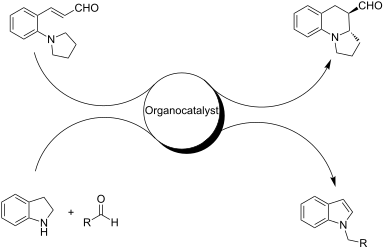
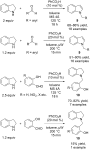
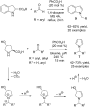
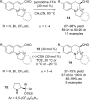
- non-asymmetric and asymmetric C–H activation reactions mediated by organocatalysts are discussed in this review. Keywords: asymmetric; C–H activation; non-asymmetric; organocatalysis; organocatalytic; Introduction C–H activation reactions have recently been found to be a powerful method for the





Organocatalytic asymmetric Michael addition of unprotected 3-substituted oxindoles to 1,4-naphthoquinone
Beilstein J. Org. Chem. 2012, 8, 1360–1365, doi:10.3762/bjoc.8.157
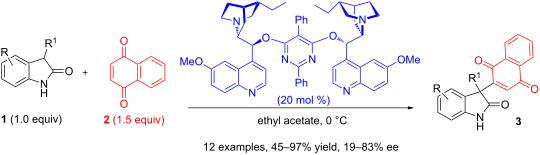
- catalytic synthesis of which was unprecedented. Keywords: 3,3-disubstituted oxindoles; Michael addition; organocatalysis; quaternary stereogenic center; unprotected 3-substituted oxindoles; Introduction The catalytic asymmetric synthesis of 3,3-disubstituted oxindoles has recently received great attention


Organocatalysis
Beilstein J. Org. Chem. 2012, 8, 1358–1359, doi:10.3762/bjoc.8.156
- Benjamin List Max-Planck-Institut für Kohlenforschung, Kaiser-Wilhelm-Platz 1, D-45470 Mülheim an der Ruhr, Germany 10.3762/bjoc.8.156 Keywords: organocatalysis; During the past 12 years or so, hardly any other field has impacted the art and science of chemical synthesis more profoundly than
- organocatalysis. The growth, both in academic research and in industrial use, has been breathtaking. Judging by the development of its impact factor, the Beilstein Journal of Organic Chemistry is currently attempting to achieve the same impact within chemistry publishing. A Beilstein Thematic Series on
- Organocatalysis therefore appeared to be quite logical. A brilliant opportunity arose in the context of a priority program sponsored by the Deutsche Forschungsgemeinschaft (DFG), which has in the meanwhile supported the organocatalysis research of over thirty groups in Germany between 2004 and 2010. The series in
Asymmetric one-pot sequential Friedel–Crafts-type alkylation and α-oxyamination catalyzed by a peptide and an enzyme
Beilstein J. Org. Chem. 2012, 8, 1333–1337, doi:10.3762/bjoc.8.152
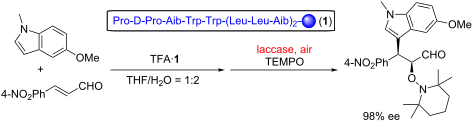
- -functionalized indole or pyrrole derivatives in a highly enantioselective manner. Keywords: Friedel–Crafts-type alkylation; laccase; one-pot reaction; organocatalysis; α-oxyamination; resin-supported peptide catalyst; Findings Indole derivatives represent a class of biologically active compounds [1][2][3], and


Asymmetric organocatalytic decarboxylative Mannich reaction using β-keto acids: A new protocol for the synthesis of chiral β-amino ketones
Beilstein J. Org. Chem. 2012, 8, 1279–1283, doi:10.3762/bjoc.8.144
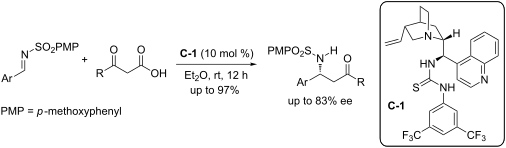
- , catalyzed by cinchonine-derived bifunctional thiourea catalyst has been described. The desired β-amino ketones were obtained in excellent yields and with moderate to good enantioselectivities. Keywords: decarboxylative addition; β-keto acid; Mannich reaction; organocatalysis; Introduction Chiral β-amino


Organocatalytic asymmetric allylic amination of Morita–Baylis–Hillman carbonates of isatins
Beilstein J. Org. Chem. 2012, 8, 1241–1245, doi:10.3762/bjoc.8.139

- yields (up to 97%). Keywords: allylic amination; asymmetric organocatalysis; Morita–Baylis–Hillman carbonates; 2-oxindoles; quaternary chiral center; Introduction Chiral 3-amino-2-oxindoles are versatile and useful units for the preparation of natural products and drug candidates, such as the


Recyclable fluorous cinchona alkaloid ester as a chiral promoter for asymmetric fluorination of β-ketoesters
Beilstein J. Org. Chem. 2012, 8, 1233–1240, doi:10.3762/bjoc.8.138
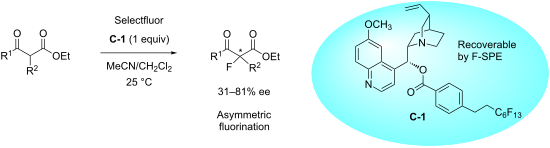
- the reaction mixture by simple fluorous solid-phase extraction (F-SPE) and used for the next round of reaction without further purification. Keywords: asymmetric fluorination; β-ketoester; fluorous cinchona ester; organocatalysis; recyclable chiral promoter; Introduction Fluorinated organic


Combined bead polymerization and Cinchona organocatalyst immobilization by thiol–ene addition
Beilstein J. Org. Chem. 2012, 8, 1126–1133, doi:10.3762/bjoc.8.125
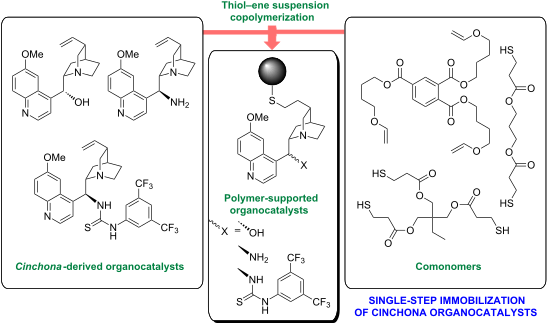
- water and copolymerized on heating by thiol–ene additions. The resultant spherical and gel-type polymer beads have been evaluated as organocatalysts in catalytic asymmetric transformations. Keywords: asymmetric catalysis; Cinchona derivatives; organocatalysis; polymerization; thiol–ene reaction
- organocatalysts 11. Polymer-supported catalysts 11a,b were tried out in the asymmetric preparation of the anticoagulant warfarin from benzylideneacetone and 4-hydroxycoumarin, a transformation that we have investigated in our group as part of developmental work in primary amine organocatalysis on a previous


Asymmetric total synthesis of smyrindiol employing an organocatalytic aldol key step
Beilstein J. Org. Chem. 2012, 8, 1112–1117, doi:10.3762/bjoc.8.123
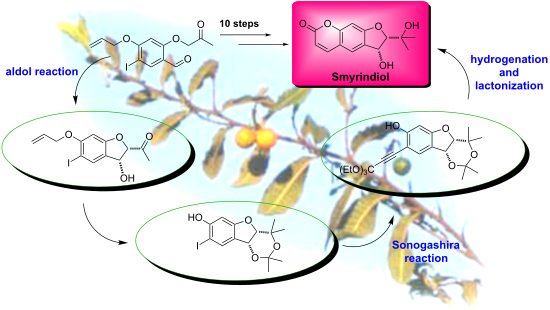
- reaction; asymmetric synthesis; organocatalysis; proline; smyrindiol; Introduction Furocoumarins are a group of compounds that are structurally derived from psoralen or angelicin (Figure 1) [1]. Naturally occurring furocoumarins are mainly found in plants of the Apiaceae and Rutaceae families [2] and are
- chromatograms. Acknowledgements This work was supported by the Deutsche Forschungsgemeinschaft (SPP 1179 “Organocatalysis”). We thank the former Degussa AG and the BASF SE for the donation of chemicals.


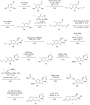
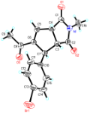
Chiral multifunctional thiourea-phosphine catalyzed asymmetric [3 + 2] annulation of Morita–Baylis–Hillman carbonates with maleimides
Beilstein J. Org. Chem. 2012, 8, 1098–1104, doi:10.3762/bjoc.8.121
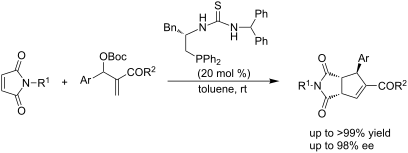
- previous literature. Keywords: asymmetric [3 + 2] annulation; maleimides; Morita–Baylis–Hillman carbonates; multifunctional thiourea-phosphine; organocatalysis; Introduction Highly functionalized cyclopentene derivatives are important subunits in a variety of biologically active molecules and have




Enantioselective Michael addition of 2-hydroxy-1,4-naphthoquinones to nitroalkenes catalyzed by binaphthyl-derived organocatalysts
Beilstein J. Org. Chem. 2012, 8, 699–704, doi:10.3762/bjoc.8.78
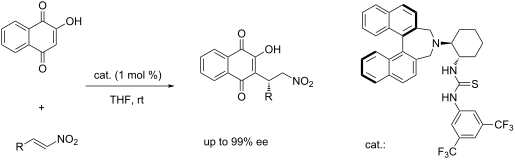
- organocatalysts is described. This reaction afforded the chiral functionalized naphthoquinones in high yields (81–95%) and excellent enantioselectivities (91–98% ee) under low catalyst loading (1 mol %). Keywords: asymmetric catalysis; Michael addition; 1,4-naphthoquinones; nitroalkenes; organocatalysis


Facile isomerization of silyl enol ethers catalyzed by triflic imide and its application to one-pot isomerization–(2 + 2) cycloaddition
Beilstein J. Org. Chem. 2012, 8, 658–661, doi:10.3762/bjoc.8.73

- sequence, Tf2NH catalyzes both of the reactions. Keywords: isomerization; one-pot reaction; organocatalysis; silyl enol ethers; triflic imide; Introduction Silyl enol ethers, which are isolable equivalents of metal enolates, are useful and important intermediates in synthetic chemistry [1][2][3]. They


Stereoselective, nitro-Mannich/lactamisation cascades for the direct synthesis of heavily decorated 5-nitropiperidin-2-ones and related heterocycles
Beilstein J. Org. Chem. 2012, 8, 567–578, doi:10.3762/bjoc.8.64
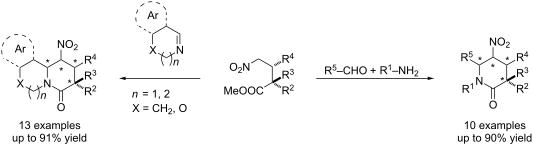
- substituted piperidines. Keywords: cascade; imine; Michael addition; nitro-Mannich; organocatalysis; piperidine alkaloids; Introduction The piperidine ring is a common motif found in many biologically active natural products and drugs. The structures of these compounds range from the architecturally complex


N-Heterocyclic carbene/Brønsted acid cooperative catalysis as a powerful tool in organic synthesis
Beilstein J. Org. Chem. 2012, 8, 398–402, doi:10.3762/bjoc.8.43
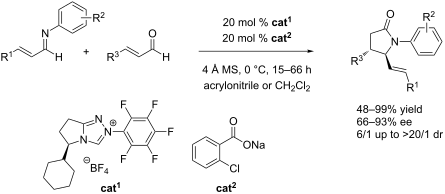
- toward the synthesis of different heterocycles. Nonetheless, enantioselective control of homoenolates remained an important issue to be addressed, and this problem was tackled very recently by the group of T. Rovis [23]. Their important contribution to the field of organocatalysis originated from the


Binding of group 15 and group 16 oxides by a concave host containing an isophthalamide unit
Beilstein J. Org. Chem. 2012, 8, 11–17, doi:10.3762/bjoc.8.2
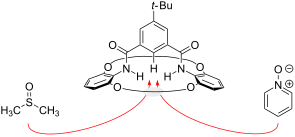
- to the steric bulk of the guests. These initial experiments now open the way for the synthesis of new modified concave hosts based on isophthalamide units with improved binding selectivity and/or for organocatalysis [21]. Concave host 1 can also be applied as a carrier in transport experiments. When


Continuous-flow enantioselective α-aminoxylation of aldehydes catalyzed by a polystyrene-immobilized hydroxyproline
Beilstein J. Org. Chem. 2011, 7, 1486–1493, doi:10.3762/bjoc.7.172
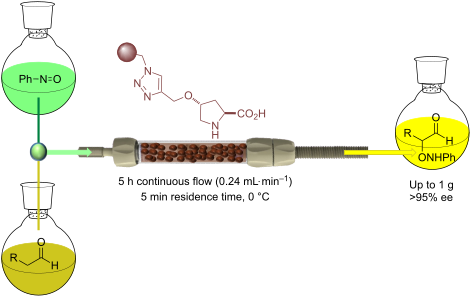
- ]. With this methodology an α-aminoxyketone was obtained that could be readily transformed into the corresponding α-hydroxyketone in the presence of catalytic amounts of CuSO4·5H2O in methanol. This strategy was soon extrapolated to the field of organocatalysis, leading in 2003 [13] to the first
- organocatalyzed α-aminoxylation of aldehydes and ketones experienced in the last few years has transformed it into a powerful, reliable and environmentally friendly method for the synthesis of α-hydroxyaldehydes and ketones [32][33][34]. Despite its extreme simplicity and very high enantiocontrol, organocatalysis


Multicomponent synthesis of artificial nucleases and their RNase and DNase activity
Beilstein J. Org. Chem. 2011, 7, 1135–1140, doi:10.3762/bjoc.7.131

- activity of the new compounds towards single-stranded RNA and double-stranded circular DNA. Keywords: DNA; isocyanide; multicomponent reaction; organocatalysis; peptidomimetic; RNA; Introduction RNA cleavage can serve as a molecular tool for biological research [1], as well as for development of


Effects of anion complexation on the photoreactivity of bisureido- and bisthioureido-substituted dibenzobarrelene derivatives
Beilstein J. Org. Chem. 2011, 7, 278–289, doi:10.3762/bjoc.7.37
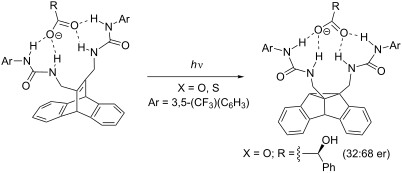
- in organocatalysis has been demonstrated in several examples [40][41][42][43][44]. Herein, we report the synthesis of ureido- and thioureido-substituted dibenzobarrelene derivatives 1e–i, along with first studies of their photochemical properties in the absence and in the presence of anions. Results
- systematically to influence the photochemical properties of a substrate, although such supramolecular receptor–anion interactions have been used in the organocatalysis of ground-state reactions [40][41][42][43][44]. It should be noted that the supramolecular interactions between anions and ureido- or thioureido




Shelf-stable electrophilic trifluoromethylating reagents: A brief historical perspective
Beilstein J. Org. Chem. 2010, 6, No. 65, doi:10.3762/bjoc.6.65
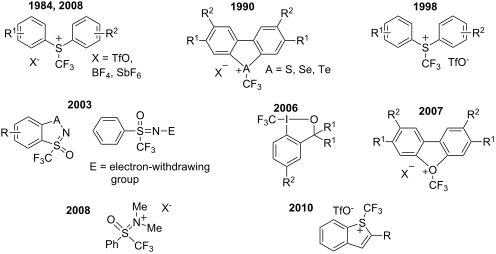
- highly enantioselective electrophilic trifluoromethylation of aldehydes has only very recently been reported by MacMillan by using a combination of organocatalysis with Togni’s reagent 37 [39]. This report appeared only just after a photolytic approach, also reported by MacMillan, that employs CF3





