


Search results
Search for "ring-closure" in Full Text gives 303 result(s) in Beilstein Journal of Organic Chemistry. Showing first 200.
Biosynthesis of α-pyrones
Beilstein J. Org. Chem. 2016, 12, 571–588, doi:10.3762/bjoc.12.56
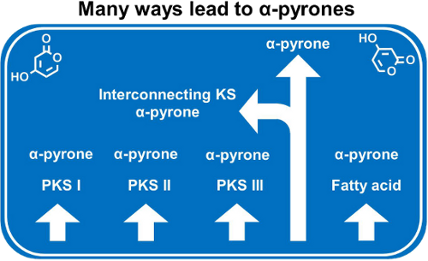
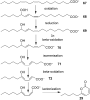
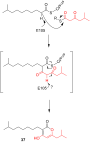
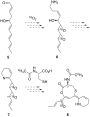
- terminal module, which results in a cis-configured double bond. Through the formation of the cis double bond the sterical arrangement of the nascent chain favors the lactone ring closure which results in the α-pyrone moiety. Hence, the polyketide is released from the assembly line, whereby the thioesterase
- (TE) domain catalyzes the ring-closure and therewith also the off-loading from the PKSI system [79]. A comparable mechanism, in which a TE is involved in off-loading the nascent chain from the PKS assembly line by lactonization, was described for other natural products, e.g., the isochromanone ring
- sterical requirements within the catalytic cavity of CorB and MxnB do not favor the ring closure, thus the second step might take place in solution [90]. It has to be mentioned that the results between CorB and MxnB differ slightly. The in vitro results obtained for MxnB imply that the western chain gets






(Thio)urea-mediated synthesis of functionalized six-membered rings with multiple chiral centers
Beilstein J. Org. Chem. 2016, 12, 462–495, doi:10.3762/bjoc.12.48
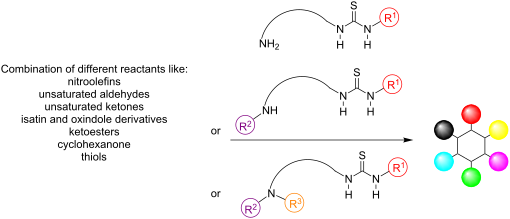
- Henry ring closure. In 2015, Chen and co-workers envisaged a three-component organo-cascade quadruple reaction, that yielded highly functionalized polycarbocycles [85]. The authors utilized multiple aromatic aldehydes 205 and some 4-substituted cyclohexanones 206, affording the desired products 207 in


Tandem processes promoted by a hydrogen shift in 6-arylfulvenes bearing acetalic units at ortho position: a combined experimental and computational study
Beilstein J. Org. Chem. 2016, 12, 260–270, doi:10.3762/bjoc.12.28
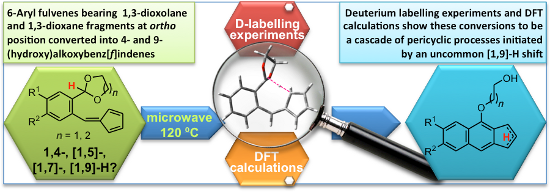
- 10a and 11a can lead respectively to the final benzindenes 5a and 6a. Thus, intermediate 11a undergoes a disrotatory 6π-electrocyclic ring closure [49] via the transition structure TS6 to give the tricyclic species 13a. By an analogous electrocyclic ring closure through TS7, compound 10a is converted


Synthesis of Xenia diterpenoids and related metabolites isolated from marine organisms
Beilstein J. Org. Chem. 2015, 11, 2521–2539, doi:10.3762/bjoc.11.273
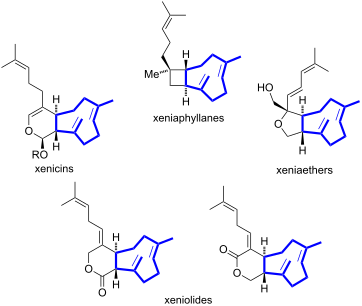
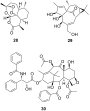
- . Addition of lithium acetylide 41 to the keto group led to acetal 42. Hydrogenation of the triple bond under basic conditions resulted in cleavage of the acetal and ring closure to the corresponding lactol which was oxidized with chromic acid to furnish γ-lactone 43. An ensuing Dieckmann condensation [32
- allenic sulfone [44] which, upon conjugate addition of diethyl amine followed by hydrolysis afforded a β-ketosulfone. For the following ring closure, the primary alcohol was desilylated and converted to the corresponding allylic carbonate 71. The cyclononene structure 72 was then assembled via a palladium
- -membered carbocycle was realized via a B-alkyl Suzuki–Miyaura cross-coupling reaction. Optimization studies of this key ring closure with different protecting groups on the lactol functionality revealed methyl acetal 135 as the most efficient substrate for this transformation. The challenging key step was







Recent highlights in biosynthesis research using stable isotopes
Beilstein J. Org. Chem. 2015, 11, 2493–2508, doi:10.3762/bjoc.11.271
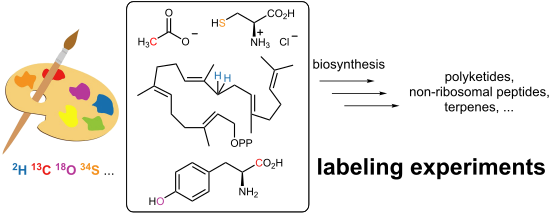
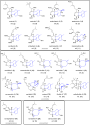
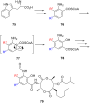
- function and subsequent ring closure would then lead to the proposed antibiotic 7. The other oxygen atom is lost during biosynthesis und is therefore undetectable. This example shows how well-designed labeling experiments can support biosynthetic investigations especially on highly derivatized and altered
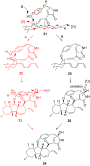
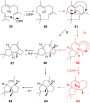
- (42) and B (43) provides an interesting example (Scheme 7) [61]. The proposed mechanism starts with isomerization of farnesyl diphoshate (FPP, 35) to nerolidyl diphosphate (36) followed by 1,10-ring closure to the helminthogermacradienyl cation (37). A 1,3-hydride shift to the allylic cation 38 and
- are in line with the proposed cyclization mechanism starting from geranylfarnesyl diphosphate (GFPP, 53), which undergoes two cyclizations yielding cation 54. A 1,5-hydride shift at C-12 to C-19 leads to the allylic cation 55. Additional ring closure fuses the tricyclic system 56, which rearranges to









Efficient synthetic protocols for the preparation of common N-heterocyclic carbene precursors
Beilstein J. Org. Chem. 2015, 11, 2318–2325, doi:10.3762/bjoc.11.252
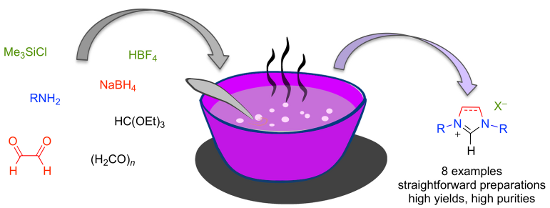
- borohydride in THF, followed by an acidic work-up with aqueous hydrochloric acid to quench the excess of hydride and to precipitate N,N'-dimesitylethylenediammonium dichloride as a stable white solid. A third step afforded the final heterocyclic product upon ring-closure with triethyl orthoformate in the


Mechanism, kinetics and selectivity of selenocyclization of 5-alkenylhydantoins: an experimental and computational study
Beilstein J. Org. Chem. 2015, 11, 1865–1875, doi:10.3762/bjoc.11.200

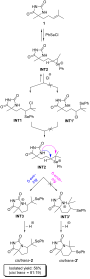
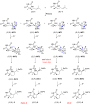
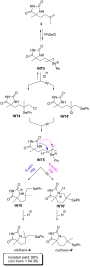
- -membered ((S,R)-INT3 and (S,S)-INT3) or six-membered ((S,R)-INT3’ and (S,S)-INT3’) intermediate bicyclic imidazolinium cations. Energy profiles for both 5-exo and 6-endo pathways are presented in Figure 3. The ring closure reactions are carried out via four transition states: two for the formation of the
- and susceptible to the nucleophilic attack of N(1) atom. Subsequent ring closure is the rate-determing step and also the step in which the cyclization mode and distribution of the products is determined (Figure 3). This process was followed in 1H NMR experiments by the increase of the signal
- intermediate imidazolinium cations. The last step of the reaction is deprotonation followed by the formation of the fused bicyclic hydantoins. DFT calculations support a plausible reaction pathway where the ring closure is the rate-determining step. The preferred 5-exo cyclization is confirmed. Elucidation of





Recent applications of ring-rearrangement metathesis in organic synthesis
Beilstein J. Org. Chem. 2015, 11, 1833–1864, doi:10.3762/bjoc.11.199

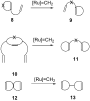
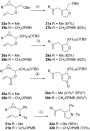
- : a sequential aldol condensation of dihydrocarvone with norbornene 2-carboxaldehyde followed by a ROM–RCM of the resulting aldol product. The norbornene derivative 164 was subjected to a RRM using the catalyst 1 to produce the ROM product 165 exclusively. The ring-closure of the resulting ROM product










SmI2-mediated dimerization of indolylbutenones and synthesis of the myxobacterial natural product indiacen B
Beilstein J. Org. Chem. 2015, 11, 1700–1706, doi:10.3762/bjoc.11.184

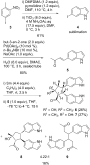
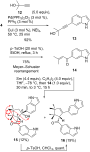
- ][28]. Thus, the indole NH group (pKa about 21 in DMSO) should be able to serve as a stoichiometric proton source that, after β,β'-coupling, would convert one of the Sm(III) enolates to the ketone. Attack of the remaining Sm(III) enolate would lead to Dieckmann-type ring closure, followed by



Pyridinoacridine alkaloids of marine origin: NMR and MS spectral data, synthesis, biosynthesis and biological activity
Beilstein J. Org. Chem. 2015, 11, 1667–1699, doi:10.3762/bjoc.11.183
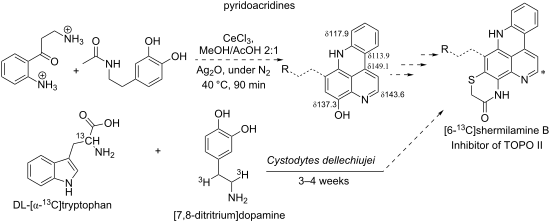
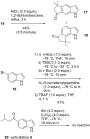
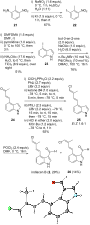
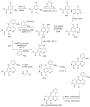
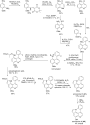
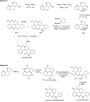
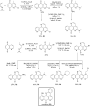
- converted into an amide in the presence of methylaminoacetaldehyde dimethylacetal. A ring closure occurs by treating the amide with a strong acid. The reaction gave a mixture of a quinone and a dimethoxy intermediate that were first reduced to amine products. Furthermore, the dimethoxy intermediate was









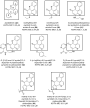


A facile synthetic route to benzimidazolium salts bearing bulky aromatic N-substituents
Beilstein J. Org. Chem. 2015, 11, 1656–1666, doi:10.3762/bjoc.11.182
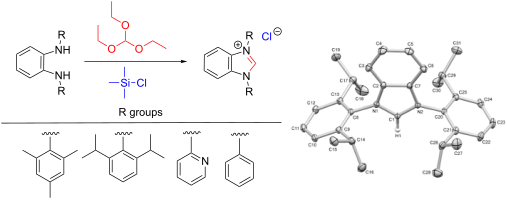
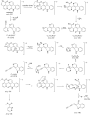
- -step synthesis avoiding chromatographic work-up. In the key step triethyl orthoformate is reacted with the corresponding N1,N2-diarylbenzene-1,2-diamines and then further transformed in situ, by alkoxy abstraction using trimethylsilyl chloride (TMSCl), and concomitant imidazole ring closure. Keywords
- of nucleophilic aromatic substitutions (SNAr) of benzene-1,2-diamine at 2-chloropyridine (Scheme 1). Once all the different N1,N2-diarylbenzene-1,2-diamines were prepared a method had to be developed to build up the imidazolium salts by ring closure. 3-Cl and 4-Cl could principally be obtained from
- stability of the [BF4]− anion could lead to complications generating side-products [50][51][52]. The preparations of both 3-Cl and 4-Cl started along the given lines with the syntheses of the respective aryl-substituted diamines, which had to undergo ring closure in the presence of a C1 component. For 3-Cl


Preparative semiconductor photoredox catalysis: An emerging theme in organic synthesis
Beilstein J. Org. Chem. 2015, 11, 1570–1582, doi:10.3762/bjoc.11.173

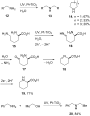
- in an aqueous dispersion of a Pt-TiO2 catalyst, an interesting self-reaction occurred. Ohtani and co-workers isolated modest yields of secondary amines 13 that were formed via C–N coupling (Scheme 4, top) [48]. Terminal diamines reacted by ring closure resulting in cyclic amines 14; pyrrolidine was







Towards inhibitors of glycosyltransferases: A novel approach to the synthesis of 3-acetamido-3-deoxy-D-psicofuranose derivatives
Beilstein J. Org. Chem. 2015, 11, 1547–1552, doi:10.3762/bjoc.11.170

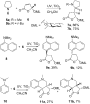
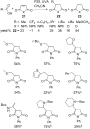
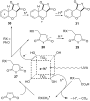
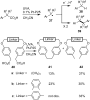
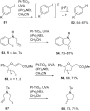
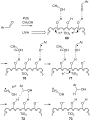
- -acetamido-3-deoxy-α-D-psicofuranose 11 resulted in ring closure of the acetamido group, affording 2-methyloxazoline derivatives 13 and 14. Further research into an alternative strategy for the synthesis of 3-azido-3-deoxy-D-psicofuranose derivatives will be performed so as to avoid the formation of the 2


Cross-metathesis reaction of α- and β-vinyl C-glycosides with alkenes
Beilstein J. Org. Chem. 2015, 11, 1392–1397, doi:10.3762/bjoc.11.150

- vinyl β-C-deoxyribofuranoside was based on transformation of 6-O-tert-butyldiphenylsilyl-3,5-dideoxy-5-iodo-L-lyxo-hexofuranose [14]. A reaction sequence relying on Horner–Wadsworth–Emmons/ring closure–halogenation/Ramberg–Bäcklund/Wittig reaction gave rise to the equimolar mixture of styryl α- and β-C


Surprisingly facile CO2 insertion into cobalt alkoxide bonds: A theoretical investigation
Beilstein J. Org. Chem. 2015, 11, 1340–1351, doi:10.3762/bjoc.11.144
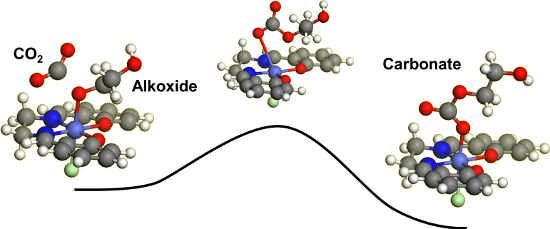
- CO2, catalysed by LiBr [41]. The preferred pathways principally involve ring opening of the epoxide, followed by CO2 insertion and ring closure of the cyclic carbonate. Interestingly, in the Re(I)-catalysed reaction (b), an alternative reaction pathway was followed, whereby the first step is CO2


Selected synthetic strategies to cyclophanes
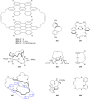
Beilstein J. Org. Chem. 2015, 11, 1274–1331, doi:10.3762/bjoc.11.142






Novel carbocationic rearrangements of 1-styrylpropargyl alcohols
Beilstein J. Org. Chem. 2015, 11, 1017–1022, doi:10.3762/bjoc.11.114
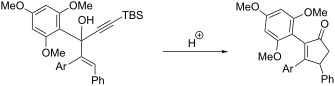
- formation of the stabilized carbocation 11 that may evolve through two pathways. This intermediate may either undergo a ring closure due to the nucleophilic character of the silylated alkyne (pathway A) or react with an oxygenated nucleophile, such as the perrhenate anion, to generate the transient


Novel stereocontrolled syntheses of tashiromine and epitashiromine
Beilstein J. Org. Chem. 2015, 11, 596–603, doi:10.3762/bjoc.11.66

- stereocontrolled approach has been developed for the syntheses of tashiromine and epitashiromine alkaloids from cyclooctene β-amino acids. The synthetic concept is based on the azetidinone opening of a bicyclic β-lactam, followed by oxidative ring opening through ring C–C double bond and reductive ring-closure
- reactions of the cis- or trans-cyclooctene β-amino acids. Keywords: alkaloids; amino acids; ring closure; ring opening; stereocontrolled synthesis; Introduction Indolizidine alkaloids are an important class of naturally occurring compounds which have received considerable attention as a result of their
- the indolizidine framework; access to tashiromine in racemic form can be achieved through the alkylation of succinimide, followed by ring closure via acyliminium intermediates [23][24], the reduction of cyclized pyridinium salts [25], iminium cascade cyclization [26], alkyne-mediated hydroformylation


Metal-free one-pot synthesis of 2-substituted and 2,3-disubstituted morpholines from aziridines
Beilstein J. Org. Chem. 2015, 11, 524–529, doi:10.3762/bjoc.11.59

- haloalkoxy amine intermediate 2a after abstraction of one hydrogen atom from alcohol. Finally, an intramolecular ring closure affords the morpholine product 3a in the presence of KOH [21]. Conclusion In conclusion, we have developed a simple and practicable metal-free protocol for the synthesis of 2


The preparation of new functionalized [2.2]paracyclophane derivatives with N-containing functional groups
Beilstein J. Org. Chem. 2015, 11, 437–445, doi:10.3762/bjoc.11.50
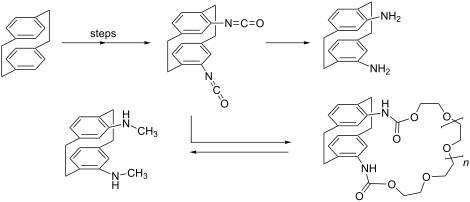
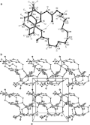
- bridging and the strain of the desired 17 would be too high for a successful ring closure. Reacting 16 with tetraethylene glycol (TEG) under high dilution conditions (toluene, reflux, 7 d) provides the crownophane 18 in 68% yield (Scheme 2). Likewise, replacement of TEG by pentaethylene glycol (PEG



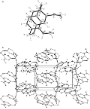


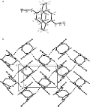
Bis(vinylenedithio)tetrathiafulvalene analogues of BEDT-TTF
Beilstein J. Org. Chem. 2015, 11, 403–415, doi:10.3762/bjoc.11.46
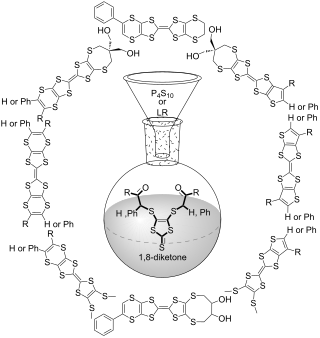
- molecules, obtained from 1,8-diketone ring closure reactions, and coupling reactions, published by our group. Review BVDT-TTF analogues from 1,8-diketones Bis(vinylenedithio)tetrathiafulvalene (BVDT-TTF) 4 (R = Ph, 4-CH3OC6H4, 4-BrC6H4, 4-CH3C6H4, 4-O2NC6H4, 2-thienyl) is a fully unsaturated analogue of
- temperature for 3 h in 90% yield (Scheme 6) [40]. The ring closure reaction of 47 was performed initially using LR, which produced only the thiophene 50, similar to the result obtained by another research group [28]. Next, the reaction was conducted with P4S10, which gave benzylphenyldithiole 49 and the
- reported in 2013 [58]. Their syntheses began with our standard synthesis of a 1,8-diketone 74 having a thiophene in place of a benzenoid aromatic group (Scheme 11). Reaction of the zinc-complex 59 with four mol equivalents of α-bromoketone 72 gave the diketone 74 in 80% yield, subsequent ring closure of


Synthesis of the furo[2,3-b]chromene ring system of hyperaspindols A and B
Beilstein J. Org. Chem. 2015, 11, 265–270, doi:10.3762/bjoc.11.29
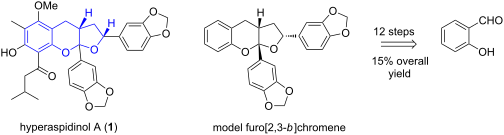
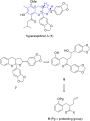
- reversibility of the ring closure and preferred formation of isomer 7a. Conclusion In conclusion, the first synthesis of the furo[2,3-b]chromene ring system found in hyperaspidinols A (1) and B (2) has been achieved. Analysis of the NMR of synthetic furo[2,3-b]chromenes 7a and 7b and comparison to the data of 1




A facile synthesis of functionalized 7,8-diaza[5]helicenes through an oxidative ring-closure of 1,1’-binaphthalene-2,2’-diamines (BINAMs)
Beilstein J. Org. Chem. 2015, 11, 9–15, doi:10.3762/bjoc.11.2
- ) reductive ring-closure of 2,2’-dinitro-1,1’-binaphthalenes using various reductants such as Na2S and LiAlH4 [20][21], and iii) the Scholl-type cyclization of 2,2’-azonaphthalenes using a eutectic melt of AlCl3/NaCl [22]. However, these methods require harsh reaction conditions such as the use of strong
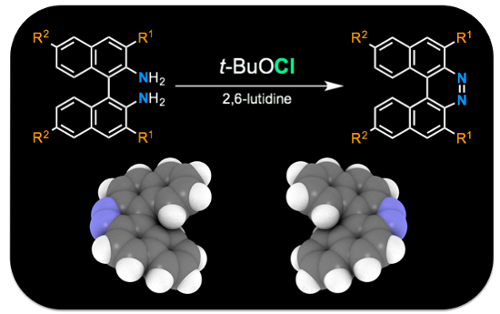
- diazahelicenes though. Another simple synthetic route to 7,8-diaza[5]helicenes would involve an oxidative ring-closure of 1,1’-binaphthalene-2,2’-diamines (BINAMs) (Scheme 1, iv). However, interestingly enough, this route remains to be explored. Corbett and Holt reported that the oxidation of BINAM with NaBO3
- . Herein we present a facile, straightforward, and moderately functional-group-tolerant synthesis of 7,8-diaza[5]helicenes (benzo[f]naphtho[2,1-c]cinnolines) bearing functional substituents on the helical π-conjugated backbone through an oxidative ring-closure of BINAM derivatives (Scheme 2, the lower


Enantioselective synthesis of polyhydroxyindolizidinone and quinolizidinone derivatives from a common precursor
Beilstein J. Org. Chem. 2014, 10, 3104–3110, doi:10.3762/bjoc.10.327

- unsaturated amide 9 in readiness for a subsequent RCM reaction. Ring closure of 9 proceeded better in the presence of Grubbs’ second generation catalyst [34] to provide the indolizidine derivative 10 in good yield. Similarly, treatment of amine 8 with vinylacetic acid in the presence of EDC/HOBt under
- standard conditions proceeded smoothly to provide the N-tethered diene 11. Ring-closure of compound 11 proved to be more facile, as expected, and the quinolizidine derivative 12 was obtained in higher yield. The four step sequences 6→10 and 6→12 proceeded in overall yields of 56% and 67%, respectively


A one-pot multistep cyclization yielding thiadiazoloimidazole derivatives
Beilstein J. Org. Chem. 2014, 10, 2989–2996, doi:10.3762/bjoc.10.317
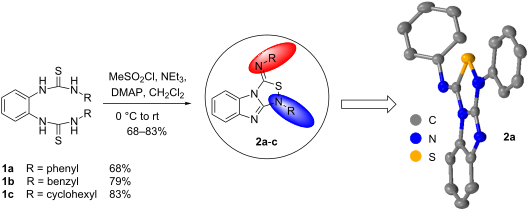
- intramolecular nucleophilic attack at its central, highly electrophilic carbon by the adjacent -NH- of the yet unreacted thiourea unit to produce 4 in a first cyclization step (cyclization-I). The second ring closure to generate the 1,2,4-thiadiazole ring may be assisted by one equivalent of methansulfonyl
- energies of the ring closure steps according to our mechanistic hypothesis were computed and found to comply with a facile reaction at room temperature. Experimental General methods. All reagents were utilized as received from commercial suppliers. NMR spectra, infrared spectra, elemental analysis and





