Search results
Search for "silver" in Full Text gives 325 result(s) in Beilstein Journal of Organic Chemistry. Showing first 200.
Stereo- and regioselectivity of the hetero-Diels–Alder reaction of nitroso derivatives with conjugated dienes
Beilstein J. Org. Chem. 2016, 12, 1949–1980, doi:10.3762/bjoc.12.184
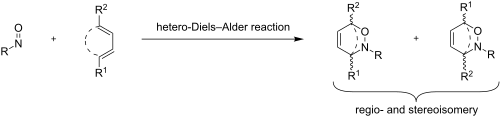
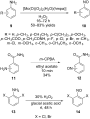
- the corresponding hydroxamic acids using, for example, periodate [14], Dess–Martin periodinane [64], Swern oxidation conditions [65], lead and silver oxide [66], and transition-metal oxidation with peroxide as the oxidant [67]. In a recent work by Tusun dirhodium caprolactamate [68], and the aerobic






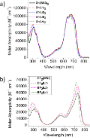
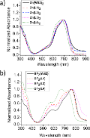
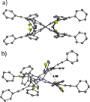
Synthesis and characterization of fluorinated azadipyrromethene complexes as acceptors for organic photovoltaics
Beilstein J. Org. Chem. 2016, 12, 1925–1938, doi:10.3762/bjoc.12.182
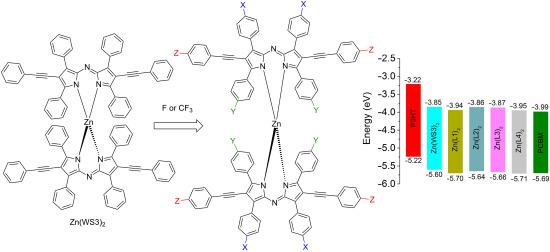
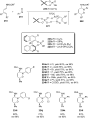
- 40 mg/mL, 1:0.8 donor-to-acceptor ratio, were spun coat at 800 rpm for 40 s and 2000 rpm for 2 s and annealed at 120 °C for 15 min. Molybdenum oxide (10 nm) and silver (80 nm) were thermally evaporated in sequence under a vacuum pressure of ≈3 × 10⁻⁶ Torr using an Angstrom Engineering Evovac thermal




Practical synthetic strategies towards lipophilic 6-iodotetrahydroquinolines and -dihydroquinolines
Beilstein J. Org. Chem. 2016, 12, 1851–1862, doi:10.3762/bjoc.12.174

- in much lower yield and only negligible amounts (1–2%) of the iPr adduct were isolated. Alkylation using silver(I) oxide was also possible, but with similarly low yields. The ortho-methyl group had originally been incorporated as protection to block the ortho-amino centre against oxidation [14], and
- detector. Apodization = Happ General. Probe: Prob A DiComp (Diamond) connected via KAgX 9.5 mm × 2 m Fiber (Silver Halide); Sampling 2000–650 at 8 cm−1 resolution; Scan option: auto select, gain 1X. X-ray crystallography Single-crystal diffraction experiments were conducted on a Bruker APEX-II CCD


On the cause of low thermal stability of ethyl halodiazoacetates
Beilstein J. Org. Chem. 2016, 12, 1590–1597, doi:10.3762/bjoc.12.155

- highly solvent dependent (Table 1, entries 2, 8–11). One obvious reason for the lower stability in CDCl3 could be the presence of trace amounts of acid in the used CDCl3. However, newly purchased CDCl3 that was stored in the fridge over silver foil and 4 Å molecular sieves in order to remove any trace of


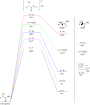


Methylpalladium complexes with pyrimidine-functionalized N-heterocyclic carbene ligands
Beilstein J. Org. Chem. 2016, 12, 1557–1565, doi:10.3762/bjoc.12.150
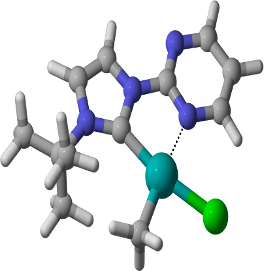
- = Cl, CF3COO, CH3) has been prepared by transmetalation reactions from the corresponding silver complexes and chloro(methyl)(cyclooctadiene)palladium(II). The dimethyl(1-(2-pyrimidyl)-3-(2,6-diisopropylphenyl)imidazolin-2-ylidene)palladium(II) complex was synthesized via the free carbene route. All
- reported the synthesis of the imidazolium salts 1–4 and their corresponding silver complexes 5–8. The reaction with dichloro(cyclooctadiene)-palladium(II) [(COD)PdIICl2] allowed for the isolation and characterization of the [((pym)^(NHC-R))PdIICl2]-complexes [34]. For the synthesis of the corresponding
- silver complexes 5–8 by transmetalation with chloro(methyl)(cyclooctadiene)palladium(II) [(COD)PdII(CH3)Cl] either in dichloromethane (A) or acetonitrile (B, Scheme 1). Although two isomers could be formed we only observed the isomer B, where the methyl group is located cis to the carbene carbon atom


Development of chiral metal amides as highly reactive catalysts for asymmetric [3 + 2] cycloadditions
Beilstein J. Org. Chem. 2016, 12, 1447–1452, doi:10.3762/bjoc.12.140

- developed asymmetric [3 + 2] cycloadditions [4][5][6][7][8] and asymmetric Mannich-type reactions [9] by using chiral silver or copper amides as catalysts. In these reactions, it has been revealed that the metal amides have higher activity than typical silver or copper acid/base catalysts, and that less


Multicomponent reactions: A simple and efficient route to heterocyclic phosphonates
Beilstein J. Org. Chem. 2016, 12, 1269–1301, doi:10.3762/bjoc.12.121
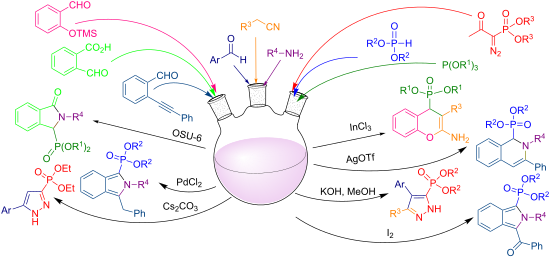
- phosphorylated quinazoline 203 through reductive elimination. A silver-catalyzed three-component reaction of α-isocyanophosphonates 206, ketones 205 and amines 204 under microwave irradiation to afford (2-imidazolin-4-yl)phosphonates 210 has recently been reported (Scheme 43) [81]. The yields of the products
- under optimized conditions were 53–89%. This process involved a Mannich-type addition of a silver-activated α-isocyanophosphonate anion 208 to an iminium salt 207, resulting from reaction of amine 204 and ketone 205, to give intermediate 209 which cyclizes to afford (2-imidazolin-4-yl)phosphonates 210
- -component reaction of acylphosphonates, isocyanides and dialkyl acetylenedicarboxylate to afford 2-phosphonofuran derivatives. Synthesis of (4-imino-3,4-dihydroquinazolin-2-yl)phosphonates via an isocyanide-based three-component reaction. Silver-catalyzed three-component synthesis of (2-imidazolin-4-yl


Efficient syntheses of climate relevant isoprene nitrates and (1R,5S)-(−)-myrtenol nitrate
Beilstein J. Org. Chem. 2016, 12, 1081–1095, doi:10.3762/bjoc.12.103

- 7TJ, UK 10.3762/bjoc.12.103 Abstract Here we report the chemoselective synthesis of several important, climate relevant isoprene nitrates using silver nitrate to mediate a ’halide for nitrate’ substitution. Employing readily available starting materials, reagents and Horner–Wadsworth–Emmons chemistry
- the C=C derived O-nitrates focuses on a report by Scheinbaum and Dines who established that alkenes in the presence of acetonitrile and 22 undergo a Ritter reaction affording vicinal nitro acetamido species [29]. Silver nitrate reacts with alkyl, benzyl or acyl halides affording the corresponding
- alkyl [30], benzyl [31][32] or acyl nitrates [33]. By way of example and relevant to the work reported here Ogawa et al. [34] transformed bromoacetone to 2-oxopropyl nitrate (component of climate mediated IPN decomposition [35]) using silver nitrate in acetonitrile. Initiating the synthesis of ‘test


Cationic Pd(II)-catalyzed C–H activation/cross-coupling reactions at room temperature: synthetic and mechanistic studies
Beilstein J. Org. Chem. 2016, 12, 1040–1064, doi:10.3762/bjoc.12.99
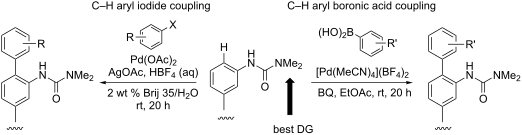
- complexes are commercially available, they may also be generated in situ via a variety of routes (Scheme 2), including: (a) reaction of a palladium complex with a non-coordinating anion source, usually an acid or metal salt; (b) reaction of Pd(II) halide complexes and silver salts [143][144][145]; (c
- ”), there was a noticeable drop in the extent of conversion. In addition, lower loadings of HBF4, silver salt, or the palladium catalyst also gave inferior results. In the case of C–H activation/Suzuki–Miyaura coupling reactions, the commercially available, pre-formed cationic Pd(II) catalyst [Pd(MeCN)4
- were examined, such as Pd(OAc)2, PdCl2Ln, Pd2(dba)3, in the absence of added acid, but none led to cross-coupling at room temperature. 1,4-Benzoquinone (BQ) was found to be an effective additive in promoting the reaction, while addition of stoichiometric metal salts (e.g., silver or copper salts) was






The synthesis of functionalized bridged polycycles via C–H bond insertion
Beilstein J. Org. Chem. 2016, 12, 985–999, doi:10.3762/bjoc.12.97
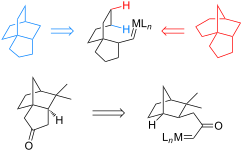
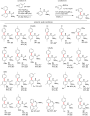
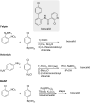
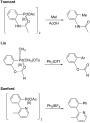
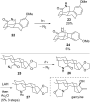
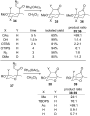
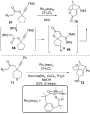
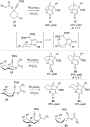
- [31]. Metal-catalyzed reactions Copper The earliest example to our knowledge of transition metal catalysis for the formation of bridged rings via C–H bond insertion was Wolff’s use of copper (Scheme 6) [32][33]. Silver was also examined as a possible catalyst, but then a Wolff rearrangement was the







Stimuli-responsive HBPS-g-PDMAEMA and its application as nanocarrier in loading hydrophobic molecules
Beilstein J. Org. Chem. 2016, 12, 939–949, doi:10.3762/bjoc.12.92

- reactions were performed under argon and argon gas was purified by passing through four columns loaded with potassium hydroxide, 4 Å molecular sieves, silver molecular sieves and potassium/sodium alloy. Vinylbenzyl chloride (VBC) was purified by passing through a column packed with alkaline alumina. DMAEMA


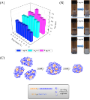


Bi- and trinuclear copper(I) complexes of 1,2,3-triazole-tethered NHC ligands: synthesis, structure, and catalytic properties
Beilstein J. Org. Chem. 2016, 12, 863–873, doi:10.3762/bjoc.12.85
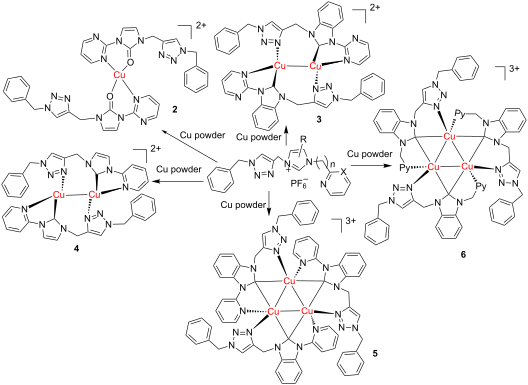
- 2.024(6)–2.092(6) Å, respectively, which are slightly longer than in dinuclear complexes 3 and 4. Benzimidazolylidene acts as a bridging ligand in a u2 mode and bonded equally to two Cu(I) ions, which is only observed in a few silver(I) and copper(I) complexes. Catalytic application in CuAAC reactions


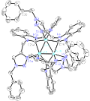

Recent advances in C(sp3)–H bond functionalization via metal–carbene insertions
Beilstein J. Org. Chem. 2016, 12, 796–804, doi:10.3762/bjoc.12.78

- development of intermolecular C–H insertion in the application of C(sp3)–H bond functionalizations, especially for light alkanes, is reviewed. The challenging problem of regioselectivity in C–H bond insertions has been tackled by the use of sterically bulky metal catalysts, such as metal porphyrins and silver
- and with up to 93% ee. Pérez and co-workers have explored different types of catalysts based on copper and silver in metal–carbene C(sp3)–H insertions. Tris(pyrazoly)borate complexes of copper (TpCu) [32][33][34] and silver (TpAg) [35][36][37] have been employed for C(sp3)–H insertion of alkanes
- and Etienne reported a perfluorinated F21-tris(pyrazoly)borate (F21-Tp) scorpionate ligand, which enhanced alkane C–H functionalization by carbene insertion with (F21-Tp)Cu and (F21-Tp)Ag catalysts (Figure 1) [38]. In particular, with silver catalyst remarkably low catalyst loading (ca. 0.5%), and


A selective and mild glycosylation method of natural phenolic alcohols
Beilstein J. Org. Chem. 2016, 12, 524–530, doi:10.3762/bjoc.12.51

- look for milder conditions for an efficient and inexpensive method of glycosylation while excluding the use of toxic mercury salts as promoter (Helferich reaction) or silver salts. The latter are often rather expensive, moisture and light sensitive, and uncomfortable to handle. Accordingly, various


Simple activation by acid of latent Ru-NHC-based metathesis initiators bearing 8-quinolinolate co-ligands
Beilstein J. Org. Chem. 2016, 12, 154–165, doi:10.3762/bjoc.12.17
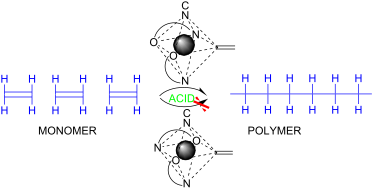
- -heterocyclic carbene bearing precursor complexes M31, HovII or M32 with excess of 5,7-dichloro-8-hydroxyquinoline or 5,7-dibromo-8-hydroxyquinoline in the presence of excess Cs2CO3 as the base (see Scheme 1). The silver-free method [41] resulted in any case in the formation of at least two new products (as


Carbon–carbon bond cleavage for Cu-mediated aromatic trifluoromethylations and pentafluoroethylations
Beilstein J. Org. Chem. 2015, 11, 2661–2670, doi:10.3762/bjoc.11.286
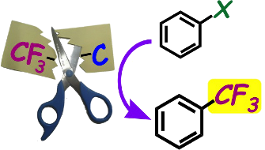
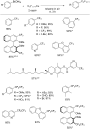
- the addition of silver salts is effective for the copper-mediated trifluoromethylation of aryl iodides [38] (Scheme 5). The amount of copper used in the reaction was reduced to 30 or 40 mol % by adding a small amount of Ag2O. As a related decarboxylative transformation, silver-mediated aromatic




Synthesis of Xenia diterpenoids and related metabolites isolated from marine organisms
Beilstein J. Org. Chem. 2015, 11, 2521–2539, doi:10.3762/bjoc.11.273
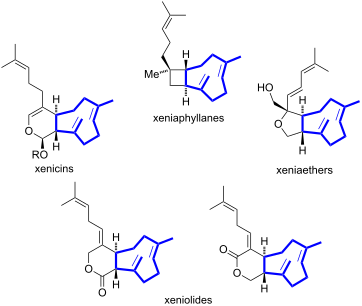
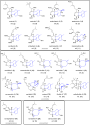
- product 63 in very good yield, however, as a mixture of lactol epimers (α/β ≈ 56:44). Silyl protection of the lactol and subsequent Tebbe olefination [42] of the ketone group installed the exocyclic double bond of the nine-membered carbocycle. Desilylation followed by oxidation with silver carbonate then







Copper-catalyzed asymmetric conjugate addition of organometallic reagents to extended Michael acceptors
Beilstein J. Org. Chem. 2015, 11, 2418–2434, doi:10.3762/bjoc.11.263
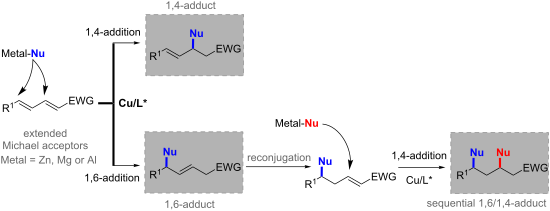
- example of copper-catalyzed selective 1,4-ACA of low-cost trialkylaluminium reagents on extended Michael acceptors in 2008 [39]. The reported catalytic system, featuring Cu(OTf)2 and sulfonated NHC-based silver complex L15 as the ligand source, appeared as the most potent system in the conversion of


Influence of bulky yet flexible N-heterocyclic carbene ligands in gold catalysis
Beilstein J. Org. Chem. 2015, 11, 1809–1814, doi:10.3762/bjoc.11.196
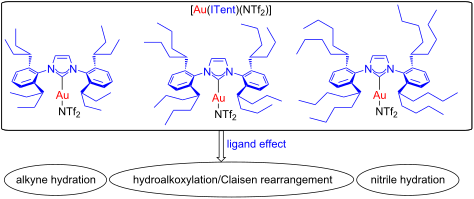
- transformations. Gagosz-type species have been typically prepared by reacting the corresponding [Au(L)Cl] derivative (L = PR3, NHC) with AgNTf2 [46][47]. Alternative protocols that avoid the use of silver salts involve the treatment of gold-hydroxide [48] or gold-acetonyl [49] complexes with
- trifluoromethanesulfonimide. Following this silver-free procedure, [Au(ITent)(OH)] complexes 4–6 were reacted with HNTf2 to obtain the corresponding [Au(ITent)(NTf2)] species 7–9 which were isolated as white solids in good to excellent yields (Scheme 2). Complexes 7–9 were characterised by 1H, 13C{1H}, and 19F{1H} NMR
- measurements in solution of the [Ni(ITent)CO3] complexes [21][42]. Synthesis of gold complexes bearing the ITent ligands. Silver-free synthesis of [Au(ITent)(NTf2)] complexes. Influence of the ITent ligands in gold-catalysed alkyne hydration.a Influence of the ITent ligands in gold-catalysed nitrile


Synthesis and structures of ruthenium–NHC complexes and their catalysis in hydrogen transfer reaction
Beilstein J. Org. Chem. 2015, 11, 1786–1795, doi:10.3762/bjoc.11.194
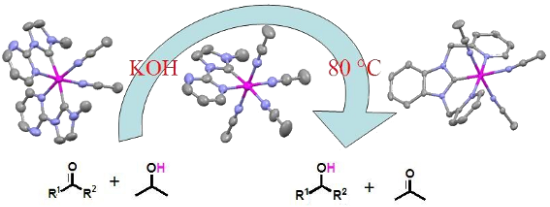
- reaction of halides with silver complexes (AgPF6 or AgBF4) in acetonitrile solution [20]. The reaction in refluxing acetonitrile is more convenient than the above mentioned procedure. The formulations of complexes 1 and 2 were first characterized by NMR measurements and further confirmed by elemental


Pyridinoacridine alkaloids of marine origin: NMR and MS spectral data, synthesis, biosynthesis and biological activity
Beilstein J. Org. Chem. 2015, 11, 1667–1699, doi:10.3762/bjoc.11.183
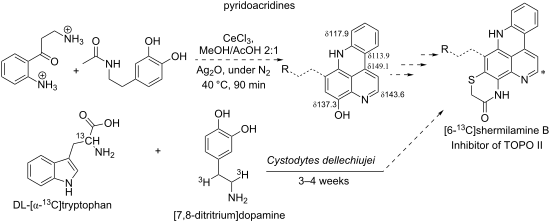
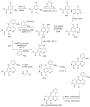
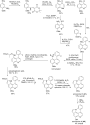
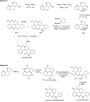
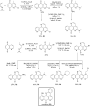
- . Precursors A and B were adequately prepared and used to synthesize 1 and 4 in a one-pot manner in the presence of cesium chloride, silver oxide in methanol and acetic acid under nitrogen atmosphere. The reaction lasted 90 min at 40 °C. The proposed mechanism postulated that silver oxide oxidized the N











Latent ruthenium–indenylidene catalysts bearing a N-heterocyclic carbene and a bidentate picolinate ligand
Beilstein J. Org. Chem. 2015, 11, 1541–1546, doi:10.3762/bjoc.11.169
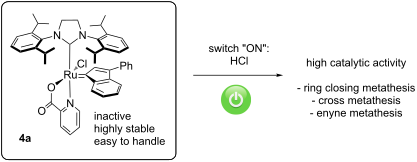
- Cedex, France 10.3762/bjoc.11.169 Abstract A silver-free methodology was developed for the synthesis of unprecedented N-heterocyclic carbene ruthenium indenylidene complexes bearing a bidentate picolinate ligand. The highly stable (SIPr)(picolinate)RuCl(indenylidene) complex 4a (SIPr = 1,3-bis(2-6
- in model ring closing metathesis and cross-metathesis transformations. Results and Discussion With the objective to develop an attractive strategy for the synthesis of indenylidene-picolinic ruthenium complexes, we initially attempted their preparation using a silver-free methodology. In fact, silver


Tetrathiafulvalene-based azine ligands for anion and metal cation coordination
Beilstein J. Org. Chem. 2015, 11, 1379–1391, doi:10.3762/bjoc.11.149
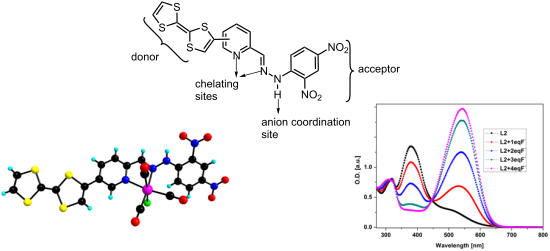
- were performed in a three-electrode cell equipped with a platinum millielectrode as the working electrode , a platinum wire as a counter electrode and a silver wire Ag/Ag+ used as a reference electrode. The electrolytic media involved a 0.1 mol/L solution of (n-Bu4N)PF6 in dichloromethane/acetonitrile


Selected synthetic strategies to cyclophanes
Beilstein J. Org. Chem. 2015, 11, 1274–1331, doi:10.3762/bjoc.11.142






Glycoluril–tetrathiafulvalene molecular clips: on the influence of electronic and spatial properties for binding neutral accepting guests
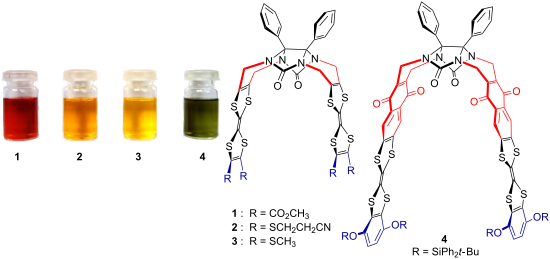
Beilstein J. Org. Chem. 2015, 11, 1023–1036, doi:10.3762/bjoc.11.115
- ]. Electrochemical measurements were carried out using a platinum wire counter electrode and a silver wire as a quasi-reference electrode with a Biologic SP-150 potentiostat driven by the EC-Lab software including ohmic drop compensation. Experiments were recorded in dry HPLC-grade acetonitrile and dichloromethane