


Search results
Search for "solid state" in Full Text gives 481 result(s) in Beilstein Journal of Organic Chemistry. Showing first 200.
Ultrafast processes triggered by one- and two-photon excitation of a photochromic and luminescent hydrazone
Beilstein J. Org. Chem. 2019, 15, 2438–2446, doi:10.3762/bjoc.15.236
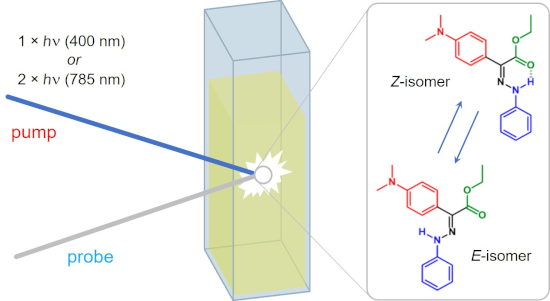
- -photon excitation (i.e., near infrared (NIR) light), which is also maintained in serum and solid state, has a very high photochemical stability and excellent fatigue resistance. Although the main photochemical properties of this molecule have been recently reported [29], a detailed analysis of its



Photochromic diarylethene ligands featuring 2-(imidazol-2-yl)pyridine coordination site and their iron(II) complexes
Beilstein J. Org. Chem. 2019, 15, 2428–2437, doi:10.3762/bjoc.15.235
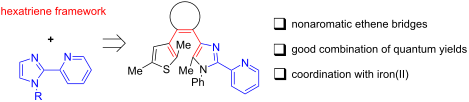
- at the iron(II) ion at room temperature (rt) in solution via ligand photocyclization [19]. More recently, the remarkable photoswitching between high-spin and low-spin states at rt in the solid state and thin films was demonstrated [20][21][22]. Kawai et al. obtained a luminescent complex of europium


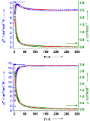
Reversible switching of arylazopyrazole within a metal–organic cage
Beilstein J. Org. Chem. 2019, 15, 2398–2407, doi:10.3762/bjoc.15.232
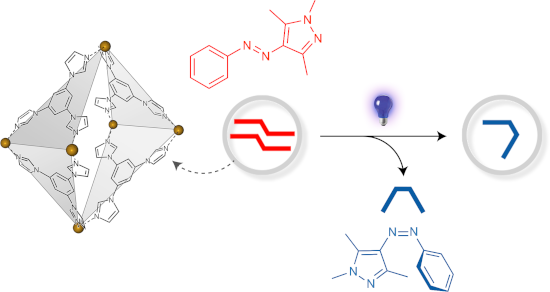
- arylazopyrazoles, that 2 would similarly encapsulate E-1. Results and Discussion Arylazopyrazole E-1 has a very low solubility in water and its encapsulation in cage 2 was attempted from the solid state. Encouragingly, when a colorless aqueous solution of 2 was stirred with an excess of solid E-1, it turned to


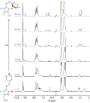
![[Graphic 1]](/bjoc/content/inline/1860-5397-15-232-i3.svg?max-width=637&scale=1.18182) 2 (500 MHz, D2O, 298 K).
2 (500 MHz, D2O, 298 K).




Thermal stability of N-heterocycle-stabilized iodanes – a systematic investigation
Beilstein J. Org. Chem. 2019, 15, 2311–2318, doi:10.3762/bjoc.15.223
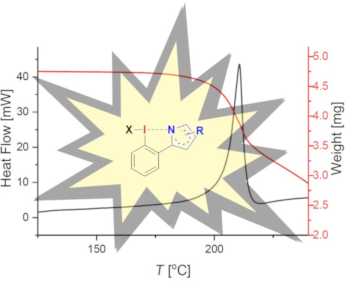
- Federation Department of Solid State Engineering, University of Chemistry and Technology, 16628 Prague, Czech Republic 10.3762/bjoc.15.223 Abstract The thermal stability of pseudocyclic and cyclic N-heterocycle-stabilized (hydroxy)aryl- and mesityl(aryl)-λ3-iodanes (NHIs) through thermogravimetric analysis


Small anion-assisted electrochemical potential splitting in a new series of bistriarylamine derivatives: organic mixed valency across a urea bridge and zwitterionization
Beilstein J. Org. Chem. 2019, 15, 2277–2286, doi:10.3762/bjoc.15.220

- . Such N–H···F hydrogen-bond formation was also reported for other urea derivatives with PF6− as counteranion in the solid state [54][55]. The N···F distance of 2.85 Å in 1b+–PF6− is slightly longer than that observed in the crystal structure of a silver complex having a pyridyl urea ligand (2.67 and


Aggregation-induced emission effect on turn-off fluorescent switching of a photochromic diarylethene
Beilstein J. Org. Chem. 2019, 15, 2204–2212, doi:10.3762/bjoc.15.217
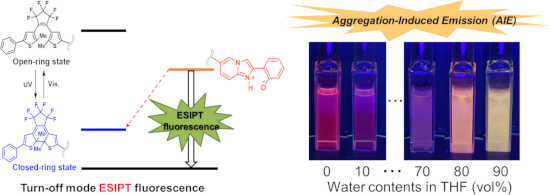
- , fluorescence switching for molecular level recording [4], multiple-fluorescence for logic circuits [5] as well as biological applications [6] and super-resolution microscopy for bio-imaging [7][8]. The fluorescence switching in solid state is attracting much attention from both scientific and technological
- mm quartz cell, which was then placed in the integral sphere. The quantum yield was calculated using an installed software. The solid-state absorption spectrum was obtained by Kubelka–Munk conversion of a diffractive reflectance spectrum of the above mixture measured on a JASCO FP-6600


1,2,3-Triazolium macrocycles in supramolecular chemistry
Beilstein J. Org. Chem. 2019, 15, 2142–2155, doi:10.3762/bjoc.15.211
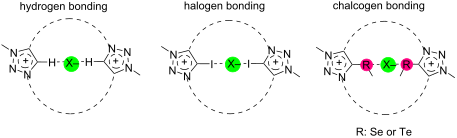
- the solid state the movement of the molecules is restricted because of charge-transfer complexes between NDI and Cl−, Br− or I−. Because macrocycle 13 precipitated in less polar organic solvents upon addition of halides, the binding affinities were studied in DMSO in which the binding constants for Cl




1,2,3,4-Tetrahydro-1,4,5,8-tetraazaanthracene revisited: properties and structural evidence of aromaticity loss
Beilstein J. Org. Chem. 2019, 15, 2059–2068, doi:10.3762/bjoc.15.203
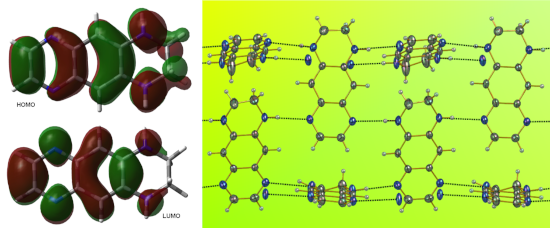
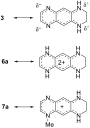
- the presence of two H-donor (N–H) and two H-acceptor (N=C) sites that can lead to well organized H-bonded arrangements in the solid state. Moreover, the presence of two different types of nitrogen atoms affords the possibility to be selectively substituted at the desired position. Here we revisited
- bond lengths. The dominant motive seen for 3 in the solid state is the formation of infinite chains based on N–H···N=C hydrogen bonds (N···N distances 3.011–3.047 Å, Figure 9). The crystal lattice of 6a (Figure 10) also exhibits the presence of the infinite chains >N–H···Cl−···H–N+: the Cl−···N and Cl
- supramolecular array generated by 3 in the solid state. Color coding: nitrogen, blue; carbon, grey. View of the supramolecular array generated by 6a in the solid state. Color coding: nitrogen, blue; carbon, grey, chloride, green. View of the supramolecular array generated by 7a in the solid state. Color coding




Fluorinated azobenzenes as supramolecular halogen-bonding building blocks
Beilstein J. Org. Chem. 2019, 15, 2013–2019, doi:10.3762/bjoc.15.197
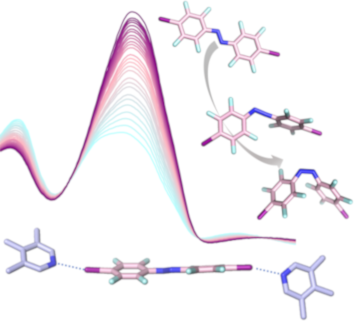
- building blocks both in solution and in the solid state in combination with neutral halogen bonding acceptors, such as lutidines. Therefore, we investigate the photochemistry of a series of azobenzene photoswitches. Upon introduction of iodoethynyl groups, the halogen bonding donor properties are
- noncovalent interaction between a polarized halogen atom (the halogen bond donor) and a Lewis base (the halogen bond acceptor) [1][2]. A prominent example regarding the origin of halogen bonding can be found in inorganic solid-state chemistry. The structurally diverse group of polyiodides, with its rich
- ) and E-4,4’-di(iodoethynyl)perfluoroazobenzene (A3) halogen bond donors can be combined with rigid u-shaped anthracene building blocks, bearing two 3,5-lutidine acceptors in 1 and 8 positions, to form self-assembled boxes of 25–30 Å length in solution and in the solid state [35]. We chose azobenzene


Attempted synthesis of a meta-metalated calix[4]arene
Beilstein J. Org. Chem. 2019, 15, 1996–2002, doi:10.3762/bjoc.15.195
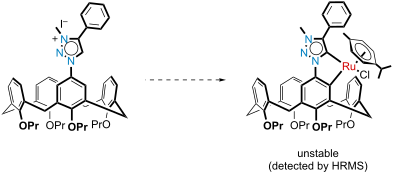
- appeared that the product was unstable, which was unexpected since Albrecht has reported that their complexes were stable for months in both solution and the solid state. Even our own model study showed that the complex was easy to work with and manipulate, but we needed to concede that the calix[4]arene




Synthesis and anion binding properties of phthalimide-containing corona[6]arenes
Beilstein J. Org. Chem. 2019, 15, 1976–1983, doi:10.3762/bjoc.15.193
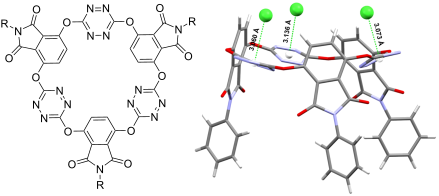
- conveniently by means of a macrocyclic condensation reaction between N-functionalized 3,6-dihydroxyphthalimides and 3,6-dichlorotetrazine under mild conditions in a one-pot reaction manner. The novel macrocycles exist as a mixture of rapidly interconvertible conformers in solution while in the solid state they
- adopt the conformation in which three phthalimide units are cis,trans-orientated. Acting as electron-deficient macrocyclic hosts, the synthesized O6-corona[3]arene[3]tetrazines self-regulated conformational structures to complex anions in the gas phase and in the solid state owing to the anion–π
- -corona[6]arenes in the solid state, high quality single crystals of 3a were grown at room temperature from diffusion of diethyl ether vapor into the solution of 3a in acetonitrile. X-ray diffraction analysis revealed that the macrocycle 3a adopted an interesting conformation. As depicted in Figure 1, it


Halide metathesis in overdrive: mechanochemical synthesis of a heterometallic group 1 allyl complex
Beilstein J. Org. Chem. 2019, 15, 1856–1863, doi:10.3762/bjoc.15.181
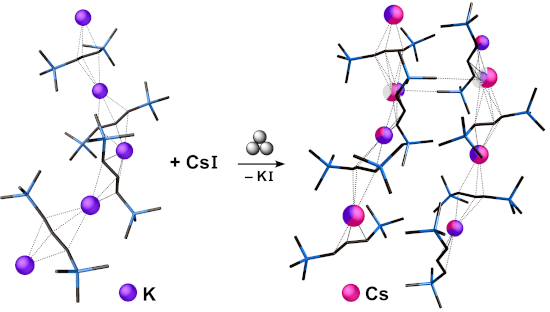
- ]∞, enable an otherwise unfavorable halide metathesis to proceed with mechanochemical assistance. From this result, we demonstrate that ball milling and unexpected solid-state effects can permit seemingly unfavored reactions to occur. Keywords: caesium; entropy; intermolecular forces; mechanochemistry
- likely to be isolated. The high concentration of reagents in a solid-state reaction may influence product formation as well. The possibility of partial exchange also needs to be considered. If the caesium iodide were insufficiently reactive, a starting ratio of 3:1 for [KA']:CsI could give rise to
- kJ mol−1; Table 1, entries 3 and 4). Of course, these are calculations on isolated monomers, and the energetics of formation of the solid-state polymeric forms [30] would be expected to change these values, but not necessarily in a way that would clearly favor the formation of [CsA'] over [KA']. If


Complexation of 2,6-helic[6]arene and its derivatives with 1,1′-dimethyl-4,4′-bipyridinium salts and protonated 4,4'-bipyridinium salts: an acid–base controllable complexation
Beilstein J. Org. Chem. 2019, 15, 1795–1804, doi:10.3762/bjoc.15.173
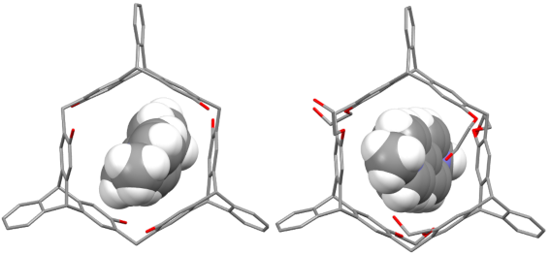
- both 1,1′-dimethyl-4,4'-bipyridinium salts and protonated 4,4'-bipyridinium salts in solution and in the solid state. Especially, the helic[6]arene and its derivatives containing 2-hydroxyethoxy or 2-methoxyethoxy groups exhibited stronger complexation with the guests than the other helic[6]arene
- protonated 4,4'-bipyridinium salts (Figure 1) in both solution and in the solid state. We found that the helic[6]arene and its derivatives containing 2-hydroxyethoxy or 2-methoxyethoxy groups showed stronger complexation with the guests than the other helic[6]arene derivatives. This result can be explained
- ·G3−2PF6]2+, [H5·G3−2PF6]2+, [H1·G4−2BArF]2+, [H2·G4−2BArF]2+, [H4·G4−2BArF]2+, [H5·G4−2BArF]2+ were observed, which further confirmed the formation of the 1:1 host–guest complexes (Supporting Information File 1, Figures S41–S55). Host–guest complexation in the solid state The single crystal of


Functional panchromatic BODIPY dyes with near-infrared absorption: design, synthesis, characterization and use in dye-sensitized solar cells
Beilstein J. Org. Chem. 2019, 15, 1758–1768, doi:10.3762/bjoc.15.169
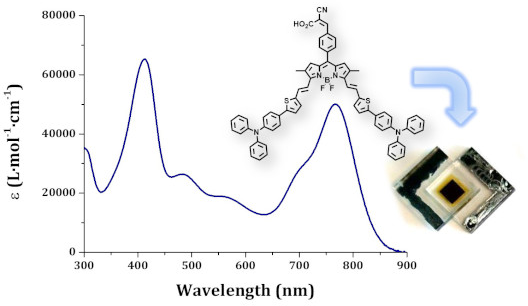
- were investigated using UV–vis spectroscopy, and we show that they can absorb light up to 900 nm in solution and 1000 nm in solid state, after grafting on anatase-TiO2 mesoporous films. The cyclic voltammetry (CV) measurements indicate that the compounds have HOMO and LUMO energy levels suitable for an




Synthesis, photophysical and electrochemical properties of pyridine, pyrazine and triazine-based (D–π–)2A fluorescent dyes
Beilstein J. Org. Chem. 2019, 15, 1712–1721, doi:10.3762/bjoc.15.167
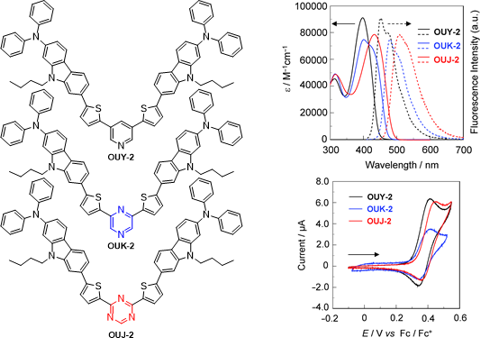
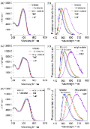
- solvents are much larger than those in nonpolar solvents (Table 1). In order to investigate the solid-state photophysical properties of OUY-2, OUK-2 and OUJ-2, we have measured the solid-state fluorescence spectra of the solids (Figure 4). The λmax,fl of the as-recrystallized dyes appears at 550 nm for OUY
- -2, 592 nm for OUK-2, and 557 nm for OUJ-2, which showed a significant bathochromic shift by 97 nm, 112 nm, and 48 nm, respectively, compared with those in toluene. The solid-state Φf value is below 0.02 for OUY-2 and OUK-2 and 0.09 for OUJ-2, which are much lower than those in toluene. It is well
- known that D–π–A fluorescent dyes show bathochromic shifts of the λmax,fl and lower Φf values by changing from the solution state to the solid state. This fact is attributed to the delocalization of excitons or excimers due to the formation of intermolecular π–π interactions [48][49][50][51] between the




Reaction of oxiranes with cyclodextrins under high-energy ball-milling conditions
Beilstein J. Org. Chem. 2019, 15, 1448–1459, doi:10.3762/bjoc.15.145
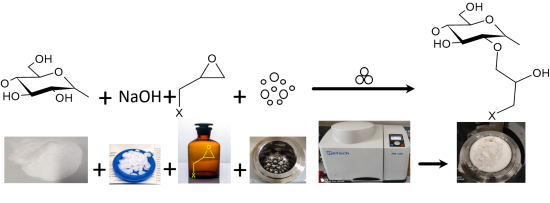
- chemistry. The restricted mobility of solid-state components further reduces the aforementioned side-reactions and enhances the utilization in the CD substitution. Although many side reactions are suppressed in ball milling, they cannot be completely eliminated when alkaline hydroxides are used to activate
- toward MO, as seen in the UV spectra in Figure 6 and Figure 7. However, unlike the epichlorohydrin polymers, their “concentration-dependency” was not linear. The solution and solid state reactions showed similar yields, as can be concluded from Table 5. A significant difference was found between GPTS-β
- -synthesised CD derivatives was simpler in the (2-hydroxy)propylated cases, it does not seem possible to alter the current industrial method to make it more green. Preparations of water-insoluble CD derivatives were more effective than the solution reactions, but the particle size of the solid state reaction


Selenophene-containing heterotriacenes by a C–Se coupling/cyclization reaction
Beilstein J. Org. Chem. 2019, 15, 1379–1393, doi:10.3762/bjoc.15.138

- crucial cyclization steps to the stable and soluble fused systems were achieved by copper-catalyzed C–S and C–Se coupling/cyclization reactions. Structures and packing motifs in the solid state were elucidated by single crystal X-ray analysis and XRD powder measurements. Comparison of the optoelectronic
- starting material, but also ring fusion to selenophene was achieved by Cu-catalyzed C–Se cross-coupling reaction [28]. The detailed geometric structure and the packing behaviour in the solid state of triacenes 2–4 have been elucidated by single crystal X-ray structure analysis and X-ray diffraction on


Synthesis of dipolar molecular rotors as linkers for metal-organic frameworks
Beilstein J. Org. Chem. 2019, 15, 1331–1338, doi:10.3762/bjoc.15.132

- also been pursued to implement molecular rotors in the solid state. Crystals of linear molecular rotors [8][9][10][11][12][13], caged rotor crystals and gyroscope like molecules [14][15][16][17][18][19][20] as well as organosilicates [21] and metal-organic frameworks [22][23][24][25] containing


Mechanochemical Friedel–Crafts acylations
Beilstein J. Org. Chem. 2019, 15, 1313–1320, doi:10.3762/bjoc.15.130
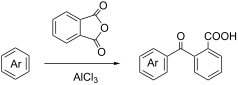
- temperature without the use of solvents, which are usually highly toxic (halogenated hydrocarbons) will improve the eco-friendliness of the process. Until now, FCRs have been rarely applied to organic functionalizations which are carried out in solid state by mortar and pestle [3][4][5]. We are aware of only
- forced conditions (by melting at 200 °C) reacted sluggishly with pyrene affording mixture of regioisomeric products 6 and 7. The advantage of the employment of mechanochemical conditions is evidenced by solid state milling of pyrene with succinic anhydride which showed remarkably better performance than
- (<5%) of 22. This result indicates that rapid [4π – 4π] cycloreversion of 19 takes place, even in solid state ball-milling conditions at room temperature. Produced anthracene then subsequently participates in FCR. In control reaction of milling of photodimer 19 itself for 1 h was converted to


Understanding the unexpected effect of frequency on the kinetics of a covalent reaction under ball-milling conditions
Beilstein J. Org. Chem. 2019, 15, 1226–1235, doi:10.3762/bjoc.15.120
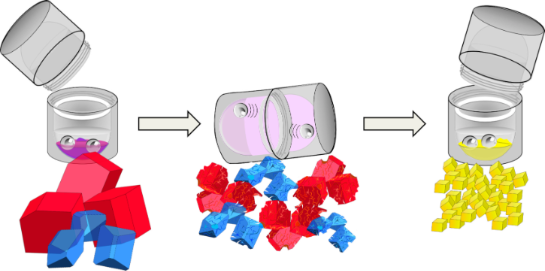
- crystals into smaller particles followed by the accumulation of energy in crystal defects. In recent years, manual and ball-mill grinding have become increasingly routine solid-state synthesis tools [1]. Generally referred to as mechanochemistry, these methods are more environmentally friendly and usually
- developing a fundamental understanding of these solid-state processes. The validation of reaction kinetic models has been a powerful approach for investigating fundamental processes in chemistry and physics. This has led to significant advancement in the understanding of molecular and submolecular phenomena
- ) is the Arrhenius-type rate constant, and f(α) is the functional form of rate, dependent on the specific mechanism of the transformation. Many of the traditional kinetic equations for solid-state transformations (e.g., the Avrami–Erofeyev and Prout–Tompkins models) are derived for single phase solid


Molecular recognition using tetralactam macrocycles with parallel aromatic sidewalls
Beilstein J. Org. Chem. 2019, 15, 1086–1095, doi:10.3762/bjoc.15.105
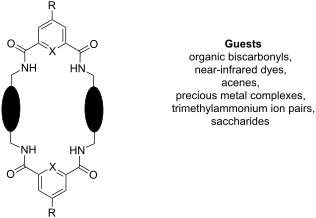
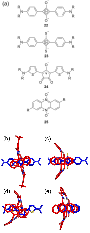
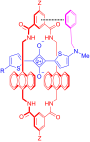
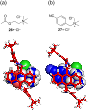
- -conformational motion such as macrocycle pirouetting around the encapsulated guest [50][51]. The Smith group has found that an organic soluble version of anthracene-containing tetralactam B is able to encapsulate squaraine, thiosquaraine and croconaine dyes [33][57][58][59]. Solid-state structures of various
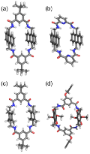
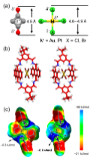
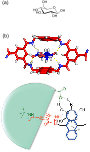
- (left) with anionic square planar metal halide complexes (right). (b) Solid-state structures of B·AuBr4− (X = CH, Z = t-Bu, left) and C·AuBr4− (X = CH, Z = t-Bu, right). (c) Electrostatic potential maps of the interior surfaces of (left) B and (right) C obtained by DFT calculations at the B3LYP/631G
- -Bu). a) Chemical structure of β-D-glucopyranose and the solid-state structure of its complexes with macrocycle B (X = CH). b) Schematic view of tetralactam B encapsulating glucose (R = O) or glucosammonium (R = NH2+) with stabilizing secondary interactions provided by back-folding of a peripherally




Mechanochemical synthesis of poly(trimethylene carbonate)s: an example of rate acceleration
Beilstein J. Org. Chem. 2019, 15, 963–970, doi:10.3762/bjoc.15.93
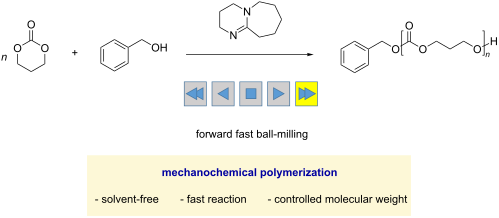
- added. All reagents were placed in a 10 mL stainless-steel milling jar with three 7 mm diameter stainless-steel balls. The solid-state reaction mixture was placed into a high-speed vibration ball mill. After 30 min of high-speed vibration (30 Hz), 43% conversion was recorded, and PTMC with an Mn of 3930


Halogen bonding and host–guest chemistry between N-alkylammonium resorcinarene halides, diiodoperfluorobutane and neutral guests
Beilstein J. Org. Chem. 2019, 15, 947–954, doi:10.3762/bjoc.15.91
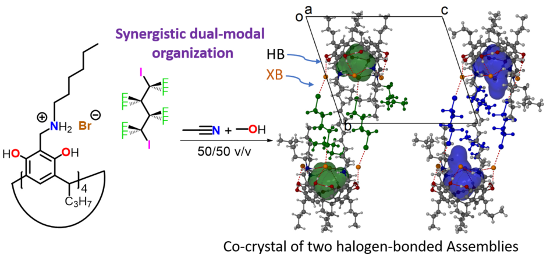
- interactions to be used in aqueous or polar environments where HB-based systems are less viable [8][9][10][11][12]. However, we lack the analytical tools to directly examine and determine the precise structure of XB assemblies in solution [13][14][15]. In the solid-state, X-ray diffraction has proven an
- are working in tandem and concertedly to form networks of non-covalent interactions stabilizing the dimeric and capsular structures in the solid state. The inclusion guests affect the geometry of the cavity of the hex-NARBr and cy-NARCl, thus affecting the halogen bonding connection in the final


An anomalous addition of chlorosulfonyl isocyanate to a carbonyl group: the synthesis of ((3aS,7aR,E)-2-ethyl-3-oxo-2,3,3a,4,7,7a-hexahydro-1H-isoindol-1-ylidene)sulfamoyl chloride
Beilstein J. Org. Chem. 2019, 15, 931–936, doi:10.3762/bjoc.15.89
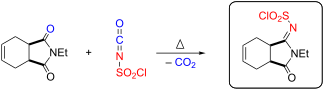
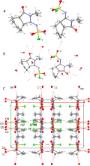
- changes the stoichiometry. In the solid state, compound 10 is stabilized via effective intramolecular H-bonds. Interactions between C9–H∙∙∙O5 [D∙∙∙A = 3.331(3) Å], C5–H∙∙∙O6 [D∙∙∙A = 3.529(3) Å], C19–H∙∙∙O3 [D∙∙∙A = 3.316(3) Å], C16–H∙∙∙O5 [D∙∙∙A = 3.315(3) Å], and C9–H∙∙∙O4 [D∙∙∙A = 3.313(3) Å




Mechanochemistry of supramolecules
Beilstein J. Org. Chem. 2019, 15, 881–900, doi:10.3762/bjoc.15.86
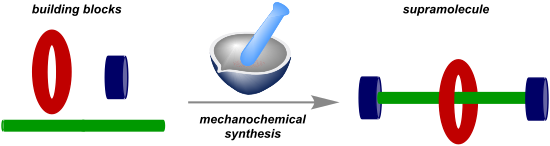
- complexes 30 and 31 upon the addition of Cu(I) tetrafluoroborate (1.5 equiv) and Fe(II) sulfate (1.0 equiv) as shown in Figure 17 [86]. DCL formation was also shown to be possible in the solid-state by grinding or mechanochemical methods by Sanders and co-workers in 2011. They have demonstrated the
- differences in the crystal packing in the solid state. The products 32 were obtained via thermodynamic control (Figure 18) from a dynamic combinatorial library [53][88]. In 2010, Otto and co-workers observed unprecedented product selectivity for the formation of disulfide macromolecules based on mechanical
- -bond formation in supramolecular chemistry which occurs in solution-phase synthesis is almost impossible in solid-state reactions. However, MacGillivray’s group demonstrated several examples of co-crystal formation or supramolecular synthesis in the solid phase through mechano-milling or dry grinding





