Search results
Search for "supramolecular chemistry" in Full Text gives 229 result(s) in Beilstein Journal of Organic Chemistry. Showing first 200.
Molecular recognition of AT-DNA sequences by the induced CD pattern of dibenzotetraaza[14]annulene (DBTAA)–adenine derivatives
Beilstein J. Org. Chem. 2014, 10, 2175–2185, doi:10.3762/bjoc.10.225
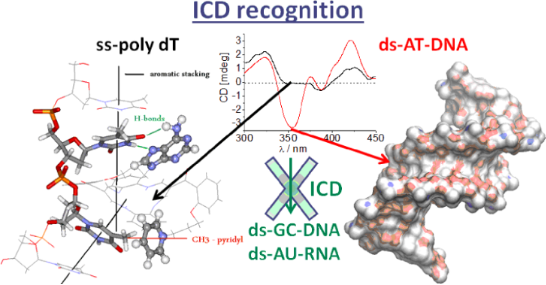
- /RNA sites [2][3], frequently relying upon new knowledge gained from supramolecular chemistry [4]. Among the large number of DNA/RNA sequences of biochemical interest, long homogeneous AT tracts have attracted significant attention as small molecule targets. An illustrative natural example can be found


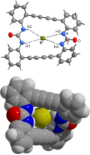
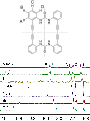
Macrocyclic bis(ureas) as ligands for anion complexation
Beilstein J. Org. Chem. 2014, 10, 1834–1839, doi:10.3762/bjoc.10.193
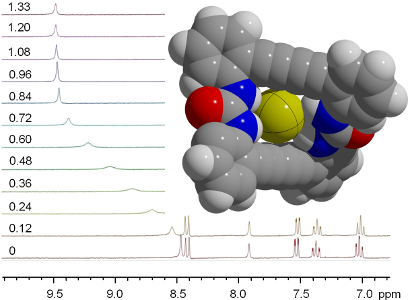
- rather weak complexing agent, the large ring of 2 binds anions with association constants up to log K = 7.93 for chloride ions. Keywords: anion binding; macrocyclic compounds; NMR spectra; supramolecular chemistry; template; urea; Introduction Supramolecular chemistry – the “chemistry beyond the



Influence of perylenediimide–pyrene supramolecular interactions on the stability of DNA-based hybrids: Importance of electrostatic complementarity
Beilstein J. Org. Chem. 2014, 10, 1589–1595, doi:10.3762/bjoc.10.164
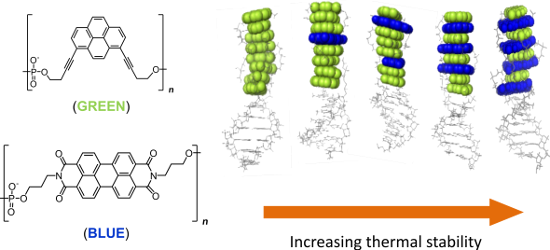
- well as van der Waals, electrostatic and charge transfer interactions that can lead to a thermodynamically favourable association [8]. It is an important interaction in biological systems, drug receptor interactions, materials sciences, and supramolecular chemistry [8][9][10][11][12]. Such interactions



Molecular recognition of surface-immobilized carbohydrates by a synthetic lectin
Beilstein J. Org. Chem. 2014, 10, 1354–1364, doi:10.3762/bjoc.10.138
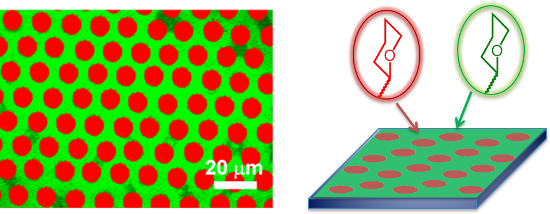
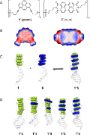
- as drugs in various therapies and as recognition units in diagnostics and sensing. However, the development of synthetic lectins poses a phenomenal challenge for supramolecular chemistry [37] because a carbohydrate receptor in order to be useful must not only compete with the strong hydration of
- (SFB 858). This work was supported by COST CM1005 “Supramolecular Chemistry in Water”.


Homochiral BINOL-based macrocycles with π-electron-rich, electron-withdrawing or extended spacing units as receptors for C60
Beilstein J. Org. Chem. 2014, 10, 1308–1316, doi:10.3762/bjoc.10.132
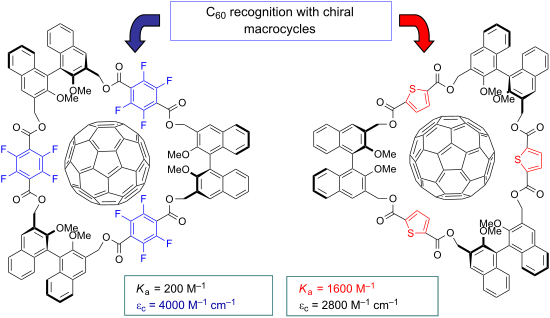
- ; supramolecular chemistry; Introduction Shape persistent macrocycles are carbon-based nanomaterials and are more and more in demand. They enrich the molecular toolkit available to a variety of disciplines, e.g., supramolecular chemistry and materials science [1][2][3][4]. Shape persistency properties are


Substitution effect and effect of axle’s flexibility at (pseudo-)rotaxanes
Beilstein J. Org. Chem. 2014, 10, 1299–1307, doi:10.3762/bjoc.10.131
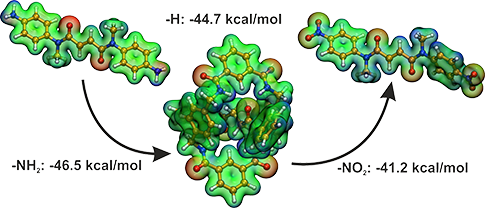
- binding is weakened by approximately 10 kcal/mol, and hydrogen bonds are slightly shortened (by up to 0.2 Å). Keywords: dispersion interaction; hydrogen bond; supramolecular chemistry; template; theoretical chemistry; Introduction Rotaxanes are prototypes for molecular machines and molecular switches [1


Synthesis, characterization and DNA interaction studies of new triptycene derivatives
Beilstein J. Org. Chem. 2014, 10, 1290–1298, doi:10.3762/bjoc.10.130
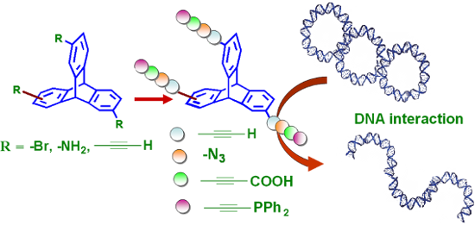
- organic molecules having terminal ethynyl functional groups are very useful synthons for the design of interesting materials in polymer and supramolecular chemistry [20][21][22][23][24][25]. Herein we report, the syntheses of 2,6,14- and 2,7,14-triazido and 2,6,14- and 2,7,14-triethynyl substituted
- interaction of triptycene derivatives with DNA in more detail, and the use of triptycene derivatives as building blocks in supramolecular chemistry. Experimental Methods of preparation of compounds 1–8 and their characterization data are given in Supporting Information File 1. Biological studies General


The influence of intraannular templates on the liquid crystallinity of shape-persistent macrocycles
Beilstein J. Org. Chem. 2014, 10, 910–920, doi:10.3762/bjoc.10.89
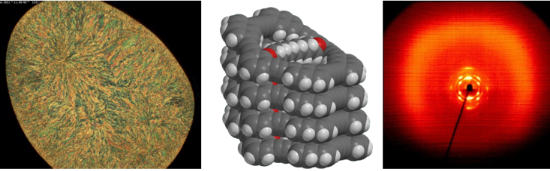
- planar. Keywords: discotic liquid crystals; shape-persistent macrocycles; templates; X-ray scattering; Introduction The supramolecular chemistry of shape-persistent macrocycles has enormously expanded during the past several years [1][2][3][4][5][6]. It covers the non-covalent interaction between the


Molecular recognition of isomeric protonated amino acid esters monitored by ESI-mass spectrometry
Beilstein J. Org. Chem. 2014, 10, 825–831, doi:10.3762/bjoc.10.78
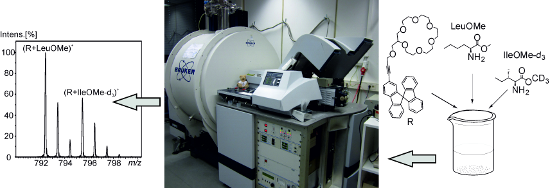
- . However, mass spectrometry has become a major analytical tool in supramolecular chemistry in recent years [19][20][21] and seemed to be perfectly suited in this case, since we were planning to recognise the amino acid derivatives in form of their protonated alkyl esters anyway. Thus, the host–guest


Towards allosteric receptors – synthesis of β-cyclodextrin-functionalised 2,2’-bipyridines and their metal complexes
Beilstein J. Org. Chem. 2014, 10, 814–824, doi:10.3762/bjoc.10.77
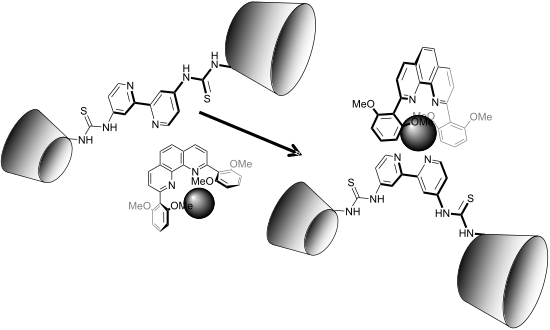
- bringing together or separating the cyclodextrin moieties from each other. Keywords: allosteric receptors; 2,2’-bipyridines; β-cyclodextrin; supramolecular chemistry; metal complexes; Introduction In biological systems, recognition events play a major role to guarantee the selectivity of essential
- ) or hampering (negative allosteric cooperativity) the binding of another substrate at a second binding site. This powerful regulatory concept has become quite interesting in supramolecular chemistry, and the development of artificial receptor systems which can be controlled by allosteric effects comes


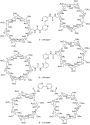
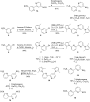
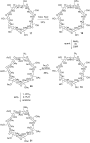


End-group-functionalized poly(N,N-diethylacrylamide) via free-radical chain transfer polymerization: Influence of sulfur oxidation and cyclodextrin on self-organization and cloud points in water
Beilstein J. Org. Chem. 2014, 10, 680–691, doi:10.3762/bjoc.10.61
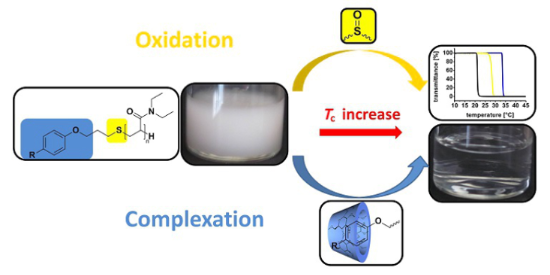
- functionalization is supported by 1H NMR-, SEC-, FTIR- and MALDI–TOF measurements. Keywords: chain-transfer polymerization; cyclodextrins; end-group functionalization; host–guest interaction; lower critical solution temperature (LCST); poly(N,N-diethylacrylamide); Introduction Supramolecular chemistry was first


Self-assembly of metallosupramolecular rhombi from chiral concave 9,9’-spirobifluorene-derived bis(pyridine) ligands
Beilstein J. Org. Chem. 2014, 10, 432–441, doi:10.3762/bjoc.10.40
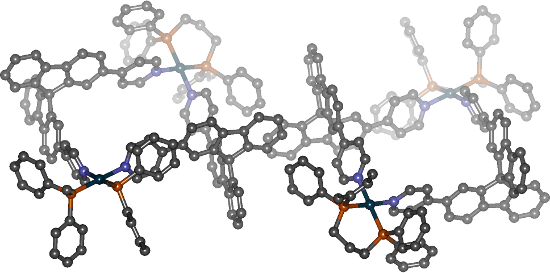
- . Keywords: concave templates; metal complexes; self-assembly; self-sorting; 9,9’-spirobifluorene; supramolecular chemistry; Introduction Concave templates are versatile tools to achieve self-sorting behaviour in the self-assembly of defined aggregates from multicomponent mixtures in a social self



Continuous-flow Heck synthesis of 4-methoxybiphenyl and methyl 4-methoxycinnamate in supercritical carbon dioxide expanded solvent solutions
Beilstein J. Org. Chem. 2013, 9, 2886–2897, doi:10.3762/bjoc.9.325
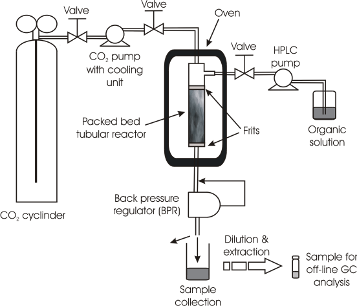
- these cross-coupling methods has undoubtedly revolutionalised the protocols for the construction of natural products, building blocks for supramolecular chemistry, self-assembly of organic materials and polymers, and lead compounds in medicinal chemistry from simpler entities [1]. These include the


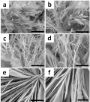
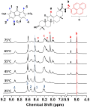
Charge-transfer interaction mediated organogels from 18β-glycyrrhetinic acid appended pyrene
Beilstein J. Org. Chem. 2013, 9, 2877–2885, doi:10.3762/bjoc.9.324
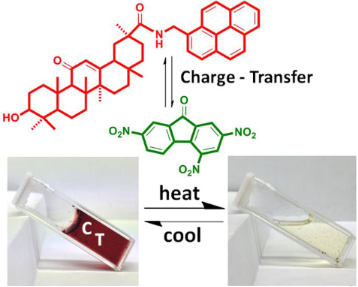
- ; Introduction The creation of one-dimensional (1D) nanostructures is one of the focused fields in supramolecular chemistry [1][2][3][4]. In order to control the molecular arrangement in 1D structures, low molecular weight gelators (LMWGs) have generated considerable interest during the past decade [5][6]. The




Novel supramolecular affinity materials based on (−)-isosteviol as molecular templates
Beilstein J. Org. Chem. 2013, 9, 2821–2833, doi:10.3762/bjoc.9.317
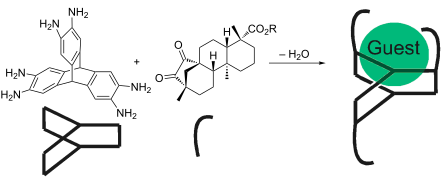
- particular as templates for tracing air-borne arenes at low concentration. The affinities of the synthesized materials towards different air-borne arenes were determined by 200 MHz quartz crystal microbalances. Keywords: affinity materials; (−)-Isosteviol; supramolecular chemistry; triphenylene ketals


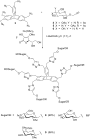
Synthesis of enantiopure sugar-decorated six-armed triptycene derivatives
Beilstein J. Org. Chem. 2013, 9, 2410–2416, doi:10.3762/bjoc.9.278

- geometric features of its skeleton with a D3h symmetry have attracted a lot of attention and its derivatives have been used for applications in supramolecular chemistry, material chemistry, and as molecular machines [1][2]. The interest in this three-dimensional rigid platform is also due to the easy



Structure elucidation of β-cyclodextrin–xylazine complex by a combination of quantitative 1H–1H ROESY and molecular dynamics studies
Beilstein J. Org. Chem. 2013, 9, 1917–1924, doi:10.3762/bjoc.9.226
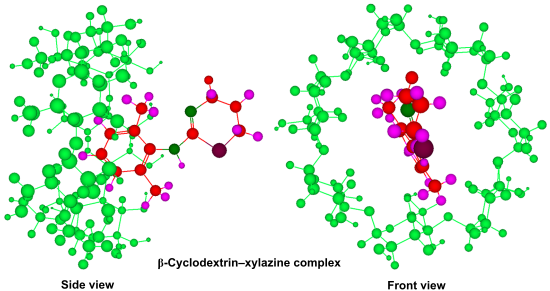
- ; Introduction The emergence and establishment of supramolecular chemistry as an important domain of science has fueled the development of complex chemical systems from components, interacting by non-covalent intermolecular forces. This field transcends the traditional barriers separating many disciplines of
- science and is the basis for most of the vital biological processes [1]. The basis of supramolecular chemistry is molecular recognition where host and guest species interact with each other and exist as a single system. These host–guest systems symbolize simplest examples of supramolecular systems in





Efficient continuous-flow synthesis of novel 1,2,3-triazole-substituted β-aminocyclohexanecarboxylic acid derivatives with gram-scale production
Beilstein J. Org. Chem. 2013, 9, 1508–1516, doi:10.3762/bjoc.9.172
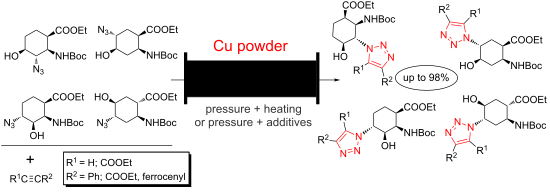
- applications in numerous other areas of modern chemical sciences, such as bioconjugation [13], supramolecular chemistry, [14] and polymer sciences [15]. Probably the most useful and powerful procedure for the synthesis of 1,2,3-triazoles is the Huisgen 1,3-dipolar cycloaddition of organic azides with



Isolation and X-ray characterization of palladium–N complexes in the guanylation of aromatic amines. Mechanistic implications
Beilstein J. Org. Chem. 2013, 9, 1455–1462, doi:10.3762/bjoc.9.165
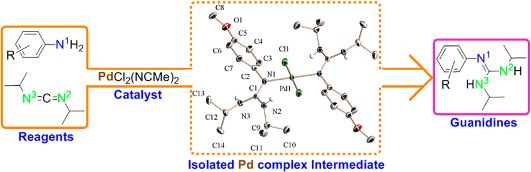
- catalysis; palladium complexes; reactive intermediates; Introduction N-Arylguanidines are important compounds with interesting biological activities [1][2] such as fungicides [3] and also in supramolecular chemistry as complementary partners of carboxylate and nitro groups [4][5][6][7]. Some of these


Linkage of α-cyclodextrin-terminated poly(dimethylsiloxanes) by inclusion of quasi bifunctional ferrocene
Beilstein J. Org. Chem. 2013, 9, 1278–1284, doi:10.3762/bjoc.9.144
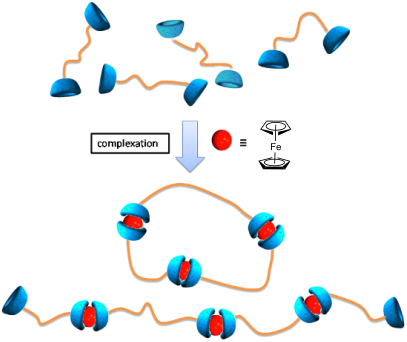
- verified by the shifts of the protons in the 1H NMR spectra and in the correlation signals of the 2D ROESY NMR spectra. Keywords: cyclodextrins; ferrocene; host–guest systems; polysiloxanes; supramolecular chemistry; Introduction Polymers containing cyclodextrins (CD) covalently or supramolecularly


Host–guest complexes of mixed glycol-bipyridine cryptands: prediction of ion selectivity by quantum chemical calculations, part V
Beilstein J. Org. Chem. 2013, 9, 1252–1268, doi:10.3762/bjoc.9.142

- -inorganic supramolecular chemistry, which requires detailed and elaborate examination due to its significant role in receptors in biological and technical systems. Selectivity phenomena have been studied for over 80 years [5][6]. During this period of time versatile model systems with variable cavity sizes


![[Graphic 2]](/bjoc/content/inline/1860-5397-9-142-i3.png?max-width=637&scale=0.295455) 2.2.bpy]+.
2.2.bpy]+.


Efficient electroorganic synthesis of 2,3,6,7,10,11-hexahydroxytriphenylene derivatives
Beilstein J. Org. Chem. 2012, 8, 1721–1724, doi:10.3762/bjoc.8.196
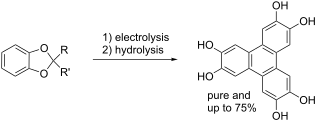
- common structural motif. The use of triphenylenes in discotic liquid crystals [1][2] as building blocks in supramolecular chemistry [3][4] as well as in solid-state chemistry [5] is well documented. Furthermore, triphenylenes are applied as components of functional polymers [6][7] and fluorescent labels


Synthesis and anion recognition properties of shape-persistent binaphthyl-containing chiral macrocyclic amides
Beilstein J. Org. Chem. 2012, 8, 967–976, doi:10.3762/bjoc.8.109
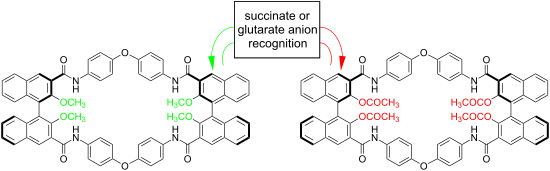
- electronic features of the functional groups in the 2,2' positions. Keywords: amides; anion recognition; chirality; macrocycles; molecular switches; supramolecular chemistry; Introduction Macrocyclic molecules possessing a high degree of shape persistency act as molecular cages, and the scientific interest


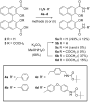

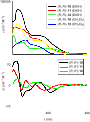


Azobenzene dye-coupled quadruply hydrogen-bonding modules as colorimetric indicators for supramolecular interactions
Beilstein J. Org. Chem. 2012, 8, 486–495, doi:10.3762/bjoc.8.55
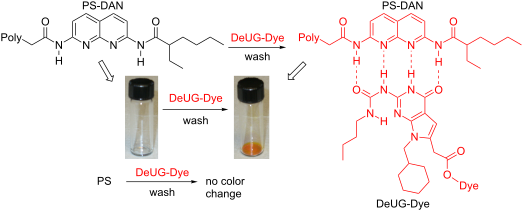
- -diamido-1,8-naphthyridine (DAN); polymer; quadruply hydrogen bonding; supramolecular; Introduction Lehn’s pioneering studies [1] have advanced supramolecular chemistry to the point where complex hierarchical self-assembled [2] and even dynamically assembled structures are routinely described [3


Synthesis of mesomeric betaine compounds with imidazolium-enolate structure
Beilstein J. Org. Chem. 2012, 8, 390–397, doi:10.3762/bjoc.8.42
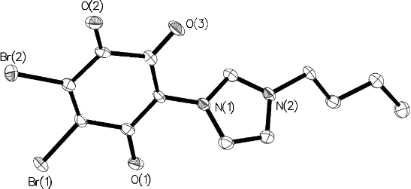
- ). Regarding our interest in supramolecular chemistry and the enhancement of water solubility, the ability of 3 to form inclusion complexes with randomly methylated (1.8) β-cyclodextrin (m-β-CD) was investigated by means of UV–vis spectroscopy. Therefore, the type of inclusion complex and the complex formation