


Search results
Search for "aldimine" in Full Text gives 27 result(s) in Beilstein Journal of Organic Chemistry.
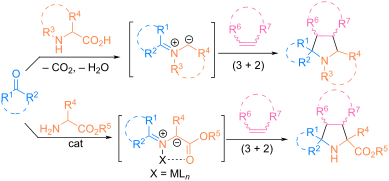
Synthesis of heterocycles based on azomethine ylides from α-amino acids (or amines) and carbonyl compounds
- Ekaterina V. Berezhnaya,
- Alexander I. Ponyaev,
- Vitali M. Boitsov and
- Alexander V. Stepakov
Beilstein J. Org. Chem. 2026, 22, 705–741, doi:10.3762/bjoc.22.55
- in the asymmetric (3 + 2) cycloaddition of iminoethers with various 2-alkylidenecyclopentanones [53] In 2025, Wang and co-workers carried out a cascade enantioconvergent reaction between aldimine esters 1 and low-reactivity allylic alcohols 30, which are activated by oxidative dehydrogenation to form
- enones, which trigger a 1,3-dipolar cycloaddition via copper–ruthenium catalysis [54] (Scheme 15). Further reductive hydrogenation of ketopyrrolidines proceeds to form hydroxypyrrolidines 31 in high yields and excellent diastereo-/enantioselectivity. The reaction can be used with aldimine esters with
- . The authors used this methodology to modify peptides and functionalize several natural products. Thus, aldimine dipeptides Gly–Gly, Gly–Ala, as well as iminoesters in combination with natural ʟ-borneol, ʟ-menthol, cholesterol, or lactate scaffolds proved to be suitable precursors of azomethine ylides

Graphical Abstract

Scheme 1: Strategies for the preparation of pyrrolidine derivatives by (3 + 2) cycloaddition of azomethine yl...

Scheme 2: (3 + 2) Cycloaddition of iminoesters to dimethylmaleate.

Scheme 3: Cycloaddition of 1 with various dipolarophiles catalyzed by Ag(I)-L1.

Scheme 4: Cycloaddition of 1 with tert-butyl acrylate catalyzed by Ag(I)-L2.

Scheme 5: Cycloaddition of 1 with dimethyl maleate catalyzed by Cu(I)-L3.

Scheme 6: Cycloaddition of 1 with alkenes catalyzed by Zn(II)-t-Bu-BOX (L4).

Scheme 7: (3 + 2) Cycloaddition of iminoesters to acrylates.

Scheme 8: Catalytic double (3 + 2) cycloaddition to form pyrrolizidine derivatives.

Scheme 9: (3 + 2) Cycloaddition of iminoethers to vinyl phenyl sulfone.

Scheme 10: Regiodivergent and enantioselective synthesis of pyrrolidines 16 and 17.

Scheme 11: Substrate-controlled regioreversible "normal" and "incomplete" 1,3-dipolar cycloaddition.

Scheme 12: Enantioselective synthesis of exo-/endo-pyrrolidines.

Scheme 13: (3 + 2) Cycloaddition of iminoethers 21 to dipolarophiles 22–24.

Scheme 14: Synthesis of bicyclic pyrrolidines 29 from cyclopentene-1,3-diones.

Scheme 15: (3 + 2) Cycloaddition of aldimine esters and allyl alcohols using copper-ruthenium catalysis.

Scheme 16: Synthesis of 3,3-difluoro- and 3,3,4-trifluoropyrrolidine derivatives.

Scheme 17: Use of iminoesters from natural compounds and pharmaceuticals for reactions with 1,1-difluoro- and ...

Scheme 18: Reaction of iminoesters with 1,3-enynes.

Scheme 19: Synthesis of pyrrolidines from iminoesters and vinyl(hetero)arenes.

Scheme 20: Synthesis of exo-pyrrolidines 42 and 43.

Scheme 21: Enantioselective synthesis of heteroarylpyrrolidines 45 and 46.

Scheme 22: Catalytic reaction of (3 + 2) cycloaddition of imines 12 to benzofulvenes 47.

Scheme 23: Fullerene as a dipolarophile in (3 + 2) cycloaddition reactions.

Scheme 24: Asymmetric synthesis of optically active tetrasubstituted pyrrolidines 54.

Scheme 25: (3 + 2) Cycloaddition reaction of imines 55 and α,β-unsaturated aldehydes.

Scheme 26: Probable mechanism of enantioselective (3 + 2) cycloaddition of azomethine ylides to α,β-unsaturate...

Scheme 27: Cycloaddition between iminoesters 12 and sulfinylimines 58.

Scheme 28: (3 + 2) Cycloaddition between triarylideneacetylacetone and azomethine ylides in the presence of ti...

Scheme 29: Stereoselective synthesis of decahydropyrrolo[2,1,5-cd]indolizine 66.

Scheme 30: Synthesis of policyclic derivatives 71 and 72.

Scheme 31: Catalytic аsymmetric (3 + 2) сycloaddition of 2-pyridylimines with N-methylmaleimide.

Scheme 32: Catalytic аsymmetric (3 + 2) сycloaddition of 2-pyridylimines 1 with other dipolarophiles.

Scheme 33: Enantioselective (3 + 2) cycloaddition of silylimine with various dipolarophiles.

Scheme 34: Proposed mechanism of formation of pyrrolidines 78.

Scheme 35: Synthesis of polyheterocyclic pyrrolidines 82–91.

Scheme 36: Synthesis of spirocyclic (95) and fused (96) pyrrolidines.

Scheme 37: (3 + 2) Cycloaddition involving aromatic aldehydes 97, N-propargylmaleimide (98) and α-amino acids ...

Scheme 38: Synthesis of pyrrolizidines 106 and by-product 107.

Scheme 39: Iridium-catalyzed three-component cascade (3 + 2) cycloaddition.

Scheme 40: Intramolecular (3 + 2) cycloaddition of N-alkenylpyrrole-2-carbaldehyde 110 and α-amino acids.

Scheme 41: Three-component (3 + 2) cycloaddition involving fullerene.

Scheme 42: Four-component stereoselective one-pot synthesis of spiro-cycloadducts 119–122.

Scheme 43: Reactions of azomethine ylide 123 with cyclopropenes.

Scheme 44: Three-component reactions involving ninhydrin, cyclopropenes and acyclic α-amino acids.

Scheme 45: Reaction of cyclopropenes 138 with the N-protonated form of Ruhemann purple 137.

Scheme 46: Enantioselective (3 + 2) cycloaddition of azomethine ylides generated in situ from isatins and amin...

Scheme 47: (3 + 2) Cycloaddition of cyclohexenone 143, isatins 140 and aminomalonic diesters 141, catalyzed by...

Scheme 48: Enantioselective (3 + 2) cycloaddition of azomethine ylides generated in situ from isatins and amin...

Scheme 49: Enantioselective (3 + 2) cycloaddition of azomethine ylides generated in situ from isatins and benz...

Scheme 50: (3 + 2) Cycloaddition involving isatins, azetidine-2-carboxylic acid, maleimides or itaconimides.

Scheme 51: (3 + 2) Cycloaddition involving isatins, amino acids and tetraethylvinylidenebis(phosphonate).

Scheme 52: Synthesis of spirooxindoles 156 from triarylideneacetylacetones 155.

Scheme 53: Synthesis of spirooxindole derivatives 157–160.

Scheme 54: Synthesis of hybrid spiro-heterocycles 164–166.

Scheme 55: Formation of azomethine ylide from isatin and sarcosine.

Scheme 56: (3 + 2) Cycloaddition involving isatins, amino acids and trans-3-benzoylacrylic acid.

Scheme 57: Regioselective synthesis of spirooxindoles 170.

Scheme 58: Synthesis of hybrid spiro-heterocycles 86.

Scheme 59: (3 + 2) Cycloaddition involving acenaphthenequinones, amino acids and cyclopropenes.

Scheme 60: Synthesis of hybrid glyco-3-nitrochromane cycloadducts 179.

Scheme 61: Synthesis of spiro[indenoquinoxaline-(thia)pyrrolizidines] 90a.

Scheme 62: Three-component reactions of cyclopropenes, 11H-indeno[1,2-b]quinoxalin-11-onesand α-amino acids, s...

Scheme 63: Synthesis of hybrid glyco-3-nitrochromane cycloadducts 92.

Scheme 64: (3 + 2) Cycloaddition of 11H-benzo[4,5]imidazo[1,2-a]indol-11-one (189) with cyclopropenes and male...

Scheme 65: Diastereoselective synthesis of spiro derivatives of barbituric acid from alloxan 193, α-amino acid...

Scheme 66: Probable mechanism of formation of azomethine ylide from alloxan and ʟ-proline.

Scheme 67: Three-component reactions involving tryptanthrin 196, α-amino acids and cyclopropenes.
Recent advancements in the synthesis of Veratrum alkaloids
- Morwenna Mögel,
- David Berger and
- Philipp Heretsch
Beilstein J. Org. Chem. 2025, 21, 2657–2693, doi:10.3762/bjoc.21.206
- , vinylogous Mannich reaction of the in situ-generated aldimine condensation product of 49 and amine 50 with trimethylsiloxyfuran 51 generated secondary amine 52 in a diastereomeric ratio of 10:1. To close the piperidine, which is to become the F-ring, six steps were carried out: 1,4-reduction of the

Graphical Abstract

Scheme 1: Representatives of steroid alkaloid classes. Marked in blue is the steroidal cholestane framework, ...

Scheme 2: Subclasses of Veratrum alkaloids: jervanine, veratramine and cevanine-type [8].

Scheme 3: Flow chart presentation of the synthesis of (−)-englerin A developed by the Christmann group [10].
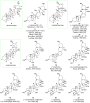
Scheme 4: Structures and year of synthesis of the three types of Veratrum alkaloids reported in the literatur...
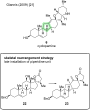
Scheme 5: Key step in the synthesis of cyclopamine (6) by the Giannis group [21].

Scheme 6: Overview of the semisynthesis of cyclopamine (6) reported by the Giannis group in 2009 [21].
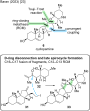
Scheme 7: Key steps in the synthesis of cyclopamine (6) by the Baran group [23].

Scheme 8: Overview of the total synthesis of cyclopamine (6) by the Baran group in 2023 [23].
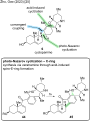
Scheme 9: Key steps in the synthesis of cyclopamine (6) by the Zhu/Gao group [25].
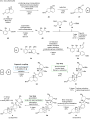
Scheme 10: Overview of the total synthesis of cyclopamine (6) by the group of Zhao/Gao in 2023 [25].
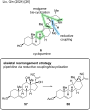
Scheme 11: Key steps in the synthesis of cyclopamine (6) by the Liu/Qin group [26].

Scheme 12: Overview of the semisynthesis of cyclopamine (6) by the Liu/Qin group in 2024 [26].
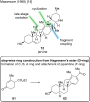
Scheme 13: Key steps in the synthesis of jervine (12) by the Masamune group [14].

Scheme 14: Overview of the total synthesis of jervine (12) by the Masamune group in 1968 [14].

Scheme 15: Color-coded schemes of the presented cyclopamine (6) syntheses by Giannis, Baran, Zhu/Gao, and Liu/...
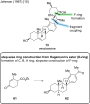
Scheme 16: Key steps in the total synthesis of veratramine (13) by the Johnson group [15].

Scheme 17: Overview of the total synthesis of veratramine (13) by the Johnson group in 1967 [15].
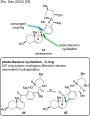
Scheme 18: Key steps in the synthesis of veratramine (13) by the Zhu/Gao group [25].

Scheme 19: Shortened overview of the total synthesis of veratramine (13) by the Zhu/Gao group in 2023 [25].
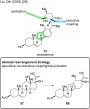
Scheme 20: Key steps in the synthesis of veratramine by the Liu/Qin group [26].

Scheme 21: Overview of the semisynthesis of veratramine (13) by the Liu/Qin group in 2024 [26].
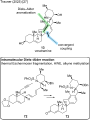
Scheme 22: Key steps in the synthesis of veratramine (13) by the Trauner group [27].

Scheme 23: Overview of the total synthesis of veratramine (13) by the Trauner group in 2025 [27].
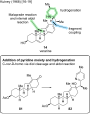
Scheme 24: Key steps in the synthesis of verarine (14) by the Kutney group [16-19].

Scheme 25: Overview of the total synthesis of verarine (14) by the Kutney group reported 1962–1968 [16-19].

Scheme 26: Color-coded schemes of the presented veratramine-type alkaloid synthesis of Zhu/Gao, Liu/Qin and Tr...
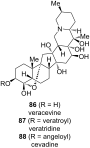
Scheme 27: Structures of veracevine (86), veratridine (87), and cevadine (88).

Scheme 28: Key step in the semisynthesis of verticine (15) by the Kutney group (1977) [20,46].

Scheme 29: Overview of the semisynthesis of verticine (15) by the Kutney group (1977) [20,46].

Scheme 30: Key step of the total synthesis of (±)-4-methylenegermine (17) by the Stork group (2017) [22].

Scheme 31: Overview of the total synthesis of (±)-4-methylenegermine (17) by the Stork group (2017) [22].

Scheme 32: Key step of the total synthesis of heilonine (16) by Cassaidy and Rawal (2021) [24].

Scheme 33: Overview of the total synthesis of heilonine (16) by Cassaidy and Rawal (2021) [24]. FGI: functional gr...
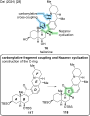
Scheme 34: Key steps of the synthesis of heilonine (16) by Dai and co-workers (2024) [28].

Scheme 35: Overview of the total synthesis of heilonine (16) by Dai and co-workers (2024) [28].
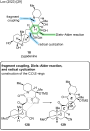
Scheme 36: Key steps of the total synthesis of zygadenine (18) reported by Luo and co-workers [29].
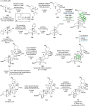
Scheme 37: Overview of the total synthesis of zygadenine (18) by Luo and co-workers (2023) [29].
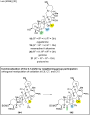
Scheme 38: Key step of the divergent total syntheses of highly oxidized cevanine-type alkaloids by Luo and co-...
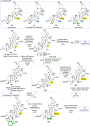
Scheme 39: Divergent syntheses of highly oxidized cevanine-type alkaloids by Luo and co-workers (2024) [30].
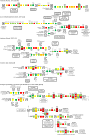
Scheme 40: Color-coded overview of the presented cevanine-type alkaloid syntheses [10,20,22,24,28-30,46]. LLS: longest linear sequen...
Asymmetric organocatalytic synthesis of chiral homoallylic amines
- Nikolay S. Kondratyev and
- Andrei V. Malkov
Beilstein J. Org. Chem. 2024, 20, 2349–2377, doi:10.3762/bjoc.20.201
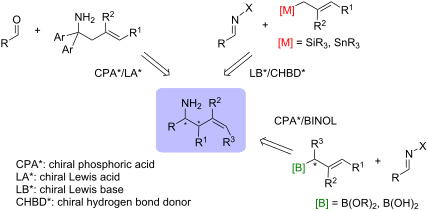
- aryl group of the oxazaborolidinium ion is restricting the allyltributylstannane attack to only one enantioface of the imine C=N bond (Scheme 13, COBI–aldimine complex). The catalyst was used in the allylation of a wide range of aliphatic and aromatic N-(2-hydroxyphenyl)imines 64, providing good to
- active catalytic species in COBI-catalysed allylations, chemical equilibria in a solution containing catalyst 72, triflic acid, and aldimine 73 were investigated by low-temperature NMR spectroscopy (Scheme 15). Protonation of oxazaborolidine 70 with triflic acid resulted in an 8.3:1 mixture of 71 and 72
- chemical shifts of the Hb proton in 74 with the same signals in the free substrate 73 and protonated 75 at −40 °C. It was revealed that the aldimine proton Hb in the free imine appears as a singlet at 7.95 ppm, while in both 74 and 75 it becomes a doublet with a 15 Hz trans JH–H coupling constant. However

Graphical Abstract

Scheme 1: The position of homoallylic amines in the landscape of alkaloid and nitrogen compounds syntheses.
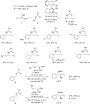
Scheme 2: 3,3’-Diaryl-BINOL-catalysed asymmetric organocatalytic allylation of acylimines [24].

Scheme 3: Aminophenol-catalysed reaction between N-phosphinoylimines and pinacol allylboronic ester. Imine sc...

Scheme 4: Asymmetric geranylation and prenylation of indoles catalysed by (R)- or (S)-3,3’-dibromo-BINOL [25]. aA...

Scheme 5: (R)-3,3’-Di(3,5-di(trifluoromethyl)phenyl-BINOL-catalysed asymmetric geranylation and prenylation o...

Scheme 6: Microwave-induced one-pot asymmetric allylation of in situ-formed arylimines, catalysed by (R)-3,3’...

Scheme 7: Microwave-induced one-pot asymmetric allylation of in situ-formed arylimines, catalysed by (R)-3,3’...
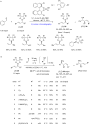
Scheme 8: Kinetic resolution of chiral secondary allylboronates [15,30].

Scheme 9: (E)-Stereospecific asymmetric α-trifluoromethylallylation of cyclic imines and hydrazones [31].

Scheme 10: Hosomi–Sakurai-type allylation of in situ-formed N-Fmoc aldimines [32].

Figure 1: Two different pathways for the Hosomi–Sakurai reaction of allyltrimethylsilane with N-Fmoc aldimine...

Scheme 11: Chiral squaramide-catalysed hydrogen bond-assisted chloride abstraction–allylation of N-carbamoyl α...

Figure 2: The pyrrolidine unit gem-methyl group conformational control in the squaramide-based catalyst [34].

Figure 3: The energetic difference between the transition states of the two proposed modes of the reaction (SN...

Scheme 12: One-pot preparation procedure for oxazaborolidinium ion (COBI) 63 [37].

Scheme 13: Chiral oxazaborolidinium ion (COBI)-catalysed allylation of N-(2-hydroxy)phenylimines with allyltri...

Scheme 14: The two-step N-(2-hydroxy)phenyl group deprotection procedure [37].

Scheme 15: Low-temperature (−40 °C) NMR experiments evidencing the reversible formation of the active COBI–imi...

Figure 4: Two computed reaction pathways for the COBI-catalysed Strecker reaction (TS1 identical to allylatio...

Scheme 16: Highly chemoselective and stereospecific synthesis of γ- and γ,δ-substituted homoallylic amines by ...

Scheme 17: Catalytic cycle for the three-component allylation with HBD/πAr–Ar catalyst [39].

Scheme 18: Reactivity of model electrophiles [39].
Scheme 19: HBD/πAr–Ar catalyst rational design and optimisation [39].

Scheme 20: Scope of the three-component HBD/πAr–Ar-catalysed reaction [39].

Scheme 21: Limitations of the HBD/πAr–Ar-catalysed reaction [39].

Scheme 22: Asymmetric chloride-directed dearomative allylation of in situ-generated N-acylquinolinium ions, ca...

Scheme 23: Chiral phosphoric acid-catalysed aza-Cope rearrangement of in situ-formed N-α,α’-diphenyl-(α’’-ally...

Scheme 24: Tandem (R)-VANOL-triborate-catalysed asymmetric aza-Cope rearrangement of in situ-formed aldimines ...

Scheme 25: (S)-TRIP-catalysed enantioconvergent aza-Cope rearrangement of β-formyl amides, substrate scope [43]. a...

Scheme 26: (S)-TRIP-catalysed enantioconvergent aza-Cope rearrangement of β-formyl amides 16–19, amide and all...

Scheme 27: Synthetic applications of homoallylic N-benzophenone imine products 131 [43].

Scheme 28: Chiral organocatalysed addition of 2,2,2-trifluoroethyl ketimines to isatin-derived Morita–Baylis–H...

Scheme 29: Chiral chinchona-derived amine-catalysed reaction between isatin-based Morita–Baylis–Hilman carbona...

Scheme 30: (R)-VAPOL-catalysed hydrogen atom transfer deracemisation [45].

Scheme 31: Chiral PA-catalysed [1,3]-rearrangement of ene-aldimines [46].
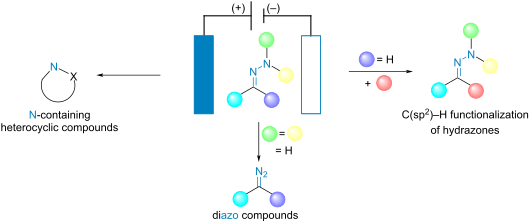
Harnessing the versatility of hydrazones through electrosynthetic oxidative transformations
- Aurélie Claraz
Beilstein J. Org. Chem. 2024, 20, 1988–2004, doi:10.3762/bjoc.20.175
- electromediated by iodine would furnish aldehyde 56. Electrogenerated iodine would further assist the reaction with ammonia to form N-iodo aldimine intermediate 57. Subsequent radical cycloaddition between 56 and 57 would furnish cyclic hydrazinyl radical 58. Finally, the triazole would be obtained after hydrogen

Graphical Abstract

Scheme 1: Synthesis of triazolopyridinium salts [34-36].

Scheme 2: Synthesis of pyrazoles [37].
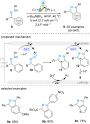
Scheme 3: Synthesis of indazoles from ketone-derived hydrazones [38].
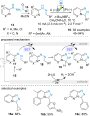
Scheme 4: Intramolecular C(sp2)–H functionalization of aldehyde-derived N-(2-pyridinyl)hydrazones for the syn...

Scheme 5: Synthesis of pyrazolo[4,3-c]quinoline derivatives [40].
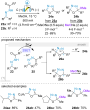
Scheme 6: Synthesis of 1,3,4-oxadiazoles and Δ3-1,3,4-oxadiazolines [41].
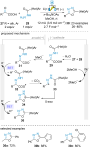
Scheme 7: Synthesis of 1,3,4-oxadiazoles [43].
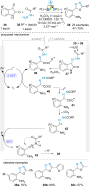
Scheme 8: Synthesis of 2-(1,3,4-oxadiazol-2-yl)anilines [44].
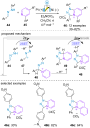
Scheme 9: Synthesis of fused s-triazolo perchlorates [45].
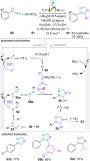
Scheme 10: Synthesis of 1-aryl and 1,5-disubstitued 1,2,4-triazoles [49].
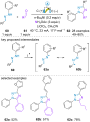
Scheme 11: Synthesis of 1,3,5-trisubstituted 1,2,4-triazoles [50].

Scheme 12: Alternative synthesis of 1,3,5-trisubstituted 1,2,4-triazoles [51].

Scheme 13: Synthesis of 5-amino 1,2,4-triazoles [55].
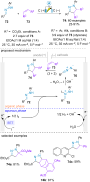
Scheme 14: Synthesis of 1-arylpyrazolines [58].
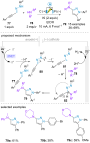
Scheme 15: Synthesis of 3‑aminopyrazoles [60].
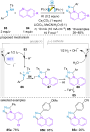
Scheme 16: Synthesis of [1,2,4]triazolo[4,3-a]quinolines [61].·
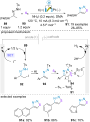
Scheme 17: Synthesis of 1,2,3-thiadiazoles [64].
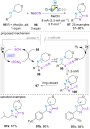
Scheme 18: Synthesis of 5-thioxo-1,2,4-triazolium inner salts [65].
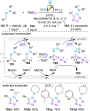
Scheme 19: Synthesis of 1-aminotetrazoles [66].
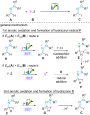
Scheme 20: C(sp2)–H functionalization of aldehyde-derived hydrazones: general mechanisms.

Scheme 21: C(sp2)–H functionalization of benzaldehyde diphenyl hydrazone [68,69].

Scheme 22: Phosphorylation of aldehyde-derived hydrazones [70].

Scheme 23: Azolation of aldehyde-derived hydrazones [72].

Scheme 24: Thiocyanation of benzaldehyde-derived hydrazone 122 [73].

Scheme 25: Sulfonylation of aromatic aldehyde-derived hydrazones [74].

Scheme 26: Trifluoromethylation of aromatic aldehyde-derived hydrazones [76].

Scheme 27: Electrooxidation of benzophenone hydrazones [77].

Scheme 28: Electrooxidative coupling of benzophenone hydrazones and alkenes [77].

Scheme 29: Electrosynthesis of α-diazoketones [78].
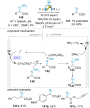
Scheme 30: Electrosynthesis of stable diazo compounds [80].
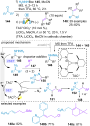
Scheme 31: Photoelectrochemical synthesis of alkenes through in situ generation of diazo compounds [81].

Scheme 32: Synthesis of nitriles [82].
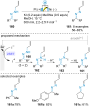
Scheme 33: Electrochemical oxidation of ketone-derived NH-allylhydrazone [83].
Metal-catalyzed coupling/carbonylative cyclizations for accessing dibenzodiazepinones: an expedient route to clozapine and other drugs
- Amina Moutayakine and
- Anthony J. Burke
Beilstein J. Org. Chem. 2024, 20, 193–204, doi:10.3762/bjoc.20.19
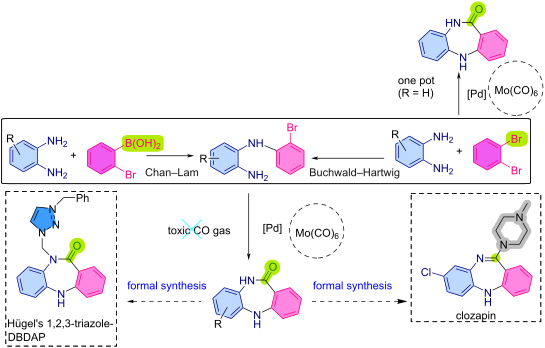
- careful review of the product structure it was revealed that the purported dibenzodiazepine products were, in fact, diarylimines, which resulted from a nucleophilic addition of the aniline reagents to the aldimine substrates, followed by elimination of an tosylamine product. This was one of the principle

Graphical Abstract

Figure 1: Biologically active dibenzodiazepinones.

Scheme 1: Different synthetic routes to DBDAPs (a–c), including our novel approach (d).

Scheme 2: One-pot synthesis of 5H-dibenzo[b,e][1,4]diazepin-11-ol (5).

Scheme 3: Scope of the Chan–Lam coupling between o-phenylenediamines and 2-bromophenylboronic acids (please n...

Scheme 4: Scope of the synthesis of DBDAPs. Please note that product 4g contained some unidentified impuritie...

Scheme 5: Proposed mechanism.
pH-Responsive fluorescent supramolecular nanoparticles based on tetraphenylethylene-labelled chitosan and a six-fold carboxylated tribenzotriquinacene
- Nan Yang,
- Yi-Yan Zhu,
- Wei-Xiu Lin,
- Yi-Long Lu and
- Wen-Rong Xu
Beilstein J. Org. Chem. 2023, 19, 635–645, doi:10.3762/bjoc.19.45
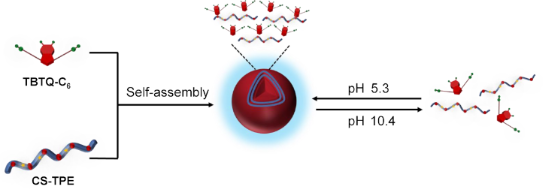
- bioconjugates with different degrees of fluorescence labelling were synthesized as guests by controlling the feed ratios (Rf) of 4-(1,2,2-triphenylvinyl)benzaldehyde (TPE-CHO) [23] to 2 mol %, 10 mol %, and 20 mol %, respectively. They were obtained with chitosan and TPE-CHO through an aldimine condensation

Graphical Abstract

Scheme 1: (a) Synthesis route to CS-TPE. (b) Structure of TBTQ-C6. (c) Construction of TBTQ-C6/CS-TPE supramo...

Figure 1: Partial 1H NMR spectra (400 MHz, CD3COOD/D2O, 25 °C) of (a) CS, (b) CS-TPE-2%, (c) CS-TPE-10%, and ...

Figure 2: (a) Optical images of CS-TPE under daylight (top) and 365 nm UV light (bottom) in the solid state; ...

Figure 3: TEM images of (a) CS-TPE-2%, (b) CS-TPE-10%, and (c) CS-TPE-20% assemblies at pH 5.3; TEM images of...
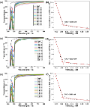
Figure 4: (a, c, e) Optical transmittance and (b, d, f) transmittance as a function of [TBTQ-C6] at 293 nm of...
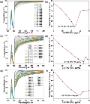
Figure 5: (a, c, e) Optical transmittance and (b, d, f) CS-TPE concentration-dependent optical transmittance ...

Figure 6: TEM images of (a) TBTQ-C6/CS-TPE-10% in aqueous solution at pH 5.3, (b) after adjustment of the sol...
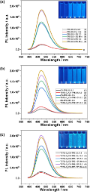
Figure 7: (a) Fluorescence spectra of CS-TPE with different Rf in aqueous solutions at pH 5.3 and 10.4; (b) f...
Catalytic aza-Nazarov cyclization reactions to access α-methylene-γ-lactam heterocycles
- Bilge Banu Yagci,
- Selin Ezgi Donmez,
- Onur Şahin and
- Yunus Emre Türkmen
Beilstein J. Org. Chem. 2023, 19, 66–77, doi:10.3762/bjoc.19.6

- aza-Nazarov reactions of such imines were found to proceed successfully, albeit with slightly lower diastereoselectivities (ca. 4:1 to 16:1 dr) compared to their cyclic counterparts (Scheme 3). The reaction of the aldimine formed via the condensation of benzaldehyde and n-propylamine with acyl
- °C and with the use of 1.3 equivalents of AgOTf. Finally, we sought to check the reactivity of other substituents on the amine component of acyclic imine substrates. With the use of benzyl-substituted aldimine, the aza-Nazarov product 19l was obtained in 49% yield and with 10:1 dr. Similarly, the aza

Graphical Abstract
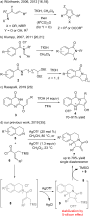
Scheme 1: Examples of aza-Nazarov reactions.

Scheme 2: Aza-Nazarov cyclization on gram scale.

Scheme 3: Scope of the aza-Nazarov cyclization with acyclic imines. aThe syntheses of aza-Nazarov products 19b...

Figure 1: X-ray crystal structure of compound 19l.

Scheme 4: Proposed mechanism for the formation of diastereomers 19 and 22.

Scheme 5: Preparation of acyl chloride 23.

Scheme 6: Aza-Nazarov reaction tested using β-TMS-substituted acyl chloride 23.

Scheme 7: Hydrolysis of N-acyliminium intermediates.

Scheme 8: (a) Two possible pathways for the formation of 7 and (b) investigation of the reaction between imin...

Scheme 9: (a) Preparation of acyl chlorides 6ba and 6bb in diastereomerically pure forms, (b) aza-Nazarov cyc...
Synthesis of (−)-halichonic acid and (−)-halichonic acid B
- Keith P. Reber and
- Emma L. Niner
Beilstein J. Org. Chem. 2022, 18, 1629–1635, doi:10.3762/bjoc.18.174
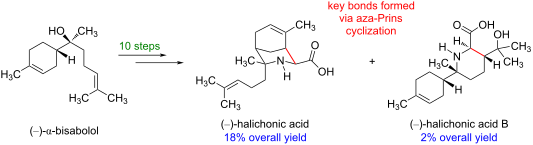
- configuration was not rigorously established, we have assigned it as the (E)-isomer, as is commonly observed in aldimine formation. The stage was now set for the key intramolecular aza-Prins reaction that would form the bicyclic structures of the halichonic acids (Scheme 2). When a solution of imine 7 in

Graphical Abstract

Figure 1: Structures of halichonic acid ((+)-1) and halichonic acid B ((+)-2).

Scheme 1: Synthesis of (−)-7-amino-7,8-dihydrobisabolene (4) and its conversion to cyclization precursor 7.

Scheme 2: Synthesis of the halichonic acids via a key intramolecular aza-Prins cyclization.

Scheme 3: Proposed intermediates for the intramolecular aza-Prins reaction leading to the formation of ethyl ...
Regioselectivity of the SEAr-based cyclizations and SEAr-terminated annulations of 3,5-unsubstituted, 4-substituted indoles
- Jonali Das and
- Sajal Kumar Das
Beilstein J. Org. Chem. 2022, 18, 293–302, doi:10.3762/bjoc.18.33
- cyclization leading to the formation of polycyclic azepino[5,4,3-cd]indoles. Synthesis of azepino[3,4,5-cd]indoles via iridium-catalyzed asymmetric [4 + 3] cycloaddition of racemic 4-indolyl allylic alcohols with azomethine ylides. Aldimine condensation/1,6-hydride transfer/Mannich-type cyclization cascade of

Graphical Abstract

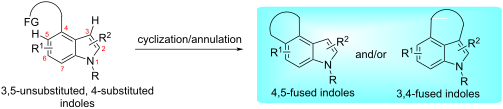
Scheme 1: SEAr-based, CAr–C bond-forming cyclization or annulation of: (A) substituted arenes/heteroarenes an...

Scheme 2: Indole C3 regioselective intramolecular alkylation of indolyl allyl carbonates.

Scheme 3: Indole C3 regioselective Michael-type cyclization in the total synthesis of (−)-indolactam V.

Scheme 4: Synthesis of azepino[4,3,2-cd]indoles via indole C3 regioselective aza-Michael addition/cyclization...

Scheme 5: Indole C3 regioselective Pictet−Spengler reaction of 2-(1H-indol-4-yl)ethanamines.

Scheme 6: Indole C3 regioselective hydroindolation of cis-β-(α′,α′-dimethyl)-4′-methindolylstyrenes.

Scheme 7: Indole C3 regioselective cyclization leading to the formation of polycyclic azepino[5,4,3-cd]indole...

Scheme 8: Synthesis of azepino[3,4,5-cd]indoles via iridium-catalyzed asymmetric [4 + 3] cycloaddition of rac...

Scheme 9: Aldimine condensation/1,6-hydride transfer/Mannich-type cyclization cascade of indole-derived pheny...

Scheme 10: Indole C5 regioselective intramolecular FC acylation of 4-substituted indoles.

Scheme 11: Catalyst-dependent regioselectivity switching in the cyclization of ethyl 2-diazo-4-(4-indolyl)-3-o...

Scheme 12: Indole C5 regioselective cyclization of α-carbonyl sulfoxonium ylides.

Scheme 13: Indole C5 regioselective cyclization of an indole-tethered donor–acceptor cyclopropane.

Scheme 14: Indole C5 regioselective epoxide–arene cyclization.
Recent advances and perspectives in ruthenium-catalyzed cyanation reactions
- Thaipparambil Aneeja,
- Cheriya Mukkolakkal Abdulla Afsina,
- Padinjare Veetil Saranya and
- Gopinathan Anilkumar
Beilstein J. Org. Chem. 2022, 18, 37–52, doi:10.3762/bjoc.18.4
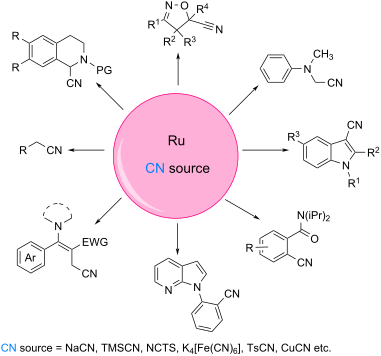
- cyanation of resultant aldimine intermediate to afford the α-amino nitriles (Scheme 20). This reaction worked well under eco-friendly conditions with low catalyst loading, and utilizing O2 as green oxidant to give excellent yields of the products. They also disclosed the efficiency of these Ru(II) complexes
- strategy. Proposed mechanistic pathway for the cyanation of the aldimine intermediate. Strecker-type functionalization of N-aryl-substituted tetrahydroisoquinolines under flow conditions. One-pot synthesis of α-aminonitriles using RuCl3 as catalyst. Synthesis of alkyl nitriles using (Ru(TMHD)3) as the

Graphical Abstract

Scheme 1: Starch-immobilized ruthenium trichloride-catalyzed cyanation of tertiary amines.

Scheme 2: Proposed mechanism for the cyanation of tertiary amines using starch-immobilized ruthenium trichlor...

Scheme 3: Cyanation of tertiary amines using heterogeneous Ru/C catalyst.

Scheme 4: Proposed mechanism for cyanation of tertiary amines using a heterogeneous Ru/C catalyst.

Scheme 5: Ruthenium-carbamato complex-catalyzed oxidative cyanation of tertiary amines.

Scheme 6: Cyanation of tertiary amines using immobilized MCM-41-2N-RuCl3 as the catalyst.

Scheme 7: Cyanation of tertiary amines using RuCl3·nH2O as the catalyst and molecular oxygen as oxidant.

Scheme 8: RuCl3-catalyzed cyanation of tertiary amines using NaCN/HCN and H2O2 as oxidant.

Scheme 9: Proposed mechanism for the ruthenium-catalyzed oxidative cyanation using H2O2.

Scheme 10: Proposed mechanism for the ruthenium-catalyzed aerobic oxidative cyanation.

Scheme 11: RuCl3-catalyzed oxidative cyanation of tertiary amines using acetone cyanohydrin as the cyanating a...

Scheme 12: Cyanation of indoles using K4[Fe(CN)6] as cyano source and Ru(III)-exchanged NaY zeolite (RuY) as c...

Scheme 13: Cyanation of arenes and heteroarenes using a ruthenium(II) catalyst and N-cyano-N-phenyl-p-toluenes...

Scheme 14: Proposed mechanism for the cyanation of arenes and heteroarenes using ruthenium(II) as catalyst and...

Scheme 15: Synthesis of N-(2-cyanoaryl)-7-azaindoles.

Figure 1: Structure of the TiO2-immobilized ruthenium polyazine complex.

Scheme 16: Visible-light-induced oxidative cyanation of aza-Baylis–Hillman adducts.

Scheme 17: Synthesis of 1° alkyl nitriles using [Ru(bpy)3](PF6)2 as the photocatalyst.

Scheme 18: Synthesis of 2° and 3° alkyl nitriles using [Ru(bpy)3](PF6)2 as the photocatalyst.

Scheme 19: Photoredox cross coupling reaction.

Scheme 20: Synthesis of α-amino nitriles from amines via a one-pot strategy.

Scheme 21: Proposed mechanistic pathway for the cyanation of the aldimine intermediate.

Scheme 22: Strecker-type functionalization of N-aryl-substituted tetrahydroisoquinolines under flow conditions....

Scheme 23: One-pot synthesis of α-aminonitriles using RuCl3 as catalyst.

Scheme 24: Synthesis of alkyl nitriles using (Ru(TMHD)3) as the catalyst.

Scheme 25: Synthesis of cyanated isoxazolines from alkenyl oximes catalyzed by [RuCl2(p-cymene)]2 in the prese...

Scheme 26: Proposed mechanism for the synthesis of cyanated isoxazolines from alkenyl oximes.

Scheme 27: Oxidative cyanation of differently substituted alcohols.
N-tert-Butanesulfinyl imines in the asymmetric synthesis of nitrogen-containing heterocycles
- Joseane A. Mendes,
- Paulo R. R. Costa,
- Miguel Yus,
- Francisco Foubelo and
- Camilla D. Buarque
Beilstein J. Org. Chem. 2021, 17, 1096–1140, doi:10.3762/bjoc.17.86

- alkaloids that were isolated in the mid-1990s from the Caribbean sponge bataella sp. From a biological point of view, the batzelladines have received attention due to their reported activity as inhibitors of HIV gp120-human CD4 binding. Chiral N-tert-butanesulfinyl aldimine (SS)-58 was used as a precursor
- Grignard reagents to chiral aldimine (RS)-74, and an intramolecular oxidative cyclization of aminoalcohols derivatives 76, are key steps of this approach. Both diastereoisomers of aldimines 74 (RS and SS) were prepared from ᴅ-malic acid and the corresponding enantiomer of tert-butanesulfinamide
- the Re face of the imine with S configuration at the sulfur atom, through a chelated transition state. The reaction of chiral aldimine (SS)-104b with pentylmagnesium bromide gave compound 106 in 75% yield. Further successive N-desulfinylation, intramolecular palladium-catalyzed N-arylation, and final

Graphical Abstract

Scheme 1: General strategy for the enantioselective synthesis of N-containing heterocycles from N-tert-butane...

Scheme 2: Methodologies for condensation of aldehydes and ketones with tert-butanesulfinamides (1).

Scheme 3: Transition models for cis-aziridines and trans-aziridines.

Scheme 4: Mechanism for the reduction of N-tert-butanesulfinyl imines.

Scheme 5: Transition models for the addition of organomagnesium and organolithium compounds to N-tert-butanes...

Scheme 6: Synthesis of 2,2-dibromoaziridines 15 from aldimines 14 and bromoform, and proposed non-chelation-c...

Scheme 7: Diastereoselective synthesis of aziridines from tert-butanesulfinyl imines.

Scheme 8: Synthesis of vinylaziridines 22 from aldimines 14 and 1,3-dibromopropene 23, and proposed chelation...

Scheme 9: Synthesis of vinylaziridines 27 from aldimines 14 and α-bromoesters 26, and proposed transition sta...

Scheme 10: Synthesis of 2-chloroaziridines 28 from aldimines 14 and dichloromethane, and proposed transition s...

Scheme 11: Synthesis of cis-vinylaziridines 30 and 31 from aldimines 14 and bromomethylbutenolide 29.

Scheme 12: Synthesis of 2-chloro-2-aroylaziridines 36 and 32 from aldimines 14, arylnitriles 34, and silyldich...

Scheme 13: Synthesis of trifluoromethylaziridines 39 and proposed transition state of the aziridination.

Scheme 14: Synthesis of aziridines 42 and proposed state transition.

Scheme 15: Synthesis of 1-substituted 2-azaspiro[3.3]heptanes, 1-phenyl-2-azaspiro[3.4]octane and 1-phenyl-2-a...

Scheme 16: Synthesis of 1-substituted 2,6-diazaspiro[3.3]heptanes 48 from chiral imines 14 and 1-Boc-azetidine...

Scheme 17: Synthesis of β-lactams 52 from chiral imines 14 and dimethyl malonate (49).

Scheme 18: Synthesis of spiro-β-lactam 57 from chiral (RS)-N-tert-butanesulfinyl isatin ketimine 53 and ethyl ...

Scheme 19: Synthesis of β-lactam 60, a precursor of (−)-batzelladine D (61) and (−)-13-epi-batzelladine D (62)...

Scheme 20: Rhodium-catalyzed asymmetric synthesis of 3-substituted pyrrolidines 66 from chiral imine (RS)-63 a...

Scheme 21: Asymmetric synthesis of 1,3-disubstituted isoindolines 69 and 70 from chiral imine 67.

Scheme 22: Asymmetric synthesis of cis-2,5-disubstituted pyrrolidines 73 from chiral imine (RS)-71.

Scheme 23: Asymmetric synthesis of 3-hydroxy-5-substituted pyrrolidin-2-ones 77 from chiral imine (RS)-74.

Scheme 24: Asymmetric synthesis of 4-hydroxy-5-substituted pyrrolidin-2-ones 80 from chiral imines 79.

Scheme 25: Asymmetric synthesis of 3-pyrrolines 82 from chiral imines 14 and ethyl 4-bromocrotonate (81).

Scheme 26: Asymmetric synthesis of γ-amino esters 84, and tetramic acid derivative 86 from chiral imines (RS)-...

Scheme 27: Asymmetric synthesis of α-methylene-γ-butyrolactams 90 from chiral imines (Z,SS)-87 and ethyl 2-bro...

Scheme 28: Asymmetric synthesis of methylenepyrrolidines 92 from chiral imines (RS)-14 and 2-(trimethysilylmet...

Scheme 29: Synthesis of dibenzoazaspirodecanes from cyclic N-tert-butanesulfinyl imines.

Scheme 30: Stereoselective synthesis of cyclopenta[c]proline derivatives 103 from β,γ-unsaturated α-amino acid...

Scheme 31: Stereoselective synthesis of alkaloids (−)-angustureine (107) and (−)-cuspareine (108).

Scheme 32: Stereoselective synthesis of alkaloids (−)-pelletierine (112) and (+)-coniine (117).

Scheme 33: Synthesis of piperidine alkaloids (+)-dihydropinidine (122a), (+)-isosolenopsin (122b) and (+)-isos...

Scheme 34: Stereoselective synthesis of the alkaloids(+)-sedamine (125) from chiral imine (SS)-119.

Scheme 35: Stereoselective synthesis of trans-5-hydroxy-6-substituted-2-piperidinones 127 and 129 from chiral ...

Scheme 36: Stereoselective synthesis of trans-5-hydroxy-6-substituted ethanone-2-piperidinones 132 from chiral...

Scheme 37: Stereoselective synthesis of trans-3-benzyl-5-hydroxy-6-substituted-2-piperidinones 136 from chiral...

Scheme 38: Stereoselective synthesis of trans-5-hydroxy-6-substituted 2-piperidinones 139 from chiral imine 138...

Scheme 39: Stereoselective synthesis of ʟ-hydroxypipecolic acid 145 from chiral imine 144.

Scheme 40: Synthesis of 1-substituted isoquinolones 147, 149 and 151.

Scheme 41: Stereoselective synthesis of 3-substituted dihydrobenzo[de]isoquinolinones 154.

Scheme 42: Enantioselective synthesis of alkaloids (S)-1-benzyl-6,7-dimethoxy-1,2,3,4-tetrahydroisoquinoline (...

Scheme 43: Enantioselective synthesis of alkaloids (−)-cermizine B (171) and (+)-serratezomine E (172) develop...

Scheme 44: Stereoselective synthesis of (+)-isosolepnosin (177) and (+)-solepnosin (178) from homoallylamine d...

Scheme 45: Stereoselective synthesis of tetrahydroquinoline derivatives 184, 185 and 187 from chiral imines (RS...

Scheme 46: Stereoselective synthesis of pyridobenzofuran and pyridoindole derivatives 193 from homopropargylam...

Scheme 47: Stereoselective synthesis of 2-substituted 1,2,5,6-tetrahydropyridines 196 from chiral imines (RS)-...

Scheme 48: Stereoselective synthesis of 2-substituted trans-2,6-disubstituted piperidine 199 from chiral imine...

Scheme 49: Stereoselective synthesis of cis-2,6-disubstituted piperidines 200, and alkaloid (+)-241D, from chi...

Scheme 50: Stereoselective synthesis of 6-substituted piperidines-2,5-diones 206 and 1,7-diazaspiro[4.5]decane...

Scheme 51: Stereoselective synthesis of spirocyclic oxindoles 210 from chiral imines (RS)-53.

Scheme 52: Stereoselective synthesis of azaspiro compound 213 from chiral imine 211.

Scheme 53: Stereoselective synthesis of tetrahydroisoquinoline derivatives from chiral imines (RS)-214.

Scheme 54: Stereoselective synthesis of (−)-crispine A 223 from chiral imine (RS)-214.

Scheme 55: Synthesis of (−)-harmicine (228) using tert-butanesulfinamide through haloamide cyclization.

Scheme 56: Stereoselective synthesis of tetraponerines T1–T8.

Scheme 57: Stereoselective synthesis of phenanthroindolizidines 246a and (−)-tylophorine (246b), and phenanthr...

Scheme 58: Stereoselective synthesis of indoline, tetrahydroquinoline and tetrahydrobenzazepine derivatives 253...

Scheme 59: Stereoselective synthesis of (+)-epohelmin A (258) and (+)-epohelmin B (260) from aldimine (RS)-79.

Scheme 60: Stereoselective synthesis of (−)-epiquinamide (266) from chiral aldimine (SS)-261.

Scheme 61: Synthesis synthesis of (–)-hippodamine (273) and (+)-epi-hippodamine (272) using chiral sulfinyl am...

Scheme 62: Stereoselective synthesis of (+)-grandisine D (279) and (+)-amabiline (283).

Scheme 63: Stereoselective synthesis of (−)-epiquinamide (266) and (+)-swaisonine (291) from aldimine (SS)-126....

Scheme 64: Stereoselective synthesis of (+)-C(9a)-epi-epiquinamide (294).

Scheme 65: Stereoselective synthesis of (+)-lasubine II (298) from chiral aldimine (SS)-109.

Scheme 66: Stereoselective synthesis of (−)-epimyrtine (300a) and (−)-lasubine II (ent-302) from β-amino keton...

Scheme 67: Stereoselective synthesis of (−)-tabersonine (310), (−)-vincadifformine (311), and (−)-aspidospermi...

Scheme 68: Stereoselective synthesis of (+)-epohelmin A (258) and (+)-epohelmin B (260) from aldehyde 313 and ...

Scheme 69: Total synthesis of (+)-lysergic acid (323) from N-tert-butanesulfinamide (RS)-1.
Microwave-assisted multicomponent reactions in heterocyclic chemistry and mechanistic aspects
- Shivani Gulati,
- Stephy Elza John and
- Nagula Shankaraiah
Beilstein J. Org. Chem. 2021, 17, 819–865, doi:10.3762/bjoc.17.71
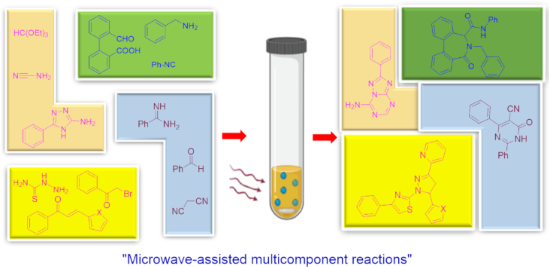

Graphical Abstract

Figure 1: Marketed drugs with acridine moiety.

Scheme 1: Synthesis of 4-arylacridinediones.

Scheme 2: Proposed mechanism for acridinedione synthesis.

Scheme 3: Synthesis of tetrahydrodibenzoacridinones.

Scheme 4: Synthesis of naphthoacridines.

Scheme 5: Plausible mechanism for naphthoacridines.
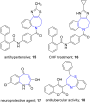
Figure 2: Benzoazepines based potent molecules.

Scheme 6: Synthesis of azepinone.

Scheme 7: Proposed mechanism for azepinone formation.

Scheme 8: Synthesis of benzoazulenen-1-one derivatives.

Scheme 9: Proposed mechanism for benzoazulene-1-one synthesis.

Figure 3: Indole-containing pharmacologically active molecules.

Scheme 10: Synthesis of functionalized indoles.

Scheme 11: Plausible mechanism for the synthesis of functionalized indoles.

Scheme 12: Synthesis of spirooxindoles.

Scheme 13: Synthesis of substituted spirooxindoles.

Scheme 14: Plausible mechanism for the synthesis of substituted spirooxindoles.

Scheme 15: Synthesis of pyrrolidinyl spirooxindoles.

Scheme 16: Proposed mechanism for pyrrolidinyl spirooxindoles.

Figure 4: Pyran-containing biologically active molecules.

Scheme 17: Synthesis of functionalized benzopyrans.

Scheme 18: Plausible mechanism for synthesis of benzopyran.

Scheme 19: Synthesis of indoline-spiro-fused pyran derivatives.

Scheme 20: Proposed mechanism for indoline-spiro-fused pyran.

Scheme 21: Synthesis of substituted naphthopyrans.

Figure 5: Marketed drugs with pyrrole ring.

Scheme 22: Synthesis of tetra-substituted pyrroles.

Scheme 23: Mechanism for silica-supported PPA-SiO2-catalyzed pyrrole synthesis.

Scheme 24: Synthesis of pyrrolo[1,10]-phenanthrolines.

Scheme 25: Proposed mechanism for pyrrolo[1,10]-phenanthrolines.

Figure 6: Marketed drugs and molecules containing pyrimidine and pyrimidinones skeletons.

Scheme 26: MWA-MCR pyrimidinone synthesis.

Scheme 27: Two proposed mechanisms for pyrimidinone synthesis.

Scheme 28: MWA multicomponent synthesis of dihydropyrimidinones.

Scheme 29: Proposed mechanism for dihydropyrimidinones.

Figure 7: Biologically active fused pyrimidines.

Scheme 30: MWA- MCR for the synthesis of pyrrolo[2,3-d]pyrimidines.

Scheme 31: Proposed mechanism for pyrrolo[2,3-d]pyrimidines.

Scheme 32: Synthesis of substituted pyrrolo[2,3-d]pyrimidine-2,4-diones.

Scheme 33: Probable pathway for pyrrolo[2,3-d]pyrimidine-2,4-diones.

Scheme 34: Synthesis of pyridopyrimidines.

Scheme 35: Plausible mechanism for the synthesis of pyridopyrimidines.

Scheme 36: Synthesis of dihydropyridopyrimidine and dihydropyrazolopyridine.

Scheme 37: Proposed mechanism for the formation of dihydropyridopyrimidine.

Scheme 38: Synthesis of thiopyrano[4,3-d]pyrimidines.

Scheme 39: Plausible mechanism for the synthesis of thiopyrano[4,3-d]pyrimidines.

Scheme 40: Synthesis of decorated imidazopyrimidines.

Scheme 41: Proposed mechanism for imidazopyrimidine synthesis.

Figure 8: Pharmacologically active molecules containing purine bases.

Scheme 42: Synthesis of aza-adenines.

Scheme 43: Synthesis of 5-aza-7-deazapurines.
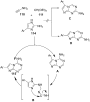
Scheme 44: Proposed mechanism for deazapurines synthesis.

Figure 9: Biologically active molecules containing pyridine moiety.

Scheme 45: Synthesis of steroidal pyridines.

Scheme 46: Proposed mechanism for steroidal pyridine.

Scheme 47: Synthesis of N-alkylated 2-pyridones.

Scheme 48: Two possible mechanisms for pyridone synthesis.

Scheme 49: Synthesis of pyridone derivatives.

Scheme 50: Postulated mechanism for synthesis of pyridone.

Figure 10: Biologically active fused pyridines.

Scheme 51: Benzimidazole-imidazo[1,2-a]pyridines synthesis.

Scheme 52: Mechanism for the synthesis of benzimidazole-imidazo[1,2-a]pyridines.

Scheme 53: Synthesis of pyrazolo[3,4-b]pyridine-5-spirocycloalkanedione derivatives.

Scheme 54: Proposed mechanism for spiro-pyridines.

Scheme 55: Functionalized macrocyclane-fused pyrazolo[3,4-b]pyridine derivatives.

Scheme 56: Mechanism postulated for macrocyclane-fused pyrazolo[3,4-b]pyridine.

Scheme 57: Generation of pyrazolo[3,4-b]pyridines.

Scheme 58: Proposed mechanism for the synthesis of pyrazolo[3,4-b]pyridines.

Scheme 59: Proposed mechanism for the synthesis of azepinoindole.

Figure 11: Pharmaceutically important molecules with quinoline moiety.

Scheme 60: Povarov-mediated quinoline synthesis.

Scheme 61: Proposed mechanism for Povarov reaction.

Scheme 62: Synthesis of pyrazoloquinoline.

Scheme 63: Plausible mechanism for pyrazoloquinoline synthesis.

Figure 12: Quinazolinones as pharmacologically significant scaffolds.

Scheme 64: Four-component reaction for dihydroquinazolinone.

Scheme 65: Proposed mechanism for dihydroquinazolinones.

Scheme 66: Synthesis purine quinazolinone and PI3K-δ inhibitor.

Scheme 67: Synthesis of fused benzothiazolo/benzoimidazoloquinazolinones.

Scheme 68: Proposed mechanism for fused benzothiazolo/benzoimidazoloquinazolinones.

Scheme 69: On-water reaction for synthesis of thiazoloquinazolinone.

Scheme 70: Proposed mechanism for the thiazoloquinazolinone synthesis.

Scheme 71: β-Cyclodextrin-mediated synthesis of indoloquinazolinediones.

Scheme 72: Proposed mechanism for synthesis of indoloquinazolinediones.

Figure 13: Triazoles-containing marketted drugs and pharmacologically active molecules.

Scheme 73: Cu(I) DAPTA-catalyzed 1,2,3-triazole formation.

Scheme 74: Mechanism for Cu(I) DAPTA-catalyzed triazole formation.

Scheme 75: Synthesis of β-hydroxy-1,2,3-triazole.

Scheme 76: Proposed mechanism for synthesis of β-hydroxy-1,2,3-triazoles.

Scheme 77: Synthesis of bis-1,2,4-triazoles.

Scheme 78: Proposed mechanism for bis-1,2,4-triazoles synthesis.

Figure 14: Thiazole containing drugs.

Scheme 79: Synthesis of a substituted thiazole ring.

Scheme 80: Synthesis of pyrazolothiazoles.

Figure 15: Chromene containing drugs.

Scheme 81: Magnetic nanocatalyst-mediated aminochromene synthesis.

Scheme 82: Proposed mechanism for the synthesis of chromenes.
Ultrasound-assisted Strecker synthesis of novel 2-(hetero)aryl-2-(arylamino)acetonitrile derivatives
- Emese Gal,
- Luiza Gaina,
- Hermina Petkes,
- Alexandra Pop,
- Castelia Cristea,
- Gabriel Barta,
- Dan Cristian Vodnar and
- Luminiţa Silaghi-Dumitrescu
Beilstein J. Org. Chem. 2020, 16, 2929–2936, doi:10.3762/bjoc.16.242
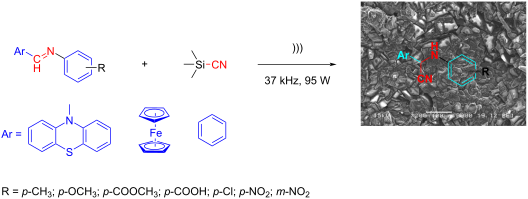
- Abstract This work describes an efficient, simple, and ecofriendly sonochemical procedure for the preparation of new α-(arylamino)acetonitrile derivatives C-substituted with phenothiazine or ferrocene units. The synthetic protocol is based on the Strecker reaction of a (hetero)aryl aldimine substrate with
- of aldimine and ketoimine substrates under mild conditions [18]. Early studies reported a positive effect of sonication on the classical aminocyanation procedures. The reaction rate of the classical Strecker reaction using cyanide salts, amines and aromatic carbonyl derivatives [19] or piperidone [20
- ] was customized for phenothiazinyl aldimine substrates (Scheme 1), but an extremely long reaction time was required (72 hours) for the reaction to complete. In order to enhance the reaction rate, alternative energy sources were taken into consideration and ultrasonic irradiation was selected as a green

Graphical Abstract

Scheme 1: Synthesis of α-amino-acetonitrile derivatives. Reaction conditions: Aldimine (1 equiv), TMSCN (1 eq...

Figure 1: Crystal structure of 2-phenothiazinyl-2-(p-tolylamino)acetonitrile 2a. a) ORTEP plot and b) crystal...

Figure 2: SEM images recorded at 200× for the raw reaction product 2b obtained through a) ultrasound-assisted...

Figure 3: SEM image recorded at 200× for the raw reaction product 2c obtained through a) ultrasound-assisted ...
Asymmetric Mannich reactions of (S)-N-tert-butylsulfinyl-3,3,3-trifluoroacetaldimines with yne nucleophiles
- Ziyi Li,
- Li Wang,
- Yunqi Huang,
- Haibo Mei,
- Hiroyuki Konno,
- Hiroki Moriwaki,
- Vadim A. Soloshonok and
- Jianlin Han
Beilstein J. Org. Chem. 2020, 16, 2671–2678, doi:10.3762/bjoc.16.217
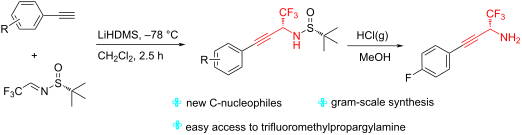
- -nucleophile; CF3-aldimine; fluorinated propargylamine; Introduction In recent years, substitution of hydrogen by fluorine atoms or fluorine-containing groups usually provides unexpected biological and physicochemical properties, which thus has become an established approach for the development of
- yne nucleophiles have never been reported thus far. Accordingly, intrigued by this methodological deficiency, we decided to dedicate a special research project to this objective; herein, we report Mannich reactions between yne nucleophiles and aldimine 1 (Scheme 1c). The results reported in this work
- excellent level (>90% de) of stereocontrol reported for the Mannich additions of aldimine 1 with sp3 [42][55] and sp2 [56] nucleophiles, including lithiated aromatics [57] one would not anticipate such a dramatic drop in the selectivity in the reactions of sp nucleophiles. Accordingly, we considered the

Graphical Abstract

Figure 1: Anti-HIV compound containing a trifluoromethylpropargylamine moiety.

Scheme 1: Literature-known methods (a and b) and the here reported (c) approach for the synthesis of α-triflu...
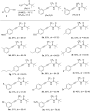
Scheme 2: Substrate scope study. Reaction conditions: arylethyne 2 (0.39 mmol), imine 1 (0.3 mmol), LiHMDS (0...

Figure 2: ORTEP diagram showing of the minor product of 3a.

Figure 3: Mode of nucleophilic attacks A and B.

Scheme 3: Large-scale application of the reaction.

Scheme 4: Removal of the chiral auxiliary.
Recent advances in Cu-catalyzed C(sp3)–Si and C(sp3)–B bond formation
- Balaram S. Takale,
- Ruchita R. Thakore,
- Elham Etemadi-Davan and
- Bruce H. Lipshutz
Beilstein J. Org. Chem. 2020, 16, 691–737, doi:10.3762/bjoc.16.67
- aldimines 62, failing to use unactivated educts [40]. Likewise, the α-silylated sulfonamide 67 was obtained in modest ee, although the chemical yield of the transformation was very low (15%). Changing the protecting group from Ts to methyl (68) or Boc (70) in the aldimine series did not alter yields or ees

Graphical Abstract

Scheme 1: Pharmaceuticals possessing a silicon or boron atom.

Scheme 2: The first Cu-catalyzed C(sp3)–Si bond formation.

Scheme 3: Conversion of benzylic phosphate 6 to the corresponding silane.

Scheme 4: Conversion of alkyl triflates to alkylsilanes.

Scheme 5: Conversion of secondary alkyl triflates to alkylsilanes.

Scheme 6: Conversion of alkyl iodides to alkylsilanes.

Scheme 7: Trapping of intermediate radical through cascade reaction.

Scheme 8: Radical pathway for conversion of alkyl iodides to alkylsilanes.

Scheme 9: Conversion of alkyl ester of N-hydroxyphthalimide to alkylsilanes.

Scheme 10: Conversion of gem-dibromides to bis-silylalkanes.

Scheme 11: Conversion of imines to α-silylated amines (A) and the reaction pathway (B).

Scheme 12: Conversion of N-tosylimines to α-silylated amines.

Scheme 13: Screening of diamine ligands.

Scheme 14: Conversion of N-tert-butylsulfonylimines to α-silylated amines.

Scheme 15: Conversion of aldimines to nonracemic α-silylated amines.

Scheme 16: Conversion of N-tosylimines to α-silylated amines.

Scheme 17: Reaction pathway [A] and conversion of aldehydes to α-silylated alcohols [B].

Scheme 18: Conversion of aldehydes to benzhydryl silyl ethers.

Scheme 19: Conversion of ketones to 1,2-diols (A) and conversion of imines to 1,2-amino alcohols (B).

Scheme 20: Ligand screening (A) and conversion of aldehydes to α-silylated alcohols (B).

Scheme 21: Conversion of aldehydes to α-silylated alcohols.

Scheme 22: 1,4-Additions to α,β-unsaturated ketones.

Scheme 23: 1,4-Additions to unsaturated ketones to give β-silylated derivatives.

Scheme 24: Additions onto α,β-unsaturated lactones to give β-silylated lactones.

Scheme 25: Conversion of α,β-unsaturated to β-silylated lactams.

Scheme 26: Conversion of N-arylacrylamides to silylated oxindoles.

Scheme 27: Conversion of α,β-unsaturated carbonyl compounds to silylated tert-butylperoxides.

Scheme 28: Catalytic cycle for Cu(I) catalyzed α,β-unsaturated compounds.

Scheme 29: Conversion of p-quinone methides to benzylic silanes.

Scheme 30: Conversion of α,β-unsaturated ketimines to regio- and stereocontrolled allylic silanes.

Scheme 31: Conversion of α,β-unsaturated ketimines to enantioenriched allylic silanes.

Scheme 32: Regioselective conversion of dienedioates to allylic silanes.

Scheme 33: Conversion of alkenyl-substituted azaarenes to β-silylated adducts.

Scheme 34: Conversion of conjugated benzoxazoles to enantioenriched β-silylated adducts.

Scheme 35: Conversion of α,β-unsaturated carbonyl indoles to α-silylated N-alkylated indoles.

Scheme 36: Conversion of β-amidoacrylates to α-aminosilanes.

Scheme 37: Conversion of α,β-unsaturated ketones to enantioenriched β-silylated ketones, nitriles, and nitro d...

Scheme 38: Regio-divergent silacarboxylation of allenes.

Scheme 39: Silylation of diazocarbonyl compounds, (A) asymmetric and (B) racemic.

Scheme 40: Enantioselective hydrosilylation of alkenes.

Scheme 41: Conversion of 3-acylindoles to indolino-silanes.

Scheme 42: Proposed mechanism for the silylation of 3-acylindoles.

Scheme 43: Silyation of N-chlorosulfonamides.

Scheme 44: Conversion of acyl silanes to α-silyl alcohols.

Scheme 45: Conversion of N-tosylaziridines to β-silylated N-tosylamines.

Scheme 46: Conversion of N-tosylaziridines to silylated N-tosylamines.

Scheme 47: Conversion of 3,3-disubstituted cyclopropenes to silylated cyclopropanes.

Scheme 48: Conversion of conjugated enynes to 1,3-bis(silyl)propenes.

Scheme 49: Proposed sequence for the Cu-catalyzed borylation of substituted alkenes.

Scheme 50: Cu-catalyzed synthesis of nonracemic allylic boronates.

Scheme 51: Cu–NHC catalyzed synthesis of α-substituted allylboronates.
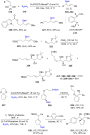
Scheme 52: Synthesis of α-chiral (γ-alkoxyallyl)boronates.

Scheme 53: Cu-mediated formation of nonracemic cis- or trans- 2-substituted cyclopropylboronates.

Scheme 54: Cu-catalyzed synthesis of γ,γ-gem-difluoroallylboronates.

Scheme 55: Cu-catalyzed hydrofunctionalization of internal alkenes and vinylarenes.

Scheme 56: Cu-catalyzed Markovnikov and anti-Markovnikov borylation of alkenes.

Scheme 57: Cu-catalyzed borylation/ortho-cyanation/Cope rearrangement.
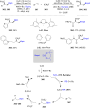
Scheme 58: Borylfluoromethylation of alkenes.

Scheme 59: Cu-catalyzed synthesis of tertiary nonracemic alcohols.

Scheme 60: Synthesis of densely functionalized and synthetically versatile 1,2- or 4,3-borocyanated 1,3-butadi...

Scheme 61: Cu-catalyzed trifunctionalization of allenes.

Scheme 62: Cu-catalyzed selective arylborylation of arenes.

Scheme 63: Asymmetric borylative coupling between styrenes and imines.

Scheme 64: Regio-divergent aminoboration of unactivated terminal alkenes.

Scheme 65: Cu-catalyzed 1,4-borylation of α,β-unsaturated ketones.

Scheme 66: Cu-catalyzed protodeboronation of α,β-unsaturated ketones.

Scheme 67: Cu-catalyzed β-borylation of α,β-unsaturated imines.

Scheme 68: Cu-catalyzed synthesis of β-trifluoroborato carbonyl compounds.

Scheme 69: Asymmetric 1,4-borylation of α,β-unsaturated carbonyl compounds.

Scheme 70: Cu-catalyzed ACB and ACA reactions of α,β-unsaturated 2-acyl-N-methylimidazoles.

Scheme 71: Cu-catalyzed diborylation of aldehydes.

Scheme 72: Umpolung pathway for chiral, nonracemic tertiary alcohol synthesis (top) and proposed mechanism for...

Scheme 73: Cu-catalyzed synthesis of α-hydroxyboronates.

Scheme 74: Cu-catalyzed borylation of ketones.

Scheme 75: Cu-catalyzed borylation of unactivated alkyl halides.

Scheme 76: Cu-catalyzed borylation of allylic difluorides.

Scheme 77: Cu-catalyzed borylation of cyclic and acyclic alkyl halides.

Scheme 78: Cu-catalyzed borylation of unactivated alkyl chlorides and bromides.

Scheme 79: Cu-catalyzed decarboxylative borylation of carboxylic acids.
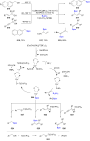
Scheme 80: Cu-catalyzed borylation of benzylic, allylic, and propargylic alcohols.
Microwave-assisted synthesis of N,N-bis(phosphinoylmethyl)amines and N,N,N-tris(phosphinoylmethyl)amines bearing different substituents on the phosphorus atoms
- Erika Bálint,
- Anna Tripolszky,
- László Hegedűs and
- György Keglevich
Beilstein J. Org. Chem. 2019, 15, 469–473, doi:10.3762/bjoc.15.40
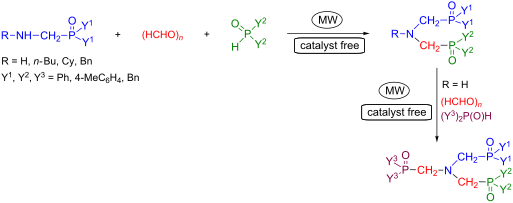
- of alkylphenylphosphine oxides and the corresponding aldimine derivatives of thiazole 1 (Scheme 1) [12]. Cherkasov and his group applied the Kabachnik–Fields reaction to synthesize a P-chiral aminophosphine oxide with a 2-pyridyl substituent 3 (Scheme 2) [13]. Bis(aminophosphine oxide) derivatives

Graphical Abstract

Scheme 1: Synthesis of chiral thiazole-substituted aminophosphine oxides.

Scheme 2: Synthesis of a P-chiral aminophosphine oxide containing a 2-pyridyl moiety.

Scheme 3: Condensation of (octylaminomethyl)dihexylphosphine oxide with paraformaldehyde and di(p-tolyl)phosp...

Scheme 4: Synthesis of (aminomethyl)phosphine oxides 5–7.

Scheme 5: Synthesis of (aminomethyl)diphenylphosphine oxide (9).

Scheme 6: Synthesis of N,N-bis(phosphinoylmethyl)amines 10a,b, 11a,b and 12a,b bearing different substituents...

Scheme 7: Synthesis of N,N-bis(phosphinoylmethyl)amines 13a–c.

Scheme 8: Synthesis of N,N,N-tris(phosphinoylmethyl)amines 14–17.
Hydroarylations by cobalt-catalyzed C–H activation
- Rajagopal Santhoshkumar and
- Chien-Hong Cheng
Beilstein J. Org. Chem. 2018, 14, 2266–2288, doi:10.3762/bjoc.14.202
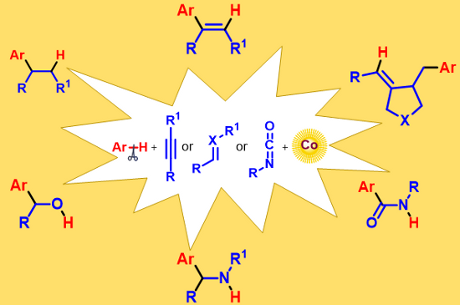
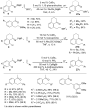
- (Scheme 20b) [66]. Moreover, the Co-catalyzed hydroarylation of styrene with ketimine or aldimine proceeded without Grignard reagent using Mg metal as the reductant [67]. Recently, N–H imines 9d were also employed for the hydroarylation reaction with styrenes, giving a branched-selective hydroarylation
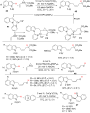
- . Indoles also efficiently participated in intra- and intermolecular hydroarylation reactions to access useful organic skeletons [70][71][72][73]. Thus, the reaction of indole bearing an aldimine and homoallyl group 29 in the presence of CoBr2, SIMes·HCl and Me3SiCH2MgCl gave dihydropyrroloindoles 30

Graphical Abstract

Scheme 1: Cobalt-catalyzed C–H carbonylation.

Scheme 2: Hydroarylation by C–H activation.

Scheme 3: Pathways for cobalt-catalyzed hydroarylations.

Scheme 4: Co-catalyzed hydroarylation of alkynes with azobenzenes.

Scheme 5: Co-catalyzed hydroarylation of alkynes with 2-arylpyridines.

Scheme 6: Co-catalyzed addition of azoles to alkynes.

Scheme 7: Co-catalyzed addition of indoles to alkynes.

Scheme 8: Co-catalyzed hydroarylation of alkynes with imines.

Scheme 9: A plausible pathway for Co-catalyzed hydroarylation of alkynes.

Scheme 10: Co-catalyzed anti-selective C–H addition to alkynes.

Scheme 11: Co(III)-catalyzed hydroarylation of alkynes with indoles.

Scheme 12: Co(III)-catalyzed branch-selective hydroarylation of alkynes.

Scheme 13: Co(III)-catalyzed hydroarylation of terminal alkynes with arenes.

Scheme 14: Co(III)-catalyzed hydroarylation of alkynes with amides.

Scheme 15: Co(III)-catalyzed C–H alkenylation of arenes.

Scheme 16: Co-catalyzed alkylation of substituted benzamides with alkenes.

Scheme 17: Co-catalyzed switchable hydroarylation of styrenes with 2-aryl pyridines.
Scheme 18: Co-catalyzed linear-selective hydroarylation of alkenes with imines.

Scheme 19: Co-catalyzed linearly-selective hydroarylation of alkenes with N–H imines.

Scheme 20: Co-catalyzed branched-selective hydroarylation of alkenes with imines.

Scheme 21: Mechanism of Co-catalyzed hydroarylation of alkenes.

Scheme 22: Co-catalyzed intramolecular hydroarylation of indoles.

Scheme 23: Co-catalyzed asymmetric hydroarylation of alkenes with indoles.

Scheme 24: Co-catalyzed hydroarylation of alkenes with heteroarenes.

Scheme 25: Co(III)-catalyzed hydroarylation of activated alkenes with 2-phenyl pyridines.

Scheme 26: Co(III)-catalyzed C–H alkylation of arenes.

Scheme 27: Co(III)-catalyzed C2-alkylation of indoles.

Scheme 28: Co(III)-catalyzed switchable hydroarylation of alkyl alkenes with indoles.
Scheme 29: Co(III)-catalyzed C2-allylation of indoles.

Scheme 30: Co(III)-catalyzed ortho C–H alkylation of arenes with maleimides.

Scheme 31: Co(III)-catalyzed hydroarylation of maleimides with arenes.
Scheme 32: Co(III)-catalyzed hydroarylation of allenes with arenes.

Scheme 33: Co-catalyzed hydroarylative cyclization of enynes with carbonyl compounds.

Scheme 34: Mechanism for the Co-catalyzed hydroarylative cyclization of enynes with carbonyl compounds.

Scheme 35: Co-catalyzed addition of 2-arylpyridines to aromatic aldimines.

Scheme 36: Co-catalyzed addition of 2-arylpyridines to aziridines.

Scheme 37: Co(III)-catalyzed hydroarylation of imines with arenes.

Scheme 38: Co(III)-catalyzed addition of arenes to ketenimines.

Scheme 39: Co(III)-catalyzed three-component coupling.

Scheme 40: Co(III)-catalyzed hydroarylation of aldehydes.

Scheme 41: Co(III)-catalyzed addition of arenes to isocyanates.
Asymmetric synthesis of propargylamines as amino acid surrogates in peptidomimetics
- Matthias Wünsch,
- David Schröder,
- Tanja Fröhr,
- Lisa Teichmann,
- Sebastian Hedwig,
- Nils Janson,
- Clara Belu,
- Jasmin Simon,
- Shari Heidemeyer,
- Philipp Holtkamp,
- Jens Rudlof,
- Lennard Klemme,
- Alessa Hinzmann,
- Beate Neumann,
- Hans-Georg Stammler and
- Norbert Sewald
Beilstein J. Org. Chem. 2017, 13, 2428–2441, doi:10.3762/bjoc.13.240
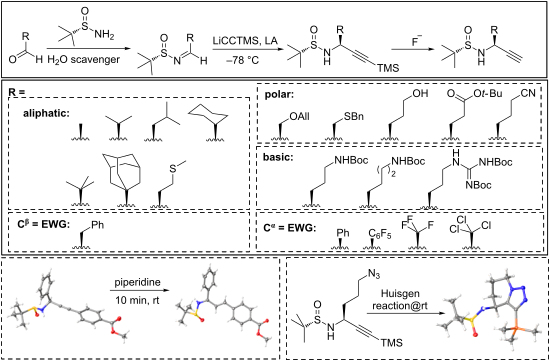
- addition to sulfinylimines is controlled by the formation of a cyclic, six-membered, chair-like transition state, which is formed by precoordination of the organometallic reagent to aldimine 5 [45]. This cyclic transition state accounts for the preferred re-face attack of the nucleophile at (S)-configured

Graphical Abstract

Figure 1: Concept of carboxylic acid or amide bond replacement on the basis of an alkyne moiety.

Figure 2: Selection of reactions based on propargylamines as precursors. a) Intramolecular Pauson–Khand react...

Figure 3: Two different approaches for the stereoselective de novo synthesis of propargylamines using Ellman’...

Figure 4: Synthesis of propargylamines 4a and 4b by introducing the side chain as nucleophile. (a) HC≡CCH2OH,...

Figure 5: Reaction of N-sulfinylimine 5h with (trimethylsilyl)ethynyllithium. (a) GP-3 or GP-4. (b) Aqueous w...

Figure 6: Side reactions observed in the course of the conversion of highly electrophilic sulfinylimines 5. (...

Figure 7: a) Possible transition states TI and TII for the transfer of the methyl moiety from AlMe3 to the im...

Figure 8: Base-induced rearrangement of propargylamines bearing electron-withdrawing substituents.

Figure 9: Base-catalyzed rearrangement of propargylamines 11 to α,β-unsaturated imines 12. A) Reaction scheme...
Chiral ammonium betaine-catalyzed asymmetric Mannich-type reaction of oxindoles
- Masahiro Torii,
- Kohsuke Kato,
- Daisuke Uraguchi and
- Takashi Ooi
Beilstein J. Org. Chem. 2016, 12, 2099–2103, doi:10.3762/bjoc.12.199
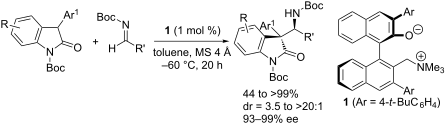
- reduced diastereoselectivity (Table 2, entries 1–4). Sterically demanding 2-tolualdehyde-derived imine 3f served as a good electrophile and the corresponding Mannich adduct 4af was isolated as virtually a single stereoisomer (Table 2, entry 5). 3-Thiophenyl aldimine 3g was also well tolerated, but a
- substantial decrease in diastereoselectivity was observed in the reaction with 2-furyl aldimine 3h, owing to the requisite higher reaction temperature (Table 2, entries 6 and 7). Catalysis with 1c was also applicable to aliphatic imines, which required prolonged reactions and slightly higher catalyst loadings

Graphical Abstract

Figure 1: Chiral ammonium betaines.
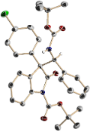
Figure 2: ORTEP diagram of 4ca (Ellipsoids displayed at 50% probability. Calculated hydrogen atoms except it ...
Investigation of the role of stereoelectronic effects in the conformation of piperidones by NMR spectroscopy and X-ray diffraction
- Cesar Garcias-Morales,
- David Ortegón-Reyna and
- Armando Ariza-Castolo
Beilstein J. Org. Chem. 2015, 11, 1973–1984, doi:10.3762/bjoc.11.213

- -nitrobenzaldehyde, and 2,6-dimethycyclohexanone for 8. The proposed reaction mechanism for piperidone formation is through an aldimine, which is formed by the reaction between an aldehyde and ammonium acetate. The aldimine is then attacked by a keto–enol to form a β-aminocarbonyl, which reacts with another molecule
- of aldehyde to form a second aldimine. Finally, 6-endo-enol-endo intramolecular cyclization leads to piperidone formation (Scheme 2) [58][59]. Structural and conformational analysis of piperidones 1–8 by NMR and X-ray diffraction Solution characterization of 1–8 was performed by 1H and 13C NMR, and

Graphical Abstract

Figure 1: (a) Schematic representation of the vicinal σC−H→σ*C−X interaction by double-bond/no-bond resonance...

Figure 2: Schematic representation of stereoelectronic effects (a) hyperconjugation, (b) homohyperconjugation...

Figure 3: Schematic representation of possible homoanomeric interactions in six-membered saturated heterocycl...

Figure 4: Structure of compounds 1 to 8.

Scheme 1: Proposed reaction mechanism for the synthesis of piperidones by the Mannich reaction. The substitue...

Scheme 2: For 6, R1 = R2 = H, for 7, R1 = H, R2 = CH3, for 8, R1 = R2 = CH3.
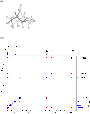
Figure 5: (a) Favored conformation for compound 1, determined by nOe effect, (b) t-ROESY spectrum of 1 record...
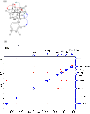
Figure 6: (a) Preferred conformation of 4 determined by nOe, (b) t-ROESY spectrum of 4 recorded at 500 MHz in...

Figure 7: (a) ORTEP diagram of 1. The thermal ellipsoids are drawn at the 30% probability level for all atoms...

Figure 8: (a) ORTEP diagrams of 6 and 7. The thermal ellipsoids are drawn at the 30% probability level for al...

Figure 9: (a) 1JC,H coupling constant of 3, 5, 6, and 8. (b) Plot of the population analysis versus 1JC,H (sl...

Scheme 3: Representation of the nN→σ*C–H(7)eq interaction. The interaction energy is 0.55 kcal/mol at the ωB9...
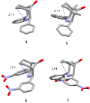
Figure 10: Distances between N(3) and C(7) for 3, 5, 6, and 7 measured in the structures obtained by XRD.
Multicomponent versus domino reactions: One-pot free-radical synthesis of β-amino-ethers and β-amino-alcohols
- Bianca Rossi,
- Nadia Pastori,
- Simona Prosperini and
- Carlo Punta
Beilstein J. Org. Chem. 2015, 11, 66–73, doi:10.3762/bjoc.11.10
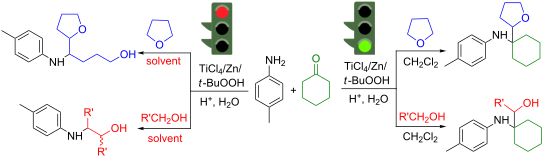
- transformation significantly affected the selectivity in the desired products. Taking advantage of this secondary process, we performed a domino reaction, where the alcohol served as the source of both the nucleophilic radical and the aldehyde necessary for the in situ formation of the aldimine (Scheme 2, entry

Graphical Abstract

Scheme 1: Nucleophilic radical addition to imines mediated by titanium salts.

Scheme 2: Radical domino approach to the synthesis of β-aminoacohols triggered by titanium salts.

Scheme 3: Competitive imine formation from THF.

Scheme 4: Reaction mechanism.

Scheme 5: Domino reaction in the presence of ethanol.
Silver and gold-catalyzed multicomponent reactions
- Giorgio Abbiati and
- Elisabetta Rossi
Beilstein J. Org. Chem. 2014, 10, 481–513, doi:10.3762/bjoc.10.46
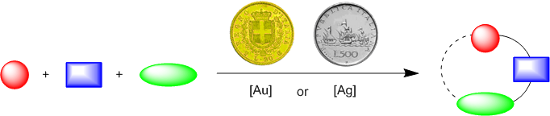
- , 25 °C for aldimine formation (first step) in the MM K-10 containing packed-bed capillary reactor (PBCR), and 80 °C for the reaction with phenylacetylene (second step) in Au NP@Al2O3 containing PBCR. The system, tested with some different aryl/heteroaryl/alkylaldehydes and cyclic/acyclic secondary
- diastereoisomeric 1,2-dihydroisoquinolines 40 (Scheme 22) [60]. Iminium intermediate 28, generated in situ from the aldimine 27 under silver triflate catalysis is the usual electrophilic intermediate, whereas the nucleophile, in this case, is the oxonium ylide 39. The reaction resulted in the synthesis of highly
- chiral phosphine ligands and AgOAc via bidentate chelation of a properly substituted aldimine. Chiral phosphine–silver(I) complexes are emerging as a valuable tool for carbon–carbon bond forming reactions. These catalysts are effective in promoting enantioselective allylations, aldol reactions, Mannich

Graphical Abstract

Scheme 1: General reaction mechanism for Ag(I)-catalyzed A3-coupling reactions.

Scheme 2: A3-coupling reaction catalyzed by polystyrene-supported NHC–silver halides.

Figure 1: Various NHC–Ag(I) complexes used as catalysts for A3-coupling.

Scheme 3: Proposed reaction mechanism for NHC–AgCl catalyzed A3-coupling reactions.

Scheme 4: Liu’s synthesis of pyrrole-2-carboxaldehydes 4.

Scheme 5: Proposed reaction mechanism for Liu’s synthesis of pyrrole-2-carboxaldehydes 4.

Scheme 6: Gold-catalyzed synthesis of propargylamines 1.

Scheme 7: A3-coupling catalyzed by phosphinamidic Au(III) metallacycle 6.

Scheme 8: Gold-catalyzed KA2-coupling.

Scheme 9: A3-coupling applied to aldehyde-containing oligosaccharides 8.

Scheme 10: A3-MCR for the preparation of propargylamine-substituted indoles 9.

Scheme 11: A3-coupling interceded synthesis of furans 12.

Scheme 12: A3/KA2-coupling mediated synthesis of functionalized dihydropyrazoles 13 and polycyclic dihydropyra...

Scheme 13: Au(I)-catalyzed entry to cyclic carbamimidates 17 via an A3-coupling-type approach.

Scheme 14: Proposed reaction mechanism for the Au(I)-catalyzed synthesis of cyclic carbamimidates 17.

Figure 2: Chiral trans-1-diphenylphosphino-2-aminocyclohexane–Au(I) complex 20.

Scheme 15: A3-coupling-type synthesis of oxazoles 21 catalyzed by Au(III)–salen complex.

Scheme 16: Proposed reaction mechanism for the synthesis of oxazoles 21.

Scheme 17: Synthesis of propargyl ethyl ethers 24 by an A3-coupling-type reaction.

Scheme 18: General mechanism of Ag(I)-catalyzed MCRs of 2-alkynylbenzaldehydes, amines and nucleophiles.

Scheme 19: General synthetic pathway to 1,3-disubstituted-1,2-dihydroisoquinolines.

Scheme 20: Synthesis of 1,3-disubstituted-1,2-dihydroisoquinolines 29.

Scheme 21: Synthesis of 1,3-disubstituted-1,2-dihydroisoquinolines 35 and 36.

Scheme 22: Rh(II)/Ag(I) co-catalyzed synthesis of 1,3-disubstituted-1,2-dihydroisoquinolines 40.

Scheme 23: General synthetic pathway to 2-amino-1,2-dihydroquinolines.

Scheme 24: Synthesis of 2-amino-1,2-dihydroquinolines 47.

Scheme 25: Synthesis of tricyclic H-pyrazolo[5,1-a]isoquinoline 48.

Scheme 26: Synthesis of tricyclic H-pyrazolo[5,1-a]isoquinolines 48.

Scheme 27: Cu(II)/Ag(I) catalyzed synthesis of H-pyrazolo[5,1-a]isoquinolines 48.

Scheme 28: Synthesis of 2-aminopyrazolo[5,1-a]isoquinolines 53.

Scheme 29: Synthesis of 1-(isoquinolin-1-yl)guanidines 55.

Scheme 30: Ag(I)/Cu(I) catalyzed synthesis of 2-amino-H-pyrazolo[5,1-a]isoquinolines 58.

Scheme 31: Ag(I)/Ni(II) co-catalyzed synthesis of 3,4-dihydro-1H-pyridazino[6,1-a]isoquinoline-1,1-dicarboxyla...

Scheme 32: Ag(I) promoted activation of the α-carbon atom of the isocyanide group.

Scheme 33: Synthesis of dihydroimidazoles 65.

Scheme 34: Synthesis of oxazoles 68.

Scheme 35: Stereoselective synthesis of chiral butenolides 71.

Scheme 36: Proposed reaction mechanism for the synthesis of butenolides 71.

Scheme 37: Stereoselective three-component approach to pirrolidines 77 by means of a chiral auxiliary.

Scheme 38: Stereoselective three-component approach to pyrrolidines 81 and 82 by means of a chiral catalyst.

Scheme 39: Synthesis of substituted five-membered carbocyles 86.

Scheme 40: Synthesis of regioisomeric arylnaphthalene lactones.

Scheme 41: Enantioselective synthesis of spiroacetals 96 by Fañanás and Rodríguez [105].

Scheme 42: Enantioselective synthesis of spiroacetals 101 by Gong [106].

Scheme 43: Synthesis of polyfunctionalized fused bicyclic ketals 103 and bridged tricyclic ketals 104.

Scheme 44: Proposed reaction mechanism for the synthesis of ketals 103 and 104.

Scheme 45: Synthesis of β-alkoxyketones 108.

Scheme 46: Synthesis of N-methyl-1,4-dihydropyridines 112.

Scheme 47: Synthesis of tetrahydrocarbazoles 115–117.

Scheme 48: Plausible reaction mechanism for the synthesis of tetrahydrocarbazoles 115–117.

Scheme 49: Carboamination, carboalkoxylation and carbolactonization of terminal alkenes.

Scheme 50: Oxyarylation of alkenes with arylboronic acids and Selectfluor as reoxidant.

Scheme 51: Proposed reaction mechanism for oxyarylation of alkenes.

Scheme 52: Oxyarylation of alkenes with arylsilanes and Selectfluor as reoxidant.

Scheme 53: Oxyarylation of alkenes with arylsilanes and IBA as reoxidant.
Four-component reaction of cyclic amines, 2-aminobenzothiazole, aromatic aldehydes and acetylenedicarboxylate
- Hong Gao,
- Jing Sun and
- Chao-Guo Yan
Beilstein J. Org. Chem. 2013, 9, 2934–2939, doi:10.3762/bjoc.9.330
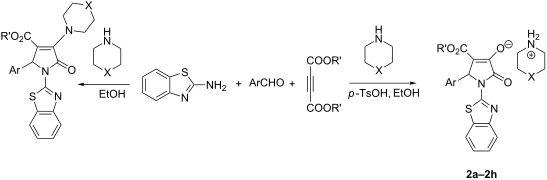
- 1,3-dipolar intermediate A. In the meantime, the condensation of the aromatic aldehyde with 2-aminobenzothiazole affords an aldimine B. Secondly, the nucleophilic addition of 1,3-dipole intermediate A to aldimine B gives an addition intermediate C. Thirdly, the intramolecular nucleophilic attack of

Graphical Abstract

Figure 1: Molecular structure of compound 1f.

Figure 2: Molecular structure of compound 2a.

Figure 3: Molecular structure of compound 2h.

Scheme 1: The proposed reaction mechanism for the four-component reaction.
Diastereoselectivity in the Staudinger reaction of pentafluorosulfanylaldimines and ketimines
- Alexander Penger,
- Cortney N. von Hahmann,
- Alexander S. Filatov and
- John T. Welch
Beilstein J. Org. Chem. 2013, 9, 2675–2680, doi:10.3762/bjoc.9.303

- control of the C–N ketimine geometry was reflected in the stereochemistry of the product β-lactam. Cyclization of imines with a stereogenic center bearing SF5 was reflected in the 1,2-lk,lk selectivity of the β-lactam. Keywords: aldimine; Cornforth transition state; diastereoselectivity; β-lactam; organo

Graphical Abstract

Scheme 1: Synthesis of 2-pentafluorosulfanylaldehydes by addition of SF5Cl to enol ethers.

Scheme 2: Reaction of pentafluorosulfanylaldimines with benzyloxyketene.

Scheme 3: Preparation of ethyl pentafluorosulfanylpyruvate and formation of the corresponding β-lactam.

Figure 1: The 1,2-lk stereochemistry of 7a as determined by single crystal X-ray diffraction. Thermal ellipso...

Scheme 4: Influence of the SF5 group on the initial attack of the ketene on the imine nitrogen (A) and on the...

Figure 2: The stereochemistry of 7c, 1,2-lk,lk (Si, Si-S), as determined by single crystal X-ray diffraction ...
Facile synthesis of functionalized tetrahydroquinolines via domino Povarov reactions of arylamines, methyl propiolate and aromatic aldehydes
- Jing Sun,
- Hong Gao,
- Qun Wu and
- Chao-Guo Yan
Beilstein J. Org. Chem. 2012, 8, 1839–1843, doi:10.3762/bjoc.8.211

- enantiomerically enriched 4-amino-tetrahydroquinolines [43][44]. In this work our aim is to describe the domino Povarov reaction with both in situ formed aldimine and in situ generated β-enamino ester for the facile synthesis of the functionalized tetrahydroquinoline. Results and Discussion It is known that the
- was prepared in 63% yield (Scheme 1). The tetrahydroquinoline was obviously formed by the reaction of the previously formed β-enamino ester with in situ generated N-aryl aldimine. Thus, a domino Povarov reaction is successfully established. Similarly, various arylamines and aromatic aldehydes were
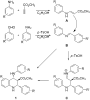
- published domino Povarov reaction [45][46][47][48][49]. At first, arylamine adds to methyl propiolate to form the β-enamino ester A. Secondly, excess arylamine reacts with the aromatic aldehyde to form the N-aryl aldimine B in the presence of p-toluenesulfonic acid as catalyst. Thirdly, the Mannich type

Graphical Abstract

Scheme 1: Synthesis of polysubstituted tetrahydroquinolines 1a–1m.

Figure 1: Molecular structure of compound 1c.
Scheme 2: The proposed mechanism of domino Povarov reaction.



