


Search results
Search for "asymmetric Michael reaction" in Full Text gives 9 result(s) in Beilstein Journal of Organic Chemistry.
Synthesis and optical resolution of 4,5-diaminohomoadamantane: a promising scaffold for chiral ligands and bioactive compounds
- Polina A. Man’kova,
- Vadim A. Shiryaev,
- Olga S. Podlipnova,
- Marat M. Khisyamov,
- Dmitry S. Nikerov,
- Alexander N. Reznikov and
- Yuri N. Klimochkin
Beilstein J. Org. Chem. 2026, 22, 1013–1022, doi:10.3762/bjoc.22.80
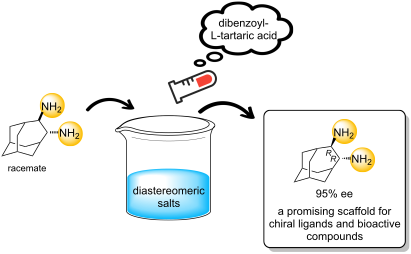
- suggest that further molecular design of homoadamantane-based chiral N,N-ligands is promising. Keywords: asymmetric Henry reaction; asymmetric Michael reaction; diaminohomoadamantane; enantiodivergent effect; resolution of racemate; Introduction The chemistry of organic polycyclic cage compounds has

Graphical Abstract

Figure 1: Examples of bioactive homoadamantanes.

Figure 2: Examples of cage vicinal diamines.

Scheme 1: Synthetic route to homoadamantane oximes 3–5.

Scheme 2: Reduction of azidoxime 4.

Scheme 3: Synthesis of N-substituted aziridines 10–12.

Scheme 4: Aziridine 11 ring-opening reaction with NaN3.

Scheme 5: Aziridine 12 ring-opening and reduction.

Scheme 6: Resolution of racemic diamine 8a′.

Figure 3: The results of C4–C5–N–H dihedrals scan for staggered conformations with C5–C4–N–H dihedrals 50.66,...

Scheme 7: Synthesis of ligands 18 and 19′.

Scheme 8: Enantiodivergent Henry reaction when using ligands 8a′ and 18.

Scheme 9: Catalysis of the Michael reaction using the complex (4R,5R)-19′−NiBr2.
Asymmetric organocatalytic Michael addition of cyclopentane-1,2-dione to alkylidene oxindole
- Estelle Silm,
- Ivar Järving and
- Tõnis Kanger
Beilstein J. Org. Chem. 2022, 18, 167–173, doi:10.3762/bjoc.18.18
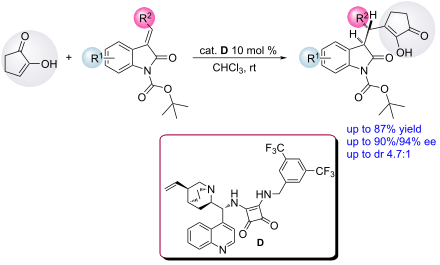
- Estelle Silm Ivar Jarving Tonis Kanger Department of Chemistry and Biotechnology, Tallinn University of Technology, Akadeemia tee 15, 12618 Tallinn, Estonia 10.3762/bjoc.18.18 Abstract An asymmetric Michael reaction between cyclopentane-1,2-dione and alkylidene oxindole was studied in the

Graphical Abstract

Figure 1: Model of the catalyst action.

Figure 2: Catalysts screened.

Scheme 1: Screening of different N-protecting groups. Reaction conditions: 0.2 M solution of 1 (1 equiv), 2 (...

Scheme 2: Scope of the reaction (the relative configuration of the major diastereoisomer is depicted). Reacti...
Scheme 3: Comparison reactions of E- and Z-isomers (the relative configurations of the major diastereoisomers...
Synthesis of non-racemic 4-nitro-2-sulfonylbutan-1-ones via Ni(II)-catalyzed asymmetric Michael reaction of β-ketosulfones
- Alexander N. Reznikov,
- Anastasiya E. Sibiryakova,
- Marat R. Baimuratov,
- Eugene V. Golovin,
- Victor B. Rybakov and
- Yuri N. Klimochkin
Beilstein J. Org. Chem. 2019, 15, 1289–1297, doi:10.3762/bjoc.15.127
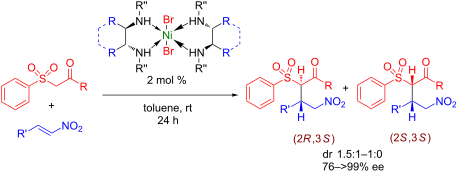
- ketosulfones with nitroalkenes in the presence of organocatalysts shows high enantioselectivity, however, leads to a mixture of diastereomers. For the catalytic activation of β-ketosulfones by metal complexes chiral Lewis acids may be considered as an alternative way to carry out the asymmetric Michael
- reaction with their participation. Asymmetric conjugate addition of activated methylene compounds (such as diketones, keto esters and malonates) to nitroalkenes in the presence of Mg [43], Co [44][45], Mn [45] and Ru [46] complexes was performed. The most remarkable results were obtained with Ni(II

Graphical Abstract
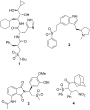
Figure 1: Рharmacologically active sulfones.

Figure 2: Structures of the ligands L1–L8.

Figure 3: Evolution of the conversion of 5 and diastereomeric composition of the products of reaction of 5a w...

Figure 4: Time profile of epimerization and retro-Michael reaction of (2R,3S)-8a in chloroform-d solution.

Figure 5: ORTEP diagram of (2R,3S)-8d.
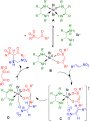
Scheme 1: The proposed mechanism of asymmetric addition of β-ketosulfones to nitroalkenes.

Scheme 2: Transition state models for asymmetric addition of β-ketosulfones to nitroalkenes.
Asymmetric Michael addition reactions catalyzed by calix[4]thiourea cyclohexanediamine derivatives
- Zheng-Yi Li,
- Hong-Xiao Tong,
- Yuan Chen,
- Hong-Kui Su,
- Tangxin Xiao,
- Xiao-Qiang Sun and
- Leyong Wang
Beilstein J. Org. Chem. 2018, 14, 1901–1907, doi:10.3762/bjoc.14.164
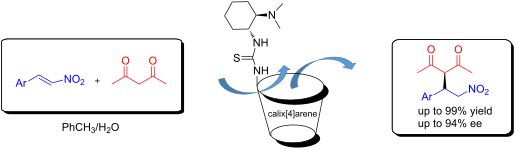
- During the past decades, asymmetric organocatalysis has played an important role as a tool for the syntheses of chiral molecules under mild conditions [1][2][3][4]. Among these reactions, the asymmetric Michael reaction is a powerful strategy to construct versatile intermediates due to its synthetic

Graphical Abstract

Scheme 1: Catalysts synthesized and screened in this study.

Scheme 2: Synthetic routes for organocatalysts 1–4.
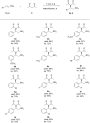
Figure 1: Asymmetric Michael addition of acetylacetone with different nitroolefins catalyzed by organocatalys...

Scheme 3: Possible proposed reaction mechanism.
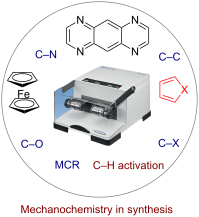
Mechanochemical synthesis of small organic molecules
- Tapas Kumar Achar,
- Anima Bose and
- Prasenjit Mal
Beilstein J. Org. Chem. 2017, 13, 1907–1931, doi:10.3762/bjoc.13.186
- -(S)-proline derived catalyst [49]. b) Report using α,α-dipeptide-based catalyst [50]. Mechanochemical Michael reaction [51]. Mechanochemical organocatalytic asymmetric Michael reaction [52]. Mechanochemical Morita–Baylis–Hillman (MBH) reaction [53]. Mechanochemical Wittig reactions [55

Graphical Abstract

Scheme 1: Mechanochemical aldol condensation reactions [48].

Scheme 2: Enantioselective organocatalyzed aldol reactions under mechanomilling. a) Based on binam-(S)-prolin...

Scheme 3: Mechanochemical Michael reaction [51].

Scheme 4: Mechanochemical organocatalytic asymmetric Michael reaction [52].

Scheme 5: Mechanochemical Morita–Baylis–Hillman (MBH) reaction [53].

Scheme 6: Mechanochemical Wittig reactions [55].

Scheme 7: Mechanochemical Suzuki reaction [56].

Scheme 8: Mechanochemical Suzuki–Miyaura coupling by LAG [57].

Scheme 9: Mechanochemical Heck reaction [59].

Scheme 10: a) Sonogashira coupling under milling conditions. b) The representative example of a double Sonogas...

Scheme 11: Copper-catalyzed CDC reaction under mechanomilling [67].

Scheme 12: Asymmetric alkynylation of prochiral sp3 C–H bonds via CDC [68].

Scheme 13: Fe(III)-catalyzed CDC coupling of 3-benzylindoles [69].

Scheme 14: Mechanochemical synthesis of 3-vinylindoles and β,β-diindolylpropionates [70].

Scheme 15: Mechanochemical C–N bond construction using anilines and arylboronic acids [78].

Scheme 16: Mechanochemical amidation reaction from aromatic aldehydes and N-chloramine [79].

Scheme 17: Mechanochemical CDC between benzaldehydes and benzyl amines [81].

Scheme 18: Mechanochemical protection of -NH2 and -COOH group of amino acids [85].

Scheme 19: Mechanochemical Ritter reaction [87].

Scheme 20: Mechanochemical synthesis of dialkyl carbonates [90].

Scheme 21: Mechanochemical transesterification reaction using basic Al2O3 [91].

Scheme 22: Mechanochemical carbamate synthesis [92].

Scheme 23: Mechanochemical bromination reaction using NaBr and oxone [96].

Scheme 24: Mechanochemical aryl halogenation reactions using NaX and oxone [97].

Scheme 25: Mechanochemical halogenation reaction of electron-rich arenes [88,98].

Scheme 26: Mechanochemical aryl halogenation reaction using trihaloisocyanuric acids [100].

Scheme 27: Mechanochemical fluorination reaction by LAG method [102].

Scheme 28: Mechanochemical Ugi reaction [116].

Scheme 29: Mechanochemical Passerine reaction [116].

Scheme 30: Mechanochemical synthesis of α-aminonitriles [120].

Scheme 31: Mechanochemical Hantzsch pyrrole synthesis [121].

Scheme 32: Mechanochemical Biginelli reaction by subcomponent synthesis approach [133].

Scheme 33: Mechanochemical asymmetric multicomponent reaction[134].

Scheme 34: Mechanochemical Paal–Knorr pyrrole synthesis [142].

Scheme 35: Mechanochemical synthesis of benzothiazole using ZnO nano particles [146].

Scheme 36: Mechanochemical synthesis of 1,2-di-substituted benzimidazoles [149].

Scheme 37: Mechanochemical click reaction using an alumina-supported Cu-catalyst [152].

Scheme 38: Mechanochemical click reaction using copper vial [155].

Scheme 39: Mechanochemical indole synthesis [157].

Scheme 40: Mechanochemical synthesis of chromene [158].

Scheme 41: Mechanochemical synthesis of azacenes [169].

Scheme 42: Mechanochemical oxidative C-P bond formation [170].

Scheme 43: Mechanochemical C–chalcogen bond formation [171].

Scheme 44: Solvent-free synthesis of an organometallic complex.
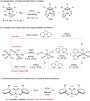
Scheme 45: Selective examples of mechano-synthesis of organometallic complexes. a) Halogenation reaction of Re...

Scheme 46: Mechanochemical activation of C–H bond of unsymmetrical azobenzene [178].

Scheme 47: Mechanochemical synthesis of organometallic pincer complex [179].

Scheme 48: Mechanochemical synthesis of tris(allyl)aluminum complex [180].

Scheme 49: Mechanochemical Ru-catalyzed olefin metathesis reaction [181].

Scheme 50: Rhodium(III)-catalyzed C–H bond functionalization under mechanochemical conditions [182].

Scheme 51: Mechanochemical Csp2–H bond amidation using Ir(III) catalyst [183].

Scheme 52: Mechanochemical Rh-catalyzed Csp2–X bond formation [184].

Scheme 53: Mechanochemical Pd-catalyzed C–H activation [185].

Scheme 54: Mechanochemical Csp2–H bond amidation using Rh catalyst.

Scheme 55: Mechanochemical synthesis of indoles using Rh catalyst [187].

Scheme 56: Mizoroki–Heck reaction of aminoacrylates with aryl halide in a ball-mill [58].

Scheme 57: IBX under mechanomilling conditions [8].

Scheme 58: Thiocarbamoylation of anilines; trapping of reactive aryl-N-thiocarbamoylbenzotriazole intermediate...
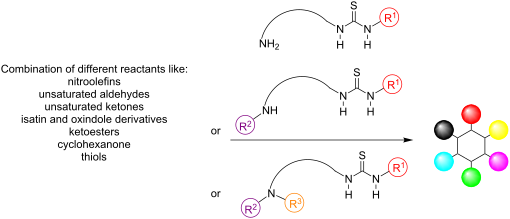
(Thio)urea-mediated synthesis of functionalized six-membered rings with multiple chiral centers
- Giorgos Koutoulogenis,
- Nikolaos Kaplaneris and
- Christoforos G. Kokotos
Beilstein J. Org. Chem. 2016, 12, 462–495, doi:10.3762/bjoc.12.48

Graphical Abstract

Scheme 1: Activation of carbonyl compounds via enamine and iminium intermediates [2].

Scheme 2: Electronic and steric interactions present in enamine activation mode [2].

Scheme 3: Electrophilic activation of carbonyl compounds by a thiourea moiety.

Scheme 4: Asymmetric synthesis of dihydro-2H-pyran-6-carboxylate 3 using organocatalyst 4 [16].

Scheme 5: Possible hydrogen-bonding for the reaction of (E)-methyl 2-oxo-4-phenylbut-3-enoate [16].

Scheme 6: Asymmetric desymmetrization of 4,4-cyclohexadienones using the Michael addition reaction with malon...

Scheme 7: The enantioselective synthesis of α,α-disubstituted cycloalkanones using catalyst 11 [18].

Scheme 8: The enantioselective synthesis of indolo- and benzoquinolidine compounds through aza-Diels–Alder re...

Scheme 9: Enantioselective [5 + 2] cycloaddition [20].

Scheme 10: Asymmetric synthesis of oxazine derivatives 26 [21].

Scheme 11: Asymmetric synthesis of bicyclo[3.3.1]nonadienone, core 30 present in (−)-huperzine [22].

Scheme 12: Asymmetric inverse electron-demand Diels-Alder reaction catalyzed by amine-thiourea 34 [23].

Scheme 13: Asymmetric entry to morphan skeletons, catalyzed by amine-thiourea 37 [24].

Scheme 14: Asymmetric transformation of (E)-2-nitroallyl acetate [25].

Scheme 15: Proposed way of activation.

Scheme 16: Asymmetric synthesis of nitrobicyclo[3.2.1]octan-2-one derivatives [26].

Scheme 17: Asymmetric tandem Michael–Henry reaction catalyzed by 50 [27].

Scheme 18: Asymmetric Diels–Alder reactions of 3-vinylindoles 51 [29].

Scheme 19: Proposed transition state and activation mode of the asymmetric Diels–Alder reactions of 3-vinylind...

Scheme 20: Desymmetrization of meso-anhydrides by Chin, Song and co-workers [30].

Scheme 21: Desymmetrization of meso-anhydrides by Connon and co-workers [31].

Scheme 22: Asymmetric intramolecular Michael reaction [32].

Scheme 23: Asymmetric addition of malonate to 3-nitro-2H-chromenes 67 [33].

Scheme 24: Intramolecular desymmetrization through an intramolecular aza-Michael reaction [34].

Scheme 25: Enantioselective synthesis of (−)-mesembrine [34].

Scheme 26: A novel asymmetric Michael–Michael reaction [35].

Scheme 27: Asymmetric three-component reaction catalyzed by Takemoto’s catalyst 77 [46].

Scheme 28: Asymmetric domino Michael–Henry reaction [47].

Scheme 29: Asymmetric domino Michael–Henry reaction [48].

Scheme 30: Enantioselective synthesis of derivatives of 3,4-dihydro-2H-pyran 89 [49].

Scheme 31: Asymmetric addition of α,α-dicyano olefins 90 to 3-nitro-2H-chromenes 91 [50].

Scheme 32: Asymmetric three-component reaction producing 2,6-diazabicyclo[2.2.2]octanones 95 [51].

Scheme 33: Asymmetric double Michael reaction producing substituted chromans 99 [52].

Scheme 34: Enantioselective synthesis of multi-functionalized spiro oxindole dienes 106 [53].

Scheme 35: Organocatalyzed Michael aldol cyclization [54].

Scheme 36: Asymmetric synthesis of dihydrocoumarins [55].

Scheme 37: Asymmetric double Michael reaction en route to tetrasubstituted cyclohexenols [56].

Scheme 38: Asymmetric synthesis of α-trifluoromethyl-dihydropyrans 121 [58].

Scheme 39: Tyrosine-derived tertiary amino-thiourea 123 catalyzed Michael hemiaketalization reaction [59].

Scheme 40: Enantioselective entry to bicyclo[3.2.1]octane unit [60].

Scheme 41: Asymmetric synthesis of spiro[4-cyclohexanone-1,3’-oxindoline] 126 [61].

Scheme 42: Kinetic resolution of 3-nitro-2H-chromene 130 [62].

Scheme 43: Asymmetric synthesis of chromanes 136 [63].

Scheme 44: Wang’s utilization of β-unsaturated α-ketoesters 87 [64,65].

Scheme 45: Asymmetric entry to trifluoromethyl-substituted dihydropyrans 144 [66].

Scheme 46: Phenylalanine-derived thiourea-catalyzed domino Michael hemiaketalization reaction [67].

Scheme 47: Asymmetric synthesis of α-trichloromethyldihydropyrans 149 [68].

Scheme 48: Takemoto’s thiourea-catalyzed domino Michael hemiaketalization reaction [69].

Scheme 49: Asymmetric synthesis of densely substituted cyclohexanes [70].

Scheme 50: Enantioselective synthesis of polysubstituted chromeno [4,3-b]pyrrolidine derivatines 157 [71].

Scheme 51: Enantioselective synthesis of spiro-fused cyclohexanone/5-oxazolone scaffolds 162 [72].

Scheme 52: Utilizing 2-mercaptobenzaldehydes 163 in cascade processes [73,74].

Scheme 53: Proposed transition state of the initial sulfa-Michael step [74].

Scheme 54: Asymmetric thiochroman synthesis via dynamic kinetic resolution [75].

Scheme 55: Enantioselective synthesis of thiochromans [76].

Scheme 56: Enantioselective synthesis of chromans and thiochromans synthesis [77].

Scheme 57: Enantioselective sulfa-Michael aldol reaction en route to spiro compounds [78].

Scheme 58: Enantioselective synthesis of 4-aminobenzo(thio)pyrans 179 [79].

Scheme 59: Asymmetric synthesis of tetrahydroquinolines [80].

Scheme 60: Novel asymmetric Mannich–Michael sequence producing tetrahydroquinolines 186 [81].

Scheme 61: Enantioselective synthesis of biologically interesting chromanes 190 and 191 [82].

Scheme 62: Asymmetric tandem Henry–Michael reaction [83].

Scheme 63: An asymmetric synthesis of substituted cyclohexanes via a dynamic kinetic resolution [84].

Scheme 64: Three component-organocascade initiated by Knoevenagel reaction [85].

Scheme 65: Asymmetric Michael reaction catalyzed by catalysts 57 and 211 [86].

Scheme 66: Proposed mechanism for the asymmetric Michael reaction catalyzed by catalysts 57 and 211 [86].

Scheme 67: Asymmetric facile synthesis of hexasubstituted cyclohexanes [87].

Scheme 68: Dual activation catalytic mechanism [87].

Scheme 69: Asymmetric Michael–Michael/aldol reaction catalyzed by catalysts 57, 219 and 214 [88].

Scheme 70: Asymmetric synthesis of substituted cyclohexane derivatives, using catalysts 57 and 223 [89].

Scheme 71: Asymmetric synthesis of substituted piperidine derivatives, using catalysts 223 and 228 [90].

Scheme 72: Asymmetric synthesis of endo-exo spiro-dihydropyran-oxindole derivatives catalyzed by catalyst 232 [91]....

Scheme 73: Asymmetric synthesis of carbazole spiroxindole derivatives, using catalyst 236 [92].

Scheme 74: Enantioselective formal [2 + 2] cycloaddition of enal 209 with nitroalkene 210, using catalysts 23 ...

Scheme 75: Asymmetric synthesis of polycyclized hydroxylactams derivatives, using catalyst 242 [94].

Scheme 76: Asymmetric synthesis of product 243, using catalyst 246 [95].

Scheme 77: Formation of the α-stereoselective acetals 248 from the corresponding enol ether 247, using catalys...

Scheme 78: Selective glycosidation, catalyzed by Shreiner’s catalyst 23 [97].
Primary-tertiary diamine-catalyzed Michael addition of ketones to isatylidenemalononitrile derivatives
- Akshay Kumar and
- Swapandeep Singh Chimni
Beilstein J. Org. Chem. 2014, 10, 929–935, doi:10.3762/bjoc.10.91

- of the enantioselective Michael addition of acetone (2a) to isatylidenemalononitrile (3a).a Substrate scope of 1a D-CSA catalyzed asymmetric Michael reaction of ketones 2 with isatylidenemalononitrile derivatives 3.a Supporting Information Supporting Information File 12: Experimental procedures

Graphical Abstract

Figure 1: Oxindole based Michael acceptors.

Figure 2: Primary-tertiary diamine organocatalysts.

Scheme 1: Diamine catalyzed Michael addition of acetone to isatylidenemalononitrile.

Scheme 2: Substrate scope of the addition of 2 with 3 catalyzed by 1a D-CSA.

Scheme 3: One-pot, three-component Knoevenagel condensation–Michael addition.

Scheme 4: Cascade reduction–cyclization for the synthesis of spirooxindole.
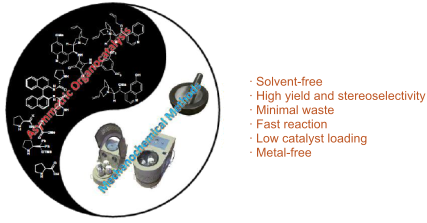
Mechanochemistry assisted asymmetric organocatalysis: A sustainable approach
- Pankaj Chauhan and
- Swapandeep Singh Chimni
Beilstein J. Org. Chem. 2012, 8, 2132–2141, doi:10.3762/bjoc.8.240
- of (A) ketones with aldehydes and (B) acetone with isatin derivatives. Enantioselective Michael reaction of aldehydes with nitroalkenes catalysed by pyrrolidine-derived organocatalysts. Chiral squaramide catalysed asymmetric Michael reaction assisted by ball-milling. Asymmetric organocatalytic

Graphical Abstract

Scheme 1: Proline-catalysed aldol reaction in a ball-mill.

Scheme 2: Proline-catalysed aldol reaction between solid substrates (1b and 2a).

Scheme 3: (S)-Binam-L-prolinamide catalysed asymmetric aldol reaction by using a ball-mill. aConversion.

Scheme 4: Asymmetric aldol reaction assisted by ball-milling catalysed by dipeptides (A) with III and (B) wit...

Scheme 5: Thiodipeptide-catalysed asymmetric aldol reaction of (A) ketones with aldehydes and (B) acetone wit...

Scheme 6: Enantioselective Michael reaction of aldehydes with nitroalkenes catalysed by pyrrolidine-derived o...

Scheme 7: Chiral squaramide catalysed asymmetric Michael reaction assisted by ball-milling.

Scheme 8: Asymmetric organocatalytic Michael reaction assisted by pestle and mortar grinding.

Scheme 9: C-2 symmetric thiourea catalysed enantioselective MBH reaction.

Scheme 10: Quinine-catalysed ring opening of meso-anhydride by ball-milling.

Scheme 11: Ball-milling-assisted (A) synthesis of glycine schiff bases and (B) their organocatalytic asymmetri...

Scheme 12: Enantioselective amination of β-ketoester by using pestle and mortar.
Asymmetric reactions in continuous flow
- Xiao Yin Mak,
- Paola Laurino and
- Peter H. Seeberger
Beilstein J. Org. Chem. 2009, 5, No. 19, doi:10.3762/bjoc.5.19
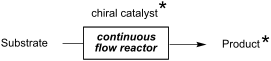
- flow. Asymmetric synthesis of ß-lactams. α-Chlorination of acid chlorides in flow. Asymmetric Michael reaction in continuous flow. Enantioselective addition of Et2Zn to benzaldehyde using monolithic chiral amino alcohol. Continuous-flow hydrolytic dynamic kinetic resolution of epibromohydrin (32

Graphical Abstract

Scheme 1: Enantioselective addition of trimethylsilyl cyanide to benzaldehyde.

Scheme 2: Asymmetric catalytic hydrogenation in a falling-film microreactor.

Scheme 3: Aldol reaction catalyzed by 5-(pyrrolidine-2-yl)tetrazole.

Scheme 4: Enantioselective addition of diethylzinc to aryl aldehydes.

Scheme 5: Glyoxylate-ene reaction in flow.

Scheme 6: Asymmetric synthesis of ß-lactams.

Scheme 7: α-Chlorination of acid chlorides in flow.

Scheme 8: Asymmetric Michael reaction in continuous flow.

Scheme 9: Enantioselective addition of Et2Zn to benzaldehyde using monolithic chiral amino alcohol.

Scheme 10: Continuous-flow hydrolytic dynamic kinetic resolution of epibromohydrin (32).

Scheme 11: Continuous-flow asymmetric cyclopropanation.

Scheme 12: Continuous asymmetric hydrogenation of dimethyl itaconate in scCO2.

Scheme 13: Continuous asymmetric transfer hydrogenation of acetophenone.

Scheme 14: Asymmetric epoxidation using a continuous flow membrane reactor.

Scheme 15: Enzymatic cyanohydrin formation in a microreactor.

Scheme 16: Resolution of (R/S)- 54 with immobilized lipase in a continuous scCO2- flow reactor.

Scheme 17: Enantioselective separation of Acetyl-D-Phe in a continuous flow reactor.



