


Search results
Search for "electrophilic amination" in Full Text gives 10 result(s) in Beilstein Journal of Organic Chemistry.
Chiral phosphoric acid-catalyzed asymmetric synthesis of helically chiral, planarly chiral and inherently chiral molecules
Beilstein J. Org. Chem. 2025, 21, 1864–1889, doi:10.3762/bjoc.21.145
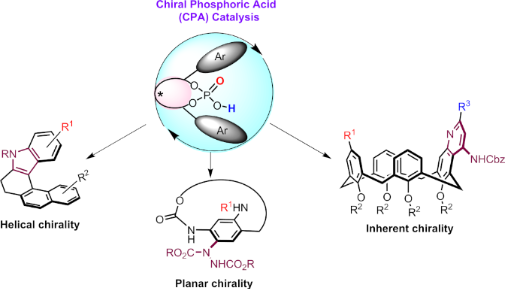
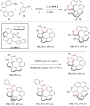
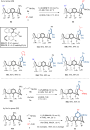
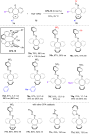
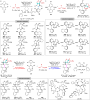
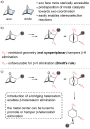
- through a [3 + 3]-cycloaddition reaction. By employing the CPA-catalyzed asymmetric electrophilic amination reaction with azodicarboxylate on the phenol moiety, efficient kinetic resolution of 25 proceeded to yield both the amination products 26 and the recovered starting material with high
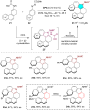
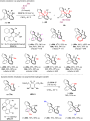
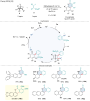
- electrophilic amination reaction of the aniline moiety with azodicarboxylates [37][38], the introduction of a bulky hydrazine group restricted the free flipping of the benzene ring, leading to the formation of planar chiral macrocycle 33 with high enantioselectivity (Scheme 9). Substrate scope studies
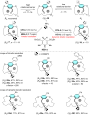
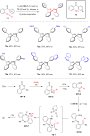
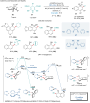
- directly used as a planarly chiral primary amine catalyst in the asymmetric electrophilic amination reaction of aldehyde 34, which yielded the α-amination product 35 with high enantioselectivity. In 2022, our group disclosed an enantioselective macrocyclization protocol for the asymmetric synthesis of










Catalytic asymmetric reactions of isocyanides for constructing non-central chirality
Beilstein J. Org. Chem. 2025, 21, 1648–1660, doi:10.3762/bjoc.21.129

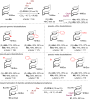
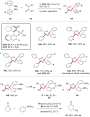
- of the resulting products in developing chiral organocatalysts was investigated as well. For instance, 28a was converted to a thiourea-tertiary amine 29 through a four-step procedure in an overall 36% yield. This compound was then utilized as the catalyst in the electrophilic amination reaction





Reactivity of hypervalent iodine(III) reagents bearing a benzylamine with sulfenate salts
Beilstein J. Org. Chem. 2024, 20, 3281–3289, doi:10.3762/bjoc.20.272
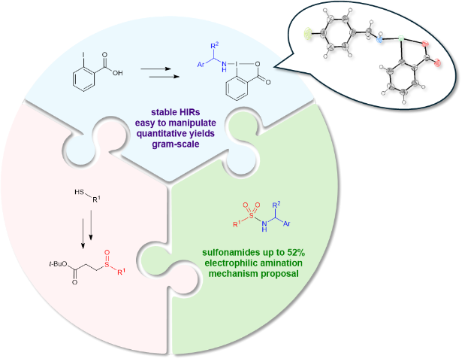
- . A plausible mechanism is proposed, suggesting a possible radical pathway. Keywords: electrophilic amination; hypervalent iodine reagents; sulfinamide; sulfonamide; Introduction Iodine(III) compounds, known as λ3-iodanes, have been extensively applied in organic synthesis. Although initially used
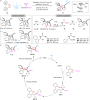
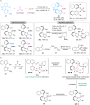
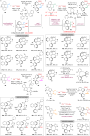
- ) [32][33]. To investigate the reactivity of the BBXs in this electrophilic amination reaction, the generated compound 4 was subjected to a retro-Michael addition to produce the sulfenate anion intermediate, followed by the addition of BBX 2. Based on our experience with HIRs, the reaction of 2 with
- nucleophiles is more effective when a pre-formed nucleophile is used [4]. Thus, HIR 2 was added to the reaction mixture after the in situ formation of the sulfenate anion (by retro-Michael addition). First experiments were carried out under the previously described conditions for BBX electrophilic amination



Transition-metal-catalyzed domino reactions of strained bicyclic alkenes
Beilstein J. Org. Chem. 2023, 19, 487–540, doi:10.3762/bjoc.19.38
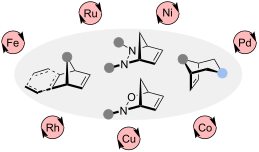
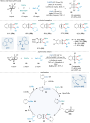
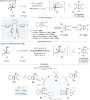
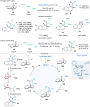
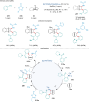
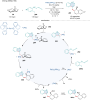
- –Cu species 60 which after electrophilic amination with the O-benzoylhydroxylamine 54 liberates the final aminoborylated product 55 and a benzoyl–Cu complex 61. To close the catalytic cycle a transmetalation of 61 with LiOt-Bu regenerates the active catalyst. In 2017, Xiao and Fu studied the Cu



















Diastereo- and enantioselective preparation of cyclopropanol derivatives
Beilstein J. Org. Chem. 2019, 15, 752–760, doi:10.3762/bjoc.15.71
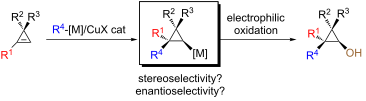
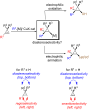
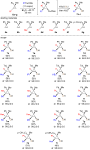
- enantiomeric ratios (er up to 99:1, Scheme 7). Following the same concept of copper-catalyzed diastereo- and enantioselective carbomagnesiation reaction of cyclopropenes 6 followed now by a selective electrophilic amination reaction, a powerful entry to cyclopropylamines as single diastereoisomer and in





Asymmetric α-amination of 3-substituted oxindoles using chiral bifunctional phosphine catalysts
Beilstein J. Org. Chem. 2016, 12, 725–731, doi:10.3762/bjoc.12.72
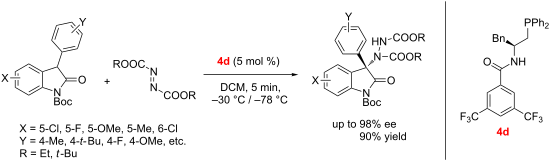
- tetrasubstituted carbon center have been recognized as core building blocks for the preparation of many biologically active and therapeutic compounds [2][3][4][5][6][7]. As a type of commercially available electrophilic amination reagents, azodicarboxylates have been extensively used in both asymmetric


Copper-catalyzed intermolecular oxyamination of olefins using carboxylic acids and O-benzoylhydroxylamines
Beilstein J. Org. Chem. 2016, 12, 22–28, doi:10.3762/bjoc.12.4
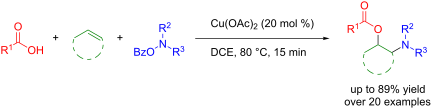
- . Keywords: copper; electrophilic amination; olefin oxyamination; Introduction The 1,2-oxyamino motif is highly valuable and found in a vast range of biologically active natural products, pharmaceuticals, and agrochemicals (Figure 1) [1][2]. Representative examples include salmeterol (Advair®), a β2
- transformation, integrating an electrophilic amination with a nucleophilic oxygenation, builds upon our recent development in copper-catalyzed olefin difunctionalization, such as copper-catalyzed diamination [40] and amino lactonization [34]. This strategy overcomes common issues of chemo- and regioselectivity


Continuous formation of N-chloro-N,N-dialkylamine solutions in well-mixed meso-scale flow reactors
Beilstein J. Org. Chem. 2015, 11, 2408–2417, doi:10.3762/bjoc.11.262
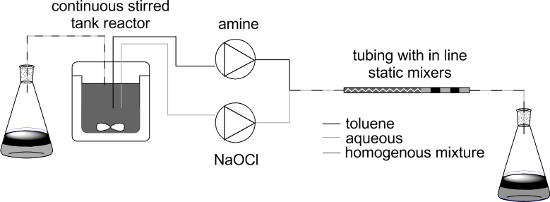
- -Chloramines provide a versatile and reactive class of reagents for use in electrophilic amination and other reactions. N-Chloro-N,N-dialkylamines have been shown to offer a broad range of products from reactions with i) unsaturated C–C bonds to give amines [1][2][3] and heterocycles [1][4]; ii) Grignard and


Multicomponent versus domino reactions: One-pot free-radical synthesis of β-amino-ethers and β-amino-alcohols
Beilstein J. Org. Chem. 2015, 11, 66–73, doi:10.3762/bjoc.11.10
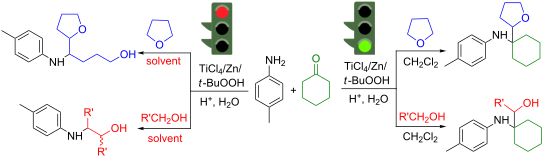
- a) [29]. Surprisingly, the same reaction was even more efficient when performed in the presence of the Ti(IV)/Zn/t-BuOOH system (Scheme 2, entry b). Under the latter conditions, the domino approach was also successfully extended to cyclic ethers, promoting the consecutive electrophilic amination to


Synthesis of oleophilic electron-rich phenylhydrazines
Beilstein J. Org. Chem. 2012, 8, 275–282, doi:10.3762/bjoc.8.29
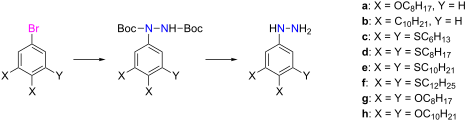
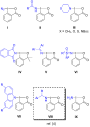
- arylboronic acid V to AD [18][19][20]. The latter method is especially suited for arylhydrazides substituted with sensitive functional groups. Protected electron-rich arylhydrazines, hydrazides II, containing the 2,2,2-trichloroethyl group (R = CH2CCl3) are conveniently prepared by direct electrophilic
- amination of arenes VI with bis(2,2,2-trichloroethyl) azodicarboxylate (BTCEAD) under Lewis [21][22] or Brønsted [23] acid conditions. By judicious choice of the substituent R, the removal of the protecting group in II and formation of arylhydrazines I can be accomplished under acidic (R = t-Bu) [16





