


Search results
Search for "bacteria" in Full Text gives 182 result(s) in Beilstein Journal of Nanotechnology.
Gold bipyramids as a promising alternative to gold nanorods for analytical and biomedical applications
Beilstein J. Nanotechnol. 2026, 17, 1170–1184, doi:10.3762/bjnano.17.80
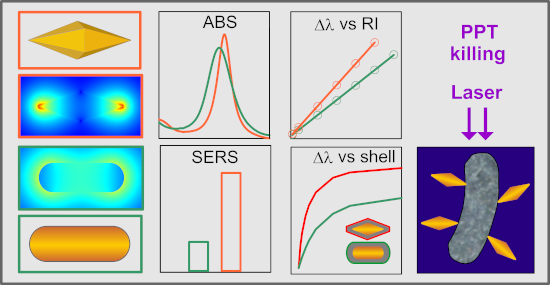
- nanorods for a broad range of analytical and biomedical applications. Keywords: bacteria; gold nanoparticles; nanobipyramids and nanorods; photothermal therapy; plasmon resonance; plasmonics; SERS; surface-enhanced Raman scattering; Introduction Anisotropic metal nanoparticles [1][2][3][4][5] are
- sensitivity, thermoplasmonic properties of gold BPs and nanorods with similar PR wavelengths, and plasmonic photothermal killing of bacteria in water suspensions. In contrast to published similar studies (see, e.g., [40][41]), we compared the normalized quantities that are proportional to the SERS intensity
- dielectric environment, and the efficiency of light-to-heat conversion, surpass those of gold nanorods with comparable dimensions and PR wavelengths. Experiments also demonstrate effective photothermal killing of Escherichia coli DH5α bacteria under laser irradiation at a wavelength near the PR. Methods



Biosynthesis, characterization, and biofunctional assessment of niobium oxide nanostructures obtained using lactic acid bacteria-derived supernatants
Beilstein J. Nanotechnol. 2026, 17, 1128–1141, doi:10.3762/bjnano.17.77
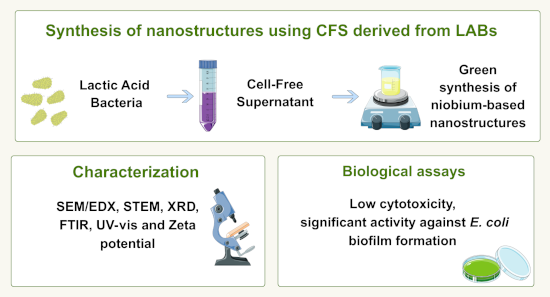
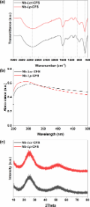
- , cell-free approach using supernatants derived from lactic acid bacteria (LAB) Lacticaseibacillus rhamnosus and Lacticaseibacillus paracasei UFTM 2.9. The use of LAB supernatants provided an eco-friendly and sustainable route for nanoparticle production, avoiding toxic reagents while exploiting
- chemical routes, primarily by avoiding the use of toxic and high-cost substances [9][10]. Among the resources considered for use in the green synthesis of nanoparticles are extracts derived from lactic acid bacteria (LAB), a group of microorganisms widely used in different industrial processes, precisely
- ]. Similarly, Awadelkareem et al. reported that silver nanoparticles synthesized using Lcr exhibited promising antimicrobial activity and the ability to inhibit biofilm formation by pathogenic bacteria, suggesting potential applications in biomedical and therapeutic fields [17]. Zeinivand et al. reported that


Ultrasonic irradiation in the synthesis of nanohydroxyapatite: a chemically friendly technique for improving hemocompatibility and antibiofilm applications
Beilstein J. Nanotechnol. 2026, 17, 991–1015, doi:10.3762/bjnano.17.68
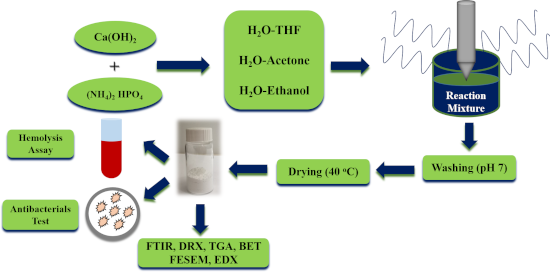
- important to determine the antibiofilm effectiveness of this bioceramic against opportunistic bacteria such as Pseudomonas aeruginosa. This pathogen is responsible for high rates of morbidity, mortality, as well as multidrug resistance, worldwide [31]. A key factor in its pathogenicity and transmission is




Restorative potential of laser-synthesized silver nanoparticles with Salvia officinalis for periodontal disease treatment: an in vitro study
Beilstein J. Nanotechnol. 2026, 17, 781–795, doi:10.3762/bjnano.17.55
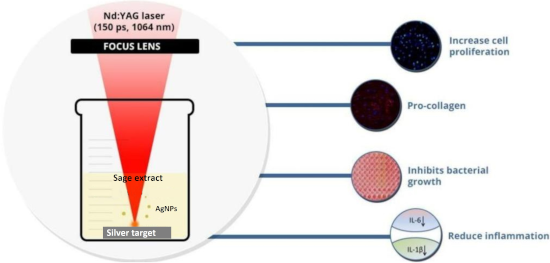
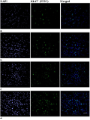
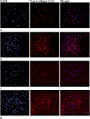
- collagen production up to 11% after 24 h and significantly reduced IL-6 by 23% after 24 h, which returned to the baseline levels after 48 h. These findings define a clear therapeutic window, where the same concentration that eradicates bacteria also promotes gingival cell regeneration and reduces
- employ silver nitrate as a precursor and different reducing agents as a stabilizer, (ii) biological methods, which use natural precursors like bacteria, enzymes, and plant extracts, and (iii) physical methods based on arc discharge, sputtering, physical vapor deposition, or laser ablation [2]. While
- well as minimal bactericidal concentrations (MBCs) were determined according to the method previously described in [26]. Inoculum containing 2 × 10⁴ CFU per well (105 CFU·mL−1) of bacteria was added to each well after the serial dilution of the NPs. After the 24 h incubation, resazurin was used as a



Environmental applications of silver nanoparticles: state-of-the-art review and emerging trends
Beilstein J. Nanotechnol. 2026, 17, 697–736, doi:10.3762/bjnano.17.49
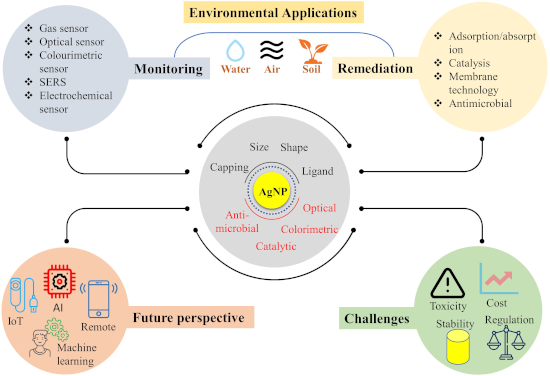
- bacteria, as well as multidrug-resistant strains [23]. Furthermore, the catalytic activity of AgNPs was utilised to remove synthetic dyes, nitrophenol, and other organic pollutants. Methylene blue (MB), Congo red (CR), 4-nitrophenol, and 4-nitroaniline were degraded into harmless products using AgNPs
- exhibit toxicity towards aquatic organisms, including bacteria, algae, invertebrates, and fish, with reported adverse effects such as growth inhibition, reproductive impairment, and mortality [32][33]. Moreover, various factors influence the fate and transport of AgNPs in environmental samples, including
- Antimicrobial properties and disinfection. Nanosilver showed broad-spectrum antimicrobial activity (bacteria, viruses, and fungi) and can serve as an effective disinfectant for water applications [7][72]. Various mechanisms, including disruption of cellular membranes, interference with DNA replication, and the


Decontamination from water pollutants and pathogens by electrospun nanofibers doped with heavy-atom-free borafluorene-BODIPY photosensitizers
Beilstein J. Nanotechnol. 2026, 17, 668–682, doi:10.3762/bjnano.17.46
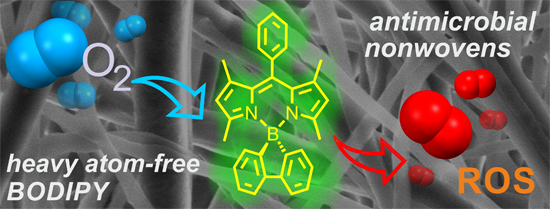
- addressed in the following decades [1]. A huge increase of organic compound production by chemical, textile, food, and pharmaceutical industries results in harming aquatic ecosystems and even further reduces the available freshwater resources. Relatedly, bacteria, fungi, and viruses continuously exposed to
- photoinactivation potential of the fibers was evaluated on the Gram-positive bacterium Staphyloccocus aureus (ATCC 6538). For this assay, we used 1(0.15 wt %)@PCL, 1(0.50 wt %)@PCL, 1(1.00 wt %)@PCL, and pure PCL for the reference. Bacteria were grown in Mueller–Hinton broth (BioMaxima, Poland). Inactivation
- studies were performed using two sterile, flat-bottom 24-well plates; one was illuminated and the second was used as the dark control. Materials were disinfected from wild bacteria and fungi by washing with 70% EtOH solution, followed by a twofold rinse with saline solution (0.9% NaCl). Three samples of

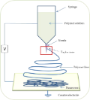
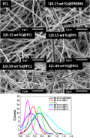


Cellulose as a photocatalyst support material: extraction, structural features, and environmental applications
Beilstein J. Nanotechnol. 2026, 17, 635–652, doi:10.3762/bjnano.17.44
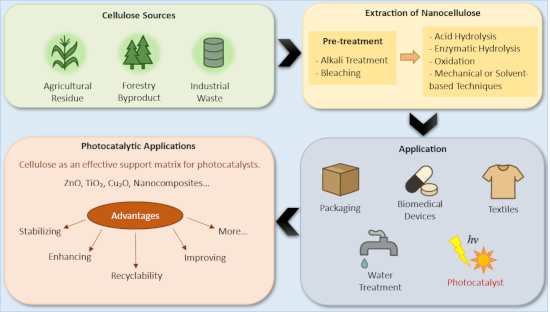
- natural materials, and it exists in many different sources that can be used to create valuable products. These sources are generally divided into four main groups, which are plants, waste materials, bacteria, and marine organisms. Plants represent the largest and most important source of cellulose, with


Electrochemical determination of ciprofloxacin using a MIL-101/reduced graphene oxide-modified electrode
Beilstein J. Nanotechnol. 2026, 17, 541–554, doi:10.3762/bjnano.17.35
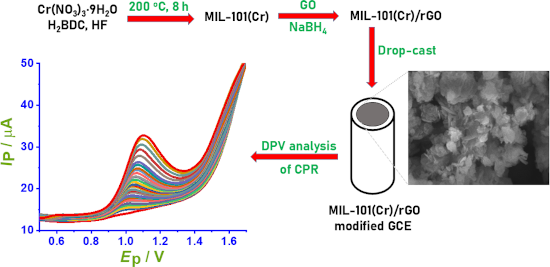
- fluids, and aquatic environments [2][3]. The uncontrolled presence of ciprofloxacin not only poses risks to human health but also promotes the development of antibiotic-resistant bacteria, raising significant environmental and public health concerns [4]. Therefore, developing sensitive, selective, and


Beam shaping techniques for pulsed laser ablation in liquids: Unlocking tunable control of nanoparticle synthesis in liquids
Beilstein J. Nanotechnol. 2026, 17, 309–342, doi:10.3762/bjnano.17.22
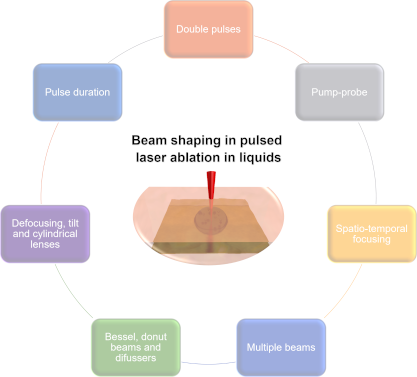
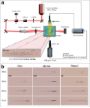
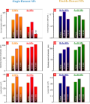
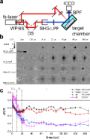
- controlling NP size and shape but often require reducing agents and stabilising or capping agents to ensure colloidal stability, which may introduce impurities and raise environmental concerns. Biological routes for synthesising nanomaterials, such as those based on plant extracts, bacteria, or fungi, are







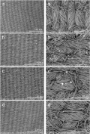
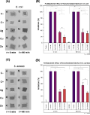
Durable antimicrobial activity of fabrics functionalized with zeolite ion-exchanged nanomaterials against Staphylococcus aureus and Escherichia coli
Beilstein J. Nanotechnol. 2026, 17, 262–274, doi:10.3762/bjnano.17.18
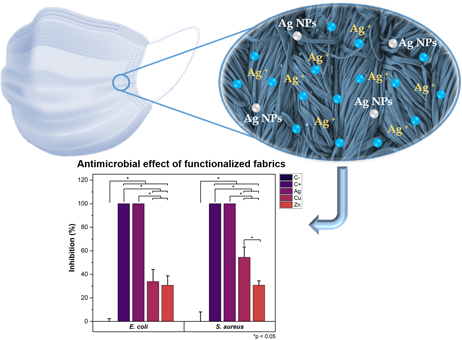
- of infections [3][4]. In this context, nanotechnology and nanomaterials offer a new alternative to combat pathogens such as viruses and bacteria. Metal NPs have intrinsic manipulatable properties that make them useful in a wide variety of research fields, including biomedicine. Different types of NPs
- that ZnO possesses unique antibacterial, antimicrobial, and antifungal properties, making it effective against both Gram-positive and Gram-negative bacteria [19][20]. Recently, the application of nanotechnology has been extended to textiles. Fabrics functionalized with nanoparticles, also known as
- bacteria. The synthesis conditions, including concentration (1% and 2%), temperature (25 and 80 °C), and order of the ZnO NP application during the pad–dry–cure method were studied by Eskani and coworkers. Antibacterial activity of the treated fabrics was evaluated against S. aureus and E. coli [34




Micro- and nanoscale effects in biological and bioinspired materials and surfaces
Beilstein J. Nanotechnol. 2026, 17, 214–217, doi:10.3762/bjnano.17.14
- surface structures and their surroundings at nano-, micro-, and macroscales [1]. The physical constraints shaping such interactions are complex for all organisms, including bacteria, plants, and animals and of relevance across all habitats [2]. Understanding these interactions and the functionality of
Functional surface engineering for cultural heritage protection: the role of superhydrophobic and superoleophobic coatings – a comprehensive review
Beilstein J. Nanotechnol. 2026, 17, 63–96, doi:10.3762/bjnano.17.6
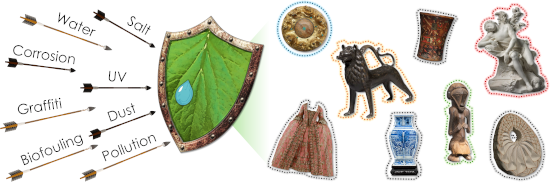
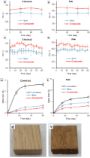
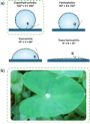
- water-absorbent) [53], while, if in indoor environment, they may experience biological fouling (fungi or bacteria) [54][55], which might initiate bio-deterioration [56]. If the substrate is metallic, corrosion caused by water (rain when outdoor and humidity fluctuation when indoor) is the main issue




Optical bio/chemical sensors for vitamin B12 analysis in food and pharmaceuticals: state of the art, challenges, and future outlooks
Beilstein J. Nanotechnol. 2025, 16, 2207–2244, doi:10.3762/bjnano.16.153
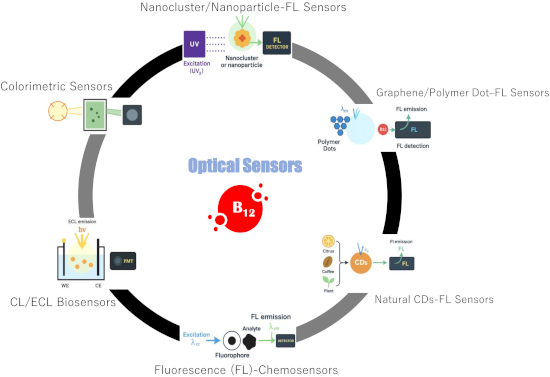
- different countries, organized by the VB12 concentration threshold [70]. Initially, labs used microbiological tests to determine VB12 levels because of their favorable accuracy. These tests did not measure VB12 directly. Instead, microbiological analyses examined how certain bacteria consume this water


Microplastic pollution in Himalayan lakes: assessment, risks, and sustainable remediation strategies
Beilstein J. Nanotechnol. 2025, 16, 2144–2167, doi:10.3762/bjnano.16.148
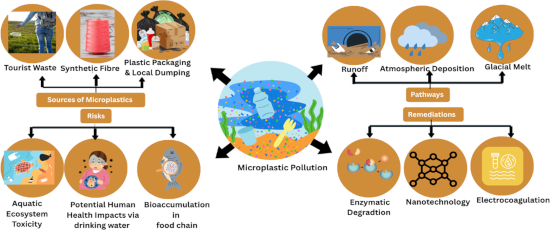
- techniques are environmentally friendly, in contrast to chemical or physical remediation techniques that could disrupt local biodiversity. For example, even in oligotrophic environments, psychrophilic bacteria in biofilms may flourish at freezing temperatures and aid in the degradation of MPs. Studies have


Rapid synthesis of highly monodisperse AgSbS2 nanocrystals: unveiling multifaceted activities in cancer therapy, antibacterial strategies, and antioxidant defense
Beilstein J. Nanotechnol. 2025, 16, 2105–2115, doi:10.3762/bjnano.16.145
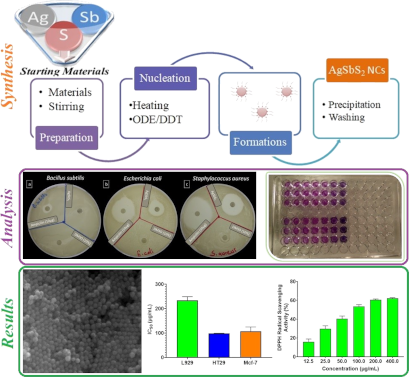
- gram-negative (Escherichia coli) pathogenic bacteria were evaluated, along with their DPPH scavenging activities. The crystal structure of the synthesized NCs was elucidated through XRD analysis, revealing characteristic diffraction peaks corresponding to the (111), (200), (220), (311), and (222
- to prokaryotic cells including microorganisms such as bacteria, viruses, and fungi [13]. Therefore, silver-based nanoparticles have been the subject of many biomedical studies [14][15][16][17][18]. In a study conducted in this context; the effects of α-AgS nanoparticles produced using the fungus
- h [17]. In another study, the antibacterial effects of Ag, Ag2S, and Ag2Se NCs on gram-negative and gram-positive bacteria were investigated [15]. As a result of the literature review, biomedical applications of silver-based NCs were exemplified above. As can be seen from these studies, biomedical


Targeting the vector of arboviruses Aedes aegypti with nanoemulsions based on essential oils: a review with focus on larvicidal and repellent properties
Beilstein J. Nanotechnol. 2025, 16, 1894–1913, doi:10.3762/bjnano.16.132
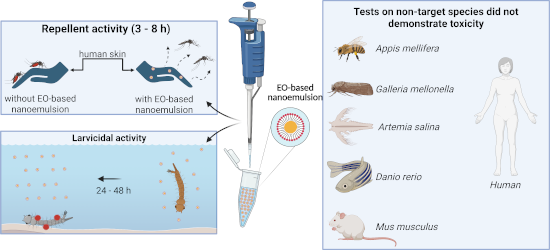
- review focuses on mapping nanoemulsions based on essential oils and their potential as an innovative strategy for controlling Aedes aegypti and consequently related arboviruses. Review Aedes aegypti: General aspects and control strategies Insects are important vectors in the transmission of bacteria and


On the road to sustainability – application of metallic nanoparticles obtained by green synthesis in dentistry: a scoping review
Beilstein J. Nanotechnol. 2025, 16, 1851–1862, doi:10.3762/bjnano.16.128
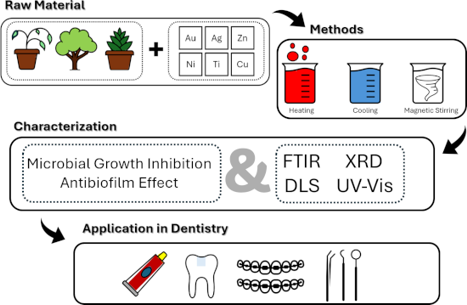
- bacteria, offers a sustainable alternative by leveraging natural reducing agents like polyphenols and flavonoids. These bioactive compounds not only facilitate nanoparticle formation but also improve stability and biological efficacy, making them ideal for dental applications such as caries prevention
- , safe, and economically viable alternative [8][9]. This approach employs biological agents, such as plant extracts, fungi, bacteria, and algae, which contain bioactive compounds capable of acting as reducing and stabilizing agents in the formation of metallic nanoparticles [10][11]. In the case of plant


Exploring the potential of polymers: advancements in oral nanocarrier technology
Beilstein J. Nanotechnol. 2025, 16, 1751–1793, doi:10.3762/bjnano.16.122
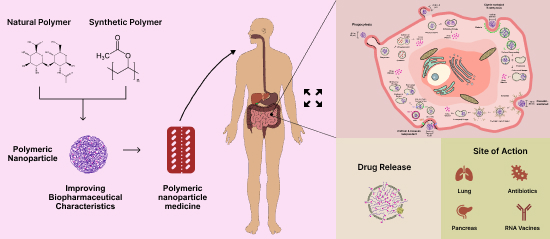
- walls. Since mucus is continuously secreted along the GIT, it is subsequently eliminated due to the cellular renewal process [5]. Mucus is a complex hydrogel comprising proteins, carbohydrates, lipids, salts, antibodies, bacteria, and cellular debris. Mucins are the primary protein component of mucus
- protrusions induced by growth factors, bacteria, viruses, and necrotic cells. These protrusions either collapse into endocytic vesicles or retract into the membrane, fusing with it and forming macropinosomes [80]. CME involves interactions between clathrin-associated adaptors and sorting proteins, forming


Prospects of nanotechnology and natural products for cancer and immunotherapy
Beilstein J. Nanotechnol. 2025, 16, 1644–1667, doi:10.3762/bjnano.16.116
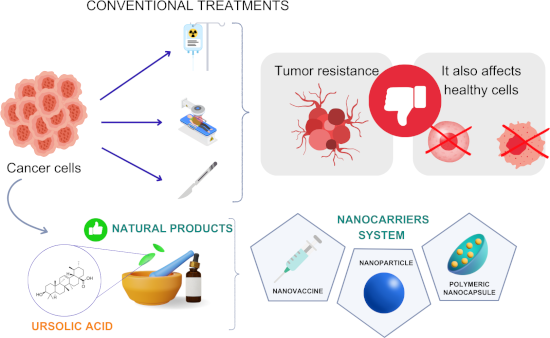
- -EGCG, as well as manganin, FeCl3, and the PD-L1 antibody. Hyaluronic acid is a non-sulfated glycosaminoglycan component of the extracellular matrix and has diverse biomedical applications [115]. It can be obtained through the fermentation of bacteria and yeasts, as well as animal sources, using



Nanotechnology-based approaches for the removal of microplastics from wastewater: a comprehensive review
Beilstein J. Nanotechnol. 2025, 16, 1607–1632, doi:10.3762/bjnano.16.114
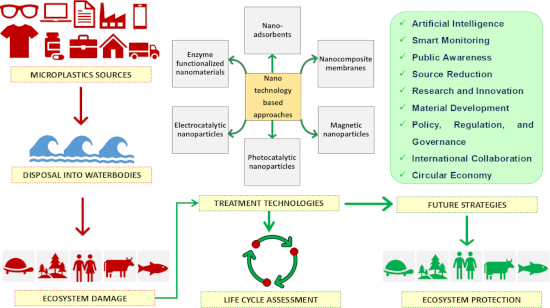
- oxidative stress, histological damage in vital organs, and overall impaired fish health, highlighting their toxic impact on aquatic ecosystems. NPs and MPs negatively impact marine organisms, but their toxicity toward marine bacteria remain less understood. In a study performed by Sun et al. [49], it was


Nanomaterials for biomedical applications
Beilstein J. Nanotechnol. 2025, 16, 1499–1503, doi:10.3762/bjnano.16.105
- . Traditional implants face various problems, such as poor biocompatibility, inflammatory response, or the risk of infection. However, with the integration of nanomaterials, these devices show higher biocompatibility, durability, and defenses against bacteria [36]. For example, incorporating titanium dioxide or
- material to meet specific requirements, whether to attack cancer cells, allow tissue regrowth, or eliminate bacteria from a surgical site. Since nanoparticles are extremely small, they have the potential to interact with cells and enable cellular events. Even though these technologies are intricate, their
Laser processing in liquids: insights into nanocolloid generation and thin film integration for energy, photonic, and sensing applications
Beilstein J. Nanotechnol. 2025, 16, 1428–1498, doi:10.3762/bjnano.16.104






The role of biochar in combating microplastic pollution: a bibliometric analysis in environmental contexts
Beilstein J. Nanotechnol. 2025, 16, 1401–1416, doi:10.3762/bjnano.16.102
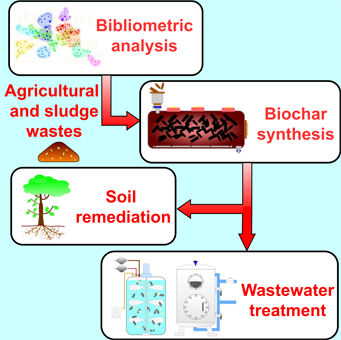
- yields by 30–81%, even under high MP contamination levels (up to five times that of biochar-modified bacteria). Additionally, biochar enhances Olsen-P availability by 46.6%, increases soil organic carbon in microaggregates by 35.7%, and reduces antibiotic resistance genes by promoting beneficial microbes
- such as Subgroup 10, Bacillus and Pseudomonas, which suppress harmful bacteria and promote plant growth [54]. For instance, in lettuce rhizosphere soil exposed to PS, genetic diversity decreased by 26.67%, but the application of peanut shell biochar increased gene abundance by 5.15% compared to control
- bacteria, such as Subgroup 10, Bacillus, and Pseudomonas, which suppress harmful microorganisms, reduce antibiotic resistance genes and enhance biodiversity. The increased activity of soil enzymes, including urease and dehydrogenase, further illustrates its role in improving soil fertility. Notably



Synthesis and antibacterial properties of nanosilver-modified cellulose triacetate membranes for seawater desalination
Beilstein J. Nanotechnol. 2025, 16, 1380–1391, doi:10.3762/bjnano.16.100
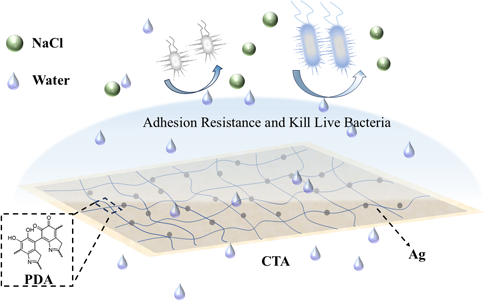
- membrane exhibited significant antibacterial activity, reducing the number of attached live bacteria by 80−95% for three different model bacterial strains (Escherichia coli, Pseudomonas aeruginosa, and Staphylococcus aureus). The Cu NPs could be reloaded onto the membrane surface after depletion
- , Bacillus thuringiensis, Lysinibacillus xylanilyticus, Lysinibacillus lparviboronicapiens and Burkholderia ambifaria after 24 h of contact of the membrane with the above bacteria. The modified membrane of Ag@PCTA demonstrates significant disinfection and sterilization effects on all tested strains
- , evidenced by a pronounced inhibitory ring. Notably, bacteria surrounding the Ag@PCTA membrane are unable to grow, indicating the membrane’s potent antibacterial activity. The antibacterial activity of Ag ions was attributed to their interactions with S-, O-, and N-containing groups in the bacteria [48]. Dai


Enhancing the therapeutical potential of metalloantibiotics using nano-based delivery systems
Beilstein J. Nanotechnol. 2025, 16, 1350–1366, doi:10.3762/bjnano.16.98
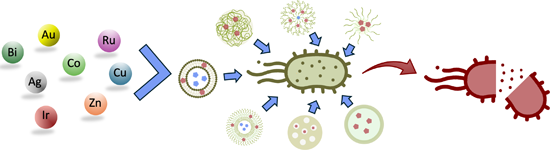
- : antimicrobial resistance; biocompatibility; metalloantibiotics; nanocarriers; targeted delivery; Introduction Antimicrobial resistance (AMR), the condition that bacteria no longer respond to drugs used to treat infections, has become one of the biggest public health challenges of the 21st century. According to
- global crisis arises from a combination of the abuse and misuse of antibiotics, the lack of new antibiotic drugs in clinical development, and the remarkable ability of microorganisms to adapt and evolve. Antimicrobial resistance can be partly explained by natural selection, which allows bacteria to
- develop mutations that reduce or completely eliminate the antibiotic efficacy [4]. If bacteria are exposed to non-lethal quantities of an antibiotic, these bacteria will eventually develop resistance to the antibiotic [5]. Moreover, bacteria have the ability to transfer resistance genes directly between





