


Search results
Search for "hysteresis" in Full Text gives 292 result(s) in Beilstein Journal of Nanotechnology. Showing first 200.
Recent progress in enhancing built-in electric fields of perovskite solar cells via junction engineering
Beilstein J. Nanotechnol. 2026, 17, 602–621, doi:10.3762/bjnano.17.42
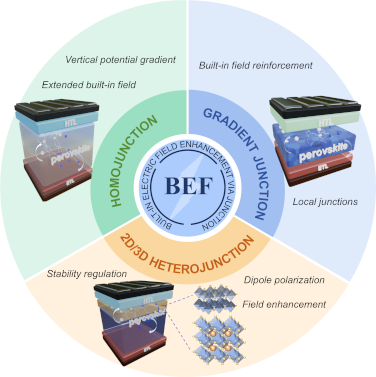
- device efficiency of 23.2% with negligible hysteresis. Moreover, combined grain-boundary passivation and band-structure modulation by BP NSs enabled unencapsulated devices to retain over 92% efficiency maintained for 150 days (3,600 h) at 25 °C and 40% ± 10% relative humidity. Although this operational




Defects and defect-mediated engineering of two-dimensional materials: challenges and open questions
Beilstein J. Nanotechnol. 2026, 17, 454–488, doi:10.3762/bjnano.17.31





Ferroelectric nanodot reservoir for neuromorphic computing
Beilstein J. Nanotechnol. 2026, 17, 352–364, doi:10.3762/bjnano.17.24
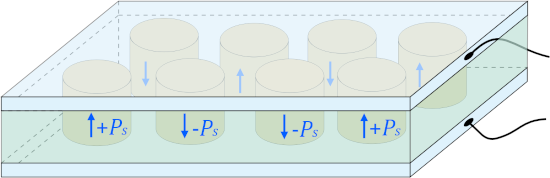
- been proposed and demonstrated as viable candidates for synaptic and reservoir elements [25][35]. In FeFET-based reservoirs, for example, the polarization-dependent hysteresis provides both the nonlinearity and memory required for temporal signal encoding [36]. Moreover, recent advances in material
- coercive electric field Ec. The coercive charge required for switching is: Qc = ε0εfSEc, where the positive value corresponds to switching from “up” to “down”, and the negative value corresponds to the reverse process. This behavior is illustrated in Figure 2b, showing typical hysteresis loops for both
- polarization vs electric field P(E) and voltage vs charge V(Q). These hysteresis curves realize the bistability and nonlinearity that are central to the function of the reservoir. Similar behaviors have been experimentally verified in a variety of ferroelectric materials, such as HfO2-based FeFETs [36], and Pb


Gold nanoparticle-decorated reduced graphene oxide as a highly effective catalyst for the selective α,β-dehydrogenation of N-alkyl-4-piperidones
Beilstein J. Nanotechnol. 2026, 17, 218–238, doi:10.3762/bjnano.17.15
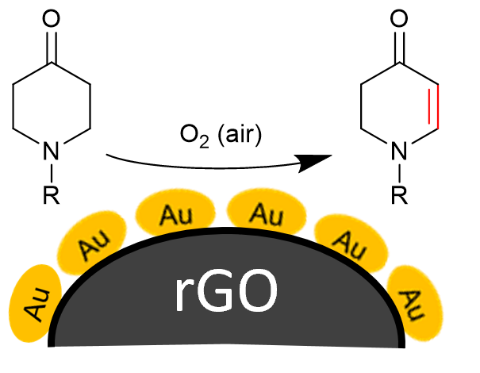
- small particles. The nitrogen sorption isotherms and their hysteresis loops in Figure 3 supplement the SEM analysis of the three carbon materials in terms of specific BET surface area, and pore volume and size. AC features a reversible almost type-I isotherm, given by microporous materials with narrow
- micropores around 1 nm, with a small type-II contribution at larger P/P0 and a small H4 hysteresis loop, which is given by the mesoporous part of AC. rGO has a type-II isotherm due to unrestricted monolayer–multilayer adsorption up to high P/P0; the multilayer absorption appears to increase without limit
- when P/P0 reaches 1. The wide H3 hysteresis loop is typically given by non-rigid aggregates of platelets as seen in rGO (cf. Figure 2b). CB also gives a combination of a type-I and a type-II isotherm, albeit with an overall small uptake and a very narrow H3 hysteresis loop. The lower limit of this H3


Capabilities of the 3D-MLSI software tool in superconducting neuron design
Beilstein J. Nanotechnol. 2026, 17, 122–138, doi:10.3762/bjnano.17.8
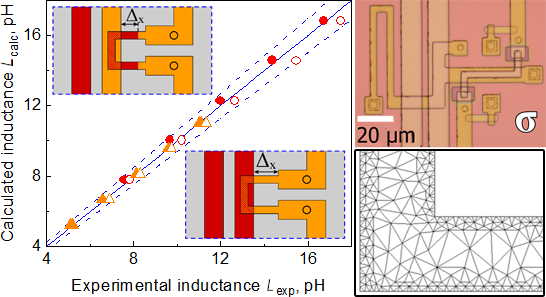
- suppress capacitive hysteresis in I–V curves. Overall, this fabrication process is a type of one previously used for RSFQ logic circuits [29]. In Figure 2, four types of C-shaped SQUIDs are shown schematically. Each type corresponds to one of the methods of implementation and coupling of inductive elements



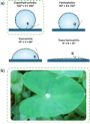
Functional surface engineering for cultural heritage protection: the role of superhydrophobic and superoleophobic coatings – a comprehensive review
Beilstein J. Nanotechnol. 2026, 17, 63–96, doi:10.3762/bjnano.17.6





Terahertz-range on-chip local oscillator based on Josephson junction arrays for superconducting quantum-limited receivers
Beilstein J. Nanotechnol. 2025, 16, 2296–2305, doi:10.3762/bjnano.16.158
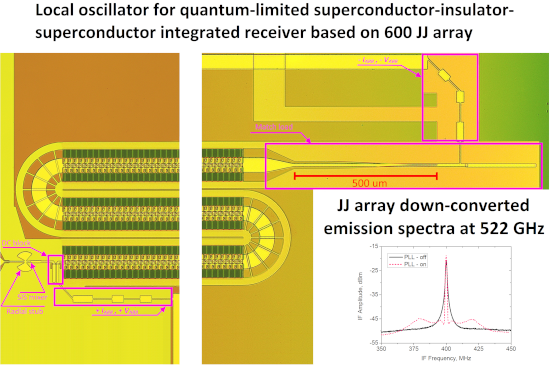
- technological cycle, the molybdenum film with a thickness of 100 nm (surface resistance of approx. 1 Ω/square) is used. A shunt is crucial for reducing the McCumber parameter to the value of ≈0.3 in order to provide a hysteresis-free current–voltage characteristic (IVC) [3]. The parameters of the single


Improving magnetic properties of Mn- and Zn-doped core–shell iron oxide nanoparticles by tuning their size
Beilstein J. Nanotechnol. 2025, 16, 2285–2295, doi:10.3762/bjnano.16.157
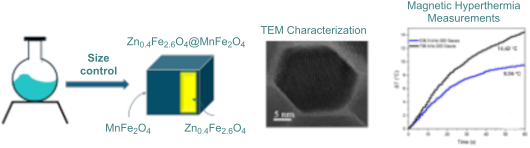
- the core–shell system. Furthermore, the superparamagnetic behavior of both Zn0.4Fe2.6O4 and Zn0.4Fe2.6O4@MnFe2O4 NPs was confirmed by the absence of hysteresis in the magnetization curves. This behavior is characteristic of superparamagnetic NPs, where thermal energy is sufficient to overcome magnetic



Calibration of piezo actuators and systems by dynamic interferometry
Beilstein J. Nanotechnol. 2025, 16, 2086–2091, doi:10.3762/bjnano.16.143
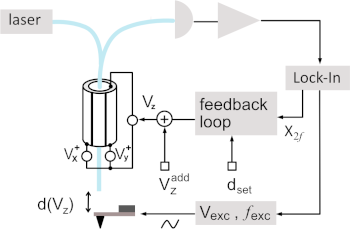
- control over the interferometer cavity. Measurements involve the expansion and contraction of the piezo tube by an amount of the order of 100 nm, raising the issues of piezo nonlinearity [19], hysteresis [20], and creep [21]. Therefore, we address systematic errors in tube piezo calibration and explore to
- and hysteresis occurring after switching polarity from positive to negative. Note that we observe this phenomenon although we paused the measurement for 25 min between contraction and extension experiments to give the system time for equilibration. The deviation of data points from a straight line is
- that the misalignment and the fiber piezo motion history may deteriorate the excitation system calibration. This is probably due to piezo hysteresis and the fit procedure that has been optimized for the perfectly aligned interferometer [13] but not extensively tested for the misaligned interferometer


Low-temperature AFM with a microwave cavity optomechanical transducer
Beilstein J. Nanotechnol. 2025, 16, 1873–1882, doi:10.3762/bjnano.16.130
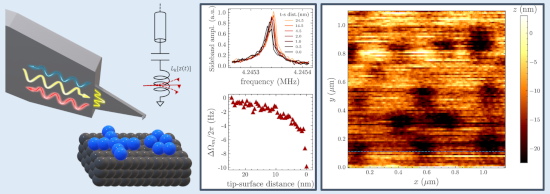
- lines due to hysteresis and drift in the open loop x–y scanners. These problems are more pronounced when attempting to resolve smaller features, and image processing techniques such as filtering and smoothing are not particularly effective in enhancing resolution, as shown by Figure 6e. Conclusion We


Beyond the bilayer: multilayered hygroscopic actuation in pine cone scales
Beilstein J. Nanotechnol. 2025, 16, 1695–1710, doi:10.3762/bjnano.16.119
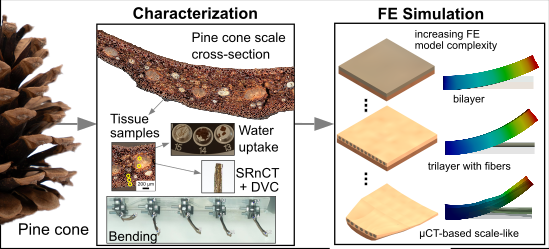
- function of relative humidity. There were distinct differences between tissues and a pronounced hysteresis between sorption and desorption. Finite element analysis was performed on geometries ranging from simplified bilayer models to complex remodeled scales. Simulation results showed an underestimation of
- threshold, a more nuanced study of the differences in water uptake between tissues is required to gain a better understanding of motion actuation. Quan et al. [24] also measured the gravimetric water uptake, revealing a hysteresis between uptake and evaporation, but without distinguishing between the scale
- , the sclereid cells achieve a moisture content of 27.7 ± 0.4% for desorption and 26.8 ± 0.4% for absorption. In comparison, the sclerenchyma fibers achieve a moisture content of 23.7 ± 0.6% for desorption and 23.0 ± 0.5% for absorption. In terms of the hysteresis observed, the difference in moisture


Photocatalytic degradation of ofloxacin in water assisted by TiO2 nanowires on carbon cloth: contributions of H2O2 addition and substrate absorbability
Beilstein J. Nanotechnol. 2025, 16, 1567–1579, doi:10.3762/bjnano.16.111
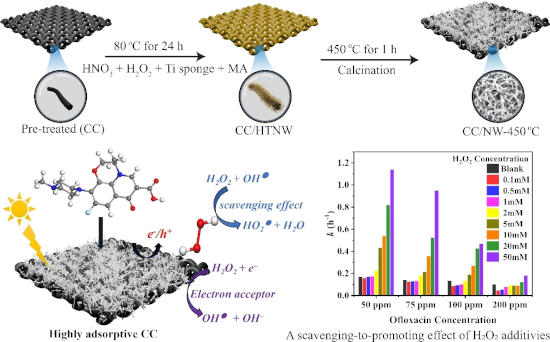
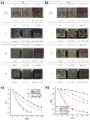
- into the TiO2 lattice. Figure 3b shows the nitrogen adsorption–desorption isotherm of the TiO2 nanowires on carbon cloth at 77 K. The adsorption isotherm exhibits a type-IV profile with an H3 hysteresis loop, indicative of mesoporous structures with slit-like pores. This is further corroborated by the


Laser processing in liquids: insights into nanocolloid generation and thin film integration for energy, photonic, and sensing applications
Beilstein J. Nanotechnol. 2025, 16, 1428–1498, doi:10.3762/bjnano.16.104






Transfer function of an asymmetric superconducting Gauss neuron
Beilstein J. Nanotechnol. 2025, 16, 1160–1170, doi:10.3762/bjnano.16.85
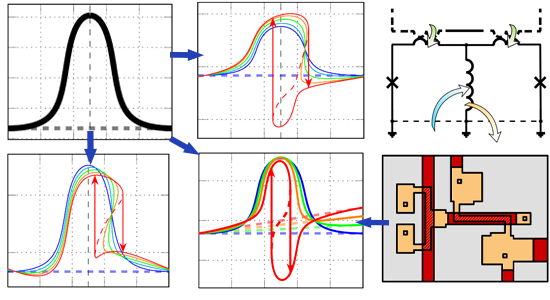
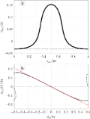
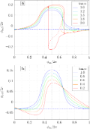
- . It can be seen that as tanα increases, the curve becomes asymmetric, that is, the left part becomes flatter, and the right one steeper (Figure 3a). For sufficiently large asymmetry ( for the parameters in Figure 3a), the transfer function becomes multivalued, and hysteresis should be observed during
- lA/lB increases, the distortion of the transfer function increases (Figure 4a), which leads to its multivaluedness (and hence to hysteresis). This is related to the increase in the inductance of the overall receiving circuit 2l+ as lA increases. The opposite change (reducing lA while keeping lB



Shape, membrane morphology, and morphodynamic response of metabolically active human mitochondria revealed by scanning ion conductance microscopy
Beilstein J. Nanotechnol. 2025, 16, 951–967, doi:10.3762/bjnano.16.73
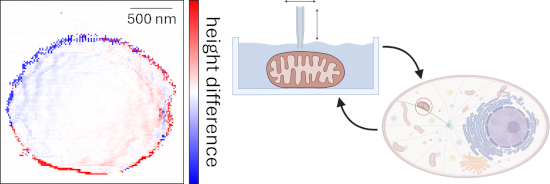
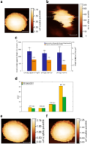
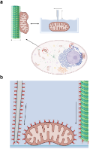
- artefacts such as (mechanical) hysteresis effects caused by the elastic behaviour of the measuring tip or the mechanical components of the SPM setup, as well as repeated displacements of the object during the scan of each line. Drift phenomena are considerable, too, which are primarily caused by the lateral
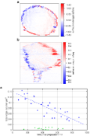
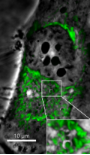
- a linearly decreasing trend, represented by the blue dotted line. This trend supports the suitability of the TEV as a parameter for characterising morphodynamics. The hysteresis effects mentioned earlier are always time-independent. The TEV is still not zero for non-viable objects like fixed



Synthesis and magnetic transitions of rare-earth-free Fe–Mn–Ni–Si-based compositionally complex alloys at bulk and nanoscale
Beilstein J. Nanotechnol. 2025, 16, 823–836, doi:10.3762/bjnano.16.62
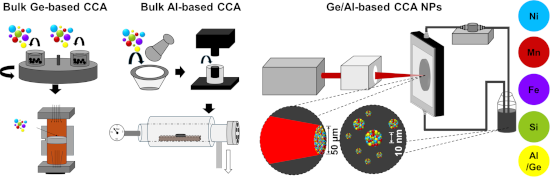
- particle size), demonstrating the intrinsic superparamagnetic nature of NPs. While the Ge-based CCA demonstrates almost twice the saturation magnetization (Ms) and ≈20% lower hysteresis (Hc) in bulk form, the Al-based CCA exhibits comparable Ms and ≈45% lower Hc at the nanoscale at 5 K. These results
- File 1) confirms an elevated oxygen concentration at the NP surface, indicating surface oxidation effects. Most oxide shells, such as MnO, NiO, or FeO are antiferromagnetic [61] and exhibit higher anisotropy than the NP core, leading to an exchange bias effect in the hysteresis loop and an increase in
- suggests that the magnetization changes smoothly across the transition point, consistent with ferromagnetic or ferrimagnetic ordering. The M–H curve at 5 K (Figure 6b and Figure S5b, Supporting Information File 1) exhibits a pronounced hysteresis loop with a Hc of 8.4 kA·m−1 and a high saturation


Zeolite materials with Ni and Co: synthesis and catalytic potential in the selective hydrogenation of citral
Beilstein J. Nanotechnol. 2025, 16, 520–529, doi:10.3762/bjnano.16.40
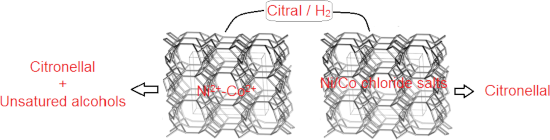
- isotherms showed a hysteresis loop, which is associated with capillary condensation within the materials’ pores and is expected to be more pronounced in HEU than in Mor. This can be attributed to the smaller channel diameter of HEU (maximum opening of 0.31 × 0.75 nm2) compared to Mor (maximum opening of


Performance optimization of a microwave-coupled plasma-based ultralow-energy ECR ion source for silicon nanostructuring
Beilstein J. Nanotechnol. 2025, 16, 484–494, doi:10.3762/bjnano.16.37
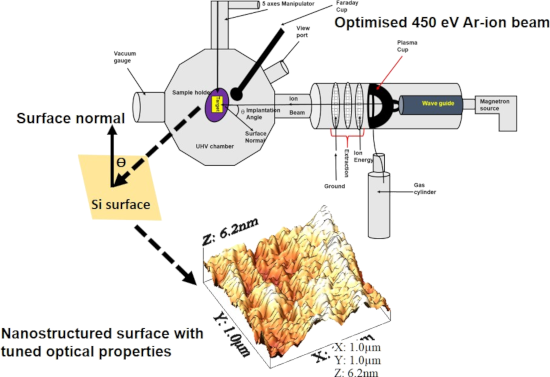
- oxide on the nanopatterned silicon surface. Additionally, the post-bombardment growth of silicon oxide on nanopatterned silicon leads to site-dependent growth of native oxide, which is useful for producing hysteresis in surface current–voltage characteristic measurements [50][51]. The preferential


TiO2 immobilized on 2D mordenite: effect of hydrolysis conditions on structural, textural, and optical characteristics of the nanocomposites
Beilstein J. Nanotechnol. 2025, 16, 128–140, doi:10.3762/bjnano.16.12
- (isotherm I or II according to IUPAC classification); at increasing pressure, the absorption continues and is accompanied by a hysteresis loop (isotherm IV according to IUPAC classification). For the series of Ti-WNh-C samples hydrolyzed in pure water, the inflection point on the desorption curves appears
- around P/P0 = 0.5, and it is followed by a broad hysteresis loop. The shape of this loop mainly corresponds to bottle-shaped pores (type H2, more precisely H2b, which corresponds to a pore blocking effect but without percolation, which may also indicate a narrow size distribution of pore cavities), with
- some presence of slit-shaped pores (type H3). Hydrolysis in 70% ethanol solution (i.e., Ti-ENh-C series) results in a wider distribution of mesopores by size. Volume VBJH and diameter DBJH of the mesopores determined from the desorption branch of the hysteresis loops are given in Table 2. The surface



Electrochemical nanostructured CuBTC/FeBTC MOF composite sensor for enrofloxacin detection
Beilstein J. Nanotechnol. 2024, 15, 1522–1535, doi:10.3762/bjnano.15.120
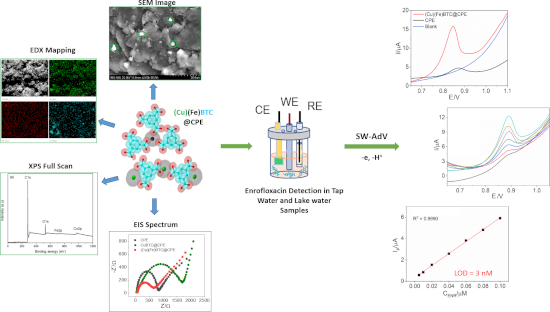
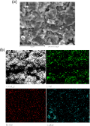
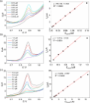
- simultaneous presence of FeBTC and CuBTC phases in the (Cu)(Fe)BTC sample indicates the successful synthesis of (Cu)(Fe)BTC composite. The N2 adsorption/desorption isotherms of the (Cu)(Fe)BTC sample are of type I with H4 hysteresis ring according to IUPAC classification (Figure 1b) [35]. The N2 adsorption





Investigation of Hf/Ti bilayers for the development of transition-edge sensor microcalorimeters
Beilstein J. Nanotechnol. 2024, 15, 1353–1361, doi:10.3762/bjnano.15.108
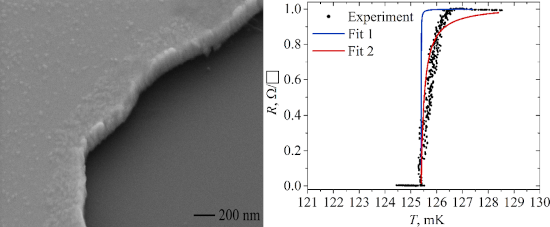
- regions the critical temperature is different. Furthermore, such a protracted transition can be explained by the effect of phase separation in a film of large size, that is, it becomes superconducting in parts. The film sample C1, unlike samples A1–A4 and B1, shows thermal hysteresis, which is expressed


The role of a tantalum interlayer in enhancing the properties of Fe3O4 thin films
Beilstein J. Nanotechnol. 2024, 15, 1253–1259, doi:10.3762/bjnano.15.101
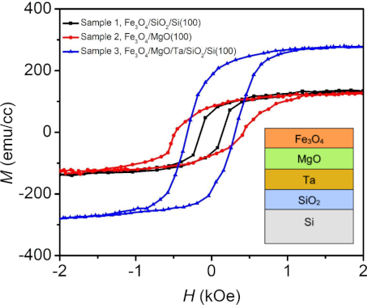
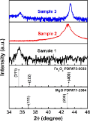
- depicts the hysteresis curves (M–H) of samples 1, 2, and 3. The magnetization of the Fe3O4 thin film grown on the multilayer structure is significantly larger than the those of the others, as shown in Figure 3a. Figure 3b shows a magnification of the M–H loops from −2 kOe to 2 kOe to show more details


Unveiling the potential of alginate-based nanomaterials in sensing technology and smart delivery applications
Beilstein J. Nanotechnol. 2024, 15, 1077–1104, doi:10.3762/bjnano.15.88

- kilohertz. Another alginate-based humidity sensor is carbonized lignin-loaded sodium alginate (CL/SA). The CL/SA composite film provided extremely high sensitivity, low hysteresis, and consistent repeatability throughout a wide relative humidity range of 11–97%. Furthermore, the CL/SA sensor allowed for


Beyond biomimicry – next generation applications of bioinspired adhesives from microfluidics to composites
Beilstein J. Nanotechnol. 2024, 15, 965–976, doi:10.3762/bjnano.15.79
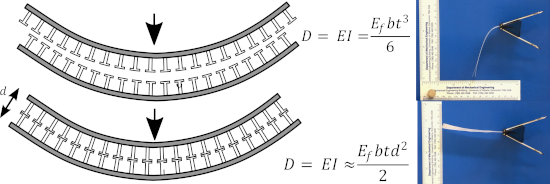
- ) simplified modeling of effective bending stiffness as either two parallel non-adhesive sheets or as iii) a bonded sandwich composite structure. (b) Small scale tests show substantial bending stiffness increase as anticipated, but the large hysteresis indicates that internal delamination and plastic behavior


Radiofrequency enhances drug release from responsive nanoflowers for hepatocellular carcinoma therapy
Beilstein J. Nanotechnol. 2024, 15, 569–579, doi:10.3762/bjnano.15.49
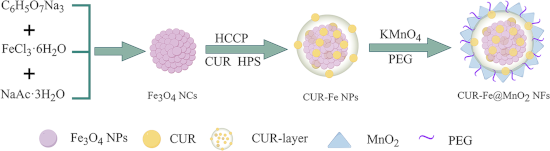
- of a layer on CUR-Fe NPs and CUR-Fe@MnO2 NFs. Furthermore, the three new diffraction peaks at 28.7°, 37.34°, and 64.8° confirmed the presence of MnO2. The magnetic properties of the NFs were verified by magnetic hysteresis loops. Figure 2h shows that Fe3O4 NCs and CUR-Fe@MnO2 NFs were
- , respectively). f) FTIR spectra of HCCP, CUR, HPS, and the CUR-Fe@MnO2 NFs. g) XRD patterns of the Fe3O4 NCs, curcumin, CUR-Fe NPs, and CUR-Fe@MnO2 NFs. h) Hysteresis loop of the Fe3O4 NCs and CUR-Fe@MnO2 NFs, indicating that they were superparamagnetic. a) T1/T2-mapping MR imaging of CUR-Fe@MnO2 NFs at pH 5.0





